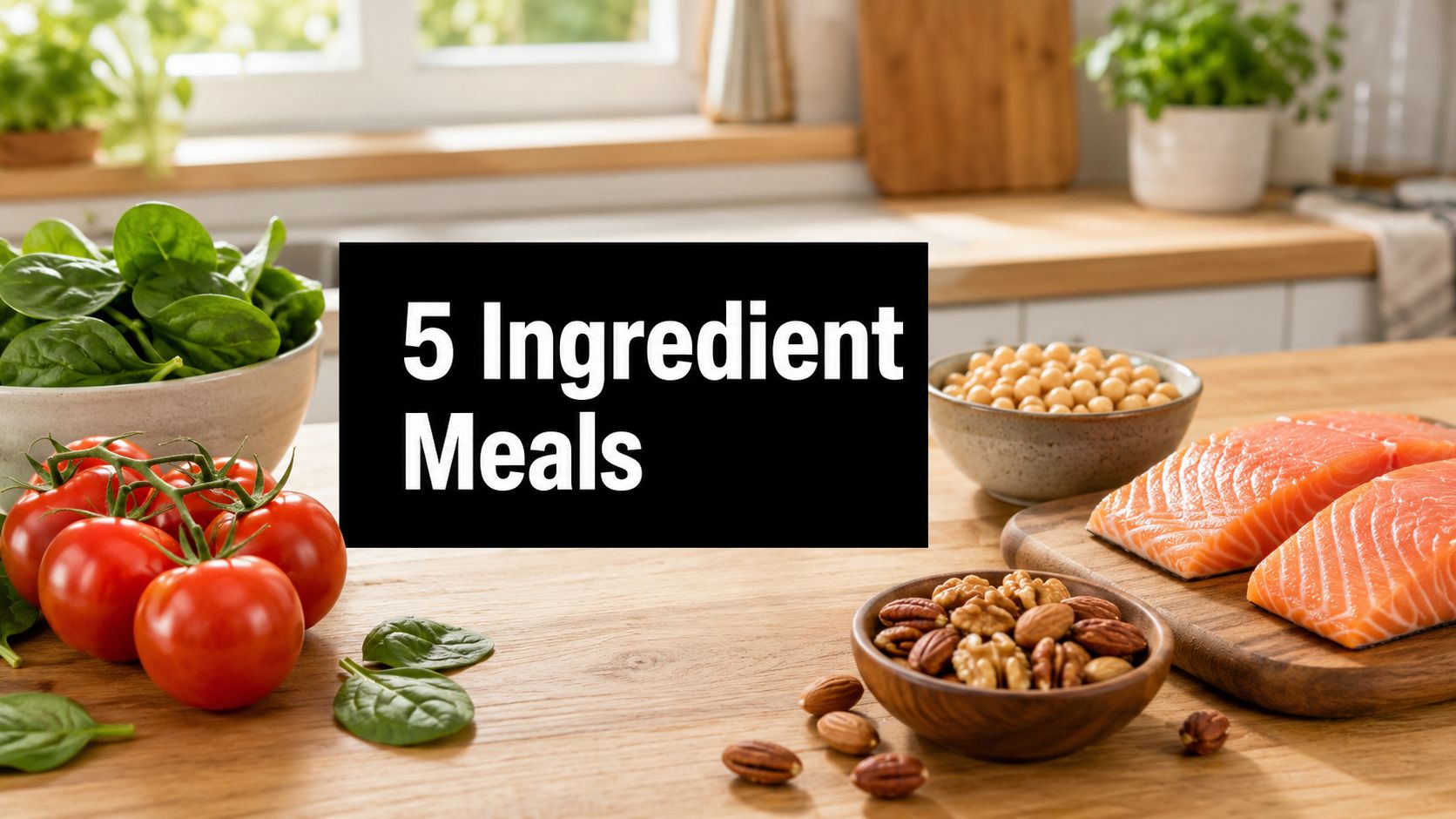
It is 6:15, you are hungry, and dinner has to be on the table before the evening gets away from you. That is where 5 ingredient meals earn their place. They cut grocery friction, reduce prep decisions, and make it easier to build a plate you can repeat on a busy schedule.
The best versions follow a simple structure. Start with a protein or legume. Add produce. Include a whole-food carb when it helps with energy, training recovery, or fullness. Dietitian-style 5 ingredient dinner ideas often use that same framework because it keeps meals practical without turning dinner into snack food disguised as a recipe, as shown in these dietitian-led 5-ingredient dinner ideas.
Short ingredient lists also help with a problem I see often in nutrition coaching. People buy with good intentions, then lose momentum halfway through the week because every meal needs a different sauce, herb, or specialty item. A tighter list lowers food waste and makes batch prep more realistic.
This article goes further than a recipe roundup. Each meal is part of a usable system. You will see how it fits into a weeknight routine, what trade-offs to expect with flavor and satiety, and how to prep it so it still works on a tired Wednesday. There is also a side-by-side comparison, dietary notes, macro guidance, batch-cooking direction, and a consolidated grocery checklist so the plan is usable.
If you want a more structured setup for repeating high-protein meals with less planning work, the high-protein meal planning tools from AI Meal Planner follow the same practical approach. The onboarding flow at AI Meal Planner is built for that kind of routine planning.
A partner resource is included here for compliance: guide to NZ splitting axes. It is unrelated to meal planning, so the focus below stays on fast, balanced meals that are easy to shop for, cook, and repeat.
1. How do you make grilled chicken with roasted vegetables and quinoa actually taste good?
You get home hungry, want something balanced, and do not want dinner to turn into a project. This meal works in that exact situation, but only if each part is cooked with a purpose. Chicken breast, quinoa, broccoli, olive oil, and garlic can taste flat fast if the texture is off or the portions are unbalanced.

The reason this meal earns a place in a 5-ingredient system is simple. It covers the basics without guesswork. Chicken gives you a lean protein anchor, quinoa adds fiber and steady carbs, and broccoli gives volume so the plate looks and feels like a full meal instead of a small serving of protein.
How to make the flavor better without adding more ingredients
Start with the chicken. Coat it lightly with olive oil and grated or minced garlic, then salt it well before cooking. That step matters more than people expect. If the chicken is under-seasoned, the whole plate tastes bland no matter how well the broccoli and quinoa turn out.
Cook the quinoa ahead if this meal is part of your weekday rotation. I recommend that often because it cuts the friction at dinner and keeps people from skipping the carb portion, then wondering why they are hungry again an hour later.
For the broccoli, high heat is the difference between a meal you repeat and one you avoid. Roast it until you get browned edges and tender stems. Soft, steamed broccoli next to plain chicken is usually where this kind of meal loses people.
Practical rule: Fix seasoning, browning, and doneness before you start chasing flavor with extra ingredients.
Macro balance, dietary notes, and real trade-offs
A standard plate of grilled chicken, cooked quinoa, and roasted broccoli usually lands as a high-protein, moderate-carb meal with moderate fat from the olive oil. Exact macros depend on portion size, which is why this works well for people who want a repeatable base they can scale up or down.
This setup fits fat-loss phases, high-protein meal prep, and performance-focused eating. It is naturally gluten-free if your ingredients are uncontaminated. If appetite is high, increase the quinoa or use a larger broccoli portion before adding snack foods later.
The trade-off is variety. This meal is reliable, but it can get repetitive by the third or fourth repeat if you plate it the same way every time. Rotate the emphasis. Use more broccoli and less quinoa on a lower-activity day, or serve sliced chicken over the quinoa so each bite feels better integrated.
Batch-cooking system that holds up through the week
Batch-cook the quinoa first. Roast a full tray of broccoli while the chicken cooks. Then slice the chicken after a short rest so it stays juicier in storage. That sequence saves time and improves texture.
For a weekly plan, portion the meal into containers with the broccoli kept away from the hottest part of the chicken if possible. It helps preserve texture. If you want a repeatable setup for meals in this style, the high-protein meal planning templates from AI Meal Planner follow the same practical structure of protein target, portion guidance, and easy reuse.
As noted earlier, standard food safety guidance still applies here. Cool leftovers promptly, refrigerate them within the safe window, and use them within a few days for best quality.
2. Why is sheet pan salmon one of the smartest 5 ingredient healthy meals?
Salmon with asparagus, lemon, garlic, and olive oil is one of the cleanest examples of a short-ingredient meal that still feels complete. It cooks on one pan, it has enough richness to be satisfying, and it doesn't need much else.
The main advantage is cleanup. If a healthy dinner dirties a cutting board, a bowl, a sheet pan, and maybe one knife, people repeat it. If it turns into a sink full of cookware, they don't.
How to avoid dry salmon and limp asparagus
Pat the salmon dry first. That helps the surface cook better and keeps the fish from steaming. Trim the asparagus so the stalks cook evenly, then coat both with olive oil, garlic, and lemon.
Roast until the salmon flakes easily and the asparagus is tender with a little snap left. The exact oven routine can vary by thickness, but the principle doesn't. Pull it before the fish dries out. Residual heat keeps cooking it for a bit after it leaves the oven.
A squeeze of lemon at the end matters more than people think. It brightens the fat in the salmon and makes the asparagus taste fresher without adding another sauce.
This is one of the few “healthy” dinners that can feel richer than takeout while using fewer ingredients.
When this meal is worth the cost
Salmon costs more than chicken or chickpeas, so this isn't always the everyday option. But it earns its place when you want a low-friction dinner that feels substantial and still fits a health-focused week.
That matters in a market increasingly built around convenience. The prepared meals market reached USD 190.71 billion in 2025 and is projected to rise to USD 326.50 billion by 2034, with Europe holding the largest regional share at 33.44% in 2025, according to Fortune Business Insights' prepared meals market outlook. The takeaway for home cooks is straightforward. People are paying for meals that save time and still feel balanced, and this is a version you can make yourself with very little friction.
This meal works well for professionals who want a power lunch the next day, for Mediterranean-style eaters, and for anyone trying to make home cooking feel easier rather than more virtuous. The main weakness is storage. Salmon is best when freshly cooked, so I'd batch-prep components sparingly rather than making a full week of it.
3. Can a 5 ingredient plant-based bowl still be balanced?
Yes, if the ingredients do distinct jobs. Chickpeas, kale, sweet potato, tahini, and lemon create a bowl with legumes for substance, greens for volume, and a starchy vegetable for steady energy. That's what makes it more than a trendy bowl.

This meal is also one of the best examples of where 5 ingredient healthy meals can go wrong if you don't think beyond ingredient count. Plenty of recipe lists keep things minimal but don't explain whether the result is balanced enough for your goal. That's a real gap highlighted in Simply Quinoa's discussion of healthy 5-ingredient dinners and nutrition questions.
How to build this bowl so it feels substantial
Roast the sweet potato until it's soft and browned on the edges. Roast or pan-warm the chickpeas so they don't just sit in the bowl cold and starchy. Then massage the kale with a little tahini-lemon mixture or a bit of the dressing so it softens.
The dressing is what ties it together. Tahini gives body and richness, lemon keeps it sharp, and the combination makes the bowl feel satisfying without needing a longer ingredient list.
For many people, this meal works best after training, as a desk lunch, or as a reset dinner after heavier meals earlier in the week. It's also easy to adapt through a plant-based meal plan if you want more structure around similar recipes.
What this meal does better than many recipe roundups
It solves the “healthy but not filling” problem that hurts a lot of vegetable-heavy meals. Chickpeas and tahini give the bowl staying power, while sweet potato keeps it from becoming a giant salad that leaves you hungry an hour later.
Still, there's a trade-off. If your main goal is high protein with minimal calories, this won't hit the same way a chicken-based plate will. It's better framed as a balanced plant-forward meal than as a protein-maximizing one.
Here's a useful visual for assembly and texture ideas:
What I like most here is that each ingredient has a clear purpose. That's the difference between a smart 5-ingredient meal and a sparse one. Minimal isn't enough. Functional is.
4. Are turkey lettuce wraps filling enough for dinner?
They can be, if you treat them as a protein-first meal instead of pretending lettuce is the main event. Lean ground turkey, lettuce, bell pepper, onion, ginger, and soy sauce make a fast skillet filling that's light but still satisfying when cooked properly.
This is one of the most useful meals for people who want a lower-carb dinner without eating something joyless. The crunch from the lettuce and peppers keeps it fresh, while onion, ginger, and soy sauce make it feel like real cooking instead of plain ground meat in leaves.
How to keep this from turning watery and bland
Brown the turkey first and give it time to develop color. If you rush this stage, you end up with pale, damp meat and a pan full of liquid. Add the onion and pepper after the turkey starts to cook through, then finish with ginger and soy sauce.
Use lettuce with enough structure to hold the filling. Butter lettuce works well for tenderness. Romaine works better if you want more crunch and less collapse in your hand.
A quick mise en place matters more here than in slower meals. Once the pan is hot, this dish moves fast. Prepping the vegetables first keeps the turkey from overcooking while you slice onions.
Who should use this meal more often
This is a strong option for people in a calorie-conscious phase, anyone who wants a break from grain bowls, and busy professionals who need dinner on the table without turning on the oven. It also fits naturally into a low-carb meal plan when you want meals that feel lighter but still carry enough protein to be useful.
Coach's note: Lettuce wraps fail when the filling is underseasoned. The wrap isn't there to add flavor. It's there to add crunch and portion control.
The downside is that it doesn't store as neatly as some other meals. Lettuce gets soggy fast, so keep the filling and leaves separate if you're meal prepping. This is a good example of why ingredient count alone doesn't solve convenience. Storage method matters just as much.
There's also a broader issue in 5-ingredient cooking. Some recipes exclude staples like oil, salt, pepper, broth, or seasonings from the count, which can make shopping and waste harder than promised. That confusion is part of the ingredient-count problem raised in this discussion of what really counts in 5-ingredient cooking and food-waste planning. With these wraps, keep the rule honest. If soy sauce and ginger drive the flavor, count them.
5. What makes Mediterranean chickpea salad a smart make-ahead lunch?
This is the no-cook answer for weeks when your schedule is packed and your motivation is low. Chickpeas, cucumber, tomato, red onion, olive oil, and feta make a salad that holds up better than leafy salads and usually tastes better after it sits for a bit.

The first reason it works is texture stability. Cucumber, tomato, onion, and chickpeas don't wilt in the same way greens do. The second is flavor carryover. Olive oil, onion, and feta mellow and blend together after a little time in the fridge.
How to prep it without making it watery
Drain and rinse the chickpeas well. Cut the vegetables evenly so the salad eats consistently instead of feeling like random chunks. Then dress it lightly enough that it coats the ingredients without pooling at the bottom.
If you want the best texture across several days, hold back some feta until serving. That keeps it from dissolving into the dressing and helps the salad feel freshly finished rather than fully marinated.
This is one of the easiest entries into a Mediterranean meal plan because it asks so little of you. No pan. No oven. No reheating.
Why this meal often gets repeated
It solves lunch, not just dinner. That matters because many people can manage one healthy dinner, then lose the thread at midday and end up buying whatever's nearby. A bowl like this gives you a portable meal that doesn't need much maintenance.
It also fits the wider logic behind 5 ingredient healthy meals. The format is flexible rather than restrictive. The 5-ingredient approach has roots in the Pollan-style simplicity rule and in meal-building approaches that align with MyPlate, where half the plate should be fruits and vegetables, as discussed earlier.
The caution here is fullness. For some people, especially very active people, this salad may need a larger portion or a supporting side later in the day. But for desk lunches, lighter dinners, or hot-weather meals, it's one of the most reliable options in the whole category.
5-Ingredient Healthy Meals: Side-by-Side Comparison
| Recipe | 🔄 Complexity | ⚡ Prep Time & Efficiency | 📊 Expected Outcomes | 💡 Ideal Use Cases | ⭐ Key Advantages |
|---|---|---|---|---|---|
| Grilled Chicken with Roasted Vegetables and Quinoa | Moderate, requires grilling skill and temperature control | ~25 min; scalable for batch cooking; moderate cleanup | Balanced macros (35gP / 42gC / 8gF, 420 kcal); complete amino acids; high fiber | Meal prep, muscle gain, weight loss, busy professionals | Highly satiating, budget-friendly, adaptable, naturally gluten-/dairy-free |
| Sheet Pan Salmon with Asparagus, Lemon, Garlic, and Olive Oil | Low, one-pan technique; source-quality affects outcome | ~18 min cook; minimal cleanup; simple assembly | High omega-3 (2.3g EPA+DHA); 28g protein; 310 kcal; anti-inflammatory benefits | Heart/brain health, paleo/keto, quick dinners | Omega-3 rich, one-pan convenience, aromatic flavor profile |
| Buddha Bowl with Chickpeas, Kale, Sweet Potato, Tahini, and Lemon | Moderate, multiple roasting steps and dressing prep; texture tricks (massage kale) | ~30–40 min (roast times); good batch potential | Plant-forward: 16g protein, 58g carbs, 11g fat, 385 kcal, 12g fiber; high phytonutrients | Vegan athletes, weight loss, sustainable diets, high-fiber needs | High fiber and satiety, complete plant protein with tahini, low environmental footprint |
| Turkey Ground Meat Lettuce Wraps with Bell Pepper, Onion, Ginger, and Soy Sauce | Low, simple stovetop cooking and assembly; fresh produce handling | ~15–20 min; quick assembly; minimal equipment | High protein (28g), very low carbs (6g), 235 kcal; keto-friendly | Ketogenic/paleo plans, rapid weight loss, diabetes blood-sugar control | Very low-carb, budget-friendly, high protein, portable and filling |
| Mediterranean Chickpea Salad with Cucumber, Tomato, Red Onion, Olive Oil, and Feta | Very low, no-cook prep, simple chopping and mixing | ~10–15 min; make-ahead (improves 3–4 days); zero cooking required | 15g protein, 42g carbs, 14g fat, 365 kcal, 11g fiber; antioxidant-rich | Meal prep, office lunches, Mediterranean/vegetarian diets | Zero-cook, meal-prep stable, budget-friendly, aligned with longevity research |
Final Thoughts
The best 5 ingredient healthy meals aren't the ones with the shortest shopping list. They're the ones you'll want to repeat because they balance effort, nutrition, flavor, and storage. That usually means one clear protein or legume source, enough vegetables to give the meal bulk, and a cooking method that doesn't create extra friction.
That's also why the old “five ingredients” idea has stayed useful. It was never a scientific magic number. It's a behavior tool. Simpler ingredient lists tend to reduce label complexity, make grocery shopping easier, and give you a better chance of cooking at home instead of defaulting to takeout. In practice, that's often more important than chasing perfect meals.
For busy households, the sweet spot is usually a short list of repeatable recipes rather than constant novelty. Chicken with quinoa works because it reheats well. Salmon works because it feels high-value with very little labor. The Buddha bowl covers plant-based days without becoming flimsy. Turkey lettuce wraps help when you want something lighter. Chickpea salad fills the no-cook gap that every realistic weekly system needs.
The bigger lesson is to think in systems, not isolated recipes. One meal should help the next one. Ingredients should overlap when possible. Leftovers should be stored safely and used within the appropriate window. And the meal should still make sense on a tired Wednesday, not just in theory on Sunday.
That's where a planning tool can help. AI Meal Planner is one option if you want personalized weekly meal plans, grocery lists, macro calculations, and ingredient reuse organized for you. That fits this topic well because 5 ingredient healthy meals work best when they're part of a repeatable week, not just a one-off recipe save.
Use the meals in this list as a base. Then adjust portions, repeat your best performers, and stop assuming healthy eating has to involve complicated recipes. Simple, trusted meals often prove more effective.
If you want a faster way to turn simple meals into a full week of eating, AI Meal Planner builds personalized meal plans, calculates macros and calories, and creates grocery lists that help you reuse ingredients instead of starting from scratch every night.
AI-powered nutrition
Get Your Personalized Meal Plan
AI creates the perfect meals for your goals, lifestyle, and taste.
Start Your Journej