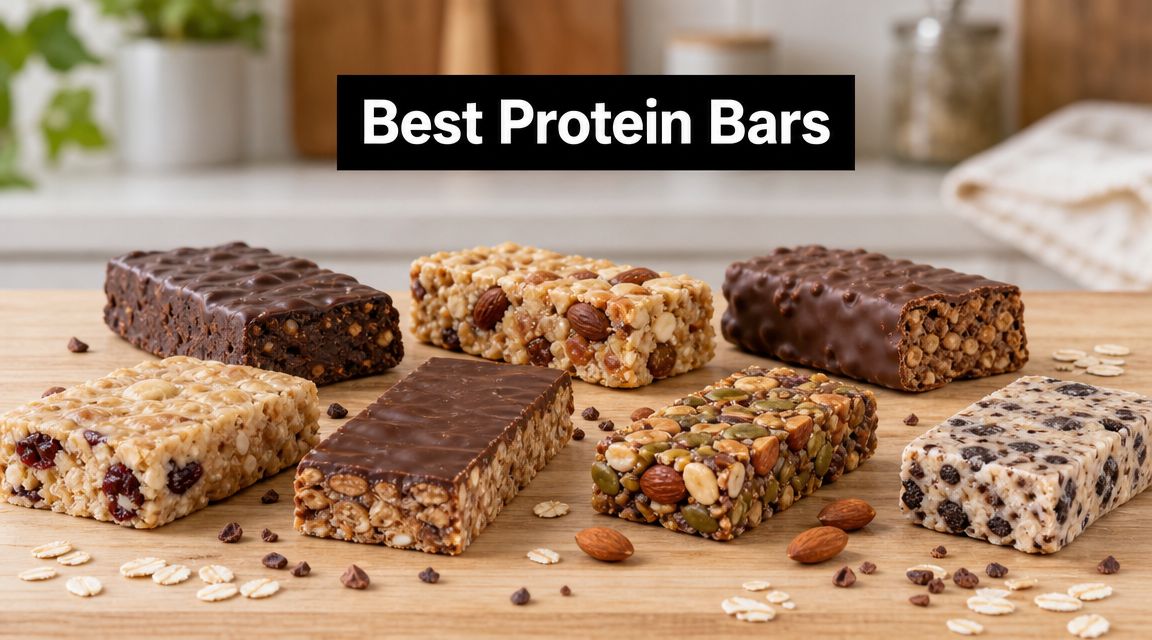
The best protein bars are the ones matched to your actual use case: macro-friendly bars for high protein and low sugar, whole-food bars for simpler ingredients, and plant-based bars for dairy-free eating. If you want a snack, aim for roughly 180 to 250 calories according to this snack-versus-meal-replacement guide; if you want a meal replacement, look at more filling bars instead of treating every bar as interchangeable.
You're probably standing in front of a shelf, or scrolling a product page, looking at bars that all promise more protein, better ingredients, and better taste. The problem is that “best protein bars” is too broad to be useful unless you separate gym bars from clean-label bars, vegan bars from whey bars, and snack bars from dessert-style bars.
That distinction matters because many bars don't clear basic nutrition benchmarks. A large independent review of 50 popular protein bars sold through major U.S. retailers found that only 66% met the standard for “high protein,” while 48% were high in fiber and 28% were low in total sugar. Convenience has improved, but selection still matters.
The market keeps expanding, too. The global protein bar market was estimated at USD 15.80 billion in 2025, with online distribution projected to grow at a 6.1% CAGR through 2033. That's part of why there are so many niche options now, from dessert-like bars to gut-friendlier plant-based picks. If you want a broader wellness shopping reference beyond bars, this MedEq Fitness buyer's guide is a useful companion.
1. Is Quest Nutrition still the best protein bar for strict macro tracking?

Quest Nutrition protein bars are still one of the easiest recommendations for people who care most about protein density and sugar control. If your priority is hitting protein without turning a snack into a dessert bomb, Quest remains near the top of the list.
The appeal is straightforward. Most bars in the line are built around a high-protein, low-sugar profile, and the brand has nationwide availability that makes repeat buying easy. That sounds boring, but consistency matters when you want a bar you can keep in a desk drawer, gym bag, or car without overthinking the label every time.
What works well with Quest
Quest fits best for fat-loss phases, high-protein meal plans, and anyone who wants a predictable backup snack.
- Best use case: Cutting phases, macro tracking, high-protein snacking
- Why people keep buying it: Broad flavor range, easy retail access, familiar nutrition profile
- Where it falls short: Sugar alcohols and texture are the sticking points
If your daily eating already revolves around fixed protein targets, Quest is the kind of bar that slots in cleanly beside a high-protein meal plan instead of forcing you to reshuffle the rest of the day.
Practical rule: Choose Quest when you care more about macros than ingredient minimalism.
The trade-off is digestive comfort and taste preference. These bars often lean chewy, dense, and sweetened in a way some people tolerate well and others don't. If you know sugar alcohols bother your stomach, Quest is rarely the safest blind buy.
I also wouldn't call Quest the best option for people who want a bar that feels like real food. It's a performance-style packaged snack. For many lifters, that's exactly the point.
2. Which protein bar makes the most sense after lifting?
CLIF Builders 20 g Protein Bars are one of the easiest picks for post-workout use. They feel more substantial than diet-leaning bars, and the line is built around a clear protein target that suits people who want something filling after training.
This is the bar I'd point to for someone who says, “I don't want a tiny, clinical-tasting bar after the gym. I want something that feels satisfying.” Builders leans into that. The texture is closer to a candy bar than a minimalist health snack, which is a plus for some people and too sweet for others.
Where CLIF Builders fits best
The strength of Builders is that it doesn't pretend to be a tiny snack bar. It's gym-focused and more satisfying than bars designed mainly around calorie control.
- Best use case: Post-lift recovery, long workdays after training, bigger snack needs
- Why it stands out: A clear 20 g protein target and broad retail availability
- Main drawback: It can feel too large or too sweet if you only wanted a light snack
For active people, that fuller feel is useful. A nutrition-focused ranking of leading bars in 2025 included names like Barebells, David Bar, Quest, ONE Bar, and Pure Protein, and noted profiles such as 250 calories and 13 g protein for Power Crunch, reflecting how bars are judged on taste, macros, ingredients, and value together. Builders plays well in that real-world middle ground where taste matters almost as much as protein.
After a hard session, a bar you'll actually eat beats a “perfect” bar you leave in your bag.
The downside is obvious. If you're trying to keep snacks small, Builders can overshoot the moment. This is one of the best protein bars for recovery convenience, not for light grazing.
3. What if you want the best-tasting protein bar, not just the cleanest macros?

Barebells protein bars are the dessert pick. If your biggest issue with protein bars is that too many of them taste chalky, medicinal, or aggressively “functional,” Barebells is one of the better exits from that problem.
These bars are built to feel indulgent. The Original and Soft lines usually do a better job than most rivals at giving you a layered, candy-like experience instead of a compressed block of protein paste. That's why Barebells often wins with people who don't normally like protein bars.
Who should buy Barebells
Taste-first buyers usually do better with Barebells than with stricter macro bars.
- Best use case: Sweet craving control, dessert replacement, higher adherence
- Why it works: Strong texture, polished flavors, clear nutrition labeling
- What to watch: Maltitol and similar sweeteners can be rough on some stomachs
That trade-off matters more than many rankings admit. One of the more useful discussions in this category is the shift toward gut tolerance and ingredient quality, especially as more buyers ask whether bars are easy to digest. An independent review examining gut-friendly protein bars highlights the importance of whole ingredients, lower added sugar, and sensitivity-aware choices such as nut-free, vegan, or dairy-free options.
Barebells is a strong taste play, but not automatically a gut-friendly one. If you're fine with sugar alcohols, it's one of the best protein bars for making compliance easier. If you're not, even a great flavor won't save it.
4. Which bar works best when you want low sugar and a candy-bar feel?

ONE Bar from ONE Brands sits in a useful lane between strict macro bars and dessert bars. It's for people who want low sugar, decent protein, and flavors that feel familiar enough to replace an actual treat.
That's where ONE does its best work. The brand leans into dessert-style flavors and branded tie-ins, so the buying experience feels less like shopping for a supplement and more like picking a snack you'll look forward to.
Why ONE Bar is a practical middle ground
ONE is especially handy for people who are trying to keep carbs and sugar in check without defaulting to the driest bars on the shelf.
- Best use case: Sweet tooth management, office snacks, lower-sugar dessert substitute
- Strength: Reliable protein range across flavors and broad retail access
- Limitation: Some flavors are very sweet, and the price can run higher than simpler bars
For someone managing intake closely, this can fit well into a high-protein, low-carb meal structure because it gives you the “treat” function without pushing you toward a pastry, candy bar, or vending-machine default.
The best low-sugar bar isn't always the leanest one. It's the one that actually stops the snack spiral.
I'd still be selective with flavors. With ONE, flavor quality is generally strong, but sweetness intensity varies enough that a variety pack makes more sense than committing to a full box of one flavor.
5. What's the best protein bar for clean eating and easier digestion?
ALOHA organic plant-based protein bars are one of the stronger options for people who care more about ingredient quality and gentler digestion than maximum protein per bar. They're organic, plant-based, soy-free, dairy-free, and avoid sugar alcohols.
That combination makes ALOHA appealing for a specific kind of buyer. This isn't the bar for chasing the most aggressive calorie-to-protein ratio. It's the bar for someone who reads the ingredient list first and protein grams second.
Why ALOHA stands out
ALOHA's edge isn't raw protein quantity. It's the cleaner, simpler formulation and broader compatibility with common dietary preferences.
- Best use case: Clean eating, dairy-free snacking, gentler digestion, vegan diets
- Big advantage: No sugar alcohols or stevia, which many sensitive eaters appreciate
- Main compromise: Lower protein than many whey-based gym bars
That trade-off is often worth it. If you've had bars leave you bloated or weirdly overfull, ALOHA tends to be a better place to start than highly sweetened alternatives. It also fits naturally inside a vegan meal plan where snack options can otherwise get repetitive.
I wouldn't use ALOHA as my first pick for a mass-gain phase or a heavy post-workout slot. I would use it for normal life. Work travel, afternoon hunger, and on-the-go eating where you want a bar that feels closer to a food product than a supplement product.
6. Are RXBARs still worth buying if you prefer real-food ingredients?

RXBAR still earns its place because it solves a different problem from most bars on this list. It's not trying to be the leanest macro bar. It's trying to be the most straightforward bar for people who want recognizable ingredients like dates, nuts, and egg whites.
That matters because many shoppers looking for the best protein bars aren't really asking for the highest protein. They're asking for the least processed option they'll still enjoy eating.
Where RXBAR wins and where it doesn't
RXBAR is best treated as a whole-food snack with added protein, not a high-protein performance bar.
- Best use case: Clean-label snacking, travel, ingredient transparency
- What it does well: Short ingredient lists, no artificial sweeteners in core bars, solid satiety
- Where it loses: Lower protein than gym-oriented bars and common allergens from eggs and nuts
The bar's satiety often comes from the full package rather than protein alone. Dates and nuts make it feel more food-like, and for many people that's exactly why it works. If your eating style leans toward minimally processed foods, RXBAR fits much more naturally than ultra-sweet isolate bars.
It also works well as part of a clean eating meal approach, especially when you want a packaged snack that doesn't feel detached from the rest of your diet.
This isn't the bar I'd choose when I need the strongest post-lift protein hit. It is the one I'd choose when I want fewer ingredients and fewer surprises.
7. Which vegan protein bar gets closest to whey-bar macros?

No Cow protein bars are the practical answer for plant-based eaters who don't want to settle for the usual “decent for vegan” compromise. The brand aims for a high-protein, low-sugar profile that's much closer to traditional whey-bar territory than many vegan rivals.
That makes No Cow useful for lactose-intolerant lifters, dairy-free eaters, and vegans who still want a more performance-oriented snack. In that niche, there aren't many bars that compete on the same terms.
Who should actually choose No Cow
No Cow is strongest when your first filter is dairy-free and your second is high protein.
- Best use case: Vegan macro tracking, dairy-free muscle support, low-sugar plant-based snacking
- Why it earns a spot: It delivers the kind of protein target many plant-based bars don't
- What turns some buyers off: Dense texture and sweetener tolerance
That's the central trade-off. No Cow solves the macro problem, but not always the sensory problem. The texture can feel dense, and if you're sensitive to sugar alcohols or certain sweeteners, the formula may not be comfortable.
Still, among vegan options, it's one of the best protein bars when the question is performance first. If the question is taste first or whole-food simplicity first, other picks on this list will be easier to live with.
Top 7 Protein Bars Comparison
| Item | 🔄 Implementation complexity | 💡 Resource requirements | 📊 Expected outcomes | ⚡ Ideal use cases | ⭐ Key advantages |
|---|---|---|---|---|---|
| Quest Nutrition – Protein Bars | Moderate, processed whey/milk isolates and sugar‑alcohol formulation | Uses whey/milk isolates, high fiber, erythritol; widely manufactured | High protein ( |
Macro tracking, weight management, post-workout on the go | Macro-friendly high protein and very low sugar; broad flavor/availability |
| CLIF Builders – 20 g Protein Bars | Moderate, standard bar production with plant/dairy blends and candy-bar finish | 20 g protein per bar (complete plant-based option), higher calories | Reliable 20 g protein; higher sweetness and calories than diet bars | Post-workout refuel, gym-goers wanting satisfying texture | Consistent 20 g protein and satisfying candy-bar texture; wide retail reach |
| Barebells – Original and Soft Protein Bars | Moderate, layered/textured formats with sugar‑alcohol sweeteners | 20 g protein per 55 g bar; uses maltitol/polydextrose in many flavors | Dessert-like taste, 20 g protein, "no added sugar" positioning (uses sugar alcohols) | Treat-like snack with protein, flavor-focused snacking | Frequently rated best-tasting with a candy-bar feel and clear labeling |
| ONE Brands – ONE Bar | Moderate, multiple co-branded flavors, low-sugar formulations | 18–20 g protein, low sugar (1–3 g), uses sweeteners; broad SKUs | Consistent protein, indulgent dessert flavors; variable sweetness | Low-sugar indulgence, casual snacking, retail impulse buys | Strong taste/texture reputation and frequent branded tie-ins |
| ALOHA – Organic, Plant-Based Protein Bars | Low–moderate, simpler ingredient list but plant-based processing | 14 g plant protein, certified organic, no sugar alcohols or stevia | Cleaner-label, gentler digestion, lower protein per bar (~14 g) | Vegan/organic shoppers, those with sensitive stomachs | Certified organic, fully plant-based and avoids sugar alcohols |
| RXBAR – "No B.S." Whole-Food Ingredient Bars | Low, minimal-ingredient, whole-food formulation | Dates, nuts, egg whites; ~10–12 g protein; common allergens present | Moderate satiety from fiber/fat, lower protein than gym bars | Clean-eating preference, whole-food snackers | Transparent short ingredient lists and simple whole-food composition |
| No Cow – Vegan, Dairy-Free Protein Bars | Moderate, plant protein blends with low-sugar sweeteners | Brown rice + pea protein ~20 g, very low sugar, uses erythritol/stevia | High plant-based protein (~20 g) with very low sugar; denser texture | Vegan athletes, lactose-intolerant users wanting whey-like macros | True high-protein vegan option with competitive macros |
How Do I Integrate Protein Bars Into a Balanced Diet?
Protein bars work best as support food. They help when meetings run long, travel wrecks your meal timing, or training leaves you needing something convenient before you can eat a full meal. They work less well when they replace too many whole-food meals.
That distinction matters even more now because demand has accelerated fast. A market-tracking dataset showed protein bars reached USD 5.80 billion in year-to-date non-adjusted sales in April 2026, up from USD 4.16 billion in the same period a year earlier. More bars on shelves doesn't automatically make selection easier. It just means there are more ways to buy the wrong format for your goal.
A practical approach is to match the bar to the moment:
- Use macro bars like Quest or No Cow when protein target and sugar control matter most.
- Use workout bars like CLIF Builders when you need a more satisfying post-training option.
- Use dessert-style bars like Barebells or ONE when the competitor is candy, not chicken breast.
- Use cleaner-label bars like ALOHA or RXBAR when ingredient simplicity and digestion matter more than top-end protein.
Whole foods should still do the heavy lifting. Meals built around protein, produce, fiber-rich carbs, and healthy fats are more filling and nutritionally complete than a stack of bars. A protein bar is a bridge, not a foundation.
Busy people usually struggle less with nutrition knowledge than with planning friction. That's where a system helps. If you want your snacks to fit your calories and macros without constant mental math, the AI Meal Planner onboarding flow can help organize meals and snacks around your goals. If you also like functional convenience foods, this guide to protein coffee for Keurig is another practical read for busy mornings.
The best protein bar is the one that solves a real problem in your day. Pick for purpose first. Brand second.
FAQ
Are protein bars good for weight loss?
They can be, if they help you control hunger and stay within your overall intake. Bars with a stronger protein profile usually work better than bars that mainly imitate candy.
Is a protein bar a snack or a meal replacement?
Usually a snack. Bars around the snack range are better for between-meal use, while larger, more filling bars fit occasional meal-replacement situations better.
Which protein bar is best for muscle gain?
CLIF Builders, Quest, and No Cow are strong picks when protein delivery is the main goal. The better choice depends on whether you want whey-based, vegan, or lower-sugar options.
What's the best-tasting protein bar on this list?
Barebells is the easiest pick for dessert-like taste and texture. ONE is also strong if you want sweeter, candy-inspired flavors.
Which protein bar has the cleanest ingredient list?
RXBAR and ALOHA are the clearest choices for simpler ingredient profiles. RXBAR leans whole-food, while ALOHA leans plant-based and digestion-friendly.
Are vegan protein bars as good as whey bars?
They can be useful, but they often make different trade-offs in texture and ingredients. No Cow is one of the better vegan options if you want a more macro-driven profile.
If you want protein bars to fit into your week without guessing the rest of your meals, AI Meal Planner can build a personalized plan around your goals, dietary preferences, and snack choices.
AI-powered nutrition
Get Your Personalized Meal Plan
AI creates the perfect meals for your goals, lifestyle, and taste.
Start Your Journej