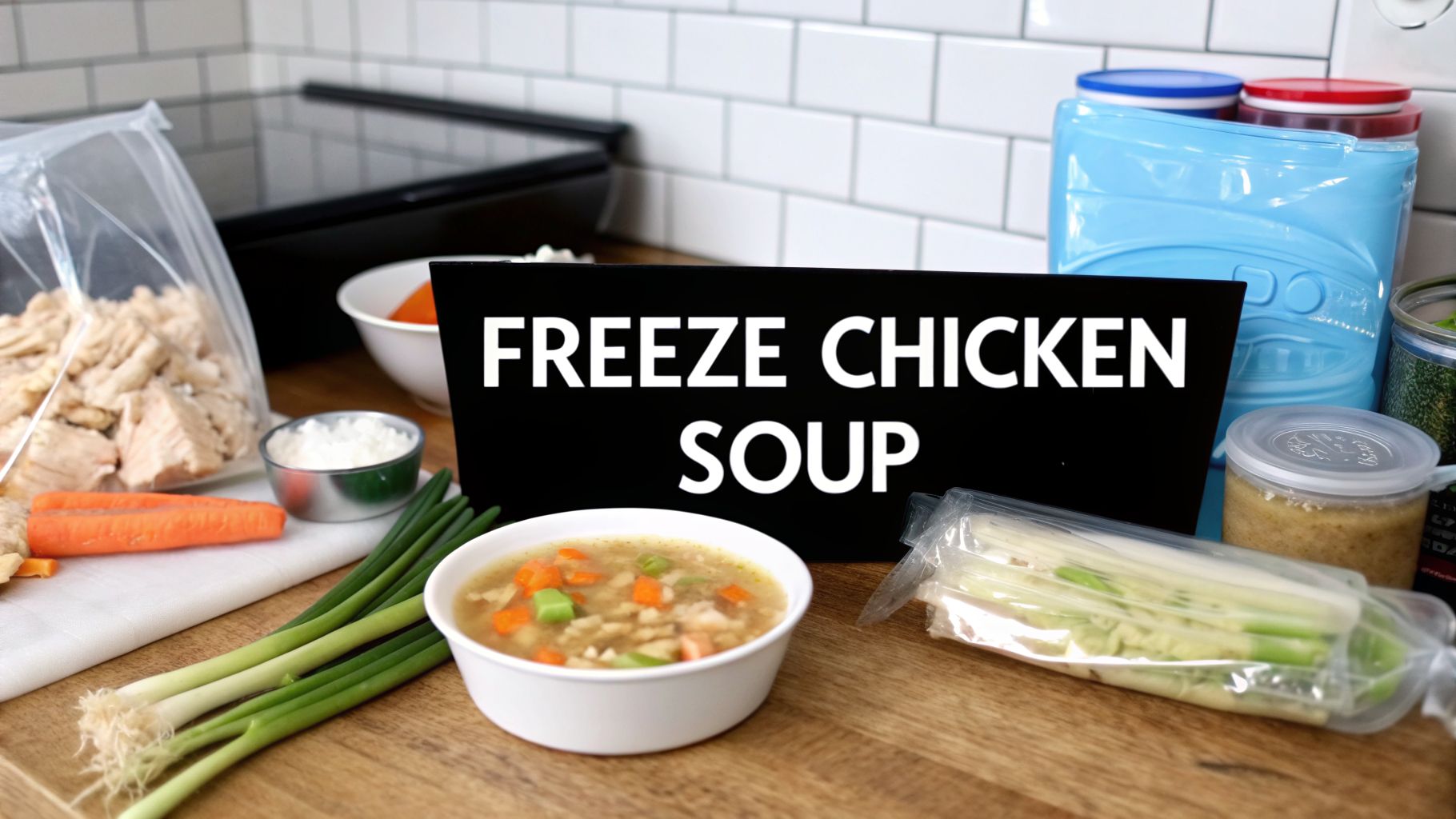
Yes, you can freeze homemade chicken noodle soup, but for the best results, you must freeze it without the noodles. The soup base—broth, chicken, and vegetables—freezes perfectly for up to 6 months. Cook and add fresh noodles when you reheat the soup to prevent them from becoming mushy.
Freezing chicken noodle soup is a fantastic way to have a comforting, home-cooked meal ready to go. By separating the soup base from the pasta, you preserve the ideal texture and flavor of both components. When frozen and thawed, cooked noodles absorb too much liquid, break down, and turn into a starchy, unpleasant mush. Freezing the base alone ensures your future meal tastes just as fresh and delicious as the day it was made.

Why is freezing soup a good meal prep strategy?
Having a home-cooked meal waiting for you on a frantic weeknight is the magic of freezing soup. It's a foundational kitchen strategy for anyone trying to eat healthier, save money, and cut down on food waste. This technique is one of the single best strategies for anyone serious about meal planning.
Many of our AI Meal Planner users rely on it to keep healthy options within arm's reach. Once you understand the benefits, it becomes clear why learning to master the art of meal prep is so transformative, and freezing soup is a huge part of that.
Beyond pure convenience, freezing does an incredible job of locking in the soup's rich flavor and nutrients. This ensures that the meal you eat weeks from now is just as delicious and nourishing as it was the day you made it. You're essentially turning one cooking session into multiple effortless meals for your future self.
How should I prepare chicken noodle soup for freezing?
Success with frozen chicken noodle soup all comes down to proper preparation. The single most important rule is to leave the noodles out. Cooked noodles are the enemy of frozen soup because they soak up broth, bloat into a starchy paste, and fall apart when reheated. Your goal is to create a rich soup base—just the broth, chicken, and veggies—that will freeze perfectly.
Why is cooling the soup before freezing important?
You must let your soup base cool down completely before it goes into the freezer. Putting hot soup into a cold environment is a food safety risk and damages the soup's texture. A large, hot container can raise the temperature inside your freezer, potentially warming other foods and creating a breeding ground for bacteria as the soup slowly passes through the "danger zone" between 40°F and 140°F.
Fast temperature changes also create large ice crystals that shred the cell walls of your vegetables and chicken, leading to freezer burn and a watery texture. Let the soup cool on the counter for about an hour, then move it to the fridge to chill completely.
Pro Tip: Slightly under-season your soup before you freeze it. The freezing process can concentrate flavors, especially salt. You can always taste and adjust the seasoning to perfection when you reheat it.
How should I portion and season the soup?
For anyone tracking macros or planning meals, freezing perfectly portioned soup is a strategic move. When portioning, always leave at least one inch of headspace at the top of your container, as soup expands when it freezes. Skipping the cool-down step can lead to a 50% increase in bacterial growth risk, so ensure it's fully chilled. Always label your containers with the contents and date.
Food tests show noodles can soak up 20-30% more broth after being frozen and thawed, which is why we leave them out to avoid a mushy texture. Adjusting your seasoning is also a smart strategy, especially if you're watching your sodium intake. By holding back on some salt upfront, you have complete control over the final flavor. If you're looking for ways to build incredible flavor without excess salt, our guide on creating a delicious low-sodium meal plan is a great place to start.
What are the best containers for freezing soup?
Choosing the right container is crucial for locking in flavor and preventing freezer burn. The best choice depends on your freezer space, budget, and how you plan to thaw and serve the soup later.
How do different container types compare?
There's no single "best" container. This comparison can help you decide what works for your kitchen.
| Container Type | Best For | Pros | Cons |
|---|---|---|---|
| Freezer-Safe Bags | Maximum space-saving. | Inexpensive; can be frozen flat and stacked, saving tons of freezer space. | Can be prone to leaks; not reusable; harder to fill without a mess. |
| Glass Containers | Durability and reheating. | Eco-friendly and reusable; can often go from freezer to microwave (once thawed). | Bulky; risk of thermal shock (cracking); heavy and can break if dropped. |
| Silicone Molds | Perfect portion control. | Creates uniform, single-serving blocks; molds are reusable and the frozen blocks are easy to store. | Higher initial cost; you need to transfer the frozen blocks to another container for long-term storage. |
What is the most efficient way to store frozen soup?
My favorite method involves silicone molds (like Souper Cubes). They allow you to freeze perfect 1-cup or 2-cup portions. Once solid, you can pop the frozen soup "bricks" out and transfer them to a larger freezer bag. This frees up the mold and creates a tidy, organized stash of single servings.
No matter what container you choose, the most critical rule is to leave about one inch of headspace at the top. Soup expands when it freezes, and this gap prevents containers from cracking.
To keep things simple, this visual breaks down the essential steps to take before your soup even gets near a container.

As the infographic shows, the process is straightforward: cook the soup, cool it completely, and keep the noodles out until you’re ready to eat.
How can I prevent freezer burn?
Once your soup is cooled and portioned, the final step is to create an airtight seal. This is your best defense against freezer burn, which happens when air dries out food, ruining its texture and flavor. For the best protection, use a quality container like an airtight food storage container with a bamboo lid.
Finally, label everything. Use masking tape and a marker to note the contents ("Chicken Noodle Soup") and the date. This prevents "mystery meals" and ensures you use the oldest batches first.
What is the best way to thaw and reheat frozen soup?

You’ve already done the hard work. Now it's time to enjoy your meal. The best and safest way to thaw soup is to plan ahead. Move the sealed container from the freezer to the fridge and let it thaw overnight, which usually takes 8 to 12 hours. This slow thaw keeps the soup out of the temperature "danger zone" and preserves its flavor and texture.
How can I thaw soup quickly?
If you forget to thaw the soup overnight, you still have options. The best quick-thaw method is a cold water bath. Submerge your sealed, leak-proof container in a large bowl of cold tap water, changing the water every 30 minutes. A single-serving portion will thaw in about 1 to 2 hours.
The defrost setting on your microwave is the fastest route.
- Transfer the soup to a microwave-safe bowl.
- Use the defrost function in short bursts, stirring between each interval to ensure it thaws evenly.
How do I reheat the soup for the best result?
Once the soup base is thawed, it's time to bring it back to its original glory and add the noodles. Pour the thawed soup base into a pot on the stovetop over medium-low heat. Gentle reheating prevents the chicken from getting tough and allows the flavors to meld. Bring it to a gentle simmer, ensuring it reaches an internal temperature of at least 165°F for safety.
While the soup base is heating, cook a fresh batch of noodles in a separate pot of salted water. Never add uncooked noodles directly to your thawing soup, as they will soak up too much broth and release starch, creating a gummy mess.
In the world of sustainable weight loss, where the AI Meal Planner shines, freezing homemade soup is a powerful strategy. However, you should always avoid refreezing, as this can degrade quality. Just before serving, place freshly cooked noodles into individual bowls and ladle the hot soup over the top. Finish with a squeeze of fresh lemon juice or a sprinkle of chopped parsley. If you're looking for more ways to pack your meals with protein, check out our guide on creating a delicious high-protein meal plan.
Can I freeze other types of soup?
Yes. The basic rules for freezing chicken noodle soup apply to a world of other soups. The key is knowing how certain ingredients hold up in the freezer. Broth-based soups like lentil, minestrone, black bean, or simple vegetable soup all freeze beautifully with almost no change in texture.
What about freezing creamy or potato-based soups?
You need to be more strategic with dairy-based or potato soups, but it's completely doable. The fat in milk, cream, or yogurt can separate when frozen, resulting in a grainy texture upon reheating.
The trick is to freeze the soup base before adding the dairy. Cook your soup up to that final step, cool and freeze it, then stir in fresh cream or milk when you reheat it.
Potatoes can also become mealy or grainy after freezing due to their high water content.
If a soup needs potatoes, use waxy varieties like Yukon Gold or red potatoes. They have a lower starch content and hold their creamy texture much better after thawing than starchy potatoes like Russets.
This adaptable method opens up many meal prep possibilities. You can even find new inspiration for other freezer-friendly meals, like those in our guide for building a balanced gluten-free meal plan. If you want to take the guesswork out of planning, an AI Meal Planner can generate freezer-friendly soup recipes tailored to your dietary needs.
FAQ: Freezing Homemade Chicken Noodle Soup
How long does frozen soup last in the freezer? When stored in an airtight container, homemade chicken noodle soup base stays at its best quality for 3 to 6 months.
Can I freeze chicken soup with the vegetables in it? Yes, hearty vegetables like carrots, celery, and onions freeze very well and maintain their texture and flavor.
Can I refreeze thawed chicken soup? It is not recommended to refreeze thawed soup, as it significantly degrades the texture and flavor and increases food safety risks.
What's the fastest way to thaw frozen soup? The fastest safe method is a cold water bath; submerge the sealed container in cold water, changing the water every 30 minutes.
Why do noodles get mushy when frozen in soup? Noodles absorb excess broth and their structure is damaged by ice crystals during freezing, causing them to fall apart when reheated.
Should I use glass or plastic containers to freeze soup? Both work well, but freezer-safe plastic bags save the most space, while glass containers are durable and reusable but can break.
Can I freeze creamy soups? Yes, but you should freeze the soup base before adding dairy like cream or milk, which you can stir in during reheating.
Ready to make meal prep effortless and delicious? AI Meal Planner creates personalized weekly meal plans, smart grocery lists, and freezer-friendly recipes tailored to your goals. Start planning with AI today.
AI-powered nutrition
Get Your Personalized Meal Plan
AI creates the perfect meals for your goals, lifestyle, and taste.
Start Your Journej