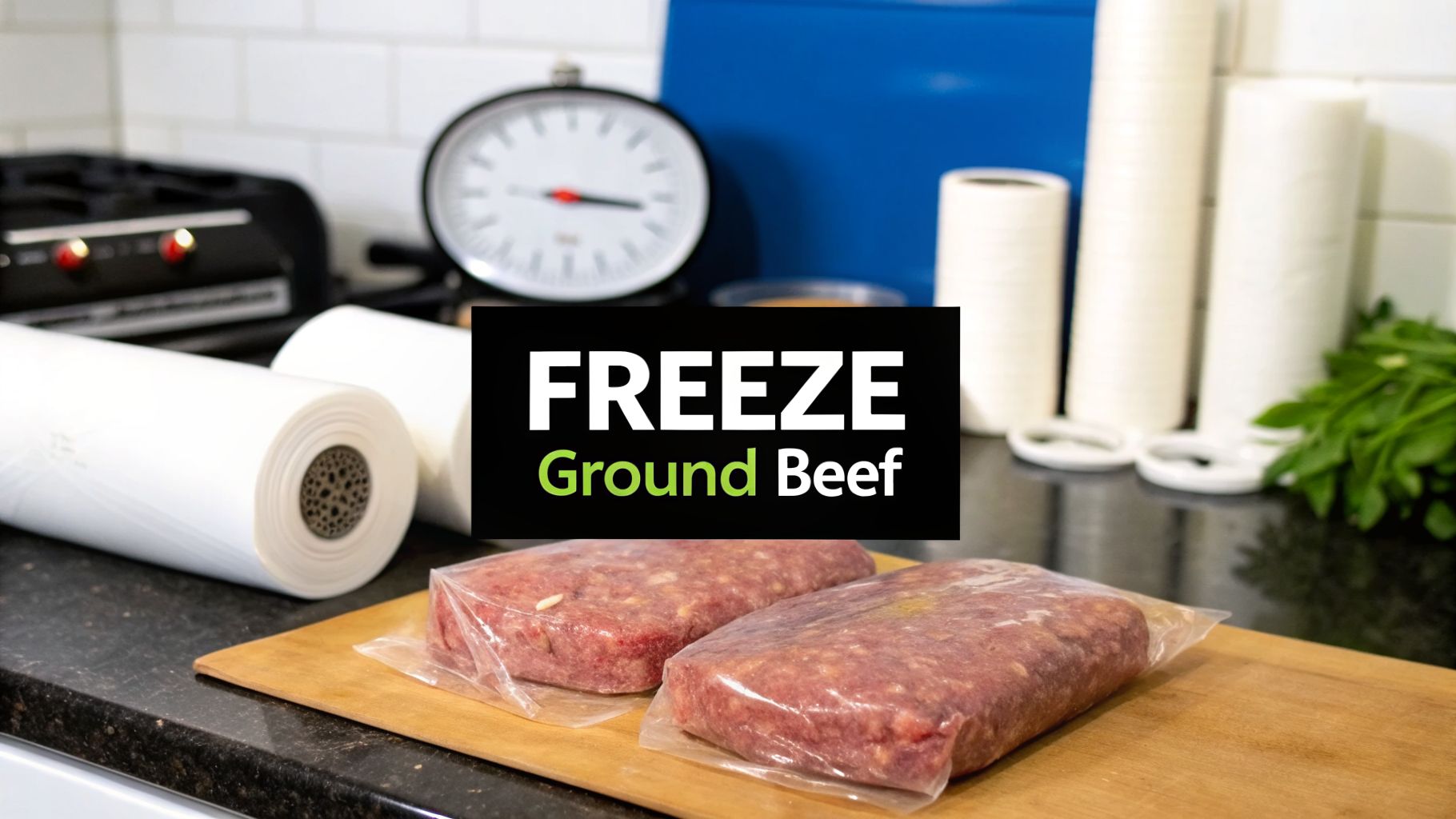
Yes, you can freeze ground beef. For best quality, use raw ground beef within 4 months and cooked ground beef within 2–3 months of freezing. Always freeze it in airtight packaging at 0°F (-18°C) to prevent freezer burn and maintain texture.
Stocking up on ground beef when it's on sale is a savvy move, but it only pays off if you can preserve its quality. Properly freezing ground beef is about more than just avoiding spoilage; it's about smart meal planning and cutting down on food waste. Think of it as setting your future self up for success. When you have a perfectly portioned, ready-to-go ingredient, you’re just minutes away from tacos, bolognese, or a quick skillet meal.
This guide will show you exactly how to do it. While freezing is simple, a few details make all the difference between a great result and a freezer-burned one. Mastering this skill will genuinely change your cooking routine. For more ideas on how to build this into a seamless system, see how our AI Meal Planner can help.
Why is Freezing Ground Beef a Smart Kitchen Habit?
Think about that moment of panic when you realize you have nothing planned for dinner. Or the guilt of finding a forgotten package of ground beef that’s gone past its prime. Making a habit of freezing ground beef isn't just about preserving meat—it’s a game-changer for your budget, your schedule, and your peace of mind.
For savvy home cooks, a well-stocked freezer is the secret weapon against expensive, last-minute takeout. Having pre-portioned ground beef ready to go means you’re always just a few minutes away from a hearty, protein-packed meal, whether it’s for tacos, spaghetti, or burgers.
How Does Freezing Save Money and Reduce Food Waste?
Freezing is one of the simplest and most effective ways to slash your grocery bill and combat food waste. When that family-pack of ground beef goes on sale, you can stock up without worrying about it spoiling. The same goes for those "buy one, get one" deals that are too good to pass up.
This isn't just a hypothetical win; it has a real impact. Households that make a habit of freezing excess ground beef report 15-20% less meat waste each year. For a family of four, that can easily translate into savings of around $150 annually just on protein. For a deeper look at the economics, you can explore detailed market insights on Fortune Business Insights.
How Can Freezing Help with Meal Prep and Nutrition?
If you're focused on fitness goals or just trying to eat better, a stocked freezer is your best friend. Frozen ground beef retains about 95% of its nutritional value, including its high protein content, making it perfect for structured meal prepping. You can plan your weekly meals with confidence, knowing a key ingredient is always on hand.
This approach is a cornerstone of efficient meal planning. It helps you consistently hit your nutritional targets without needing daily trips to the store, turning what could be a chore into a streamlined process.
This is where smart planning really pays off. Tools like an AI Meal Planner can optimize your grocery list, suggesting you buy ground beef in bulk when it's on sale and then prompting you to freeze it in recipe-ready portions. This automated strategy can cut grocery costs by an additional 10-15%.
Beyond the budget, freezing is also a critical step for food safety. The process is a key part of preventing foodborne illness at home because it halts bacterial growth in its tracks. By quickly freezing fresh meat, you keep your food safer for much longer, completely transforming how you plan, prepare, and enjoy your meals.
How Should You Prep and Package Ground Beef for Freezing?
The secret to amazing frozen ground beef isn't just tossing it in the freezer. It's all in the prep. How you prepare and package your ground beef before it freezes makes all the difference in its flavor, texture, and how easy it is to use later.
A few minutes of work upfront saves you from a frustrating, freezer-burned block of meat down the road. We'll walk through the best ways to handle both raw and cooked beef to get perfect results every single time.
Preparing Raw Ground Beef
Whatever you do, don't just throw the store package into your freezer. That flimsy styrofoam tray wrapped in plastic is your enemy—it’s not airtight and is a fast track to freezer burn.
The real trick is to portion and flatten. I always divide my bulk ground beef purchases into one-pound portions, which is perfect for most of our family’s recipes. Creating these flat packages gives you a few major wins:
- It Saves a Ton of Space. Thin, flat squares of beef stack like files in a cabinet, taking up way less freezer real estate.
- It Freezes Faster. A thinner layer freezes more quickly, which prevents large, texture-ruining ice crystals from forming.
- It Thaws Incredibly Fast. This is the biggest game-changer. A flat package can thaw in the fridge in just a few hours, a huge improvement over the day-plus it takes for a solid brick of meat.
My Go-To Method: I use a kitchen scale to measure out perfect one-pound portions. I pop one into a zip-top freezer bag, press out as much air as I can, and then use a rolling pin to flatten the meat into a thin, even square before I seal it completely.
Handling Cooked Ground Beef
Freezing cooked ground beef is one of my favorite meal prep shortcuts. It’s perfect for future taco nights or spaghetti sauce. The golden rule here is to let it cool completely before you package it.
Putting hot or even warm beef into the freezer is a recipe for disaster. It creates steam, which condenses and turns into a layer of ice crystals all over the meat. That extra moisture will make it mushy and unappetizing when you reheat it.
I just spread the cooked and crumbled beef on a baking sheet to let it cool down fast. Once it hits room temperature, I pack it into freezer-safe bags or containers. Don’t forget to label it with the date and what it is—"Taco Meat" or "Plain Cooked Beef"—so you know exactly what you’re grabbing. If you're looking for new ways to use that prepped beef, our guide for a high-protein meal plan has some fantastic ideas.

This simple act of freezing beef is a cornerstone of a smart kitchen, helping you save money, reduce waste, and streamline meal prep. Think of it as a cycle: you stock up on sales, prep ahead, and always have a quick meal starter on hand, making your kitchen more efficient and your budget happier.
What is the Best Packaging to Use?
Your packaging is the final defense against freezer burn. But before you even start bagging, double-check your freezer’s temperature. The ideal freezer temperature for food storage is a constant 0°F (-18°C). A stable, cold environment is non-negotiable for keeping food fresh.
Now, let's talk about what to wrap it in. Not all methods are created equal, and the right choice depends on how long you plan to store the beef.
Packaging Method Comparison for Freezing Ground Beef
Here’s a quick rundown of how common packaging methods stack up against each other.
| Packaging Method | Air Removal | Freezer Burn Protection | Best For |
|---|---|---|---|
| Zip-Top Freezer Bag | Good (Manual press or water displacement) | Good to Excellent | Portioned raw or cooked ground beef for short to medium-term storage. |
| Vacuum Sealer Bag | Excellent (Mechanical) | Excellent | Long-term storage (4+ months), bulk purchases, and ensuring the best quality. |
| Plastic Wrap + Foil | Fair to Good | Good | Short-term storage only. Requires careful, tight double-wrapping. |
| Original Store Packaging | Poor | Poor to Fair | Not recommended for storage longer than 1-2 weeks due to its permeability to air. |
While a vacuum sealer is the absolute gold standard for long-term storage, high-quality freezer bags are my everyday choice and work beautifully for meat you plan to use within a few months. The key is always to remove as much air as possible before sealing.
What Are the Safest Ways to Thaw Frozen Ground Beef?

Getting that frozen block ready for dinner is where food safety really comes into play, and improper thawing can quickly turn a great meal into a risky one. The moment meat hits the temperature window between 40°F and 140°F (4°C and 60°C)—what food safety experts call the "danger zone"—unwanted bacteria can start to multiply. Fast. Your goal is to move the beef through this zone as quickly and safely as possible.
Thankfully, there are three foolproof, USDA-approved methods for doing just that. Each one is a winner, depending on how much time you have on your hands.
The Refrigerator Thawing Method
Thawing in the refrigerator is, without a doubt, the gold standard. It's the safest and most reliable method because the meat never gets warm enough to enter the danger zone. This slow-and-steady approach is your best friend for preventing bacterial growth.
It's simple: just move your ground beef from the freezer to the fridge. The key is to place the package on a plate or inside a shallow dish to catch any condensation or potential leaks. This little step is crucial for preventing cross-contamination in your refrigerator.
How long it takes completely depends on how you froze it:
- A one-pound package you flattened out might be ready in as little as 12 hours.
- A thick, brick-shaped block of the same weight will likely need a full 24 hours, sometimes even longer.
The biggest advantage here is flexibility. Once the beef is thawed, it stays perfectly good in the fridge for another 1 to 2 days, giving you plenty of wiggle room with your meal prep schedule.
The Cold Water Thawing Method
Need that ground beef thawed today, not tomorrow? The cold water bath is your go-to method for a much faster, yet still perfectly safe, thaw. It just requires a bit more hands-on attention.
First, make sure your beef is in a leak-proof package. A sturdy zip-top bag or a vacuum-sealed pouch is perfect. Submerge the sealed package in a large bowl of cold tap water and change the water every 30 minutes. Using this technique, a one-pound package of ground beef is usually thawed in about an hour.
A key difference with this method is that you must cook the ground beef immediately after it's thawed. Because the meat's temperature has been raised, bacteria can become active more quickly, so it's not safe to put it back in the fridge for later.
The Microwave Thawing Method
When you're in a real pinch and dinner needs to happen now, the microwave can save the day. But be warned: this is the trickiest method and can easily start to cook the edges of your meat.
To do it right, unwrap the ground beef and place it in a microwave-safe dish. Use your microwave’s dedicated "defrost" setting, entering the meat's weight. As it thaws, you'll want to pause every few minutes to rotate the dish and break apart the ground beef. You absolutely must cook the meat immediately after it’s defrosted.
Properly frozen ground beef retains its quality and nutritional profile exceptionally well. Data shows that when frozen correctly in airtight packaging, it experiences minimal drip loss (under 5%) and loses only 2-3% of its nutrients over three months. Discover more insights about the ground beef market on htfmarketinsights.com.
Can You Cook Ground Beef Directly from Frozen?
Yes, you can absolutely cook ground beef straight from frozen. It's a completely safe and surprisingly effective method for those nights when thawing just didn't happen. The key is knowing how to handle it and, most importantly, adjusting your cook time.
As a rule of thumb, cooking from frozen will take about 50% longer than cooking fresh or thawed ground beef. Just plan for that extra time, and you can salvage dinner without any last-minute stress.
What is the Best Way to Cook a Frozen Block of Beef?
When you’re starting with a solid block of frozen beef, the game plan is to sear the outside while gently steaming the inside to help it break apart. Get a large skillet hot over medium-high heat with a little oil. Place the frozen block directly in the pan and sear for about four minutes per side.
Once both sides are seared, pour about a half-cup of water or beef broth into the pan and immediately cover it with a tight-fitting lid. This traps the steam, which works quickly to thaw the beef from the outside in. Let it steam for a few minutes.
The real work starts once the edges soften. Grab a sturdy spatula or a wooden spoon and begin scraping away the cooked, outer layers of the beef. As you scrape off the browned bits, you'll expose more of the frozen center to the direct heat of the pan, which speeds up the whole process.
Keep scraping and breaking up the meat every few minutes. As it separates into smaller chunks, you can start crumbling it like you normally would. This gradual approach is the secret to ensuring the meat cooks evenly.
How Do You Ensure It Is Cooked Safely?
Cooking from frozen makes it easy to end up with undercooked cold spots hiding in the middle of your batch. This is exactly why a meat thermometer isn't just a suggestion—it's essential for safety.
Once all the meat is crumbled and appears fully browned, it's time to verify. Use an instant-read thermometer to check the temperature in several different spots throughout the pan. The ground beef must reach a safe internal temperature of 160°F (71°C) to ensure any harmful bacteria have been destroyed.
For some delicious ideas on how to use your perfectly cooked beef, check out our guide on building a custom keto meal plan.
How Can You Tell if Frozen Ground Beef Has Gone Bad?

While the freezer is great at preserving meat, the real test of quality happens after it’s thawed. Your senses are your most reliable tools here. One common sight on frozen meat is freezer burn—those dry, grayish-brown patches. Don’t worry. Freezer burn might make the meat tough and less flavorful, but it isn't a sign of spoilage. You can simply trim off those spots and cook the rest.
A post-pandemic demand increase of 18% for items like frozen beef patties shows just how much we rely on our freezers. You can discover more insights about frozen meat market growth from Future Market Insights. Thankfully, when you portion your ground beef flat before freezing, it thaws to about 99% of its original texture, which makes spotting true spoilage much easier.
How to Identify Spoilage After Thawing
Once your ground beef has fully thawed, it’s time for a quick sensory inspection. This is where you’ll get a clear answer on whether it’s safe to cook.
First, trust your eyes. Fresh, wholesome ground beef should have a vibrant, reddish color. If the meat has turned a dull brown or gray all the way through—not just on the surface from oxygen exposure—it's a strong indicator that spoilage has begun.
The most reliable rule of thumb for food safety is simple: when in doubt, throw it out. Risking foodborne illness is never worth trying to salvage questionable meat.
Next, give the meat a good sniff. Fresh beef has a mild, almost neutral scent. If you detect any sour, rancid, or faintly sweet and unpleasant odor, it has gone bad. Discard it immediately.
How to Check the Texture of Thawed Ground Beef
Finally, pay attention to how the meat feels. Fresh raw ground beef should feel firm to the touch and break apart cleanly when you handle it.
If the texture has become slimy, sticky, or tacky, that’s a clear sign of bacterial overgrowth. At this point, the meat is unsafe to eat and should not be cooked. By remembering these three simple checks—color, smell, and texture—you can confidently and safely decide if your thawed ground beef is ready for dinner.
Frequently Asked Questions About Freezing Ground Beef
Here are answers to some of the most common questions about freezing ground beef so you can feel completely confident in your meal prep.
How long can you safely freeze ground beef?
You can safely freeze raw ground beef for 3–4 months and cooked ground beef for 2–3 months without significant quality loss. While it remains safe to eat longer if kept at 0°F (-18°C), its texture and flavor may decline.
Can you refreeze thawed ground beef?
Yes, you can refreeze ground beef, but only if it was thawed in the refrigerator. Never refreeze beef that was thawed in cold water or a microwave, as this increases the risk of bacterial growth.
Is it better to freeze ground beef raw or cooked?
This depends on your meal prep goals. Freezing it raw offers more recipe flexibility for later, while freezing it cooked provides a convenient shortcut for quick meals like tacos or pasta sauce.
Does freezing ground beef kill harmful bacteria?
No, freezing does not kill bacteria like E. coli or Salmonella; it only makes them dormant. You must cook ground beef to an internal temperature of 160°F (71°C) to ensure it is safe to eat.
Can you freeze vegan ground beef?
Yes, most vegan ground beef can be frozen, especially products made from textured vegetable protein (TVP) or lentils. Plant-based grounds with a high tofu content may become chewier after thawing.
What's the best way to portion ground beef for freezing?
Portion the beef into one-pound amounts, place in freezer bags, and flatten into thin squares before sealing. This method saves significant freezer space and drastically reduces thawing time.
Is it safe to cook ground beef from frozen?
Yes, it is safe to cook ground beef directly from frozen, but it will take about 50% longer than cooking it thawed. Use an instant-read thermometer to confirm the meat reaches a safe internal temperature of 160°F (71°C) throughout. For anyone following a specialized eating plan like the carnivore diet, having perfectly portioned ground beef on hand is essential for easy meal planning. You can see exactly how to build this into a structured routine with our guide on the carnivore meal plan.
AI-powered nutrition
Get Your Personalized Meal Plan
AI creates the perfect meals for your goals, lifestyle, and taste.
Start Your Journej