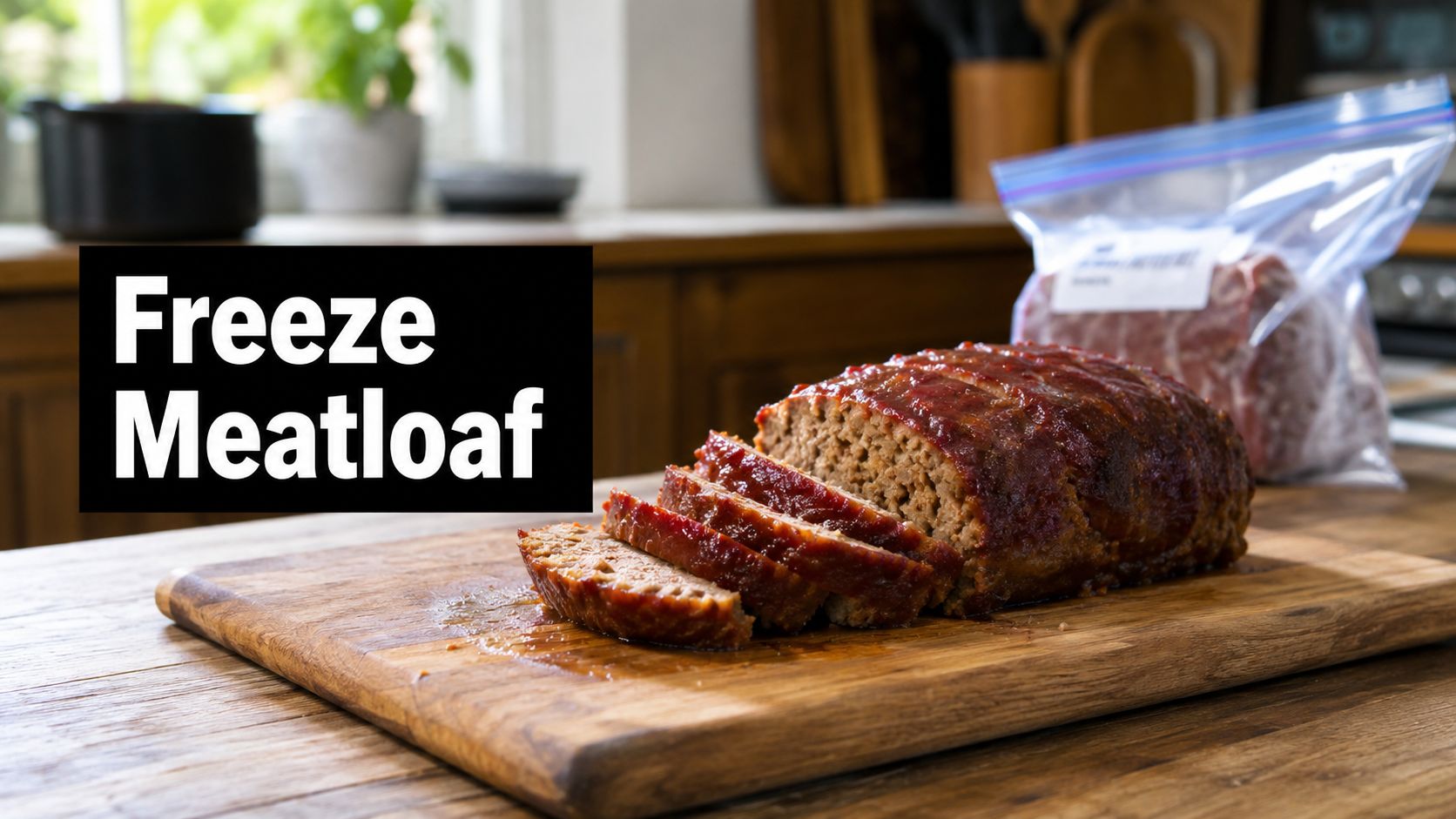
Yes, you can freeze both cooked and uncooked meatloaf. For the best quality, use cooked meatloaf within 3–4 months and uncooked meatloaf within 4–6 months.
Can I Freeze Meatloaf?
Yes. Meatloaf freezes well when you wrap it tightly, keep it at 0°F or below, and handle cooked and uncooked versions a little differently. For the best eating quality, use cooked meatloaf within 3–4 months and raw meatloaf within 4–6 months.
If you're standing in the kitchen with extra meatloaf and wondering whether to save it or force leftovers for days, freezing is usually the smarter move. Meatloaf is one of the most useful make-ahead dinners because it reheats well, portions easily, and gives you a solid fallback meal when you don't want to start from scratch.
The trick is that freezing meatloaf isn't just about getting it cold. Good results come from understanding what damages texture, what protects moisture, and which version fits your schedule better.
Why Freezing Meatloaf Is a Meal Prep Game Changer
Meatloaf solves a very specific weeknight problem. You want something filling and homemade, but you don't want to brown meat, chop aromatics, wash a cutting board, and wait on the oven after a long day.
Frozen meatloaf gives you that middle ground. It's still real food. It just moves the work to a day when you have more time and energy.
It turns one cooking session into multiple dinners
A single batch can cover several different situations. You can freeze a whole loaf for family dinner, mini loaves for faster baking, or slices for solo lunches. That flexibility matters more than people think.
Instead of eating the same leftovers repeatedly, you're building options. One night it's meatloaf with potatoes. Another day it becomes a sandwich filling or a quick protein next to roasted vegetables.
Practical rule: Freeze meatloaf in the portion size you're most likely to use on a tired day, not the size that looks nicest in the freezer.
It cuts waste without making meals feel repetitive
Ground meat is easy to overbuy, especially when bulk packs are the better value. Freezing meatloaf lets you turn that purchase into finished meals instead of raw ingredients that need immediate attention.
That's also why meatloaf works so well inside a broader budget meal plan strategy. It's built from affordable staples, and it holds up well enough in the freezer that you can prep ahead without feeling like you're settling for lower-quality leftovers.
It rewards small amounts of planning
The biggest payoff isn't just convenience. It's consistency. When there's a well-wrapped loaf or a few slices in the freezer, you're less likely to default to takeout or let random ingredients go unused.
From a meal prep perspective, frozen meatloaf works because it's forgiving. It doesn't need delicate handling like some foods, but it still benefits from a disciplined method. That combination makes it one of the most practical comfort-food staples to keep in rotation.
Should I Freeze Meatloaf Cooked or Uncooked
You've got two good options, and they solve different problems.
If dinner needs to be fast on a Wednesday, freeze meatloaf cooked. If you want the smell, crust, and just-baked texture of a fresh loaf on the day you serve it, freeze it uncooked. The right choice comes down to what you want the freezer to do for you: save time at mealtime or shift prep work out of a busy day.
Cooked vs. Uncooked Meatloaf Freezing Comparison
| Factor | Freezing Cooked | Freezing Uncooked |
|---|---|---|
| Best for | Fast dinners and quick lunches | Fresh-baked dinner with less day-of prep |
| Quality window | Best within a few months for strongest texture and flavor | Usually holds quality a bit longer when wrapped well |
| Convenience | Highest. Reheat and serve | Lower. Still needs full cooking |
| Texture payoff | Very good if cooled, wrapped, and reheated carefully | Often closer to freshly made texture |
| Portioning | Easy to freeze slices or meal-size portions | Best if shaped intentionally before freezing |
| Best use case | Busy weeknights, meal prep lunches | Weekend prep for future dinners |
When cooked meatloaf makes more sense
Cooked meatloaf is the better choice for pure meal prep efficiency. Bake once, cool it fully, portion it, and you've got ready-to-reheat meals that fit the way people eat during the week.
It also gives you more control. Individual slices thaw faster, reheat more evenly, and are easier to pair with sides for lunch or dinner. For anyone building a rotation from freezer-friendly meatloaf recipes and meal prep ideas, cooked portions are usually the most useful format.
Cooling matters here for a practical reason. Warm meatloaf releases steam. If that steam gets trapped inside the wrap, it turns into condensation, then ice, and that extra surface moisture weakens texture during reheating.
When uncooked meatloaf is the better call
Uncooked meatloaf works best when your priority is final texture. You handle the mixing and shaping ahead of time, then keep the actual bake for later.
That gives you a result that feels closer to a same-day dinner, especially if you care about a better exterior and a softer interior instead of reheated slices. It is also a smart option for full family meals, where serving a whole loaf feels better than piecing together portions from the freezer.
Raw meatloaf also gives you planning flexibility. You can prep on a low-effort day and cook on the day that needs the help.
The trade-off that actually matters
The trade-off is convenience versus freshness.
Cooked meatloaf saves the most time later. Uncooked meatloaf usually gives the stronger oven-fresh result. In my experience, the best freezer strategy is to use both on purpose. Freeze cooked slices for lunches and backup dinners. Freeze an uncooked loaf when you want future-you to have an easier path to a real sit-down meal.
How to Freeze Meatloaf for Perfect Results
A strong freezer result starts on prep day. If you want meatloaf that still slices cleanly, holds moisture, and reheats without turning grainy, the freezing method has to match the form you are storing.

How to freeze raw meatloaf
Raw meatloaf freezes best after it has been shaped and briefly firmed up first. Soft ground meat is easy to squash, and once the loaf loses its shape, it rarely bakes as evenly as intended.
I use a short tray freeze for this. Organize Yourself Skinny's freezing method recommends shaping the loaf first, then freezing it until firm before wrapping. That extra step protects the structure and makes the package easier to seal tightly.
Use this order:
- Shape the meatloaf first: Form a full loaf, mini loaves, or patties based on how you plan to cook and serve it later.
- Set it on a tray or pan: Keep the shape stable and make it easy to transfer in and out of the freezer.
- Freeze until firm: Once the outside holds its form, it is much less likely to get compressed during wrapping.
- Wrap and label: Package it tightly, then mark the type and freeze date so you can use older batches first.
This is also the point where meal prep gets more efficient. A full loaf covers a family dinner. Mini loaves or patties give you faster thawing and more flexibility on busy nights. If you want formats that fit a smarter freezer routine, browse freezer-friendly meal prep recipes.
How to freeze cooked meatloaf
Cooked meatloaf is easier to portion, but the quality depends on patience. Wrap it too early and the trapped steam turns into condensation. In the freezer, that moisture becomes ice on the surface instead of staying in the loaf where you want it.
Cool the meatloaf fully first. Then portion it based on how you eat it. Whole loaves work for planned family dinners, but thick slices or single servings usually give better weeknight flexibility and less waste.
Use this sequence for cooked meatloaf:
- Cool completely: The surface should be dry, not warm or steamy.
- Portion with purpose: Freeze a whole loaf, several thick slices, or individual servings based on your routine.
- Wrap close to the surface: Tight packaging reduces exposed air and protects texture.
- Add a second outer layer: The extra barrier helps the meatloaf hold quality longer in the freezer.
- Freeze promptly: For best food safety and texture, get it packaged and into the freezer soon after cooling.
Portioning is the easiest quality upgrade
Portion size changes the result more than many home cooks expect.
A whole frozen loaf is fine if you know you will reheat and serve the entire thing. For lunches, smaller households, or backup dinners, separate slices are usually the better choice. They thaw faster, reheat more evenly, and let you use only what you need.
Freeze the version you will pull from the freezer on a tired Wednesday, not the version that only looks neat on day one.
A mixed approach works best in real kitchens. Store one whole loaf for a planned dinner, then freeze a few slices separately for fast meals with less waste.
The Best Way to Wrap Meatloaf to Prevent Freezer Burn
You pull a meatloaf from the freezer for an easy weeknight dinner, and the edges are gray, dry, and carrying that stale freezer smell. That result usually comes from packaging, not from freezing itself.
Freezer burn starts when air reaches the surface and pulls moisture out of the meatloaf. Ground meat is especially prone to quality loss because there is more exposed surface for air to affect, and the fat can absorb off flavors during long storage.

The wrapping method that works
Use a close inner wrap and a protective outer layer.
Start by pressing freezer-safe plastic wrap directly against the loaf or each slice. The goal is to remove as much trapped air as possible. Follow that with heavy-duty foil or a freezer bag. Foodess's meatloaf freezing guide recommends that same two-layer approach, and it holds up well in real meal prep because each material solves a different problem.
- Plastic wrap: hugs the surface and cuts down air pockets
- Foil or a freezer bag: blocks light, adds protection, and reduces moisture loss
- A tight package: helps the meatloaf keep its texture instead of drying out around the edges
Vacuum sealing also works well if you already have the equipment. For sliced meatloaf, I still prefer wrapping the slices first, then bagging them. That extra contact layer protects the surface better than dropping bare slices into a bag.
Packaging mistakes that lower quality
The weak point is usually empty space.
A loose sheet of foil around a loaf leaves pockets of air inside the package. Thin storage bags have the same problem, plus they tear easily and do little to protect the shape of a soft loaf. Containers can work, but only if the meatloaf is wrapped first. Otherwise, the container traps convenience, not quality.
Label the package too. A date and portion note save guesswork later and help you rotate older meatloaf out first, which is one of the easiest ways to keep freezer meal prep efficient and waste low.
Why the extra layer matters
At freezer temperature, meatloaf stays safe much longer than it stays at peak quality. Those are separate issues.
Good wrapping slows moisture loss and oxidation, which is why double-wrapping pays off. You are not adding busywork. You are protecting the texture you worked for when you mixed, shaped, and cooked the loaf in the first place.
If you want frozen meatloaf to function as a reliable meal prep staple instead of a backup that tastes second-rate, wrapping is the step that decides the outcome.
How to Safely Thaw and Reheat Frozen Meatloaf
You pull a frozen meatloaf from the freezer at 5 p.m. and dinner still needs to work. The result depends less on the freezer and more on how you thaw and reheat. Handle those two steps well, and meatloaf stays useful as a real meal prep staple instead of turning into dry, crumbly leftovers.
The safest thawing approach
Refrigerator thawing gives the best balance of safety and texture. It keeps the loaf out of the temperature danger zone and lets the center thaw at a pace closer to the outside, which matters with ground meat. Slow thawing also limits the moisture loss that often shows up after a rushed defrost.
Counter thawing causes the exact problem you want to avoid. The exterior can sit warm long before the middle is thawed, so you get uneven temperatures and weaker texture at the same time.
Slices are easier to manage than a full loaf. They thaw faster, reheat faster, and fit meal prep better because you only pull what you need. If you build meals around protein targets, a high-protein meal plan works much better when proteins are already portioned this way.
How to reheat without drying it out
Cooked meatloaf reheats best with moderate heat and some cover. The goal is simple. Warm the center before the surface dries out. A covered baking dish or a loosely covered plate helps trap enough moisture to protect the outer layer, especially on sliced portions.
A whole cooked loaf is more forgiving in the center but easier to over-dry on the edges. Slices do the opposite. They heat quickly, but they lose moisture quickly too, so shorter reheating time matters more than high heat.
For a raw frozen meatloaf, thawing first usually gives a better result because the loaf cooks more evenly. If you bake from frozen, plan for a longer cook time and verify doneness with a thermometer. For reheated cooked meatloaf, the USDA recommends heating leftovers to 165°F.
Here's the practical version:
- For cooked slices: Reheat covered in the oven, skillet, or microwave until hot throughout.
- For a cooked whole loaf: Cover and warm gradually, then check the center with a thermometer.
- For raw frozen loaf: Bake until fully cooked in the middle, with extra time built in if it went into the oven frozen.
- Use a thermometer: Ground meat is not the place to guess.
A quick visual walkthrough can help if you prefer seeing the process in action.
One mistake to avoid
High heat and no cover will dry meatloaf out fast. The outside tightens up and loses moisture before the center catches up.
Better reheating comes from controlling moisture and time. Cover it, use moderate heat, and stop as soon as it is fully hot. That is the difference between frozen meatloaf that tastes like smart meal prep and frozen meatloaf that feels like a compromise.
Turn Frozen Meatloaf into an Effortless Weekly Meal
Frozen meatloaf becomes much more useful when you stop treating it as a one-night dinner. It can anchor several meals across the week with almost no additional prep.
A few slices can go onto toast or sandwich bread for lunch. Chopped pieces can be added to pasta sauce. A warmed slice with vegetables works for a straightforward dinner, and a smaller portion can even fill out a grain bowl or salad plate.
Build variety from one batch
The smartest freezer cooking isn't about making more food. It's about giving one batch more than one job.
Try using frozen meatloaf in these ways:
- Classic dinner: Serve a slice with mashed potatoes and green beans.
- Lunch sandwich: Reheat, slice, and add mustard or a simple sauce.
- Pasta shortcut: Crumble warmed meatloaf into tomato sauce.
- Low-effort plate: Pair a slice with roasted vegetables or salad.
Make your freezer support the rest of your meals
If you keep a few prepared proteins in rotation, weekly planning gets easier. Meatloaf is especially useful because it's familiar, filling, and easy to portion around different appetites.
For people building meals around protein targets, a high-protein meal plan approach can make that rotation much more intentional.

The bigger point is simple. Freezing meatloaf isn't just about saving leftovers. It's a practical system for reducing waste, protecting your time, and making home-cooked meals easier to repeat.
Frequently Asked Questions About Freezing Meatloaf
Can I freeze meatloaf in slices instead of as a whole loaf
Yes. Slices are often more practical because they thaw faster and let you use only what you need.
Can I freeze meatloaf right after cooking
Yes, but only after it has cooled completely. Wrapping it while warm traps moisture and hurts texture later.
Is it better to freeze meatloaf before or after baking
Both work well. Freeze it before baking if you want a more freshly baked dinner, and after baking if you want the fastest meal later.
How do I know frozen meatloaf is still worth eating
If it has stayed continuously frozen, safety isn't the main issue. Quality is. Heavy freezer burn, dry edges, or stale freezer odors are signs it won't eat well.
Can I freeze mini meatloaves
Yes. Mini loaves are one of the best formats for meal prep because they portion easily and fit into tighter schedules.
Should I add glaze before freezing
You can, but many cooks prefer handling finishing touches closer to serving so the surface texture stays better. If you already glazed it, wrapping tightly matters even more.
What's the easiest way to estimate nutrition for a homemade loaf
Use a tool that breaks down the ingredients in your specific recipe, such as this recipe nutrition calculator.
If you want meal prep to feel simpler from the start, AI Meal Planner helps you turn freezer-friendly dishes like meatloaf into a realistic weekly system with personalized meals, smart grocery lists, and less waste.
AI-powered nutrition
Get Your Personalized Meal Plan
AI creates the perfect meals for your goals, lifestyle, and taste.
Start Your Journej