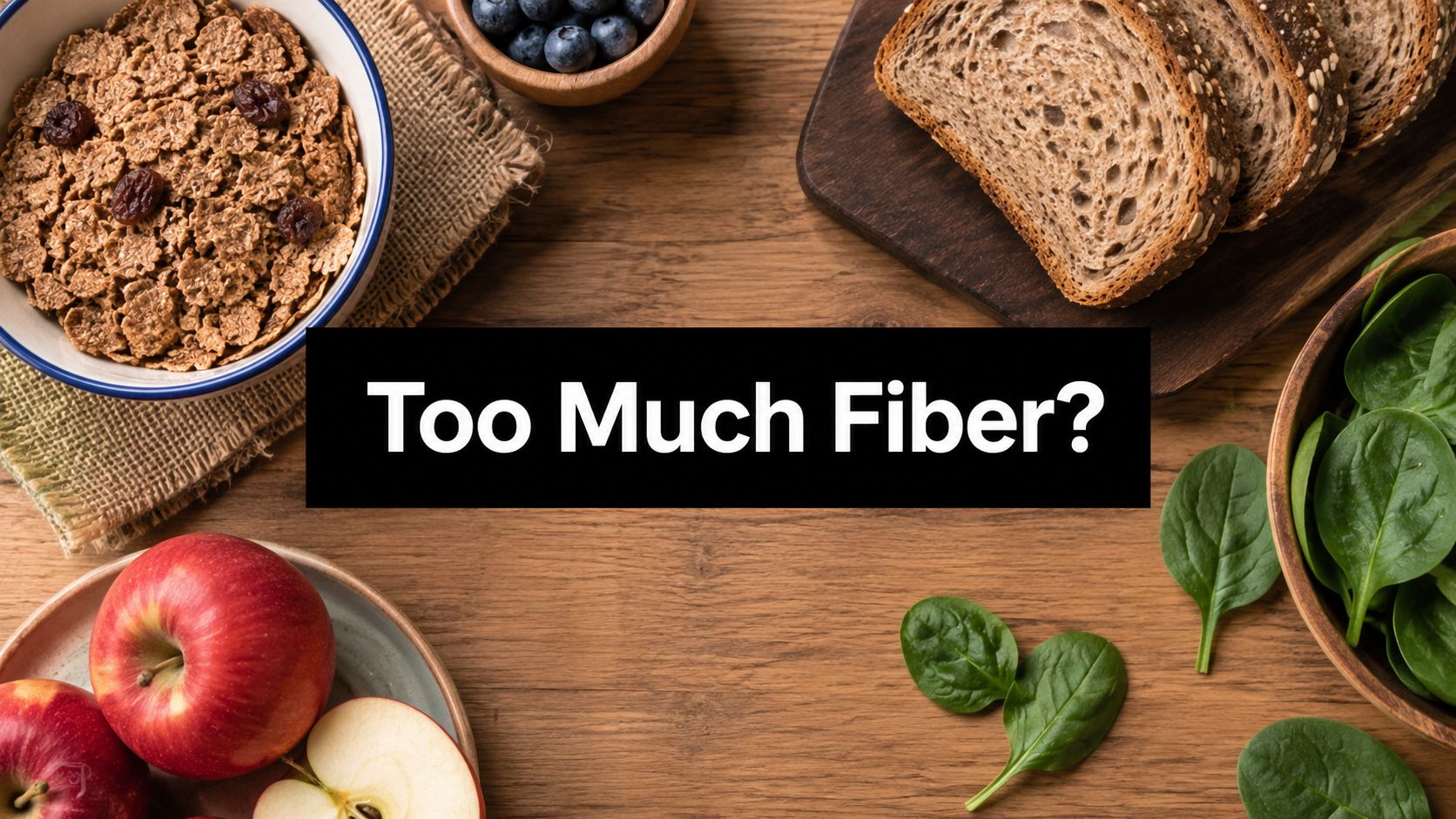
Fiber gets marketed as a nutrient you should always push higher. That advice is incomplete. You can eat too much fiber, and the problems often show up when people increase it fast, pile on supplements, or follow high-calorie eating plans that accidentally drive intake past what their gut can handle.
Can You Eat Too Much Fiber?
Yes, and the people who overshoot are not always the ones eating “badly.” In many cases, they are doing exactly what healthy eating advice seems to reward: adding bran cereal, loading up on legumes, using high-fiber wraps, and chasing per-calorie targets that look sensible on paper.
That is where fibermaxxing can go wrong.
General fiber guidelines are built for broad populations, not for every gut, every training load, or every calorie level. An athlete eating a very high-calorie diet can follow the common rule of 14 grams per 1,000 calories and end up with a daily total that sounds impressive but feels terrible. A recommendation that fits one person can become too much bulk, too much fermentation, and too much water demand for someone else.
TIME's reporting on what fibermaxxing gets wrong about fiber highlights this problem well. High-volume eaters can drift into very high fiber intakes without meaning to, especially when whole foods, fortified products, and supplements all stack together. At that point, fiber stops acting like a helper and starts acting more like traffic in a tunnel. If there is not enough fluid, enough adjustment time, or enough digestive tolerance, movement through the gut can slow and symptoms can build.
The key idea is simple: fiber has benefits, but your gut has a capacity.
That capacity varies more than people expect. Food form matters. Hydration matters. Training stress matters. So does how quickly you increased your intake and whether your total is coming from food alone or from food plus powders, gummies, or psyllium products.
A practical target for many adults is around 30 grams per day, then adjusting based on symptoms, stool pattern, and fluid intake. Some people feel great above that. Others run into trouble well before the numbers that get celebrated online.
The safest mindset is not “more fiber is better.” It is “enough fiber is better.”
What Exactly Is Fiber and Why Do We Need It
Fiber is the part of plant food your body doesn't fully digest. Instead of being broken down like starch or protein, it moves through the digestive tract and changes how food, water, and gut bacteria behave along the way.
Soluble fiber is the “gel” type. When it mixes with water, it thickens. That slowing effect can help steady digestion and support more gradual absorption of nutrients.
Insoluble fiber is the “bulking brush.” It adds structure to stool and helps keep bowel movements moving.

How the two types behave differently
| Fiber type | Simple way to picture it | Main job in the gut |
|---|---|---|
| Soluble | A sponge or gel | Slows digestion when mixed with water |
| Insoluble | A brush or broom | Adds bulk and helps movement through the intestines |
These aren't competing fibers. Most plant foods contain a mix, just in different proportions. That's why a varied diet usually works better than chasing one “perfect” fiber source.
Why people benefit from fiber in the first place
A healthy intake of fiber can help with:
- Regularity: It supports easier, more predictable bowel movements.
- Fullness: High-fiber meals tend to feel more satisfying.
- Steadier digestion: Slower movement of food can help some people avoid sharp swings in appetite.
- Gut support: Fiber gives gut microbes material to ferment, which is one reason plant-rich eating patterns are often recommended.
If you want food ideas rather than supplement-heavy shortcuts, this roundup of foods with fibre for optimal health is a useful starting point. For meal-building help, a searchable list of fiber-rich food options can make it easier to spot where your daily total is coming from.
Fiber isn't something to fear. It's something to match to your own digestion.
The common confusion is that people swing between extremes. They either under-eat fiber for years, or they jump hard into bran cereals, legumes, chia puddings, and powders all at once. The second pattern is where many “healthy eating” plans start backfiring.
How Do You Know If You Have Eaten Too Much Fiber
The first sign is usually a pattern shift. Your digestion feels worse after your diet gets "cleaner," your meals get bulkier, or you start adding fiber bars, powders, bran cereal, or large amounts of beans and seeds.
Symptoms can show up at either end of the spectrum. You might feel bloated, gassy, cramped, backed up, or stuck making urgent trips to the bathroom. That mix confuses people because fiber can help bowel regularity, yet too much of it, or too much too fast, can push the gut in the wrong direction.

What the symptoms usually feel like
- Bloating: Your stomach feels swollen, tight, or unusually full after meals.
- Gas: Fermentation in the colon can increase, which raises pressure and discomfort.
- Constipation: Stools may become hard or difficult to pass, especially if fluid intake has not kept pace.
- Diarrhea: In some people, a high fiber load speeds transit and loosens stools.
- Abdominal pain: Cramping or aching can happen when the intestine is stretched by gas or struggling to move bulky stool.
A useful way to read these signs is to ask what changed. Did symptoms start after a sudden jump in whole grains, legumes, raw vegetables, high-volume dieting foods, or supplements? If yes, fiber is a reasonable suspect.
Why excess fiber causes these problems
Fiber changes the physical traffic inside your gut. It holds water, adds bulk, and gives gut microbes material to ferment. Those effects are helpful in the right amount. They become uncomfortable when the dose rises faster than your gut can adapt.
Three mechanisms explain most of the trouble:
More fermentation, more gas
Certain fibers are broken down by gut bacteria. That process produces gas. If intake climbs quickly, gas production can climb quickly too.More bulk without enough fluid
Fiber and water work as a pair. If you raise fiber but not fluids, stool can become dense and slow-moving rather than soft and easy to pass.Too much volume for your current tolerance
Your intestines still have to move all that material along. For someone with a sensitive gut, a history of constipation, or a sudden diet overhaul, that extra load can feel like traffic backing up on a busy road.
"Fibermaxxing" can backfire. A person eating large amounts of food for marathon training, cycling, bodybuilding, or general high-calorie intake can hit very high fiber totals without realizing it. On paper, the diet looks healthy. In practice, the gut may be dealing with constant fullness, excess stool bulk, and repeated irritation.
That is one reason the safe upper limit is not one-size-fits-all. An athlete eating 3,500 to 4,500 calories can overshoot their own comfort range by following standard high-fiber advice at every meal. The issue is not that vegetables, oats, beans, or whole grains are bad. The issue is total load, meal timing, hydration, and individual tolerance.
If your digestion gets worse as your diet gets more aggressively high-fiber, the problem may be dose and pacing.
One practical clue is timing. If symptoms began soon after a diet change, a fiber supplement, or a meal plan built around very bulky foods, reduce the load and reassess before adding even more roughage.
For constipation, adding more bran is not always the smartest next step. Some people do better with a different approach, and this guide on laxido for constipation explains one option.
What Are the Safe and Optimal Fiber Intake Ranges
There isn't one universal “best” number. A better starting point is calorie intake. The established Adequate Intake for fiber is 14 grams per 1,000 calories, which means 28 grams on a 2,000-calorie diet and 35 grams on a 2,500-calorie diet, according to Muscle & Strength's summary of fiber intake guidance.

A smarter way to think about your range
Use the calorie-based rule as a starting estimate, then adjust based on symptoms, stool pattern, training load, and food choices.
| Situation | Useful mindset |
|---|---|
| Moderate-calorie intake | Start near the calorie-based target and assess digestion |
| High-calorie intake | Be careful that the formula doesn't push you into an uncomfortable high total |
| Heavy supplement use | Count supplements as part of your total, not as “bonus” fiber |
| Sensitive digestion | Prioritize tolerance over hitting an aggressive target |
Why hydration changes the answer
Fiber and fluid work as a pair. If you raise one without the other, you often get the downside without the benefit. That's one reason a fiber target on paper can feel very different in real life.
People using psyllium need to be especially mindful of that pairing. This Trim guide on psyllium and GLP-1s is helpful if you want a plain-language overview of how one common supplemental fiber behaves in the digestive system.
Another practical issue is food tracking. A recipe that looks balanced can become fiber-heavy once you stack oats, berries, chia, legumes, and high-fiber wraps in the same day. A recipe nutrition calculator for meals and ingredients can help you see the total before it becomes guesswork.
The best fiber range is the one that supports regular digestion without pushing you into daily symptoms.
Who Is Most at Risk from Excess Fiber
The people most likely to run into trouble are not always the ones eating a textbook "healthy" diet. Risk often rises when fiber intake climbs faster than the gut can adapt, or when a standard target gets pushed too far in a body with different needs.
That matters for athletes and people on high-calorie diets. The common rule of getting more fiber as calories rise can overshoot in real life. A person eating large volumes of food for training, size, or endurance can hit very high fiber totals without trying, especially if meals are built around oats, beans, vegetables, fruit, high-fiber wraps, bars, and powders in the same day. More calories do not automatically mean the gut wants unlimited bulk.
A large review on fiber physiology explains why tolerance differs so much. It notes that excessive fiber intake can contribute to bloating, flatulence, and diarrhea, may reduce absorption of minerals such as iron, zinc, and calcium, and is best increased gradually rather than in a sudden jump. A practical pace suggested in that review is about 5 grams per week, not a dramatic overnight change, as summarized in this PMC review on fiber physiology and excessive intake.
Groups that need extra caution
- People with inflammatory bowel disease: During flares or narrowing of the bowel, high-fiber foods can be harder to tolerate and may raise the risk of pain, obstruction, or dehydration. For people whose symptoms change week to week, a condition-specific ulcerative colitis meal planning guide can help with food texture and fiber choices.
- Athletes in heavy training: High fiber can be uncomfortable before runs, lifting sessions, or long workouts because it adds bulk and can speed or disrupt bowel activity at the wrong time.
- People on high-calorie eating plans: This group is easy to miss. If every meal is "clean" and fiber-rich, total intake can become excessive even without supplements.
- Anyone using fiber powders, fortified snacks, or multiple high-fiber products: Supplements make fiber more concentrated. It is easier to overshoot when fiber comes from a scoop, cereal, bar, and wrap rather than from one obvious food.
- People shifting from a low-fiber diet: The gut is like a muscle group returning to training after time off. Too much work too soon often causes soreness. In digestion, that soreness shows up as gas, cramping, or unpredictable stools.
- People with diabetes using glucose-lowering medication: Very high fiber intake can change how quickly carbohydrates are absorbed, which may affect blood sugar patterns and medication timing.
Practical signs your target may be too high for you
A fiber goal is probably too aggressive if you notice one of these patterns:
- You are hitting the number on paper but feel bloated or overly full most days.
- Your training feels worse because your stomach still feels heavy.
- You rely on supplements to reach the total.
- Bowel movements become looser, more urgent, or harder to pass.
- Meals feel crowded out by bulk, so overall energy or protein intake starts slipping.
A safer way to respond
If symptoms started after a rapid increase, reduce the total fiber load and simplify the sources first. Cook vegetables, peel fruits if needed, and pause powders or bran-heavy products for a short period.
If you are trying to raise intake, add one change at a time and hold it there long enough to judge tolerance. Slow progress gives the gut time to adapt, which is often the difference between fiber helping and fiber backfiring.
How to Safely Adjust Your Fiber Intake
The safest fix is usually simple. Change slowly, not dramatically.

If you need to increase fiber
Start with foods you already tolerate. That might mean oats instead of a large bean chili, or cooked vegetables instead of a raw cruciferous salad. Keep the portion modest, then hold steady for a few days before changing anything else.
A gentle progression often looks like this:
- Week one: Add one modest fiber source to one meal.
- Next step: Increase only if bowel movements stay comfortable.
- Keep fluids steady: Don't add dry, bulky fiber without adding water.
- Avoid stacking: Don't add bran cereal, psyllium, lentils, and chia on the same day just because each sounds healthy on its own.
If you need to reduce fiber for symptom relief
Short-term reduction can calm things down. The aim isn't to avoid plants forever. It's to reduce the current digestive workload.
Useful swaps include:
| Higher-fiber choice | Lower-fiber temporary swap |
|---|---|
| Brown rice | White rice |
| Unpeeled apple | Peeled apple |
| Large lentil portion | Smaller portion of a tolerated protein |
| Raw salad | Cooked vegetables |
| Bran cereal | Sourdough toast or another simpler starch |
For readers focused on digestion, a gut health meal planning resource can help you think in patterns rather than single “good” or “bad” foods.
Some people find it easier to see the mechanics in action, especially when symptoms seem inconsistent. This short video is a helpful visual explainer.
Small reset: If fiber seems to be the problem, reduce the total for a few days, simplify meals, hydrate well, then rebuild gradually.
If you want a structured way to put that into practice, start planning your balanced meals today at AI Meal Planner onboarding.
Frequently Asked Questions About High Fiber Diets
A high-fiber diet can be helpful and still cause problems. The missing piece is dose, form, and context. That matters even more for athletes and other high-calorie eaters, because a target that looks sensible on paper can turn into a gut overload once you add shakes, bars, large grain portions, beans, fruit, and vegetables in the same day.
Are fiber supplements riskier than whole foods
They can be easier to overdo.
Whole foods usually bring fiber packaged with water, bulk, and slower eating. A powder stirred into a drink or a few fortified products can raise your fiber intake fast, sometimes without the stomach stretch or meal volume that warns you to slow down. As noted earlier in the Amenta Nutrition review, high supplemental intake can raise the chance of side effects, can interfere with mineral absorption in some cases, and may contribute to phytobezoar risk in susceptible people.
Can too much fiber reduce mineral absorption
Sometimes, yes.
Some fibers and plant compounds can bind minerals such as iron, zinc, and calcium, which may reduce how much your body absorbs. This does not mean fiber is harmful or that plant foods are a problem. It means balance matters, especially if you already have low iron, restrict many foods, or rely heavily on bran products and supplements. If you have a known deficiency, the smarter question is not "Is fiber good?" but "How much, from what foods, and in what pattern works for me?"
What is a phytobezoar
A phytobezoar is a clump of poorly digested plant material that can collect in the digestive tract.
It is uncommon, but the risk is higher in people with slowed stomach emptying, prior gut surgery, Crohn's disease, or other conditions that change how food moves through the gut. In that setting, very fibrous foods are a bit like feeding too much rough material into a system that is already moving slowly.
Does cooking change how fiber feels in the gut
Usually yes.
Cooking does not erase fiber, but it often softens the plant structure. That can make foods easier to chew, easier to break down, and less mechanically irritating for some people. Raw cabbage and cooked cabbage both contain fiber, but they do not always feel the same after a meal.
How long do symptoms from too much fiber last
Mild symptoms often improve within a day or two after you lower the total amount, choose simpler meals, and drink enough fluids.
If pain is strong, constipation is severe, vomiting occurs, or bloating keeps returning despite changes, get medical advice. Persistent symptoms are not something to troubleshoot forever at home.
Can you eat too much fiber if your diet is otherwise healthy
Yes.
A day full of oats, berries, beans, vegetables, seed crackers, and a fiber bar can look extremely healthy and still be too much for your gut. Healthy foods do not cancel out the effects of total load. Your digestive system still has to process the full amount.
Is more fiber always better for athletes
No.
Athletes often eat more food, so they can overshoot fiber without trying. The common rule of getting more fiber as calories rise is useful up to a point, but it is not a command to keep pushing higher and higher. Around training, very high fiber intake can crowd the gut, slow gastric emptying, and make fueling less comfortable. For some active people, the better plan is moderate fiber overall, with lower-fiber choices before and during training and higher-fiber foods placed farther away from sessions.
If you want an easier way to build balanced meals without accidentally overshooting fiber, AI Meal Planner can help you organize meals around your goals, preferences, and digestion so your weekly plan feels practical, not exhausting.
AI-powered nutrition
Get Your Personalized Meal Plan
AI creates the perfect meals for your goals, lifestyle, and taste.
Start Your Journej