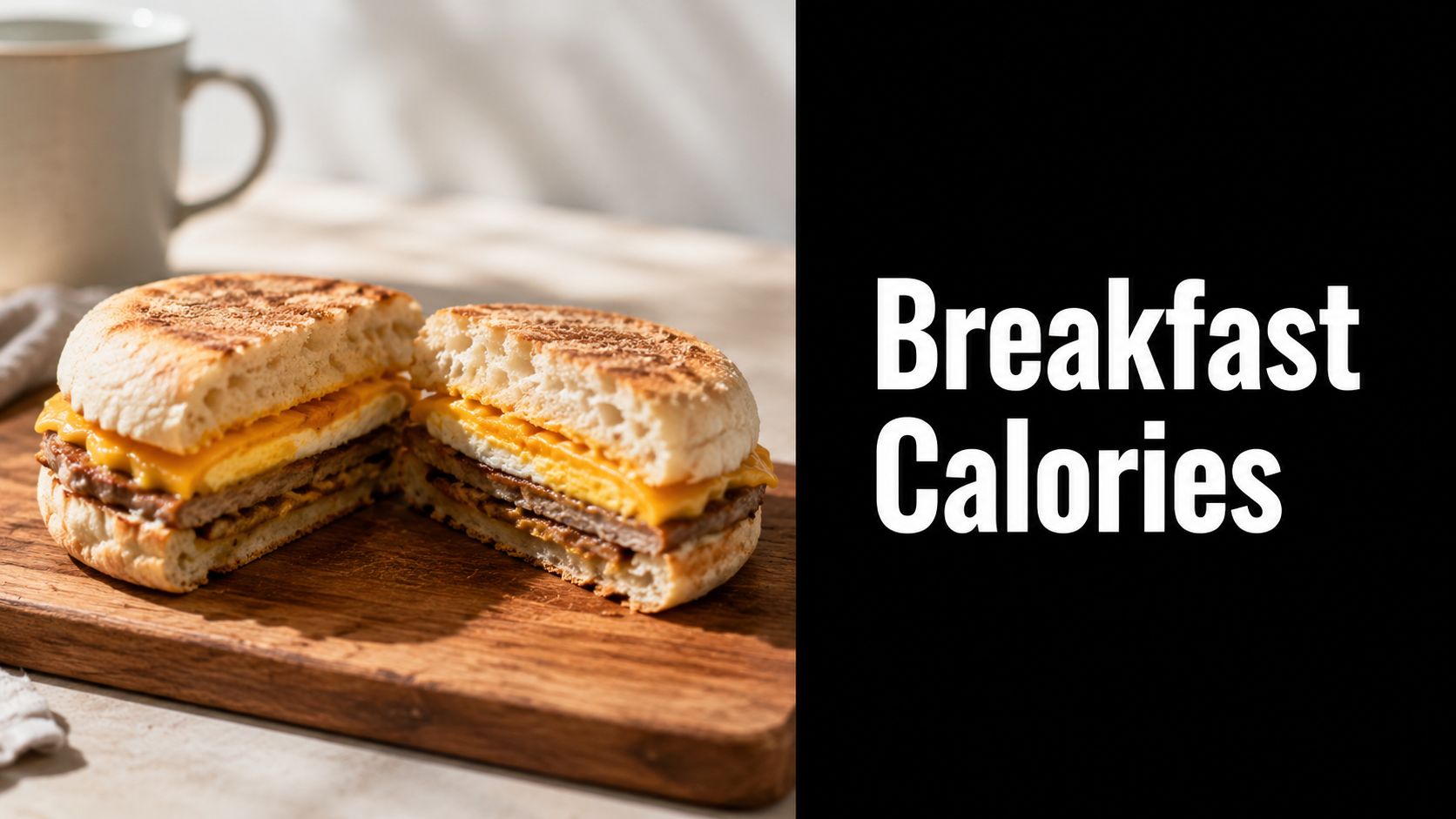
A typical breakfast sandwich contains roughly 160 to 600 calories in common U.S. examples, with many everyday options landing around the middle of that range. Bread choice is one of the biggest reasons for the swing, because English muffins and simpler builds stay lighter while biscuits and croissants often drive the total much higher.
Busy mornings are when breakfast sandwich calories catch people off guard. The meal looks simple. Egg, bread, maybe cheese, maybe bacon. But the final number can change a lot based on a few small choices that are often made automatically.
That matters if you're trying to lose weight, stay full through meetings, manage blood sugar, or hit a macro target without feeling like breakfast turned into your biggest meal of the day. A sandwich can be practical and satisfying. It can also become far more calorie-dense than it appears.
How many calories are in a breakfast sandwich?
Most breakfast sandwiches fall between 160 and 600 calories in common U.S. examples. A generic breakfast sandwich is listed at 439 calories, and egg sandwiches in a large U.S. nutrition dataset averaged 447 calories on intake days.
Your Guide to Navigating Breakfast Sandwich Calories
If you grabbed a sandwich on the way to work this morning, you're not alone. Breakfast sandwiches work because they're portable, familiar, and easy to eat fast. The problem is that convenience hides the calorie drivers.
The focus is often on the egg or the meat. In practice, that usually isn't the main issue. The calorie gap between one sandwich and another often comes from the structure around the protein. The bread, the fat built into that bread, the cheese, and the sauce all change the outcome fast.
A sandwich can fit many goals. It can work for fat loss, muscle gain, appetite control, or just getting breakfast handled without overthinking it. But you need to judge it as a full meal, not as "just eggs on bread."
Practical rule: When a breakfast sandwich feels light in your hand but rich in taste, the extra calories are often coming from hidden fats in the bread, cheese, or spread.
The most useful way to think about breakfast sandwich calories is to stop asking for one magic number. Ask what kind of bread it's built on, how fatty the protein is, whether cheese is essential, and what spread is being used.
That approach works whether you're ordering from a drive-thru, buying a cafe sandwich, or making one at home. Once you know the drivers, you can lower calories without ending up with a dry, unsatisfying breakfast.
What Actually Determines a Sandwich's Calorie Count
A breakfast sandwich is four calorie sources stacked into one meal. Bread, protein, cheese, and sauce each pull the total in a different direction, and small changes in any one of them can swing the result more than people expect.

Bread usually sets the ceiling
Start with the base. Bread often determines whether the sandwich stays moderate or turns into a heavy meal before the fillings even matter.
An English muffin, basic toast, or a smaller roll usually keeps calories more controlled. A biscuit, croissant, or dense bagel raises the total fast because those options are larger, richer, or both. In coaching, this is the first swap I make because it lowers calories without stripping out the protein that helps with fullness.
If you want a quick way to compare common ingredients before you order or cook, a searchable food calorie reference for breakfast sandwich components can make the bread trade-off easier to see.
Protein affects fullness as much as calories
Protein is not just a number on the label. It changes how long the meal keeps you satisfied.
Eggs, Canadian bacon, turkey sausage, regular sausage, and bacon all create different outcomes. Leaner options often give a better calorie-to-satiety return, while sausage patties and fattier meats can push calories up quickly without helping much more with fullness. That matters if the goal is to make breakfast hold you until lunch instead of sending you back for a snack an hour later.
A common mistake is keeping the richest bread, adding a fatty meat, and assuming the egg makes the sandwich balanced. The sandwich may still provide decent protein, but the calorie load is often being driven by refined carbs and added fat.
Cheese and sauces decide whether the sandwich stays reasonable
Cheese is rarely the main problem by itself. The bigger issue is accumulation.
One slice of cheese on an egg sandwich is a modest addition. Pair that with a buttery croissant, sausage, and mayo-based sauce, and the sandwich becomes a very different meal. This is why two sandwiches with the same egg count can land in very different calorie ranges.
Use this order of operations when you scan a menu or build one at home:
- Check the bread first. This is often the biggest calorie swing.
- Choose protein for fullness. Eggs plus leaner meat usually outperform fattier combinations.
- Decide if cheese adds enough value. One slice can fit. Extra cheese often adds more calories than satisfaction.
- Treat sauce as optional. Spreads and creamy dressings can erase the benefit of a smarter bread or protein choice.
If you only change one thing, change the bread.
How Do Popular Fast-Food Sandwiches Compare
You pull into a drive-thru for something quick and see two breakfast sandwiches that look close enough to be interchangeable. They usually are not. A sandwich built on an English muffin with egg, cheese, and bacon often sits in a very different calorie range than one built on a biscuit or croissant with the same fillings.
A broad calorie listing from Eat This Much's breakfast sandwich range overview shows how wide the category can be. Lighter egg-and-cheese builds can sit at the low end, while richer bacon, egg, and cheese sandwiches, especially on biscuits or croissants, climb quickly. The useful takeaway is not the exact brand ranking. It is identifying which part of the sandwich is pushing the number up.
Calorie ranges of common fast-food breakfast sandwiches
| Sandwich Type | Typical Calorie Range | Key Drivers |
|---|---|---|
| Simple egg and cheese on a basic roll or school-service format | Lower end of the category | Smaller portion, fewer add-ons |
| Bacon, egg, and cheese on a lighter bread | Moderate range | Added meat and cheese, but less rich bread |
| Generic breakfast sandwich | Middle of the pack | Balanced mix of bread, fat, and protein |
| Heavier cafe or drive-thru sandwich | Higher range | Larger bread, extra cheese, fattier meat |
| Biscuit or croissant sandwich | Often among the highest | Butter-rich bread and higher total fat |
| Indulgent oversized fast-food builds | Top end of the category | Rich bread, multiple meats, sauces, larger portions |
The fastest way to compare menu options is to read them in layers.
Start with the bread. Then check whether the protein is egg-only, bacon, sausage, or a larger folded egg and meat combo. Finish with cheese, spreads, and any words like "creamy," "aioli," or "loaded." That sequence gives a better estimate than focusing on the sandwich name.
This matters if your goal is fullness, gym performance, or body-composition progress. A slightly higher-calorie sandwich with better protein can be a smarter pick than a lower-calorie option that leaves you hungry an hour later. If you want a quick way to sort that out, use a calorie and macro calculator for meal planning alongside the nutrition info on the menu.
I coach clients to treat fast-food breakfast sandwiches as a trade-off, not a pass-fail food. A biscuit sandwich may fit after a long training session or on a high-calorie day. An English muffin sandwich usually works better for an office morning when activity is low and lunch is still hours away. That same logic matters for optimizing macros for real results.
What to expect when ordering out
Fast-food chains tend to reward simple builds. Egg, one slice of cheese, and a leaner meat on a basic bread usually stays more manageable. Once the sandwich adds a richer bread, larger meat portion, or sauce, the calorie jump is often bigger than people expect.
Order based on the job the meal needs to do. If breakfast has to hold you through a busy morning, a moderate-calorie sandwich with solid protein may be the right call. If you just need a quick bite before a sedentary morning, the same sandwich can be more food than you need.
Why Is the Macronutrient Breakdown Important
Calories matter, but the macro mix decides how the sandwich behaves after you eat it. Two sandwiches can look similar and leave you with very different results by midmorning.

One useful comparison comes from a large U.S. nutrition dataset. It found that egg sandwiches average 447 kilocalories per intake day, while eggs or omelets average 179 kilocalories, meaning the sandwich version delivers more than 2.5 times the calories in this national intake analysis. The protein core may look similar, but the format changes the whole meal.
What you're getting for the calories
A sandwich earns its place when it gives you enough protein and enough structure to keep you full. It loses value when most of the calories come from refined bread, butter-heavy dough, cheese layers, and sauce, while protein stays modest.
A small example shows the difference. One nutrition panel lists an eat-in bacon, egg, and cheese breakfast sandwich at 250 calories, with 42% carbs, 37% fat, and 21% protein. Another school food-service egg and cheese breakfast sandwich is listed at 160 calories, with 7.0g fat, 20.0g carbohydrate, and 6.0g protein in the earlier cited market summary. Neither number tells you everything unless you also ask whether the sandwich will keep you full.
Why macros matter for real life
A breakfast that leaves you hungry in an hour often leads to snacking, extra coffee add-ins, or a bigger lunch than planned. That's why many people benefit from optimizing macros for real results instead of chasing the lowest number on the menu.
If you're tracking your own intake, a macro and calorie calculator for meals helps you judge whether a sandwich is balanced enough for your goal, not just whether it looks light on paper.
A lower-calorie breakfast isn't automatically a better breakfast if it doesn't carry you through the morning.
How Can You Build a Healthier Breakfast Sandwich
You order what sounds like a reasonable breakfast sandwich, then realize later that the bread, cheese, and sauce did more calorie damage than the egg. That is the part many people miss. The fastest way to improve a sandwich is to identify which component is pulling the meal up without adding much fullness.

The best builds are not the bare minimum. They are structured to give you enough protein and enough volume to hold you through the morning, while trimming calories that do little for satiety.
Start with the biggest calorie drivers
Bread sets the tone. An English muffin, thin bagel, wrap, or standard toast usually gives you more control than a biscuit or croissant, which can bring in a lot of fat before you even add fillings.
Next comes protein. Eggs are a solid base, but the add-on matters. Canadian bacon, turkey sausage, lean ham, or extra egg whites often give a better protein return than a thick sausage patty. If you want a sandwich that feels substantial without getting too heavy, this is usually the most effective place to make a swap.
Cheese and sauce are the quiet extras that change the whole outcome. One slice of cheese can fit well. Two slices plus a creamy spread can turn a balanced sandwich into one that is calorie-dense without being much more filling. Hot sauce, salsa, mustard, and pico de gallo add flavor with less downside.
Here's a useful visual if you want a quick mental checklist before you build or order:
Build for your goal, not just the lowest number
For fat loss, keep the structure simple. Use a lighter bread, one main protein, vegetables, and a punchy condiment. That usually cuts calories without making breakfast feel skimpy.
For maintenance or muscle gain, a slightly larger sandwich can be the smarter play. Add a second egg, keep the cheese if you enjoy it, or choose a higher-protein meat. The point is not to make the sandwich as small as possible. The point is to make the calories work harder.
A practical home formula looks like this:
- Base: English muffin, toast, or wrap
- Protein: Egg, egg whites, lean breakfast meat, or a mix
- Produce: Spinach, tomato, onion, peppers, mushrooms
- Flavor: Salsa, mustard, hot sauce, or one slice of cheese
That framework works because it gives you room to adjust one variable at a time. If calories are creeping up, start with the sauce or bread. If the sandwich is leaving you hungry, increase protein before adding richer extras.
What tends to work at home
A simple sandwich is easier to repeat, and repeatable meals are usually what drive results.
Good builds tend to share a few traits:
- They keep protein central: The sandwich is built around egg and a purposeful protein add-on, not around bread and melted extras.
- They use produce for volume: Spinach, peppers, tomato, and onion add bulk and texture without making the sandwich dense.
- They keep indulgent items in measured portions: One slice of cheese or a small amount of avocado is different from stacking multiple rich ingredients together.
What backfires is predictable.
- Dry, joyless sandwiches: If breakfast feels like a compromise, many people make up for it later.
- Creamy condiments in large amounts: Mayo-based sauces can erase the benefit of a lighter bread or leaner meat.
- Treating all breads the same: They are not. A thinner bread option often gives you more room for protein.
If you want practical meal ideas you can cook, a recipe collection organized by nutrition targets can help you compare breakfast sandwich formats without guessing.
Is a Low-Calorie Sandwich Always the Best Choice
Not always. The smarter question is whether the sandwich supports your goal after you eat it.
Some recipes promote 300-calorie sandwiches with 45 g of protein in this high-protein breakfast sandwich discussion. That kind of sandwich serves a very different purpose from a commercial option with similar calories but much less protein. One is built for fullness and recovery. The other may be smaller.
Look at protein density, not just the total
A very low-calorie sandwich can backfire if it leaves you unsatisfied. That's especially true for people trying to control appetite during a workday. If breakfast is too light in protein, many end up chasing snacks before lunch.
A slightly higher-calorie sandwich can be the better choice when it gives you stronger satiety and steadier energy. For muscle gain or active lifestyles, that matters even more. For weight loss, it can still matter because adherence improves when breakfast feels like a meal.
The best sandwich isn't the one with the lowest number. It's the one that fits your calorie target and still keeps you full.
This is also why "healthy" menu labels can be misleading. Some lower-calorie commercial sandwiches cut more than calories. They cut protein, substance, and staying power.
How Can You Track Sandwich Calories in Your Meal Plan
Once you understand the moving parts, breakfast sandwich calories stop being random. You start seeing the pattern. Rich bread raises the floor. Fatty meats and creamy sauces push it further. Better protein structure usually improves the meal, even when calories don't hit the absolute minimum.
That same thinking helps with the rest of your day. If breakfast was heavier than planned, lunch can be simpler. If you're trying to build a full day around lighter meals, it helps to look at practical comparisons like vegan 300 calorie lunch ideas so your total intake stays realistic instead of restrictive.
For tracking, a recipe nutrition calculator is useful when you're changing bread, cheese, or sauces and want the meal total to reflect what you're eating. If you want a full personalized plan, AI Meal Planner onboarding lets you set calorie targets and build breakfast-inclusive meal plans around them.
Frequently Asked Questions About Breakfast Sandwiches
Are homemade breakfast sandwiches healthier than fast-food ones
Often, yes. Home preparation lets you control the parts that add calories, like oversized bread, extra cheese, butter, and mayo-based sauces. A homemade sandwich can still end up heavy, but it is easier to build one that matches your hunger and your calorie target.
What's usually the lowest-calorie bread for a breakfast sandwich
English muffins and smaller wraps are often lighter choices than biscuits, bagels, or croissants. A key trade-off is fullness. Some lower-calorie breads save calories but leave less room for fiber and satisfaction, so the best pick depends on whether you want the lightest sandwich or one that holds you longer.
Does toasting the bread change the calories
No. Toasting changes texture and can make a sandwich feel more satisfying, but it does not reduce the calorie count.
Is skipping cheese worth it
Usually, yes. Cheese can add flavor and some protein, but it also adds calories quickly in a small portion. If the sandwich already includes eggs and meat, dropping cheese is one of the cleaner ways to lower calories without making the meal feel incomplete.
Are egg sandwiches a small breakfast or a full meal
They are usually closer to a full meal than a light breakfast. Once eggs are paired with bread, spreads, cheese, or breakfast meat, the calorie total climbs fast and the sandwich becomes more substantial than eggs alone.
What's the biggest hidden calorie source in most breakfast sandwiches
Sauces and richer breads cause the most undercounting. A biscuit or croissant sets a higher calorie baseline before you even add egg, sausage, or cheese. Then a swipe of aioli, mayo, or flavored spread can push the total up again without adding much fullness.
If you want breakfast sandwiches and the rest of your meals to fit your goals without manual math, AI Meal Planner can generate a personalized plan with calories, macros, and grocery lists based on how you eat.
AI-powered nutrition
Get Your Personalized Meal Plan
AI creates the perfect meals for your goals, lifestyle, and taste.
Start Your Journej