Bread Crumbs Calories: A Complete Nutrition Guide
You add bread crumbs quickly, often without thinking about them. A handful for chicken cutlets, a scoop for meatballs, a sprinkle over pasta. If you track calories or macros, that small pantry ingredient can matter more than it seems.
How Many Calories Are in Bread Crumbs?
You coat chicken cutlets, stir some into meatballs, or scatter a little over baked pasta. The amount looks small. The calories are more concentrated than the volume suggests.
Dry, plain bread crumbs contain about 395 calories per 100 grams. As noted earlier from the cited nutrition source, that number makes sense once you look at how bread crumbs are made. Regular bread contains a good amount of water. Bread crumbs have much less. Drying removes water, then grinding packs the starch, protein, and fat into a lighter-looking ingredient that carries more calories per gram.
A useful way to view bread crumbs is as a concentrated grain product. One spoonful does not look like much because the crumbs are dry and airy, but your body still counts the underlying bread.
This matters for weight loss and macro tracking because bread crumbs often blend into the meal instead of sitting on the plate in an obvious portion. A coating on fish, a binder in meatloaf, or a crunchy casserole topping can shift the final calorie total more than expected. The issue is not that bread crumbs are unhealthy. The issue is that they are easy to under-measure.
Here are the places where under-logging happens most often:
- Coating proteins: Chicken, fish, tofu, and eggplant can hold onto more crumbs than you planned.
- Toppings: A thin layer over mac and cheese or a baked casserole can add up quickly.
- Binders: In meatballs, veggie burgers, and meatloaf, the crumbs disappear into the mixture and are easy to forget.
- Scooping by eye: Bread crumbs look fluffy, so a generous pour does not always register as a larger portion.
For food logging, precision matters most with ingredients like this because the visual cue is misleading. If you already measure rice, pasta, or cooking oil, bread crumbs belong in the same category. The same principle applies to other compact ingredients, which is why articles on how eggs fit your weight management plan can be useful for comparing how small foods affect your daily total.
For day-to-day tracking, using a searchable food database for ingredient nutrition entries is more accurate than guessing from memory, especially if you need to distinguish between plain, seasoned, and brand-specific products.
How Do Calories Vary Between Plain, Panko, and Seasoned Bread Crumbs?
The most dependable comparison in the verified data is between plain dry bread crumbs and seasoned bread crumbs. Plain bread crumbs provide about 395 calories per 100 grams, while seasoned bread crumbs provide about 383 calories per 100 grams, based on USDA-style nutrition data listed by FatSecret.
That same source also notes that plain bread crumbs get 74% of their calories from carbohydrates, 12% from fat, and 14% from protein, and that 1 cup of plain bread crumbs weighs 108 grams and contains about 427 calories and 13.35 grams of protein.
Quick comparison table
Because the verified dataset only provides exact numeric values for plain and seasoned bread crumbs, the table below keeps the comparison limited to those entries.
| Bread Crumb Type | Calories (kcal) | Carbs (g) | Protein (g) | Fat (g) |
|---|---|---|---|---|
| Plain, dry bread crumbs per 100 g | 395 | 71.98 | 13.35 | 5.3 |
| Seasoned bread crumbs per 100 g | 383 | Similar overall structure | Similar overall structure | Similar overall structure |
| Plain, dry bread crumbs per cup (108 g) | 427 | Not separately listed | 13.35 | Not separately listed |
What about panko
Panko is often discussed as if it's automatically lower in calories, but the verified data provided here doesn't include a numeric panko entry. So the safest takeaway is qualitative: panko and plain bread crumbs differ more in texture than in the fact that both are still bread-based coatings.
Panko's flakes are larger and airier, so a scoop can look bigger even when the actual weight is modest. That visual difference can make it feel lighter. Calorie impact depends on how much you use by weight and how much sticks to the food.
Why plain and seasoned can differ
Seasoned bread crumbs aren't just dried bread. They usually include additional flavoring ingredients. In the verified data, they come in slightly lower than plain by weight, but the practical point isn't that one is dramatically lighter. It's that both should still be measured if you care about accuracy.
Bread crumbs are a grain-based ingredient first. Flavoring changes the profile a bit, but it doesn't turn them into a low-calorie freebie.
A better way to compare options in the store
When you're choosing among brands or styles, use this order of operations:
- Check the serving description Some labels use tablespoons, others use cups, and others use grams.
- Look at grams first Weight gives you the cleanest comparison.
- Scan the ingredient list Extra oils, sugar, cheese powders, or seasonings can change how you use the product.
- Match the choice to the recipe A crunchy coating, a meatball binder, and a casserole topping don't need the same product.
The biggest reader confusion here is simple. People compare bread crumbs by volume when they should compare them by weight. That's why one crumb style can seem “lighter” while still fitting into a similar calorie range once you measure it accurately.
What Does a Healthy Portion of Bread Crumbs Look Like?
A healthy portion isn't one universal amount. It's the amount that fits the role bread crumbs play in your meal and the rest of your daily intake. The easiest mistake is using them as if they were a dusting, when in reality they can become a major coating or topping.
Here, visual cues help more than nutrition labels alone.

What portion control looks like in real cooking
For a single chicken breast, a measured light coating usually works better than dumping crumbs into a bowl and pressing repeatedly until a thick crust forms. For casserole toppings, a thin, even layer often gives the crunch people want without turning the topping into the calorie center of the dish.
For meatballs or meatloaf, think of bread crumbs as a functional ingredient. You want enough to help with structure and texture, not so much that the mixture starts leaning more on filler than on the main protein.
Use the scale before you use the pan
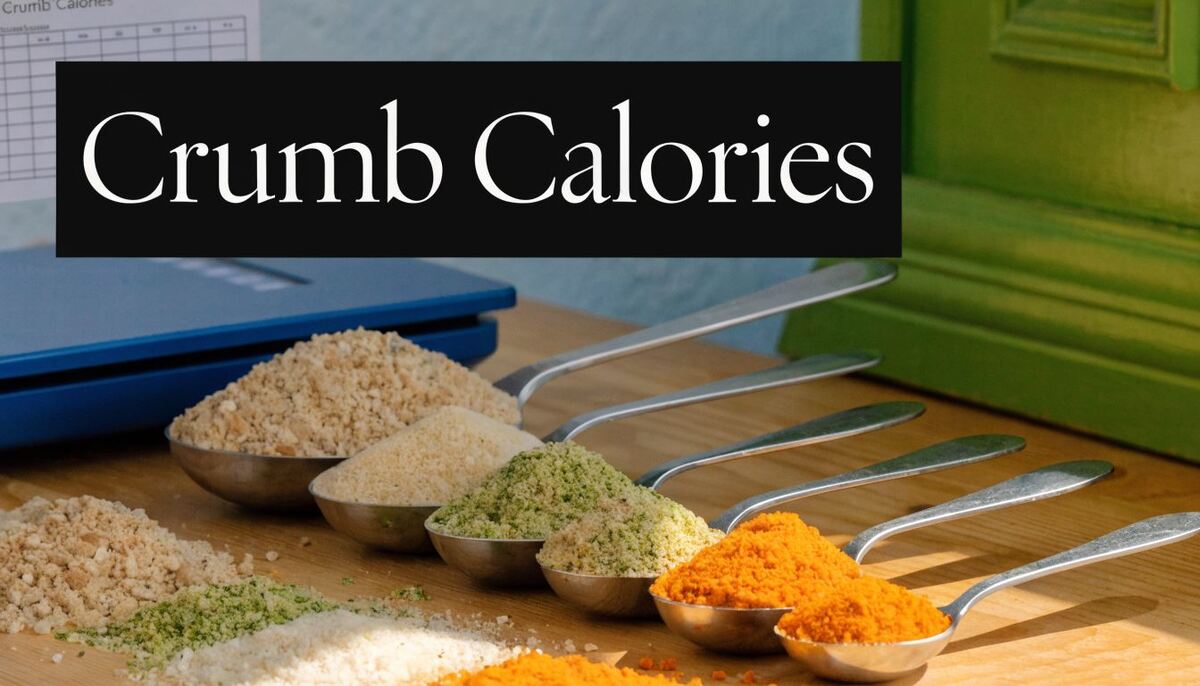
Weighing is the easiest way to remove guesswork. Put a bowl on a digital kitchen scale, tare it to zero, and add the amount you plan to use before you start breading or mixing. That number is much easier to track than trying to estimate what's left in the bowl later.
A few practical habits make portion control easier:
- Pre-measure the crumbs: Don't pour from the container straight into the recipe.
- Set aside a fixed amount: If you need more, add more deliberately rather than reflexively.
- Use a shallow tray: A wider layer makes it easier to coat evenly with less waste.
- Pat, don't pack: A gentle coat usually gives enough texture.
A “healthy portion” is usually the smallest amount that still does the job you want.
If you want help thinking through portion size in the context of your full meal, an AI nutrition assistant for meal decisions can be useful for balancing the coating, protein, and side dishes together.
Match the portion to the goal
Different goals change what counts as a sensible serving:
- Weight loss: Keep bread crumbs intentional and measured.
- Maintenance: Use them freely, but count them.
- Muscle gain: They can fit well if the rest of the meal supports your protein target.
- Lower-carb eating: Smaller portions matter more because bread crumbs are carb-heavy.
That last point matters because bread crumbs calories aren't only about energy. They also influence your macro balance.
Which Lower-Calorie Substitutes Can Replace Bread Crumbs?
You're making meatballs, chicken cutlets, or a casserole topping, and the bread crumbs are the part that no longer fits your goal. The useful question is not just, “What has fewer calories?” It is, “What job do I need this ingredient to do?”
That distinction matters because bread crumbs can act like a coating, a binder, or a crisp topping. A good swap for one role can fail in another. Some substitutes also look lighter than bread crumbs because they use less volume, even if they are not lower in calories gram for gram.
As noted earlier from FoodStruct data, almond flour is higher in calories by weight than bread crumbs, even though it is much lower in carbs. So if your target is fat loss, almond flour is not automatically the lighter choice. If your target is lower carb intake or a keto-style macro split, it may still be a better fit.

Match the substitute to the cooking job
A binder works like mortar in a brick wall. It holds moisture and structure together. A coating does something different. It creates surface texture and browning. Start there, and the choice gets much easier.
- Crushed oats
Best for meatballs, meatloaf, salmon patties, or veggie burgers. Oats absorb moisture and help mixtures hold their shape. They usually give a softer result than bread crumbs, so they are better for binding than for a crisp crust. - Ground flaxseed
Another strong binder, especially in plant-based recipes. It thickens as it absorbs liquid, which helps prevent mixtures from falling apart. Use it carefully, because too much can make the texture dense. - Nutritional yeast
Useful as a light savory topping on vegetables, pasta bakes, or roasted dishes. It does not behave like a classic crumb coating, but it adds flavor with less bulk. That can make portion control easier in meals where crunch is less important than taste. - Almond flour
Works well for lower-carb coatings and baked breads or patties. It browns faster and has a richer, nuttier flavor than bread crumbs. Good macro fit for some plans, but not a calorie-saving swap. - Crushed pork rinds
Helpful for very low-carb breading. They crisp well and add almost no carbs, but the flavor is more noticeable than bread crumbs. They fit best in strongly seasoned dishes.
What “lower-calorie” means in practice
Readers often get tripped up here. Lower calorie, lower carb, and lighter texture are three different things.
A topping made with nutritional yeast may end up lower in calories because you use a small amount. Crushed oats may be a smart swap because they stretch a recipe and improve fullness. Almond flour may support a lower-carb plan while adding more calories than expected. The label on the package does not answer the whole question. The actual answer comes from how much you use and what role it plays in the meal.
A simple way to choose
| Your goal | Best starting option | Why it fits |
|---|---|---|
| Reduce calories in a topping | Nutritional yeast | Strong flavor in a smaller amount |
| Keep a meatball or patty together | Crushed oats or flaxseed | Good moisture absorption and binding |
| Cut carbs for macro tracking | Almond flour or pork rinds | Lower-carb than traditional bread crumbs |
| Keep the closest texture to a crust | Pork rinds or almond flour | Better surface crispness |
If you want ideas for meals that already build these swaps in, a balanced recipe collection with lighter coating and binder options can save trial and error.
The best substitute is the one that fits both the recipe and the goal you are tracking. Calories matter for weight loss. Carb load matters for some meal plans. Texture still matters if you want the meal to feel satisfying enough to repeat.
How Can You Reduce Calories When Cooking with Bread Crumbs?
You don't always need a substitute. Often, the bigger calorie issue is how bread crumbs are used, not the fact that they're used at all.
A thick coating plus generous oil can turn a simple meal into something much heavier than expected. A thinner coating, less added fat, and a different cooking method can change the final result substantially without making the dish feel restrictive.
Use less, but make it count
Flavor intensity helps you use fewer crumbs without feeling deprived. Mix bread crumbs with herbs, garlic, pepper, dried spices, or grated hard cheese if that fits your recipe. That way, a thinner layer still tastes deliberate.
A few practical techniques work well:
- Brush or mist oil lightly: A spray or measured brush-on layer is easier to control than pouring.
- Press on a thin coat: You want coverage, not a shell.
- Toast toppings separately: For casseroles or pasta bakes, crisping a measured amount first can improve texture with less product.
- Combine with flavorful add-ins: Herbs and seasoning stretch the topping.
Change the cooking method
Baking and air frying usually make it easier to keep the dish lighter than shallow frying or deep frying. Bread crumbs absorb some of the fat around them during cooking, so the surrounding method matters.
If you cook often from structured meal plans, a recipe library built around balanced home cooking can help you find versions that use bread crumbs more sparingly while still keeping the texture people want.
Crispness doesn't require a thick crust. Good technique often matters more than extra crumbs.
Think about where bread crumbs matter most
Not every dish needs the same amount. In some meals, bread crumbs are central to the experience. In others, they're mostly visual or habitual.
Ask yourself three quick questions before you add them:
- Am I using this for crunch, binding, or bulk?
- Could a thinner layer do the same job?
- Is oil adding more calories than the crumbs themselves?
That last question is especially important. Bread crumbs often get blamed when the cooking fat is doing just as much work in raising the total.
How to Accurately Track Bread Crumbs for Your Health Goals
Accurate logging starts with one rule. Track bread crumbs by weight whenever possible. Volume can be inconsistent because crumb size, packing, and brand texture vary a lot.
That matters if your goal is tight calorie control or macro precision. Bread crumbs can disappear into the background of a meal, but they still count. If you're careful with protein portions and oils, it doesn't make sense to ignore the coating or binder.

The easiest logging method
Use this simple process:
- Place a bowl on the scale
- Zero it out
- Add the bread crumbs
- Record the weight before cooking starts
- Log the amount used in the full recipe
- Divide by the number of servings eaten
This works especially well for meatballs, casseroles, and coatings where the ingredient gets spread across multiple portions.
Don't log what you poured. Log what you used.
If some crumbs stay in the tray or dredging bowl, they weren't fully eaten. That's another place people overestimate or underestimate intake. Tracking is most accurate when you measure what went into the recipe and pay attention to what was left behind.
For other bread-based foods, the same principle applies. If you're comparing how different carb foods fit into your day, airfryersnackideas.com's bagel guideis a practical example of how preparation style and portion awareness affect the final meal.
Tools make consistency easier
A digital scale matters more than any nutrition app feature. After that, a searchable database and recipe calculator save time because you don't have to rebuild the same entry every week.
If you want a simpler way to calculate ingredients across meals, a meal planning tools page with nutrition support features can help organize recipe logging and portion planning.
Small ingredients often explain why a “healthy meal” didn't match the calories you expected.
For anyone who wants structure from the start, start your meal planning setup here. That's especially useful if you're trying to fit foods like bread crumbs into a weight loss, maintenance, or muscle gain plan without guessing.
Frequently Asked Questions About Bread Crumb Nutrition
Are homemade bread crumbs healthier than store-bought ones
They can be, but not automatically. Homemade versions give you more control over ingredients and seasoning, while store-bought versions are often more consistent for tracking.
Do toasted bread crumbs have fewer calories
Toasting changes flavor and texture more than it changes calories in any meaningful practical sense. What matters more is how much you use and whether you add oil or butter.
Can bread crumbs fit into a keto diet
Traditional bread crumbs are usually a poor fit for keto because they're carb-heavy. People following keto often choose lower-carb coatings instead.
Why are bread crumbs calories so concentrated
Drying removes much of the water from bread, which makes the final product more energy-dense by weight. That's why a small amount can contribute more than expected.
What's the best way to store bread crumbs
Keep them in a sealed container in a cool, dry place. If you make them at home, storage matters even more because moisture can affect freshness and texture.
Should I measure bread crumbs with cups or grams
Grams are more accurate. Cup measurements vary too much based on how fine, coarse, packed, or airy the crumbs are.
Are seasoned bread crumbs much different from plain ones
They're different in flavor and ingredients, but both still need tracking if you're paying attention to calories or macros. The seasoning can also affect how much you use because stronger flavor may let you use less.
If you want meal plans that account for ingredients like bread crumbs without manual guesswork, AI Meal Planner can help you build a personalized routine around your calories, macros, food preferences, and schedule.
AI-powered nutrition
Get Your Personalized Meal Plan
AI creates the perfect meals for your goals, lifestyle, and taste.
Start Your Journej