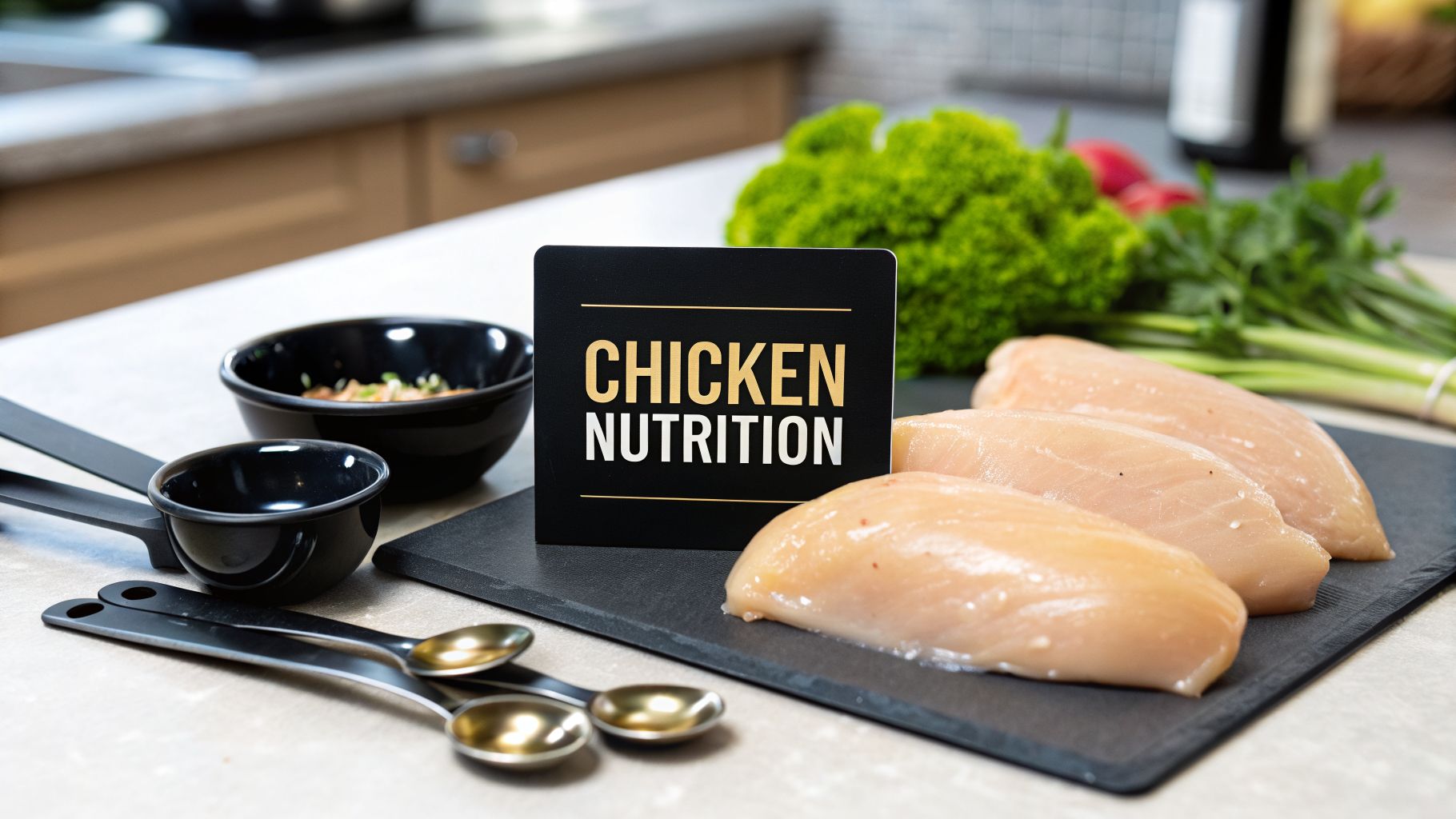
A standard 100-gram (3.5-ounce) serving of cooked boneless, skinless chicken breast contains approximately 165 calories, 31 grams of protein, and only 3.6 grams of fat. It has zero carbohydrates, making it an exceptionally lean and efficient protein source for muscle building and weight management.
When you look at the diets of elite athletes, bodybuilders, and people who have successfully transformed their health, you’ll find one common denominator: the boneless, skinless chicken breast. Its popularity isn't a fluke. It's built on a straightforward, powerful nutritional profile that delivers exactly what you need with nothing you don't. Think of it as the ultimate nutritional building block for hitting your health goals.

What are the exact macros in chicken breast?
The power of chicken breast is in its simplicity. The numbers below are for a standard 100-gram (about 3.5 ounces) cooked serving. This portion is roughly the size of a deck of cards, making it an easy visual guide for meal prep.
These numbers reveal why chicken breast is a cornerstone of so many effective meal plans. It gives you a huge dose of protein for muscle repair and satiety without the high calorie and fat load you’d find in other sources.
For anyone trying to build muscle, that impressive protein count delivers the essential amino acids your body needs for recovery and growth. To hit those goals, building meals around high-protein foods like chicken is non-negotiable. You can learn exactly how to structure your diet for this in our guide to a high-protein meal plan.
Macronutrient Breakdown of 100g Cooked Chicken Breast
This table presents the core nutritional data for a standard 100-gram (about 3.5 ounces) serving of cooked boneless, skinless chicken breast, providing a clear and quick reference for calorie and macro counters.
| Nutrient | Amount | Daily Value (%) |
|---|---|---|
| Calories | 165 kcal | 8% |
| Protein | 31 g | 62% |
| Fat | 3.6 g | 5% |
| Carbs | 0 g | 0% |
| Sodium | 74 mg | 3% |
This table immediately shows why tools like the AI Meal Planner feature chicken breast so prominently. It’s an incredibly reliable way to hit your protein targets without blowing your calorie budget.
Why is chicken breast considered a superior lean protein?
Ask any fitness pro or nutritionist for their top protein recommendations, and you'll almost always hear boneless, skinless chicken breast mentioned. Its elite status isn't just about packing a lot of protein; it's about the quality and efficiency of that protein. This makes it a true nutritional MVP for anyone looking to build muscle, stay full, or manage their weight.
The two ideas that really set chicken breast apart are protein density and bioavailability. Simply put, protein density is about how much protein you get for the number of calories you eat. Chicken breast crushes it here, delivering a huge dose of protein with very little fat and absolutely no carbs.
Why does the "complete protein" in chicken matter?
Think of building or repairing muscle like building a house. To get the job done right, you need a full set of all the different types of bricks. In your body, these "bricks" are called amino acids. The most important ones are the nine essential amino acids, which your body can't make on its own and must get from food.
A food that gives you all nine of these is called a complete protein. Boneless, skinless chicken breast is a complete protein, which means every single serving hands your body the full set of "bricks" it needs to get to work repairing tissue, building lean muscle, and supporting countless other bodily functions. This high bioavailability means the protein you eat is absorbed and put to work with incredible efficiency.
How does chicken breast compare to other proteins?
To really see why boneless, skinless chicken breast is in a league of its own, it helps to compare it to other popular protein choices. It's not just the total protein that matters, but the protein-to-fat ratio that truly makes it shine.
Here's a quick breakdown of how it compares:
- Beef (Sirloin Steak): While it's also a fantastic complete protein rich in iron, a similar cut of sirloin steak comes with significantly more fat, which drives the calorie count way up. For a cleaner protein-to-calorie ratio, chicken wins.
- Salmon: An amazing source of protein and heart-healthy omega-3 fats, but its higher fat content means more calories per serving. It's a stellar choice for overall health, but when your goal is pure, lean protein, chicken breast has the edge.
- Lentils: As a plant-based champion, lentils are loaded with fiber and protein. However, they are an incomplete protein on their own and bring a much higher carbohydrate count to the table.
This remarkable efficiency is precisely why chicken breast helps you feel full and satisfied. It supports a lean physique by giving you the maximum muscle-building potential for a minimal caloric price.
What vitamins and minerals does chicken breast provide?
While chicken breast rightly gets all the attention for its muscle-building protein, that’s only half the story. The real magic lies in the micronutrients—the essential vitamins and minerals working behind the scenes. Think of these compounds as the expert pit crew for your body, ensuring everything runs at peak performance.
Which B vitamins are in chicken breast?
Chicken breast is absolutely loaded with B vitamins, which are the spark plugs for your body's metabolism. They’re fundamental to converting the food you eat, especially protein and carbs, into usable energy for your muscles and brain.
Here’s a look at the key players you'll find in a single serving:
- Niacin (Vitamin B3): A 100-gram serving can knock out over 50% of your daily niacin requirement. This vitamin is a workhorse, critical for energy production and nervous system function.
- Vitamin B6: Essential for brain health, Vitamin B6 helps create the neurotransmitters that your brain cells use to communicate.
- Vitamin B12: While present in smaller amounts, B12 is crucial for forming healthy red blood cells—the very cells that transport oxygen to your hard-working muscles.
This combination means that when you eat chicken breast, you’re not just feeding your muscles; you’re directly fueling your energy systems and supporting your brain.
Which key minerals does chicken contain?
Beyond the B-vitamin complex, chicken breast delivers several crucial minerals that perform highly specialized jobs, protecting your body and ensuring it functions correctly.
One of the most important minerals found in chicken breast is Selenium. This powerful antioxidant acts like a personal bodyguard for your cells, shielding them from damage caused by stress and intense exercise while bolstering your immune system.
Other vital minerals include:
- Phosphorus: This mineral works hand-in-hand with calcium to build and maintain strong bones and teeth.
- Zinc: A key player in immune defense, wound healing, and cell growth, zinc is essential for recovery.
This rich micronutrient profile is why chicken breast is such a staple in effective nutrition plans. It’s a highly efficient food that delivers both the macros for your goals and the micros for your overall health, which is why tools like the AI Meal Planner feature it so prominently.
How does your cooking method change its nutrition?
That lean, protein-packed chicken breast you just bought? Think of it as a blank canvas. Its final nutritional picture isn’t painted until you decide how to cook it. Your choice of cooking method can either preserve its pristine, lean profile or turn it into something loaded with far more calories and fat than you intended.
For instance, pan-frying a standard 100g chicken breast in just one tablespoon of olive oil can tack on an extra 120 calories and 14 grams of fat. Suddenly, your "lean" protein isn't so lean anymore. This is why mastering your cooking technique is non-negotiable if you're serious about tracking your nutrition.
Cooking Method vs. Nutritional Outcome (per 100g serving)
The way you cook your chicken directly impacts its final calorie and fat content. This table breaks down how common methods stack up, helping you see exactly what’s happening to your food.
| Cooking Method | Approximate Calories | Approximate Fat (g) | Notes |
|---|---|---|---|
| Poached/Boiled | ~165 | ~3.6 | Adds zero fat. The leanest possible outcome, perfect for shredding. |
| Grilled | ~170 | ~4.5 | Minimal added fat, and existing fat drips away. |
| Baked | ~175 | ~5 | A dry-heat method that requires little to no oil to keep it lean. |
| Air Fried | ~190 | ~7 | Mimics frying with a fraction of the oil, keeping it much leaner than deep-frying. |
| Pan-Fried (with 1 tbsp oil) | ~285 | ~18 | The added oil is absorbed, dramatically increasing calories and fat. |
As you can see, simply switching from pan-frying to grilling or baking can save you over 100 calories and more than 10 grams of fat per serving. It's a small change in the kitchen that makes a massive difference on your plate.
How do different cooking methods impact chicken?
The goal is simple: cook the chicken with minimal added fats to keep it the lean powerhouse it’s meant to be. Some methods are naturally better at this than others.
- Grilling & Baking: These are your best friends for lean cooking. Using dry heat means you need little to no oil.
- Boiling & Poaching: Simmering chicken in water or a savory broth adds absolutely zero fat and is great for meal-prepping shredded chicken.
- Air Frying: This appliance uses circulating hot air to get a crispy, "fried" texture with just a light spritz of oil.
- Pan-Frying & Sautéing: This is where things can go sideways. Cooking chicken directly in oil or butter means the meat absorbs that fat.
You're not just preserving the low-fat nature of the chicken; you're also protecting its valuable micronutrients.

As the infographic highlights, chicken delivers vital nutrients like Niacin (B3) for energy metabolism, Vitamin B6 for brain health, and the antioxidant Selenium. Leaner cooking methods that use less extreme heat help ensure these vitamins aren't degraded in the cooking process.
What should you use to flavor chicken instead of oil or butter?
Big flavor doesn't have to come from fat. A simple rub made from paprika, garlic powder, onion powder, and black pepper works wonders. Another great technique is to marinate the chicken in non-fat options like lemon juice, fresh herbs, or even a bit of plain yogurt to add moisture and a ton of flavor. If you’re managing your sodium intake, you can find a wealth of ideas in a low-sodium meal plan.
How can you integrate chicken into your meal plan?

Knowing the numbers behind boneless, skinless chicken breast is one thing. Turning that knowledge into delicious, effective meals is where the real progress happens. Thanks to its incredible versatility, chicken breast is the perfect canvas for almost any dish, making it easy to tailor your meals to hit any health goal.
How do you build meals around chicken for different goals?
Building balanced meals is all about smart pairings. The right combinations can amplify chicken’s benefits, whether your goal is to shed fat, pack on muscle, or simply maintain your health.
- For Weight Loss: Pair grilled or baked chicken with high-fiber vegetables like broccoli, bell peppers, or a massive leafy green salad. The one-two punch of high protein and high fiber creates a powerful feeling of fullness.
- For Muscle Gain: Your muscles need protein for repair and carbs for fuel. Combine your chicken with complex carbohydrates like quinoa, sweet potatoes, or brown rice.
- For General Health: Aim for balance. Create vibrant bowls with chicken, a healthy fat source like avocado, a wide variety of colorful veggies, and a sensible portion of whole grains. For inspiration, explore our guide to the Mediterranean meal plan.
How can you make chicken less boring?
Let's be honest—eating the same bland chicken breast every day can kill anyone's motivation. Luckily, chicken is a culinary chameleon that can be adapted in countless ways. Having the right high-quality kitchen knives and cooking tools makes prep work feel less like a chore and more like a creative outlet.
One of the easiest and most effective meal prep hacks is to boil and shred a large batch of chicken at the start of the week. This gives you a ready-to-go protein base for quick lunches and dinners, saving you a ton of time.
You can take that pre-cooked chicken and instantly transform it. Mix it with Greek yogurt, black beans, corn, and spices for a zesty, high-protein Southwestern chicken salad—no mayo required. Or, cube fresh chicken breast, marinate it in lemon juice and herbs, and thread it onto skewers for incredible kebabs. This is exactly where a tool like the AI Meal Planner comes in, building customized meal plans that remove all the guesswork.
What are the best healthy alternatives to chicken breast?
Boneless, skinless chicken breast is the go-to lean protein for a reason, but eating the same thing day after day is a recipe for boredom. The good news is, breaking out of a food rut doesn't mean you have to sacrifice your goals. Plenty of fantastic alternatives can keep your meals interesting while still delivering a high-protein, low-fat profile.
What are some lean animal protein swaps?
If you enjoy animal protein but are just tired of chicken, you have some excellent options. These choices are just as lean and versatile, making them easy to substitute into your favorite recipes.
- Turkey Breast: Often seen as chicken's closest cousin, boneless, skinless turkey breast is its nutritional twin. It packs around 29 grams of protein per 100g serving with very little fat.
- Cod or Halibut: Don't sleep on white fish. Cod is an incredibly lean source of protein, offering about 23 grams of protein for only 105 calories in a 100g fillet.
- Egg Whites: When you need a pure protein hit with almost zero fat or carbs, egg whites are tough to beat. They deliver about 11 grams of protein per cup.
Are there good plant-based alternatives?
Whether you're fully plant-based or just trying to incorporate more meat-free meals, the plant kingdom offers some serious protein contenders. If you want to explore this further, our guide on building a vegetarian meal plan is a great place to start.
When you're leaning on plant-based proteins, remember that many are "incomplete," meaning they don't contain all nine essential amino acids on their own. The fix is simple: just eat a variety of plant sources—like grains, beans, nuts, and seeds—throughout the day.
Here are some of the best plant-based swaps:
- Tofu (Extra-Firm): Made from soybeans, extra-firm tofu offers up about 17 grams of protein per 100g serving. Press it first to remove excess water so it gets crispy when baked or fried.
- Tempeh: Another soy-based protein, tempeh is fermented, giving it a firmer texture and around 20 grams of protein per 100g.
- Lentils: Lentils deliver both protein and fiber. One cooked cup gives you about 18 grams of protein and a whopping 16 grams of fiber.
Frequently Asked Questions
Is it healthy to eat chicken breast every day? Yes, eating chicken breast daily is healthy, especially for fitness goals, as long as it's part of a balanced diet with varied vegetables, fats, and carbs.
What’s the real difference between organic and conventional chicken? The nutritional content (protein, fat, calories) is nearly identical; the "organic" label refers to farming practices, like antibiotic-free raising and non-GMO feed.
How much protein is in a 4 oz chicken breast? A cooked 4-ounce (113-gram) boneless, skinless chicken breast contains approximately 35 grams of high-quality protein, making it extremely protein-dense.
Does freezing chicken affect its nutritional value? No, freezing does not significantly impact the core nutritional value of chicken breast. The protein, fat, and calorie counts remain stable.
What is the healthiest way to season chicken breast? The healthiest methods use herbs, spices, and acid-based marinades (like lemon juice or vinegar) to add flavor without adding fat, calories, or excess sodium.
Is chicken breast a better protein source than chicken thigh? For lean protein, yes. A skinless chicken breast has significantly more protein and less fat per gram than a skinless chicken thigh.
How does chicken compare to vegan protein sources? Chicken is a complete protein, while many vegan options are not. However, you can get all essential amino acids by combining different plant sources, such as beans and rice. You can explore the best vegan protein sources to mix things up.
Ready to stop guessing and start achieving your health goals? AI Meal Planner builds a personalized plan based on your exact needs, perfectly portioning ingredients like chicken breast to make healthy eating effortless. Get your custom plan started today at https://ai-mealplan.com/onboarding.
AI-powered nutrition
Get Your Personalized Meal Plan
AI creates the perfect meals for your goals, lifestyle, and taste.
Start Your Journej