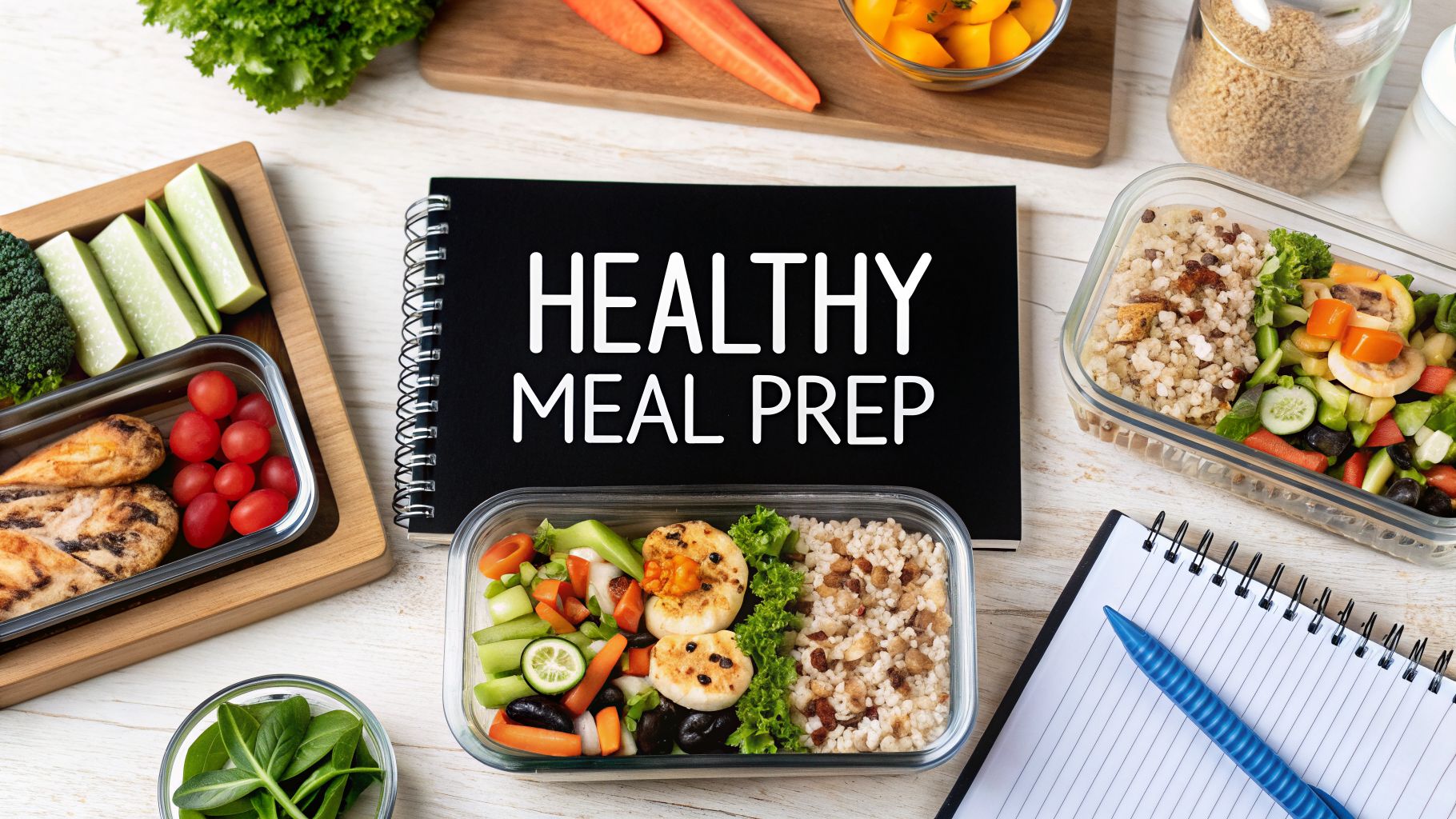
To start healthy weekly meal prep, pick 3-4 simple recipes, dedicate 2-3 hours for cooking, and use quality airtight containers. Focus on making lunches or dinners for 3-5 days to build a sustainable habit. This approach saves time, controls nutrition, and reduces daily stress.
Jumping into meal prep can feel overwhelming, but it doesn't have to be. The secret isn't about spending your entire Sunday chained to the stove. It’s about a simple, repeatable system. Nail these four things, and you’ll build a sustainable habit that actually sticks.
What's the First Step to Successful Meal Prep?

The biggest mistake people make is thinking meal prep is just about cooking a ton of food at once. The key to making it work long-term is giving it a purpose. When you tie your prep to a specific outcome, it stops feeling like a chore and starts feeling like a powerful tool to run your life better.
So, before you even think about recipes, ask yourself one question: what problem am I trying to solve? Your answer will shape every single decision that follows, from the food you buy to the way you cook.
Why Do I Need to Define a Goal?
Are you tired of the 6 PM takeout panic? Trying to hit specific macros for the gym? Your "why" is the fuel that will keep you going when you'd rather be doing anything else but chopping vegetables.
Most people’s goals fall into one of these buckets:
- Time Savings: You want your weeknights back. Dinner is ready to heat and eat, no thinking required.
- Nutritional Control: You need to know exactly what’s in your food, whether it’s hitting a protein target, cutting sodium, or managing an allergy.
- Financial Savings: You’re done with the daily $15 lunch and the endless food delivery fees.
- Stress Reduction: You want to eliminate the mental drain of figuring out "what's for dinner?" every single day.
Defining a clear goal gives your prep a mission. For instance, if your goal is to hit 150g of protein a day, your prep will automatically shift to batch-cooking chicken, portioning out Greek yogurt, and making a big pot of lentils. You're no longer just cooking—you're building a system for success.
Should I Cook All My Meals at Once?
Thinking you need to cook seven different, elaborate dinners for the week ahead is a fast track to burnout. That’s not smart prep; it’s just a massive, exhausting cooking session.
A much better way to start is to scale back. Just prep your lunches for the work week. That’s it. See how that feels.
Or, try "component prep." This has been a game-changer for so many people. Instead of full meals, you just cook versatile building blocks: a big batch of grilled chicken, a container of quinoa, a tray of roasted vegetables. Then, during the week, you assemble them into different meals—a chicken salad one day, a quinoa bowl the next. You get all the time-saving benefits without the monotony. For more ideas on how to pair these components, check out our guide on how to create a balanced meal plan.
How Do I Build a Balanced Meal Prep Menu?
Turning a blank weekly calendar into a delicious, balanced plan that works for you is the real challenge. The secret is to move your health goals from an abstract idea into an actionable plan, centered around nutrient-dense whole foods.
The simplest and most effective tool for this is the plate method. It's a game-changer because it’s a visual guide—no complex tracking or obsessive calorie counting required. It’s perfect for building a healthy weekly meal prep habit.
The Plate Method: Fill 50% of your plate with non-starchy vegetables, 25% with a source of lean protein, and the final 25% with complex carbohydrates. This simple ratio creates a nutritionally sound, satisfying meal every time.
This visual framework is your blueprint for success. It ensures you’re getting a fantastic mix of micronutrients, fiber, muscle-supporting protein, and sustained energy with every single meal you prep. Think about it: a beautiful plate with half of it covered in vibrant roasted broccoli and bell peppers (veggies), a perfectly grilled chicken breast (protein), and a scoop of fluffy quinoa (carbs) filling out the rest.
How Can I Create a Simple Recipe List?
To dodge decision fatigue and keep your prep sessions lightning-fast, you need to build a 'core recipe list'. This is simply your personal collection of 5-7 trusted meals that you actually enjoy eating and know how to make without much thought.
Rotating through these core recipes keeps your menu interesting without sending you down a rabbit hole of new, complicated recipes every week. You can build this list over time—just try one new, simple recipe each week. If you love it and it’s easy to prep, it makes the cut.
Here’s a good place to start building your list:
- Breakfast: Think overnight oats, cottage cheese egg bakes, or grab-and-go protein smoothies.
- Lunch: Big-batch salads with a hearty protein, versatile quinoa bowls, or a comforting, hearty soup.
- Dinner: Sheet-pan meals are your best friend here. Salmon and asparagus is a classic, as is a big batch of ground turkey chili.
Having this reliable set of recipes means you spend less time hunting for ideas and more time executing a plan that you know works. For a more detailed walkthrough on putting these meals together, check out our guide on crafting a balanced meal plan.
What's a Sample Meal Prep Menu for Beginners?
Getting started is always easier with a template. The recipes in this sample menu are all designed to be prepped and cooked in under 30 minutes, making them perfect for a quick, effective prep session without taking over your entire Sunday.
| Meal | Day 1 Example | Day 2 Example | Day 3 Example |
|---|---|---|---|
| Breakfast | Overnight Oats with Berries & Chia Seeds | Sausage Hashbrown Egg Muffins | Greek Yogurt with Homemade Granola |
| Lunch | Black Bean Quinoa Bowl with Avocado & Corn | Sheet-Pan Chicken with Roasted Broccoli | Mediterranean Chickpea Salad with Lemon Dressing |
| Dinner | Sheet-Pan Salmon with Asparagus & Sweet Potato | Ground Turkey Stir-fry with Mixed Veggies & Rice | Lentil Soup with a side of Whole-Grain Bread |
A plan like this shows you how to think strategically. For instance, the roasted sweet potato from dinner on Day 1 can easily be tossed into a lunch bowl later in the week. This kind of ingredient overlap is a pro-move—it minimizes food waste and makes your cooking efforts go even further.
What's the Most Efficient Way to Cook My Prepped Meals?
To make healthy meal prep a lasting habit, you have to be efficient in the kitchen. Most people who stick with it follow one of two core strategies: component prep or full meal prep. Figuring out which one fits your life is the key to making it all click.
Component prep is all about batch-cooking individual ingredients. You'll have a big container of cooked quinoa, a tray of roasted broccoli and peppers, and a dozen grilled chicken breasts ready to go. Then, during the week, you just grab and assemble these building blocks into different meals.
Full meal prep, on the other hand, is what most people picture: cooking and portioning complete, ready-to-eat meals. This is your classic lineup of containers with chicken, rice, and veggies, perfectly portioned and just waiting for a quick reheat.
How Do I Choose Between Component and Full Meal Prep?
It really boils down to how much you value variety versus pure, grab-and-go convenience.
Choose component prep if: You get bored easily. It gives you the flexibility to use the same core ingredients to build a grain bowl one day, a loaded salad the next, and tacos the day after.
Choose full meal prep if: You want maximum convenience and minimal thinking. If your goal is zero cooking or assembly during a chaotic workweek, this is the dream. Just grab a container, heat, and eat.
A hybrid approach also works wonders. Maybe you fully prep your lunches for the week but just component prep for dinners, which gives you a bit more freedom and creativity in the evenings.
How Can I Create an Optimized Cooking Workflow?
A smart workflow can easily cut your kitchen time in half. The secret is to stop thinking like a home cook making one dish at a time and start thinking like a chef. You have to manage your clock by starting with whatever takes the longest to cook.
Let's say you're prepping roasted sweet potatoes (45 minutes), quinoa (20 minutes), and a big chopped salad. Here’s how a pro would tackle it:
First, get that oven preheating and pop the sweet potatoes in. They have the longest cook time, so they set the pace.
While the potatoes are roasting, you can get the quinoa cooking on the stovetop.
Then, during the 15-20 minutes the quinoa is simmering, you have the perfect window to chop all your vegetables for the salad.
By the time your longest-cooking item is done, everything else is ready too. This multi-tasking, assembly-line approach is how a 2-hour prep session can yield a week's worth of food.
This "building block" logic applies directly to how you build your plate, too.

Starting with veggies, then adding protein, and finishing with carbs creates a simple mental checklist you can use for any meal, ensuring every dish is balanced. It’s no surprise that while nearly 9 out of 10 Americans have tried meal prep, this efficient style is a major reason why 70% of households who plan their meals actually stick with it. Discover more insights on how Americans approach meal prep from Myprotein.
How Can Meal Prep Save Me Money?
Beyond saving you time, a solid weekly meal prep routine is one of the single most powerful moves you can make to get a handle on your finances. When you shift from reactive food choices—like grabbing last-minute takeout or buying daily cafe lunches—to a proactive plan, you immediately slash spending on impulse buys and overpriced convenience meals.
The real secret isn't just cooking more at home. It's about shopping with surgical precision and actually using every single ingredient you bring into your kitchen. This all starts with an organized grocery list based on your weekly meal plan, preventing impulse buys.
How Can I Reduce Food Waste and Costs?
The most financially savvy meal preppers have mastered the art of ingredient overlapping. This just means you intentionally pick recipes that share a few key components. It ensures that big bag of carrots or bunch of cilantro gets completely used up, dramatically cutting down on food waste.
A perfect example is buying a whole chicken. You can roast it for Sunday dinner, shred the leftover meat for chicken salad sandwiches on Monday and Tuesday, and then boil the carcass to make a rich, nutritious bone broth for a soup base later in the week. One purchase, three completely different uses.
This approach totally transforms how you see your ingredients. A large bag of spinach isn't just for one salad; it's destined for green smoothies, an egg scramble, and for wilting into a pasta sauce. This strategy is a cornerstone of any budget-friendly prep routine. For more ideas, you can dive into our detailed guide on building a budget meal plan.
What Are the Best Budget-Friendly Ingredients?
Putting together a healthy weekly meal prep plan on a tight budget also means getting smart about your food choices. Certain ingredients deliver a huge nutritional punch for a much lower cost.
- Lean on budget proteins: While chicken and fish are fantastic, don't ignore powerhouse proteins like lentils, beans, chickpeas, and eggs. They're incredibly affordable, ridiculously versatile, and packed with nutrients.
- Buy produce in season: Fruits and vegetables that are in season are not only fresher and taste better, but they're also way cheaper because they're so abundant.
- Embrace the freezer aisle: Don't shy away from frozen fruits and vegetables. They are picked at peak ripeness and flash-frozen, which locks in their nutrients. They're often cheaper than fresh, last for months, and completely eliminate the risk of your produce going bad before you can use it.
How Do I Store and Reheat My Meals for Maximum Freshness?
 You’ve done the hard work of planning and cooking. Now comes the part that makes or breaks your entire meal prep: storage. This isn’t just about keeping food safe; it’s about making sure your Wednesday lunch tastes just as incredible as it did when you cooked it on Sunday. The right containers and a few simple rules are all it takes.
What Are the Best Storage Practices?
Glass containers are highly recommended. They don't stain, absorb odors, and can go straight from the fridge to the oven for easy reheating. Whatever material you choose, make sure your containers have airtight, leak-proof seals.
Before storing, always let your cooked meals cool on the counter until they reach room temperature—this usually takes about 60-90 minutes. Putting hot food directly into the fridge can raise the refrigerator's temperature, putting other food at risk.
How Long Does Prepped Food Last?
Not all foods have the same shelf life. Front-load your week with the most perishable items, like fish or delicate greens, to minimize waste and ensure safety.
Here’s a quick reference guide:
| Food Item | Recommended Refrigerator Storage |
|---|---|
| Cooked Grains (Quinoa, Rice) | 4–5 days |
| Roasted Vegetables | 3–4 days |
| Cooked Chicken, Turkey, or Beef | 3–4 days |
| Cooked Fish and Seafood | 2–3 days |
| Hard-Boiled Eggs (in shell) | Up to 7 days |
| Soups and Stews | 3–4 days |
Food safety begins during cooking. It's essential to prevent cross-contamination to ensure your meals are safe from the start.
What's the Best Way to Reheat Prepped Meals?
Your goal is to restore the food's original texture and flavor, not just make it hot.
- Microwave: Best for soups, stews, and grain bowls. Add a splash of water and cover with a damp paper towel to create steam and prevent drying.
- Oven/Toaster Oven: Perfect for reviving anything you want to be crispy, like roasted vegetables or baked chicken.
- Stovetop: Ideal for reheating stir-fries, curries, and sauces in a pan with a little broth or water.
My single most important tip for salads is to always store dressings, sauces, and any crunchy toppings separately. Adding them right before you eat is the only way to avoid a sad, soggy mess and ensure every bite is fresh and crisp.
Can AI Really Automate My Meal Prep?
Absolutely. If you’ve ever felt like the endless planning, list-making, and macro-counting were the worst parts of meal prep, modern AI tools can take over that tedious work for you. Think of it as your own personal nutrition assistant.
You tell an app your specific goals, dietary needs, and how much time you have to cook. In seconds, it generates a complete weekly plan with easy recipes that fit your life. It's about getting rid of the hours of mental gymnastics that go into planning, freeing you up to enjoy cooking and eating healthy food.
How Does AI Solve Common Prep Problems?
The magic of an AI planner is how it tackles the exact problems that make most people give up on meal prep. It creates a varied, balanced menu that prevents boredom while ensuring every meal hits your specific calorie and macro targets.
An AI planner does the heavy lifting for you. It learns your preferences, plans for leftovers to cut down on food waste, and even organizes your grocery list by store aisle to get you in and out faster. That level of smart automation is what makes sticking with it feel effortless.
For example, a good AI tool will ask you a series of personalized questions to build your plan from the ground up.
This simple setup allows you to dial in your exact goals, which the AI then translates into a perfectly matched meal plan. You can check out some of the best AI-powered meal prep tools to see how different platforms approach this.
Ultimately, these tools provide the structure and guidance that turn healthy eating from a weekly struggle into a sustainable habit. If you want to see how it can transform your routine, you can start your personalized plan here.
Frequently Asked Questions About Healthy Weekly Meal Prep
For how many days should I meal prep?
For optimal freshness and safety, it's best to meal prep for 3-5 days at a time. This ensures food quality remains high without needing to freeze everything.
How do I keep my meals from getting boring?
Rotate between 5-7 core recipes and try one new recipe each week. Use different sauces, spices, and fresh herbs to change the flavor profile of the same base ingredients.
Is it safe to meal prep fish?
Yes, but you should plan to eat prepped fish within 2-3 days for the best quality and safety. Always store it in a sealed, airtight container in the coldest part of your fridge.
What are the best containers for meal prep?
Airtight glass containers are ideal because they don't stain, absorb odors, and are safe for both the oven and microwave. If using plastic, ensure it's BPA-free and leak-proof.
What's the fastest way to get a meal prep plan?
Using a dedicated tool like the AI Meal Planner is the quickest method. It generates a personalized weekly menu and grocery list in seconds based on your goals and preferences.
How do I reheat food without it getting soggy?
Use an oven or air fryer for foods meant to be crispy, like roasted vegetables or breaded chicken. For most other meals, microwave with a damp paper towel over the container to steam them.
What are the best meals to freeze?
Soups, stews, chilis, curries, and casseroles freeze exceptionally well. Avoid freezing dishes with delicate greens, high-water-content vegetables (like cucumbers), or dairy-based sauces that can separate.
AI-powered nutrition
Get Your Personalized Meal Plan
AI creates the perfect meals for your goals, lifestyle, and taste.
Start Your Journej