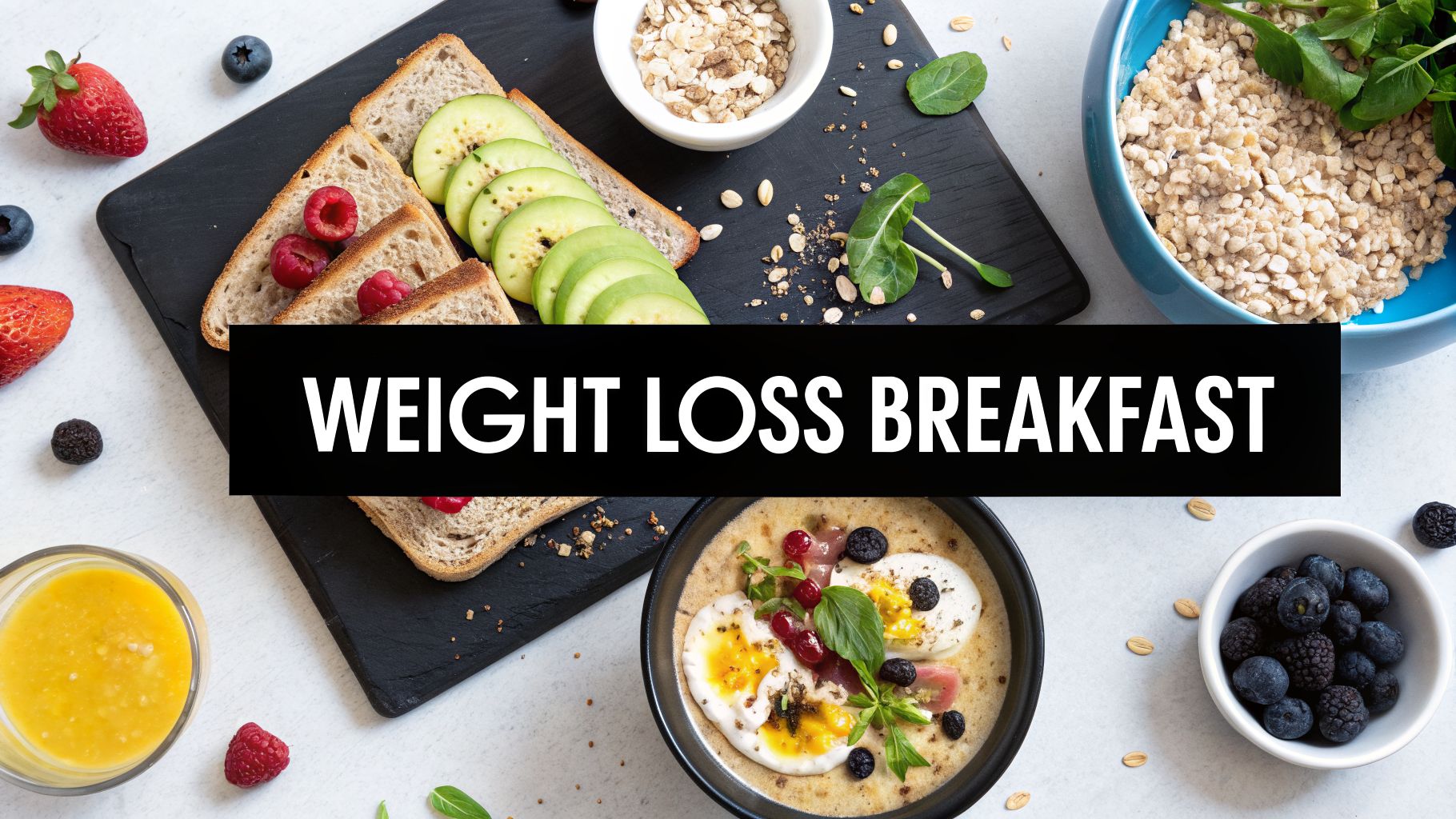
The best breakfast for weight loss is a meal containing 400-500 calories, with at least 20-30 grams of protein and 8-10 grams of fiber. This specific combination maximizes fullness, stabilizes blood sugar, and helps control cravings throughout the day. Consuming a breakfast with these targets makes it easier to maintain a calorie deficit for weight loss.
When it comes to weight loss, breakfast is your first and best opportunity to set the day’s nutritional tone. The ideal morning meal isn't about deprivation; it's about strategy. Forget the sugary cereals and carb-heavy pastries that lead to a midday crash. This approach is specifically designed to keep you feeling full, stabilize your blood sugar, and crush cravings for hours.
Why Is a Structured Breakfast So Effective for Weight Loss?
The endless debate over eating or skipping breakfast often misses the most important detail. It’s not simply if you eat, but what you eat consistently that turns your morning meal into a powerful tool for weight loss. A breakfast engineered with protein and fiber directly manipulates your body's hunger hormones to your advantage.
- Protein's Role: It works to suppress ghrelin, the hormone that screams "I'm hungry!" to your brain.
- Fiber's Function: It slows down digestion and boosts PYY, a hormone that signals you're full and satisfied.
This powerful duo prevents the all-too-common energy spike and subsequent crash that high-sugar breakfasts trigger, which is what sends you hunting for snacks by 10 a.m. By starting your day with a meal that's built to last, you make it profoundly easier to stick to your goals for the rest of the day.
What Should My Breakfast Macros Look Like?
| Nutrient/Metric | Target Range | Primary Role in Weight Loss |
|---|---|---|
| Calories | 400-500 | Provides energy without overshooting your daily needs. |
| Protein | 20-30 grams | Maximizes satiety and suppresses the hunger hormone ghrelin. |
| Fiber | 8-10 grams | Slows digestion and increases the fullness hormone PYY. |
This table isn't just a suggestion; it's a blueprint for constructing a breakfast that actively works for you, not against you.
Why Is Consistency More Important Than Perfection?
Making a smart breakfast a daily habit is far more impactful than eating a few "perfect" meals here and there. This isn't just talk; the research is clear. A 2022 study revealed that for every additional day per week participants ate a structured breakfast, they achieved an extra 0.5% body weight loss.
Even more telling, data from the National Weight Control Registry—which tracks individuals who have successfully maintained long-term weight loss—shows that 78-80% of them eat breakfast every single day.
The goal isn't just to eat breakfast; it's to eat the right breakfast consistently. Think of it as front-loading your satiety for the day, which makes all subsequent food choices easier and more mindful.
For those mornings when you're in a rush, convenient options like the best protein bars for breakfast can be a lifesaver, helping you hit your targets without derailing your progress. Getting your breakfast right is a foundational step. If you want to explore more ways to boost your protein intake throughout the day, check out our guide on building a high-protein meal plan.
How Do I Calculate Calories and Macros for My Breakfast?
Figuring out the exact numbers for your breakfast can feel like a daunting math problem, but it's simpler than you think. The goal here isn't perfection; it's about establishing a reliable starting point that connects your morning meal to your overall weight loss goals for the day.
First, you need a ballpark estimate of your daily calorie target for weight loss. The easiest way to get this is with an online calculator that uses a formula like the Mifflin-St Jeor equation. These tools take your age, gender, height, weight, and activity level into account to give you a solid number to work with.
Once you have that daily target, the breakfast math becomes surprisingly simple.
A smart breakfast weight loss strategy dedicates about 25-30% of your total daily calories to your morning meal. This approach front-loads your energy and keeps you feeling full, which is a huge advantage for preventing those late-afternoon snack attacks.
So, if your daily target for weight loss is 1,800 calories, your breakfast should land somewhere in the 450 to 540 calorie range. This is the sweet spot—it’s enough to properly fuel your morning without eating into your calorie budget for the rest of the day.
How Do I Turn Calories into a Balanced Meal?
With a calorie target in hand, the next move is to think about what’s in those calories. We need to break it down into macronutrients—protein, carbs, and fat—to make sure your breakfast is built for sustained energy, not just a fleeting sugar rush.
For a 450-calorie breakfast, this is a fantastic starting framework:
- Protein: Around 30 grams
- Carbohydrates: Around 45 grams
- Fat: Around 15 grams
Think of these as guardrails, not a rigid cage. Some days you might go a little higher on protein, other days a bit more on healthy fats. It’s all about building a meal that keeps you satisfied and works for your body.
This simple framework helps you build a powerful breakfast every single time.

As you can see, it's a logical flow. You start with protein to build muscle and feel full, add fiber for digestion and even more satiety, and then make sure the total calories fit your target. It's a simple, repeatable process that guarantees a balanced meal.
How Can I Learn to Track This Without an App?
Okay, but how do you actually apply this without living in a spreadsheet? My advice is to use a nutrition app for a week or two. You don't have to track forever, but doing it for a short period is an absolute game-changer for your food literacy.
It teaches you what 30 grams of protein or 10 grams of fiber actually looks like on a plate. You’ll quickly learn that three large eggs get you about 18 grams of protein, while a cup of Greek yogurt can easily deliver over 20 grams. This is the kind of practical knowledge that eventually lets you build meals intuitively.
Let's build a quick smoothie using this logic:
- Protein Base: Start with a scoop of protein powder (~25g protein).
- Fiber & Carbs: Toss in a half-cup of frozen berries, a tablespoon of chia seeds, and a big handful of spinach (~10g fiber, ~20g carbs).
- Healthy Fats: Finish with a tablespoon of almond butter (~8g fat).
Boom. You've easily hit your targets with a delicious meal that will keep you full for hours. The whole point is to demystify these numbers and turn them into tangible, tasty food. Taking control of your breakfast like this sets a powerful, positive tone for the entire day.
Of course, if you want to skip the manual calculations altogether, you can find a variety of helpful calculators and other resources designed to do the heavy lifting for you. These tools can generate personalized meal plans that automatically dial in these numbers based on your specific goals, making a consistent breakfast weight loss strategy practically effortless.
What Are the Best Foods for a Weight Loss Breakfast?
Alright, let’s move from the numbers on a screen to the food on your plate. Knowing your protein and fiber targets is one thing, but translating that into a breakfast that’s both delicious and effective for weight loss is where the real magic happens.
Think of this as building your toolkit. We're stocking your kitchen with high-performance ingredients you can mix and match to keep your mornings interesting and, more importantly, to keep you full and energized until lunch.

What Are the Best Protein Sources for Breakfast?
Protein is the non-negotiable backbone of a fat-burning breakfast. It’s the nutrient that delivers deep, lasting satiety, stopping you from rummaging through the pantry an hour after you’ve eaten. Here are the most effective, accessible options to build your meals around.
- Eggs: The undefeated classic. Two large eggs give you about 12–14 grams of protein. Scramble them, fry them, or hard-boil a batch for the ultimate grab-and-go protein hit.
- Greek Yogurt: This is a true protein superstar. A single cup of plain, low-fat Greek yogurt can pack a massive 20–23 grams of protein. It’s the perfect, creamy base for a breakfast bowl or a high-powered smoothie.
- Cottage Cheese: Don't overlook this one. It's making a comeback for a reason. A single cup can offer an incredible 25 grams of protein. I love pairing it with some fruit and nuts for a balanced meal that feels like a treat.
- Tofu: For a fantastic plant-based scramble, firm tofu is your best friend. A half-cup serving delivers a solid 10 grams of protein and acts as a blank canvas for any herbs and spices you throw at it.
- Protein Powder: When you're short on time, nothing beats a quality protein powder. One scoop typically provides 20–30 grams of protein, making it ridiculously easy to whip up a nutrient-dense smoothie in minutes.
What Are the Best Fiber Sources for Breakfast?
Fiber is protein’s essential partner in crime. It adds bulk to your meal for physical fullness, slows down digestion to keep you satisfied longer, and supports a healthy gut—all critical for managing your appetite and weight. Sprinkling these foods into your breakfast will help you easily hit that 8–10 gram target.
- Oats: A half-cup of rolled oats offers 4–5 grams of fiber. It’s a slow-releasing carb that gives you steady, sustained energy without the crash.
- Chia Seeds: These tiny seeds are a fiber bomb. Just two tablespoons contain a huge 10 grams of fiber, plus a healthy dose of omega-3 fats and a little extra protein.
- Berries: Raspberries are the fiber champions of the fruit world, with 4 grams of fiber in just a half-cup. Blueberries and strawberries are excellent choices, too.
- Avocado: Half a medium avocado adds about 5–7 grams of fiber and a generous serving of heart-healthy monounsaturated fats that boost satiety even more.
- Spinach: Don’t be shy about adding greens to your breakfast. Two big handfuls of raw spinach (which wilts down to almost nothing in eggs or a smoothie) adds about 2 grams of fiber and a ton of micronutrients for virtually no calories.
Should I Prioritize Protein or Fiber for Weight Loss?
When designing a weight-loss breakfast, a common question is whether to prioritize protein or fiber. While the best answer is "both," research shows each nutrient offers distinct advantages for satiety and fat loss. Understanding these differences helps you fine-tune your meals for your specific needs.
| Focus Area | High-Protein Breakfast Benefits | High-Fiber Breakfast Benefits |
|---|---|---|
| Primary Satiety Mechanism | Triggers fullness hormones (like PYY and GLP-1), reducing appetite and calorie intake at the next meal. | Adds physical volume to the stomach and slows gastric emptying, leading to prolonged feelings of fullness. |
| Metabolic Impact | Higher thermic effect of food (TEF), meaning your body burns more calories digesting protein compared to carbs or fats. | Improves blood sugar control by slowing carbohydrate absorption, preventing energy spikes and crashes that lead to cravings. |
| Weight Loss Studies | Studies consistently link higher protein intake at breakfast with better appetite control and reduced snacking throughout the day. | Research indicates high-fiber diets are associated with lower body weight and improved gut health, which aids in long-term weight management. |
Ultimately, the science confirms that the most powerful approach combines the hormonal appetite suppression of protein with the mechanical, long-lasting fullness from fiber. This synergy is what makes your breakfast a truly effective tool for weight loss.
For example, a bowl of Greek yogurt (protein) topped with a handful of raspberries (fiber) and a tablespoon of chia seeds (fiber and fat) is a perfect trifecta. This simple combination creates a powerhouse meal that can genuinely keep you satisfied for four or five hours. It’s not just breakfast; it’s a hunger management strategy.
Similarly, scrambling three eggs (21 grams of protein) with a large handful of spinach (2 grams of fiber) and serving it alongside half an avocado (5–7 grams of fiber) turns a basic meal into a nutritional juggernaut. If you're looking for more plant-based ideas, our guide on a well-structured vegetarian meal plan has some great inspiration.
By using these combinations, breakfast stops being a meal you have to get through and becomes one of your most powerful tools for breakfast weight loss.
What Are Some Quick Weight Loss Breakfast Recipes?
Knowing what to eat is one thing, but actually preparing it on a chaotic morning is the real challenge. The best breakfast for weight loss is the one you’ll make and eat consistently. These recipes are designed to be ready in under 15 minutes, hit our protein and fiber targets, and taste incredible.
Think of these less as strict instructions and more as flexible templates. You can tweak them to fit your own tastes and what you have on hand.

If you need more ideas, you can always find a great variety of low-calorie, high-protein meals that are perfect for sustainable weight loss and can easily be adapted for your morning routine.
Recipe 1: Creamy Berry Power Smoothie
This is the ultimate grab-and-go solution when you literally have five minutes to spare. It’s loaded with nutrients to keep you feeling full for hours.
Ingredients:
- 1 scoop (30g) vanilla or unflavored protein powder (whey or plant-based)
- 1 cup unsweetened almond milk
- 1/2 cup frozen mixed berries
- 1 tbsp chia seeds
- 1 large handful of fresh spinach
How to Make It:
- Add everything to a blender.
- Blend on high until it's completely smooth and creamy.
- Pour it into a glass and you're good to go.
Nutritional Breakdown (Approximate): Calories: 310 | Protein: 28g | Carbs: 22g | Fat: 12g | Fiber: 11g
Recipe 2: Savory Spinach and Feta Egg Bites
Whip up a batch of these on a Sunday, and you'll have a high-protein breakfast you can grab all week. They reheat perfectly in the microwave in under a minute.
Ingredients:
- 8 large eggs
- 1/2 cup crumbled feta cheese
- 2 cups fresh spinach, chopped
- 1/4 cup milk or unsweetened almond milk
- Salt and pepper to taste
How to Make It:
- Preheat your oven to 375°F (190°C) and grease a 12-cup muffin tin.
- In a big bowl, whisk the eggs and milk together, then season with salt and pepper.
- Stir in the chopped spinach and feta.
- Pour the mixture evenly into the muffin cups.
- Bake for 12-15 minutes, or until the eggs are firm and set.
Nutritional Breakdown (Approximate, per 2 bites): Calories: 220 | Protein: 20g | Carbs: 4g | Fat: 14g | Fiber: 1g
Recipe 3: Overnight Mocha Chia Pudding
For anyone who loves a dessert-for-breakfast vibe, this pudding is a game-changer. Prep it the night before and wake up to a delicious, fiber-rich meal that keeps your breakfast weight loss goals on track.
Ingredients:
- 3 tbsp chia seeds
- 1 tbsp unsweetened cocoa powder
- 1/2 tsp instant coffee powder
- 1 scoop chocolate or vanilla protein powder
- 1 cup unsweetened almond milk
- Optional: 1 tsp maple syrup or a few drops of stevia
How to Make It:
- In a jar or bowl, mix together the chia seeds, cocoa powder, coffee, and protein powder.
- Pour in the almond milk and sweetener (if you're using it).
- Stir everything vigorously until it's well combined with no clumps.
- Cover it and pop it in the fridge for at least 4 hours, or overnight.
Nutritional Breakdown (Approximate): Calories: 350 | Protein: 26g | Carbs: 28g | Fat: 15g | Fiber: 15g
How can I modify these recipes for my diet?
A successful meal plan is a flexible one. These recipes can be easily tweaked for different dietary needs without losing their weight-loss benefits.
For a Vegan Diet:
- Smoothie: Use a high-quality plant-based protein powder (pea or soy isolate works great).
- Egg Bites: Swap the eggs for a firm tofu scramble or a batter made from chickpea flour. Use a vegan feta alternative.
For a Keto or Low-Carb Diet:
- Chia Pudding: Make sure your protein powder is ultra-low in carbs and use a keto-friendly sweetener like monk fruit. Stick to low-carb berries like raspberries.
- Smoothie: Trade the mixed berries for a smaller amount of raspberries, or use avocado to add creaminess and healthy fats instead.
Making these small but powerful adjustments is what makes long-term success possible. If you want to automate this process, the AI Meal Planner can generate endless recipe variations tailored to your specific macros, dietary needs, and food preferences, taking all the guesswork out of it. This ensures your breakfast weight loss journey is both effective and enjoyable.
How Can I Plan Breakfasts for an Entire Week?
When it comes to weight loss, consistency is your secret weapon. Moving beyond one-off meal decisions to a full weekly system is what makes healthy eating feel automatic instead of like a daily chore. This is the real key to making new habits stick.

The entire goal here is to remove friction from your mornings. When a delicious, balanced breakfast is already planned—or better yet, already made—you eliminate the mental gymnastics of figuring out what to eat. This frees you from the temptation of that sugary, convenient option that can derail your progress before the day even gets going.
How to build a 7-day breakfast schedule
A good weekly plan gives you nutritional variety while keeping things incredibly simple. You’re not trying to cook seven totally different, complex meals. The smarter approach is to rotate through just a few of your trusted favorites. This streamlines both your grocery list and your prep time.
Here’s what a balanced, efficient week could look like, using recipes similar to the ones we’ve covered:
- Monday: Creamy Berry Power Smoothie (A quick and nutrient-dense start to the week).
- Tuesday: Two Savory Spinach and Feta Egg Bites (Made on Sunday, ready in 60 seconds).
- Wednesday: Overnight Mocha Chia Pudding (Prepped the night before for a perfect grab-and-go morning).
- Thursday: Two Savory Spinach and Feta Egg Bites (Another easy win from your weekly prep).
- Friday: Creamy Berry Power Smoothie (Using your pre-portioned freezer pack).
- Saturday: Greek Yogurt Bowl with nuts and berries (A flexible, 5-minute option).
- Sunday: Fresh Scrambled Eggs with Avocado Toast (A more relaxed weekend meal).
This schedule provides a great mix of protein and fiber all week long, and most importantly, it minimizes morning stress.
What are the smartest meal prep strategies?
Think of meal prep as your Sunday superpower. Just one hour can save you time and mental energy every single day of the week. The trick is to focus on components you can cook in batches.
My Personal Tip: Never leave a Sunday prep session without making at least two things for the week ahead. Even something as simple as boiling half a dozen eggs gives you a high-protein snack or breakfast component that's ready to go.
Here are a few practical meal prep strategies you can use:
- Batch-Cook Egg Bites: Make a full 12-cup muffin tin of egg bites. This gives you six breakfasts for the week (two bites per serving).
- Create Smoothie Packs: Portion out your smoothie ingredients (protein powder, spinach, berries, seeds) into individual freezer bags. In the morning, just dump one pack into the blender with your liquid of choice.
- Portion Out Puddings: Make 2-3 jars of overnight oats or chia pudding at once. They’ll keep perfectly in the fridge for several days.
How can I use leftovers for breakfast?
A highly effective but often-overlooked strategy is what I call "leftover planning." This just means intentionally using parts of last night's dinner to build today's breakfast. It’s a brilliant way to cut down on food waste and save money.
For instance, if you had grilled chicken and roasted vegetables for dinner, shred a small portion of the leftover chicken. In the morning, you can quickly sauté it with the veggies and an egg for a high-protein, zero-effort scramble. This simple crossover of ingredients makes your breakfast weight loss plan even more sustainable.
Interestingly, while a structured breakfast is a game-changer for many, it's not a universal rule for weight loss. A notable randomized controlled trial from the University of Alabama at Birmingham found no significant weight loss difference between groups who ate breakfast and those who skipped it. This really highlights that your overall dietary pattern and individual response are what truly matter. You can explore the full research published in the American Journal of Clinical Nutrition to learn more.
This is where a personalized approach becomes so valuable. For those who thrive on a morning meal, planning is essential. If you're building out a full day's worth of meals, you might also be interested in our guide to a complete 1500-calorie meal plan.
Frequently Asked Questions
What is the best time to eat breakfast for weight loss?
The ideal time to eat is within one to two hours of waking, but consistency is more important than the exact time. Listening to your body's hunger cues and maintaining a regular eating schedule will yield the best results for weight management.
Does coffee with milk ruin a weight loss breakfast?
A small splash of milk in your coffee adds minimal calories and will not ruin your breakfast. However, be wary of sugary lattes and blended coffee drinks, which can contain hundreds of hidden calories.
What should I do if I'm not hungry in the morning?
Never force a large meal if you're not hungry. Instead, opt for something small and protein-dense, like a single hard-boiled egg or a small protein shake, to prevent overeating later in the day.
Is skipping breakfast better for weight loss?
For most people, a high-protein, high-fiber breakfast is better for managing hunger and making healthier choices all day. However, skipping breakfast can work for some, especially within an intermittent fasting protocol, if it helps them control overall calorie intake.
Are oatmeal or eggs better for weight loss?
Both are excellent choices, but eggs have a slight edge due to their higher protein content, which is more effective for satiety. You can boost oatmeal's effectiveness by adding protein powder, nuts, or seeds.
How many calories should I eat for breakfast to lose weight?
Aim for 400-500 calories for a weight loss breakfast. This provides enough energy to start your day without using too much of your daily calorie budget, making it easier to maintain a deficit.
Can I use meal replacement shakes for a weight loss breakfast?
Yes, a quality meal replacement shake can be a convenient and effective option for breakfast. Choose one that is high in protein (20+ grams), contains fiber, and is low in added sugar.
Tired of the daily guesswork? The AI Meal Planner creates a personalized breakfast and full-day meal plan based on your exact weight loss goals and food preferences. Stop counting and start eating with confidence by exploring your custom plan.
AI-powered nutrition
Get Your Personalized Meal Plan
AI creates the perfect meals for your goals, lifestyle, and taste.
Start Your Journej