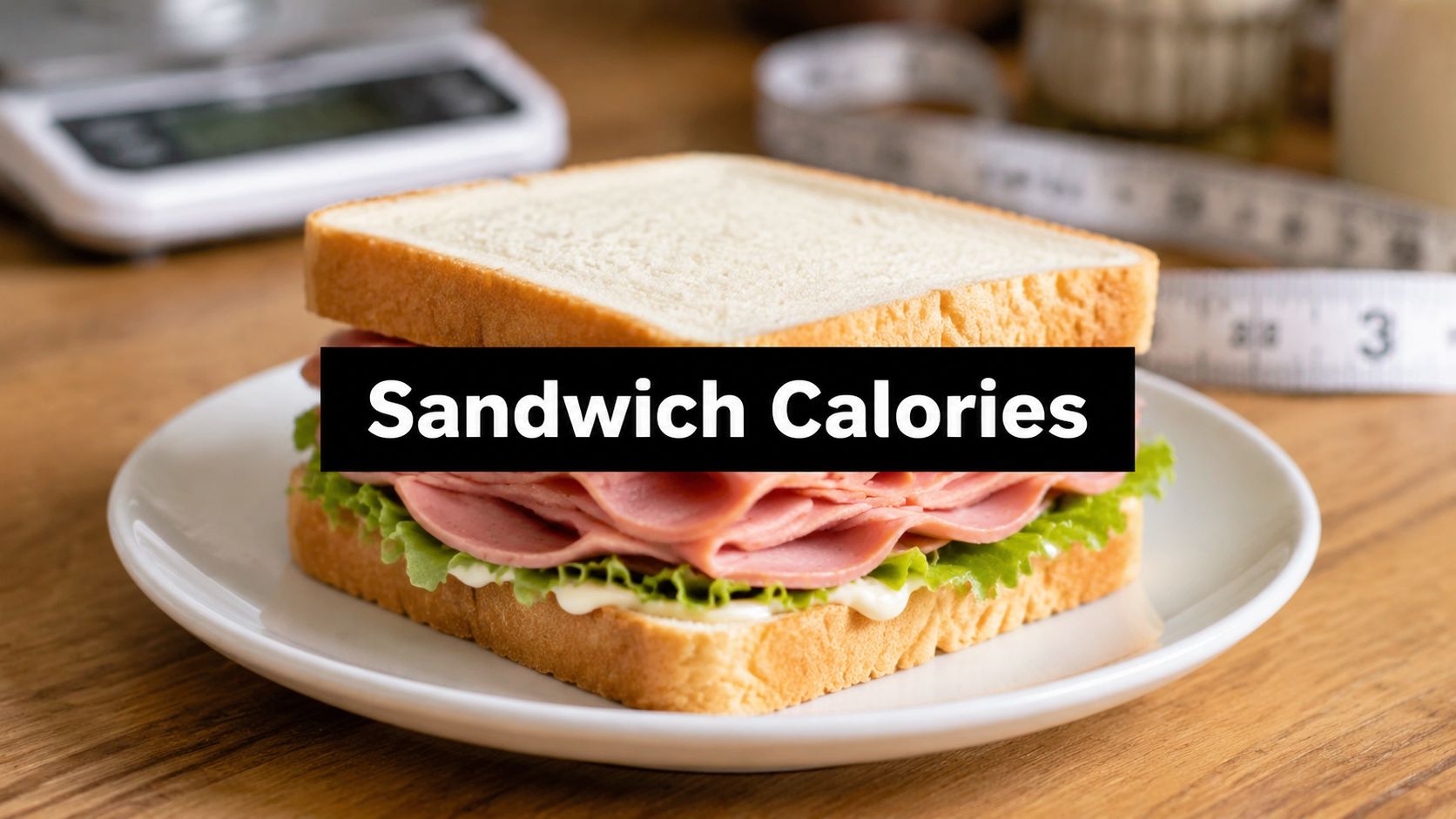
If you're standing at the fridge deciding whether a bologna sandwich fits your day, the tricky part is that there isn't one single calorie answer. A standard bologna sandwich with spread is listed at 252 calories, while prepared deli-style versions can reach 385 to 450 calories per serving depending on bread, meat amount, cheese, and condiments.
A lot of people underestimate bologna sandwich calories because the sandwich looks simple. Two slices of bread, a few slices of lunch meat, maybe some mayo, and lunch is done. But small choices change the total fast, especially when the meat, cheese, and spread all bring in extra energy.
The useful way to think about this sandwich isn't “Is it good or bad?” It's “What exactly is in mine?” Once you break it down layer by layer, you can build a version that better matches your hunger, macros, and goals.
How Many Calories Are in a Bologna Sandwich?
You make a quick lunch with two slices of bread, a few rounds of bologna, and a swipe of spread. It looks simple, but the calorie total can swing quite a bit depending on how each layer is built.
As noted earlier, a standard bologna sandwich with spread comes in at 252 calories. That works best as a reference point, not a fixed answer for every sandwich.
A sandwich works like a stack of small calorie decisions. Bread sets much of the carbohydrate base. Bologna adds fat and protein. Spread can change the total faster than many people expect because a thin-looking layer still adds energy. Once you see the sandwich this way, the number becomes easier to estimate and adjust.
Use 252 calories as a baseline for a basic version, then adjust based on your actual ingredients and portions.
That approach matters because homemade sandwiches rarely match a generic listing exactly. One person uses light bread and a single slice of meat. Another uses thick white bread, several slices of bologna, and a heavier spread. Both are called a bologna sandwich, but they do not land in the same calorie range.
A practical way to estimate yours is to look at each part separately:
- Bread choice: Thin sandwich bread usually lands lower than large bakery slices.
- Bologna portion: More slices mean more calories, fat, and protein.
- Spread amount: Mayo, butter, or sandwich spread can shift the total quickly.
- Extras: Cheese, pickles, and toasted add-ons can change the final count.
If you want a closer estimate for your own lunch, build it ingredient by ingredient with a food database for sandwich ingredients. That gives you a number based on your bread, your bologna, and your portion sizes, not a one-size-fits-all average.
What Is the Calorie Breakdown for Each Ingredient?
The fastest way to understand bologna sandwich calories is to stop treating it like one item. It's really a stack of ingredients, and each one pulls the total in a different direction.
The bologna itself is often the biggest surprise. One slice of sandwich bologna is listed at 130 calories per 45 g slice, with 10 g fat, 3 g carbohydrate, and 6 g protein according to Field Bologna's sandwich bologna nutrition information. The same nutrition details show that roughly 77% of its calories come from fat, which explains why portion size matters so much.
What the meat tells you
That single slice gives you a simple lesson. Bologna can be compact in size but still energy-dense. If your sandwich includes multiple slices, cheese, and a creamy spread, the total can climb much faster than the sandwich looks like it should.
A thin-looking deli meat layer can still carry a large share of the sandwich's calories.
Calorie estimates for common bologna sandwich ingredients
The exact calories for bread, cheese, and condiments vary by brand and portion, so it's better to treat them as adjustable pieces rather than fixed numbers.
| Ingredient | Portion | Calorie Range |
|---|---|---|
| Bread | 2 slices | Varies by brand and slice size |
| Bologna | 1 slice | 130 calories |
| Cheese | 1 slice | Varies by cheese type and thickness |
| Mayonnaise or spread | 1 layer | Varies by amount used |
| Mustard | 1 layer | Often lower than creamy spreads |
| Lettuce, tomato, onion, pickle | Sandwich add-ons | Usually small impact compared with meat, cheese, and spread |
How to estimate your own sandwich
Use this order when you build your total:
Start with bread
Enter the exact bread brand if you can. Bread size changes more than commonly expected.Add the bologna by slice count
If your package matches the product above, one slice is 130 calories. Two slices would be meaningfully higher than a standard light build.Check cheese separately
Cheese can turn a snack-style sandwich into a heavier lunch.Log the spread accurately
A thin smear and a generous spoonful aren't the same thing.
For a custom total, a tool like the recipe nutrition calculator makes it easier to add each ingredient as its own line item.
How Do Different Sandwich Builds Compare?
A bologna sandwich can look small on the plate and still land very differently in your food log. The reason is simple. You are not counting “a sandwich.” You are counting a stack of parts.
That makes comparison easier if you break the sandwich into builds.
The minimalist build
This is the bread-and-bologna version, sometimes with mustard or a few vegetable toppings. It is usually the easiest build to keep lighter because there are fewer calorie-dense add-ons competing for space.
If your goal is control, this version works like a basic budget. Fewer ingredients means fewer surprises.
The classic deli build
This is the version many people mean by a “regular” bologna sandwich. Bread, bologna, cheese, and a spread create a fuller sandwich that often climbs faster in calories than expected because several richer ingredients are stacked together.
A commercial reference point helps show what that middle ground can look like. Great American Deli lists a bologna and cheese sandwich at 385 calories per 5.0 oz (142 g), with 24 g fat, 26 g carbohydrate, 14 g protein, and 1,090 mg sodium.

The fully loaded build
Now add another slice or two of bologna, a second cheese slice, a heavier layer of mayo, or thicker bread. The sandwich can shift from simple lunch to a much denser meal without looking dramatically bigger.
That is where people often get tripped up. One extra layer here and one thicker spread there can change the total more than lettuce, tomato, or pickles ever will.
A practical way to compare builds
Use this quick framework:
- Minimalist: Best for tighter calorie control and simpler tracking
- Classic deli: A middle option with more flavor and more total calories
- Fully loaded: Higher in calories and easier to underestimate
If you want a more exact comparison, plug your bread, slice count, cheese, and condiments into a calorie and macro calculator for custom sandwich builds. That gives you a number based on your sandwich, not a generic one.
The main takeaway is straightforward. A bologna sandwich is adjustable, and the total depends on how you build it.
What Are the Macros in a Typical Bologna Sandwich?
Calories tell you how much energy the sandwich provides. Macros tell you where that energy comes from.

In a typical bologna sandwich, the carbs usually come mostly from bread, the fat often comes from bologna and spread, and the protein is mainly from the meat, with cheese adding more if you use it. That basic pattern helps explain why two sandwiches with similar calories can feel different in fullness and fit differently into your daily targets.
What a standard macro pattern looks like
For the standard sandwich discussed earlier, the macro split is reported as 43% fat, 44% carbs, and 13% protein. That gives you a useful picture of the overall balance. It's fairly even between carbs and fat, with a smaller share coming from protein.
For many readers, that's the key takeaway. Bologna sandwiches are not usually protein-only foods, even though they contain lunch meat. Bread and spread shape the macro profile just as much as the meat does.
If you're tracking macros, don't log a bologna sandwich as “mostly protein.” Most versions are a mix, and many lean heavily on fat and carbs.
How to adjust macros without guessing
If you want a sandwich that better fits your goals, focus on the ingredient that controls each macro:
- To lower carbs: Choose a smaller bread portion or a lighter bread option.
- To lower fat: Use less spread and keep the meat and cheese portions moderate.
- To raise protein: Increase the meat portion carefully or choose a build with more lean protein elsewhere in the meal.
- To improve balance: Add produce so the sandwich feels more filling without relying only on extra meat or cheese.
If macro tracking is part of your routine, a calorie and macro calculator can help you log the full sandwich instead of making a rough estimate.
If you want a quick visual explanation of sandwich building and meal tracking, this short video can help:
How Can You Build a Healthier Bologna Sandwich?
A healthier bologna sandwich doesn't have to stop being a bologna sandwich. Usually, it's about choosing which part of the sandwich does the heavy lifting. You can get flavor from the meat, crunch from vegetables, and satisfaction from the bread without stacking every calorie-dense extra at once.
Smart swaps that keep the sandwich familiar

- Choose bread with more substance: Whole grain bread can add texture and make the sandwich feel more complete.
- Be selective with the meat portion: A moderate amount of bologna often gives you the flavor you want without making the sandwich top-heavy.
- Rethink the spread: Mustard or another lighter condiment can keep moisture and flavor without the same richness as a heavy mayo layer.
- Use cheese deliberately: If cheese is the part you enjoy most, keep it and go lighter elsewhere instead of piling on everything.
- Add crisp vegetables: Lettuce, tomato, onion, or pickles can make the sandwich feel larger and fresher.
Nutrient boosts that improve satisfaction
Some of the best upgrades don't involve subtraction at all.
A few slices of tomato, a handful of lettuce, or some onion can change the eating experience more than an extra layer of spread. More texture often makes a sandwich feel more satisfying.
Better sandwich choices usually come from balance, not from trying to make lunch feel like a punishment.
If you're working on longer-term eating habits, this guide to sustainable nutrition for weight management offers helpful context for making changes you can stick with.
For meal ideas built around cleaner ingredient choices, you can also browse a clean eating meal plan.
How to Track Your Custom Sandwich for Accurate Results
The most accurate way to track bologna sandwich calories is to log your actual sandwich, not the closest generic entry. “Bologna sandwich” in an app may be useful for a rough estimate, but your bread brand, slice count, cheese, and condiment amount determine the actual total.
A simple tracking routine that works

Try this process:
Check the package first
Use the label for bread, bologna, cheese, and condiments when possible.Count slices and portions
“A little mayo” is hard to track. A measured amount is much easier.Build the sandwich as separate items
Logging bread, meat, cheese, and spread separately is usually more accurate than choosing one generic result.Save it if you eat it often
Repeating meals are easier to track once you've built them once.
When extra support makes sense
If you're tracking for weight loss, blood sugar awareness, or performance goals, accuracy matters more. Some people also do better with outside guidance, especially if they're balancing medical concerns. In that case, expert medical weight loss guidance can be a useful complement to food tracking.
To turn this into a repeatable habit, you can start with AI Meal Planner onboarding and set up meals around your calorie and macro targets.
Frequently Asked Questions About Bologna Sandwiches
Is a bologna sandwich a high-calorie lunch?
It can be. A standard version is listed at 252 calories, while prepared deli-style versions can be much higher depending on cheese, spread, and portion size.
Why do bologna sandwich calories vary so much?
The total changes with the bread, the number of bologna slices, whether cheese is added, and how much spread you use. A generic database entry won't always match your sandwich.
Is the bologna or the bread the main calorie source?
Often, both matter. The meat is calorie-dense, but bread and spread can contribute a large share of the sandwich total.
Does adding cheese make a big difference?
Yes. Cheese can noticeably raise the calorie and fat content, especially when combined with a creamy spread.
What's the easiest way to lower bologna sandwich calories?
Keep the portion moderate, go easy on the spread, and add vegetables for volume and crunch. That usually changes the sandwich less than people expect.
Is a bologna sandwich good for macro tracking?
It can be, if you log each ingredient separately. That gives you a clearer picture of protein, fat, and carbs than using one generic sandwich entry.
Can I still eat bologna sandwiches if I'm trying to lose weight?
Yes, if the sandwich fits your overall intake and keeps you satisfied. Portion choices and add-ons usually matter more than the sandwich name itself.
If you want an easier way to fit meals like bologna sandwiches into your goals, AI Meal Planner can help you build personalized meal plans, calculate calories and macros, and make everyday eating feel more organized. It's a practical option when you want structure without overthinking every meal.
AI-powered nutrition
Get Your Personalized Meal Plan
AI creates the perfect meals for your goals, lifestyle, and taste.
Start Your Journej