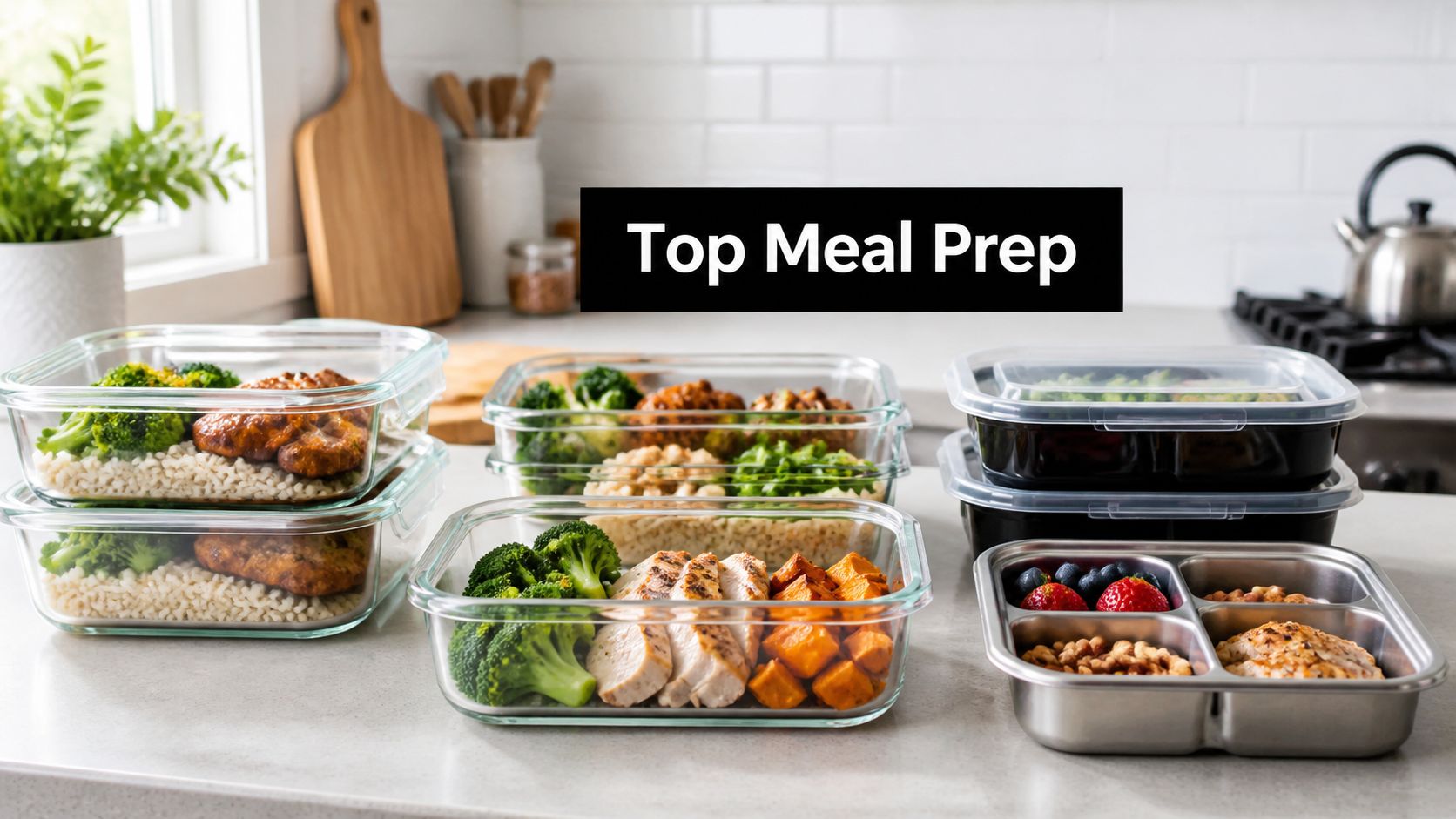
For many, the best meal prep containers are borosilicate glass sets with multi-point latching lids and silicone gaskets, typically in 2-cup (500 ml) and 3-cup (750 ml) sizes. These containers offer the strongest combination of microwave practicality, leak resistance, portion control, and repeated-use durability.
You've cooked a full batch of chicken, rice, and vegetables, divided everything into neat portions, and packed one container beside your laptop or gym clothes. Then the lid leaks in your bag, the plastic smells like tomato sauce, or the container comes out of the microwave cloudy and warped. The container is supposed to make meal prep easier, but the wrong design creates extra transfers, extra washing, and uncertainty about what's touching your food.
The category has moved well beyond basic tubs with loose snap-on lids. One market estimate values meal prep containers at USD 1.84 billion in 2024 and projects USD 3.05 billion by 2033, with a 5.7% CAGR from 2025 to 2033. A separate estimate places the market at USD 2.41 billion in 2026 and forecasts USD 3.61 billion by 2035, at a 4.6% CAGR. Those projections reflect a category competing on reusable storage, leak control, stackability, heating compatibility, and material choices, not just capacity. (Toward Packaging market sizing)
What Makes the Best Meal Prep Containers Worth Buying
The best meal prep containers for most kitchens are borosilicate glass containers with multi-point latching lids and removable silicone gaskets, bought in a useful mix of 2-cup (500 ml) and 3-cup (750 ml) sizes. This combination handles the freezer-to-microwave routine better than ordinary plastic, while the gasket and latches provide a more dependable barrier against soups, sauces, and dressings.
Container choice affects whether your preparation system survives the week. A weak seal can spill curry across a work bag. An oversized box can make portions look smaller than they are, while a cramped one forces you to pack food vertically and mash delicate ingredients. A plastic base that stains or deforms also makes the meal less appealing to use again.
I judge a container against five essential criteria:
- Material safety under heat: The base should be appropriate for the way you reheat food, not merely labeled “food safe.”
- Seal integrity in transport: Look for a silicone gasket and several latching points around the lid.
- Useful portion sizing: A small set of practical volumes is more valuable than a drawer full of mismatched capacities.
- Freezer and dishwasher compatibility: Confirm the manufacturer's instructions, including whether lids need to be removed during heating.
- Stackability: Matching footprints and flat lids matter as much as the container's internal volume.
The broader food-storage market helps explain why these features now matter. Plastic packaging changed how households and retailers stored, transported, and sold food by reducing transit spoilage, supporting supermarket self-service, and enabling ready-to-eat meal categories. Food storage containers have consequently become a mainstream kitchen product, with one market estimate valuing the global food storage container market at USD 170.1 billion in 2025 and projecting USD 266.6 billion by 2035. (Packaging Market Insights)
For a practical starting point, use glass for meals you'll reheat and plastic only where its low weight solves a real problem. Build around the foods you cook, then test the seal before filling an entire week's worth of meals. The useful question isn't which container looks most impressive on a product page. It's which one remains safe, sealed, clean, and easy to stack after repeated kitchen use.
You can pair that container system with a structured meal routine using AI Meal Planner's meal-planning tools, especially when portion sizes and repeatable grocery lists are part of your weekly workflow.
Glass vs Plastic vs Stainless Steel for Meal Prep
No material wins every situation. Borosilicate glass is the strongest choice for reheating and cleaning, BPA-free plastic is convenient when weight and impact resistance matter, and stainless steel is excellent for cold transport but cannot go in a microwave.
Independent testing consistently finds glass less likely to retain odors or stains and better suited to freezer-to-microwave use. Some borosilicate sets are designed for oven, microwave, and freezer use with the lids removed, while top-rack dishwasher placement is common because prolonged heat can deform silicone lid seals. Plastic is lighter and often cheaper, but some users avoid microwaving it, particularly after repeated use. (Good Housekeeping's meal prep container testing)
How each material behaves in a real kitchen
Borosilicate glass suits a Monday-to-Friday office lunch rotation when you'll refrigerate meals, reheat them in the same base, and wash the containers repeatedly. It resists food odors and staining, tolerates temperature changes better than ordinary soda-lime glass, and gives you a stable base for saucy meals. The drawbacks are clear: it's heavier in a commuter bag and can break if dropped.
Polypropylene, or PP #5 plastic, makes sense for a gym bag, shared office refrigerator, or situation where a dropped container would be a regular risk. It's lightweight and practical for cold storage. However, repeated microwave cycles can contribute to material wear, and tomato-based meals can leave persistent stains or smells.
Tritan offers a clearer, more rigid plastic feel and often appears in premium leak-resistant systems. It can be a useful compromise for transport, but “BPA-free” doesn't mean a plastic container is chemically inert under every heating condition. Treat it as a lightweight storage option rather than a reason to microwave every meal in plastic.
Stainless steel is the workhorse for durability and cold food transport. It won't stain easily, and it's a sensible choice for salads, sandwiches, fruit, or meals that can be eaten cold. Microwave incompatibility remains a dealbreaker for office reheating, and vacuum-seal lids can require more careful cleaning.
| Criteria | Borosilicate Glass | BPA-Free Plastic (PP #5) | Stainless Steel |
|---|---|---|---|
| Heat tolerance | Strong choice for freezer-to-microwave use when manufacturer instructions allow it | Convenient for some microwave use, but repeated heating deserves caution | Not microwave compatible |
| Weight | Heavier, less convenient for long commutes | Light and easy to carry | Moderate to heavy, depending on construction |
| Stain and odor resistance | Generally excellent | More likely to stain or retain odors | Excellent for the steel body |
| Chemical safety | Preferred for heated meals because glass avoids the plastic migration concern | Material and heat conditions matter, even when labeled BPA-free | Strong option for cold storage |
| Daily durability | Long-lasting, but vulnerable to impact and rim chips | Resistant to drops, but can warp, cloud, or degrade | Highly durable, with lids and hinges needing care |
| Cost per unit | Often higher than basic plastic | Usually the lower-cost option | Often higher, especially with vacuum lids |
Practical rule: If you reheat lunch in the container, choose glass. If you carry food farther than you heat it, lightweight plastic or stainless steel may earn its place.
How Leakproof Seals Work
A lid's shape matters less than the pressure it applies around the rim. Multi-point latching lids with silicone gaskets spread compression across several points, while a basic snap-fit lid may depend on a narrow plastic edge and one or two tension points. That difference becomes noticeable with soup, dressing, or other thin foods.
A silicone gasket seals by compressing against the container rim and filling small gaps that rigid plastic cannot. The flexible barrier remains useful after repeated dishwasher cycles, when lid geometry and sealing materials can shift slightly. Premium designs often pair a removable gasket with several latches. Comparative testing has highlighted systems that stayed leakproof after being shaken for 30 seconds and held inverted for 60 seconds.

The failure points that matter
Single-tab lids can feel secure when new but lose tension as the hinge fatigues. The gasket itself can create a hygiene problem when it stays permanently inside a recessed channel. Food particles and moisture collect underneath, allowing odor or mold growth while the lid still looks clean.
Steaming food creates another risk. Sealing a hot meal immediately allows cooling air and pressure changes to affect the closure. The lid may seem tight in the refrigerator, then leak when the container is tilted in a work bag. Cool food according to your food-safety routine, and keep it below the gasket channel rather than filling it to the rim.
Useful features include:
- Four-point locking tabs: These apply pressure at several locations instead of relying on one central contact.
- Recessed gasket channels: They help when the gasket can be removed and cleaned. A fixed channel can trap residue.
- Steam-vent valves: These support reheating, provided the valve is easy to clean and the lid instructions explain its use.
“Leakproof” on the package does not guarantee performance in every situation. Test the container before trusting it with soup beside a laptop.
A simple home test
Fill the container with cold water, close the lid, and dry the exterior. Turn it upside down over a sink and gently shake it. Open the lid, remove the gasket, reinstall it carefully, and repeat the test. This reveals whether the seal depends on correct gasket placement.
For a harder check, use thin soup or dressing, hold the container inverted, and inspect the rim and latch areas. A separate carrier adds another layer of protection for lunches packed beside electronics or clothing. Guides to yellow lunch bags for busy moms can help when choosing an insulated bag around the container instead of relying on the lid alone.
Chemical Safety and Microwaving Plastic Containers
A container can pass a “microwave safe” test and still be a poor choice for daily reheating. That label means the product is intended for microwave use under stated conditions. It does not mean every food, heating time, or temperature creates the same exposure. Heat can increase chemical migration from food-contact plastics, especially with fatty or acidic meals, and the resin type affects the result.
A 2024 review reported BPA in food-safe plastics at levels up to 42.78 ppm, while a 2023 review found lower BPA release from PET, glass, and HDPE than from polycarbonate. The same research area identifies heat as a factor that can increase migration across packaging types. (ScienceDirect review of chemical migration)

What BPA-free does and doesn't tell you
“BPA-free” means the manufacturer excluded bisphenol A from the stated formulation. It does not confirm that the container contains no other additives or that repeated heating eliminates migration concerns. Replacement bisphenols, including BPS, and compounds such as phthalates call for closer attention to the material label and use instructions.
Regulatory decisions also show why a single label is not enough. European regulators banned BPA in food-contact materials in December 2024, after the European Food Safety Authority lowered the safe exposure threshold by a factor of 20,000. The decision does not prove that every plastic container is unsafe. It does show that safety assessments can change as evidence develops.
Use plastic selectively, based on the meal and the heating routine:
- Cold transport: PP #5 or Tritan suits lunches where low weight and impact resistance matter.
- Short, gentle reheating: Follow the microwave instructions, remove or vent the lid, and do not heat an empty container.
- Fatty or acidic meals: Choose glass for repeated reheating to reduce the plastic contact at the hottest stage.
- Older or damaged plastic: Replace bases that are cloudy, cracked, heavily scratched, or permanently stained.
- Daily freezer-to-microwave use: Borosilicate glass offers the clearest material choice when the product is explicitly rated for that workflow.
Check more than the microwave symbol. Confirm whether the lid must be removed, whether the container can move directly from freezer to microwave, and whether the manufacturer sets temperature or heating-time limits. For plastic, leave the lid off or vented as directed, keep food from overheating at the edges, and retire containers that have developed damage or persistent odors.
Glass does not prevent every kitchen mistake, but it removes the plastic-specific migration question from the reheating surface. That distinction matters for prepared meals reheated on most weekdays, even when plastic remains more convenient for carrying and stacking.
Choosing the Right Size and Compartment Layout
The right volume controls more than portion size. It determines whether food gets crushed, whether sauces touch dry ingredients, how much space the container takes in your bag, and how evenly the meal reheats.
A 2-cup (500 ml) container suits a smaller lunch or a calorie-controlled meal, particularly when a three-compartment bento layout separates vegetables, protein, and a modest grain portion. A 3-cup (750 ml) single-compartment box gives a chicken, rice, and vegetable meal enough room without forcing the food into a tall stack. A 4-cup (1 L) container is better for family-style portions, batch-cooked grains, casseroles, or components that you'll divide later.
| Goal / Meal Type | Ideal Volume | Compartment Layout | Example Meal |
|---|---|---|---|
| Calorie-controlled lunch | 2 cups (500 ml) | Three compartments | Chicken, vegetables, and a measured grain portion |
| Muscle-building lunch | 3 cups (750 ml) | Single compartment or two sections | Chicken, rice, vegetables, and a larger protein serving |
| Standard office meal | 3 cups (750 ml) | Single compartment | Chicken-rice-vegetable bowl |
| Batch cooking | 4 cups (1 L) | Single compartment | Chili, cooked grains, roasted vegetables, or casserole |
| Family-style storage | 4 cups (1 L) or larger | Single compartment | A shared portion of pasta, stew, or prepared ingredients |
Why shape affects reheating
Shallow, wide containers generally reheat more evenly than tall, narrow ones because the food forms a thinner layer. That shape also makes it easier to spread rice or vegetables across the base, stir halfway through heating, and check whether the center remains cold.
Dividers help with presentation and portion visibility, but they can interrupt reheating. A cold protein section beside a hot vegetable section may require stirring or separate heating. Use compartments when separation matters more than uniform heating, such as keeping dressing away from salad or sauce away from crisp grains.
Owning two core sizes beats buying one oversized “universal” container. Use the smaller box for controlled lunches and snacks, the 750 ml box for complete meals, and the 1 L box for batch cooking before transferring portions. If your menu changes every week, AI Meal Planner's recipe library can help you identify whether you're mostly packing individual meals or storing ingredients in bulk.
Sustainable Materials That Perform in Real Kitchens
Sustainability isn't achieved by buying a container that fails quickly. A warped lid, cracked base, or stained box gets replaced, and repeated replacement can undermine the environmental reason for choosing a reusable product in the first place.
Recent market coverage includes bamboo fiber, sugarcane fiber, recycled polypropylene, and borosilicate glass among the materials being promoted for lower-waste food storage. Each has a different heat, freezer, cleaning, and longevity profile, so there isn't one universally sustainable winner. (Eco-friendly meal prep container market coverage)

Match the material to the task
Glass can require more energy to manufacture and transport because it's heavy, but a well-made container can remain useful for a long time. It performs particularly well when one base handles storage, reheating, freezing, and cleaning instead of requiring disposable liners or replacement tubs.
Recycled stainless steel is a strong option for cold meals and transport. It tolerates drops better than glass and avoids the plastic-heating question, but it isn't a microwave solution. Salt-heavy foods and complex hinges also demand sensible cleaning.
Silicone works well for collapsible storage, freezer bags, and flexible containers where saving cupboard space matters. It can be harder to stack neatly, and a soft body may not protect delicate food during a commute.
Bamboo composites and plant-based PLA need closer inspection. A renewable or bio-based input doesn't guarantee microwave compatibility, stain resistance, or long service life. PLA products are generally a poor match for hot reheating, while bamboo composites may absorb odors or use resin binders that change the material's end-of-life profile.
A practical sustainability test
Ask three questions before buying:
- Will I use it repeatedly? A container that fits your meals and commute is more sustainable than one that stays in a cupboard.
- Can I clean and repair the vulnerable parts? Replaceable gaskets and available lids extend useful life.
- Does the material fit the heating routine? Choose glass for repeated reheating, stainless steel for cold transport, and silicone for flexible storage.
Performance should come before a green label. The lowest-waste choice is usually the container you can keep sealed, clean, and functional through your normal meal-prep cycle.
Cleaning and Storage Tips to Extend Container Life
A good container fails early when the lid, gasket, or dishwasher routine is neglected. Care starts with separating the parts, following the temperature instructions, and storing the pieces so they don't deform under pressure.
Glass bases are commonly directed to the top dishwasher rack in independent reviews and product guidance, particularly when the set includes silicone seals that prolonged heat can deform. One independently reviewed glass set and one plastic set were both listed as freezer-, microwave-, and dishwasher-safe, but those labels still need to be read alongside lid and temperature instructions. (The Spruce Eats container testing)

A routine that prevents most problems
- Separate the seal: Remove silicone gaskets regularly, wash the channel and gasket, and let both dry completely before reassembly.
- Control dishwasher heat: Put glass on the top rack where appropriate, and keep plastic away from excessive heat that can warp the base or lid.
- Treat stains early: For tomato-based stains on plastic, use a baking soda paste or place the clean container in sunlight to help reduce discoloration.
- Store lids without pressure: Keep lids in a dedicated bin or use vertical dividers. Don't bury them under heavy stacks of bases.
- Cool before closing: Let hot food cool appropriately before sealing and refrigerating, rather than trapping steam against the lid.
- Inspect the rim: Replace glass with chips along the rim, cracked silicone, or structural damage that prevents a reliable seal.
Stainless steel needs its own discipline. Hand-washing helps protect vacuum-seal lids and reduces the chance of salt corrosion around hinges and mechanisms.
For a food-focused prep system, AI Meal Planner's food guidance can help you choose recipes and ingredients that fit the containers you already own, including meals that store better with sauces separated.
Which Containers Fit Your Meal Prep Goals
The right setup changes with the person carrying it. A commuter values weight and spill protection, a macro tracker values visible separation, and a family needs uniform footprints that stack efficiently in the freezer.
| User Profile | Best Material | Ideal Size | Key Features | Budget Tier |
|---|---|---|---|---|
| Busy professional | Tritan plastic or borosilicate glass | 2 cups (500 ml) to 3 cups (750 ml) | Lightweight option, latching lid, carrying sleeve | Mid-range |
| Fitness enthusiast | Borosilicate glass | 3 cups (750 ml) | Compartments, portion markings, secure gasket | Mid-range to premium |
| Family batch cook | Oven-rated borosilicate glass | 4 cups (1 L) and larger | Uniform footprint, stackability, freezer compatibility | Mid-range to premium |
| Dietary restriction household | Glass for reheating, stainless steel for cold storage | Mixed sizes | Color coding, airtight seals, dedicated sets | Flexible |
Busy professionals
Choose a compact 2-cup (500 ml) container for lighter lunches and a 3-cup (750 ml) option for fuller meals. Tritan can reduce bag weight, while borosilicate glass is preferable if you'll reheat at work. A carrying sleeve helps protect glass during transport, but it doesn't compensate for a weak seal, so test the lid with liquid first.
Fitness enthusiasts
A 3-cup (750 ml) container with sections for protein, carbohydrates, and vegetables makes portioning easier to see. Etched measurement markings on the glass base can support repeatable serving sizes, while a silicone gasket protects liquid-heavy meals from leaking into a gym bag.
Families and batch cooks
Use larger rectangular containers with matching footprints for casseroles, cooked grains, roasted vegetables, and bulk proteins. Oven-rated glass is useful for batch cooking when the product instructions permit it, but transfer hot food carefully and avoid abrupt temperature changes.
Allergen-sensitive households
Dedicated, color-coded containers reduce mix-ups between gluten-free, allergen-sensitive, or standard foods. Use glass for reheating and stainless steel for cold storage when those materials fit the meal, and keep gaskets clean so residue doesn't remain in the lid channel.
If your lunch needs to stay hot or cold without immediate reheating, an insulated food container guide can help you compare the separate role of insulated vessels with ordinary meal-prep storage boxes. For organizing meals around these container profiles, AI Meal Planner can generate plans around dietary preferences, allergies, calorie targets, and macro goals.
Frequently Asked Questions
Are glass meal prep containers better than plastic?
Glass is generally the better choice for repeated reheating, odor resistance, stain resistance, and freezer-to-microwave use when the product is rated for that workflow. Plastic remains useful when low weight, impact resistance, and cold transport matter more.
What lid is best for leakproof meal prep?
Choose a lid with a removable silicone gasket and multiple locking points around the perimeter. A simple snap-fit lid may work for dry foods, but it deserves a liquid test before carrying soups or sauces.
Can I microwave a stainless steel meal prep container?
No. Stainless steel containers aren't suitable for microwave reheating, so transfer the food to a microwave-rated dish or choose glass if you need one-container reheating.
Is BPA-free plastic safe to microwave?
BPA-free identifies the absence of BPA, not the absence of all migration concerns. Follow the manufacturer's microwave instructions, avoid unnecessary repeated heating in plastic, and use glass for regular reheating when you want the more conservative option.
What size container is best for meal prep?
A 2-cup (500 ml) container suits smaller lunches, while a 3-cup (750 ml) container handles a fuller individual meal. A 4-cup (1 L) container works better for batch cooking and family-style storage.
How do I stop meal prep containers from leaking?
Check that the gasket is correctly seated, the rim is clean, and every latch closes fully. Test the container upside down with water before trusting it with a liquid meal.
When should I replace a meal prep container?
Replace plastic that stays cloudy, heavily stained, cracked, or warped, and replace any gasket that is cracked or no longer seals. Discard glass with chips along the rim or structural cracks, even if the lid still appears to fit.
AI Meal Planner creates personalized weekly meal plans and organized grocery lists around your goals, dietary preferences, allergies, calories, and macros. Use it to plan meals that fit your container sizes, reduce ingredient waste through leftover planning, and visit AI Meal Planner to build a more consistent prep routine.
AI-powered nutrition
Get Your Personalized Meal Plan
AI creates the perfect meals for your goals, lifestyle, and taste.
Start Your Journej