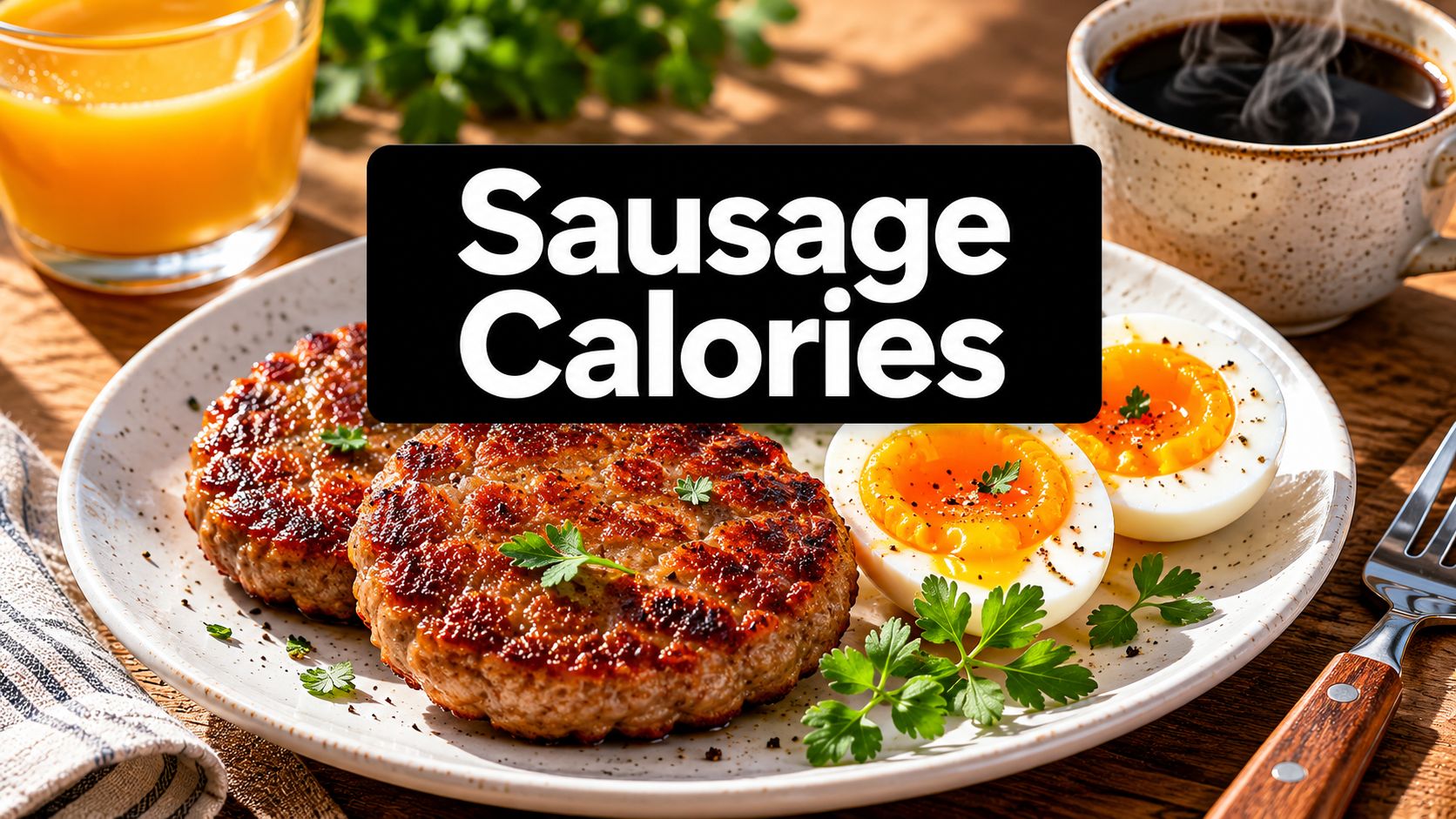
You're probably looking at a breakfast plate, a frozen box, or a fast food menu and wondering whether one sausage patty is a small add-on or the main calorie driver. That's a smart question, because breakfast sausage patty calories look simple at first, but they change a lot with brand, patty size, and fat content.
How Many Calories Are in a Breakfast Sausage Patty?
You order a quick breakfast sandwich, then realize the sausage patty may be contributing more calories than the egg. That happens because a breakfast sausage patty is small in size but relatively dense in energy.
For a typical cooked pork breakfast sausage patty, about 90 to 100 calories per patty is a practical starting estimate. That range works well for many standard grocery-store patties, but it is only a starting point, not a fixed rule.
The easiest way to understand it is to treat sausage like a compact package of meat plus fat. A small change in patty size or fat level can raise calories faster than people expect. Two patties that look similar on a plate can log very differently if one is thicker, made from a fattier blend, or designed for a biscuit sandwich.
That is why the question is not just "how many calories are in sausage?" The better question is "which sausage patty am I eating?" Brand, meat type, and cooking method all affect the total, and those details matter if you are trying to build an accurate breakfast log instead of relying on a rough guess.
For day-to-day meal tracking, 90 to 100 calories is usually reasonable for one standard pork breakfast sausage patty. If the patty is oversized, from a restaurant, or made from turkey, chicken, or plant-based ingredients, your estimate may need to shift up or down.
If you want a faster way to compare labels before logging breakfast, a searchable database such as AI Meal Planner's food library can help you match the specific patty instead of choosing a generic entry.
Quick rule: Use the generic estimate only for a standard small patty. If the product label or serving size differs, log the exact item.
The Calorie and Macro Profile of a Standard Pork Sausage Patty
A pork sausage patty is small, but its macros are concentrated. That is why two breakfasts with the same calorie total can feel very different after you eat them. The patty adds some protein, but a large share of its calories usually comes from fat.
What a standard pork patty usually provides
Using the common small cooked patty discussed earlier, a practical macro pattern is:
| Item | Calories | Fat | Protein | Carbs |
|---|---|---|---|---|
| Standard pork breakfast sausage patty | about 90 to 100 | usually about 8 to 9 g | usually about 5 g | usually 0 to 1 g |
That balance matters. Fat supplies 9 calories per gram, while protein and carbohydrate supply 4 calories per gram. So a patty with around 8 to 9 grams of fat can reach close to 100 calories quickly, even if the protein number looks modest.
A simple way to read it is this: sausage is a protein food, but not a lean protein food.
Why the macros look this way
Breakfast sausage is usually made from pork plus seasoning, and the cut of meat often includes a meaningful amount of fat. After cooking, water cooks off and the remaining patty becomes a denser package of calories and macros.
That is the part many readers miss.
A patty with only about 5 grams of protein may look similar to other breakfast proteins on the label, but it behaves differently in a meal plan. Egg whites, nonfat Greek yogurt, and Canadian bacon give you more protein for the same calories. Pork sausage gives you a different tradeoff: more flavor and richness, with a higher fat share per bite.
How to use that information in real meal planning
If your breakfast already includes other higher-fat foods, such as cheese, buttered toast, or a biscuit, sausage can push the meal's calorie total up faster than expected. If you want to keep the meal balanced, pair one sausage patty with foods that add volume or protein without much extra fat, such as fruit, oatmeal, or eggs prepared with minimal added oil.
If you track carefully, logging the exact product is better than relying on the generic entry every time. Brand formulas and patty weights vary enough to change the total. A calorie and macro calculator for meal tracking can help you match the patty to the rest of your breakfast instead of treating all sausage patties as identical.
For tracking purposes, count a standard pork sausage patty as a fat-forward protein: roughly 90 to 100 calories, about 8 to 9 grams of fat, and about 5 grams of protein.
How Do Turkey, Chicken, and Plant-Based Patties Compare?
People often assume every swap is automatically lighter. That's not always true. Some alternatives are leaner, but some plant-based or larger patties can land surprisingly high depending on formulation and serving weight.

What the verified comparisons actually show
The strongest verified comparison data here points to how much range exists across products. MorningStar Farms' Jumbo Breakfast Sausage Patties contain 120 calories per 56 g patty, while Breakfast Best fully cooked original pork sausage patties list 190 calories per 50 g patty, and McDonald's sausage patty is also labeled at 190 calories, according to Eat This Much's listing for fully cooked pork sausage patties.
That tells you two important things:
- Bigger patties can change the calorie total fast
- Plant-based doesn't automatically mean low-calorie
Here's a comparison table using only verified data and clearly marking where exact macros aren't available from the allowed dataset.
Typical Nutrition Per Cooked Sausage Patty (~1 oz / 28 g)
| Sausage Type | Calories (kcal) | Fat (g) | Protein (g) | Carbs (g) |
|---|---|---|---|---|
| Standard pork patty | 92 to 100 | 7.66 to 9 | 5 to 5.25 | 0 to not listed |
| Plant-based jumbo patty (MorningStar Farms) | 120 | 7 | 10 | 6 |
| Larger packaged pork patty (Breakfast Best) | 190 | not listed | not listed | not listed |
| McDonald's sausage patty | 190 | 18 | 7 | not listed |
How to interpret the table without getting misled
A smaller classic pork patty can sit in the 90 to 100 calorie range. But once the serving gets larger, you may be dealing with 190 calories for a single patty. That's a major difference for a food people often count casually.
Plant-based patties deserve a closer look too. MorningStar's jumbo patty has 120 calories, 7 g fat, 6 g carbohydrate, and 10 g protein. That's a very different macro pattern than classic pork sausage. It has more carbs and more protein than the standard pork benchmark.
So the best swap depends on your goal:
- If you want a classic low-carb profile, pork usually stays lower in carbs.
- If you want more protein in one patty, some plant-based products may provide that.
- If you want the lightest-feeling breakfast, you have to check serving size first, not just the marketing label.
If you're building a vegetarian breakfast pattern, plant-based meal planning support can help you balance sausage alternatives with the rest of the meal.
What Key Factors Change a Sausage Patty's Calorie Count?
The label gives you the final number, but it helps to know what drives that number. Once you understand the inputs, you can make much better estimates when the serving is homemade, restaurant-made, or missing clear packaging.

Patty size changes more than people realize
The simplest variable is weight. A small patty and a sandwich-size patty may both be called one serving, but they aren't the same food from a calorie standpoint.
That's why “one patty” is often a weak estimate. The better question is, “How many grams is this patty?” Once weight goes up, calories usually follow.
Fat content is the real driver
The most important variable is fat. Fat provides 9 kcal per gram, and a school nutrition reference for a fully cooked pork sausage patty reports 250 calories per 57 g serving, with 216 calories from fat, meaning about 86% of total energy comes from fat, according to the school nutrition sausage patty reference.
That's why two patties of similar size can still have different calorie totals. If one formula retains more fat, it will usually carry more calories.
Why labels vary: sausage isn't just meat. The final calorie count reflects the fat level, moisture retained after cooking, and the size of the finished patty.
Added ingredients and cooking method also matter
Seasonings don't usually dominate the calorie count, but binders and plant-based ingredients can change the carb profile. That helps explain why a meat-free sausage can look very different on the label from a classic pork patty.
Cooking method affects the final result too. If a patty releases fat during cooking and some of that fat drains away, the eaten portion may differ from a version that keeps more rendered fat. Moisture loss matters as well, because the same original patty can finish denser after cooking.
If you want a visual walkthrough of how cooking changes a breakfast sausage patty, this quick video is useful:
For home cooking, the most practical rule is simple:
- Weigh it if it's homemade
- Use the brand label if it's packaged
- Estimate conservatively if it's from a restaurant
How to Fit Sausage Patties into a Healthy Meal Plan
A sausage patty can fit into a healthy breakfast. The key is treating it as one part of the meal, not the whole nutrition strategy.

Build the plate around the patty
The easiest way to use sausage well is to anchor the rest of the meal with foods that bring volume, fiber, and staying power.
A balanced breakfast often works better when the sausage sits alongside foods like:
- Eggs or egg whites for additional protein
- Fruit for fiber and a fresher contrast to the saltiness
- Whole grain toast or oats if you want more sustained energy
- Vegetables like spinach, peppers, or tomatoes for bulk without much calorie load
This approach helps because sausage is rich and concentrated. The rest of the plate can do the work that sausage doesn't do well, especially fiber and produce volume.
Use portion control without making breakfast feel skimpy
You don't need to ban sausage to eat well. In practice, many people do better by using one patty and making the overall breakfast more complete, rather than using multiple patties and keeping the rest of the plate minimal.
That's especially helpful for people training regularly. Endurance athletes, for example, usually need meals that balance protein, carbohydrates, and digestibility around workouts. If you're thinking about how breakfast fits into performance nutrition, Swift Running's half marathon training fuel offers useful context on how to structure energy intake around training.
A sausage patty works best as a flavor-focused protein addition, not as the main volume food on the plate.
Practical meal ideas that work in real life
Try these simple combinations:
- Workday breakfast sandwich: one sausage patty, egg, and English muffin, plus fruit on the side
- Lower-effort plate: one patty with scrambled eggs and sautéed spinach
- Weekend breakfast: one patty, roasted potatoes, and a side of berries, with the rest of the day adjusted around it
If you want help arranging these foods into a realistic weekly routine, balanced meal planning support can help you organize breakfasts around your calorie and macro goals.
Copy-and-Paste Entries for Your AI Meal Planner
Precise tracking becomes much easier. Breakfast sausage patty calories vary enough by brand and size that generic logging often misses the mark.
A verified example shows that a Johnsonville mild breakfast sausage patty is 90 calories per 32 g, while a McDonald's sausage patty is 190 calories. That's why brand-specific logging is more reliable than a generic “sausage patty” entry, as shown on Johnsonville's mild breakfast patties page.

You can copy and paste entries like these into your tracker:
- Johnsonville Mild Breakfast Sausage Patty, 1 patty (32 g), 90 calories
- McDonald's Sausage Patty, 1 serving, 190 calories, 18 g fat, 7 g protein
- MorningStar Farms Jumbo Breakfast Sausage Patty, 1 patty (56 g), 120 calories, 7 g fat, 6 g carbs, 10 g protein
- Generic cooked pork breakfast sausage patty, 1 patty, 92 calories, 7.66 g fat, 0 g carbs, 5.25 g protein
That format is especially helpful when you want consistent entries across breakfast sandwiches, meal prep boxes, or repeat grocery orders.
If you want one tool that can turn those entries into a full weekly plan, AI Meal Planner onboarding lets you set goals, food preferences, and calorie targets, then organize meals and grocery lists around them.
Frequently Asked Questions About Breakfast Sausage
Is breakfast sausage healthy
It can fit into a healthy diet, but it's usually a higher-fat protein choice. The overall meal pattern matters more than labeling one food as good or bad.
Is sausage patty or bacon lower in calories
That depends on the serving size and brand. For an accurate comparison, use the package label or restaurant nutrition listing rather than assuming one is always lighter.
Does air frying lower the calories in a sausage patty
Cooking method can change the final calories indirectly by affecting fat retention and moisture loss. The label is still your best starting point.
Is plant-based breakfast sausage always lower in calories
No. Some plant-based patties exceed the classic pork benchmark, so you need to check the brand and serving size.
How much protein is in a sausage patty
A standard pork breakfast sausage patty in the verified benchmark provides about 5 to 5.25 g protein, while some alternatives provide more.
What's the best way to log homemade sausage patties
Weigh the cooked patty and use the recipe ingredients if you made it from scratch. Homemade patties vary too much to rely on a generic restaurant-style entry.
Why do restaurant sausage patties seem so much higher
They're often larger and may retain more fat. That combination pushes calories up quickly.
If you want a simpler way to turn nutrition facts into actual meals, AI Meal Planner can help you organize breakfasts, lunches, dinners, and grocery lists around your calorie and macro targets.
AI-powered nutrition
Get Your Personalized Meal Plan
AI creates the perfect meals for your goals, lifestyle, and taste.
Start Your Journej