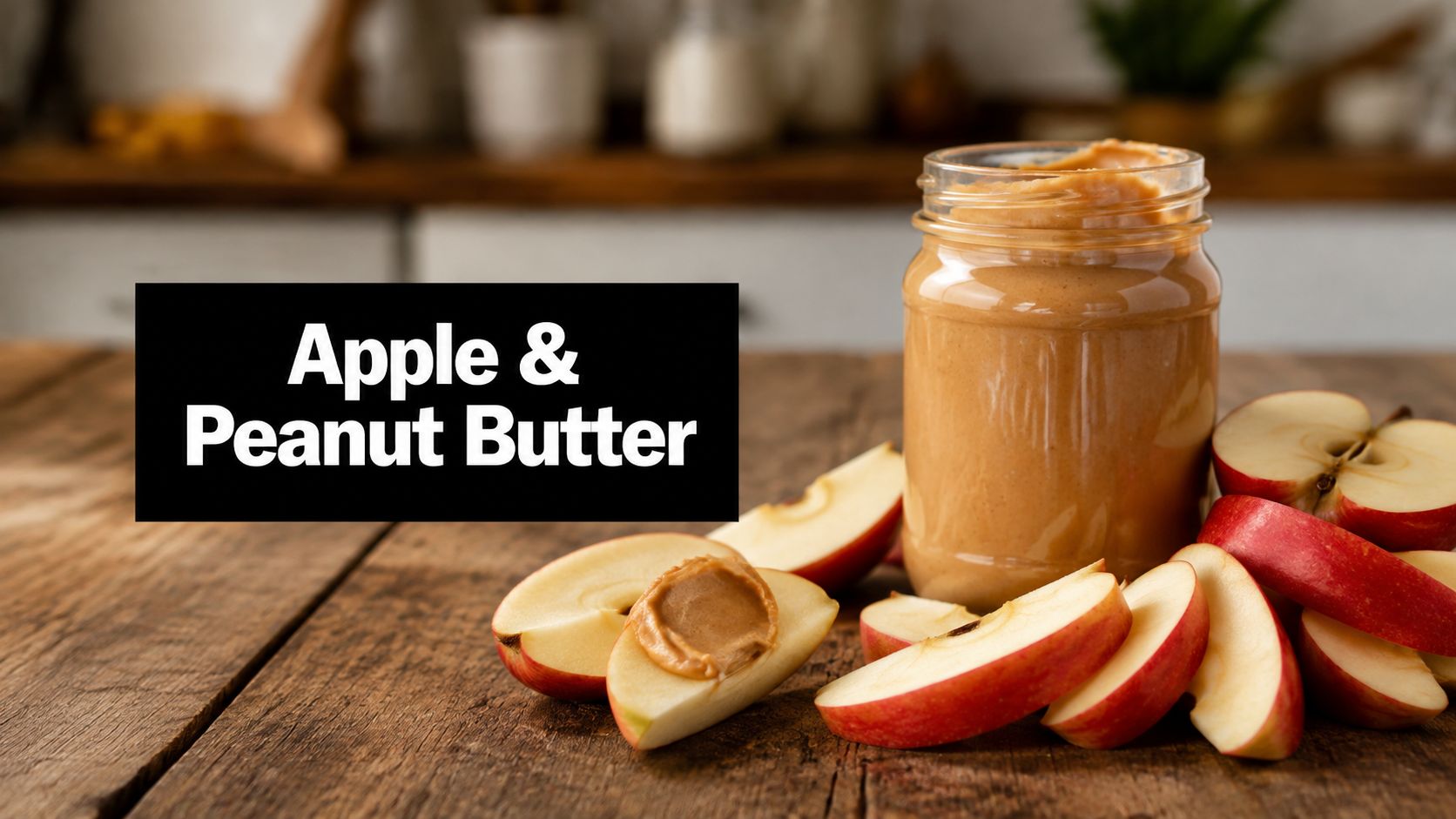
One medium apple with 2 tablespoons of peanut butter delivers roughly 283 calories, 8 grams of protein, 16 grams of fat, and 7 grams of fiber. That's the reference serving that makes apples with peanut butter feel like a real snack, not a light bite that disappears in 20 minutes.
If you're packing lunch, trying to curb a 3 p.m. crash, or just want something that holds you over, this is the combination to size correctly. The trick isn't whether it tastes good, it does, the trick is making it stay crisp, safe, and portioned for the job.
The Reference Portion and What It Actually Delivers
A practical baseline starts with a small to medium apple, about 150 to 180 grams, paired with 2 tablespoons of peanut butter. That combination lands at roughly 283 calories, 8 grams of protein, 16 grams of fat, and 7 grams of fiber, which is why it works as more than a quick sweet bite Healthline peanut butter nutrition.
The point is not just that the snack tastes good. It brings together carbs, fat, protein, and fiber in a way that usually holds better between meals than fruit alone. The apple supplies fast, crisp carbohydrate, while the peanut butter slows the pace of eating and gives the snack more staying power. That mix is what makes it useful for a lunchbox, a desk drawer, or a post-workout pause.
A simple comparison that makes portion changes obvious
A plain apple gives you a lighter snack with less fat and protein. One 193-gram apple by itself comes in at about 159 calories, 28 grams of carbohydrates, 6 grams of fat, 3 grams of protein, and 5 grams of fiber Eat This Much calorie reference. Once peanut butter enters the picture, the snack changes from fruit-heavy to a more balanced option that lasts longer.
| Serving | Calories | Protein | Fat | Fiber |
|---|---|---|---|---|
| 1 medium apple + 2 tbsp peanut butter | 283 | 8 g | 16 g | 7 g |
| 1 apple alone, 193 g | 159 | 3 g | 6 g | 5 g |
That table is useful because it shows where the calories really come from. If you want the snack to stay lighter, reduce the peanut butter. If you need more staying power, keep the apple and adjust the spread, since that is where most of the calorie change lives.
Practical rule: build from the fruit first, then decide how much peanut butter the rest of your day can handle.
For quick portion checks while you adjust servings, use this recipe nutrition calculator when you want apples with peanut butter to fit a specific calorie target.
How to Assemble Apples With Peanut Butter the Right Way
A good apple and peanut butter snack starts with the apple itself. Wash it, dry it well, then pay attention to the cut surface, because peanut butter sticks better when the slice is dry. Core the apple fully, remove every seed, and slice it into even 1/8-inch slices so the texture stays steady from the first bite to the last USDA-style recipe guidance.
The most reliable lunchbox build is simple. Spread about 1/2 teaspoon of peanut butter per slice, then press the slices together, with raisins if you want a firmer bite and a little sweetness. That format travels better than a separate dip cup, because the fruit and spread stay together instead of shifting around the container.

When warm assembly works better than cold assembly
Warm service gives the snack a softer, richer texture. The USDA-style guidance uses a #30 scoop to portion 2 tablespoons of peanut butter, then finishes the sandwich at 375°F for 5 to 7 minutes in a combi-oven USDA-style recipe guidance. That version eats more like a dessert, and it is less convenient for packing ahead than the chilled version.
Uneven slices cause most of the frustration. Thick pieces let the spread slide, while thin, even slices bite cleanly and stay stacked. Timing matters too. Once sliced fruit and nut butter sit out like pantry food, they stop behaving well. This is a time-and-temperature-controlled snack, not a shelf-stable one.
Rule to remember: slice evenly, seed completely, portion the peanut butter, and refrigerate leftovers within 2 hours if they are not eaten right away USDA-style recipe guidance.
Stopping the Brown and Keeping the Crunch

Apple slices brown because polyphenol oxidase reacts with oxygen on the cut surface. The practical fix is to lower the surface pH before you assemble the snack, and a quick acid bath does that without changing the recipe into something fussy. One workable method is 500 ml water mixed with 15 ml lemon juice, followed by a 3 to 5 minute soak and then thorough drying browning-control recipe guidance.
Drying matters just as much as the soak. Wet slices make the peanut butter slide, and any topping you add after that turns smeared instead of set in place. In practice, the snack looks cleaner, tastes better, and stays together longer when the apples are patted dry with a paper towel before the spread goes on.
What ruins texture faster than people expect
Over-soaking causes the most avoidable texture loss. Leave the slices in acidulated water only long enough to slow browning, then pull them out. If they sit too long, the crisp snap drops off, and that is the part of the apple that makes apples with peanut butter worth packing in the first place.
Peanut butter texture can also work against you. Thick, unwhipped natural peanut butter feels stubborn on chilled apple slices, especially when you are assembling several snack boxes at once. A small amount of water or Greek yogurt can make it spread more easily, which helps when you need the coating to go on quickly and evenly browning-control recipe guidance.
Dry the slices first, then spread. Reversing that order turns the snack messy fast.
For a clear look at the browning issue, the process is easier to see in this clip, especially if you have watched apple slices go dull before lunch.
Swaps for Vegan, Nut-Free, and Goal-Based Diets
The cleanest way to think about swaps is by goal, not by ideology. Apples with peanut butter can be adjusted for vegan eating, school allergy policies, weight control, muscle gain, and more deliberate nutrition planning without turning into a different snack.
For vegan eating, peanut butter is usually already a fit, but the label still matters. Choose a 100% peanut product when you want to avoid honey or other additives, and use it as the base instead of assuming every jar behaves the same. If you want a broader plant-based frame for the rest of the day, a vegan meal plan can help place the snack into the larger pattern without forcing last-minute adjustments. For people using a wider diet framework, fertility nutrition plan insights are a useful reminder that small snack choices matter most when they are consistent, not flashy.
Goal-based swaps that change the snack
- Weight loss: drop to 1 tablespoon of peanut butter and add cinnamon if you want flavor without much extra energy. That keeps the snack recognizable while trimming the spread portion.
- Muscle gain: increase the peanut butter to 2.5 to 3 tablespoons, then pair it with milk or another protein source to push the snack toward a more training-friendly profile.
- Nut-free households: use sunflower seed butter, soy nut butter, or tahini. Each one changes the flavor and allergen profile, so cross-contamination still matters in shared kitchens and school settings.
- Diabetes-aware eating: the apple contributes most of the carbs, so consistency matters more than random portion changes. Pairing the snack with protein is usually the more practical move than eating it alone as a sweet bite.
A standard serving already lands around 283 calories, with enough fat and fiber to feel substantial, so the main dial to turn is the spread, not the apple. That is helpful when you are trying to fit the snack into a calorie budget without losing the texture that makes it satisfying.

For a clearer view of how those swaps shift the snack, the infographic above shows the main options at a glance.
Meal Prep and Storage for Lunchboxes and Desk Snacks
If you want apples with peanut butter to work on a school morning or during a packed workday, prep matters more than the recipe itself. Slice the apples in batches, give them a lemon-water soak, dry them thoroughly, and pack them in airtight containers lined with paper towels so extra moisture does not sit against the fruit. Keep the peanut butter in a separate small container or silicone cup. That makes the snack easy to repeat, and it keeps the texture closer to what you wanted when you packed it.
For a lunchbox that leaves the house early and gets opened at midday, separate components are the better choice. The apple keeps more of its snap, the peanut butter stays where it belongs, and you avoid the soft, messy middle ground that happens when the whole snack sits together for hours. For a desk snack you assemble the night before and eat at a short break the next day, pre-assembly can still work if the container stays cold and the lid fits well, which is where a guide to on-the-go snack containers helps you think through compartment size and moisture control.
The texture window you can actually plan around
With the acid bath and solid drying, sliced apples hold their best crunch for about 4 hours unrefrigerated and 24 hours refrigerated before the texture starts to slip. After that, they can still be safe if they were handled properly, but they usually stop feeling fresh enough for a lunchbox bite browning-control recipe guidance. Crunch is a timing issue, not a mystery.
That timing also shapes how you build the snack. If the apple is meant for later in the day, keep the slices cold and the peanut butter separate until you are ready to eat. If you are planning several snack boxes at once, a recipes collection can help you fit this snack into a weekly routine instead of treating it like a one-off.
If the apple smells sour, feels slimy, or the container has condensation you cannot shake off, toss it.
The practical rule is simple. Cooler storage protects texture, dry packaging protects the fruit, and separate portions make the snack more reliable in a lunchbox or at a desk.
Snack Timing, Weekly Meal Plan Fit, and a Quick Grocery List
The time you eat apples with peanut butter should match the job you want the snack to do. Thirty to 60 minutes before a workout, it gives you usable carbs from the apple with enough fat to keep the snack from feeling thin or overly spiky. Mid-afternoon, it holds the gap between lunch and dinner better than plain fruit or crackers. After dinner, it can calm a sweet craving without turning the night into a full dessert round.
That timing explains why this snack works in real kitchens, not just on paper. The apple brings quick appeal, while the peanut butter adds staying power that fruit alone usually misses Acibadem evidence-based guide. For training days, keep the spread lighter before harder sessions, because a smaller portion is easier to digest.
A short grocery list for the whole snack
- Apples: Honeycrisp or Gala if you want sweeter slices, Granny Smith if you want sharper contrast.
- Natural peanut butter: choose a jar with a texture you like spreading.
- Lemon: for the browning bath.
- Raisins: optional, but useful for sandwich-style bites.
- Cinnamon: helpful when you want a sweeter impression without more sugar.
- Paper towels: for drying after the soak.
- Small airtight containers: for lunchbox prep and portion control.
A grocery list generator is most useful when it turns this snack into part of a weekly routine and sorts the ingredients by aisle instead of by recipe.

Common Questions About Apples With Peanut Butter
Can I use a peanut-free butter instead? Yes. Sunflower seed butter, soy nut butter, and tahini are the most practical swaps, especially in school or shared-kitchen settings where cross-contamination matters.
Is this snack good before a workout? Yes, especially 30 to 60 minutes before training if you keep the peanut butter portion modest. The apple gives usable carbs, and a smaller fat load is easier to handle than a heavy meal.
How do I keep apple slices from browning in a lunchbox? Use the lemon-water soak, dry the slices well, and keep them cold if you can. Wet slices are the fastest route to soggy peanut butter and dull-looking fruit.
Is it okay for diabetes-friendly eating? It can be, as long as the portion stays consistent and you pay attention to the apple's carbs. Pairing it with protein usually works better than eating it as a standalone sweet snack.
If you want apples with peanut butter to fit your week without guesswork, AI Meal Planner can build the snack into a full plan, adjust portions to your goals, and generate a grocery list that matches your kitchen reality. Visit AI Meal Planner to turn this kind of snack into something you can repeat.
AI-powered nutrition
Get Your Personalized Meal Plan
AI creates the perfect meals for your goals, lifestyle, and taste.
Start Your Journej