You open the pantry at 3 p.m. and want something salty, crunchy, and easy. The best alternative to potato chips is the one that solves that exact job without leaving you hungry soon after.
From a nutritionist's perspective, the strongest swap depends on what you want from chips. Popcorn usually works best for volume. Roasted chickpeas, nuts, seeds, and protein crisps usually work better for satiety. Seaweed fits a very light, salty craving. Vegetable or legume-based chips often make the easiest transition for people who want a snack that still feels familiar.
That trade-off matters.
A snack can look healthy on the label and still miss in real life because it is expensive, fragile, not filling, or easy to overeat. Taste matters. So does cost per serving, shelf stability, and whether the snack fits your eating pattern. Keto, vegan, and gluten-free shoppers often need different answers, which is why the Swap Scorecard later in this guide compares calories, protein, fiber, and diet fit side by side.
For practical swapping, choose options that are baked, air-fried, or naturally lower in oil, and prioritize protein or fiber when you need a snack to hold you over. If you want a snack routine instead of random pantry purchases, a plant-based meal plan can make those decisions easier. If you like growing ingredients at home, herbs and simple edible plants can also make basic dips and snack plates more appealing, and Leaves & Soul's gardening advice is a useful place to start.
The best choice is rarely one universal snack. It is the option you will keep stocked, enjoy eating, and use consistently instead of chips.
1. Vegetable Chips
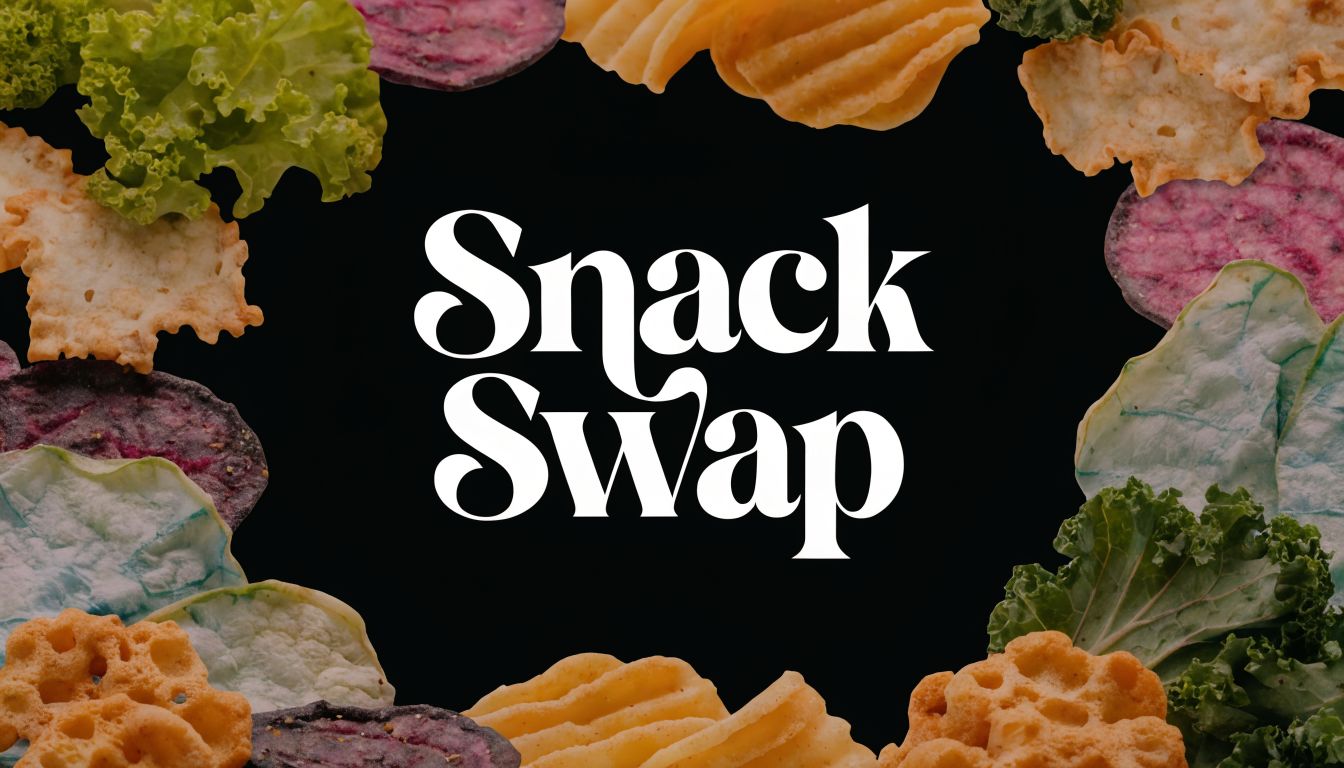
You open the pantry wanting something salty and crisp, and a bag that still eats like a chip is usually the easiest place to start. Vegetable chips fit that job better than many “healthy snacks” because the format feels familiar. That matters if your goal is to replace potato chips consistently, not buy a snack you forget after two servings.
They are still a mixed category. Some vegetable chips are lighter and bring more fiber or micronutrients than standard potato chips. Others are mostly starch and oil with a vegetable on the front of the package. I tell clients to treat this as a transition snack first, then check whether the nutrition label supports the health claim.
For the Swap Scorecard later in this guide, vegetable chips usually land in the middle. They often improve on potato chips for ingredients and sometimes for calories, but they rarely compete with chickpeas, nuts, seeds, or protein crisps for protein and staying power. If you want a crunchy swap that feels familiar, they make sense. If you need a snack to hold you until dinner, they are often not enough on their own.
A packaged option like Rhythm Superfoods kale chips or Brad's Raw Chips can work for desk drawers, while homemade beet or carrot chips are better if you already meal prep. For plant-based snack planning, this kind of swap fits naturally into a plant-based meal plan.
When vegetable chips work best
Vegetable chips are strongest in one specific situation. You want the chip experience with a modest nutrition upgrade and minimal friction.
Kale chips tend to be light, brittle, and savory. Beet and carrot chips usually have a mild sweetness and a denser crunch. Sweet potato versions often feel closest to a standard snack food, which makes them easier to stick with, but they can also creep closer to regular chips on calories if the oil is heavy.
Practical rule: Buy vegetable chips for crunch, flavor, and a better ingredient profile. Do not rely on them as a high-protein snack.
Use these label checks before you buy:
- Look at serving size first: Small bags can make calories and sodium look lower than they are.
- Check fiber and protein: If both are low, the snack may not keep you full for long.
- Read the ingredient list: Vegetables near the top is better than starch blends leading the list.
- Compare oils and seasonings: Heavily seasoned versions can add a lot of sodium fast.
Homemade versions give you more control over oil and salt, but they are less convenient and usually less sturdy in storage. Packaged versions win on portability. Homemade wins on ingredient control and cost if you already prep produce at home.
If you grow herbs or greens at home, Leaves & Soul's gardening advice can help you keep simple ingredients on hand.
A quick visual can help if you're making them at home:
2. Roasted Nuts and Seeds
If potato chips are your stress snack, roasted nuts and seeds are one of the most reliable upgrades. They don't copy the exact texture of chips, but they usually do a better job of ending hunger.
Almonds, pumpkin seeds, and sunflower seeds are practical because they're portable, shelf-stable, and easy to portion. Blue Diamond almonds, plain roasted pepitas, and unsalted mixed seed blends are all common choices that work in a work bag or office drawer.

Why nuts and seeds beat chips for staying power
Traditional potato chips are mostly a fat-and-starch snack. Nuts and seeds usually bring more structure to a snack because they add fat, some protein, and a more substantial chew. In real life, that means a small portion often feels more complete than an open bag of chips.
They're also versatile. I often suggest pairing roasted seeds with fruit when someone wants both crunch and a little sweetness, or using nuts as part of a planned afternoon snack instead of free-pouring them from a big container.
A few practical points matter more than nutrition theory here:
- Pre-portion first: Large bags are easy to overeat.
- Choose plain or lightly salted: Flavored varieties can turn into sodium bombs fast.
- Use them strategically: They're better for true hunger than for mindless grazing during TV time.
Nuts and seeds are excellent, but they aren't "free foods." They work because they satisfy, not because they're impossible to overeat.
This category is especially useful for people who don't need a chip replica. If your real goal is something crunchy that travels well and holds you over until dinner, nuts and seeds are often a stronger everyday choice than many packaged "healthy chips."
3. Air-Fried Chickpeas
You open the pantry at 3 p.m., want something salty and crunchy, and know a bag of chips will not keep you full for long. Air-fried chickpeas solve that problem better than many chip substitutes because they bring crunch with enough protein and fiber to make the snack stick.
In the Swap Scorecard, this is one of the stronger options for satiety. Compared with potato chips, chickpeas usually give you more protein and fiber per serving, which is why I recommend them for afternoon hunger rather than casual grazing. They are also one of the more budget-friendly swaps. A can of chickpeas often costs less than a single-serve specialty snack, and you can season them to match the craving.
Commercial versions like Biena and The Good Bean are convenient. Homemade batches usually win on cost, texture, and sodium control.

How to make chickpeas actually crisp
Moisture is the make-or-break factor. Drain them well, rub them dry with a clean towel, and cook them in a single layer so hot air can circulate. If they are even slightly damp, they soften fast.
Season after drying, then use a light coat of oil. Too much oil dulls the crunch. Smoked paprika, garlic powder, cumin, chili-lime, and simple salt-and-pepper all work well.
- For the best texture: Air-fry in a single layer and shake the basket midway.
- For better flavor control: Season lightly at first, then add more after cooking if needed.
- For meal prep: Cool them completely before storing, and expect some loss of crispness by the next day.
- For better nutrition: Pair them with fruit or cut vegetables if you want a more balanced snack plate.
Diet fit matters here too. Chickpeas are naturally vegan and gluten-free, which makes them an easy win for many households. They are usually not keto-friendly because they are higher in carbs than nuts, seeds, or cheese crisps.
Their main drawback is texture drift. Freshly made chickpeas can be excellent. Stored chickpeas are still useful, but they often turn more chewy than crisp. That trade-off is worth knowing before you batch-cook a large container.
If the goal is to replace chips with something that still feels snackable but performs better on the scorecard, air-fried chickpeas are one of the smartest pantry options.
4. Seaweed Snacks
Seaweed snacks are a very different kind of alternative to potato chips. They don't mimic a thick, crunchy kettle chip. Instead, they deliver salt, umami, and crispness in a very light format.
That makes them useful for people who crave flavor more than bulk. SeaSnax, Gimme, Annie Chun's, and Korean roasted nori sheets are easy examples. They fit especially well in office settings because they don't leave greasy hands behind.
Who should choose seaweed snacks
Choose seaweed if your problem is "I want something salty" rather than "I need a filling snack." In my experience, seaweed is often best as a craving redirect, not a hunger solution.
It also pairs well with other foods. You can eat it with edamame, rice-free tuna salad, or cucumber slices for a more complete snack. On its own, it tends to satisfy the mouthfeel and flavor side of the craving better than the fullness side.
A few cautions make a real difference:
- Check sodium: Some brands are much saltier than others.
- Store carefully: Humidity ruins seaweed fast.
- Start simple: Plain roasted nori is a better introduction than heavily seasoned varieties.
Seaweed belongs in the rotation because it's convenient and distinctive. It won't replace every chip craving, but it's excellent when you want a quick savory hit without the heaviness of fried snacks.
5. Homemade Protein Energy Balls
If you snack because your meals are spaced too far apart, protein energy balls can work better than chips ever will. They aren't a chip substitute in texture, but they solve a common real-world problem, which is needing something quick that carries you forward.
Dates, nut butter, seeds, and protein powder are the usual base. Peanut butter and date balls, vegan hemp bites, or cocoa almond versions all work. The texture is soft rather than crisp, so this is a category for people who need convenience and staying power more than crackly crunch.
Why they work in meal plans
Protein energy balls are useful because they're easy to standardize. Once you make a batch, you can portion them and stop improvising snacks all week. That's especially helpful if you're trying to support training, avoid vending machine choices, or keep your calorie budget more predictable.
They also fit naturally into a high-protein meal plan because they can be built around your preferred protein source.
Their biggest advantage is control. You decide the sweetness, ingredients, and texture. Their biggest downside is that they're easy to make calorie-dense if you keep adding nut butter, syrup, coconut, and chocolate all in the same recipe.
Try these practical adjustments:
- Use dates for binding: That usually gives enough sweetness without extra syrup.
- Chill before rolling: It makes portioning cleaner and faster.
- Freeze extras: Texture usually holds well, and that prevents the whole batch from disappearing in two days.
These aren't my first recommendation for a salty chip craving. They are one of my best recommendations for the person who says, "I keep grabbing chips because I'm too busy to eat a proper snack."
6. Popcorn
You get home, want something salty, and do not want a tiny portion that disappears in five bites. Popcorn is one of the few swaps that can replace the experience of eating chips, not just the nutrition label.
Its biggest advantage is volume. A large bowl of air-popped popcorn feels generous for relatively few calories, which makes it useful for evening snacking or TV-time habits where hand-to-mouth repetition matters. In the article's Swap Scorecard, popcorn usually lands well on calories, but less well on protein. Fiber is decent, especially compared with standard potato chips.

Where popcorn fits, and where it falls short
From a nutritionist's perspective, popcorn is a good chip alternative for people who want crunch, portion size, and better calorie efficiency. It is a weaker choice if the goal is satiety for several hours. You are still getting a mostly carbohydrate-based snack unless you pair it with something else.
That trade-off matters. If chips show up as an evening boredom snack, popcorn is often a smart replacement. If chips show up because lunch was too small and hunger is high at 4 p.m., roasted edamame, nuts, or a higher-protein option will usually work better.
How to keep popcorn from turning into dessert or fast food
Preparation decides whether popcorn stays a smart swap. Air-popped or lightly oil-popped kernels keep calories reasonable. Heavy butter coatings, caramel, and sugary kettle-style versions can erase much of the advantage.
Seasonings make the difference in real life. Plain popcorn gets boring fast.
Try practical options such as nutritional yeast, smoked paprika, garlic powder, chili powder, ranch-style seasoning, or a light sprinkle of parmesan. If buying pre-popped popcorn, check the label for added oil and sodium, and compare it with the Swap Scorecard instead of assuming every popcorn bag beats chips.
- Best for: High-volume snacking and replacing the ritual of chips
- Swap Scorecard strengths: Lower calorie density, decent fiber, naturally vegan and gluten-free in plain forms
- Less ideal for: Keto eating patterns and snacks meant to keep you full for a long stretch
- Smart fix: Pair it with string cheese, Greek yogurt, or roasted soybeans if you need more staying power
Popcorn earns its place because it solves a specific problem well. It gives crunch, quantity, and familiarity. Just do not expect it to perform like a high-protein snack unless you build that in.
7. Cucumber and Vegetable Slices with Hummus or Dip
Sometimes the right alternative to potato chips isn't another packaged crunchy food. It's raw vegetables plus a dip that makes them feel like a real snack instead of a punishment.
Cucumbers, bell peppers, celery, carrots, and snap peas all work. Hummus is the simplest pairing because it adds creaminess and makes the snack more substantial. Greek yogurt dips work too if dairy fits your eating style.
Why this swap succeeds when chips are just a vehicle
A lot of people don't love potato chips on their own. They love salt, crunch, and dipping. Once you recognize that, vegetables with hummus become much more practical.
Cucumbers are especially good if you want hydration and crunch. Bell peppers feel sweeter and more substantial. Carrots hold up best in meal prep and travel. Hummus brings the savory side that makes the whole thing satisfying.
Vegetables with dip work best when they're ready to eat. Whole cucumbers and an unopened tub of hummus rarely beat a chip bag in the moment.
For weekly prep, cut vegetables ahead and keep the dip separate until you're ready to eat. This is one of the most effective snack swaps for people trying to eat more produce without overcomplicating things.
The main trade-off is convenience. It's excellent at home or at work if you've prepped it. It's less useful when you're in the car, at an airport, or grabbing something from a gas station.
8. Granola and Granola Bars
Granola isn't a direct chip replacement, but it can fill the same "grab, munch, keep going" role for people who lean more sweet than salty. It's especially useful if your afternoon chip habit is really about energy drop-off.
Whole grain granola, seed-heavy granola, or minimally processed bars can be solid options. One Degree Organics and simple oat-based homemade blends are practical examples.
Where granola fits and where it doesn't
Granola works when you need a portable snack that pairs well with yogurt, fruit, or milk. It doesn't work as well when you're specifically craving salt and crunch, because it scratches a different itch.
Its biggest strength is versatility. A small portion can become a planned snack rather than random grazing. Its biggest downside is that many granolas are easy to overpour, and sweetened bars can feel healthy while acting more like dessert.
A few rules help:
- Measure the portion: Granola is easy to underestimate.
- Pair it with protein: Yogurt is the simplest match.
- Read ingredient lists: Simpler is usually better.
If your goal is a more structured, less ultra-processed snack pattern, this swap also fits well into a clean eating meal plan. I usually recommend granola for active people who need energy and texture, not for someone trying to replace salty chips one-to-one.
9. Fruit-Based Snacks
Fruit-based snacks work best when the chip habit overlaps with low energy, sweet cravings, or poor meal timing. Whole fruit is still the strongest option in this category because it gives you natural sweetness with more bulk and fewer surprises than many bars or fruit leathers.
Apples, oranges, berries, dried apricots, dried mango, figs, and homemade fruit leather all belong here. They don't imitate chips, but they can interrupt the cycle where someone swings from salty snacks to sweets later in the day.
Best ways to use fruit as a snack swap
Fresh fruit works better than juice because it keeps the structure of the food intact. Pairing fruit with nuts, seeds, or cheese usually improves staying power and makes the snack feel complete.
Dried fruit is where portions matter most. It's convenient and travel-friendly, but it's easy to eat quickly. That's why pre-portioning helps.
This category is especially practical around exercise. A banana or dried fruit before a workout can make more sense than a bag of chips because you're using the energy intentionally.
- Best for: Mid-morning or pre-workout snacks.
- Less ideal for: Someone who wants a strongly savory substitute.
- Smart pairing: Apple plus almonds, or berries with yogurt.
Fruit-based snacks don't replace the salty crunch of chips. They do replace the habit of reaching for something packaged when what your body may really need is quick energy plus a little fiber and fluid.
10. Cheese Crisps and Protein Crisps
You open the pantry wanting chips, but what you really need is a snack that holds you over until the next meal. This is the point where cheese crisps and protein crisps usually outperform standard potato chips. They still deliver crunch and salt, but they bring more protein to the table, which matters if hunger is the actual issue.
In my experience, these are some of the most practical swaps for clients who keep buying chips because lighter options do not satisfy them. A serving of cheese crisps or protein crisps often fits better than chips for higher-protein eating patterns, lower-carb plans, and afternoons when a snack needs to work harder.
Here is the trade-off. Cheese crisps are usually lower in carbs and higher in protein, but they can be rich, salty, and easy to overeat if you eat from the bag. Protein crisps often have a lighter texture and a more familiar chip shape, but some brands taste noticeably processed and cost much more per serving than popcorn, roasted chickpeas, or whole foods.
For the Swap Scorecard, this category generally scores well on protein, moderate on calories, and low on fiber. That last point matters. If fullness is your goal, protein alone helps, but pairing these with high-volume produce usually works better than eating them by themselves.
Whisps, Quest-style protein crisps, and homemade parmesan crisps are the common options. Cheese crisps tend to suit keto and gluten-free diets well. Many protein crisps also fit gluten-free plans, but vegan suitability varies by brand, so the label needs a quick check. If you are building snacks around a lower-carb routine, they can fit naturally into a keto meal plan for lower-carb eating.
One more practical point. These snacks make the most sense when chips tend to become a skipped lunch in disguise. Adding cucumber, bell peppers, or cherry tomatoes gives you volume, improves fiber intake, and makes the portion look more like real food.
If you compare packaged protein snacks often, athletic performance protein insights can help you sort through whey-based options and decide which products make sense for your goals.
Top 10 Potato Chip Alternatives Comparison
| Snack | 🔄 Preparation Complexity | ⚡ Resources & Speed | 📊 Expected Outcomes | 💡 Ideal Use Cases | ⭐ Key Advantages |
|---|---|---|---|---|---|
| Vegetable Chips (Beet, Kale, Carrot) | Medium, thin-slicing + bake/air-fry (15–20 min) | Needs fresh produce + oven/air-fryer; quick homemade | Lower-calorie crunch; adds vitamins & fiber; variable texture | Snack swaps, meal-prep, increase veg intake | ⭐ Nutrient-dense, vegan/gluten-free |
| Roasted Nuts & Seeds (Almonds, Sunflower, Pumpkin) | Low, ready-to-eat or simple home roasting | Minimal equipment; shelf-stable and portable | High satiety, protein & healthy fats; calorie-dense | Muscle-building, portable snacks, macro-focused plans | ⭐ High protein/healthy fats; long shelf life |
| Air-Fried Chickpeas (Roasted Legumes) | Medium, soak/cook or use canned; air-fry 15–20 min | Requires air-fryer/oven; budget-friendly with dried legumes | High protein and fiber; crunchy alternative; possible bloating | High-protein/fiber snacks, weight-loss, diabetic-friendly | ⭐ Exceptional protein + fiber per serving |
| Seaweed Snacks (Nori Sheets, Crisps) | Low, ready-to-eat (no prep) | Very low resources; fragile to humidity | Very low calories; iodine & trace minerals; acquired taste | Calorie-restricted plans, micronutrient variety, office snacks | ⭐ Extremely low-calorie; iodine-rich |
| Homemade Protein Energy Balls (Date, Nut, Protein Powder) | Medium, no-bake assembly, food processor (5–10 min) | Requires pantry ingredients and freezer for storage | Balanced macros for sustained energy; customizable | Pre/post-workout, batch meal-prep, athletic fueling | ⭐ Customizable macros; preservative-free |
| Popcorn (Air-Popped, Minimally Seasoned) | Low, air-popper or stovetop (minutes) | Low-cost kernels; very fast with an air popper | High satiety-to-calorie ratio; whole-grain benefits | Weight management, high-volume snacking, economical | ⭐ High volume with low calories |
| Cucumber & Vegetable Slices with Hummus/Dip | Low, simple washing & slicing (no cooking) | Fresh produce + prepared dip; no equipment needed | Very low calorie; hydrating; nutrient-dense | Hydration goals, strict weight-loss, clean-eating | ⭐ Low-calorie, high water & fiber |
| Granola & Granola Bars (Whole Grain) | Low–Medium, ready-made or bake at home | Oats/nuts/oven for homemade; portable store-bought option | Sustained energy via complex carbs; calorie-dense | On-the-go energy, breakfast pairing, travel snacks | ⭐ Whole-grain sustained energy; versatile |
| Fruit-Based Snacks (Dried/Whole/Fruit Leather) | Low, fresh ready-to-eat or dehydrate for leather | Minimal tools; dehydrator for fruit leather; quick prep | Quick energy, vitamins & antioxidants; higher sugar | Pre-workout energy, satisfy sweet cravings, fruit quotas | ⭐ Natural sugars + micronutrients |
| Cheese & Protein Crisps (Baked Cheese, Whey-Based) | Low, ready-made or quick bake (minutes) | Minimal prep; can be costlier; shelf-stable options | High protein, low-carb; higher saturated fat | Keto/low-carb plans, high-protein snacking, muscle maintenance | ⭐ Exceptional protein-to-calorie ratio |
Final Thoughts
The best alternative to potato chips depends on what you're chasing. If you want the closest sensory match, start with vegetable chips, popcorn, or protein crisps. If you need more staying power, roasted chickpeas, nuts, seeds, or cheese crisps usually outperform airy snack swaps. If your snacking is really a convenience problem, prepped vegetables with hummus or homemade energy balls often work better than any packaged "healthy chip."
The strongest pattern I see is simple. Good swaps match both craving and context. People fail with snack changes when they buy foods that are healthy in theory but wrong for the situation. Seaweed is great in an office drawer, but it won't fix true hunger. Granola can be smart before training, but it won't satisfy a salty late-night craving. Kale chips can be useful, but if texture matters most to you, a legume or protein crisp may be a better fit.
The market is moving in this direction too. The global non-potato veggie chips market is projected to grow from USD 1.5 billion in 2024 to USD 2.5 billion by 2035, with about a 4.8% CAGR, reflecting demand for nutrient-dense snack options (non-potato veggie chips market projection). In North America, the healthy snack chips market was valued at USD 11.65 billion in 2023 and is forecasted to reach USD 18.62 billion by 2033, also at a 4.8% CAGR (North America healthy snack chips market outlook). That doesn't tell you what to eat this afternoon, but it does confirm that better-for-you chip alternatives aren't a niche anymore.
There are also practical public-health signals behind this shift. Verified data notes that 71% of UK adults avoid ultra-processed foods, which helps explain why baked, air-fried, legume-based, and root vegetable snacks keep gaining attention. Consumers want snacks that feel familiar without relying entirely on the classic fried potato model.
If I were helping someone build a reliable snack rotation, I'd keep it simple:
- For volume and movie-night snacking: Air-popped popcorn
- For true afternoon hunger: Roasted chickpeas or nuts and seeds
- For low-carb, high-protein needs: Cheese crisps or protein crisps
- For produce intake: Vegetable sticks with hummus
- For a chip-like transition: Vegetable chips or legume chips
- For a light salty craving: Seaweed snacks
One final point matters more than the individual snack. Don't rely on willpower at 3 p.m. Build your environment so the better option is the obvious option. Portion snacks ahead of time. Keep the easy choices visible. Buy one or two alternatives you'll enjoy eating, not five "healthy" foods you don't enjoy. If you need more high-protein ideas beyond crisps and chickpeas, these Louisville Vegan Jerky suggestions can help expand the rotation.
A good alternative to potato chips isn't the one with the best marketing. It's the one you can keep in your routine without feeling deprived, overhungry, or stuck in the same snack cycle a week later.
If you want these snack swaps built into a realistic weekly routine, AI Meal Planner makes that much easier. It creates personalized meal plans, calculates macros and calories, and turns your snack choices into aisle-sorted grocery lists so you're not guessing what fits your goals.
AI-powered nutrition
Get Your Personalized Meal Plan
AI creates the perfect meals for your goals, lifestyle, and taste.
Start Your Journej