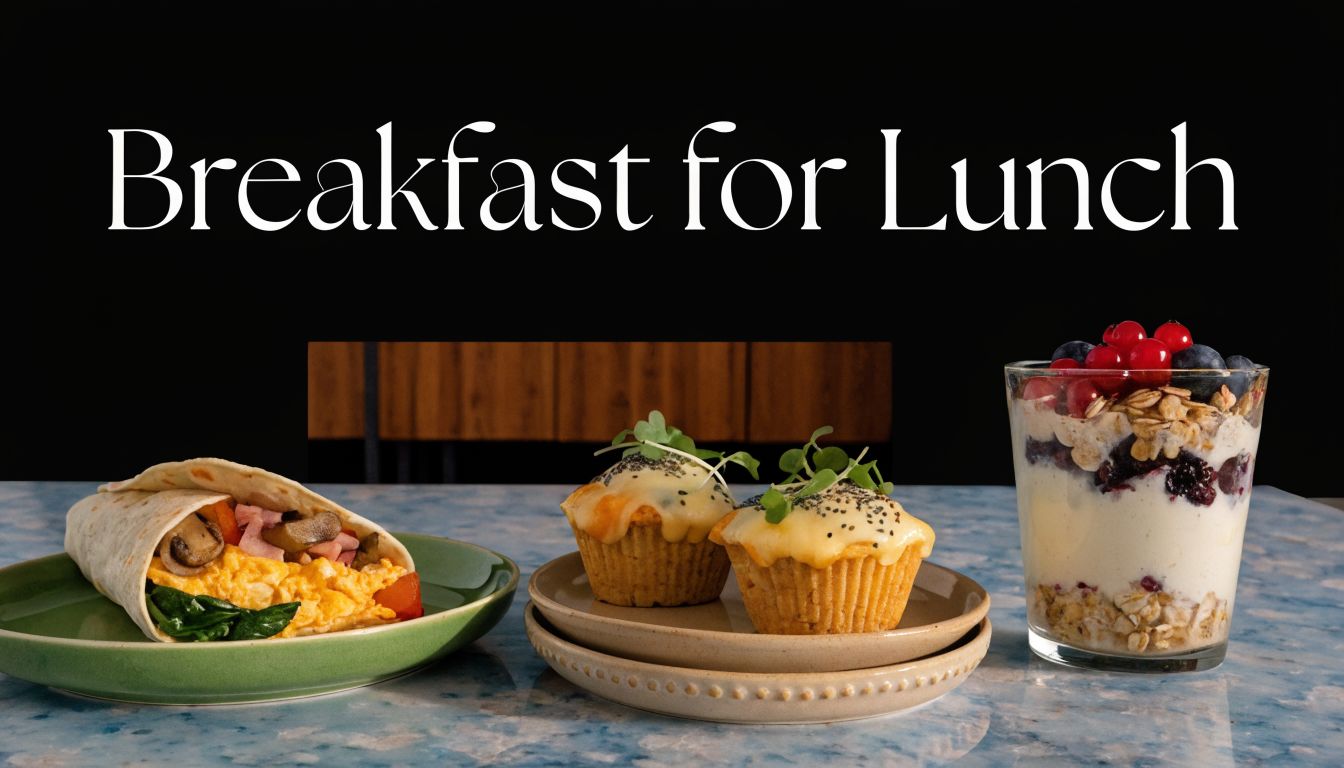
You look up at 1:15 p.m., realize lunch got pushed again, and need something that will keep you steady through the rest of the workday. That is the real test for breakfast for lunch. The meal has to survive storage, reheat well, and deliver enough protein, fiber, and staying power to function as lunch, not a quick breakfast snack.
The best options do that reliably. Burritos, shakshuka, overnight oats, egg muffin cups, frittata squares, breakfast salads, grain bowls, and smoked salmon sandwiches all work because they can be built with real structure. Protein comes first. Produce adds volume and nutrients. Fat, fiber, or both slow the crash that hits after a light carb-heavy meal.
That distinction matters. People already reach for breakfast foods regularly. The better question is which ones still perform at noon. In practice, savory options usually win because they travel better, reheat more predictably, and feel more satisfying after a busy morning.
I treat breakfast for lunch as a system, not a novelty. A good rotation includes desk-friendly meals for office days, fork-and-bowl options for home days, and at least two make-ahead choices for the busiest part of the week. It also needs room for diet-specific swaps. Tortillas can become gluten-free wraps, eggs can become tofu scramble, grains can be replaced with lower-carb vegetables, and dairy can be adjusted without rebuilding the whole plan. If your goal is higher satiety or muscle support, a high-protein meal plan for weekday lunches helps you set portions and ingredient targets before the week gets hectic.
The ideas below are strong because they solve common lunch problems: soggy textures, weak protein, poor portability, and decision fatigue.
1. Protein-Packed Breakfast Burrito
A breakfast burrito is one of the easiest ways to make breakfast for lunch feel substantial instead of snacky. It travels well, reheats predictably, and lets you layer protein, vegetables, and fat into one meal that you can eat between meetings.

The versions that work best for lunch are savory and tight on moisture control. Scrambled eggs, roasted peppers, cooked onions, black beans, turkey sausage, steak strips, or tofu scramble all hold up well. Watery tomatoes, too much salsa inside the wrap, or undercooked vegetables turn the burrito gummy by noon.
I usually separate the thinking into layers. Protein first, then vegetables, then one creamy or melty element, then a wrap sturdy enough to survive storage. That formula works whether you go Southwestern with chorizo and beans, Mediterranean with spinach and feta, or low-carb with eggs, turkey sausage, cheese, and avocado in a smaller wrap.
How to make burritos work for lunch
For meal prep, cook the filling components separately before assembly. That gives you cleaner texture and better control over portions. If you're tracking intake closely, a high-protein meal plan helps you fit burritos into the rest of the day instead of letting lunch dominate your macros.
A few combinations are especially reliable:
- Southwestern style: Eggs, black beans, peppers, onions, salsa added after reheating.
- Mediterranean style: Eggs, spinach, feta, chopped olives, tomatoes packed on the side.
- Vegan version: Tofu scramble, roasted sweet potato, peppers, avocado.
- Low-carb approach: Smaller tortilla, extra egg, turkey sausage, shredded cheese, greens.
Practical rule: If the filling looks wet in the pan, it will be worse in the container. Cook off moisture before you wrap.
Freeze burritos in parchment, then stack them in a container or freezer bag. For office lunches, bring salsa, Greek yogurt, or hot sauce separately. That fresh finish matters more than often realized. It makes a reheated burrito taste assembled, not leftover.
What doesn't work is treating the burrito like a diner special. Hash browns inside, extra cheese, and multiple sauces can make it heavy and sleepy. For lunch, the sweet spot is enough density to satisfy you without knocking you flat for the rest of the day.
2. Shakshuka
Shakshuka is one of the best breakfast for lunch meals when you want something warm, vegetable-forward, and not dependent on bread to feel complete. It eats like a real lunch because the tomato-pepper base gives it body, not just breakfast flavor.

The biggest advantage is that the sauce can do most of the work ahead of time. Make a pan of tomato sauce with onions, peppers, garlic, cumin, and herbs. Then reheat a portion and crack in eggs when you're ready to eat, or bake the eggs directly into individual servings if you need grab-and-go structure.
The lunch-friendly versions tend to be heartier than the brunch versions. Add mushrooms, zucchini, chickpeas, or feta. Serve it with Greek yogurt, a piece of pita, or even over a scoop of grains if you need more staying power.
What makes shakshuka a strong midday meal
It solves a common breakfast-for-lunch problem. Many breakfast meals lean too hard on refined carbs and don't give enough protein or savory depth for the middle of the day. That gap shows up in school settings too, where breakfast-style meals served later can miss the macro balance people need for sustained energy, as discussed in Iowa’s school meal nutrition guidance.
That doesn't mean shakshuka is automatically balanced. You still need to build it intentionally.
- For more protein: Add extra eggs, Greek yogurt, or a side of beans.
- For more volume: Add mushrooms, zucchini, or spinach to the sauce.
- For lower carbs: Skip bread and finish with feta, herbs, and olive oil.
- For heartier lunches: Spoon it over quinoa or brown rice.
The tomato base should simmer long enough to lose its raw edge. If you rush that step, the whole meal tastes sharp and unfinished. A good shakshuka lunch should taste deep, soft, and savory.
Here's a solid visual guide for the technique:
If you already like Mediterranean flavors, a Mediterranean meal plan makes shakshuka easy to repeat without getting repetitive. Swap herbs, cheeses, and vegetables week to week.
Shakshuka works best when the sauce is meal-prepped and the eggs are cooked fresh. That's the difference between a great lunch and a rubbery one.
3. Overnight Oats Parfait Bowl
You pack lunch at 7 a.m., hit meetings back-to-back, and by 1 p.m. the only meal that still looks good is the one you can eat cold. That is where an overnight oats parfait bowl earns its spot. It travels well, costs little, and gives you a repeatable lunch base that can be adjusted for different calorie and macro needs without extra cooking.
The mistake is building it like a sweet snack. A lunch-worthy jar needs three jobs covered: enough protein to stay full, enough fiber to slow digestion, and enough texture that it still feels good to eat six hours later. I use oats, milk or a milk alternative, and a thick yogurt as the base. Then I add chia, flax, hemp, nuts, or protein powder based on the goal for that week.

A few combinations hold up better than others. Greek yogurt, berries, and almonds is reliable and high in protein. Peanut butter, cocoa, and chia works for longer afternoons because the fat and fiber slow things down. Apple-cinnamon with walnuts feels more like a real lunch than a fruit-heavy jar. For dairy-free prep, plant yogurt plus hemp seeds gives better staying power than oats and fruit alone.
How to build a jar that still works at lunch
Texture usually decides whether people keep making overnight oats or quit after two weeks. Fruit releases water. Granola softens. Protein powder can turn chalky if the ratio is off. Keep the base simple and hold back the crunchy pieces until you eat.
Use this assembly order:
- Base: Oats plus liquid in a ratio that hydrates fully without turning loose or gummy.
- Protein: Greek yogurt, skyr, cottage cheese, soy yogurt, or a scoop of protein powder.
- Fiber and fats: Chia, ground flax, hemp, nut butter, or chopped nuts.
- Fresh layer: Berries, diced apples, or thawed frozen fruit with excess liquid drained.
- Crunch at serving time: Nuts, seeds, toasted coconut, or granola.
This meal also adapts well, which matters if you want breakfast for lunch to last longer than one motivated week. Vegan eaters can use soy milk, soy yogurt, and hemp seeds. Gluten-free eaters can use certified gluten-free oats. People cutting carbs usually do better with a smaller oat portion, more chia, and a higher-protein topping strategy. If that is your target, a low-carb meal plan for busy weeks helps you fit oats in without letting lunch drift too carb-heavy.
For planning, I treat overnight oats like a system, not a single recipe. Prep two bases on Sunday, choose two topping sets, and repeat each combination twice. That gives variety without creating six different jars. If you use meal-planning automation, set a recurring lunch template with your preferred base, one high-protein add-in, and one fruit option. The decision gets made once, and the habit gets much easier to keep.
Overnight oats work best when they are built with intent. Oats alone rarely carry a long afternoon. A properly built parfait bowl can.
4. Egg Muffin Cups with Vegetables
Egg muffin cups are the closest thing to a nutrition insurance policy. If your schedule is chaotic, they give you a ready-made lunch component that can live in the fridge or freezer and plug into almost any midday setup.
They're especially useful for low-carb eaters, people who like portion clarity, and anyone who wants breakfast for lunch without assembling something from scratch. Bake a tray with eggs, vegetables, cheese, and a protein you already tolerate well, then pair two or three with fruit, salad, roasted potatoes, or a cup of soup depending on the day.
Why muffin cups work better than scrambled eggs
Scrambled eggs don't reheat especially well once they've been mixed with watery vegetables. Muffin cups do better because the structure sets in the oven. You can also control moisture. Spinach, mushrooms, zucchini, and tomatoes all need to be cooked or dried down first, otherwise the cups leak water and turn rubbery.
Reliable combinations include spinach-feta, broccoli-cheddar, sausage-mushroom, and olive-pepper-herb. Vegan versions can work with chickpea batter or a tofu-cashew mixture, but they need assertive seasoning or they taste flat.
For planning, I like to think of them as modules rather than complete lunches. Add them to a lunchbox with crunchy vegetables and a dip. Slice them over greens. Tuck them into a wrap. That's how they stay useful.
Best ways to batch and store them
- Dry the vegetables well: Excess moisture ruins texture faster than anything else.
- Don't overfill the tin: Leave room for expansion so the tops don't collapse oddly.
- Cool before storing: Condensation makes the surface wet and spongy.
- Reheat gently: Too much heat toughens the eggs.
If you're eating lower carb, a low-carb meal plan makes muffin cups more practical because it helps you pair them with sides that match the rest of the day. That's important. A tray of egg cups is only half the system.
Most people don't fail at meal prep because recipes are hard. They fail because they prep one item and forget to prep the supporting pieces.
What doesn't work is pretending egg muffin cups are exciting on their own after day three. They need a side, sauce, or new pairing. Hot sauce, pesto, salsa, tahini, or a simple yogurt dip can keep them in rotation without extra cooking.
5. Frittata Squares
Frittata squares are the calmest answer to weekday lunch. One sheet pan gives you several servings, they cut cleanly, and they adapt to whatever vegetables or proteins you need to use up.
They also solve the texture problem that makes many egg-based meal prep recipes disappointing. A well-made frittata stays tender enough to reheat, especially if you don't overload it with liquid vegetables. Mushrooms, zucchini, and spinach should be cooked down first. Broccoli or cauliflower should be softened before they go in. Raw dense vegetables often stay awkwardly firm and throw off the bite.
An Italian-style version with basil, sun-dried tomatoes, and mozzarella is easy to repeat. A Spanish-style version with peppers and chorizo feels more lunch-like. A vegetarian pan with asparagus and mushrooms works well in spring. If you want something hearty, add a potato layer, but keep it modest so the eggs still lead.
How to keep the texture clean
Resting matters. Pulling the pan and slicing too early gives you ragged squares and a wet center. Let the bake settle before cutting and packing.
A few handling choices make a visible difference:
- Use parchment: It lifts out cleanly and makes portioning easier.
- Season in layers: Vegetables need seasoning before they hit the egg mixture.
- Cut after cooling slightly: Warm is fine. Hot is messy.
- Pack with a crisp side: Cucumbers, greens, or slaw improve contrast.
If you're building a smarter kitchen setup around meals like this, even tools matter. Choosing the right pan affects browning, sticking, and cleanup. That's where finding your perfect fry pan can help if you're upgrading cookware.
The best thing about frittata squares is ingredient reuse. They let you pull leftovers from dinner prep into lunch without making the meal feel random. Roasted vegetables, herbs, extra cheese, or cooked sausage all have a place here.
What doesn't work is trying to make the frittata carry too many identities at once. If it has potatoes, three cheeses, bacon, and multiple vegetables, the texture turns dense and muddy. Keep one main flavor direction and let the sides do the rest.
6. Breakfast Salad with Warm Proteins
If breakfast for lunch has ever felt too beige, a breakfast salad fixes that immediately. It gives you the savory eggs, bacon, sausage, or smoked proteins you want, but anchors them in greens and vegetables so the meal feels like lunch.
This is one of the best formats for people who want a lighter midday meal without ending up hungry an hour later. The warm-and-cool contrast does a lot of work. Soft-boiled eggs over arugula, bacon over spinach, or sausage with roasted vegetables over kale all feel more complete than eggs and toast by themselves.
What to put in a breakfast salad
Use sturdy greens. Spinach, kale, and arugula hold up better than delicate spring mix once warm proteins hit the bowl. Then add one or two vegetables with crunch, one fat source, and a dressing that matches the protein.
Good combinations include:
- Spinach and egg: Avocado, tomatoes, olive oil, balsamic.
- Arugula and bacon: Radish, cucumber, Dijon vinaigrette.
- Kale and sausage: Roasted mushrooms, peppers, tahini dressing.
- Mediterranean version: Feta, olives, soft egg, herbs, lemon dressing.
This style also lines up with a broader reality. School breakfast participation averaged 14.3 million children daily during the 2022 to 2023 school year, while lunch participation was 28.1 million, according to FRAC’s school breakfast reach report. Lunch remains the more dominant format, which makes sense. People often want a meal at midday that feels more substantial and structured. A breakfast salad is one of the easiest ways to bridge that gap.
A breakfast salad succeeds when the hot element lightly wilts the greens instead of cooking them into submission.
The practical mistake here is overdressing. Once greens, egg yolk, avocado, and warm protein all meet in the bowl, you need less dressing than you think. Pack it separately and finish right before eating.
What doesn't work is using weak greens and cold protein straight from the fridge. Then you just have salad with breakfast leftovers on top. Warm one central element, and the whole meal comes together.
7. Savory Breakfast Grain Bowl
For long afternoons, hard training days, or busy work that doesn't leave much room for snacking, the savory grain bowl is often the strongest breakfast for lunch option on this list. It has more range than a sandwich and more staying power than an egg-only meal.
Use a cooked grain as the base, then build upward with roasted vegetables, a protein, and one bold finish. Quinoa, farro, brown rice, millet, or even savory oats can work. Top with eggs, beans, tofu, turkey sausage, or leftover roasted chicken if that fits your approach better.
Build it like a lunch bowl, not a breakfast plate
The easiest mistake is overloading the bowl with grains and calling it balanced. Lunch bowls work best when vegetables clearly outnumber the starch and the protein is obvious in every bite.
A dependable structure looks like this:
- Base: Quinoa, farro, brown rice, or savory oats.
- Vegetables: Roasted peppers, broccoli, mushrooms, greens, sweet potato.
- Protein: Egg, beans, tofu, yogurt sauce, sausage, or another lean option.
- Finish: Herbs, feta, salsa verde, tahini, pesto, or chili crisp.
A Mediterranean bowl with quinoa, roasted vegetables, feta, and an egg is easy to repeat. A Southwest version with farro, black beans, peppers, and avocado feels more hearty. An Asian-inspired bowl with brown rice, edamame, greens, and ginger dressing works well if you want something less egg-centered.
This is also where budget planning matters. Breakfast staples can be cost-effective, but they only stay efficient if you reuse ingredients across the week and avoid buying one-off toppings that sit in the fridge. The gap in most advice isn't whether eggs, oats, and grains are affordable. It's that people rarely get a system for reusing them across several meals, which is exactly the planning issue highlighted in this budget-conscious meal planning discussion.
For office lunches, keep dressing separate and layer the bowl with grains on the bottom, vegetables next, then protein. That protects the greens and reheats more evenly if part of the bowl is going in the microwave.
What doesn't work is too many sweet breakfast cues. Maple, dried fruit, candied nuts, or sweet yogurt dressings can make the bowl confused. At lunch, savory wins.
8. Smoked Salmon and Cream Cheese Breakfast Sandwich
Some days you want breakfast for lunch to feel a little sharper and more put-together. That's where a smoked salmon sandwich earns its place. It tastes premium, requires very little cooking, and works well for professionals who want a quick lunch that still feels intentional.
The strongest version is built more like an open-faced lunch sandwich than a deli bagel bomb. Use good bread, a restrained layer of cream cheese or thick Greek yogurt spread, smoked salmon, and vegetables that add crunch and brightness. Cucumber, red onion, sprouts, radish, dill, capers, and lemon all work.
How to keep it satisfying without making it heavy
Bread choice matters. A sturdy whole grain or sourdough slice holds up better than a soft bagel if you're packing lunch ahead. Bagels can work, but they tend to dominate the sandwich and mute the salmon.
Try combinations like these:
- Classic: Cream cheese, smoked salmon, capers, red onion, arugula.
- Mediterranean: Greek yogurt spread, cucumber, dill, tomato.
- Vegetable-forward: Avocado, sprouts, lemon-herb spread, radish.
- Open-faced plate: Poached egg, asparagus, salmon, fresh herbs.
One reason this kind of lunch has become easier to rely on is the wider shift toward flexible breakfast timing outside the home. The U.S. breakfast restaurants and diners industry reached an estimated $15.6 billion in 2025 after growing at a 7.5% CAGR over the previous five years, according to IBISWorld’s breakfast restaurants and diners industry report. All-day breakfast isn't a novelty anymore. People are already eating these flavors outside the traditional morning window.
A sandwich like this still needs balance. If the bread is oversized and the spread is thick, the meal turns rich fast. Pair it with crunchy vegetables, a simple salad, or fruit instead of adding chips and calling it done.
Use acid aggressively with smoked salmon. Lemon, pickled onion, capers, or yogurt keeps the sandwich bright and prevents palate fatigue.
What doesn't work is assembling it too early. Bread gets damp, greens slump, and the whole thing loses appeal. Pack components separately if lunch is several hours away, then build it right before eating.
8-Item Breakfast-for-Lunch Comparison
| Item | 🔄 Implementation complexity | ⚡ Resource requirements & efficiency | 📊 Expected outcomes | 💡 Ideal use cases | ⭐ Key advantages |
|---|---|---|---|---|---|
| Protein-Packed Breakfast Burrito | Moderate, 15–20 min prep, assembly/wrapping | Medium, tortillas, cooked proteins, freezer space; reheats quickly | High satiety, ~450 kcal, 25–35g protein; energy-dense | Meal prep for busy professionals, macro tracking, grab-and-go | Portable, customizable, meal-preppable |
| Shakshuka (Baked Eggs in Tomato Sauce) | Low, one-pan, 20–25 min; careful egg timing | Low, skillet, tomatoes/veg; minimal equipment | Nutrient-dense, ~280 kcal, 16g protein, high in lycopene & veg | Clean-eating, heart/diabetes-friendly lunches, minimal cleanup | Veg-forward, cost-effective, gluten/dairy-free adaptable |
| Overnight Oats Parfait Bowl | Very low, no-cook, 5 min night-before prep | Low, jars, oats, yogurt/milk; fridge storage; grab-and-go | Balanced macros, ~380 kcal, ~15g protein, high fiber (7–10g) | Fast grab-and-go for busy days, hot weather, budget meal planning | Quick prep, highly customizable, portion-controlled |
| Egg Muffin Cups with Vegetables | Moderate, batch bake 20–25 min, requires muffin tins | Medium, eggs, fillings, freezer space; oven or microwave reheat | High protein ( |
Keto/low-carb, precise macro tracking, large-batch meal prep | Single-serve portions, long freezer life, fast reheating |
| Frittata Squares (Make-Ahead Egg Bake) | Low–Moderate, sheet-pan bake, minimal active time | Low, sheet pan/oven, versatile ingredients; stores 4–5 days | Flexible macros, ~220 kcal per square, serves 6–8 per batch | Family meal prep, batch cooking, entertaining, food-waste reduction | Batch efficiency, one-pan cleanup, versatile ingredient use |
| Breakfast Salad with Warm Proteins | Moderate, cook proteins near service for best texture | Low, fresh produce and proteins; assembly required at lunch | Very high micronutrient density, ~350 kcal, 4+ veg servings | Health-focused professionals, vegetable-forward diets, chronic disease prevention | High fiber/micronutrients, light yet filling, seasonal flexibility |
| Savory Breakfast Grain Bowl | Moderate, multiple components; 25–30 min or batch-cook grains | Medium, grains, roasted veg, separate storage for freshness | Sustained energy, ~480 kcal, ~20g protein, high fiber (10–12g) | Performance nutrition, sustained afternoon energy, customizable lunches | Balanced macros, component prep for freshness, highly customizable |
| Smoked Salmon & Cream Cheese Sandwich | Very low, ~5 min assembly | Higher cost, quality smoked salmon, whole-grain bread; refrigerated | Premium nutrition, ~420 kcal, ~22g protein, 1.5–2g omega-3s | Upscale quick lunches, professional/brunch settings, heart-health focus | Fast assembly, rich omega-3s, sophisticated presentation |
Ready to Make Your Midday Meal the Best Part of Your Day?
Breakfast for lunch works because it solves real problems. It's fast. It's familiar. It can be comforting without being nutritionally lazy. And if you set it up properly, it gives you a lunch rotation that's easier to prep than many standard lunch recipes.
The main thing to remember is that breakfast flavor and lunch structure are not the same thing. A lunch-worthy breakfast meal needs enough protein to stay satisfying, enough produce to keep it from feeling heavy, and enough texture to still taste good after storage or reheating. That's why burritos, shakshuka, egg bakes, grain bowls, and smoked salmon sandwiches hold up so well. They have real meal architecture.
What usually fails is the version of breakfast for lunch that's built around convenience alone. Toast with jam isn't lunch. A plain bowl of oats often isn't either. A couple of hard-boiled eggs with no sides can be useful in a pinch, but it often won't feel complete. The better approach is to choose one anchor food and build around it. Eggs need vegetables or grains. Oats need protein and crunch. Sandwiches need freshness and acid. Once you start seeing lunch this way, the planning gets easier.
This approach also fits real eating behavior. Breakfast remains familiar to many, and flexible timing makes it easier to use those foods later in the day. That matters for consistency. People stick with habits that feel low-friction. Breakfast foods usually do. They're easier to batch, easier to portion, and easier to adapt for keto, vegan, gluten-free, higher-protein, or family-style eating than many lunch-specific recipes.
If you're trying to make this sustainable, keep the system simple.
Pick two hot options and two cold options for the week. A frittata and burrito can cover reheated lunches. Overnight oats and a smoked salmon sandwich can cover no-cook days. Prep one sauce or finishing element that improves everything, such as salsa, yogurt dressing, herb sauce, or tahini. Then build your grocery list around overlapping ingredients so spinach, eggs, oats, peppers, yogurt, herbs, and grains show up in more than one meal.
That ingredient overlap is what keeps breakfast for lunch practical instead of Pinterest-pretty but expensive. It also reduces waste. If you roast vegetables for shakshuka, they can show up in burritos or grain bowls. If you buy herbs for salmon sandwiches, they can finish frittata and salad. Good meal prep isn't just cooking ahead. It's creating useful repetition.
For cooking quality, don't ignore your fats. Egg dishes, sautéed vegetables, and warm grain bowls improve noticeably when you're using an oil that fits the cooking method and flavor profile. If you want to get more intentional there, this guide to understanding olive oil for better cooking is worth reviewing.
The next move is straightforward. Pick one breakfast for lunch idea from this list that sounds easy enough to repeat next week. Prep it once, learn where it breaks, then adjust. Maybe the burrito needs fresher toppings. Maybe the oats need more protein. Maybe the grain bowl needs a better sauce. That kind of iteration is how people establish a lunch habit that lasts.
And if you'd rather not map all of this manually, use a tool that handles the planning logic for you. A smart system can rotate these meals, match them to your diet, calculate the macros and calories, and organize the grocery list so you aren't solving lunch from scratch every few days.
FAQ
Is breakfast for lunch actually healthy?
It can be, if the meal includes protein, produce, and enough fat or fiber to stay satisfying. It becomes less useful when it's mostly refined carbs or sweet breakfast foods.
What breakfast foods don't work well for lunch?
Meals that are too sugary, too light, or too soft tend to disappoint at midday. Pancakes, pastries, and plain toast usually need major upgrades to function as lunch.
What's the best high-protein breakfast for lunch?
Burritos, egg muffin cups, frittata squares, shakshuka, and smoked salmon sandwiches are strong choices. They're easy to build around eggs, dairy, tofu, beans, or lean meats.
Can I meal prep breakfast for lunch for the whole week?
Yes, especially with burritos, frittata squares, egg muffin cups, grain bowl components, and overnight oats. The key is storing sauces and crunchy toppings separately.
Is breakfast for lunch good for weight loss?
It can be, because breakfast-style meals are often easy to portion and prep consistently. The result depends on the full meal structure, not the label.
What are the best vegan breakfast for lunch ideas?
Tofu burritos, vegan overnight oats, savory grain bowls, and vegetable-heavy skillets work well. Strong seasoning and planned protein sources matter more than trying to mimic eggs perfectly.
How do I stop breakfast for lunch from getting boring?
Rotate the format, not just the flavor. Switching between wraps, bowls, salads, bakes, and sandwiches keeps the habit easier to maintain.
If you want breakfast for lunch to become automatic instead of another weekly planning chore, AI Meal Planner is built for exactly that. It creates personalized weekly meal plans based on your goals, dietary preferences, and allergies, then generates smart grocery lists and balanced meals for every part of the day. You can start with the AI Meal Planner onboarding and build a system that makes quick, nutritious lunches much easier to repeat.
AI-powered nutrition
Get Your Personalized Meal Plan
AI creates the perfect meals for your goals, lifestyle, and taste.
Start Your Journej