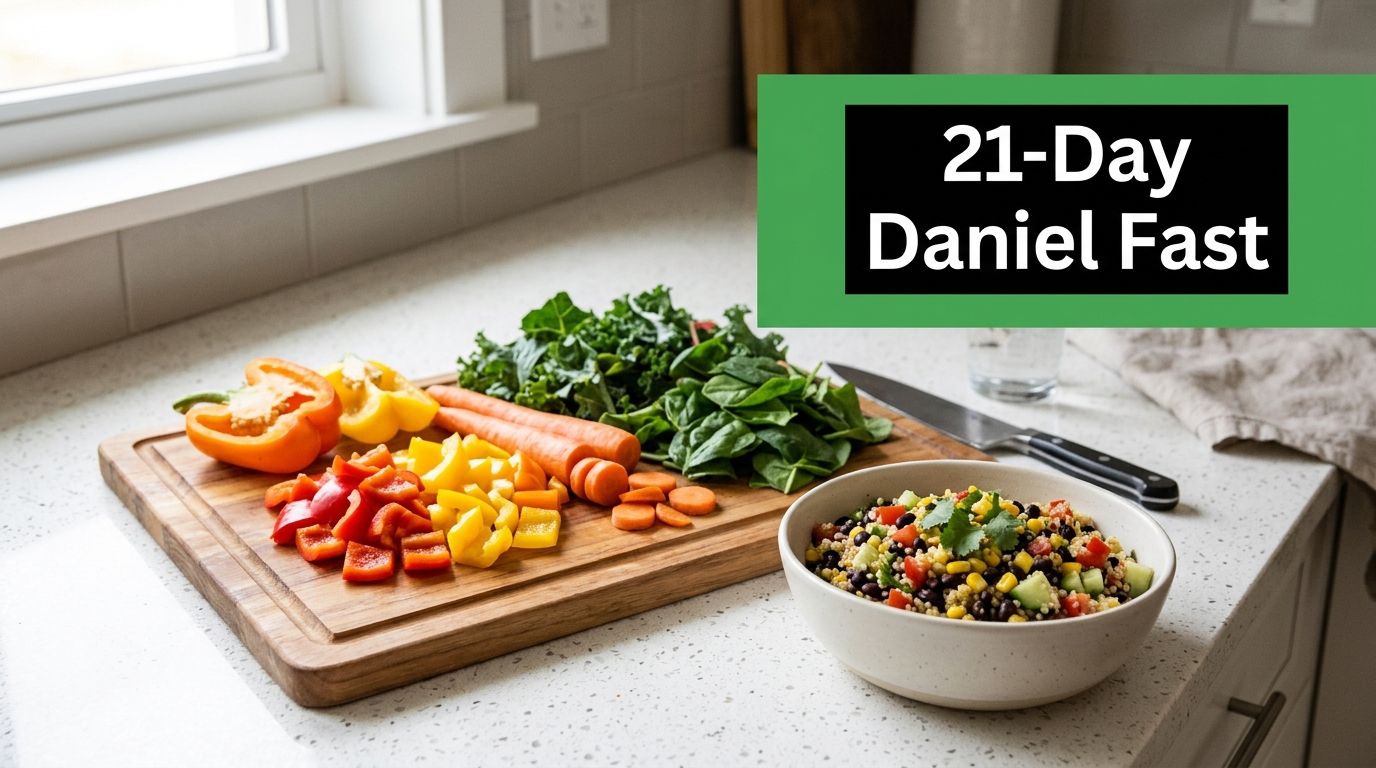
You're probably here because you want a 21 day Daniel Fast meal plan that tells you exactly what to eat without forcing you to rebuild your week from scratch every night.
What is a simple 21 day Daniel Fast meal plan?
A simple 21 day Daniel Fast meal plan is a 7-day menu repeated 3 times to cover the full fast, built around fruits, vegetables, whole grains, legumes, nuts, seeds, and water. The easiest version uses leftover dinner for next-day lunch and keeps each meal centered on whole, plant-based staples with no animal products, added sugars, caffeine, alcohol, or heavily processed foods.
This approach works because the Daniel Fast is restrictive enough to require planning, but simple enough to run on repetition. Individuals don't need a new recipe every day. They need a system that keeps them compliant, fed, and focused.
The Daniel Fast is a 21-day partial fast, not a complete food fast, and it's practiced by limiting commonly enjoyed foods as an act of consecration and worship, as described in the Daniel Fast overview. That distinction matters. You're not trying to eat as little as possible. You're trying to eat plainly, intentionally, and consistently.
A good plan removes friction. It also prevents the two most common failures I see in practice: under-eating during the day, and relying on “accidentally compliant” snacks that leave you hungry and irritated by evening.
What Can You Actually Eat on the Daniel Fast
The fastest way to make the Daniel Fast feel manageable is to stop thinking in terms of “restriction” and start thinking in terms of approved building blocks. If a food is whole, plant-based, and minimally processed, it usually belongs somewhere in your plan. If it's packaged, flavored, sweetened, preserved, or animal-based, it usually needs a harder look.
Many modern guides describe the fast as a partial fast where you eat freely from allowed foods but avoid animal products, added sugars, caffeine, alcohol, and foods with artificial additives or preservatives, as summarized in this Daniel Fast nutrition guide. For practical meal planning, that means your plate should usually start with grains, beans, vegetables, fruit, nuts, seeds, and water.

Foods to embrace
Build most meals from these:
- Fruits like apples, bananas, berries, oranges, grapes, melon, and dried fruit without added sugar
- Vegetables including leafy greens, broccoli, bell peppers, onions, carrots, tomatoes, cucumbers, cauliflower, sweet potatoes, and squash
- Whole grains such as oats, brown rice, quinoa, and other simple whole-grain staples
- Legumes including lentils, black beans, chickpeas, kidney beans, split peas, and hummus made from compliant ingredients
- Nuts and seeds like almonds, walnuts, pumpkin seeds, chia, flax, hemp, sunflower seeds, and natural nut butters
- Compliant plant foods such as tofu, soy products, and unsweetened almond milk when the ingredient list fits the fast
- Water as the main beverage
If you want a broader ingredient list to compare against your pantry, a structured Daniel Fast foods guide can help you sort staples from gray-area items.
Foods to avoid
These are the categories that usually break compliance:
- Animal products including meat, poultry, fish, eggs, and dairy
- Added sweeteners such as sugar, honey, maple syrup, molasses, cane juice, and syrup blends
- Caffeinated drinks like coffee, many teas, energy drinks, and soda
- Alcohol
- Highly processed foods with preservatives, additives, artificial ingredients, or sweeteners
- Yeast-leavened breads and many baked goods
- Packaged sauces and snacks unless every ingredient fits the fast
Practical rule: If you need to argue with the ingredient label, skip it.
The gray areas that trip people up
Here is where most confusion exists.
- Plant milks can work, but only if they're unsweetened and compliant.
- Nut butters are useful, but the ingredient list should stay simple.
- Seasonings are usually fine when they're plain herbs, spices, garlic, onion, lemon, or vinegar without sugar or additives.
- Oils are handled differently across communities. Some people use simple oils like olive oil for cooking and dressings, while others keep things more minimal. If you're following church-specific guidance, that version takes priority.
What doesn't work is treating the fast like a fruit cleanse. The strongest plans feel ordinary in the best way: oatmeal, lentils, rice bowls, vegetable soups, hummus plates, roasted vegetables, and simple snacks.
How This 21-Day Meal Plan Is Structured for Simplicity
The challenge isn't one Daniel Fast meal. It's 21 straight days of decisions. That's why the cleanest setup is a rotating weekly system instead of a brand-new calendar of meals.
A practical model is a 7-day menu repeated for 3 weeks, with lunch often made from the previous night's dinner, as shown in this Daniel Fast meal plan example. That structure cuts shopping stress, reduces waste, and keeps you from standing in the kitchen at 6 p.m. trying to invent compliance out of random produce.
Why repetition helps
Repetition isn't boring when the meals are balanced. It's efficient.
When you rotate the same week three times, you get a few benefits right away:
- Fewer decisions because breakfast and snack patterns stay familiar
- Simpler grocery runs because the same staples reappear
- Better ingredient reuse because cooked grains, beans, greens, and chopped vegetables fit multiple meals
- More reliable compliance because you're not guessing
This setup also makes batch prep worthwhile. Cooking brown rice once matters when it supports several meals. Roasting a tray of vegetables feels useful when it carries into bowls, wraps, and side dishes.
The cook once, eat twice method
Dinner should do double duty. If dinner makes enough for lunch the next day, your plan becomes easier immediately.
Leftovers aren't a backup plan. They're part of the system.
That approach also changes what you choose to cook. Soups, grain bowls, chili, roasted vegetable trays, lentil dishes, and tofu stir-fries hold up well and taste fine the next day. Delicate salads and tiny single servings don't.
What this looks like in real life
Here's the operating rhythm:
- Pick one breakfast per day from a small set of repeatable options.
- Make dinner substantial enough to cover lunch the next day.
- Use snacks strategically so you don't drift into cravings by late afternoon.
- Repeat the week three times with small produce swaps if needed.
That's the difference between a food list and a working plan. A food list tells you what's allowed. A system tells you what happens on Tuesday when work runs late and you still need dinner to be compliant.
The Complete 7-Day Rotating Meal Plan and Recipes
This menu keeps breakfast simple, uses leftovers for most lunches, and makes dinner the anchor meal. The allowed-food examples commonly shown in Daniel Fast plans include oatmeal with almond milk, lentil soup, brown rice with vegetables, chia pudding, quinoa, tofu, and hummus, which is why they show up often here in practical form in this sample Daniel Fast meal plan.
Sample 7-Day Daniel Fast menu
| Day | Breakfast | Lunch | Dinner |
|---|---|---|---|
| Day 1 | Oatmeal with unsweetened almond milk, berries, and chia seeds | Lentil soup with raw vegetables | Quinoa black bean bowl with roasted vegetables |
| Day 2 | Chia pudding with almond milk and berries | Leftovers from last night's dinner | Brown rice vegetable stir-fry with tofu |
| Day 3 | Apple with almond butter and a bowl of oats | Leftovers from last night's dinner | Hearty lentil and vegetable soup |
| Day 4 | Oatmeal with banana, flax, and walnuts | Leftovers from last night's dinner | Baked sweet potato with chickpeas and sautéed greens |
| Day 5 | Chia pudding with berries and pumpkin seeds | Leftovers from last night's dinner | Brown rice with vegetables and hummus plate |
| Day 6 | Oatmeal with chopped apples and cinnamon | Leftovers from last night's dinner | Quinoa stuffed bell peppers with black beans |
| Day 7 | Banana, unsweetened almond milk, oats, and flax blended thick or eaten as overnight oats | Leftovers from last night's dinner | Tofu and broccoli skillet over quinoa |
If you want more compliant dish ideas after you've used this full week a few times, a curated set of Daniel Fast-friendly recipe ideas can make substitutions easier without changing the overall structure.
Dinner mini-recipes
Day 1 quinoa black bean bowl
Cook quinoa. Top with black beans, roasted broccoli, bell peppers, onions, and sliced avocado. Finish with lemon juice, garlic, and chopped cilantro.
Day 2 brown rice vegetable stir-fry with tofu
Cook brown rice. Sauté tofu cubes with broccoli, carrots, bell peppers, and onions in a small amount of compliant cooking fat or broth, then season with garlic and simple spices.
Day 3 hearty lentil and vegetable soup
Simmer lentils with onion, carrots, celery, tomatoes, and greens until tender. Make a large pot so lunch is already done.
The best Daniel Fast dinners are meals you'll still want tomorrow at noon.
Day 4 baked sweet potato with chickpeas and greens
Bake sweet potatoes until soft. Warm chickpeas with garlic and spices, then pile them over the potato with sautéed spinach or kale.
Day 5 brown rice and hummus plate
Serve brown rice with cucumber, tomato, carrots, roasted vegetables, hummus, and a side of fruit. This is a low-effort night that still feels complete.
Day 6 quinoa stuffed bell peppers
Mix cooked quinoa, black beans, diced tomatoes, onions, and herbs. Stuff bell peppers and bake until the peppers soften.
Day 7 tofu and broccoli skillet over quinoa
Pan-cook tofu until lightly firm. Add broccoli, mushrooms, and onion, then serve over quinoa with lemon or a compliant homemade sauce.
Snack ideas that actually carry you
Use snacks to stabilize your day, not just fill silence.
- Apple with almond butter
- Raw vegetables with hummus
- A handful of walnuts or almonds
- Banana with peanut butter
- Berries with chia
- Cucumber and carrot sticks
- Orange slices and pumpkin seeds
The common thread is density. Snacks built from fruit alone tend to fade fast. Pair fruit with seeds, nuts, hummus, or another filling plant food.
Your Weekly Shopping List and Batch-Prep Guide
A workable shopping list should match the repeatable menu, not a fantasy version of your week. Buy what supports breakfast, two or three flexible dinners, and dependable snacks. That's enough.

Weekly shopping list by aisle
Produce
- Leafy greens such as spinach, kale, or lettuce
- Roasting vegetables like broccoli, cauliflower, carrots, onions, bell peppers, and sweet potatoes
- Fresh basics including garlic, celery, cucumbers, tomatoes, and avocados
- Fruit for breakfasts and snacks such as apples, bananas, berries, oranges, and lemons
Grains and legumes
- Rolled oats
- Brown rice
- Quinoa
- Dry lentils
- Chickpeas
- Black beans
- Other simple beans you enjoy and tolerate well
Nuts, seeds, and pantry staples
- Chia seeds
- Ground flax
- Pumpkin seeds
- Almonds or walnuts
- Natural nut butter
- Unsweetened almond milk
- Olive oil if your version of the fast allows it
- Plain herbs and spices
Refrigerated and canned items
- Tofu
- Low-ingredient canned beans
- Tomatoes or tomato products without added sugar
- Vegetable broth if compliant
A tool that organizes repeated ingredients into one aisle-sorted list can save time, especially when you're cycling the same week. This grocery list generator is a useful example of that kind of structure.
Weekend prep that makes the week easier
Do these jobs once, and the whole plan feels lighter:
- Cook grains ahead by making a batch of brown rice and quinoa
- Prep beans and lentils if you're cooking from dry
- Wash and chop produce for snacks, bowls, and soups
- Roast a tray of vegetables for quick lunches and dinners
- Mix chia pudding for the first few breakfasts
- Make lentil soup or a bean-based dinner so Day 1 starts strong
- Portion snacks into containers you can grab quickly
A visual walkthrough can help if you want to see how people organize a Daniel Fast grocery and prep routine in an actual kitchen:
Batch-prep mindset: Cook ingredients, not just meals. A pot of quinoa can become breakfast add-ins, lunch bowls, and stuffed peppers.
The best prep session isn't ambitious. It's realistic. If you over-plan, you'll resent the process by midweek. If you prep the staples, you'll stay flexible without losing structure.
Navigating Health Changes and Maintaining Spiritual Focus
The first few days often feel different from the middle of the fast. If you're removing caffeine, sugary foods, convenience snacks, or frequent restaurant meals, your body may notice. Some people feel a little flat at first. Others settle in quickly once meals become more consistent.
That's one reason balanced meals matter. A Daniel Fast built on oats, beans, tofu, grains, vegetables, nuts, and seeds usually feels steadier than one built on fruit, smoothies, and random salads.

What the short-term health data shows
A controlled clinical study of a 21-day Daniel-style diet found measurable changes within the three-week period. Participants reduced systolic blood pressure by 4 mmHg and total cholesterol by about 17 mg/dL in the study reported in Nutrition Journal.
That doesn't mean every person will feel or respond the same way. It does show that a short, tightly structured plant-based eating pattern can shift major cardiometabolic markers in a relatively brief window.
How to keep the fast spiritually grounded
Food structure helps, but it isn't the point of the fast. The point is attention. If meals become simpler but your days stay noisy, distracted, and reactive, you can finish the 21 days technically compliant and still miss the deeper purpose.
A few practices work well:
- Set one daily reflection time before breakfast or after dinner
- Write down recurring cravings or frustrations and look at what they reveal
- Pair meals with intention by beginning with a short prayer or moment of silence
- Keep one notebook for the full fast so your thoughts stay in one place
If you want a practical framework for that habit, this Mr. Pen prayer journal guide is useful for creating a simple journaling rhythm that doesn't feel forced.
Some of the most meaningful moments in a fast happen when the usual comforts are gone and your attention gets quieter.
Keep the spiritual side uncomplicated. You don't need a perfect devotional system. You need a repeatable pause.
How to Overcome Common Challenges and Find Substitutions
The hardest part of the Daniel Fast usually isn't knowing the rules. It's handling the moments when your routine breaks. Work lunches, family meals, travel days, and afternoon cravings expose weak spots quickly.
One common pitfall is protein and micronutrient dilution. Guidance on Daniel Fast food planning warns against menus that lean too heavily on fruit-heavy or grain-heavy meals without regular use of lentils, beans, tofu, nuts, seeds, or nut butters, and stresses including a protein-rich anchor at most meals in the Daniel Fast food guidelines.
What to do when cravings hit
Cravings usually mean one of three things: your meal was too light, your snack was mostly sugar, or you're reacting to habit.
Try this first:
- If you want sweets, eat fruit with almond butter or chia instead of fruit alone.
- If you miss caffeine, drink water and shift breakfast toward oats, seeds, and something more substantial.
- If you want crunchy packaged snacks, use carrots, cucumbers, roasted chickpeas, or a small handful of nuts.
What doesn't work is white-knuckling hunger. If the plan leaves you underfed, the fast becomes harder than it needs to be.
Eating out without making it complicated
Restaurants can work if you simplify the order.
Ask for:
- A plain baked potato or sweet potato
- Steamed or roasted vegetables
- A salad with beans or avocado
- Brown rice or plain grain sides
- No sweet dressings or creamy sauces
The more customizable the restaurant, the easier the meal. Build from basics and don't assume “vegan” automatically means Daniel Fast compliant.
Simple substitutions for real-life needs
You can adjust the plan without losing its structure.
| Need | Simple substitution |
|---|---|
| Nut allergy | Use sunflower seed butter or pumpkin seeds |
| Gluten sensitivity | Choose gluten-free oats and naturally gluten-free grains like rice or quinoa |
| Soy-free preference | Use lentils, beans, chickpeas, and seed-based additions instead of tofu |
| Lower-prep days | Lean on soup, grain bowls, hummus plates, and leftovers |
If you want a broader clean-food framework to compare with your current habits, a practical clean eating meal planning guide can help you think in meal templates instead of rigid recipes.
The fix for most Daniel Fast problems is simple: make meals more complete, not more creative.
Making Healthy Eating a Sustainable Habit After the Fast
A well-run Daniel Fast often changes your standards. Foods that felt normal before can start to feel noisy, overly sweet, or unnecessary. That doesn't mean you need to keep eating exactly the same way after Day 21. It does mean you've learned what structure, repetition, and whole foods can do for your week.
Keep the parts that made daily life easier. Maybe that's oatmeal on workdays, soup for lunch, a grain-and-bean dinner template, or a dedicated prep block on the weekend. The biggest win is rarely perfection. It's knowing how to return to a pattern that supports you.
If the fast made you more aware of heart-friendly eating, it's helpful to keep learning from resources focused on practical food choices, such as this roundup of expert food advice for cholesterol. Use that kind of guidance to build your next phase, not to chase dietary extremes.
The 21-day period can be a reset. It can also be proof that simple meals, repeated on purpose, are easier to sustain than constant novelty.
If you liked the structure of this plan but don't want to keep rebuilding menus and shopping lists by hand, AI Meal Planner is a practical next step. It can help you turn the discipline of the fast into a repeatable weekly system with personalized meals, smart grocery organization, and less decision fatigue.
AI-powered nutrition
Get Your Personalized Meal Plan
AI creates the perfect meals for your goals, lifestyle, and taste.
Start Your Journej