You're probably here because you picked up one Jolly Rancher from a candy bowl and want to know if it even counts. It does, and the good news is that it's easy to track once you know whether you're logging a single piece or a serving from the label.
How many calories are in a Jolly Rancher?
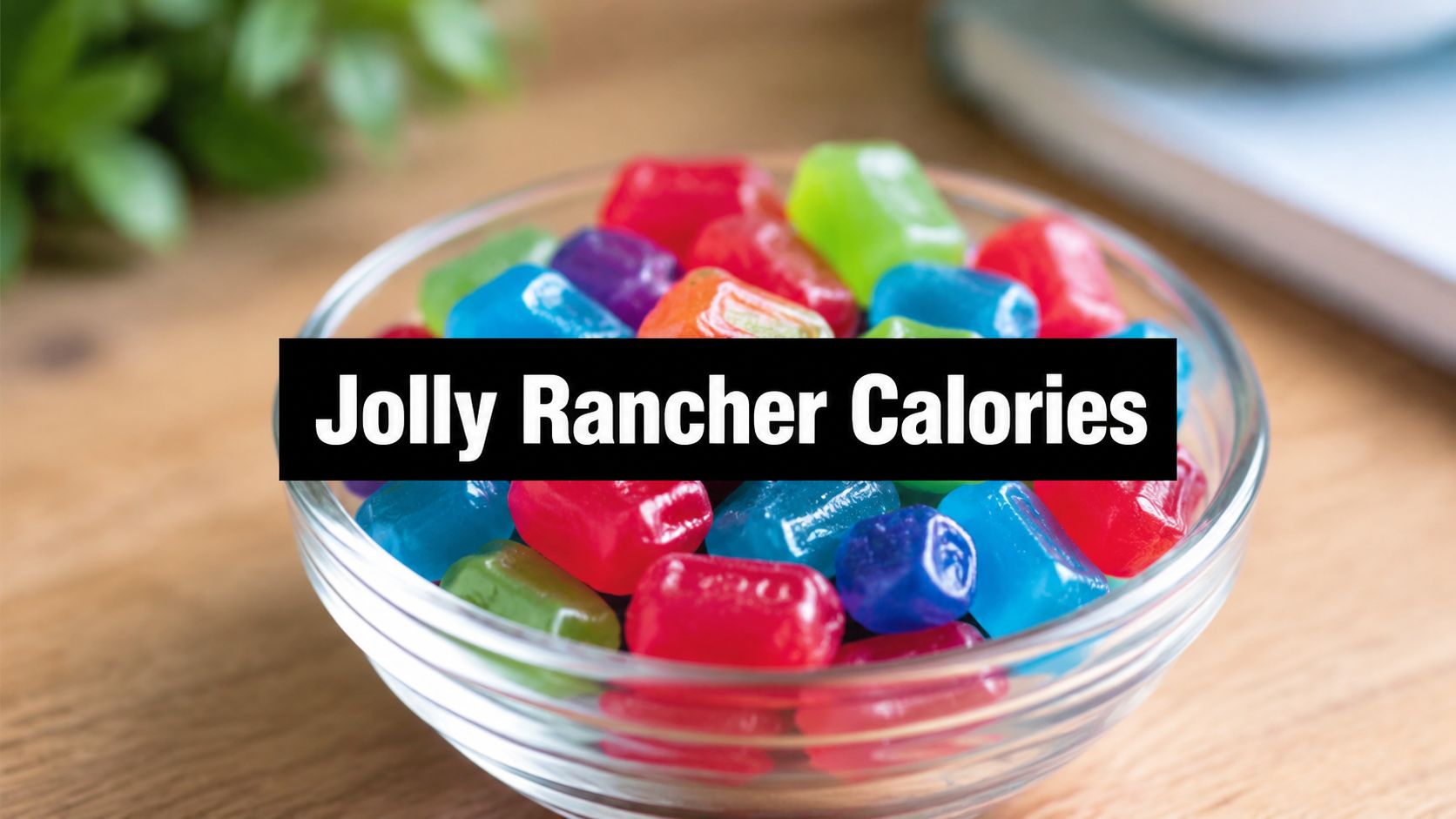
A single original Jolly Rancher hard candy has about 23 calories, based on a serving of 70 calories per 3 pieces from CalorieKing's listing for hard candy. Hershey's product label also lists 45 calories per 2 pieces (12 g) for Jolly Rancher Original Flavors Hard Candy. For food tracking, count one piece as a small candy with meaningful sugar and calories, especially if you tend to eat several without noticing.
If you've ever grabbed one piece on your way past a front desk bowl, you already know how easy it is to treat it like “nothing.” That's where people get tripped up with the calories in a Jolly Rancher. The candy is tiny, but it's still concentrated energy.
As a nutritionist, I don't look at candy in moral terms. I look at portion size, calorie density, and how likely it is to turn into a handful. Hard candies often last a while in your mouth, which can make one piece feel satisfying. But if you keep reaching back into the bag, the total rises fast.
A useful mindset is this: one Jolly Rancher is a small planned treat, not a free food. If you're logging snacks carefully, it helps to search a reliable food database or compare your package to a reference like this food guide for common items.
Practical rule: If you eat candy by the piece, log it by the piece. If you pour from a bag, pause and count before you eat.
That one habit prevents the most common mistake. People don't usually underestimate dinner. They underestimate the handfuls, nibbles, and desk snacks.
What Are the Exact Calories and Macros in Jolly Ranchers
You log one candy from the office bowl and assume it barely counts. Then you look at the package later and realize the label is written for multiple pieces, not one. That small mismatch is how candy tracking gets messy.
Per piece versus per serving
For practical logging, one original Jolly Rancher hard candy lands in the low-20-calorie range based on common serving labels. A standard reference point is 70 calories for 3 pieces (17 g), which works out to about 23 calories per piece. Another package label lists 45 calories for 2 pieces (12 g) with 8 g sugars, so the per-piece estimate is a little different.
That is normal. Candy labels often use different serving sizes, and rounding can shift the numbers slightly. For someone tracking intake, the useful takeaway is simple. A single Jolly Rancher is not “zero,” and a few pieces add up fast enough to deserve a real entry in your log.
Here is the clearest way to read the numbers:
| Format | Serving size | Calories | Carbs | Sugars | Fat | Protein |
|---|---|---|---|---|---|---|
| Original hard candy | 3 pieces (17 g) | 70 | 17 g | 11 g | 0 g | 0 g |
| Original hard candy | 2 pieces (12 g) | 45 | not listed on that label reference | 8 g | 0 g | not listed on that label reference |
| Estimated single piece from 3-piece serving | 1 piece | about 23 | about 5.7 g | about 3.7 g | 0 g | 0 g |
Why the numbers do not match perfectly
A Jolly Rancher is a small item, so label rounding has a bigger effect than it would for a full meal. If one serving is 2 pieces on one package and 3 pieces in another database entry, the math changes even when the candy is broadly similar.
As a nutritionist, I read this the same way I would read rice, cereal, or nuts. The serving line is the measuring cup. If you switch the cup, the calories change too.
Product format matters as well. Jolly Rancher Stix are not nutritionally identical to the original hard candies. The listed entry for that version shows 40 calories per 1 piece (11 g), with 10 g carbs and 7 g sugar. Same brand name, different candy, different log entry.
If you want to compare package sizes or check how a candy fits into a snack mix, a recipe nutrition calculator for serving-size comparisons can make the math easier.
Before you log it, check two things: the exact product name and the serving size on the label. That one habit catches a lot of candy-tracking mistakes.
What Do These Nutrition Numbers Actually Mean for Your Diet
You log three Jolly Ranchers after lunch because they seem tiny. Then hunger shows up again an hour later. That gap between calories eaten and fullness felt is the part that matters most in a diet plan.
A Jolly Rancher is mostly a carbohydrate-based candy, with negligible fat or protein in the verified nutrition data. For tracking purposes, that places it in the same bucket as other quick-sugar foods. It adds calories and carbs, but it does very little to support fullness or protein targets.
Why candy calories feel different from meal calories
Candy sugar works like kindling. It burns fast and gives you sweetness right away, but it does not last like a snack built with protein, fiber, or more filling carbs.
That is why a small candy can fit your calories on paper and still leave you unsatisfied in real life.
As noted earlier, a standard serving of original hard Jolly Ranchers provides a meaningful share of your added sugar allowance for the day. In a structured eating plan, that matters because sugar calories can use up room that could have gone to foods with more staying power. A nutritionist would not label that as “bad.” The better question is whether those calories are doing the job you need them to do.
What this means when you're planning meals
If you track macros, count Jolly Ranchers mainly as carbs. Do not expect them to help with protein goals, recovery after exercise, or appetite control between meals.
That makes them easiest to use as a planned treat.
For example, if you want something sweet after dinner, one or two pieces may fit well because your meal has already handled most of the fullness job. If you reach for them at 3 p.m. when you are hungry and dinner is hours away, they are less likely to hold you over. In that situation, a snack with some protein or fiber usually works better.
For anyone still learning label basics, this guide to understanding nutrition facts is useful because serving size changes the whole picture. One small line at the top of the label can shift your calorie total more than the candy itself seems to suggest.
A good diet plan depends on honest counting and realistic expectations about what a food will and won't do.
If you want to include treats without losing track of your larger goals, use a calorie and macro calculator for your daily targets and give sweets a specific place in the plan instead of eating them on autopilot.
How Do Jolly Ranchers Compare to Other Popular Treats
You are logging dessert after dinner and have about 60 calories left. At that point, the useful question is not whether Jolly Ranchers are "good" or "bad." It is what those calories buy you.
A Jolly Rancher gives a strong sweet flavor in a very small portion. Compared with many other treats, it takes up little space in your stomach and adds very little beyond sugar. As noted earlier, the candy is fairly calorie-dense for its weight, which is why a small handful can add up faster than people expect.

The comparison a nutritionist actually cares about
I usually compare sweets by function, not just by label.
A hard candy works like a flavor-focused treat. It lasts a while in your mouth, which can help if you want a sweet taste without eating a full dessert. A mini cookie or chocolate piece may feel richer, but it is often finished faster. Fruit usually gives more volume and chewing, so it tends to feel more substantial even if the calorie total is similar in a small serving.
That difference matters when you are tracking intake. Two foods can fit the same calorie budget but do very different jobs.
Which option fits the moment
| If you want... | A Jolly Rancher may work when... | Another sweet option may work better when... |
|---|---|---|
| A quick, controlled sweet taste | you want one or two pieces and plan to log them | you usually keep reaching for more once the bag is open |
| Something that lasts a little longer | you enjoy sucking on hard candy slowly | you prefer a dessert with more texture or richness |
| A snack that feels filling | you only want taste, not fullness | fruit, yogurt, or a snack with protein or fiber would suit the job better |
| Simple tracking | you are counting individual pieces | you want a food with a naturally larger, more satisfying portion |
Here is the practical takeaway. Jolly Ranchers compare well to other treats when your goal is a small, predictable sweet. They compare poorly when your goal is fullness.
That is how a nutritionist looks at candy in a structured eating plan. Match the treat to the purpose, then the calories make more sense.
How Can You Fit Jolly Ranchers into a Calorie-Tracked Diet
You can fit Jolly Ranchers into a calorie-tracked diet. The key is to treat them like a planned extra, not background snacking.

Use structure instead of willpower
The easiest strategy is pre-portioning. If you keep a large bag at your desk or in the car, divide a small amount into a separate container ahead of time. That removes the need to decide over and over.
Another useful tactic is using one piece as a craving interrupt. Sometimes you don't want a full dessert. You just want a sweet taste after lunch or during an afternoon slump. One hard candy can do that job cleanly if you log it and move on.
Here's what works well:
- Count before eating. Don't estimate from the empty wrapper pile later.
- Log the exact format. Original hard candy and Stix aren't the same item.
- Keep it paired with a plan. If candy triggers more grazing, have it after a meal instead of on an empty stomach.
If your broader goal is fat loss, knowing your overall intake target matters more than obsessing over one piece of candy. A calorie deficit calculator can help you set that framework.
Log by pieces or by weight
If the package lists servings by pieces, logging by pieces is simple. If your candy mix includes different shapes or sizes, weighing the portion is often more accurate.
That's especially helpful when you're eating from a shared bowl, candy jar, or mixed bag where serving sizes get fuzzy fast.
For a quick visual refresher on portion awareness and tracking habits, this short video is useful:
A sustainable diet leaves room for small treats. The difference between mindless candy and planned candy is usually one minute of tracking.
Find out how to create a personalized plan that includes your favorite foods at AI Meal Planner onboarding.
What Are Some Healthier Alternatives When You Crave Something Sweet
You finish dinner, want something sweet, and reach for candy by habit. Before you unwrap anything, it helps to ask a nutritionist-style question: am I looking for sugar, crunch, a dessert feeling, or just a pause in the day?
That question matters because different cravings call for different fixes. Jolly Ranchers give quick sweetness, but they do not offer much fullness, so a swap can work better if your goal is to stay on plan and feel satisfied.

Better sweet options for different cravings
If you want something cold and juicy, try frozen grapes. They slow you down because you eat them one at a time, which can make a sweet craving feel more fully answered.
If you want a snack that fits a structured eating plan better, choose Greek yogurt with berries. You get sweetness plus protein and volume, which usually helps more than candy when the craving shows up between meals.
Other useful swaps can match the moment well:
- A small portion of dark chocolate if you want a dessert taste with more intensity, so a little goes farther.
- Herbal tea with cinnamon if the craving is about flavor, warmth, or routine rather than hunger.
- Fresh fruit after a meal if you want sweetness with more chewing and a more meal-like finish.
- Air-popped popcorn with cinnamon if you want to keep your hands busy and snack for a while.
Choose the swap that matches the craving
A good substitute does not need to copy candy perfectly. It needs to solve the problem you are having.
| Craving type | Often works well |
|---|---|
| Want a sweet taste quickly | fruit or a small piece of dark chocolate |
| Want dessert after dinner | Greek yogurt with berries |
| Want something to snack on | air-popped popcorn |
| Want flavor without a snack | cinnamon or herbal tea |
This is how a nutritionist usually thinks about sweet cravings in a calorie-tracked diet. First, match the food to the craving. Second, pick the option that gives the most satisfaction for the calories you plan to spend. Asking "Will this choice satisfy what I'm craving?" can prevent the common pattern of eating a lighter option first, then candy afterward because the craving never went away.
If you want to reshape cravings over time, these nutrition insights to crave healthy are a useful read.
Small swaps work best when they feel satisfying and realistic. If the replacement feels like a penalty, it usually will not last.
Frequently Asked Questions About Jolly Ranchers
Is one Jolly Rancher a lot of calories
No. One piece is a small treat, but it still counts if you're tracking closely because several pieces can add up fast.
Are the calories in a Jolly Rancher mostly from sugar
Yes. The verified nutrition data shows the candy is overwhelmingly carbohydrate-based, with no fat and no protein listed in the standard hard candy serving.
Why do different sources list different calories
They may use different serving sizes, package formats, or rounding rules. Always compare the exact product name and serving size on your package.
Is it better to log Jolly Ranchers by piece or by grams
If you're eating standard original pieces, logging by piece is usually easiest. If sizes vary, weighing the portion is more accurate.
Do Jolly Ranchers fit into a weight loss diet
They can, if you account for them in your daily intake and keep portions intentional. The problem usually isn't one piece. It's untracked extras.
Are Jolly Ranchers filling
Not usually. They provide sweetness and quick energy, but they don't offer the protein, fat, or fiber that usually helps a snack feel satisfying.
What's the biggest mistake people make with candy calories
They forget to count the second, third, and fourth piece. Candy is easiest to manage when you portion it before you eat it.
If you want a meal plan that makes room for real life, including treats like candy, AI Meal Planner can help you build a personalized weekly plan with calories, macros, and groceries already organized. It's a practical way to eat well without turning every food choice into a guessing game.
AI-powered nutrition
Get Your Personalized Meal Plan
AI creates the perfect meals for your goals, lifestyle, and taste.
Start Your Journej