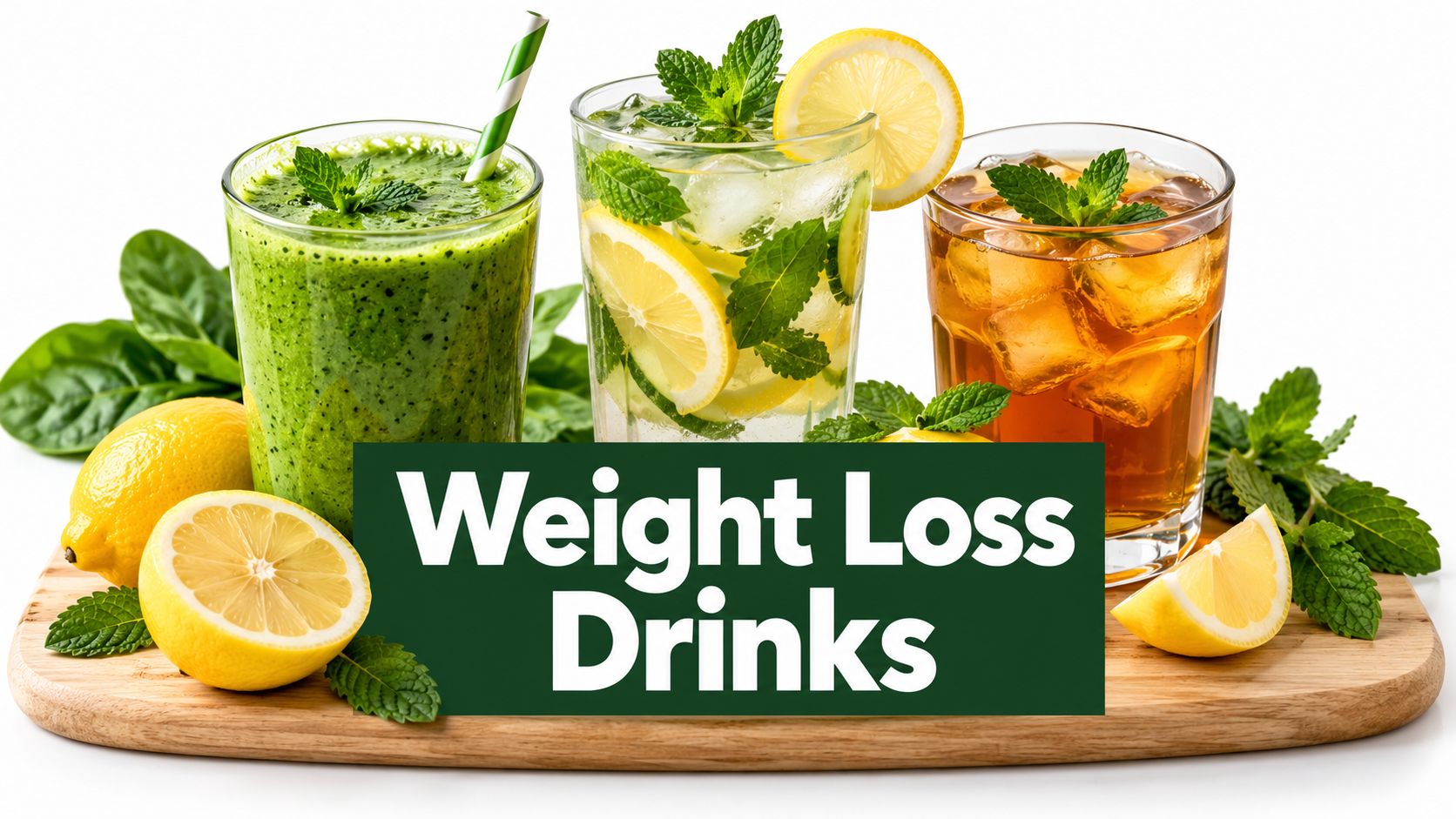
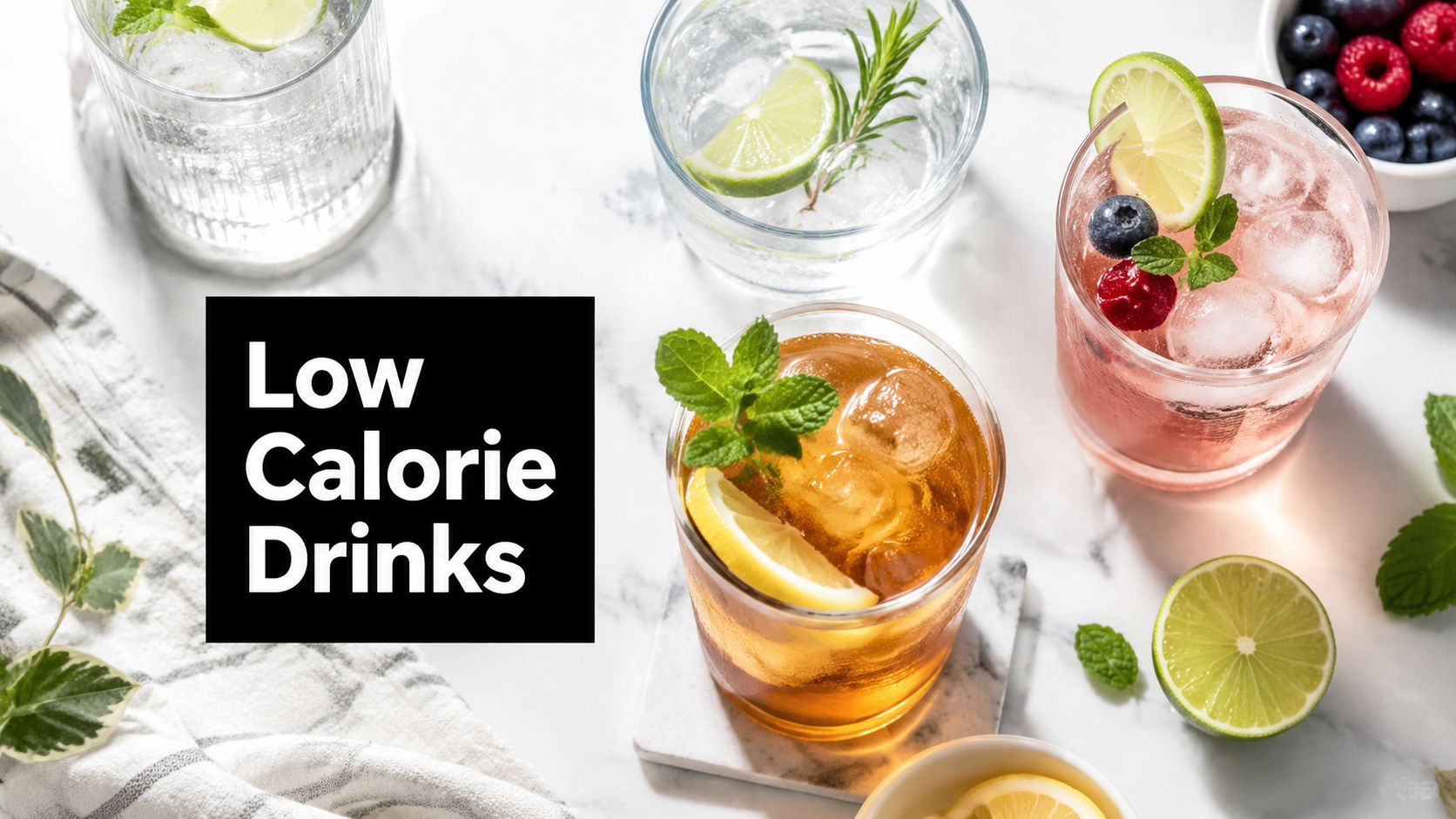
Water, unsweetened coffee, unsweetened tea, sparkling water, and zero-sugar drinks are the best low calorie drinks. In U.S. adults, water made up 51.2% of total nonalcoholic beverage intake on a given day in 2015 to 2018, compared with 14.9% for coffee, 8.7% for tea, 3.8% for diet beverages, and 10.2% for sweetened beverages, according to the CDC beverage intake data brief. For a practical store-bought list, the strongest picks are LaCroix, Spindrift, Zevia Zero Sugar Soda, Bai Antioxidant Infusions, BODYARMOR Lyte, Propel Fitness Water, and vitaminwater zero sugar.
The approach isn't always about a "diet drink strategy." It's about finding a drink that fits the moment. Soda cravings call for one kind of option, workout hydration calls for another, and late-afternoon snacking pressure often needs something different again.
That's why the best low calorie drinks aren't one universal list. They're a set of good defaults. Some work because they're plain and easy to drink all day. Some work because they replace the texture or sweetness of soda without pulling calories back into your day. Some work because they make social situations easier when plain water feels joyless.
The bigger trend supports that shift. Low- and no-calorie carbonated soft drinks made up roughly 68% of the UK carbonated soft drink market in 2024, according to Statista's UK carbonates market data. This isn't a fringe category anymore.
If you're also cleaning up snacks, pair these drinks with portable options like these top healthy vending snacks for 2025. That combination solves a common problem. People swap the soda, then eat back the calories later.
1. LaCroix Sparkling Water
LaCroix is the cleanest soda replacement on this list when you want carbonation without sweeteners, sodium, or a "functional" pitch. It works best for people who don't need sweetness. They need cold bubbles and a can in their hand.
The appeal is simple. Zero calories, zero sweeteners, zero sodium, and a broad flavor range. That makes it one of the easiest defaults to keep at home, in an office fridge, or on repeat in a grocery order.
Why LaCroix works so well for soda replacement
LaCroix solves the mechanical side of a craving. You crack a can, get fizz, and drink something that feels more substantial than still water. For a lot of people, that's enough to interrupt the reflex to reach for cola or lemon-lime soda.
It also plays nicely with structured nutrition. If you're building around a calorie deficit meal plan, a zero-calorie sparkling water is one of the easiest recurring swaps because it doesn't create tracking noise or portion ambiguity.
Practical rule: Use LaCroix when the problem is habit, not hunger. If you're actually hungry, a bubbly drink won't fix that for long.
Where LaCroix falls short
The downside is obvious after a few cans. The flavor is subtle. If you expect juice-like intensity or a true soda replacement, some flavors can feel too faint.
It also doesn't help much in situations where you want electrolytes, sweetness, or a more indulgent taste. That's where products like Propel, Bai, or Zevia make more sense. LaCroix is best when your standard is "refreshing enough," not "tastes like a treat."
A few practical use cases stand out:
- Best for desk hydration: The flavor is light enough that you won't get palate fatigue quickly.
- Best for cutting back on soda: The can format and carbonation preserve the ritual.
- Less useful after hard training: There's no electrolyte angle here.
You can browse flavors and product details on the LaCroix website.
2. Spindrift Sparkling Water
Spindrift is what I recommend for people who say they hate flavored sparkling water because it tastes fake. Its edge is that it uses real fruit juice or purée, which gives it a more natural fruit profile than essence-only seltzers.
That difference matters. If LaCroix feels too thin, Spindrift often feels more satisfying without turning into soda.
Why Spindrift is better for craving control
Most flavors sit around 4 to 15 calories per 12 ounces, depending on the flavor. That small calorie trade-off is often worth it if it keeps someone from chasing a more sugary drink later.
This is one of the few drinks in this category that lands well with people who want a cleaner ingredient list and don't want non-nutritive sweeteners. If you're focused on clean eating meal planning, that's a meaningful difference because the product still feels intentional, not diet-branded.
The best low calorie drinks don't always have to be zero calorie. Sometimes a small-calorie drink is the one you'll actually stick with.
The trade-off you should know
Spindrift isn't "free" from a tracking perspective. Because it's made with real fruit, it contains small amounts of calories and sugars. For many, that won't matter much. For someone who wants strict zero-calorie beverages across the day, it might.
The other downside is cost. It usually costs more than standard sparkling water. If you're going through several cans a day, that can become the reason the habit doesn't last.
A simple way to decide:
- Choose Spindrift if: You want a fruitier, more authentic taste and dislike sweeteners.
- Skip it if: You want zero across the board and don't want to count beverage calories at all.
- Use it strategically: Keep it for afternoon cravings, meals, or weekend soda replacement.
See flavor options on the Spindrift website.
3. Zevia Zero Sugar Soda

Zevia is the strongest pick here for a true soda substitute. Not sparkling water. Not flavored water. Soda. If your real issue is cola, root beer, ginger ale, or cream soda cravings, a lot of plans either work or fail at this point.
Zevia is zero calorie, sweetened with stevia, and avoids sugar, artificial sweeteners, and added colors. It also has a wide flavor catalog, including caffeine-free options.
When Zevia beats sparkling water
Sparkling water often fails with people who want sweetness and a recognizable soda flavor. Zevia closes that gap much better than plain seltzer. That's important because soda replacement has become a mainstream behavior shift, not just a niche dieting move.
For people reducing sugar, this kind of category matters. A peer-reviewed survey found that 78.1% of weekly consumers of low- and no-calorie sweetened beverages said those drinks helped them control or reduce total food or calorie intake, according to the PMC survey on low-calorie sweetened beverage use.
If you're trying to reduce sugar without feeling restricted, a no sugar meal planning approach usually works better when it includes one satisfying sweet drink option instead of banning the category entirely.
What doesn't work for some people
Stevia has a distinct taste. Some people adapt quickly. Others never do. That's the biggest practical reason Zevia becomes a staple in one house and sits untouched in another.
It's also usually pricier than mainstream diet soda. So while the ingredient profile appeals to many shoppers, the everyday convenience and price can still push some people back to other zero-sugar sodas.
A practical breakdown:
- Best for: People who miss classic soda flavors.
- Not ideal for: Anyone sensitive to stevia aftertaste.
- Most effective use: Keep it for evening cravings, takeout nights, and social settings where sparkling water feels unsatisfying.
You can explore the lineup on the Zevia website.
4. Bai Antioxidant Infusions

Bai sits in a useful middle ground. It isn't plain hydration, and it isn't trying to mimic soda. It tastes closer to a light juice drink, which makes it particularly helpful for people who are bored with water but don't want to move back toward full-calorie juice or sweet tea.
Most bottles are about 10 calories per 18-ounce bottle, with about 1 gram of sugar. Many flavors also include modest caffeine and are sweetened with stevia or monk fruit.
Why Bai is good for the "I want flavor" crowd
Some low calorie drinks fail because they're too subtle. Bai doesn't have that problem. It delivers stronger flavor than seltzer, usually without the heavy feel of juice or the sharp sweetness of diet soda.
That makes it useful in the afternoon, when people often confuse flavor fatigue with hunger. A strongly flavored low-calorie drink can buy time and reduce random snacking, especially if the underlying issue is boredom or the desire for something other than water.
If plain water feels punishing, adherence usually collapses. A better plan is to find a drink that's light enough to use often and flavorful enough that you won't rebel against it.
The main downside
Bai isn't as neutral as sparkling water. It uses non-nutritive sweeteners, and some flavors have a more noticeable sweetener finish than others. If you dislike stevia or monk fruit, you'll probably notice it.
It's also more "drink-like" than hydration-first options. That's useful for cravings, but less useful if you want an all-day default. Bai works best as a strategic beverage, not the only thing you're drinking.
Use Bai when you want:
- Juice-adjacent flavor: Better than seltzer when subtle flavors don't satisfy.
- A light afternoon pick-me-up: Many flavors include caffeine.
- A low-calorie alternative to sweet drinks: Without stepping all the way into full juice territory.
The full range is on the Bai website.
5. BODYARMOR Lyte Sports Drink

BODYARMOR Lyte is one of the better choices when plain water isn't enough but a traditional sports drink feels excessive. It gives you more flavor and an electrolyte angle without pushing you back into a high-calorie bottle.
Most bottles are around 20 calories per 16 ounces, and the formula leans on coconut water, potassium-forward electrolytes, and added vitamins.
When BODYARMOR Lyte makes sense
This is a practical option for light exercise, long walks in hot weather, or days when flavored hydration helps you drink more consistently. It can also be useful for people who find zero-calorie electrolyte drinks too thin or too artificial tasting.
If you're training regularly, that can fit neatly into a more intentional fueling setup like a 7-day plan for runners, where drink choice changes based on workout length, sweat loss, and whether you're trying to stay in a calorie-controlled range.
Where people overuse it
The common mistake is treating sports drinks as everyday hydration regardless of activity. BODYARMOR Lyte is lower calorie than traditional sports drinks, but it's still a flavored product with sweeteners, and its sodium profile may not be ideal for heavy sweaters who need a more targeted rehydration approach.
A second issue is expectation. Some people hear "Lyte" and assume it solves every workout hydration problem. It doesn't. It's best for moderate needs, not every long or intense session.
A quick way to understand it:
- Good fit: Light training, hot errands, travel days, or when water feels hard to drink.
- Less ideal: Very heavy sweat sessions where sodium replacement matters more.
- Best question to ask: Do you need hydration support, or do you just want flavored water with a sports-drink identity?
Check flavors and formats on the BODYARMOR website.
6. Propel Fitness Water

Propel is the most practical zero-calorie workout-adjacent option on this list for people who don't want carbonation and don't want to spend much effort thinking about hydration. It gives you flavored still water with electrolytes and added vitamins, without bringing calories or sugar along.
That simplicity is its advantage. You can toss a bottle in a bag and know exactly what role it plays.
Why Propel is easy to use daily
Propel works well for people who are bored by plain water but don't want a sweet soda experience. Because it's still water, it's easier to drink during workouts, commutes, or long stretches at a desk than many carbonated drinks.
It also fits a growing beverage category. One forecast values the global low-calorie RTD beverage market at USD 26.78 billion in 2025 and projects 3.1% CAGR to 2029, according to the Maximize Market Research low-calorie RTD beverages report. Ready-to-drink convenience is a big reason products like Propel stick.
The limitation to keep in mind
Propel is functional, but not especially exciting. If you want a stronger taste or a more indulgent feel, it may seem too tame. And while the added vitamins and electrolytes are useful, this isn't a replacement for actual food quality or a complete recovery plan.
For many people, the best low calorie drink is the one that's easiest to keep using on an ordinary Tuesday.
Propel is strongest when you need:
- Zero-calorie hydration with flavor
- A non-carbonated option
- Something easier to sip during activity than seltzer
You can find the lineup on the Propel website.
7. vitaminwater zero sugar

vitaminwater zero sugar is the easiest pick here for one specific use case: buying a flavored drink on the go when plain water feels unappealing and full-sugar options are everywhere.
Most bottles stay in the 0 to 5 calorie range, depending on flavor, and include electrolytes plus added vitamins such as vitamin C and several B vitamins. That combination gives it a broader appeal than plain flavored water, especially for readers who want a convenience-store swap that still feels like a "real" beverage.
Why it earns a spot in this lineup
Compliance matters more than perfection. If a drink is available in the places where people make purchasing decisions, gas stations, grocery coolers, airport kiosks, office fridges, it has a practical advantage over options that require planning ahead.
Taste matters too. As noted earlier, low- and no-calorie sweetened beverages stay popular largely because people find them enjoyable enough to keep buying. That is the core value here. A low-calorie drink only helps if you will choose it consistently.
For a digital meal plan, vitaminwater zero sugar is also easy to track. The calories are low, the serving format is standardized, and there is little guesswork compared with homemade drinks or fountain beverages.
The trade-off
This works better for craving control and convenience than for nutrition quality. Added vitamins can be a bonus, but they do not make the bottle nutritionally dense, and they should not be treated as a substitute for fruit, meals, or a well-built recovery routine.
Ingredient-sensitive shoppers may also prefer other options in this list. If your priority is minimal ingredients or no sweet taste at all, sparkling water or plain water is a better fit.
vitaminwater zero sugar makes the most sense if you need:
- A convenience-store soda replacement
- A lightly sweet, non-carbonated option
- A low-calorie bottle that is easy to log in a meal plan
Browse current products on the vitaminwater zero sugar product page.
Best Low-Calorie Drinks: 7-Item Comparison
| Product | 🔄 Implementation complexity | ⚡ Resource & convenience | ⭐ Expected outcomes | 📊 Key advantages | 💡 Ideal use cases |
|---|---|---|---|---|---|
| LaCroix Sparkling Water | Very low, ready‑to‑drink, no prep | Broad U.S. distribution; low cost per pack | Hydration with carbonation, zero calories/additives | Zero calories/sweeteners, many flavors | Soda swap for calorie reduction; everyday bubbly hydration |
| Spindrift Sparkling Water | Low, RTD but uses real juice (slightly more perishable) | Widely sold but higher price; small calories (~4–15/12oz) | True fruit flavor with minimal calories | Real fruit juice/purée; clean label | Prefer authentic fruit taste without much added sugar |
| Zevia Zero Sugar Soda | Very low, RTD, stevia‑sweetened | Moderate price; zero calories; good flavor range | Satisfies classic soda cravings sugar‑free | Classic soda flavors, no artificial colors/sugar | Diet soda replacement for cola/root beer fans |
| Bai Antioxidant Infusions | Low, RTD with extracts and sweeteners; some caffeine | Moderate price; ~10 cal per bottle; uses stevia/monk fruit | Juice‑like flavor, antioxidants, modest caffeine | Flavorful low‑calorie profile + antioxidant extracts | Flavorful low‑calorie option with light caffeine or antioxidant boost |
| BODYARMOR Lyte Sports Drink | Low, RTD sports formulation with electrolytes | Moderate price; ~20 cal/16oz; multipacks available | Light rehydration and electrolyte replenishment | Potassium‑forward electrolytes, coconut water, vitamins | Light exercise or when minerals are desired with minimal sugar |
| Propel Fitness Water | Very low, RTD still water with electrolytes/vitamins | Widely available; zero calories; bottled convenience | Hydration with electrolytes and vitamins, no calories | Electrolytes + B‑vitamins/C/E without calories | Electrolyte support for non‑carbonated drinkers or post‑workout |
| vitaminwater zero sugar | Very low, RTD vitamin‑enhanced water | Ubiquitous retail availability; 0–5 cal per bottle | Flavored hydration with added vitamins | Familiar flavor set, added B‑vitamins and vitamin C | On‑the‑go flavored hydration with light functional vitamins |
Final Thoughts
The best low calorie drinks are the ones that solve the right problem. LaCroix and Spindrift are strongest for replacing soda or juice habits at home. Zevia is the better answer when you want a real soda stand-in. Propel and BODYARMOR Lyte are more useful when hydration and activity are part of the decision. Bai and vitaminwater zero sugar help when boredom, flavor fatigue, or convenience are the biggest barriers.
That use-case approach matters more than obsessing over tiny differences between products. Most existing "best low calorie drinks" roundups flatten everything into one list, but that's not how people drink in real life. You don't reach for the same beverage after a workout, during a workday slump, at dinner with takeout, and in a social setting.
Social situations are where many plans break. A better low-calorie strategy isn't only about ordering the lowest-calorie alcoholic drink. It's often about replacing the alcohol occasion itself with something that still feels social. Existing guidance on lower-calorie alcohol options often stays focused on drinks like vodka soda, tequila with lime, hard seltzer, and diet-mixer combinations. Healthline's roundup also notes examples such as a rum-and-Coke at 200 calories versus 135 with Diet Coke, which shows how quickly mixers matter in practice, in the Healthline guide to the lowest calorie alcohols. But calorie count alone doesn't solve the habit. Mocktails, flavored sparkling waters, and zero-sugar sodas often work better for weekday consistency.
Another mistake is assuming "low calorie" automatically means nutritionally interchangeable. It doesn't. Some drinks are just lighter versions of sweet beverages. Others are true hydration defaults. That distinction becomes important if your goal is weight loss, blood sugar control, or recovery. The verified background on this topic points out that some better-for-you drinks can still add meaningful sugar or carbs, and that more useful guidance ranks drinks by use case instead of treating them as one bucket, as discussed in the Lose It beverage options article.
The simplest system is this. Keep one plain default, one sweet default, and one workout default. Track beverages inside your plan just like snacks, because drinks have a way of disappearing from memory even when they shape appetite, cravings, and adherence. If you're packing bottles for work, gym, school, or daycare, practical organization helps too. Small things like durable labels for daycare bottles make consistency easier when multiple drinks are in rotation.
If you want your drinks to fit your calories, macros, groceries, and weekly routine without doing the math manually, AI Meal Planner makes that easier. Start with the AI Meal Planner onboarding to build a personalized plan that includes meals, snack structure, and smarter beverage choices you can actually stick with.
AI-powered nutrition
Get Your Personalized Meal Plan
AI creates the perfect meals for your goals, lifestyle, and taste.
Start Your Journej