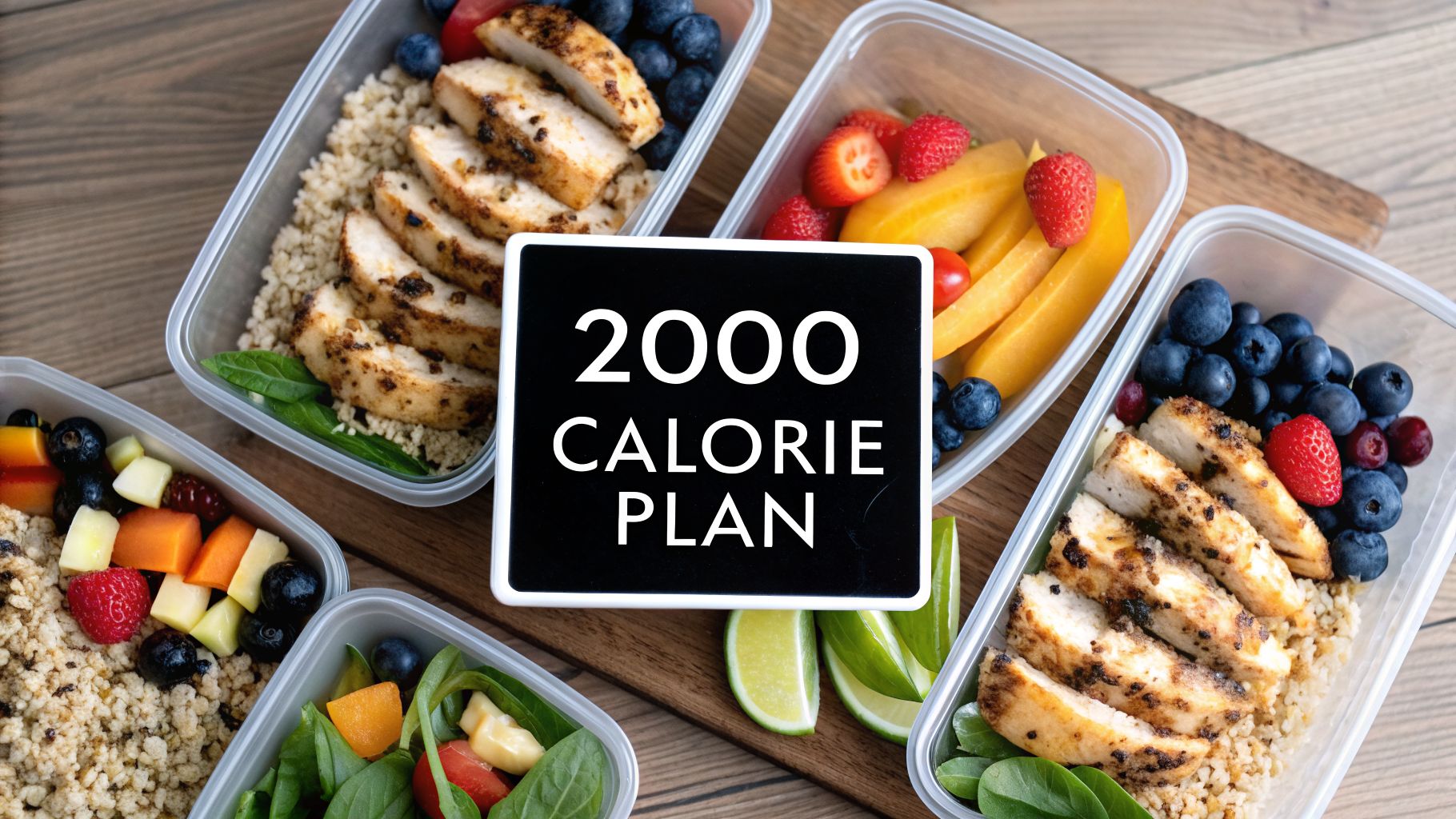
Yes, a 2000 calorie diet plan can help you lose weight, especially if you are a moderately active woman or a sedentary man. This calorie level typically creates a deficit of 250-500 calories per day for these groups, leading to a sustainable weight loss of 0.5 to 1 pound per week. The key is to consume nutrient-dense foods to ensure you feel full and get adequate nutrition.
Following a 2000-calorie diet is a common starting point for sustainable fat loss because it's high enough to provide essential nutrients and energy, but low enough for many people to create a consistent calorie deficit. This guide will explain how to determine if it's the right target for you, what to eat, and how to structure your meals for success.
How Does a 2000 Calorie Plan Trigger Weight Loss?
Weight loss occurs when you consistently burn more calories than you eat, a state known as a calorie deficit. When your body doesn't get enough energy from food, it turns to its stored fat reserves for fuel, causing you to lose weight. A 2000-calorie plan is effective for many because it creates this deficit without being overly restrictive.
This moderate approach is more sustainable than very low-calorie diets, reducing the risk of extreme hunger, fatigue, and muscle loss. It provides enough "calorie budget" to include a wide variety of foods, helping you meet your nutritional needs while still making progress.
What Is a Calorie Deficit?
A calorie deficit is the gap between the calories you consume and the calories your body burns (your total daily energy expenditure). For example, if your body needs 2,500 calories to maintain its current weight, eating 2,000 calories creates a 500-calorie daily deficit. Over a week, this adds up to a 3,500-calorie deficit, which is equivalent to approximately one pound of fat loss. To learn more, see our guide on the fundamentals of a calorie deficit.
This strategy offers several advantages:
- Sustainability: It’s easier to stick to a plan that doesn't feel like a punishment.
- Nutrient Adequacy: You can fit in a variety of foods to get essential vitamins and minerals.
- Stable Energy Levels: It provides enough fuel for daily activities and workouts.
Why Is Food Quality More Important Than Just Counting?
Successful and sustainable weight loss depends more on the quality of your calories than just the quantity. A 2000-calorie plan filled with lean protein, fiber-rich vegetables, and healthy fats will keep you feeling full and satisfied. In contrast, 2000 calories from processed foods and sugary drinks can lead to energy crashes and increased hunger.
A well-structured 2000-calorie diet focuses on nutrient density. This means you'll be eating foods that give you the most bang for your buck—lots of vitamins, minerals, and filling fiber for relatively few calories.
A meal of grilled chicken, quinoa, and roasted broccoli provides steady, long-lasting energy. A fast-food combo with the same calorie count will cause a rapid energy spike and crash, leaving you hungry shortly after. If you want to skip the manual work of planning, a tool like the AI Meal Planner can generate a customized plan for you.
How Do I Know if 2000 Calories Is My Right Target?
The 2000-calorie figure is a general benchmark, not a universal magic number. Your ideal calorie target depends on unique factors like your age, sex, current weight, height, and activity level. For instance, a 25-year-old construction worker burns significantly more calories than a 60-year-old with a desk job.

The goal is to create a moderate calorie deficit for steady, lasting weight loss. Drastic cuts may yield quick results but are difficult to maintain and often lead to rebound weight gain.
Why Is 2000 Calories the Standard Recommendation?
The 2000-calorie standard originated in the 1990s when the FDA needed a simplified average for nutrition labels based on dietary survey data. It has since become a widely used reference.
For many, it's an effective starting point. USDA guidelines suggest a moderately active woman aged 19-50 needs 2,000-2,200 calories for weight maintenance. Eating 2,000 calories creates a gentle deficit that supports a safe and sustainable weight loss of 1-2 pounds per week. A good first step is to use a BMI calculator to get a baseline of your health metrics.
Will 2000 Calories Create a Deficit for Me?
The table below shows estimated daily calorie needs to maintain your current weight. Use it to see if a 2000-calorie diet plan for weight loss will likely create a deficit for you.
Estimated Daily Calorie Needs By Gender and Activity Level
| Gender & Age | Sedentary | Moderately Active | Active |
|---|---|---|---|
| Female 19-30 | 2,000 | 2,000-2,200 | 2,400 |
| Female 31-50 | 1,800 | 2,000 | 2,200 |
| Male 19-30 | 2,400 | 2,600-2,800 | 3,000 |
| Male 31-50 | 2,200 | 2,400-2,600 | 2,800-3,000 |
Source: USDA Dietary Guidelines
If your maintenance number is higher than 2,000, this plan will likely result in weight loss.
Key Takeaway: If your maintenance calories from the table are around 2,400-2,500, a 2,000-calorie diet creates a daily 400-500 calorie deficit. This is the sweet spot for losing about one pound per week.
If 2,000 calories seems too high, a small adjustment is all you need. Consider exploring our guide to a 1900 calorie meal plan.
What Should I Eat on a 2000 Calorie Diet?

On a 2000-calorie plan, the quality of your food choices determines your success. The goal is to feel full and energized, not hungry and deprived. Build your meals with a strategic mix of macronutrients—protein, carbohydrates, and fats—to burn fat, preserve muscle, and stay satisfied.
Why Should I Prioritize Protein?
Protein is the most satiating macronutrient, meaning it keeps you feeling fuller for longer. This is a major advantage when you're in a calorie deficit and battling cravings. Sufficient protein intake also helps protect lean muscle mass, which is crucial for maintaining an efficient metabolism.
Excellent protein choices include:
- Lean Meats: Chicken breast, turkey, lean cuts of beef.
- Fish: Salmon, tuna, cod.
- Plant-Based Options: Tofu, tempeh, lentils, chickpeas.
- Dairy and Eggs: Greek yogurt, cottage cheese, whole eggs.
Which Carbohydrates Are Best for Energy?
While refined carbs (white bread, sugar) can cause energy crashes, complex carbs provide a steady, reliable release of energy. They are packed with fiber, which slows digestion and keeps you fueled throughout the day.
Focus on these complex carbs:
- Whole Grains: Quinoa, brown rice, oats, whole-wheat bread.
- Starchy Vegetables: Sweet potatoes, corn, peas.
- Legumes: Beans and lentils, which offer both carbs and protein.
Are Fats Important for Weight Loss?
Yes, healthy fats are essential. They are critical for hormone production, brain function, and absorbing fat-soluble vitamins (A, D, E, K). Fats also play a major role in satiety, helping you feel content after meals.
A common mistake is cutting fat intake too low. This often backfires by disrupting hormones and increasing cravings. The focus should be on the type of fat, not its elimination.
Include sources of healthy fats like:
- Avocados: Perfect in salads, on toast, or with eggs.
- Nuts and Seeds: Almonds, walnuts, chia seeds, and flaxseeds.
- Oils: Extra virgin olive oil and avocado oil for cooking and dressings.
How Should I Balance My Macronutrients?
General health guidelines suggest a macronutrient split of 45-65% carbohydrates, 20-35% fats, and 10-35% protein. For weight loss, aim for 25-30g of fiber per day to improve satiety and heart health. The ideal ratio can vary based on your activity level and personal preferences.
Here are a few sample macronutrient splits for a 2000-calorie diet.
Sample Macronutrient Splits for a 2000 Calorie Diet
| Diet Style | Carbohydrates (grams) | Protein (grams) | Fat (grams) |
|---|---|---|---|
| Balanced (40/30/30) | 200g | 150g | 67g |
| Zone Diet | 200g | 150g | 67g |
| Low Carb | 100g | 150g | 111g |
| High-Protein | 150g | 200g | 67g |
| Standard US Guideline | 275g | 75g | 67g |
Table values are approximate and can be adjusted to meet individual needs.
Seeing these numbers in grams can help you plan your meals. For more specific strategies, check out our guide to creating a balanced meal plan.
What Does a 7-Day 2000 Calorie Meal Plan Look Like?

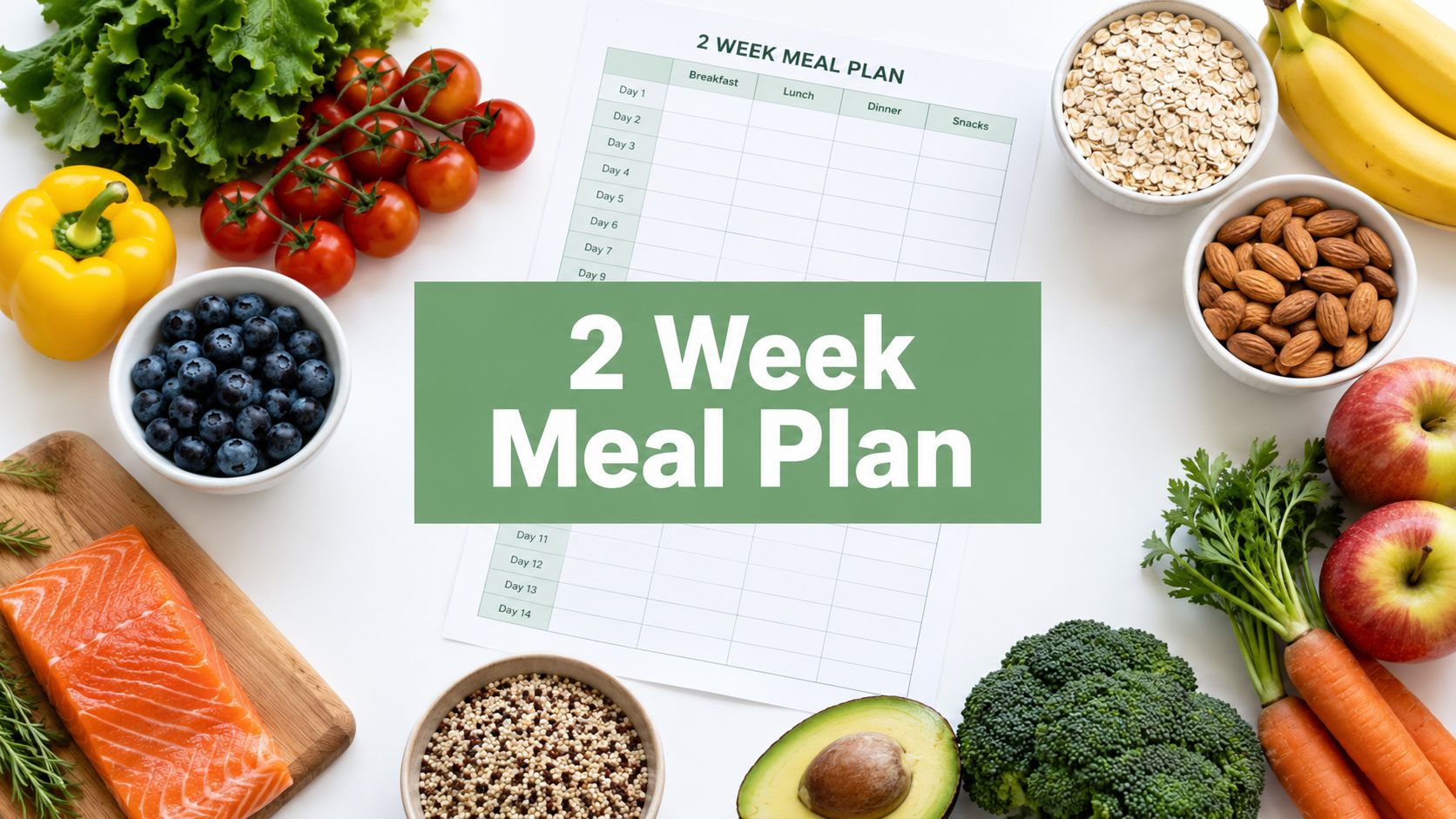
Here is a sample 7-day plan to show you how varied and satisfying a 2000 calorie diet plan for weight loss can be. This plan focuses on whole foods that are simple to prepare, with most meals taking under 30 minutes. Use this as a flexible roadmap, not a rigid set of rules.
Day 1: Kicking Off the Week
- Breakfast (≈450 calories): Greek Yogurt Power Bowl. 1 cup plain, low-fat Greek yogurt, ½ cup mixed berries, 1 tbsp chia seeds, and 1 tbsp sliced almonds.
- Lunch (≈550 calories): Grilled Chicken Salad. Mixed greens with 4 oz grilled chicken breast, ½ an avocado, cherry tomatoes, cucumber, and a light vinaigrette.
- Dinner (≈600 calories): Salmon with Quinoa and Asparagus. 5 oz salmon fillet, 1 cup cooked quinoa, and roasted asparagus.
- Snack (≈400 calories): An apple with 2 tbsp peanut butter and a small protein shake (1 scoop protein powder with water).
Day 2: Plant-Powered and Satisfying
- Breakfast (≈400 calories): Oatmeal with Walnuts. 1 cup cooked oatmeal topped with a handful of walnuts and a sprinkle of cinnamon.
- Lunch (≈500 calories): Hearty Lentil Soup. A 2-cup serving of lentil soup with a slice of whole-wheat toast.
- Dinner (≈650 calories): Chickpea and Spinach Curry. 1 cup chickpeas, spinach, and diced tomatoes in a coconut milk-based sauce. Serve with ½ cup of brown rice.
- Snack (≈450 calories): A hard-boiled egg, baby carrots, and ¼ cup of hummus.
Day 3: Lean Protein and Veggie Focus
- Breakfast (≈450 calories): Scrambled Eggs with Veggies. Three scrambled eggs with spinach and bell peppers, plus a slice of whole-grain toast with ¼ avocado.
- Lunch (≈550 calories): Leftover Chickpea Curry. Leftovers save time and reduce food waste.
- Dinner (≈600 calories): Turkey Meatballs with Zucchini Noodles. Four lean turkey meatballs in marinara sauce over spiralized zucchini "zoodles."
- Snack (≈400 calories): A cup of cottage cheese with sliced peaches.
Pro Tip: Don't like a specific meal? Swap it. If you don't have salmon, use chicken breast. Not a fan of chickpeas? Black beans or tofu are great substitutes. Make the plan work for you.
Day 4: Mid-Week Variety
- Breakfast (≈400 calories): Quick & Filling Smoothie. 1 scoop vanilla protein powder, 1 cup unsweetened almond milk, a frozen banana, and 1 tbsp almond butter.
- Lunch (≈500 calories): Leftover Turkey Meatballs. Another time-saving leftover meal.
- Dinner (≈700 calories): Lean Beef Stir-fry. 4 oz lean sirloin strips with broccoli, bell peppers, and snap peas in a low-sodium soy sauce. Serve with ½ cup of brown rice.
- Snack (≈400 calories): A small bowl of mixed nuts and a pear.
How Should I Plan for Days 5-7?
For the rest of the week, simplify your life by repeating the days you enjoyed most. This strategy streamlines grocery shopping and meal prep. For instance, you could repeat Day 1 on Friday, Day 2 on Saturday, and Day 3 on Sunday.
This sample plan is a great starting point, but creating tailored meals daily can be a grind. For an effortless experience, a tool like the AI Meal Planner can generate endless customized weekly plans.
How Can I Shop and Meal Prep Effectively?

The secret to making your 2000-calorie diet plan for weight loss work is preparation. Smart shopping and a couple of hours of meal prep on the weekend will make healthy eating second nature. Always shop with a list organized by the supermarket's layout to save time and avoid impulse buys.
What Should My Grocery List Include?
- Produce: Mixed greens, broccoli, bell peppers, onions, carrots, berries, apples, and avocados.
- Lean Proteins: Chicken or turkey breast, salmon, canned tuna, lentils, chickpeas, tofu, eggs, Greek yogurt, and cottage cheese.
- Pantry Staples: Quinoa, brown rice, rolled oats, whole-wheat bread, olive oil, almonds, chia seeds, garlic, herbs, and spices.
How Do I Meal Prep for the Week in Two Hours?
Block out two hours on a weekend to set yourself up for success.
The goal of meal prep isn't to eat the same boring meal five days in a row. It’s about creating an "assembly line" of pre-cooked ingredients you can mix and match to build varied and interesting meals quickly.
Here’s a simple two-hour plan:
- Cook Grains: Start a big batch of quinoa or brown rice on the stove.
- Roast Veggies: Chop broccoli, bell peppers, and other vegetables. Toss with olive oil and roast on a baking sheet.
- Prepare Proteins: Bake or grill chicken breasts, pan-fry tofu, or hard-boil a dozen eggs.
- Prep Fresh Items: Wash and chop salad greens and raw veggies. Portion out snacks like nuts or yogurt into single-serving containers.
This simple routine eliminates daily cooking stress and makes healthy choices easy. For an even simpler process, the AI Meal Planner can generate a personalized plan and an organized shopping list for you.
How Should I Track Progress and Adjust My Diet?
A successful weight loss plan requires feedback and adjustments. While the scale is one measure, also pay attention to how your clothes fit, your rising energy levels, and your improved mood. These are all powerful signs of progress.
Weight loss is rarely linear. A genuine plateau is when your progress stalls for more than two to three weeks despite sticking to your plan.
What Should I Do if I Hit a Plateau?
If you hit a plateau, don't panic. A small tweak is usually all that's needed to get things moving again.
Try one of these adjustments:
- Slight Calorie Reduction: Drop your daily intake by 100 calories, perhaps to a 1900-calorie plan.
- Increase Non-Exercise Activity: Add a brisk 20-minute daily walk to burn an extra 80-100 calories.
- Review Your Food Log: Honestly check for "calorie creep" from larger portions or forgotten snacks.
Consistency, not perfection, is the engine of long-term success. One off-plan meal won't derail you. The key is to get right back on track with your next choice.
For a data-driven approach, effortlessly track your weight and body metrics with the Venus AI Smart Scale to gain detailed insights. Platforms like the AI Meal Planner can help you visualize your progress, and you can find more options in our article on calorie tracking tools.
Frequently Asked Questions About the 2000 Calorie Diet
Can I drink alcohol on a 2000 calorie diet?
Yes, but you must account for the "empty" calories from alcohol within your 2000-calorie daily budget. Plan for it to ensure it doesn't hinder your progress.
Is it necessary to count every calorie?
In the beginning, tracking is educational and helps you understand portion sizes. Once you have a good feel for the calorie counts of your typical meals, you can become more intuitive.
What should I do if I feel hungry all the time?
Increase your protein and fiber intake, as both promote satiety and help you feel fuller for longer. Also, ensure you are drinking enough water, as thirst is often mistaken for hunger.
How long can I follow a 2000 calorie plan?
A balanced 2000-calorie plan is safe to follow until you reach your goal weight. Afterward, you will need to slowly increase your calories to find your new maintenance level.
Can I build muscle while on a 2000 calorie diet?
Yes, it is possible to build muscle in a calorie deficit, especially if you are new to strength training. Success requires high protein intake and a consistent resistance training program.
Ready to stop guessing and start seeing real results? AI Meal Planner builds personalized meal plans based on your exact goals and food preferences, complete with smart grocery lists that make healthy eating a breeze. Get your custom plan today at https://ai-mealplan.com/onboarding.
AI-powered nutrition
Get Your Personalized Meal Plan
AI creates the perfect meals for your goals, lifestyle, and taste.
Start Your Journej