You sit down with a normal-sized bowl of cereal, then top it off again because it doesn't look like much. At lunch, the restaurant pasta arrives and you eat the whole plate because that's what was served. By evening, you may feel like you “overdid it,” even though you never meant to.
What Is Portion Control and How Do You Actually Do It?
You pour cereal into a bowl that looked too empty at first, add a little more, and only later realize the bowl set the portion for you. That is how portion control usually works in real life. It is less about willpower and more about noticing the cues around you, then setting up a repeatable way to respond.
Portion control means choosing how much food you eat at one time so it fits your body's needs, your hunger, and your goals. It helps to separate two terms that often get blurred together. A serving size is the standardized amount listed on a food label. A portion is the amount you put on your plate or eat from the package.
That difference matters because your environment can distort portions without you noticing. Large bowls make small amounts look inadequate. Family-style meals can turn one spoonful into three. Restaurant plates often act like default instructions, even when the amount served is more than you need. Your brain uses visual shortcuts, so the portion in front of you can start to feel “normal” even when it is not the best fit for your hunger.
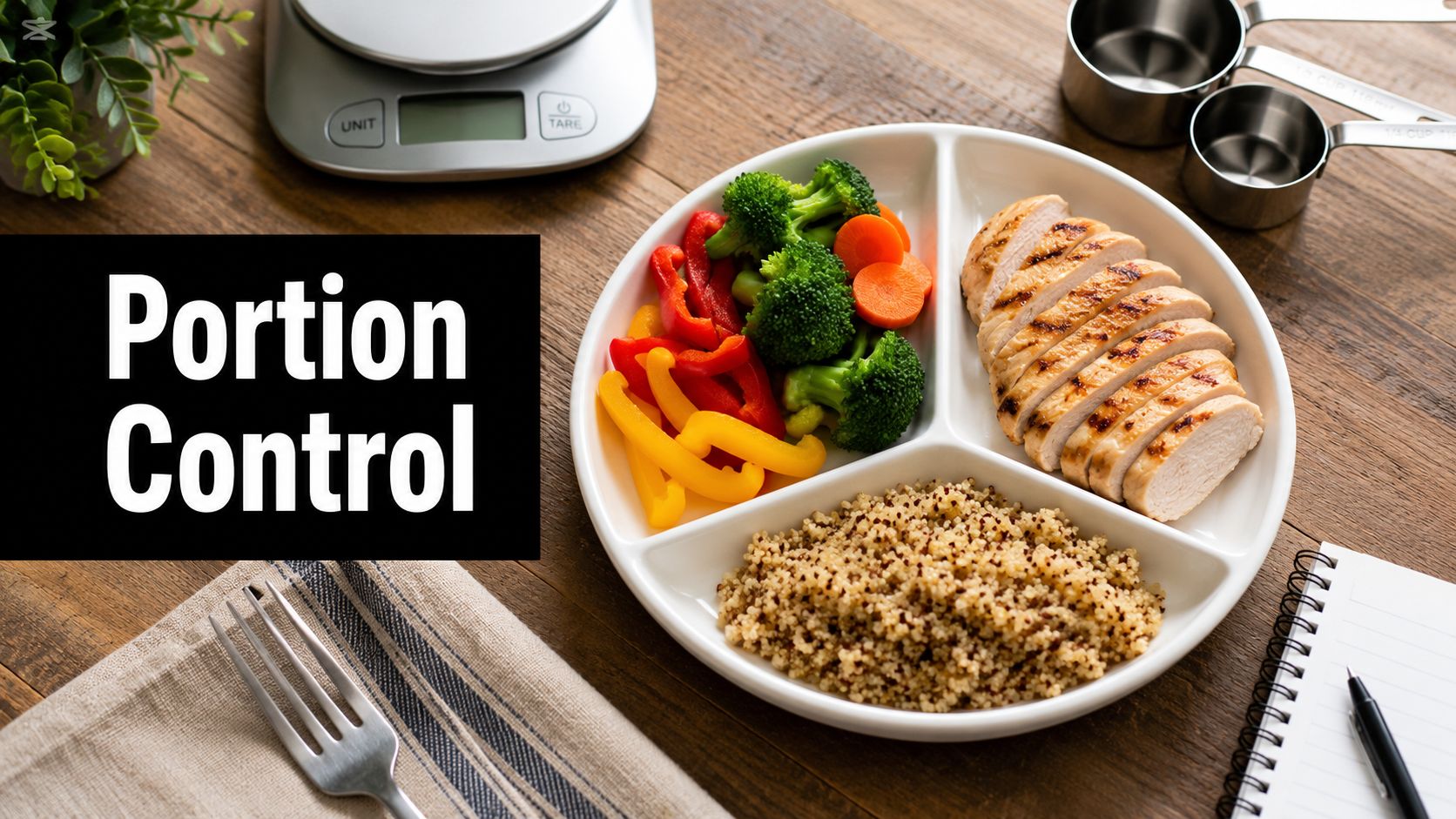
A practical way to do portion control is to use a simple meal pattern instead of making a fresh decision every time you eat. Start with half the plate for fruits and vegetables. Use one quarter for protein. Use the last quarter for grains or starches. For protein, a portion around the size of a deck of cards is a useful visual guide.
This works like guardrails on a road. You still choose the meal, but the structure keeps the amount from drifting upward because of stress, distraction, or oversized dishes.
If you want more support turning nutrition advice into daily decisions, a digital AI nutritionist can help you plan portions meal by meal, adjust for your goals, and make the process more automatic instead of relying on memory in the moment.
Regaining Control in a World of Super-Sized Servings
A lot of overeating isn't about hunger. It's about portion distortion, which means your eyes, habits, and environment start teaching you that oversized amounts are normal.
Think about the usual triggers:
- Large packages make one eating session feel like one “portion.”
- Big plates and bowls make modest amounts look small.
- Restaurant servings often arrive as one plate but contain more food than many people need at one meal.
- Distraction from work, phones, or TV makes it easier to keep eating past comfort.
Once you notice these triggers, portion control stops feeling like restriction and starts feeling like a practical skill.
What usually confuses people
The biggest misunderstanding is this: portion control doesn't mean eating tiny amounts of everything. It means being deliberate about energy-dense foods and giving more plate space to foods that bring volume, fiber, and satisfaction.
A workable everyday system looks like this:
Start with the plate layout
Put fruits and vegetables on half the plate first. That changes the visual center of the meal.Add protein second
Keep it around a deck-of-cards size if you're building a standard balanced meal.Add grains or starches last
These foods fit more easily into smaller spaces, so plating them last prevents automatic overserving.
Practical rule: Build the plate in order. Vegetables first, protein second, starch third. People usually overserve the foods they plate first.
Use visual cues you can remember
You don't need measuring cups at every dinner table. Some of the easiest visual anchors are already familiar:
- A small apple is about the size of a tennis ball.
- A medium pepper or tomato is about the size of a baseball.
- A protein serving is about the size of a deck of cards.
These aren't meant to make eating rigid. They help you reset your “normal” after years of larger default portions.
Why Does Portion Control Matter for Your Health?
You finish a restaurant meal, feel uncomfortably full, and still wonder why it happened. The food may not have seemed excessive. The plate, the package, the distraction, and the habit all set the portion for you.
That is why portion control matters. It gives you a way to interrupt automatic eating before it turns into regular overeating.
Research has shown that larger portions reliably lead people to eat more. A 2010 evidence review summarized in this review on portion size and body weight found a clear positive relationship between portion size, energy intake, and body weight. In plain terms, bigger defaults often lead to bigger intake, even when hunger has not increased.
This matters for health well beyond body weight. Oversized portions can make it harder to notice fullness, easier to overshoot calories from energy-dense foods, and more difficult to keep blood sugar and energy levels steady across the day.
Why small overages matter so much
Portion distortion usually does not come from one unusually large meal. It works more like a dripping faucet. A little extra cereal, a longer pour of dressing, a larger handful of crackers, and an oversized takeout container can shift intake upward without feeling dramatic.
Research summarized by UCHealth notes that consuming 100 extra calories daily can add about 10 pounds over one year, which shows how small, repeated overages can build over time in UCHealth's portion guidance. The same guidance explains that clear serving boundaries can also support more stable eating patterns and blood sugar control.
Portion control helps because it turns vague intentions into repeatable limits.
Why willpower usually falls short
Many adults do not overeat because they lack nutrition knowledge. They overeat because the environment keeps cueing them to continue. Large plates make standard amounts look small. Family-size packages blur the stopping point. Screens delay fullness cues. Restaurant portions reset your idea of what is normal.
A good portion-control system handles those triggers in advance. Pre-portion snacks instead of eating from the bag. Plate food in the kitchen instead of serving family-style at the table. Save half of a restaurant entrée before the first bite if portions are routinely large. If you use an AI meal planning tool, it can automate part of this process by suggesting portion targets, building meals around your goals, and reducing the number of decisions you have to make when you are tired or rushed.
That is the bigger health value. Portion control is not just about eating less. It helps you build an eating environment that makes balanced choices easier to repeat.
How Can You Measure Portions Without a Scale?
You are halfway through a restaurant meal, the plate still looks normal, and your brain says you have not eaten that much. That is portion distortion in real time. Large plates, oversized bowls, and restaurant plating can make more food look ordinary than it is.
If you want a method that works at work, while traveling, or at a family dinner, your hand is the simplest tool you already have. It gives you a built-in reference point, which matters because the hardest part of portion control is often not hunger. It is the setting around you.

The hand guide that works in real life
Your hand works like a measuring shortcut. You do not need to memorize grams or carry tools. You just need a few repeatable visual anchors:
Palm for protein
Use your palm to estimate chicken, fish, tofu, eggs, or meat. This creates a reliable stopping point for the part of the meal that is often under- or over-served.Fist for grains or starches Rice, pasta, potatoes, cereal, and similar foods can spread across a plate fast. A fist gives you a practical boundary before the portion grows.
Thumb for fats
Oils, butter, mayo, cheese, nut butter, and dressings are concentrated. A small amount can add up quickly, so the thumb check helps with foods that are easy to overpour.
Object cues can help too, especially when you are scanning a buffet line or estimating a side dish. Mayo Clinic's portion guide compares a small apple to a tennis ball, a medium tomato or pepper to a baseball, and a protein serving to a deck of cards.
Why this works better than guessing
Portion estimation gets harder in environments designed for bigger eating. Bowls hide volume. Packaged foods blur where one serving ends. Shared meals can make you match the pace and amount of everyone else at the table.
A hand-based system reduces that friction. Instead of deciding from scratch each time, you use the same reference in different settings. That lowers decision fatigue and makes your choices more consistent, even when the food around you changes.
For people who like more structure, pairing this method with a searchable food database can help turn rough estimates into a repeatable routine. AI Meal Planner's foods library can help you check common foods, compare portions, and build a system you can follow without having to calculate everything in the moment.
How to adjust portions without changing the method
The method stays the same. The emphasis shifts.
For weight loss
Keep protein steady, watch fats closely, and fill more of the plate with vegetables. This helps because energy-dense foods are usually the easiest to underestimate.
For muscle gain
Keep the same visual anchors, but repeat balanced meals more consistently across the day. Many people do better adding another structured meal or snack than making dinner twice as large.
For diabetes management
Consistency matters more than perfection. Using the same carb estimate at similar meals can make eating patterns easier to predict and repeat.
A simple set of visual reminders
Keep three images in mind:
- Deck of cards for protein
- Tennis ball for fruit
- Baseball for vegetables
That is enough to handle many everyday meals with confidence.
What Are the Best Tools for Precise Portioning?
Some people do well with visual estimates. Others feel calmer with exact numbers. Neither style is better. The right tool is the one you'll use.

When a food scale is worth using
A digital food scale is the clearest choice when you want precision with calorie tracking, macro tracking, or repeated meal prep. It removes guesswork from foods that are easy to overpour, such as pasta, rice, cereal, and nuts.
It's especially useful during a learning phase. People often discover their “usual” portion is larger than they thought. After a few weeks, many can estimate more accurately even when the scale isn't around.
When cups, spoons, and plates are enough
Measuring cups and spoons are practical for home cooking. They work well for:
- Cooked grains
- Oats
- Sauces and dressings
- Nut butters
- Liquids
Portion plates offer a different advantage. They reduce decision fatigue by visually dividing the meal. Research on portion-control plate interventions found statistically significant reductions in body weight, BMI, and waist circumference, with pooled estimates showing weight loss of 0.62 to 2.69 kg over six months in this meta-analysis of portion-control plates.
The real challenge isn't knowledge. It's consistency.
Individuals don't need more nutrition facts. They need a system that still works on a rushed Tuesday, during takeout, or when planning groceries for a household.
Here's where tools can work together:
| Situation | Simple tool |
|---|---|
| Cooking at home | Measuring cups or scale |
| Packing lunches | Meal prep containers |
| Building dinner quickly | Portion plate |
| Eating out | Hand guide |
| Planning the week | Digital meal planning tool |
One option is AI Meal Planner's nutrition tools, which can generate personalized meal plans, adjust portions to goals, and organize recipes with grocery lists. That doesn't replace judgment, but it can reduce the mental load that often causes portion decisions to slip.
How Do You Adapt Portions for Different Goals?
You eat what looks normal. That is the hidden challenge.
A dinner plate piled high can feel reasonable if the restaurant serves everyone that way. A family-style bowl on the table can make a second scoop feel automatic. Portion goals often break down for psychological reasons long before nutrition knowledge runs out. The plate, the package, the people around you, and your own hunger cues all shape what feels like the “right” amount.

The fix is to keep one base meal pattern and adjust only the parts that change your total intake. Portion control works like a thermostat. You do not rebuild the whole house every time the weather changes. You keep the structure stable and turn one dial up or down.
For weight loss
For fat loss, the goal is usually to reduce energy intake without creating meals that feel tiny or unsatisfying. A simple way to do that is to keep volume high and calories more contained. In practice, that means building meals around vegetables, fruit, lean protein, beans, broth-based soups, and other foods that take up space in the stomach and help fullness register.
A useful visual pattern is half the plate produce, one quarter protein, and one quarter starch or grain, as noted earlier in the article. If hunger stays high, start by increasing protein or vegetables before trimming portions further. That approach is easier to sustain than making every meal smaller across the board.
The environment matters here too. Large bowls, eating from packages, and distracted meals all blur the point where “enough” would have felt satisfying. A better system is to plate the meal, sit down, and pause before getting more. That short pause gives fullness signals time to catch up.
For muscle gain
Muscle gain needs more food, but still needs structure. Extra portions work best when they are targeted toward recovery, not added randomly because a food is available.
Keep the same plate framework, then increase the parts that support training. Protein usually needs to stay consistent across meals, and carbohydrates often rise to support harder workouts and recovery. Fats can increase too, but they are easy to overshoot because they add a lot of energy in a small volume.
If you are unsure how much to add, use a daily energy needs calculator for setting calorie and portion targets. That gives you a starting point, then meal portions can match the bigger plan instead of changing day by day based on appetite alone.
A practical system helps more than motivation. For example, use the same breakfast, post-workout meal, and evening snack on training days for two weeks. Consistency makes it easier to see whether your portions are supporting progress.
For maintenance and overall health
Maintenance is where flexible routines matter most. You need portions that fit real life, not a perfect spreadsheet.
For many adults, maintenance works well with a repeatable default. Breakfast stays familiar. Lunch follows a simple template. Dinner has room for variation, but still includes protein, produce, and a moderate starch portion. That pattern reduces the mental effort that often leads to oversized portions on busy or stressful days.
Appetite also changes from day to day. That does not mean your system failed. It means your portions can stay structured while remaining responsive. On a less active day, you may want a smaller starch portion. On a hungrier day, you may need more protein, fruit, or vegetables. The skill is adjusting with intention instead of letting mood, packaging, or social pressure decide for you.
For families and shared meals
Portion habits spread through a household because visual norms spread through a household. If everyone is served oversized snacks in large bowls, that starts to look standard. If meals are plated with vegetables first and second helpings happen after a short pause, that becomes the new normal.
Research on children's eating patterns shows that larger portions of high-energy-dense foods can increase intake in both children and adults in this review on portion size in children. That is why family portion control works best as a system, not a rule repeated at the table.
Try a few stable defaults:
- Serve high-volume foods first, such as vegetables, fruit, or salad
- Portion snacks into bowls or containers before they reach the table
- Keep serving dishes off the table when second helpings tend to happen automatically
- Use similar plates and bowls most days so visual cues stay consistent
If you want portion control to match a specific goal, reduce decisions and reduce exposure to triggers. The more your environment sets the default, the less often you have to rely on willpower.
How Can You Maintain Portion Control When Life Gets Busy?
You get home late, you are hungrier than expected, and dinner turns into eating straight from a takeout container while answering messages. That moment is where portion control usually slips. The problem is rarely a lack of knowledge. It is that stress, distraction, oversized packaging, and decision fatigue make large portions feel normal.

A busy week needs a system that still works when your attention is low. Portion control works like putting your meals on autopilot. You set the route ahead of time so hunger, convenience, and visual cues are less likely to take over.
Build defaults for your busiest hours
Start by identifying the moments that lead to portion distortion. For many adults, those are late-night snacks, restaurant meals, takeout, eating in the car, and the gap between getting home and starting dinner. Once you know the pattern, create a default response for that exact moment.
A few examples:
- Pre-portion leftovers into single-meal containers before they go into the refrigerator
- Pair convenience foods with structure, such as a frozen meal plus bagged salad, or soup plus fruit
- Plate snacks first instead of eating from the bag, box, or delivery container
- Keep a short list of repeat meals for your busiest days so portion size is already decided
- Use a planned pause, such as drinking water or sitting down before getting seconds, to interrupt automatic eating
This approach matters because busy eating is often cue-driven, not hunger-driven. Large containers, visible food, and multitasking all push intake upward without much awareness.
Make restaurants and takeout less reactive
Restaurant portions are often designed to look generous, and generous quickly becomes your visual reference point. If you wait until you are already very hungry and the food is in front of you, self-control has to do all the work.
Set the structure earlier.
- Decide before the meal starts whether half will be saved for later
- Order items with clearer built-in boundaries, such as an entree with separate sides instead of a mixed platter that is hard to judge
- Eat the part of the meal that helps fullness most, often protein, vegetables, beans, or broth-based starters
- Pause midway and check in by asking, “Am I still hungry, or am I finishing because it is here?”
Here's a quick visual walk-through of portion-friendly meal planning in practice:
Use automation when life gets noisy
The more decisions you have to make in real time, the harder portion control becomes. That is why one-off tips help less than repeatable systems. A strong routine might include two planned breakfasts, three easy lunches, pre-portioned staples at home, and a consistent grocery list. Fewer decisions usually means steadier portions.
AI tools can make that process easier because they reduce planning friction. If you want a done-for-you setup, you can start with the AI Meal Planner onboarding to build meals around your goals, food preferences, and routine. The practical value is consistency. When meals are mapped out in advance, you are less likely to let stress, packaging, or convenience set the portion for you.
Frequently Asked Questions About Portion Control
| Question | Answer |
|---|---|
| Do I need to weigh every food to practice portion control? | No. A scale is useful for precision, but many people do well with hand estimates, plate guides, and repeatable meals. |
| Should I measure vegetables closely? | Usually, visual guidance is enough for most non-starchy vegetables. Focus more attention on foods that are easy to overpour, such as oils, grains, and snacks. |
| How do I portion-control snacks? | Put snacks into a bowl or container before eating. Don't eat directly from the package if you want a clear stopping point. |
| Do drinks count as portions too? | Yes. Liquid calories can add up quickly because they don't create the same visual fullness as solid food. |
| How do I handle portion control with kids without making food stressful? | Keep the focus on balanced plates and routine, not restriction. Research shows that large portions of high-energy-dense foods can increase intake in both children and adults, so consistent visual norms at home matter. |
| What if I overeat at one meal or for one day? | Return to your usual pattern at the next meal. One large meal doesn't undo good habits, but overcorrecting often creates another cycle of overeating. |
A few final clarifiers
People often ask whether portion control means being hungry. It shouldn't. Good portion control usually means building meals that are satisfying, balanced, and easier to repeat.
Another common concern is whether portion control is only for weight loss. It isn't. It's also a practical way to create more consistent eating patterns, especially when your schedule is busy and your food environment keeps nudging you toward larger amounts.
The goal isn't perfection. The goal is making the next meal easier to portion than the last one.
If you want help turning these ideas into a repeatable routine, AI Meal Planner can build personalized meal plans and grocery lists around your goals, preferences, and portion needs so daily decisions take less effort.
AI-powered nutrition
Get Your Personalized Meal Plan
AI creates the perfect meals for your goals, lifestyle, and taste.
Start Your Journej