Dinner is usually where a good day falls apart. It's 5 p.m., everyone's hungry, someone has practice, someone else won't eat what you planned, and you're standing in front of the fridge trying to make a decision with no bandwidth left.
Most meal planning for busy moms fails for one reason. It's built like a rigid spreadsheet instead of a working household system. The version that lasts is flexible, repeatable, and realistic about leftovers, picky eaters, changing schedules, and health needs.
How Can Busy Moms Start a Sustainable Meal Plan?
How can busy moms start meal planning without getting overwhelmed?
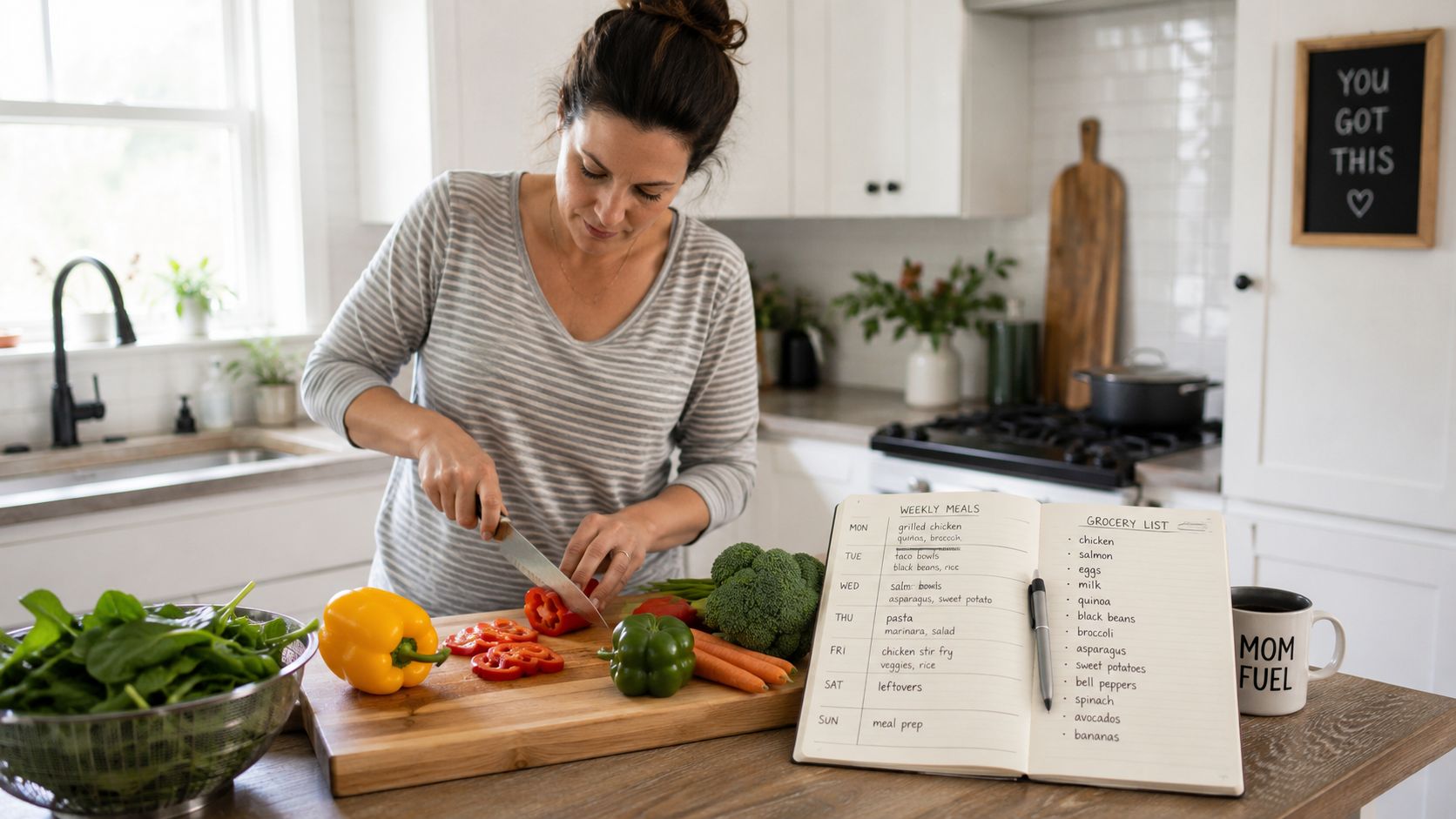
To start sustainable meal planning, block 30 minutes on Thursday to choose 5 dinners from a master list of family favorites, make one grocery list, and shop once. Then use a 1 to 2 hour Sunday prep session to batch-cook proteins and chop vegetables so weeknight cooking becomes fast assembly instead of full prep. Families who plan meals weekly save an average of $1,500 to $2,000 annually, and meal planning cuts decision-making and cooking time by an estimated 1.5 to 2 hours per week.
The problem usually isn't willingness. It's friction. Moms don't need more recipe inspiration. They need a system that still works when a child rejects Tuesday's dinner, work runs late, or the week suddenly changes shape.
A sustainable plan starts before the weekend. If you wait until Sunday night, planning feels heavy, shopping feels reactive, and dinner prep starts the week already behind. A better rhythm is to make a few key decisions early, then reduce the number of choices you have to make later.
Three tasks belong in that first planning block:
- Check the calendar first. Look at late meetings, sports, appointments, and nights when cooking needs to be especially simple.
- Pick five real dinners. Choose from meals your family already accepts, not aspirational recipes that require mental energy you don't have.
- Build one clean shopping list. Pull only what's missing after checking your pantry, fridge, and freezer.
If your evenings already feel fragmented, pairing meal planning with broader time management strategies for working parents helps. Dinner rarely exists as a separate problem. It's tied to how the whole week is organized.
For families also watching spending, a budget meal planning approach keeps the plan grounded in what you'll buy and cook.
Practical rule: If a meal takes too much thinking on a weekday, it doesn't belong in your core rotation.
Adopt the Think Ahead Thursday Planning Foundation
The biggest trap in meal planning for busy moms is the recipe rabbit hole. You sit down to “quickly plan dinner,” open Pinterest or Instagram, and suddenly the task becomes searching, comparing, second-guessing, and saving meals you'll never make.
That's why Think Ahead Thursday works. It moves the mental work earlier, before the weekend gets crowded. Instead of carrying dinner decisions into Monday, you settle them while your week is still visible and your energy is usually a bit better.

What to do in your Thursday planning block
Keep this block short. The point is not to create a perfect menu. The point is to remove uncertainty.
- Review the week. Check which nights need slow cooker meals, leftover nights, or very fast dinners.
- Start with food you already have. Pantry inventory comes first because it narrows choices and prevents duplicate shopping.
- Choose capsule meals. Pull from a small set of dependable dinners instead of browsing from scratch.
- Write the grocery list immediately. Don't trust yourself to remember what's missing later.
- Leave room on purpose. The 80/20 Principle works because it plans and preps for 80% of family meals while intentionally leaving the other 20% for leftovers or takeout to reduce burnout and decision fatigue, as outlined in the Think Ahead Thursday method.
What works better than strict weekly scripts
Rigid plans break the first time real life intervenes. The better approach is a structured weekly flow:
| Day | Focus | What you're deciding |
|---|---|---|
| Thursday | Plan | Which dinners fit the actual week |
| Friday | List check | What's missing from pantry and freezer |
| Saturday or Sunday | Shop | One main grocery run |
| Sunday | Prep | Components that shorten weekday cooking |
The Thursday anchor matters because it gets the invisible work out of your head. Once dinner decisions are made, the rest of the process becomes execution, not daily negotiation.
Plan meals around your calendar first, not your ideal self.
If you keep missing the planning window, put it on your phone calendar as a recurring appointment. Meal planning doesn't become sustainable when you feel motivated. It becomes sustainable when it has a place in the week.
What not to do
A few habits consistently make planning harder than it needs to be:
- Don't plan seven ambitious dinners. You're setting yourself up to waste groceries.
- Don't save random recipes without a system. Saved ideas aren't a meal plan.
- Don't ignore built-in flexibility. If the plan has no margin, it won't survive contact with family life.
How to Build a Recipe Capsule That Ends Decision Fatigue
A strong meal plan starts with fewer choices, not more. If you're choosing from the entire internet every week, you're making the job harder than it has to be.
The fix is a recipe capsule. Think of it as a controlled wardrobe for dinner. Instead of endless options, you keep a short list of meals your family already eats without drama.

A practical version is a master list of 10 to 20 tried-and-true family favorites, grouped into categories like pasta, soups, chicken, beef, or quick lunches. From there, you select one or two meals from each category each week. That structure cuts the blank-page feeling and keeps protein and fiber in view.
How to build your recipe capsule
Start with meals that meet three standards:
- Your family eats them
- You can shop for them without specialty ingredients
- You can cook them on a tired weeknight
Then organize them into buckets such as:
- Under 20 minutes
- Slow cooker
- Sheet pan
- Pasta night
- Use up leftovers
- Freezer-friendly
Parents who create a rotating capsule wardrobe of 3 to 4 weekly meal plan templates reduce the cognitive load of daily decision-making by up to 70% compared with ad hoc planning, according to Lucie's List on meal planning for parents.
That's why repeating templates works so well. You're not repeating the exact same week forever. You're rotating through familiar structures that reduce mental strain.
If you want fresh ideas without starting from zero, a curated recipe library for quick meals can help you plug new options into the capsule instead of rebuilding your whole system.
A capsule is not boring if you use it correctly
Most families don't need constant novelty. They need dependable meals with small variations.
Try this pattern:
- Week 1: tacos, pasta, soup, sheet-pan chicken, breakfast-for-dinner
- Week 2: burrito bowls, meatballs, chili, stir-fry, grilled cheese and salad
- Week 3: quesadillas, baked potato bar, chicken wraps, skillet pasta, leftovers
You can still test one new recipe each week. Just don't make all five meals new. That's where planning collapses.
A quick visual can help if you prefer to sort recipes by category and reuse them deliberately:
Keep the list where you can see it
This matters more than people think. If your master list lives in a notes app you never open, it won't help. Keep it on the fridge, in a binder, or in a simple phone note pinned at the top.
The best recipe system is the one you can use in under five minutes.
What Does a Time-Saving Meal Prep Schedule Look Like?
Meal prep doesn't need to mean five identical containers lined up in the fridge. For busy moms, full meal prep often feels too rigid. Component prep works better because it gives you speed without locking you into one exact dinner.
The key is a dedicated prep block. A Sunday prep session with a 2-hour window for batch-processing proteins, vegetables, and carbs can turn daily cooking from a 45-minute task into a 15-minute assembly process. In practice, many families won't need the full two hours every week, but the principle holds. Prep ingredients, not necessarily finished meals.
The three biggest shopping and prep time-wasters
Most wasted prep time starts before you chop a single onion.
Not checking inventory first
If you don't know what's already in the pantry, fridge, or freezer, you'll overbuy, miss key ingredients, or plan meals around food you don't have.Writing a messy list
A list that jumps between produce, dairy, frozen, and pantry slows shopping and increases forgotten items.Prepping at dinner time
Washing lettuce, trimming chicken, cooking rice, and hunting for containers at 6 p.m. makes every meal feel harder than it is.
A simple tech-enabled fix helps with each one. Keep a pantry note on your phone, sort your grocery list by aisle, and save a repeatable prep checklist so you don't have to remember the sequence each week.
Sample 90-Minute Sunday Meal Prep Schedule
| Time Block | Task | Example |
|---|---|---|
| 0 to 15 minutes | Start grains and oven items | Cook rice, roast potatoes, preheat oven |
| 15 to 30 minutes | Wash and chop produce | Bell peppers, cucumbers, onions, lettuce |
| 30 to 45 minutes | Cook first protein | Bake chicken breasts or thighs |
| 45 to 60 minutes | Cook second protein | Brown ground turkey or beef |
| 60 to 75 minutes | Make quick extras | Mix sauce, dressing, taco seasoning blend |
| 75 to 90 minutes | Portion and label | Store cooked components for fast assembly |
What component prep looks like during the week
Instead of making complete meals on Sunday, prepare building blocks:
- Cooked proteins for wraps, bowls, pasta, or salads
- Chopped vegetables for sheet-pan dinners, stir-fries, and snacks
- One carb base such as rice, potatoes, or pasta
- One sauce or dressing to make plain ingredients feel finished
That gives you flexibility. Chicken can become tacos on Monday, soup on Wednesday, and sandwiches later in the week. You're buying yourself speed, not monotony.
How Do You Optimize Your Grocery List and Shopping?
A grocery trip gets expensive and exhausting when the list is vague. “Dinner stuff” is not a plan. A good shopping system tells you exactly what to buy, where it belongs in the store, and why it's on the list.
The first rule is simple. Shop your pantry first. That one habit prevents duplicate purchases, reduces waste, and immediately narrows the week's meals.
Build the list from meals, not cravings
Write the grocery list directly from your selected dinners, then group items by store section. That keeps shopping fast and lowers the odds of impulse buys.
A clean list usually includes:
- Produce grouped together so you can move through one section without doubling back
- Proteins tied to specific meals so you don't buy extra “just in case” packages
- Pantry items checked against what you already own
- Flexible staples that can rescue a hard night, such as eggs, tortillas, pasta, canned beans, and broth
A grocery list generator organized for meal planning can make that process faster if list-building is the part you keep avoiding.
Use ingredient reuse on purpose
The smartest grocery list doesn't just support five separate dinners. It creates overlap.
One roasted chicken can cover tacos, soup, and sandwiches. Ground meat can become pasta one night and stuffed peppers another. Rice can support bowls, stir-fry, and a quick side later in the week.
This is also where picky eaters and special diets stop feeling like separate problems. The same strategy solves both. Build one shared base, then modify from there. Rice bowls, taco plates, baked potato bars, pasta night, and grilled protein with side options all let family members adjust toppings, portions, and add-ons without forcing you to cook entirely separate meals.
Shop in the format that protects your time
Online ordering, curbside pickup, or a saved digital cart isn't lazy. It's often the most practical choice when stores drain time and focus. For many moms, the best grocery system is the one that reduces wandering and keeps the list tied to the plan.
What If Your Family Has Dietary Needs or Picky Eaters?
Many meal plans often fall apart. One child won't eat mixed foods. Another family member needs more structure around blood sugar, sodium, or ingredient restrictions. Suddenly dinner feels like three separate jobs.
A better approach is to stop treating flexibility as failure. Flexibility is what makes meal planning for busy moms sustainable when real households have different bodies, different preferences, and different limits.
A 2024 study found that over 40% of U.S. adults have at least one chronic condition requiring dietary management, yet specific meal planning resources for parents remain scarce, according to Fit Mother Project's discussion of meal planning for working moms.

Use deconstructed meals instead of separate dinners
Deconstructed meals are one of the most useful tools in a family kitchen.
Examples that work well:
- Taco bowls with rice, seasoned protein, beans, lettuce, salsa, cheese, and avocado served separately
- Pasta night with regular and gluten-free pasta cooked separately, while the same sauce and protein work for both
- Baked potato bars with toppings set out buffet-style
- Salad and grain bowls where each person builds their plate from the same components
This structure helps picky eaters because they can see each ingredient. It also helps with medical diets because the base stays consistent while portions and additions can change.
Try the base-and-modify method
Cook one central meal. Adjust the edges.
For example:
| Base meal | Modification ideas |
|---|---|
| Grilled chicken and vegetables | Add a starch for growing kids, reduce sauce for specific restrictions |
| Chili | Serve over rice for some, over greens for others |
| Burger bowls | Bun for some, lettuce wrap for others |
| Oatmeal bar | Fruit and nuts vary by preference and dietary need |
This is much easier than making one “healthy” dinner and one “kid dinner.” It also helps you stay out of the short-order cook trap.
If meal planning also has to account for allergies, preferences, and nutrition goals at once, an AI nutrition planning tool can help organize the logic behind those choices.
Feed the family from one core meal. Change toppings, sides, and portions, not the entire dinner.
What doesn't work
Parents often get stuck in one of two extremes. They either force one rigid meal on everyone or give up and make multiple dinners. Both approaches create more stress. The middle path is usually better. Shared base, flexible finish.
How Can You Stay Consistent When Life Gets Chaotic?
Consistency doesn't come from a perfect week. It comes from knowing what you'll do when the original plan fails.
That matters because 68% of parents abandon their weekly meal plan due to unpredictability, and there still isn't a dominant system that gives families a clear swap framework, as noted in Her Country Roots on meal planning tips for busy moms.

What do you do when nobody wants the planned meal?
Use a tier-one backup. That means a planned leftovers night or a preapproved easy dinner that already fits into the week. Don't improvise from zero.
Good tier-one options include:
- Leftover bowls
- Quesadillas
- Eggs and toast
- Soup from the freezer
- Snack plate dinner with fruit, cheese, and simple proteins
What if the whole week collapses by Wednesday?
Use a tier-two backup based on pantry staples. Keep a short rescue list posted somewhere visible.
A solid rescue list might include:
- Pasta with jarred sauce and frozen vegetables
- Black bean tacos
- Rice and eggs
- Grilled cheese and tomato soup
- Sheet-pan sausage and vegetables
If your family likes Mediterranean-style meals, a simple guide to healthy Mediterranean eating can help you stock staple ingredients that work well for fast fallback dinners.
When should meal kits enter the plan?
Use them as a tier-three backup, not a permanent replacement for planning. Meal kits are most useful during especially hectic weeks or overwhelming months. They work best when paired with bulk cooking and freezer support on calmer weeks, not as an every-week habit.
That approach protects convenience without letting costs drift.
The real consistency rule
Don't judge the plan by whether every dinner happened exactly as written. Judge it by whether the household kept moving without panic, waste, or an expensive last-minute scramble.
To build this kind of flexibility into your routine automatically, get your personalized plan at AI Meal Planner onboarding.
Frequently Asked Questions About Meal Planning
How many dinners should a beginner plan each week?
Start with five dinners, not seven. Leave room for leftovers, takeout, or a schedule change.
Is it better to prep full meals or just ingredients?
For most families, ingredient prep is more flexible. Prepped proteins, vegetables, and one carb base are easier to repurpose than five finished meals.
What if my kids reject the meal I planned?
Don't make a separate dinner from scratch. Use deconstructed meals, simple side options, or a backup meal from your rescue list.
How do I meal plan on a tight budget?
Plan from what you already have first, reuse ingredients across multiple dinners, and avoid buying one-off specialty items. A short list of repeat meals usually costs less than a week built around random recipes.
When should I do meal planning each week?
Thursday works well because it gets the mental load handled before the weekend. Then you can shop and prep with less stress.
Are meal planning apps worth it?
They're useful if they reduce friction. If an app helps you choose meals, organize groceries, and adjust quickly, it can save time. If it adds more setup work, skip it.
What if I have very young kids and no uninterrupted prep time?
Shrink the system. Plan in one short block, prep a few components instead of full meals, and use easier dinners during demanding seasons.
If you want a faster way to turn your dietary needs, preferences, schedule, and grocery habits into a practical weekly system, AI Meal Planner is built for exactly that. It helps you generate personalized meal plans, organize smart grocery lists, and make weeknight cooking feel manageable again.
AI-powered nutrition
Get Your Personalized Meal Plan
AI creates the perfect meals for your goals, lifestyle, and taste.
Start Your Journej