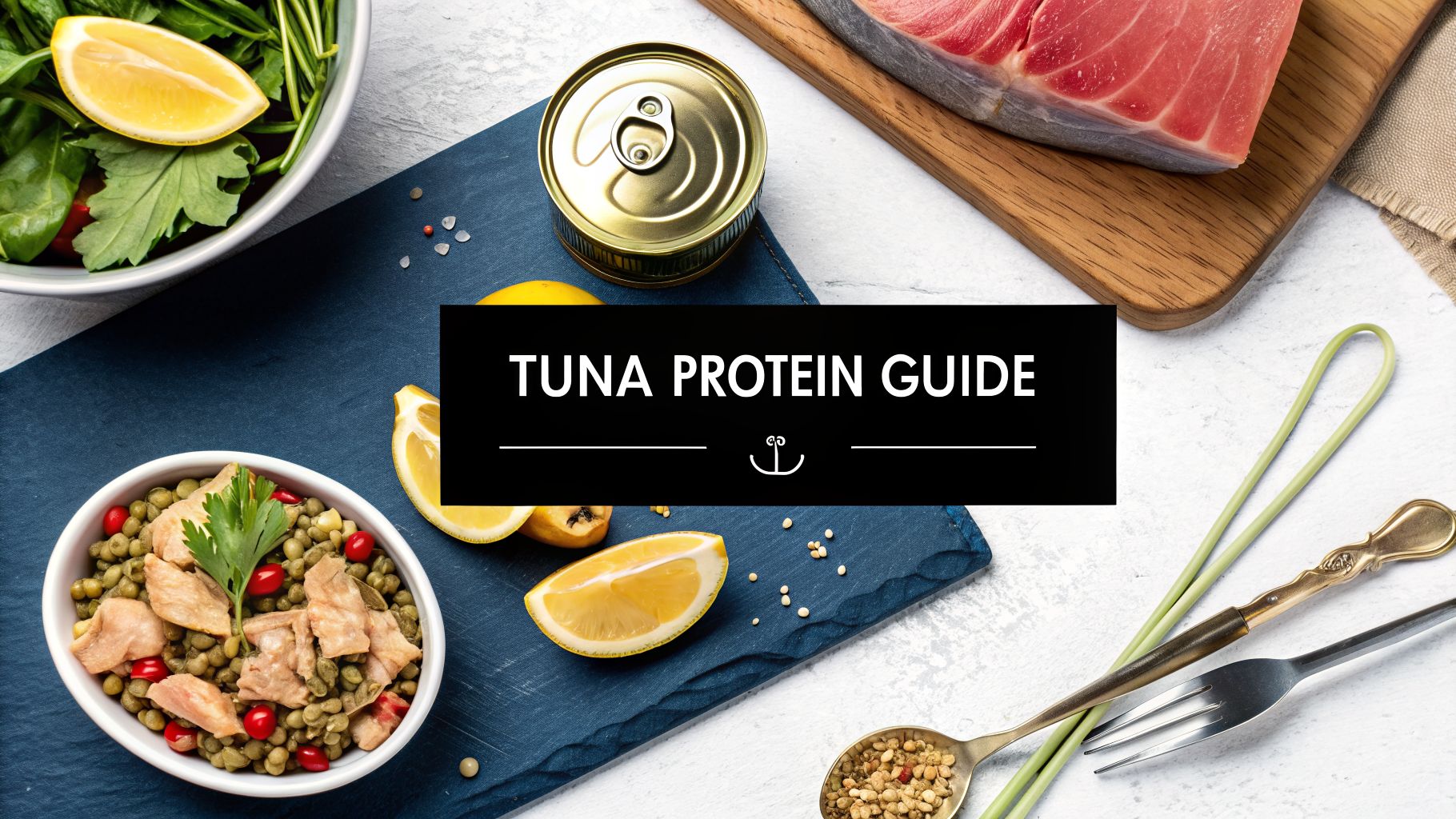
A standard 3-ounce (85g) can of light tuna packed in water contains approximately 20 grams of high-quality protein. Fresh tuna offers even more, with a 6-ounce (170g) yellowfin steak providing over 40 grams of protein. These amounts make tuna an efficient and accessible source for meeting daily protein needs.
Tuna is a lean, protein-packed fish that stands out as one of the best foods for muscle gain due to its exceptional protein density and convenience. While the numbers are impressive, the real advantage is that tuna is a complete protein. This means it contains all nine essential amino acids, which are the fundamental building blocks your body absolutely needs but can't produce on its own.
Why is tuna's protein so effective for your body?
It’s easy to get focused on the numbers, but what makes the protein in tuna so valuable isn't just the quantity—it's the quality. There's a reason athletes, nutritionists, and busy professionals rely on it. Tuna delivers a specific kind of protein that is exceptionally effective for building and maintaining a healthy physique.
The complete amino acid profile in tuna ensures your body has everything it needs for critical processes like muscle repair, hormone production, and energy.
What are the building blocks of protein in tuna?
Think of your body like a construction site that's constantly undergoing repairs and new additions. Amino acids are the specialized workers and raw materials needed for every job.
- Muscle Repair: After a workout, your muscles are filled with tiny micro-tears. The amino acids from tuna act like a skilled repair crew, patching up the damage and rebuilding the muscle fibers even stronger than before.
- Growth and Maintenance: These "building blocks" are also essential for creating everything from hormones and enzymes to healthy skin and hair.
- Energy and Function: When needed, your body can even convert amino acids into fuel to power you through your day.
Tuna stands out as a nutritional powerhouse, making it an ideal choice for busy professionals and fitness enthusiasts. A standard 3-ounce serving of canned tuna in water delivers about 20-25 grams of protein, which is roughly 40-50% of the daily recommended intake for an average adult. Discover more about its role in sustainable nutrition on sustainablefisheries-uw.org.
Because tuna provides a full set of these essential "bricks," it ensures your body has everything it needs for these critical processes. This is why a simple can of tuna is so much more than just a quick meal—it's a high-quality biological tool for smashing your health and fitness goals.
Whether you're aiming to build lean muscle, stay full on a calorie-controlled diet, or just need a reliable energy source, the complete protein in tuna provides the foundation you need. And when you're trying to hit specific goals, planning becomes crucial; see how an AI Meal Planner can simplify the entire process.
Which type of tuna has the most protein?
Walk down the canned food aisle and you're hit with a wall of choices: Albacore, Skipjack, Yellowfin, in water, in oil. It’s easy to assume all tuna is the same, but the truth is, the type of fish and how it’s packed can make a big difference in its nutritional punch.
It really comes down to the fish's lifestyle. An active, muscular fish like Yellowfin is naturally leaner, giving it a higher protein-to-fat ratio. In contrast, Albacore is a larger fish with more body fat, while Skipjack (what you typically find in "light" tuna cans) lands somewhere in the middle. These aren't just minor details—they directly influence how much protein ends up on your plate.
A single can of tuna can be a game-changer for hitting your daily protein targets, especially when you're short on time.

As you can see, one serving makes a serious dent in the average person's daily needs, proving it's one of the most efficient protein sources you can buy.
How do different tuna types compare in protein?
So, how do the numbers actually stack up? While a fresh tuna steak will almost always win for pure, unprocessed protein, canned tuna is the undisputed champion of convenience and affordability. To make the smartest choice for your goals, you need to see a direct comparison.
Here’s a quick look at the nutritional breakdown you can expect from the most common types of canned tuna. This helps cut through the marketing noise and shows you exactly what you're getting in each can.
Which canned tuna is best for protein? (Per 100g Drained)
| Tuna Type | Protein (grams) | Fat (grams) | Calories |
|---|---|---|---|
| Yellowfin (in water) | 25 g | 1 g | 110 |
| Skipjack / Light (in water) | 22 g | 1 g | 100 |
| Albacore / White (in water) | 23 g | 5 g | 130 |
Note: All values are approximate for a 100g drained serving.
The numbers don't lie. Yellowfin is the clear winner for the highest protein content with the fewest calories, making it a top-tier choice for anyone focused on lean muscle gain. Skipjack is a fantastic, budget-friendly everyday option, while Albacore offers a solid protein count with some extra healthy omega-3 fats.
Key Takeaway: For the absolute highest protein-to-calorie ratio, reach for Yellowfin tuna. For a reliable, cost-effective protein source that’s easy to find, Skipjack (light tuna) is your best bet.
With this knowledge, you can finally pick the perfect tuna for your specific plan—whether you’re maximizing protein for muscle growth, counting macros for weight management, or simply boosting your intake of healthy fats. Integrating these smart choices into your diet is even simpler with a tool like an AI Meal Planner, which can build your weekly menu around your exact nutritional goals and food preferences.
Is tuna in water or oil better for protein?
It’s the classic dilemma in the canned goods aisle: tuna in water or tuna in oil? This simple choice fundamentally changes the nutritional DNA of your meal, and it all comes down to a simple concept.
Think of the tuna filet as a sponge. Whatever liquid it’s packed in, it’s going to soak it right up. This one detail drastically shifts the protein, fat, and calorie numbers on the label.

When tuna is packed in water, the fish absorbs a liquid that has zero calories or fat. This means the nutritional stats stay incredibly close to the fish’s natural state, making it the undisputed champion for anyone who needs lean, high-quality protein without any extra baggage.
On the other hand, tuna packed in oil soaks up some of that fat. Even after you drain the can as thoroughly as you can, the fish itself has absorbed a significant amount, adding anywhere from 50 to 80 extra calories per serving compared to the water-packed version.
Which should you choose based on your goals?
The right choice isn't about which one is "better" in a vacuum—it's about which one is better for you and your specific goals.
For Maximum Lean Protein: If your main focus is building muscle or losing fat, tuna in water is the superior option. It delivers an almost pure source of protein with minimal calories, which means you can hit your protein targets much more efficiently without worrying about extra fat creeping into your macros.
For Flavor and Healthy Fats: If calories aren't your primary concern and you're more interested in a richer flavor and healthy fat intake, tuna in oil can be a great choice. The oil, which is often olive or sunflower, makes the tuna more moist and tender. Plus, those added fats can help you feel fuller for longer.
The Bottom Line: Tuna in water is for pure protein optimization. Tuna in oil is for better flavor and added fats, but you have to account for the major calorie jump.
No matter which you choose, you're getting an excellent source of protein. For anyone on a structured diet, like many following a Mediterranean-style eating pattern, knowing this difference is crucial for staying on track. You can see exactly how ingredients like this fit into a balanced week by exploring the Mediterranean meal plan. Whether you drain the oil or stick with water, the high-quality protein in tuna is a fantastic asset for any diet.
How does tuna protein support fitness goals?
The high protein count on a can of tuna is more than just a number—it’s the fuel that directly powers your body's ability to build muscle and shed fat. When you understand how it works, you start to see that simple can of tuna for what it really is: a powerful tool for your results in the gym and on the scale.
For muscle building, it's all about providing your body with the right resources to repair and grow. Tuna is loaded with essential amino acids, including a real superstar called leucine.
Think of leucine as the ignition key that turns on your body’s muscle-building engine, a process we call muscle protein synthesis. Eating tuna after a workout delivers a rush of these "keys," signaling your body to start repairing the muscle fibers you just broke down and build them back stronger.
How does tuna protein help muscle growth?
Because tuna offers a complete amino acid profile, it gives your muscles every single raw material they need for this rebuilding job. Without enough high-quality protein, your efforts in the gym can fall flat. Tuna delivers a concentrated dose of exactly what your muscles are craving for recovery, making it an incredibly efficient post-workout meal.
To dial in your specific protein needs for building lean mass, a good guide can show you how to use a protein intake calculator for muscle growth.
How does tuna protein help with weight loss?
When it comes to fat loss, tuna's protein plays a different but equally vital role. Protein is the single most satiating macronutrient, which simply means it keeps you feeling fuller for longer than fats or carbs.
A high-protein meal like a big tuna salad can dramatically increase feelings of fullness, helping you crush cravings and stop mindless snacking. This is partly due to the thermic effect of food (TEF), where your body actually burns more calories digesting protein compared to other macros.
This one-two punch makes tuna a strategic part of any calorie-controlled diet. By keeping hunger in check, you’re far less likely to overeat, which makes sticking to the calorie deficit required for weight loss much easier.
A well-structured diet makes this even more effective. See how easy it is to create a high-protein meal plan that automates your goals. By understanding these mechanisms, you can see that tuna isn’t just convenient food—it’s a strategic ingredient for building a leaner, stronger physique from the inside out.
How can you safely add tuna to your diet?
While tuna is an incredible source of high-quality protein, it’s also known for containing mercury, a heavy metal that can be harmful in high amounts. But this doesn't mean you need to avoid it. By making smart, informed choices, you can safely enjoy all the benefits of tuna without the worry.
The key is understanding the different types of tuna and their varying mercury levels. Think of it like the ocean's food chain: smaller fish are eaten by bigger fish, and so on. Mercury accumulates up this chain, so larger, longer-living tuna species naturally contain more mercury than smaller ones. This is exactly why the type of tuna you choose matters.
Which tuna has the least mercury?
Your best bet for frequent consumption is canned light tuna. This is typically made from smaller fish like Skipjack, which have a much shorter lifespan and don't accumulate mercury to the same extent as their larger counterparts. Because of this, it’s a much safer option to include regularly in your diet.
In contrast, white tuna is made exclusively from Albacore, a larger species. Albacore lives longer and eats more fish, leading to significantly higher mercury levels. While you can still enjoy it, your consumption should be more limited.
To keep your diet varied and nutritious, it's always a good idea to create a balanced meal plan that rotates different protein sources throughout the week.
What are the safe consumption guidelines for tuna?
The U.S. Food and Drug Administration (FDA) provides clear guidelines to help everyone eat fish safely. These recommendations are especially important for pregnant women, those planning to become pregnant, and young children, as they are more vulnerable to the effects of mercury.
Key Insight: For most adults, enjoying canned light tuna 2–3 times per week is perfectly safe and provides a fantastic protein boost. For albacore (white) tuna, the recommendation is to limit intake to just one serving per week.
By following these simple rules, you can confidently integrate the powerful protein in tuna into your diet. Beyond just protein, tuna is also a rich source of essential vitamins. For instance, it's an excellent way to get Vitamin B12, a nutrient vital for nerve function. Understanding what other foods contain natural sources of Vitamin B12 can help you build an even more well-rounded diet. Stick to light tuna for your regular meals and save albacore for an occasional treat.
What are some easy high-protein tuna meals?

Knowing the numbers behind tuna's protein content is a great first step. But the real game-changer is turning that can in your pantry into a fast, delicious, and protein-packed meal. It’s easy to get stuck in a rut with the same old tuna sandwich, but that’s barely scratching the surface of what this versatile fish can do.
The trick is to have a handful of simple, go-to recipes that fit into a busy week without any fuss. You can pair it with crunchy vegetables, whole grains, or creamy, healthy binders to create balanced meals that actually make hitting your protein goals feel easy—and satisfying.
How can you make quick high-protein meals with tuna?
Forget spending an hour in the kitchen. These ideas are all about speed and nutrition, transforming a simple can of tuna into a genuinely good meal in just minutes.
- Tuna-Stuffed Bell Peppers: This is a fantastic low-carb lunch. Mix a can of tuna with Greek yogurt, some diced celery for crunch, and your favorite herbs. Halve a bell pepper, clean it out, and stuff it with the tuna mix. It's crunchy, fresh, and loaded with protein.
- Zesty Tuna and Quinoa Bowls: Perfect for meal prep. Just combine cooked quinoa with a can of drained tuna, chickpeas, cherry tomatoes, and cucumber. A simple drizzle of lemon juice and olive oil brings it all together for a complete, energizing meal.
- 10-Minute Tuna Cakes: Need something fast and hot? Mix one can of tuna with an egg, about a tablespoon of almond flour, and some seasonings (like garlic powder and parsley). Form small patties and pan-fry them for a couple of minutes on each side. You get savory, protein-rich fish cakes in no time.
To give you a clearer picture of how this looks in practice, here is a sample weekly layout that strategically uses tuna to boost protein intake without getting repetitive.
Sample High-Protein Tuna Meal Ideas for Your Week
| Day | Meal | Tuna Recipe Idea |
|---|---|---|
| Monday | Lunch | Zesty Tuna and Quinoa Bowl with mixed greens and a lemon-tahini dressing. |
| Tuesday | Snack | Tuna-Stuffed Avocado (mix tuna with Greek yogurt and spoon into an avocado half). |
| Wednesday | Dinner | 10-Minute Tuna Cakes served with a side of steamed broccoli and sweet potato. |
| Thursday | Lunch | Classic Tuna Salad Sandwich on whole-grain bread with lettuce and tomato. |
| Friday | Dinner | Tuna Pasta Bake using whole-wheat pasta, tomato sauce, and topped with cheese. |
This schedule shows just how easy it is to weave tuna into your week for consistent, high-quality protein. Planning ahead like this is the key to making smart nutrition a habit.
How can you make meal planning effortless?
Let's be honest, thinking up new meals every single day is exhausting. It's often the biggest hurdle to sticking with a nutrition plan. This is where a smart tool can completely change the game. An AI Meal Planner can take your personal protein targets, food preferences, and goals, then build a complete weekly schedule for you.
Key Insight: The goal is to turn nutrition from a daily decision-making chore into an automated, background process. This structure gives you variety, an organized grocery list, and the confidence that you’re hitting your macros without the mental burnout.
This approach is especially powerful if you're following a specific diet where knowing what fits is non-negotiable. For a deeper dive into structuring your eating for a particular goal, our guide on the Keto meal plan is a great resource.
Ready to stop guessing what to eat? Let our AI build a high-protein week that’s actually customized for you.
Frequently Asked Questions
Is fresh or canned tuna higher in protein? Fresh, cooked tuna generally has a higher protein concentration than canned tuna because it hasn't been cooked in additional water or oil.
Does draining oil from tuna reduce calories? Yes, thoroughly draining oil-packed tuna significantly reduces its fat and calorie content, though it will still be higher in calories than water-packed tuna.
How much protein is in a tuna steak? A typical 6-ounce (170g) cooked tuna steak, such as yellowfin or ahi, contains a substantial 40 to 50 grams of protein.
Is it safe to eat tuna every day? No, you should not eat tuna every day due to potential mercury content. The FDA recommends limiting light tuna to 2–3 servings per week and albacore tuna to one serving per week.
Which is a better choice: tuna in water or oil? For lean protein and fewer calories, tuna in water is the clear winner. Tuna in oil provides a richer flavor and moister texture but at the cost of added fat and calories.
Ready to stop guessing and start building the perfect high-protein diet for your goals? The AI Meal Planner creates personalized weekly plans with smart grocery lists, taking all the hard work out of healthy eating. Get your custom plan today.
AI-powered nutrition
Get Your Personalized Meal Plan
AI creates the perfect meals for your goals, lifestyle, and taste.
Start Your Journej