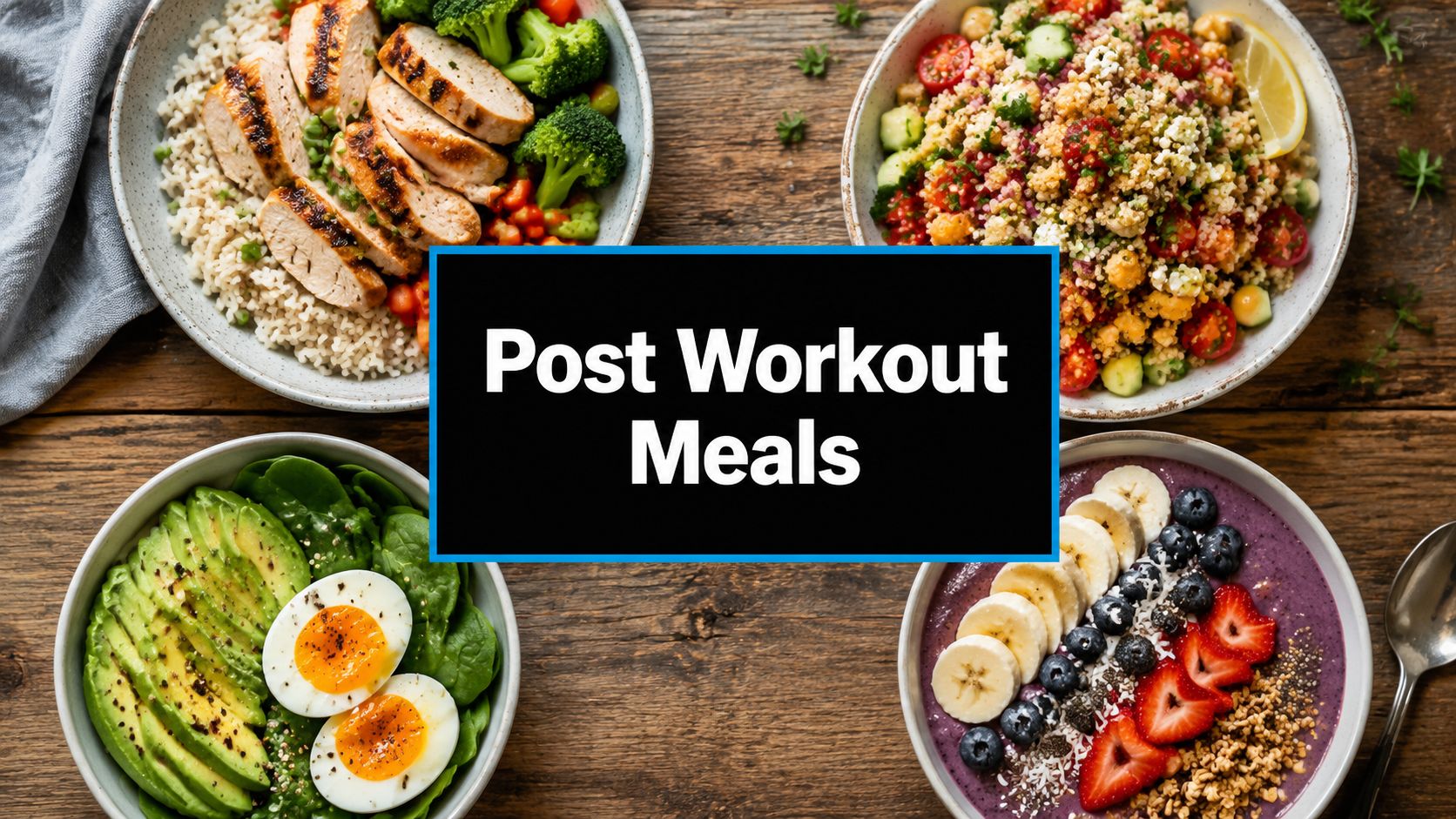
You finish a hard session, check the time, and realize the next hour is a commute, meetings, or school pickup. That is the point when recovery nutrition usually goes one of two ways. Either you grab something fast and useful, or you tell yourself you will eat later and end up under-fueled.
A good post workout meal solves a practical problem first. It needs enough protein to support muscle repair, enough carbohydrate to start replacing used energy, and a format that fits your schedule and appetite. For some people that means a shake in the car. For others it means a full plate once they get home. The right choice depends on training time, digestion, budget, and how soon the next meal will happen.
The mistake I see most often is not a lack of nutrition knowledge. It is poor meal fit. A lifter with no fridge access at work needs different options than someone training at home near a kitchen. An athlete training twice in one day usually benefits from faster carbs than a person doing a light evening session before dinner. Context matters.
If you coach clients or run a facility, nutrition coaching also becomes practical retention work in this context. There's a good example of that in this guide on boosting gym revenue with nutrition coaching.
The 10 ideas below are built as usable meal blueprints, not a generic food list. Each one includes the basic macro logic, realistic prep time, easy diet-specific swaps, and a simple way to plug it into a high-protein meal planning system if you want weekly structure and grocery planning handled ahead of time.
1. Protein Shake with Carbohydrates
This is the fastest option when you don't want to cook and you know a delayed meal will turn into no meal. A shake works especially well after early training, lunchtime lifting, or any session followed by a commute.
A practical build is protein powder, milk or water, and fruit. Banana is the easiest starting point. Berries work well if you want a lighter taste, and oats can make it more filling if you need the shake to carry you longer.
A simple blueprint that actually works
Use this meal as a fast bridge, not as an excuse to skip real food for the rest of the day.
- Protein base: Whey is easy and convenient. Plant protein works if dairy doesn't sit well.
- Carb add-on: Banana, berries, mango, or oats give the shake a recovery role instead of turning it into protein-only.
- Liquid choice: Milk makes it more filling. Water is lighter if you're training in heat or your stomach feels sensitive.
Examples that work well in real life:
- Classic gym version: Whey, banana, milk
- Dairy-free version: Plant protein, frozen berries, almond milk
- More filling version: Greek yogurt, fruit, granola, milk
- Evening version: A thicker shake with fruit if dinner is still a while away
Practical rule: If you regularly leave the gym saying you'll eat later and then don't, a shake is better than waiting for the “ideal” meal.
The main trade-off is satiety. Shakes are convenient, but they usually don't keep people full as long as solid food. If appetite rebounds hard later, add oats or pair the shake with toast, cereal, or fruit.
For macro planning, this is one of the easiest meals to standardize inside a high-protein meal plan. It also helps with grocery shopping because the ingredient list stays short and repeatable.
2. Chicken Breast with Rice and Vegetables
If you want the safest, least confusing answer to post workout eating, this is it. Chicken and rice isn't popular because it's exciting. It's popular because it's reliable.
This combination gives you lean protein, digestible carbohydrates, and enough volume to feel like you ate a real meal. It also reheats well, which matters more than people admit.

How to build it without getting bored
The structure stays the same, but the flavor profile can change all week.
- Protein choice: Grilled chicken breast is the leanest standard option. Chicken thighs work if you want more flavor.
- Carb choice: White rice is often easier to eat after hard training. Brown rice can work if you prefer a heartier meal.
- Vegetable choice: Broccoli, spinach, peppers, carrots, green beans, and zucchini all fit well.
Good combinations:
- Classic prep box: Chicken breast, white rice, broccoli
- More flavorful version: Chicken thighs, jasmine rice, sautéed peppers
- Higher-volume plate: Shredded chicken, rice, roasted carrots, spinach
What works is keeping sauces controlled and seasoning aggressive. Garlic, paprika, lemon, black pepper, herbs, and chili flakes can carry this meal. Heavy creamy sauces often make it less appetizing immediately after training and can push it from recovery meal into nap meal.
This is one of the easiest meals to batch cook for a gain phase, especially if you want repeatable lunches. If that's your focus, a bulking meal plan can make the portioning and shopping less manual.
3. Greek Yogurt Parfait with Granola and Berries
You finish an early session, need to be at your desk in 30 minutes, and the idea of reheated chicken sounds terrible. This is the kind of post workout meal that keeps people consistent because it is cold, fast, and easy to portion without guessing.
What makes it useful is the balance. Greek yogurt covers the protein side, while granola and berries add carbs that make the meal feel like recovery food instead of a snack you will be hungry after an hour later.
Meal blueprint
A solid base looks like this:
- Plain Greek yogurt: 1 to 1.5 cups
- Granola: 1/3 to 1/2 cup
- Berries: 3/4 to 1 cup
- Optional add-ons: honey, chia seeds, pumpkin seeds, sliced banana
That usually lands in a practical recovery range of roughly 25 to 35 grams of protein, 30 to 50 grams of carbs, and 5 to 12 grams of fat, depending on the granola and add-ons. Prep time is about 3 minutes if ingredients are ready.
The trade-off is easy to miss. This meal can swing from well-built to underpowered fast. A single-serve flavored yogurt with a light sprinkle of granola often looks healthy but does not give enough protein or carbs for solid recovery. On the other side, sweetened yogurt plus sugary granola plus honey can push calories up quickly without adding much extra protein.
I usually set it up one of three ways, depending on the training day:
- Lighter training day: Greek yogurt, berries, small granola serving
- Standard lift or conditioning session: Greek yogurt, full granola serving, berries
- Hard session or higher-calorie phase: Greek yogurt, granola, berries, banana, and a drizzle of honey
Texture matters more here than people expect. If you prep it ahead, keep the granola separate until you eat it. Otherwise it turns soft and the whole meal feels less satisfying.
For diet-specific swaps, use lactose-free Greek yogurt if regular dairy does not sit well, or use a high-protein soy yogurt if you need a dairy-free version. If you are experimenting with different yogurt styles, this article on avoiding goat yogurt pitfalls is useful for sorting out taste and texture before you buy a full tub.
This is also an easy one to plug into AI Meal Planner because the ingredients are simple, repeatable, and easy to batch into a weekly grocery list. Set the target macros first, then adjust granola and fruit portions instead of changing the whole meal. That keeps planning tight and saves this option for the days when convenience matters most.
4. Salmon with Sweet Potato and Asparagus
This is the premium whole-food option. It feels like dinner, not diet food, and it works well when your post workout meal is also your main evening meal.
Salmon is a strong choice when you want recovery nutrition without defaulting to chicken again. Sweet potato gives the plate substance, and asparagus keeps it from feeling heavy.
To visualize the plate, here's a good example.

Why this meal works so well at night
A lot of people train after work and need one meal to do everything. They want recovery, satiety, and something that doesn't feel like a compromise. This is that meal.
Useful combinations include:
- Grilled salmon, baked sweet potato, steamed asparagus
- Pan-seared salmon, roasted sweet potato wedges, sautéed asparagus
- Salmon baked in parchment, mashed sweet potato, lemon asparagus
The trade-off is cost and prep time. Salmon is usually pricier than eggs, chicken, or tuna, so it's not the everyday option for every budget. But if you rotate it in a couple of times a week, it adds variety and helps people stay compliant with the rest of their plan.
If salmon tastes dry, it was overcooked. That's usually the issue, not the fish itself. Keep it simple with salt, pepper, lemon, and a hot pan or short oven roast.
This kind of meal is also easy to save in a planning app for recurring dinners. Build it once, then repeat the grocery list instead of re-deciding every week.
For a quick cooking reference, this walkthrough can help:
5. Egg White Omelette with Whole Grain Toast
This is the low-cost, high-speed option that still feels like a proper plate. It's especially useful for people training at home, anyone cooking for one, or anyone who wants something hot without much cleanup.
Egg whites give you a clean protein base, and toast adds the carbohydrate side that many people forget. If you stop at eggs alone, the meal often ends up less satisfying than it should be.
How to make it better than bland gym food
The mistake here is treating the omelette like punishment. It doesn't need to be plain egg whites folded over sadness.
Use:
- Egg whites, with optional whole eggs for flavor and satiety
- Vegetables like spinach, mushrooms, onions, peppers, or tomatoes
- Whole grain or sprouted toast
- Optional fruit on the side if you need more carbohydrate
Combinations that work:
- Egg white omelette, spinach, whole grain toast
- Egg whites plus one or two whole eggs, mushrooms, tomatoes, toast
- Scrambled egg whites with peppers and onions, toast with a little jam
Add at least one ingredient for flavor and one for texture. Chives, salsa, feta, spinach, mushrooms, or toast with crunch all make this meal easier to repeat.
The trade-off is that very lean egg-white meals can leave some people hungry again too soon. If that's you, include a couple of yolks, add avocado sparingly, or pair the plate with fruit.
If you're balancing training performance with body composition goals, this kind of breakfast-style recovery meal fits well inside a 7-day plan for muscle gain and fat loss.
6. Lean Ground Turkey with Quinoa and Black Beans
This is the practical middle ground between bodybuilding meal prep and normal home cooking. It's hearty, easy to batch cook, and flexible enough to become a bowl, salad, wrap filling, or stuffed pepper mix.
Turkey gives you lean protein. Quinoa and beans add body, texture, and more staying power than a lighter recovery meal.
Best use case for this bowl
This meal works well when your next meal is far away and you need something that won't leave you scavenging for snacks an hour later.
A few strong versions:
- Ground turkey, quinoa, black beans, cilantro, lime
- Turkey taco bowl with quinoa, beans, peppers, salsa
- Turkey patties with quinoa salad and black beans
The upside is fullness and meal prep efficiency. The downside is digestion for some people. A bean-heavy meal right after very intense training doesn't work for everyone, especially if appetite is low. In that case, reduce the bean portion and keep the rest of the bowl intact.
For flavor, use dry spices generously. Cumin, garlic, onion powder, paprika, oregano, lime, and chopped herbs do a lot of work here without turning the bowl greasy.
This is also one of the better family-friendly options on the list because everyone can build their own version from the same base ingredients.
7. Chocolate Milk Recovery Drink
You finish a hard session, appetite is low, and the drive home is 30 minutes. In that situation, chocolate milk works because it is easy to drink, widely available, and gives you both protein and carbohydrates without any prep.
It is a practical recovery option, not a complete solution for every athlete.
Best use case for this drink
Chocolate milk fits best after conditioning work, team sport practice, long cardio sessions, or two-a-day training blocks where quick intake matters more than sitting down to a full meal. It also works well for lifters who struggle to eat immediately after training.
A solid starting blueprint looks like this:
- 12 to 16 ounces chocolate milk
- Approximate macros: 12 to 20 grams protein, 30 to 45 grams carbs, low to moderate fat depending on the brand
- Prep time: 0 to 2 minutes
- Best timing: immediately after training or during the trip home
If that is too light for your size or training load, add one simple upgrade:
- Banana for extra carbohydrates
- String cheese or Greek yogurt for more protein
- Dry cereal or toast if you need a larger carb hit
The trade-off is straightforward. Chocolate milk is convenient and easy to tolerate, but it usually falls short as a full recovery meal for larger athletes or anyone with several hours before the next meal. In those cases, use it as step one, then eat a proper meal later instead of treating it as the whole plan.
This is also one of the easiest entries to plug into AI Meal Planner. Set it up as a post-workout drink option, choose your preferred brand, and pair it with one add-on so the plan adjusts automatically based on whether you need a lighter recovery drink or a more complete refuel.
Diet-specific swaps are simple. Lactose-free chocolate milk works for people who do not tolerate regular milk well. A high-protein milk or filtered milk product can raise the protein total without increasing volume much. If dairy is off the table, a soy-based chocolate drink plus a separate protein source usually gets closer to the same job.
Older post-workout rules were stricter than they needed to be. As noted earlier, the useful takeaway is simpler. Get protein and carbohydrates in within a reasonable window after training, and choose the format you will consume consistently. Chocolate milk earns its place on that basis.
8. Tuna Salad on Whole Grain Bread
This is one of the best portable post workout meal ideas because it needs almost no cooking and works from a desk, gym bag cooler, or office fridge. If your schedule is chaotic, portability matters just as much as nutrition.
Tuna gives you a dependable protein base. Bread gives you structure and carbs. Vegetables make it more filling and less dry.
How to keep it light and still satisfying
A good sandwich is more about balance than stuffing in more tuna.
Build it like this:
- Tuna packed in water or oil, drained well
- Greek yogurt or a light mayo mix
- Whole grain bread
- Lettuce, tomato, cucumber, onion, spinach, or pickles
Strong versions include:
- Tuna, Greek yogurt, celery, whole grain bread
- Tuna, avocado, tomato, spinach on sprouted bread
- Tuna salad sandwich with extra cucumber and fruit on the side
The biggest practical issue is convenience versus freshness. Tuna is shelf-stable before opening, but once mixed, it's not a meal you want sitting around all day without proper chilling. Make it the night before or the morning of, then store it cold.
If texture is the reason you avoid tuna, add crunch. Celery, onion, cucumber, toasted bread, and lettuce fix most of what people dislike about bland tuna salad.
9. Cottage Cheese Bowl with Fruit and Nuts
This is a smart option when you want something high in protein without another shake. It works especially well after evening training because it's easy to assemble, easy to portion, and substantial without feeling like a full cooked dinner.
Cottage cheese also pairs well with both sweet and savory flavors, which makes it more versatile than commonly thought.
A better way to use it after training
The key is not to overload it with every healthy topping you own. Cottage cheese can go from efficient to calorie-dense fast if you pile on nuts, seeds, nut butter, granola, and dried fruit all at once.
A cleaner build:
- Cottage cheese
- Fruit such as berries, banana, pineapple, or peach
- A modest amount of nuts or seeds
- Optional cinnamon or a small drizzle of honey
Examples:
- Cottage cheese, blueberries, almonds
- Cottage cheese, banana, walnuts, cinnamon
- Cottage cheese, pineapple, pecans
Most people don't need every topping. Pick one fruit and one crunchy add-on, then stop there.
The trade-off is digestion and preference. Some people love cottage cheese cold after training. Others can't get past the texture. If that's you, Greek yogurt gives a similar role with a different mouthfeel.
For portion planning, especially if you tend to free-pour nuts, a protein intake calculator is useful when you want the bowl to fit your wider daily targets instead of becoming a random snack.
10. Smoothie Bowl with Protein Powder, Oats, and Toppings
If a shake feels too thin but a full meal feels too heavy, the smoothie bowl sits nicely in the middle. It's cold, customizable, and easier to turn into a complete meal because the toppings force you to slow down and eat it.
That said, many “healthy” bowls turn into calorie bombs. The bowl itself is rarely the problem. The toppings are.
Build the base first, then control the extras
A strong post workout bowl starts thick and simple.
Base ideas:
- Protein powder, milk, frozen banana
- Greek yogurt, frozen berries, oats
- Mango, protein powder, milk, spinach
Then choose a few toppings:
- Granola
- Sliced fruit
- Chia seeds
- Coconut flakes
- Nuts or nut butter

The best real-world versions are restrained:
- Berry protein base, granola, banana
- Mango protein base, oats, almonds
- Green smoothie base, blueberries, chia, a little granola
What doesn't work is treating toppings as decoration without accounting for them. A spoon of nut butter, a handful of granola, seeds, coconut, and extra honey can turn a recovery meal into something far heavier than intended. Keep the crunch, but cap the extras.
Post-Workout Meals: 10-Item Comparison
| Meal | 🔄 Complexity | ⚡ Prep & Resources | ⭐ Effectiveness / Quality | 📊 Expected Outcomes | 💡 Ideal Use Cases / Tips |
|---|---|---|---|---|---|
| Protein Shake with Carbohydrates | Very low, shake and consume | Minimal ingredients; portable | ⭐⭐⭐⭐, excellent for immediate recovery | Rapid glycogen restoration + muscle protein synthesis | Consume within 30–60 min post-workout; use AI planner for exact macros |
| Chicken Breast with Rice and Vegetables | Moderate, cooking required (20–30 min) | Requires kitchen, storage for meal-prep | ⭐⭐⭐⭐, high nutrient density & sustained recovery | Long-lasting satiety, full micronutrient replenishment | Meal-prep for multiple portions; best for post-long workouts or bulking |
| Greek Yogurt Parfait with Granola and Berries | Very low, assemble in minutes | Low-cost ingredients; minimal cooking | ⭐⭐⭐, good protein + probiotics | Moderate protein support, gut health, antioxidants | Quick breakfast/post-workout; choose plain yogurt and control granola portions |
| Salmon with Sweet Potato and Asparagus | Moderate, requires cooking & care | Higher-cost protein; refrigeration needed | ⭐⭐⭐⭐⭐, superior nutrient and anti-inflammatory profile | Enhanced recovery, reduced inflammation, cardiovascular benefits | Ideal for health-focused recovery days; choose sustainable salmon |
| Egg White Omelette with Whole Grain Toast | Low–Moderate, stovetop skill needed (8–10 min) | Very affordable; basic kitchen tools | ⭐⭐⭐⭐, high protein-to-calorie ratio | Fast protein delivery, good satiety when paired with toast | Budget-friendly post-workout or morning meal; add veggies for micronutrients |
| Lean Ground Turkey with Quinoa and Black Beans | Moderate, 25–35 min cooking | Moderate cost; bulk-cooking friendly | ⭐⭐⭐⭐, complete amino acid profile + fiber | Sustained energy, digestive support, balanced macros | Great for meal-prep and flexitarian diets; season well to avoid blandness |
| Chocolate Milk Recovery Drink | Very low, ready-to-drink or mix | Readily available; low prep | ⭐⭐⭐⭐, research-backed 4:1 carb:protein recovery | Rapid glycogen replenishment and rehydration | Quick post-exercise refuel; avoid if lactose intolerant or managing sugars |
| Tuna Salad on Whole Grain Bread | Very low, assemble in ~5 min | Shelf-stable canned tuna; portable | ⭐⭐⭐⭐, convenient complete protein | Immediate protein replenishment; portable energy | Ideal on-the-go recovery; prefer light tuna and Greek yogurt instead of mayo |
| Cottage Cheese Bowl with Fruit and Nuts | Very low, assemble in minutes | Low-cost; requires refrigeration | ⭐⭐⭐, excellent for evening/overnight recovery (casein) | Sustained amino acid release, high satiety | Best as evening post-workout or for weight management; portion nuts carefully |
| Smoothie Bowl with Protein Powder, Oats, and Toppings | Moderate, multiple components | Multiple ingredients; refrigeration advised | ⭐⭐⭐⭐, balanced macros, high adherence | Balanced recovery with variety of micronutrients | Prep base ahead, store toppings separately; limit toppings to control calories |
Final Thoughts
The best post workout meal ideas all follow the same basic principle. They combine protein and carbohydrates in a way you can repeat consistently. The details change based on your schedule, appetite, budget, and training style, but the foundation stays simple.
The smartest move isn't chasing the most “optimal” meal on paper. It's choosing two or three meals that fit real life and rotating them. A protein shake and fruit might be right after an early workout. Chicken and rice might work best for meal-prepped lunches. Salmon with sweet potato may fit better when your workout ends near dinner.
This is also where trade-offs matter. Liquid meals are convenient, but they often don't keep you full as long as solid food. Heavier whole-food meals are more satisfying, but they take more prep and aren't always easy to eat right after training. Dairy-based options like Greek yogurt, cottage cheese, and chocolate milk can be excellent choices, but only if they sit well with your digestion. Beans, quinoa, and high-fiber bowls are filling, but they may not feel great immediately after a hard session if your stomach is sensitive.
A lot of post workout frustration comes from choosing meals that look good online but don't match your current circumstances. After training, you need food that feels doable. If you're heading back to meetings, portable options win. If you're coming home hungry at night, a full plated meal usually works better. If your appetite disappears after training, start with something cold and easy to drink or spoon.
I also tell clients to stop overcomplicating timing. You don't need to panic if you can't eat the second you rack the last rep. What matters more is that you have a plan and follow it. Keep ingredients stocked. Prep a few defaults. Know which meal fits which type of day. That's what turns good advice into an actual routine.
If you want a practical filter, ask three questions before settling on your go-to meals:
- Can you prepare it quickly or in advance?
- Does it include a real protein source and a real carbohydrate source?
- Will you still want to eat it after a hard workout?
If the answer is yes, you're probably close. That's why simple meals keep winning. Greek yogurt parfaits, egg omelettes with toast, tuna sandwiches, turkey quinoa bowls, and smoothie bowls aren't trendy breakthroughs. They're durable solutions.
For people who want more structure, a tool like AI Meal Planner can help turn these meal ideas into a repeatable weekly system with meal scheduling, macro tracking, and grocery organization. That's useful when the actual problem isn't knowledge. It's decision fatigue.
The goal isn't to build the perfect post workout meal once. It's to make sure your next one is easy enough to repeat again tomorrow.
If you want a faster way to turn these post workout meal ideas into a weekly routine, AI Meal Planner can help you organize meals around your training, dietary preferences, and grocery needs. It creates personalized plans, calculates macros, and builds smart shopping lists so you spend less time deciding what to eat after workouts.
AI-powered nutrition
Get Your Personalized Meal Plan
AI creates the perfect meals for your goals, lifestyle, and taste.
Start Your Journej