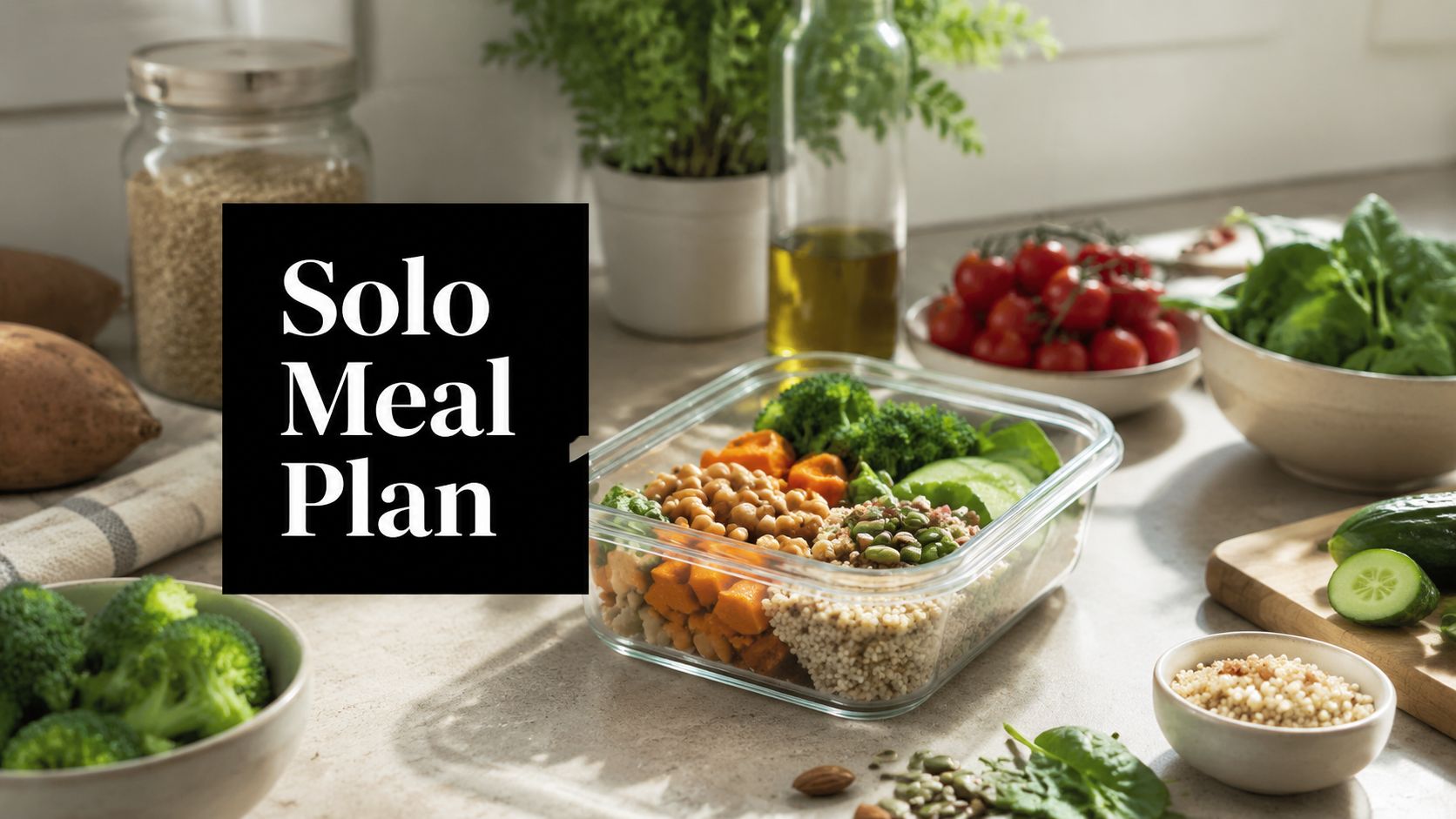
You buy groceries with good intentions, then find yourself throwing away wilted greens, forgotten leftovers, and half-used ingredients before the week ends. Meal planning for one works best when you plan three or four anchor dinners, cook at least two servings, reuse ingredients across meals, and freeze one portion instead of planning seven different dinners.
The system isn't a smaller version of family meal planning. It's a method for controlling portions, shopping from an exact list, protecting perishables, and keeping flexible backup meals available for nights when cooking feels unrealistic. Smaller households face a particular challenge because one person has fewer opportunities to use up an entire package, bunch, or recipe before quality declines.
In the United States, households with one or two people represented 46% of all households in 1970 and 64% in 2022, reflecting a long-term shift toward smaller household sizes (household-size data and related food-waste context). For solo diners, the practical response isn't more elaborate recipes. It's better ingredient architecture.
Why Traditional Meal Planning Fails for One Person
A solo cook can follow a family recipe, buy the smallest available package, and still end up with waste. By midweek, the dish may leave an inconvenient amount of food, a specialty ingredient may remain untouched, and the fresh produce intended for “healthy meals” may already be declining in quality.
Traditional meal planning assumes several people will share ingredients and finish leftovers quickly. A one-person kitchen operates differently. A large package can cost less per unit, yet the saving disappears when part of it spoils. Single-serving packaging can limit leftovers, but it may cost more, create more packaging, and leave fewer options when your schedule changes.
The waste pattern is measurable. Single-occupancy households generate 14.7% of food brought into the home as avoidable waste, compared with 11.7% for the population as a whole (WRAP household food-waste report). The figures do not mean every solo cook wastes food. They show why a plan built for larger households needs different purchasing, storage, and reuse rules for one person.
Replace recipe scaling with ingredient planning
Begin with the ingredients, not seven separate dinner ideas. Ask which foods can appear in at least two meals before their quality declines.
A bunch of herbs could season roasted vegetables, brighten a grain bowl, and finish soup. One cooked protein could serve as dinner, then become lunch with a different sauce or side. You get variety while keeping the shopping list compact.
Check each recipe against four practical tests:
- Ingredient overlap: Does it share a protein, vegetable, grain, sauce, or herb with another planned meal?
- Shelf-life fit: Can you use its perishables soon, or freeze them before quality drops?
- Portion reality: Will you finish the recipe comfortably, without eating the same meal too many times?
- Energy match: Does the preparation suit the day you have assigned to it?
Treat the kitchen as a small operating system
A workable solo plan has three controls: purchase less, portion immediately, and create a use-it-up path. Buy loose produce where practical, choose frozen ingredients when they prevent spoilage, and freeze part of a cooked batch once it has cooled. These choices trade a little planning time for fewer abandoned ingredients and more flexible meals.
For a structured resource covering meal-planning checklists and nutrition themes such as focus, energy, and hormone balance, this menopause nutrition ebook with meal planning checklists can provide prompts to adapt at home. Use its guidance as a planning aid, then set quantities according to your actual portions, storage space, and cooking schedule.
The rule is simple: don't buy food because a recipe sounds appealing. Buy it because you already know where it will go.
Building a Weekly Template Around Batch Cooking
A reliable solo week usually has fewer planned dinners than people expect. Choose three or four anchor recipes, build leftover nights around them, and leave room for a convenience meal or a social plan. Rigidly assigning seven new dinners creates unnecessary work and increases the chance that ingredients sit unused.
A workable template looks like this:
- Anchor dinner one: Cook a double portion and reserve the second serving.
- Anchor dinner two: Use at least one ingredient from the first meal.
- Leftover night one: Eat the reserved serving before preparing something new.
- Anchor dinner three: Cook another batch with one portion for the freezer.
- Leftover night two: Use the remaining planned portion or assemble a quick meal.
- Flexible meals: Keep breakfast, lunch, and one low-effort dinner adaptable.
The important detail is timing. Try to use each fresh, fragile ingredient in more than one meal within a short window. Spinach can go into a salad, then a stir-fry, then a smoothie. Roasted vegetables can fill a grain bowl, accompany eggs, and become part of a soup.

Cook once, portion before storing
Batch cooking fails when you place one large container in the refrigerator and promise yourself you'll divide it later. Later often means the food gets reheated repeatedly, forgotten, or eaten past the point of enjoyment.
Divide food while it's still easy to portion. Use containers sized for one meal, label them with the contents and date, and freeze the serving you won't realistically eat soon. Cooked quinoa, roasted sweet potatoes, and grilled chicken are useful examples because they can support different meals without requiring identical plates all week.
Practical rule: A planned leftover isn't a failed dinner. It's tomorrow's meal with the cooking already finished.
For a ready-made structure that applies this logic to plant-based meals, use the vegan meal plan as a starting point, then reduce or rearrange servings according to your schedule. The system should serve your week, not force you to follow a calendar when plans change.
Sample One-Week Plans for Balanced Keto and Vegan Diets
Dietary style changes the ingredients, not the operating model. Balanced, keto, and vegan plans can all use the same sequence: choose a few anchor meals, overlap ingredients, reserve portions, and add a use-it-up meal before shopping again.
| Approach | First anchor meal | Reuse path | Later meal |
|---|---|---|---|
| Balanced | Grilled salmon with roasted asparagus | Add salmon to quinoa with avocado | Grain bowl |
| Keto | Chicken thighs with broccoli | Reuse chicken and herbs in broth | Creamy low-carb soup |
| Vegan | Roasted chickpeas with root vegetables | Add chickpeas to stew and salad | Chickpea salad |
The balanced example creates a clear second use for salmon without requiring another protein purchase. Quinoa and avocado also work across lunches, so the plan gains variety from assembly rather than a new recipe every day.
The keto version depends on keeping the flavor profile consistent. Chicken thighs seasoned with herbs can move into soup without tasting like a leftover afterthought. Broccoli can accompany the first meal and then be folded into the soup or served alongside another portion.
Build vegan variety from components
Vegan solo planning often becomes wasteful when every recipe demands a different grain, legume, sauce, and vegetable. Roast chickpeas and root vegetables together, then give them different roles. The chickpeas can top a salad, while the vegetables can become the base of a stew with pantry beans or lentils.
Use the same garlic, spices, and dressing across meals. Tofu can be baked for one dinner, crumbled into a scramble, or added to a bowl. Frozen vegetables are especially useful when you won't consume a fresh package quickly.
For a more focused low-carbohydrate framework, the keto meal plan offers a way to organize meals around that dietary preference while keeping the same portion and leftover discipline.
The trade-off is clear. More recipe variety may feel exciting, but it also increases the number of partial ingredients. Ingredient overlap creates practical variety at a lower waste cost.
Smart Shopping List Structure and Storage Rules
Your shopping list should be built from meals, not from an optimistic tour of the grocery store. Before leaving home, check the refrigerator, pantry, and freezer. Cross off what you already own, then write quantities beside each item.
A compact solo cart can use this structure:
- Two proteins: Choose options that can serve dinner, lunch, or the freezer.
- Two or three vegetables: Prioritize one fragile fresh item and one longer-lasting or frozen option.
- One fruit: Select a quantity you can eat or freeze.
- One breakfast item: Eggs, oats, yogurt, or another dependable staple.
- One snack item: Keep it specific rather than buying several impulse options.
- One starch or grain: Rice, potatoes, quinoa, bread, or tortillas.
- One flexible convenience item: A prepared soup, frozen entrée, or another backup for low-energy nights.
The grocery list generator can help turn planned meals into an organized list, but you should still compare the result with your inventory. Automation doesn't know that the unopened rice is behind the blender unless you check.
Use portions as a planning guardrail
USDA MyPlate targets for a 2,000-calorie pattern include 6 ounces of grains, 2.5 cups of vegetables, 2 cups of fruit, 3 cups of dairy, and 5.5 ounces of protein foods (USDA MyPlate daily checklist). These are planning references, not a personalized prescription, and individual needs vary.
Translate the framework into meal components rather than shopping blindly. If your planned meals already provide vegetables through a stir-fry and soup, don't add a large salad kit just because it looks healthy. If a recipe needs a small amount of an ingredient, identify its second use before buying it.
Store food according to how soon you'll use it
Storage is part of planning, not an afterthought. Keep herbs upright in water when appropriate, use paper towels to manage moisture around berries, and freeze bread soon after purchase if you won't finish it quickly. Move cooked portions into dated containers immediately.
Loose produce often gives solo cooks better control than pre-packed bags. Frozen vegetables can also protect you from the fresh-produce deadline because you can use only what you need. The objective isn't to make every purchase minimal. It's to make every purchase finishable.
How AI Meal Planners Simplify Solo Planning
A spreadsheet can store recipes. A notes app can hold a shopping list. Neither automatically resolves the difficult parts of cooking alone, such as matching portions to your schedule, reusing an ingredient, and replacing a meal you don't want to eat.
AI meal-planning platforms reduce that administrative burden by combining preferences, dietary restrictions, goals, recipes, and shopping output in one workflow. A useful system should let you state what you eat, what you avoid, and how much effort you can manage. It should then produce a plan you can edit rather than treating the first draft as permanent.

Automation helps only when the inputs are honest
The most valuable input isn't a long list of favorite recipes. It's your real week. If you eat at the office twice, travel on one evening, or rarely cook breakfast, the plan should reflect that. Otherwise, automation just creates a polished version of an unrealistic routine.
AI can also reduce repeated decisions by generating grocery lists, organizing ingredients, calculating macros and calories where supported, and suggesting substitutions. You still need to review package sizes, pantry inventory, and the number of meals you'll eat at home.
Watch this short demonstration to see how a digital meal-planning workflow can fit into a kitchen routine.
A service such as AI nutritionist can be useful when you want planning support shaped around dietary preferences and health goals. The practical test is whether the resulting plan reduces shopping friction and makes leftovers intentional, not whether it produces the largest possible recipe collection.
Use AI as a logistics assistant. Let it handle combinations, substitutions, and list formatting, then apply human judgment to freshness, appetite, budget, and the food already in your home.
Common Mistakes That Sabotage Solo Meal Plans
The most expensive assumption is that a larger package is automatically a better deal. It isn't a saving if you can't finish it. Family-size chicken, oversized salad bags, and bulk herbs often create the exact surplus that solo planning should prevent.
Another mistake is treating Sunday preparation as a test of discipline. Elaborate cooking sessions can work for some people, but they often collapse when the workweek becomes demanding. A smaller batch, one frozen portion, and a dependable convenience meal are more useful than a grand plan you abandon after the first busy evening.
Five failure points to remove
- Buying without an inventory check: Duplicate sauces, grains, spices, and frozen foods crowd the kitchen while the items that need attention spoil.
- Planning every meal too tightly: Leave space for social plans, takeout, appetite changes, and nights when you need the easiest option.
- Ignoring vegetables until shopping day: Put produce into the recipe architecture first, then choose fresh or frozen forms based on how quickly you'll use them.
- Cooking one large batch without dividing it: Portion immediately so the freezer and refrigerator each receive food you can identify and use.
- Confusing variety with novelty: Change the format of shared ingredients. Turn cooked vegetables into a bowl, soup, omelet, or side instead of buying an entirely new set of ingredients.
Keep a standing list of five backup meals that require little effort. These might rely on eggs, frozen vegetables, canned beans, bread, rice, or a prepared item you enjoy. The list protects the plan from low-energy evenings without sending you to the store for a new collection of perishables.
A simple plan that gets cooked beats an ambitious plan that becomes refrigerator waste.
Frozen vegetables can be especially practical because you can use a portion and return the rest to storage. Fresh produce still has a place, particularly when you plan its sequence, but freshness isn't a virtue if the quantity exceeds your eating window.
Review the plan at the end of the week. Which item was still untouched? Which meal felt too repetitive? Which backup saved you from ordering food? Adjust the next list using those observations. Consistent meal planning for one comes from making the system easier to repeat, not from following an ideal menu perfectly.
AI Meal Planner creates personalized weekly menus, recipes, calculated macros and calories, and organized grocery lists based on your goals, diet preferences, and restrictions. It also supports meal swaps and leftover planning, so visit AI Meal Planner to build a solo plan that buys only what your week can realistically use.
Frequently Asked Questions
How many dinners should one person plan each week?
Plan three or four anchor dinners, then include deliberate leftover nights and flexible meals. This gives you structure without requiring a separate recipe for every evening.
Should I cook two servings or one?
Cook at least two servings when the meal stores well. Eat one portion soon, then refrigerate or freeze the other immediately so it becomes a planned future meal.
How can I stop fresh produce from spoiling?
Buy smaller or loose quantities, choose frozen options for ingredients you use slowly, and assign each perishable item to more than one upcoming meal. Use fragile produce earlier in the week.
Is meal planning for one cheaper than eating spontaneously?
It can reduce spending by limiting impulse purchases, restaurant decisions, and food that goes unused. The savings depend on buying quantities that match your actual meals and consuming what you purchase.
What should I do with awkward partial ingredients?
Give each partial ingredient a second role before you buy it. Leftover herbs can flavor soup or eggs, cooked grains can become bowls or salads, and small vegetable amounts can go into stir-fries, omelets, or stock.
Do I need to meal prep every Sunday?
No. Batch cooking can help, but a short planning session, one or two prepared components, and a few reliable meals may fit better than a large preparation block. Choose the level of preparation you can repeat.
Can AI plan meals for dietary restrictions?
AI meal-planning tools can organize menus around stated preferences, diet types, allergies, and goals, but you should still review ingredients and nutrition guidance carefully, especially when managing a medical condition.
AI-powered nutrition
Get Your Personalized Meal Plan
AI creates the perfect meals for your goals, lifestyle, and taste.
Start Your Journej