How do I start meal planning for a busy family?
The best way to start meal planning is to dedicate 30-60 minutes once a week to the process. First, audit your pantry and fridge for items to use up. Then, create a list of 10-15 favorite family meals and use theme nights (like Taco Tuesday) to structure your weekly menu and build a focused grocery list.
Let's be real: the daily grind of figuring out "what's for dinner?" is a massive source of stress. Between work, school runs, and after-school activities, the evening rush can feel less like family time and more like a frantic scramble that ends with takeout… again.
Meal planning is the system that gets you out of that cycle. It’s not about becoming a gourmet chef overnight. It's about investing a small block of time once a week to save you hours of decision-making and stress on those chaotic weeknights.
Why is a meal plan so effective?
A solid meal planning system is more than just a list of recipes; it’s a framework that brings calm and predictability back to your kitchen. It’s the difference between a dreaded chore and a moment to connect with your family over a good meal.
Think of it this way: you’re front-loading the mental effort. Instead of making dozens of small, stressful decisions every single day, you make a handful of organized ones once a week.
By taking a little time to plan, you completely change the tone of your week. The goal isn't perfection; it's about making your life easier and turning dinnertime back into something you can actually enjoy.
What are the main benefits of planning meals?
Once you get a system going, you'll notice the benefits ripple through your entire household. It's not just about what's on the table.
- You'll Save Real Money: No more impulse buys or last-minute trips to the store for that one missing ingredient. A planned list keeps you focused and on budget.
- Less Food Goes to Waste: When you plan meals around what you already have and buy only what you need, you stop finding science experiments in the back of your fridge.
- Healthier Habits Stick: When a healthy meal is already planned and the ingredients are waiting, you’re far less likely to reach for fast food after a long day.
- You Get Your Evenings Back: With the "what's for dinner" question already answered, you can spend less time scrambling and more time actually talking to your family.
How can I make a meal plan that works for my family?
The best meal plan is one that’s built for your real life—your schedule, your kids' picky tastes, your budget. Families who get into a groove with meal planning often slash their weekly food costs by up to 30%, simply because a focused grocery list eliminates all those extra store runs and impulse buys.
And you don't have to do it all with a pen and paper. Modern tools like the AI Meal Planner can do the heavy lifting for you. You can plug in your family’s preferences, dietary needs, and even what you have in the fridge, and it will generate a week’s worth of meals with a perfectly sorted shopping list. It's a game-changer for busy parents. You can learn more about how smart planning impacts your budget over at The Culinary Collective.
This guide will walk you through a practical framework you can tweak and make your own, helping you build a system that feels sustainable, not stressful.
How can I build a weekly meal planning routine?
Let's be honest: the idea of a "sustainable meal planning system" can sound like it will take over your entire weekend. But it doesn't have to. The secret is creating a simple, repeatable routine—a quick, low-effort habit that sets your whole week up for success. And it all starts with what you already own.
Before you even think about new recipes, do a quick pantry and fridge audit. Seriously, just spend 10-15 minutes checking what needs to be used up. That wilting spinach, the leftover chicken from two nights ago, or that half-empty jar of pasta sauce? This is your starting point. It's a simple step that immediately prevents food waste and ensures you're building your menu around ingredients you've already paid for.
Once you know what you've got, it's time to build a core list of family favorites. This isn't about reinventing the wheel every week. It's about having a reliable rotation of meals you know everyone will actually eat.
How do I create a list of family favorites?
Get the family involved and brainstorm 10-15 go-to meals that are generally a hit. Think easy, beloved, and picky-eater-approved.
Your list might look something like this:
- Taco Night: Ground beef, shredded chicken, or black beans with all the fixings.
- Spaghetti and Meatballs: A classic for a reason. Use pre-made sauce on busy nights, no judgment.
- Sheet Pan Sausage and Veggies: Minimal cleanup, and you can use whatever veggies you have on hand.
- DIY Pizza Night: Store-bought dough or even naan bread makes this a super fast and fun activity.
- Breakfast for Dinner: Who doesn't love scrambled eggs, pancakes, or bacon after a long day?
This list is your foundation. When you're short on time or inspiration, just pull a proven winner from this list and eliminate that dreaded decision fatigue.
How should I structure a weekly menu?
With your favorites list and pantry audit in hand, you can start building the actual menu. The easiest way I’ve found to add structure without getting bored is by using theme nights. Assigning a theme to each day simplifies the choices and, honestly, makes mealtime a little more fun.
This simple flow from planning to saving money and achieving a calmer household is the ultimate goal.
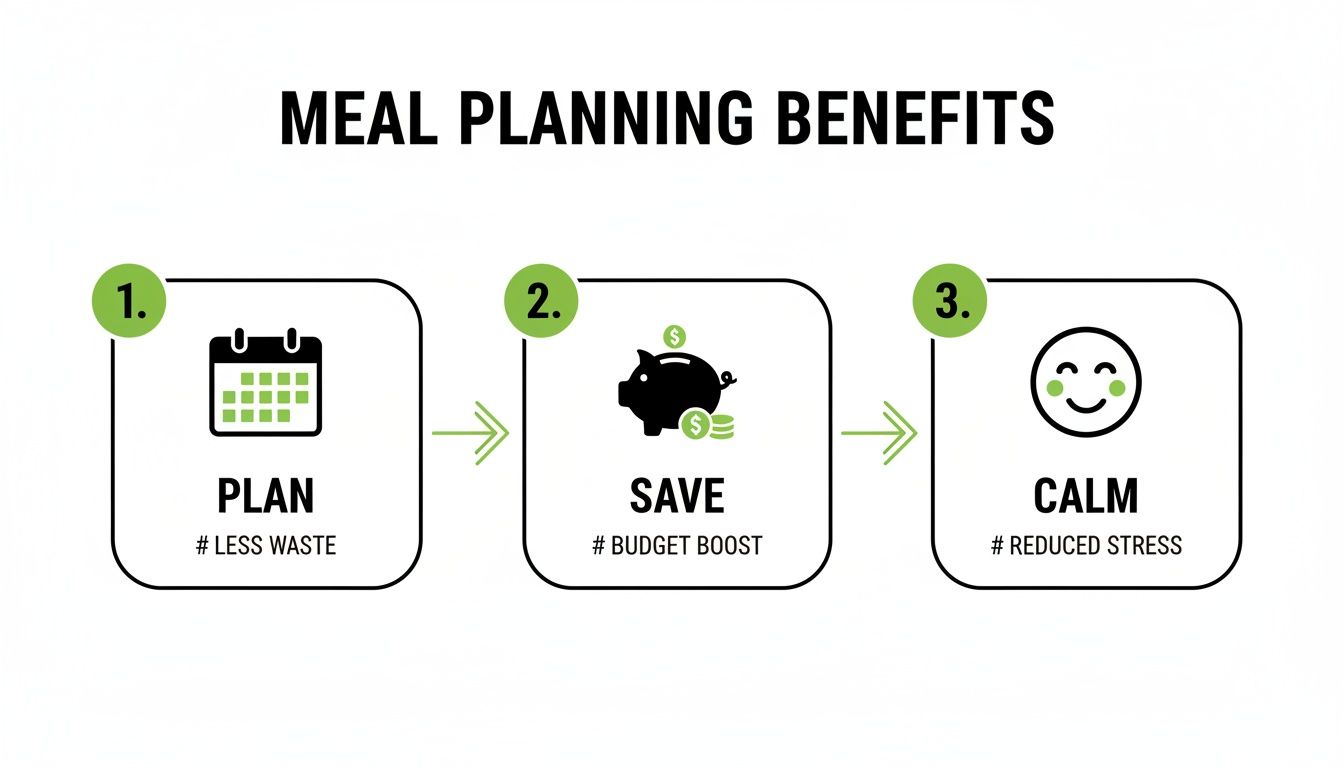
The process is clear: dedicating a little time upfront directly leads to financial savings and a whole lot less daily stress.
Here’s a sample weekly theme structure that works for tons of families:
- Monday: Meatless Monday (e.g., Black Bean Burgers)
- Tuesday: Taco Tuesday (using ground turkey this week)
- Wednesday: Pasta Night (e.g., Spaghetti Bolognese)
- Thursday: Leftovers or "Use-It-Up" Night (get creative!)
- Friday: Pizza Night (homemade or takeout)
- Saturday: Slow Cooker Saturday (e.g., Pulled Pork)
- Sunday: Family Choice (let a kid pick from the favorites list)
The key is consistency. When your family knows what to expect, the "what's for dinner?" questions fade away, and a predictable rhythm takes over.
This table shows how a simple themed plan can look in practice, complete with ideas for using leftovers to make the next day even easier.
Sample One-Week Themed Meal Plan for a Busy Family
| Day of the Week | Dinner Theme | Meal Idea | Leftover Strategy |
|---|---|---|---|
| Monday | Meatless Monday | Black Bean & Corn Quesadillas | Use extra filling for a taco salad lunch the next day. |
| Tuesday | Taco Tuesday | Ground Turkey Tacos | Leftover taco meat becomes a topping for baked potatoes. |
| Wednesday | Pasta Night | Spaghetti and Meatballs | Turn leftover spaghetti into a baked pasta casserole. |
| Thursday | "Use-It-Up" Night | Fridge-Clean-Out Frittata | A perfect way to use any remaining veggies and meats. |
| Friday | Pizza Night | Homemade Naan Pizzas | Extra toppings can be used in the next morning's omelets. |
| Saturday | Slow Cooker Saturday | Pulled Pork Sandwiches | Use leftover pork for nachos or stuffed sweet potatoes. |
| Sunday | Family Choice | Sheet Pan Chicken & Veggies | Shred leftover chicken for wraps or salads during the week. |
This approach not only plans your dinners but also gives you a head start on lunches, saving even more time and money.
Finally, turn that weekly menu into a hyper-organized shopping list. Group items by store section—produce, dairy, meat, pantry staples—to make your trip as fast as possible. A well-organized list keeps you from wandering the aisles, saving both time and money on impulse buys.
For a more automated approach, you could use a smart grocery list generator that organizes the items for you. This simple, repeatable routine is the engine that turns meal planning from a chore into a sustainable, sanity-saving habit.
What are some smart meal prep strategies that save hours?
A great meal plan is only half the battle. The real magic—the thing that actually saves your sanity on a frantic Tuesday night—happens when you turn that plan into prepped, ready-to-go components.
Meal prep is the bridge between your organized list and a stress-free weeknight dinner. It’s the single most effective strategy for making sure your meal plan actually works when life inevitably gets chaotic.
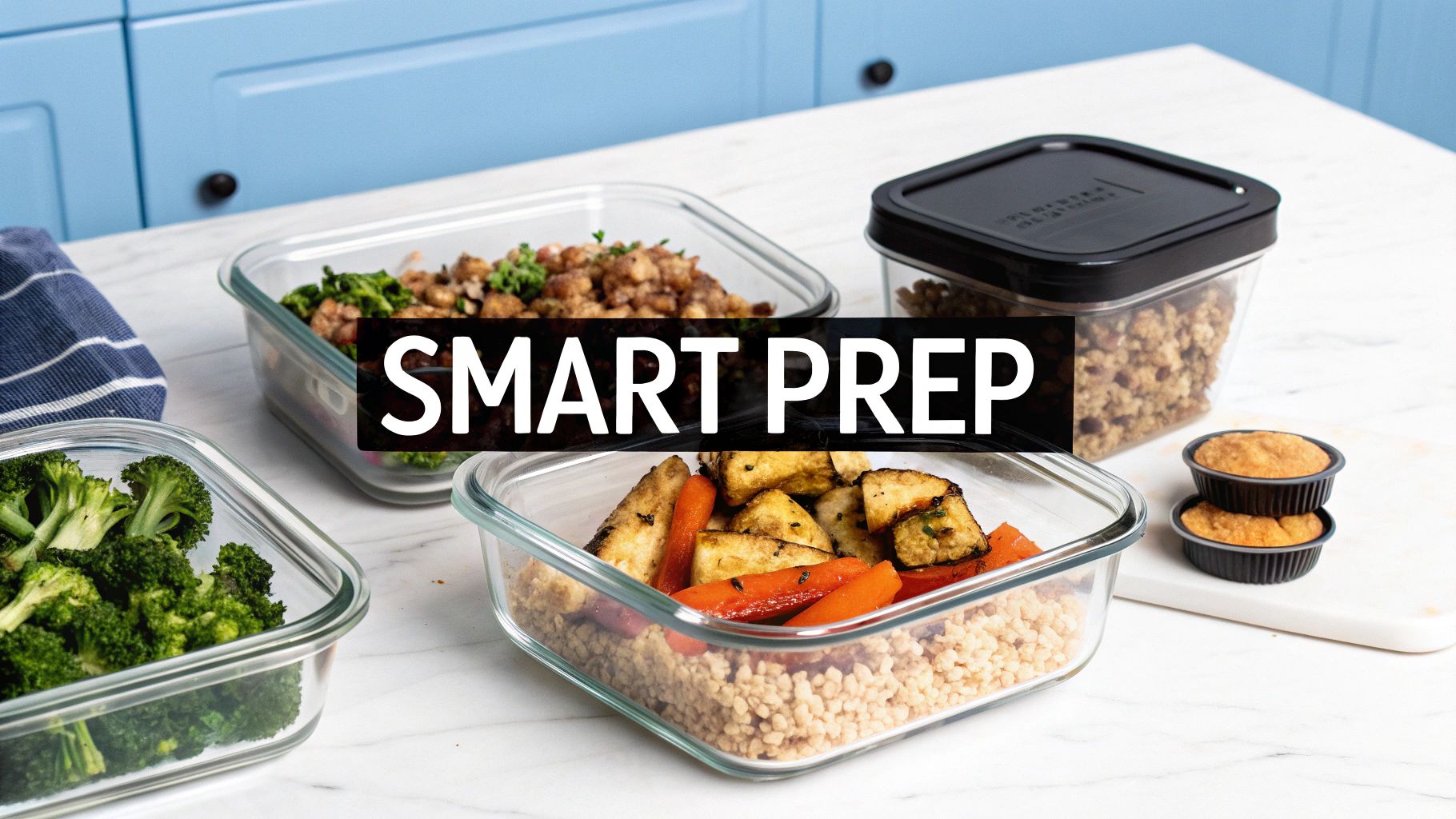
This doesn’t mean you need to spend your entire Sunday cooking five different, complicated meals. Smart meal prep is all about efficiency. The goal is to prepare ingredients that can be used across multiple dishes to drastically cut down on daily cooking time.
How can I prep components instead of full meals?
Instead of cooking full, finished meals, I want you to shift your focus to preparing the individual building blocks. This approach, known as component prep, gives you incredible flexibility while still saving a massive amount of time during the week.
When you get home from work, cooking becomes a simple assembly job rather than a full-blown production.
Here’s what component prep looks like in my kitchen:
- Wash and Chop Vegetables: I’ll dice a few onions, slice up bell peppers, and chop a head of broccoli. Stored in airtight containers, they’re ready to be tossed into stir-fries, salads, or sheet pan dinners at a moment's notice.
- Cook Grains: A big batch of quinoa, brown rice, or pasta gets cooked and stored. This becomes the base for a grain bowl, a quick side dish, or gets added to soups.
- Marinate Proteins: Chicken, beef, or tofu goes into a freezer bag with a simple marinade. It tenderizes and soaks up flavor, completely ready to be cooked on a busy night.
- Mix Sauces and Dressings: I’ll whisk together a vinaigrette for salads or a simple stir-fry sauce. Homemade versions are so much healthier and tastier than most store-bought options.
This method is incredibly effective. It’s why the global meal kit market was valued at USD 16.2 billion in 2023, driven largely by dual-income families needing to save time. In fact, 14% of online food shoppers in 2023 opted for these kits just to get fresh, pre-chopped ingredients delivered. If you want to dig deeper, MarkNtel Advisors has some fascinating insights on how families are saving time in the kitchen.
How do I use leftovers effectively?
Another cornerstone of efficient meal prep is embracing "double-duty" recipes. The strategy is simple: whenever you cook, make more than you need for just one meal. Leftovers don't have to be boring; with a little creativity, they can become an entirely new dish.
The motto in our house is 'cook once, eat twice.' I always make large batches to guarantee leftovers for lunch or dinner the next day, which is a total lifesaver.
For instance, a roasted chicken on Sunday can be brilliantly repurposed throughout the week. The leftover meat can be shredded for tacos on Tuesday, turned into chicken salad for Wednesday's lunch, or tossed into a quick soup. A big batch of chili can become a topping for baked potatoes or nachos.
This not only saves you cooking time but also stretches your grocery budget way further. If you're often staring at a fridge full of odds and ends, you might find our guide on how to create a meal from your fridge ingredients super helpful.
Which kitchen tools help automate cooking?
Your kitchen appliances are your best friends in meal prep. A slow cooker or an Instant Pot can cook a meal for you while you're busy with other things, making them perfect tools for batch cooking.
Use one to make a huge quantity of shredded chicken, pulled pork, soups, or stews with almost zero hands-on effort. Set it up on a Sunday afternoon, and by the evening, you’ll have proteins and meals ready for the entire week.
How do I adapt a meal plan for picky eaters?
Nothing unravels a great meal plan faster than the dreaded chorus of, “Ew, I don’t like that!” Catering to a table of different tastes, especially when kids are involved, can feel like an impossible puzzle. But the answer isn't to resign yourself to being a short-order cook, making three different dinners every night.
The real secret is to create one core meal that everyone can easily tweak to their own liking. This simple shift keeps dinnertime from becoming a battleground and ensures all your planning efforts don't go to waste.
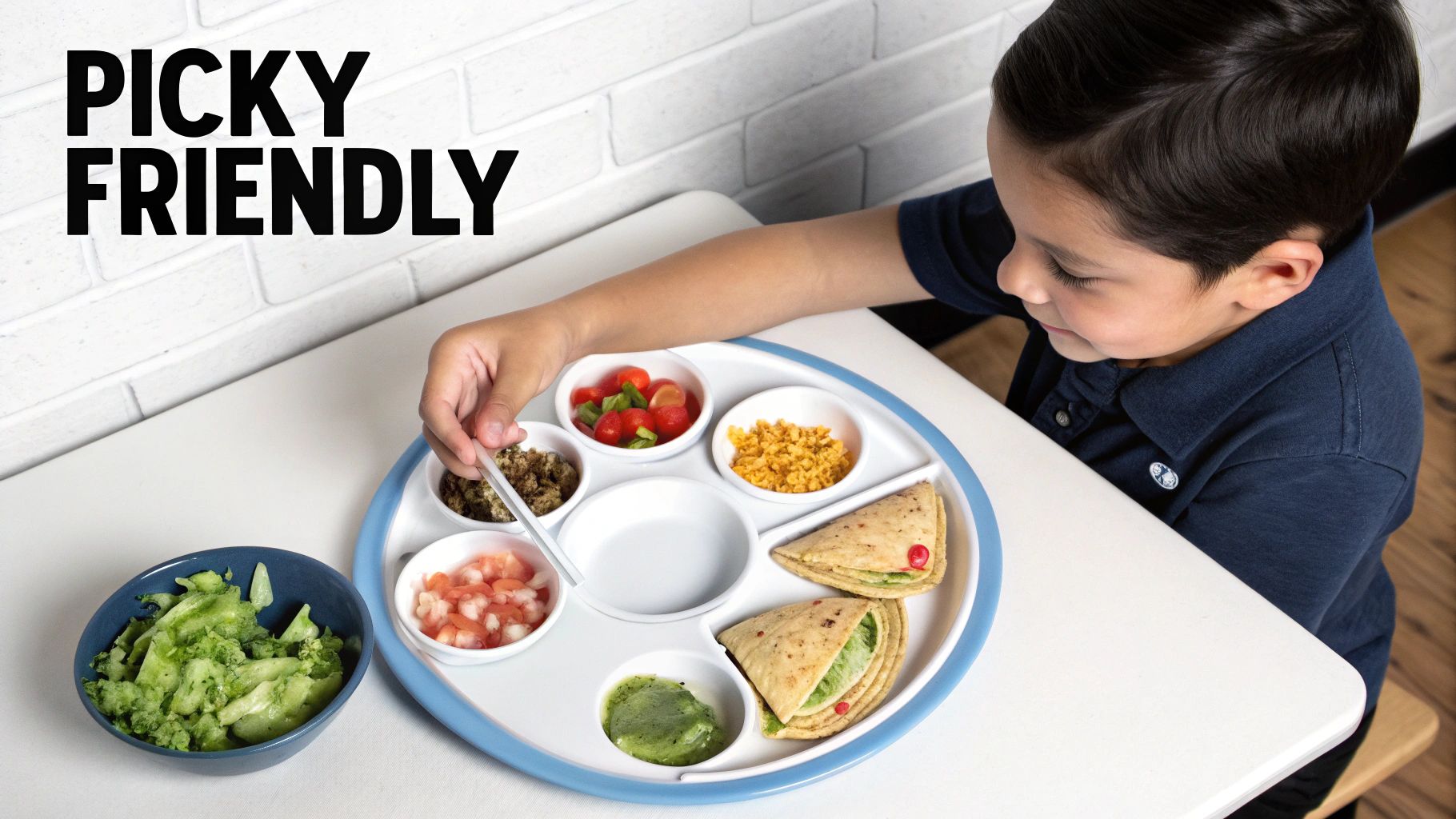
It’s all about thinking in terms of components, not just finished dishes. Trust me, this perspective changes everything.
What is a deconstructed meal?
By far, the most effective strategy I've found for navigating picky eating is the deconstructed meal. Instead of putting a fully assembled dish on the table, you serve all the parts separately. Then, you let each family member build their own plate. This gives kids a huge sense of control and autonomy over what they’re eating, which makes them far more likely to actually eat it.
This method works beautifully for so many family favorites:
- Taco Night: Set out bowls of ground meat, shredded cheese, lettuce, tomatoes, beans, and salsa. Everyone can build their own tacos, nachos, or even a taco salad.
- Pasta Bowls: Offer the cooked pasta, a simple tomato sauce, meatballs or grilled chicken, steamed broccoli, and parmesan cheese all in separate dishes.
- Power Bowls: Lay out a base like quinoa or rice, a protein like shredded chicken, and a bunch of toppings—think roasted sweet potatoes, black beans, and avocado.
This strategy is all about empowerment. When kids feel like the boss of their own plate, it dramatically reduces mealtime conflict and encourages them to try new combinations without any pressure.
How can I get kids involved in planning?
Another game-changer is giving your kids a voice in the meal planning process itself. When they have some say in what's for dinner, they feel a sense of ownership and are way more invested in the meal.
Try letting them choose one or two meals for the week from a pre-approved list of family favorites. You can also get them involved in age-appropriate prep tasks, like washing vegetables or stirring a sauce. The more they participate, the more likely they are to eat.
For families dealing with specific allergies or dietary needs, simple swaps are your best friend. Most recipes can be easily adapted. You can use gluten-free pasta for one person or offer a plant-based protein alongside the main one. If you're trying to figure out how certain foods impact your family's well-being, our guide on choosing foods by symptom can be a helpful resource. The goal is always one unified meal, where a few small tweaks make it work for everyone.
How can I use technology to automate my meal plan?
Let's be honest, trying to juggle a week of meals using scattered notebooks, messy spreadsheets, or just your own memory can feel just as chaotic as having no plan at all. This is where technology becomes your most powerful ally in the kitchen. Modern tools, especially the AI-powered ones, are built to tackle the most draining parts of meal planning head-on.
These smart systems can whip up a personalized weekly menu in seconds, tailored to your family's specific needs. You just tell it your goals, food preferences, allergies, and how many mouths you're feeding. The tech handles the rest, creating a balanced plan that feels like it was designed just for you.
How can AI build a personalized meal plan?
An AI meal planner does so much more than just spit out recipes. Think of it as your personal nutritionist and expert organizer all rolled into one, taking on the mental load so you don't have to. The best part? It actually learns your tastes over time, getting smarter with every meal you log or swap.
Here’s a glimpse of what these tools can handle automatically:
- Generate Genuinely Personalized Plans: Get a full week of breakfast, lunch, and dinner ideas built around goals like weight loss, muscle gain, or just getting the family to eat healthier.
- Track Nutrition Without the Guesswork: Stop wondering about calories or macros. Every meal comes with detailed nutritional information, making it simple to stay on track. For a deeper dive, you can even analyze your own recipes with a recipe nutrition calculator.
- Swap Meals in a Single Click: Not feeling a suggested meal? One click and you've got a new option that still fits your dietary profile perfectly. No more recipe boredom.
This kind of automation is becoming a lifeline for busy families. In-home eating is still popular, and with 90% of consumers noting rising food prices, pre-planning is the best defense against waste and budget blowouts. This need for convenient, economical options is fueling a market expected to grow from $6.74 billion to $14.42 billion by 2034. You can find more insights on these trends over at AHDB.
How do smart grocery lists save time?
One of the biggest time-savers is the automated grocery list. As soon as your meal plan is locked in, the system instantly generates a complete, organized list of every single ingredient you'll need for the week.
An AI-generated grocery list is a total game-changer. It’s smart—grouping items by aisle, planning for leftover usage to slash food waste, and getting you in and out of the store in record time.
This feature alone can transform your weekly shopping trip from a chaotic scavenger hunt into a quick, focused mission. Using a tool like the AI Meal Planner gives you back your weekends, cuts down on spoiled food, and makes sure your family enjoys delicious, balanced meals without any of the usual stress. It’s the ultimate shortcut to a calmer, more organized week.
Questions about Meal Planning for Busy Families
How far out should I plan meals?
For most busy families, planning for one week at a time is the ideal timeframe. This allows for flexibility while still reducing daily decision-making and limiting you to one main grocery trip.
What if we get sick of eating the same things?
Create a master list of 15-20 family-approved meals to form a core rotation. Then, commit to trying just one new recipe every week or two to introduce variety slowly without overwhelming everyone.
How do I stick to the plan when I'm too tired to cook?
Always build one or two "backup meals" into your weekly plan. These should be zero-effort options like a frozen pizza or pasta with jarred sauce, ensuring you have an easy out on exhausting days.
Can meal planning really save that much money?
Yes, it can significantly reduce food spending by up to 30%. A detailed grocery list eliminates impulse buys and multiple store trips, while planning meals around existing ingredients cuts down on food waste.
What's the best day to plan and shop?
Many families find it effective to plan meals on Saturday and do their grocery shopping on Sunday. This schedule allows for thoughtful planning and preps you for a smooth start to the week.
What is the easiest meal planning method?
Using theme nights is one of the easiest methods for busy families. Assigning a category to each night (e.g., Meatless Monday, Taco Tuesday) simplifies choices and creates a predictable routine.
How do I plan meals with a tight budget?
Start by checking your pantry, fridge, and freezer to build meals around ingredients you already own. Focus on budget-friendly recipes that use affordable proteins like beans and lentils, and buy produce that is in season.
Ready to stop guessing and start planning? Let AI Meal Planner create your perfect family meal plan in seconds. Get started with AI Meal Planner today and reclaim your weeknights.
AI-powered nutrition
Get Your Personalized Meal Plan
AI creates the perfect meals for your goals, lifestyle, and taste.
Start Your Journej