You've just been diagnosed with diabetes, and suddenly every meal can feel like a test. A safe meal plan for diabetics uses consistent carbohydrates, regular meal timing, and the plate method, rather than banning every food you enjoy. A practical starting point is 45 to 60 grams of carbohydrate per meal, with portions and medication timing reviewed by your healthcare professional.
The aim isn't to follow an exotic diet. It's to make meals predictable enough that you can notice how food, activity, medication, sleep, and stress affect your blood glucose. The guide below combines a seven-day menu with approximate macros, adaptable food swaps, spacing ideas, hypoglycemia safety information, and a planning workflow you can repeat.
What a Safe Meal Plan for Diabetics Actually Looks Like
A new diagnosis doesn't mean you need completely unfamiliar food. It means you need a structure that makes carbohydrate portions, meal timing, and food quality easier to manage. Clinical guidance describes diabetes meal planning as individualized, with possible macronutrient distributions of about 45%–60% carbohydrate, 15%–20% protein, and 20%–35% fat, rather than one universal formula. (clinical nutrition guidance)
The three rules that create predictability
First, keep carbohydrate portions consistent. Many meal plans begin with roughly 45–60 grams of carbohydrate at each meal, although the right amount depends on your medication, glucose pattern, body size, activity, and clinical goals. An Alberta Health Services handout gives 45–60 grams per meal as a commonly used adult target. (Alberta Health Services carbohydrate guidance)
Second, use regular timing. Skipping breakfast, waiting most of the day to eat, and then having a large dinner can make glucose management harder. Public guidance discusses regular meal timing and spacing, though recommendations vary by person and source. The safest approach is to coordinate your schedule with your diabetes team, especially if you use insulin or medication that can cause low blood glucose. (CDC diabetes meal-planning guidance)
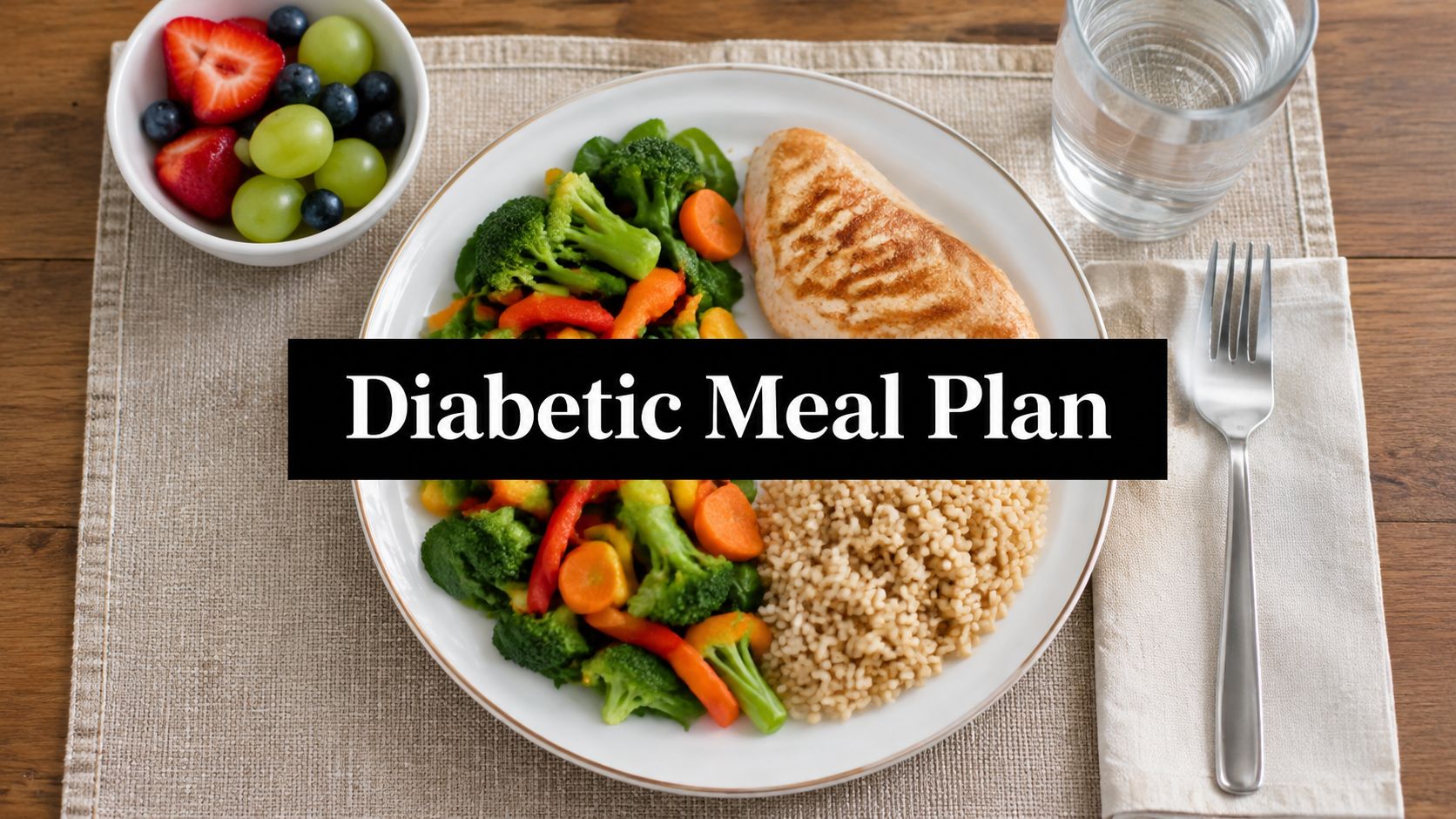
Third, portion the plate visually. Use half the plate for non-starchy vegetables, one quarter for lean protein, and one quarter for a quality carbohydrate. The plate method gives you a practical balance without requiring you to weigh every leaf of spinach or calculate every ingredient at the table.

Practical rule: Keep the meal pattern steady first. Fine-tune individual foods after you've observed your glucose response and discussed the pattern with your care team.
For a ready-made starting framework, compare this balanced diabetic meal plan. If managing diabetes at home becomes difficult because of illness, mobility, or access to appointments, house call diabetes services may provide another form of clinical support.
The Plate Method and How It Controls Blood Glucose
The American Diabetes Association's plate method uses a 9-inch plate divided into three parts: half non-starchy vegetables, one quarter carbohydrate foods, and one quarter lean protein. Water or another zero-calorie drink can accompany the meal. (American Diabetes Association plate method)
Start with the largest section. Fill it with broccoli, spinach, peppers, tomatoes, zucchini, mushrooms, or a similar non-starchy vegetable. These foods add volume and fiber without making the meal carbohydrate-heavy. You can roast zucchini and peppers, steam broccoli, or toss raw spinach and tomatoes into a salad.
What belongs in each section
The protein quarter should be about the size of a deck of cards. Choose chicken, fish, tofu, eggs, or legumes, and use a portion that fits your personal plan. Protein foods can make a meal more filling and help you pair carbohydrates with a slower-digesting component. For more detail on protein targets and portion guidance, use a resource that explains how portions fit into a broader meal pattern.
The final quarter holds the carbohydrate food. Practical choices include brown rice, quinoa, sweet potato, beans, or whole-grain pasta. A smaller serving may provide around 15–30 grams of carbohydrate, but the exact amount depends on the food and portion, so check labels or a trusted nutrition database when precision matters.
A meal with one carbohydrate quarter might still fall short of your personal meal target. You could add a small piece of fruit, plain dairy, or another measured carbohydrate food if your plan allows it. Avoid adding several carbohydrate foods by habit, such as rice plus bread plus a sweet drink, without counting the combined amount.

The visual method often works better than weighing every ingredient because it travels well. You can use it at home, in a cafeteria, or at a restaurant. You'll still need labels, measuring cups, or a dietitian's guidance when you're matching insulin or a specific medication plan, but the plate makes the first decision simple. A searchable diabetes-friendly food guide can help you collect suitable ingredients before you shop.
Here's a short visual explanation of the same portion structure:
A Seven-Day Menu With Macros You Can Follow
The menu below shows what balanced meals can look like in practice. The macro figures are approximate planning values, not prescriptions. Your portions may need adjustment for medication, glucose readings, appetite, activity, kidney health, allergies, and personal energy needs.
The menu's daily pattern is designed around roughly 145–160 grams of carbohydrate, 90–110 grams of protein, and 60–75 grams of fat, within an 1,800–2,000 calorie target. Those figures should be individualized with a qualified clinician. A calculator such as this calorie and macro calculator can organize estimates, while sustainable weight loss with macros provides additional context for macro-based planning.
Seven-Day Diabetic Menu With Macros
| Day | Breakfast (C/P/F g) | Lunch (C/P/F g) | Dinner (C/P/F g) | Snack (C/P/F g) | Daily Total |
|---|---|---|---|---|---|
| 1 | Steel-cut oats, berries, walnuts, 40/12/10 | Grilled chicken salad, chickpeas, vinaigrette, 45/35/15 | Baked salmon, quinoa, roasted broccoli, 45/35/20 | Greek yogurt with cinnamon, 15/12/4 | 145/94/49 |
| 2 | Greek yogurt, berries, chia, 35/22/10 | Turkey and whole-grain wrap with salad, 45/30/14 | Tofu and vegetable stir-fry with brown rice, 50/28/18 | Apple with peanut butter, 20/8/9 | 150/88/51 |
| 3 | Two eggs, whole-grain toast, tomatoes, 40/24/14 | Lentil and spinach bowl with quinoa, 50/25/15 | Turkey meatballs, zucchini, whole-grain pasta, 45/35/18 | Cottage cheese and cucumber, 15/14/4 | 150/98/51 |
| 4 | Protein oats with unsweetened milk and berries, 40/25/10 | Mexican chicken bowl with beans, vegetables, and measured rice, 50/35/15 | White fish, sweet potato, green beans, 45/34/17 | Hummus with carrots, 15/5/7 | 150/99/49 |
| 5 | Tofu scramble, one slice whole-grain toast, 35/24/14 | Tuna lettuce wraps, chickpeas, and vegetables, 45/32/16 | Lean beef, peppers, and quinoa, 50/35/20 | Berries with plain yogurt, 15/12/4 | 145/103/54 |
| 6 | Vegetable omelet, oats, and cinnamon, 40/24/16 | Mediterranean lentil salad with feta, 50/25/18 | Chicken, cauliflower, and measured brown rice, 45/38/17 | Pear with almonds, 20/6/10 | 155/93/61 |
| 7 | Greek yogurt, walnuts, berries, 35/22/14 | Black bean and quinoa bowl with avocado, 50/22/20 | Baked cod, whole-grain pasta, and salad, 45/36/16 | Cheese with whole-grain crackers, 15/10/7 | 145/90/57 |
Drink water regularly. Coffee without sugar can fit into many meal plans, but creamers and flavored additions can contribute carbohydrate or fat. Alcohol deserves extra caution because it can interact with medication and affect glucose patterns, so ask your healthcare professional how it fits your treatment plan.
Smart Swaps for Vegetarian, Gluten-Free, and Low-Sodium Needs
A restriction-friendly menu works best when you replace the role of an ingredient, not just its name. Chicken supplies protein, rice supplies carbohydrate, and soy sauce supplies salty flavor. A useful swap preserves that function as closely as possible.
The figures below are approximate changes for the Day 3 menu, and they're intended as planning estimates. Check the nutrition label for the brand you buy, especially for packaged tofu, sauces, bread, dairy products, and meat alternatives.
Smart Swap Reference for Common Dietary Restrictions
| Restriction | Original Ingredient | Swap | Carb Change (g) | Protein Change (g) |
|---|---|---|---|---|
| Vegetarian | Chicken in the lunch bowl | Lentils or extra-firm tofu | +5 | -5 |
| Gluten-free | Whole-grain pasta at dinner | Certified gluten-free pasta or quinoa | 0 | 0 |
| Low-sodium | Regular soy sauce in stir-fry | No-salt-added seasoning, garlic, ginger, lime | -1 | 0 |
| Dairy-free | Cottage cheese snack | Unsweetened fortified soy yogurt | +2 | -2 |
| Vegetarian | Turkey meatballs | Lentil or tofu meatballs | +5 | -6 |
| Gluten-free | Whole-grain toast | Certified gluten-free whole-grain toast | 0 | -1 |
| Low-sodium | Feta in the lentil bowl | Unsalted seeds and lemon | -1 | 0 |
| Dairy-free | Feta in the lentil bowl | Nutritional yeast or unsalted seeds | 0 | -1 |
Cauliflower rice can replace part of white or brown rice when you want more vegetable volume, but it won't provide the same carbohydrate or energy. Unsweetened oat milk can replace dairy milk, though the carbohydrate amount varies by product. Tamari is often chosen for gluten-free cooking, but it can still be high in sodium, so compare labels rather than assuming it's automatically a low-sodium option.
Kosher and halal adjustments usually involve selecting appropriately certified proteins and prepared foods. For a nut-free plan, replace walnuts or almonds with pumpkin seeds, sunflower seeds, or a seed butter if those foods are safe for you.
Check the stack: Two small swaps can change the total more than either swap appears to change alone. Recalculate the whole meal before serving, especially when you add a sauce, grain, fruit, or dairy alternative.
For more vegetarian combinations, use this vegetarian meal-plan resource. If you have celiac disease, a serious allergy, kidney disease, or a medically prescribed sodium limit, confirm substitutions with your dietitian.
Meal Timing, Spacing, and the Hypoglycemia Safety Rule
Food choice and timing work together. Regular meals can make glucose patterns easier to interpret, while long gaps may be unsafe for people using insulin or medicines that increase hypoglycemia risk. Guidance varies, but diabetes meal-planning resources discuss regular spacing, including leaving roughly 2–3 hours between eating occasions in some recommendations and 4–6 hours between meals in others. (Nutrition guidance on diabetes meal timing)
A practical starting schedule might look like this:
- 7:00 a.m. Breakfast
- 10:30 a.m. Optional snack if prescribed or needed
- 1:00 p.m. Lunch
- 4:00 p.m. Optional snack
- 7:00 p.m. Dinner
- 9:00 p.m. Optional protein-focused snack, if your care plan calls for it
Some people prefer eating soon after waking, while others have a different work or medication schedule. Shift workers can anchor meals to their waking period and planned sleep, rather than forcing a daytime schedule. If you use insulin, your bolus must match the carbohydrate amount and timing prescribed by your clinician. Don't change insulin or skip meals without medical guidance.
What to do for low blood glucose
The widely used 15-15 rule is intended for low blood glucose. If your blood glucose is below 70 mg/dL, consume 15 grams of fast-acting carbohydrate, wait 15 minutes, and recheck. If it remains below 70 mg/dL, take another 15-gram serving and repeat the check. (15-15 hypoglycemia rule)

Time-restricted eating needs particular care. If you follow a 16:8 schedule, don't compress meals or reduce carbohydrates without checking how the change interacts with medication. A clinician may suggest placing more carbohydrate earlier in your eating window rather than concentrating it at dinner, but the correct plan depends on your readings and treatment.
How Automated Planners Reduce Blood-Glucose Risk
A useful automated planner should do more than produce recipes. It should combine the plate method, carbohydrate targets, food restrictions, meal times, and shopping logistics into one reviewable plan.
The workflow can start with inputs such as your preferred foods, allergies, dietary pattern, usual meal times, glucose goals, and medication information. The planner then assigns meals to the schedule, estimates carbohydrate, protein, and fat, and creates a grocery list grouped by food type or aisle.
What a careful workflow should flag
Carbohydrate stacking happens when several meals or snacks are built around grains, fruit, dairy, sauces, or sweetened drinks without accounting for their combined contribution. A duplicate-meal check can identify repeated high-carbohydrate combinations before the shopping list is finalized.
Very low carbohydrate days deserve review rather than automatic approval. A planner can warn when a weekly average drops below 130 grams of carbohydrate, but that threshold is a screening flag, not a universal medical target. Your care team should decide whether the plan fits your medication and nutritional needs.
Shopping friction affects adherence. Grouping ingredients, reusing leftovers, and separating planned foods from discretionary purchases can make the week easier to execute. The automation should also show the macro estimate for each meal, not only the daily total, because meal-level consistency matters.
AI Meal Planner is one option that generates personalized weekly menus and grocery lists from onboarding information such as goals, food preferences, and allergies. It can calculate meal macros, support swaps, and organize ingredients, but it must remain a planning aid rather than a medication-management system.
Safety boundary: AI can organize nutrition information, but it can't safely adjust insulin doses or replace review of your medication, A1C trend, recent readings, kidney function, or hypoglycemia history.
Research evaluating AI-generated diabetes meal plans found that tested models didn't fully match clinical nutrition guidance, particularly around diagnosis and monitoring. (Evaluation of AI-generated meal plans) Review every generated menu with a qualified professional before using it, especially after medication changes or repeated highs and lows.
Common Pitfalls and a Simple Weekly Checklist
A plan can look balanced on paper and still fail in daily life. Use your glucose readings and meal notes to identify what needs changing, rather than blaming yourself for one difficult result.
Four problems to troubleshoot
- Post-meal readings above 180 mg/dL: Review the meal's total carbohydrate, sauces, drinks, and portion sizes. If your clinician approves, a short walk after eating may be a useful routine, but repeated readings should be discussed with your healthcare team.
- Skipped meals followed by overeating: Prepare a portable meal or snack and aim for a schedule that doesn't leave you without food for long periods. People using insulin or medicines that can cause lows should ask their clinician before changing meal timing.
- Restaurant portions that overwhelm the plate: Preview the menu, choose the protein and vegetables first, request sauces separately, and pre-log the meal when nutrition information is available.
- Hidden carbohydrates in drinks and condiments: Read labels for added sugars and total carbohydrate. Sweetened coffee, dressings, marinades, and large portions of rice or bread can change the meal total quickly.
Your cabinet-door checklist
Use this Monday-through-Sunday routine:
- Prepare portions: Weigh or measure protein portions when precision is needed.
- Build the plate: Fill half with non-starchy vegetables.
- Count the meal: Estimate or calculate carbohydrates at every meal.
- Choose the drink: Use water or an unsweetened beverage instead of a sweetened drink.
- Review the week: Look over glucose numbers and meal patterns every Sunday evening.
- Plan ahead: Cook a protein, wash vegetables, and portion snacks before the busiest days.
- Check safety: Keep your hypoglycemia treatment available if your care plan requires it.
Import these rules into an automated planner so the meal structure, grocery list, and weekly review become repeatable instead of improvised.
AI Meal Planner can turn your food preferences, restrictions, and macro targets into a weekly menu with recipes, meal swaps, and an organized grocery list. Visit AI Meal Planner to build a structured starting plan, then review it with your diabetes care team before making medication or carbohydrate changes.
AI-powered nutrition
Get Your Personalized Meal Plan
AI creates the perfect meals for your goals, lifestyle, and taste.
Start Your Journej