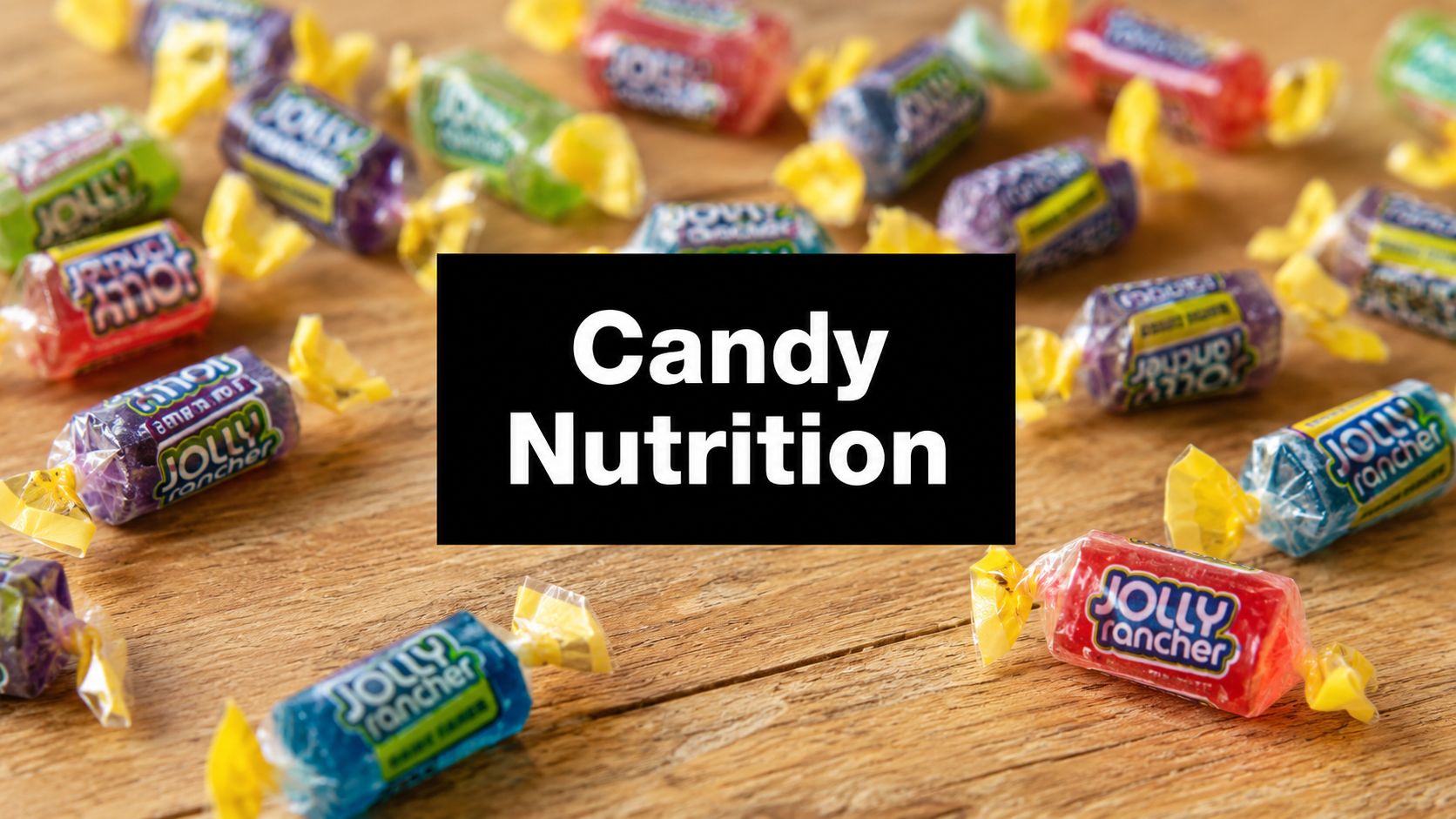
If you're staring at a candy dish or logging a few pieces into your food tracker, the main thing to know is this: Jolly Rancher nutrition facts change a lot depending on whether you have Original or Zero Sugar, and the serving sizes aren't interchangeable. For Original hard candy, 3 pieces (18g) contain 70 calories, 17g carbohydrate, and 11g sugar, while Zero Sugar lists 4 pieces (16g) at 35 calories, 15g carbohydrate, and 0g sugar.
Those small candies are easy to underestimate because they look nearly weightless. In practice, they're mostly carbohydrate, with no fat, no protein, and little to slow absorption. That matters if you're tracking calories, trying to stay low carb, managing blood sugar, or wanting a more accurate food log.
A lot of people search for one simple answer, like "How many calories are in a Jolly Rancher?" The problem is that one average number can blur important differences between product versions and serving sizes. That's where confusion starts, especially when one label is based on 2 pieces, another on 3 pieces, and the sugar-free version uses 4 pieces.
What Are the Official Jolly Rancher Nutrition Facts?
If you are checking a label while deciding between the Original candies and the Zero Sugar version, the official nutrition facts can look simpler than they really are. The main reason is that the packages use different serving sizes, so a quick glance can make the two products seem more similar, or more different, than they are.
A clearer way to read Jolly Rancher nutrition facts is to separate two questions. First, which product are you holding. Second, how many pieces does that label count as one serving. That step matters because Original Jolly Ranchers and Zero Sugar Jolly Ranchers are not measured the same way.
For the Original hard candy, the label centers on a small serving made of a few pieces and shows that the candy is almost entirely carbohydrate, mostly from sugar. For Zero Sugar, the label uses a different piece count and shows fewer calories with no sugar listed, but that does not mean the carbohydrate story is identical in practice. Sugar alcohols and serving math can change what you log, especially if you eat a handful instead of a labeled serving.
A useful way to think about it is like comparing two measuring cups that are filled to different lines. The product matters, but the portion printed on the label matters too. If you only remember one number, such as a single calorie estimate per piece, you can miss the bigger difference between versions.
The official facts make the most sense when you read calories, total carbohydrate, sugar, and serving size together. That gives you a more accurate picture for food tracking, low carb planning, or blood sugar awareness than relying on one average per-candy number.
Direct Answer
Original Jolly Rancher Hard Candy provides 70 calories, 17g carbohydrate, 11g sugar, 0g fat, and 0g protein per 3-piece serving (18g) based on Jolly Rancher Original nutrition data. Zero Sugar Jolly Rancher Hard Candy provides 35 calories, 15g carbohydrate, 0g fat, and 0g sugar per 4-piece serving (16g) based on the Zero Sugar tropical hard candy listing.
Introduction
You might have grabbed a handful of Jolly Ranchers from a bowl at work, tossed a few into your bag, or added one after lunch without thinking much about it. That's normal. Hard candy feels small, and small foods often seem nutritionally insignificant.
With Jolly Ranchers, the details often matter more than one might anticipate. The original version is mostly fast-digesting sugar, while the Zero Sugar version lowers sugar and calories but still contributes a meaningful carbohydrate load. So if you're tracking for weight loss, blood sugar awareness, or a low-carb eating pattern, the label deserves a closer look.
The biggest misunderstanding I see is assuming "sugar-free" means "free pass." It doesn't. It means the product gets to sweetness in a different way, and for some diet goals that's a major distinction.
How Many Calories Are in a Jolly Rancher?
You open a few wrappers during the afternoon and log "about 20 to 25 calories each." That estimate can be close, but it can also be off enough to matter if you ate several pieces. With Jolly Ranchers, the serving size on the label changes the math.
For Jolly Rancher Original Hard Candy, one official listing shows that 2 pieces (12g) contain 45 calories, 0g fat, 0mg sodium, and 8g total sugars according to the Lowes Foods product listing for Jolly Rancher Hard Candies.
A different listing for the same candy uses a larger serving. That is why people see different calorie answers online and assume the data conflicts, when the actual difference is often just the portion being measured.
Original serving sizes change the calorie total
Here is the practical breakdown for the original version.
| Serving Size | Calories | Total Carbs | Total Sugars | Fat | Protein |
|---|---|---|---|---|---|
| 2 pieces (12g) | 45 | Not specified in this source | 8g | 0g | Not specified in this source |
| 3 pieces (18g) | 70 | 17g | 11g | 0g | 0g |
That table explains why a single "per piece" number can be misleading. A smaller serving produces a lower average per candy, while a larger serving pushes that average up. If you are comparing the Original candy with the Zero Sugar version later in the article, this matters even more, because the products do not just differ by sweetness. They also differ by how the label frames the serving.
A simple way to picture it is measuring cereal with different cups. The food did not change. The scoop did.
Why the calories add up quickly
Original Jolly Ranchers are almost entirely carbohydrate calories. They do not bring fiber, fat, or protein that would meaningfully change the macro picture, so even a small handful can contribute more sugar and carbs than the wrappers suggest at first glance.
That is why the common "23 calories per piece" shorthand has limits. It works as a rough average, but rough averages are less useful when you are tracking carefully for calorie targets, carb limits, or blood sugar awareness. The label serving size is the number to trust first.
If accuracy matters, log the number of pieces you ate and match it to the serving on the package. If the count is fuzzy, a calorie and macro calculator can help you adjust the rest of the day without overcorrecting.
For many people, the better question is not "How many calories is one Jolly Rancher?" It is "Which Jolly Rancher version am I eating, and what serving size is this label using?" That is the question that gives you a useful number.
How Does the Sugar-Free Version Compare Nutritionally?
You grab a few Jolly Ranchers because the package says Zero Sugar, and it feels like an easy swap. The part that can throw people off is that sugar-free and low-carb are not the same label.

What Zero Sugar actually changes
The Zero Sugar version lowers calories and removes sugar. It still contributes carbohydrate, mainly from sugar alcohols, so the nutrition profile changes, but it does not become nutritionally neutral.
That distinction matters because many people use "sugar-free" as shorthand for "free food" in a tracking app. A better way to view it is this: the sweetener source changed, but the candy still takes up room in your daily totals.
Where people get confused
The biggest source of confusion is comparison. Original and Zero Sugar Jolly Ranchers are not always presented with the same serving size, so a quick side-by-side read can make the gap look smaller or larger than it really is.
It works like comparing two cereals with different scoop sizes. The product matters, but the serving printed on the label matters too.
If your main goal is reducing sugar, Zero Sugar may fit better than the original version. If your main goal is limiting total carbs, you still need to log it carefully. For people using a no sugar meal planning approach, that difference is especially useful because removing sugar does not automatically remove all carbohydrate.
What to pay attention to on your tracker
Use the exact product entry first. "Original hard candy" and "Zero Sugar hard candy" are not interchangeable.
Then check the serving count on your package before logging. That one step prevents a common mistake. Someone logs one version using the other version's serving size and ends up with a number that looks precise but is not accurate.
Sugar-free candy can fit some eating patterns better than regular candy, but it still needs to be logged accurately.
If you are also thinking beyond macros, frequent exposure to sweet or acidic products can matter for oral health over time. This overview on the impact of diet drinks on enamel is a helpful companion read because exposure pattern matters, not just calories or sugar.
What Is the Impact of Jolly Ranchers on Your Diet Goals?

For weight management, Jolly Ranchers are a classic example of a food that's easy to eat casually and hard to notice in a running daily total. Because hard candy is small and lasts a while, people often remember the flavor but not the count.
For blood sugar awareness, the original version deserves extra attention. A 3-piece serving contains 11g added sugar, which is over 20% of the FDA's 50g daily recommended limit, based on the earlier nutrition data already discussed in the calorie section. That's a meaningful amount of added sugar in a small portion.
If your goal is weight loss
The issue isn't that candy is "bad." The issue is that it contributes calories without much fullness. If you're trying to lose weight, you usually get more satisfaction from foods that contain protein, fiber, or both.
A broader guide to healthy weight reduction can help if you're working on the bigger picture rather than micromanaging one candy alone.
A food can fit your plan and still deserve portion awareness.
If your goal is low carb or keto
The original version is mostly simple sugar. The Zero Sugar version removes sugar but still isn't a true low-carb option. For keto eaters, that's the key distinction.
If your carb budget is tight, candy can use it up quickly. That's why the product name and serving size matter more than the front-of-package marketing language.
A quick visual walk-through may help if you're comparing candy portions or label entries while tracking:
If your goal is better glucose control
Original Jolly Ranchers are made from rapidly absorbed sugars and don't come with fiber or protein to buffer the response. For people with diabetes, insulin resistance, or strong sensitivity to sugar spikes, that's important context.
If you want more exact logging for mixed meals and snacks, a recipe nutrition calculator can help account for the rest of the day around a treat.
What Other Ingredients Should You Know About?
Calories and carbs tell most of the nutrition story, but ingredient details matter too, especially if you react to certain additives.

What these ingredients do
The candy includes malic acid for tartness and pH control, plus regulated artificial colorants such as Red 40, Blue 1, and Yellow 6, according to the ingredient overview for Jolly Rancher Hard Candy.
That same ingredient source notes sulfur dioxide as a preservative used to maintain freshness, which can matter for people with specific chemical sensitivities.
What to take from that information
For most readers, these ingredients are less about calories and more about personal tolerance and preference.
- If you have sensitivities: check the label closely, especially for color additives and preservatives.
- If you just want the tart flavor explained: malic acid is a major reason the candy tastes sharp and fruity rather than just sweet.
- If you're comparing products: ingredient swaps can change how a candy fits your needs even when the package looks similar.
Some people choose candy based on macros. Others choose based on additives. Both are valid.
How Can You Accurately Track Jolly Ranchers?
The biggest tracking mistake is logging a generic "Jolly Rancher" entry without checking whether it's Original or Zero Sugar. That single shortcut can throw off both calories and carbohydrates.
A simple approach works well:
- Check the product type first. Original and Zero Sugar aren't the same food entry.
- Read the serving size on your package. Jolly Rancher labels are one reason candy tracking gets messy.
- Count what you ate. Don't log "one serving" if you had a handful.
- Use weight when accuracy matters most. That's especially helpful if pieces are mixed, unwrapped, or poured into a bowl.
If you rely on app databases, verify the item before saving it as a favorite. Candy entries are notorious for mixed serving sizes and duplicate listings. A verified food database like the one in AI Meal Planner's food tracking tools can reduce that guesswork.
If you want a more guided setup for meal planning and food tracking overall, you can start with AI Meal Planner onboarding.
Frequently Asked Questions About Jolly Rancher Nutrition
A common tracking scenario is logging “a few Jolly Ranchers” and realizing later that the nutrition depends on which version you grabbed and how many pieces you ate. That is why these quick answers work best as label-reading shortcuts, not one-size-fits-all rules.
How many calories are in 2 Original Jolly Ranchers?
Two Original pieces provide about the same calories as a small spoonful of sugar. As noted earlier in the article, the exact label reference used here puts 2 pieces at 45 calories, with no fat or sodium and sugars making up most of those calories.
How many calories are in Sugar Free Jolly Ranchers?
Zero Sugar Jolly Ranchers are lower in calories per piece than the Original version, but the label is still based on its own serving size. As noted earlier, the Zero Sugar label lists 4 pieces per serving, so the calorie total only makes sense if you compare equal numbers of candies.
Are Jolly Ranchers fat free?
Yes. Both Original and Zero Sugar hard candies listed in this article contain 0 grams of fat per serving.
Are Jolly Ranchers a good choice for keto?
Original Jolly Ranchers usually do not fit a keto plan because they are primarily sugar. Zero Sugar versions may look more keto-friendly at first glance, but sugar alcohols and total carbohydrate still matter. For anyone tracking strict carb limits, the package type and serving size matter more than the brand name alone.
Do Jolly Ranchers have protein or fiber?
Hard Jolly Ranchers do not contribute meaningful protein or fiber. From a nutrition standpoint, that means they work more like a quick source of sweet taste than a food that helps with fullness.
Why do different websites show different calorie numbers?
This is one of the biggest candy-label headaches. Some entries are for Original, some are for Zero Sugar, and some use different serving sizes. Comparing them without checking the package is like comparing cups to tablespoons. The numbers are both real, but they are not measuring the same amount.
If you want a cleaner way to compare candy entries, a verified food database for packaged foods can help you match the right version and serving size before you log it.
AI-powered nutrition
Get Your Personalized Meal Plan
AI creates the perfect meals for your goals, lifestyle, and taste.
Start Your Journej