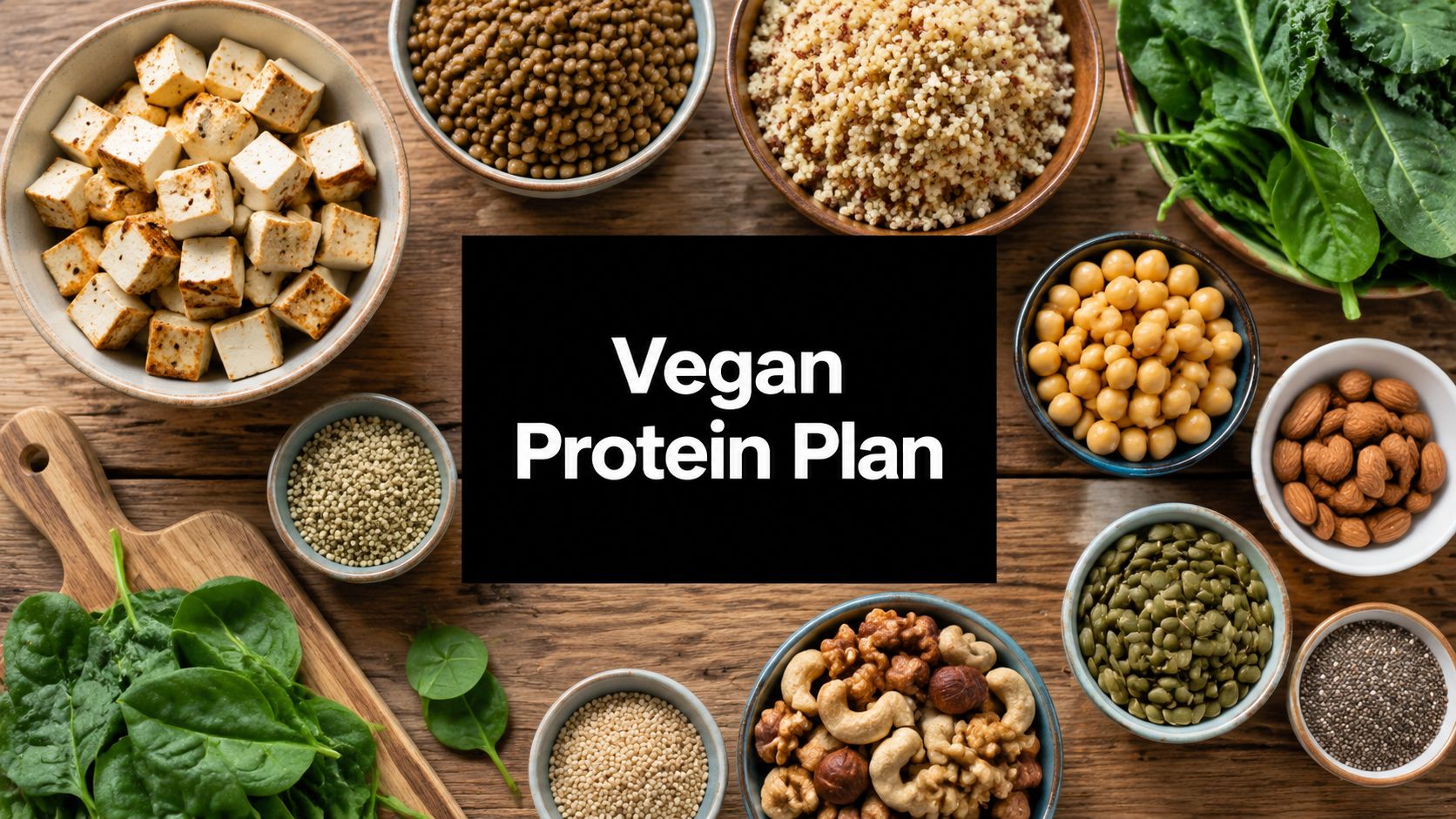
It usually starts the same way. Breakfast is oatmeal with fruit, lunch is a grain bowl that looks healthy but lands light on protein, dinner tries to make up the difference, and by the end of the day the numbers still do not work.
A high protein vegan meal plan works best when it acts like a system instead of a one-week menu you follow once and abandon. Start with a daily target, build each meal around a clear protein anchor, pair foods so amino acid coverage is stronger across the day, and prep a few repeat staples that keep weekday cooking realistic. If you want a quick way to set the numbers before building meals, use this vegan protein intake calculator.
The practical target for many active adults lands around 25 to 35 grams of protein per meal, with one or two snacks filling the gap if needed. That structure is easier to execute than relying on dinner to carry the whole day. It also tends to improve fullness, which matters if the goal is weight management as much as muscle support.
Many pre-made meal plans miss for predictable reasons. They center vegetables and whole grains without adding enough concentrated protein, or they depend on recipes that require too many ingredients, too much cooking, and too much attention on a busy weeknight.
A plan that holds up in real life has four parts. A protein target. A short list of dependable foods such as tofu, tempeh, edamame, soy milk, lentils, beans, seitan, and higher-protein pasta. A few reliable pairings like soy foods with grains, or beans with wheat or rice across the day. And a prep routine built around batch-cooked basics, not seven different fully assembled meals.
That is the difference between a plan that looks good on paper and one you can keep using.
How Do You Calculate Your Vegan Protein Needs
A vegan meal plan falls apart fast when the math stays fuzzy. Breakfast ends up light, lunch leans on grains, and dinner gets overloaded because it has to make up the gap. The fix is simple. Set a protein target that matches your body size, training, appetite, and how you cook during a normal week.
The baseline reference is still the government RDA of 0.8 grams per kilogram, which is about 50 grams per day for a 140-pound person according to Forks Over Knives' vegan protein guide for athletes. That level prevents deficiency in many adults. It does not automatically line up with goals like better fullness, strength training, muscle retention during fat loss, or easier recovery from hard sessions.

Use body weight first
Start with body weight in kilograms. Then choose a reasonable range based on how active you are, whether you are trying to maintain or build muscle, and how easy it is for you to eat larger portions.
I use four steps with clients and in my own meal planning:
- Convert your body weight to kilograms
- Choose a target range that fits your activity and goal
- Set a daily protein goal you can repeat on ordinary days
- Spread that total across meals instead of leaving most of it for dinner
If you want a fast way to do the calculation, use a vegan protein intake calculator.
Pick a target you can repeat
Consistency matters more than picking the highest number you have seen online. A lower target you hit most days will outperform an aggressive target that leaves you hungry, overstuffed, or dependent on protein powder at every meal.
Real-world trade-offs matter. If someone has a small appetite, works long shifts, or does not want to cook twice a day, I set the target around foods they will buy and eat without friction. If someone enjoys bigger meals, trains hard, and is happy to prep tofu, lentils, and a snack in advance, the plan can push higher.
The best target is the one that survives Tuesday.
Practical rule: Build for your ordinary week first. Then adjust portions, snacks, or supplements upward if training volume or hunger calls for it.
Count meal structure, not only the daily total
Daily protein matters, but distribution matters too. Plant-based eaters often do better when protein shows up in each meal in a clear, deliberate way rather than as a byproduct of grains, vegetables, and a handful of nuts.
A useful approach is to give every meal a protein anchor, then add supporting foods around it. For example, tofu at breakfast, lentils or edamame at lunch, and tempeh, beans, or seitan at dinner. That pattern improves coverage of essential amino acids across the day and usually feels easier than trying to rescue the total with one oversized evening meal.
I also look at protein density. A grain bowl can look healthy and still come up short if the protein source is only a few spoonfuls of chickpeas. The same bowl works much better with a full serving of tofu, tempeh, shelled edamame, or a higher-protein pasta base. Planning this way is similar to any system built around reliable output. The same logic shows up in agriculture, where yield depends on repeatable inputs and smart use of resources, as explained in this guide to maximizing farm output.
A good plan gives each meal a job, uses repeatable portions, and leaves enough flexibility for real life.
What Are the Best Plant-Based Protein Sources
A strong vegan meal plan gets easier once you know which foods should do the heavy lifting. Some foods are reliable protein anchors. Others are better used to round out a meal, add texture, or cover gaps.
The mistake I see in home kitchens is simple. People build meals around vegetables and grains, then hope a small scoop of beans or a sprinkle of seeds will carry protein intake. That usually leaves the day underpowered.

Which proteins should carry the plan
I organize plant proteins by job, not by trend.
| Category | Best use in a meal plan | What matters most |
|---|---|---|
| Soy foods | Main protein anchor | High protein density and good amino acid profile |
| Legumes | Daily base food | Protein, fiber, low cost |
| Grains and pseudograins | Support and pairing | Energy, texture, amino acid support |
| Nuts and seeds | Protein boost | Useful extras, but calorie-dense |
| Meat alternatives | Convenience option | Fast prep and predictable portions |
The most practical staples are tofu, tempeh, edamame, lentils, chickpeas, black beans, soy yogurt, seitan, and higher-protein pastas made from legumes. Quinoa helps, but I rarely treat it as the main protein source unless the rest of the meal is doing some work too.
A useful benchmark from the Queensland Health vegan nutrition resource is that chickpeas, tofu, tempeh, and mycoprotein products can all contribute meaningful protein in a vegan pattern. The practical lesson is straightforward. Build meals around concentrated sources first, then add grains, vegetables, sauces, and toppings.
Why soy earns a regular spot
Soy makes planning easier for one reason. It gives a lot of protein in a portion size that still feels like a normal meal.
That matters on busy weeks. A tofu scramble, tempeh grain bowl, or edamame stir-fry can hit a solid protein range without forcing oversized portions of beans or multiple snacks later. Soy foods also bring a more favorable amino acid profile than many other plant foods, which is part of why sports dietitians and vegan clinicians use them so often in higher-protein plans.
If soy works for you, use it several times a week. If it does not, you can still build a strong plan, but you will need to be more deliberate with legumes, seitan, protein-fortified dairy alternatives, and meal composition.
Which foods are anchors and which are helpers
This distinction saves time.
Best anchor proteins
- Tofu
- Tempeh
- Edamame
- Seitan
- Lentils
- Black beans, kidney beans, chickpeas
- Soy yogurt
- Legume pasta
Best supporting proteins
- Quinoa
- Oats
- Whole grain bread
- Peanut butter
- Hemp seeds
- Chia seeds
- Tahini
- Nuts
Supporting proteins still matter. They just work better beside an anchor than in place of one. For example, oatmeal with chia and almond butter is nutritious, but it usually needs soy milk, soy yogurt, or a side of tofu to function as a high-protein breakfast.
How do you improve protein quality
Protein quality matters most when total intake is borderline or meal structure is sloppy. Plant proteins can be lower in one or more indispensable amino acids, and some are less digestible than animal proteins. A position paper from the Academy of Nutrition and Dietetics on vegetarian diets explains that eating a variety of plant foods across the day covers amino acid needs for healthy adults.
In practice, that means pairing foods on purpose, not obsessing over perfect combinations at every bite.
Useful pairings include:
- Beans with rice, farro, or quinoa
- Lentil soup with whole grain toast
- Hummus with pita and roasted edamame
- Tofu with noodles or brown rice
- Peanut sauce over a tofu and soba bowl
This is the same logic that makes any repeatable food system work. You choose dependable inputs, combine them well, and keep the process realistic enough to repeat. If you like growing or sourcing more of your own staples, the guide to maximizing farm output is a useful read for thinking through productive crops and food planning.
Do you need protein powder
Protein powder is optional. It is a convenience food, not a foundation.
I use it selectively with clients who have high needs, low appetite, limited cooking time, or a training schedule that makes whole-food intake hard to space across the day. For everyone else, fixing breakfast and lunch usually does more good than adding a scoop to an already weak meal pattern.
A simple rule works well. Get most of your protein from foods you can build meals around, then use powder to fill a specific gap if needed. If you want a searchable list of ingredients to compare and rotate, this plant-based foods database for meal building can help you map out anchors, helpers, and easy swaps.
A Sample 7-Day High-Protein Vegan Meal Plan
A sample plan should do two things well. It should show you the rhythm of the day, and it should stay realistic enough that you can cook it.
There's no need to make every day culinary theater. Repeating ingredients is efficient, and smart repetition is what keeps a high protein vegan meal plan from turning into food waste.
One useful benchmark comes from an EatingWell high-protein plant-based plan, which shows that a vegan plan can deliver exactly 100 grams of protein while staying under 1,600 calories. The version below uses that idea as a practical model, but keeps the structure flexible and home-cook friendly.
For readers who like browsing broader healthy eating meal plans, it can also help to compare formats and see how different weekly layouts handle repetition, leftovers, and snack structure.
Sample 7-Day High-Protein Vegan Menu (Approx. 100g Protein / 1700 Kcal Daily)
| Day | Breakfast | Lunch | Dinner | Snacks | Est. Protein/Calories |
|---|---|---|---|---|---|
| Day 1 | Tofu scramble with spinach, mushrooms, and whole grain toast | Lentil quinoa bowl with cucumber, tomato, and tahini | Tempeh stir-fry with broccoli and brown rice | Roasted chickpeas; soy yogurt with seeds | Approx. 100g / 1700 kcal |
| Day 2 | Overnight oats with soy milk, chia, hemp seeds, and peanut butter | Chickpea pasta salad with edamame and chopped vegetables | Baked tofu, sweet potato, and green beans | Hummus with whole grain crackers; apple with nut butter | Approx. 100g / 1700 kcal |
| Day 3 | Smoothie bowl with soy yogurt, oats, berries, and hemp seeds | Black bean quinoa salad with peppers and greens | Red lentil curry with brown rice and roasted cauliflower | Edamame; chia pudding | Approx. 100g / 1700 kcal |
| Day 4 | Savory oats with tofu crumbles and sautéed greens | Hummus, roasted chickpea, and veggie wrap | Tempeh taco bowl with beans, corn, salsa, and rice | Soy yogurt; roasted pumpkin seeds | Approx. 100g / 1700 kcal |
| Day 5 | Peanut butter oats with soy milk and chia | Tofu noodle bowl with shredded cabbage and carrots | Three-bean chili with quinoa | Roasted edamame; fruit with tahini dip | Approx. 100g / 1700 kcal |
| Day 6 | Tofu breakfast burrito with beans and salsa | Lentil soup with whole grain bread and side salad | Baked mycoprotein or tofu with potatoes and broccoli | Hummus with carrots; soy yogurt with berries | Approx. 100g / 1700 kcal |
| Day 7 | High-protein chia-oat bowl with soy yogurt and seeds | Grain bowl with chickpeas, tofu, greens, and lemon dressing | Stir-fried tempeh with soba-style noodles and vegetables | Roasted chickpeas; nut and seed mix | Approx. 100g / 1700 kcal |
How to make this plan fit you
Treat this as a template, not a rulebook.
If you need more food, enlarge the core proteins and grains first. If you want a lighter day, keep protein anchors stable and trim extras like oils, dressings, or calorie-dense snacks before cutting your main protein portions.
A few simple swaps keep the same structure intact:
- No tempeh on hand: Use tofu or a bean-based bowl instead.
- Need a faster lunch: Convert any grain bowl into a wrap with hummus.
- Prefer fewer cooked breakfasts: Rotate overnight oats, soy yogurt bowls, and toast with nut butter plus seeds.
- Short on time: Use canned beans and pre-baked tofu to keep the day moving.
What works better than rigid meal plans
Rigid plans fail when one missed meal turns into an abandoned week. Systems work better.
Keep the meal pattern stable:
- breakfast with a protein anchor
- lunch built around legumes or soy
- dinner centered on tofu, tempeh, lentils, or beans
- two small protein-supporting snacks
The goal isn't novelty every day. The goal is a week that still works when work runs late.
How to Create Your Weekly Shopping List
A strong plan gets easier the moment your shopping list matches your menu. Overspending or forgetting key proteins often occurs when shopping by craving instead of by structure.
I like to build the list by store section. It saves time, reduces impulse buys, and makes meal prep feel smaller because each ingredient already has a place in the week.
Shop by aisle, not by recipe tab
Here's a reusable framework for a high protein vegan meal plan.
Produce
- Leafy greens: spinach, kale, mixed salad greens
- Crucial vegetables: broccoli, bell peppers, carrots, onions, mushrooms
- Flavor builders: garlic, ginger, lemons, fresh herbs
- Flexible extras: sweet potatoes, cucumbers, tomatoes, cabbage, green beans
- Fruit for snacks and breakfasts: apples, bananas, berries
Pantry staples
- Legumes: chickpeas, black beans, lentils, mixed beans
- Grains: quinoa, brown rice, oats, whole grain bread, whole grain wraps
- Convenience staples: canned tomatoes, hummus, chickpea pasta
- Add-ins: chia seeds, hemp seeds, peanut butter, tahini
Refrigerated and frozen
- Protein anchors: tofu, tempeh, soy yogurt
- Easy backups: frozen edamame, frozen vegetables for stir-fries
Seasonings and sauces
- Core seasonings: salt, pepper, smoked paprika, cumin, curry powder
- Cooking sauces: soy sauce or tamari, mustard, vinegar
- Finishing ingredients: nutritional yeast, chili flakes, sesame oil if you use it
Keep one list, then generate the details
Once the framework is there, the weekly job is small. You're only adjusting quantities and a few produce choices.
If you want to automate the aisle sorting and avoid rebuilding the same list every week, a grocery list generator can speed that up.
Buy the proteins first. Then buy the vegetables and grains that help you turn them into meals.
How to Meal Prep and Adapt Your Plan for Real Life
You get home late, you are hungry, and the plan falls apart because dinner still needs soaking, chopping, and seasoning. That is the point where a good high-protein vegan plan succeeds or fails. The fix is not more motivation. The fix is reducing the number of decisions and the amount of work left at 6 p.m.
Meal prep works best when it supports a repeatable system. Prepare a few protein anchors, a couple of carbs, enough produce for fast assembly, and one or two sauces that make plain ingredients worth eating all week.

What to prep first
Start with the foods that give you the most protein per minute of prep.
In practice, that usually means cooking a batch of lentils, beans, rice, or quinoa, then preparing two ready-to-use proteins such as baked tofu and steamed edamame. If tempeh is on the menu, marinate it while the grains cook. Even a short marinade improves flavor, and better flavor makes adherence easier.
A simple prep session usually includes:
- Batch-cooked staples: lentils, quinoa, rice, beans
- Ready proteins: baked tofu, marinated tempeh, steamed edamame
- Fast vegetables: washed greens, sliced peppers, chopped onions, shredded carrots
- One sauce: tahini-lemon, peanut-lime, or soy-ginger
- Portable extras: soy yogurt, roasted chickpeas, seed mixes
That setup gives you enough flexibility to build lunches and dinners without starting from zero each night.
How to adapt the plan on busy days
Use substitutions that protect protein intake first, then adjust the rest.
Canned beans are fine. Frozen vegetables are fine. Pre-cut produce is fine. These are not shortcuts in a bad sense. They are useful tools when time, energy, or kitchen access is limited. I would rather see someone eat a tofu rice bowl made with frozen broccoli than abandon the plan because fresh vegetables never got chopped.
Shorter eating windows can work too, but each meal has to carry more protein. If meal timing is part of your routine, the Pretty Progress intermittent fasting guide is a reasonable resource for planning the schedule side. The nutrition side stays the same. Hit your daily target and distribute protein well enough that one light meal does not leave the whole day underpowered.
Here's a useful visual walkthrough for keeping prep simple during the week:
Keep meals modular
A practical plan is built from components, not seven separate recipes with no overlap.
Use a base formula:
- Protein: tofu, tempeh, lentils, chickpeas
- Carb: quinoa, rice, oats, whole grain wraps
- Produce: raw or cooked vegetables
- Flavor: sauce, herbs, spice blend, pickled element
- Top-up protein if needed: hemp seeds, soy yogurt, roasted legumes
This structure helps you personalize the week without recalculating everything from scratch. If lunch is light on protein, add edamame or a side of soy yogurt. If dinner is heavier on grains, make sure the protein portion is still doing enough work. Over time, you start seeing meals as protein targets with flexible ingredients around them.
If your rotation gets stale, browse a set of high-protein vegan recipe ideas and swap in new flavors while keeping the same prep framework.
Frequently Asked Questions About High-Protein Vegan Diets
You notice the weak points in a vegan plan on busy days. Breakfast turns into toast, lunch is a salad with chickpeas, dinner is pasta, and by the end of the day protein looks fine on paper but was never distributed well enough to keep meals satisfying. That is usually the core problem. A high-protein vegan diet works best when each meal has a clear protein anchor and the full day adds up consistently.
Protein quality matters, but it does not require perfect food combining at every bite. What works in practice is repeating a simple system. Build meals around stronger protein bases such as soy foods, legumes, and higher-protein grains, then vary those choices across the day so your amino acid intake is more balanced overall.
FAQ
Do I need protein powder to eat high protein as a vegan?
No. Many people can hit their target with tofu, tempeh, edamame, lentils, beans, soy yogurt, seitan, and protein-rich staples like oats and whole grains. Protein powder helps when appetite is low, calories are tight, or convenience matters more than cooking.
Is tofu enough as my only protein source?
Tofu is useful, affordable, and easy to prep, but using it as your only protein gets repetitive and can leave your meals narrow in texture and flavor. A better plan rotates tofu with tempeh, legumes, seitan if tolerated, and soy yogurt or edamame. Variety improves adherence, which matters more than having one perfect food.
Can a high protein vegan meal plan support weight loss?
Yes, if calories still match the goal. Higher-protein meals often make portion control easier because they are more filling, but weight loss still depends on the overall energy intake. In practice, the best setup is a modest calorie deficit with enough protein that muscle retention and satiety do not get ignored.
How do I improve protein quality without obsessing over every meal?
Use range, not perfection. Include legumes, soy foods, grains, nuts, and seeds over the course of the day. Pairings like beans with rice, lentils with whole grain bread, or tofu with quinoa are practical ways to cover more amino acids without turning every meal into a math problem.
What is the most common mistake beginners make?
They build meals around vegetables, then add a small scoop of beans and assume it is a high-protein meal. Start with the protein portion first. Then add the grain, produce, and flavor pieces around it. That one habit changes the whole plan.
How many meals should I eat per day?
Use the meal pattern you can repeat. Three meals works well for some people. Others do better with three meals plus one protein-forward snack. The useful question is not meal frequency. It is whether each eating occasion does enough work to help you reach your daily target.
Are legumes enough for a full plan?
They are a strong foundation, but they are easier to use well when combined with other protein sources. Beans and lentils bring fiber and staying power. Soy foods and seitan can make it easier to reach higher targets without needing very large portions.
Can older adults follow a high-protein vegan plan?
Yes, though the plan usually needs tighter structure. Older adults often benefit from more deliberate protein distribution and easy-to-chew options such as tofu scrambles, lentil soups, bean pastes, soy yogurt bowls, and softer grain dishes. Large protein targets are harder to catch up on at dinner, so earlier meals matter.
A high protein vegan meal plan holds up when the system is simple enough to repeat. Set a daily target, give each meal a protein job, and keep a few reliable staples in rotation so real life does not knock the plan apart.
If you want the planning done for you, AI Meal Planner builds personalized meal plans around your goals, diet, allergies, and preferences, then creates smart grocery lists with macros and calories already worked out. It's a simple way to turn the ideas in this guide into a week you can practically follow.
AI-powered nutrition
Get Your Personalized Meal Plan
AI creates the perfect meals for your goals, lifestyle, and taste.
Start Your Journej