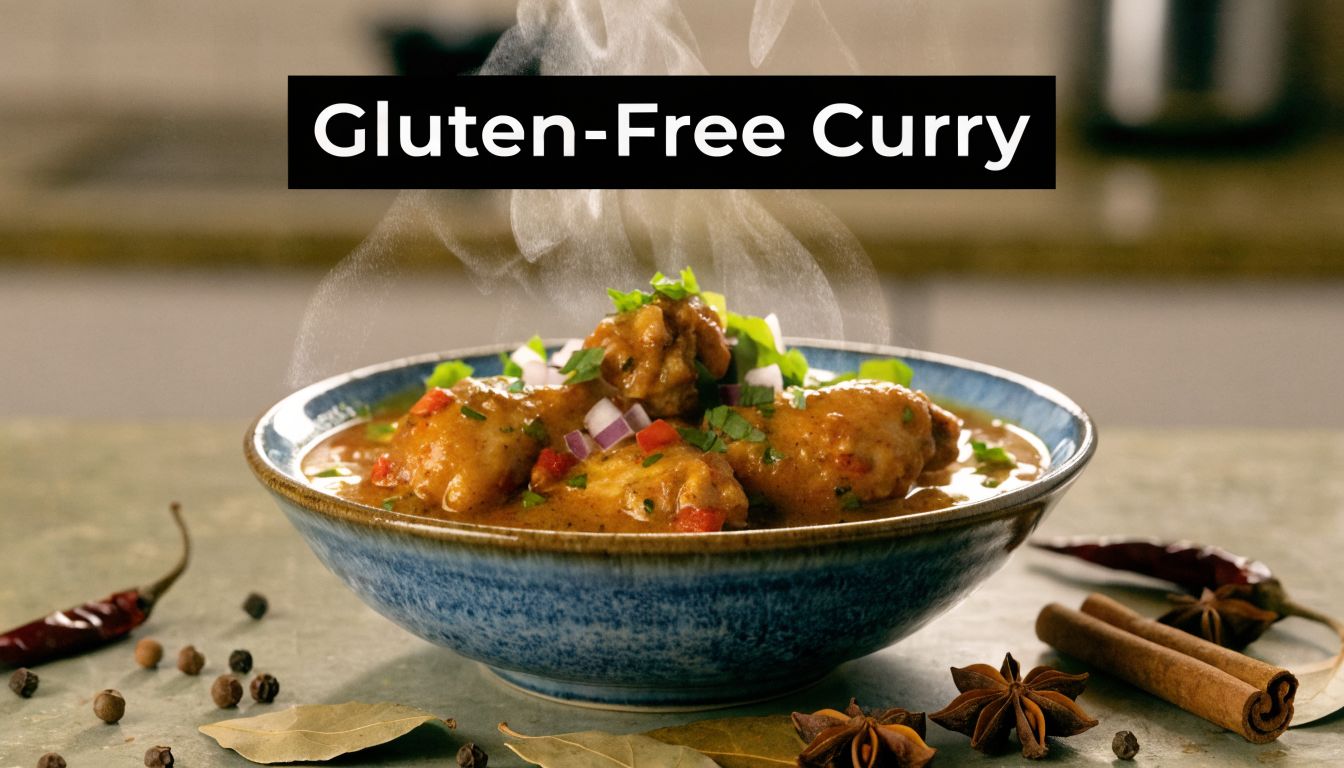
You’re in the grocery aisle holding a curry paste, or scanning a restaurant menu, and the question is simple: is curry gluten free?
Is Curry Gluten Free?
You pick up a jar of curry sauce that looks harmless, then notice soy sauce in the ingredients. At a restaurant, a chicken curry may be thickened with wheat flour in one kitchen and made only with spices and coconut milk in another. Curry can be gluten-free, but the name alone does not tell you enough to decide.
The safest way to judge curry is to separate the idea into layers. The spices themselves are often naturally gluten-free. The packaged base, such as a paste, roux block, or bottled sauce, is where risk often starts. The finished dish adds another layer because a cook may use stock cubes, seasoning sauces, breaded protein, or shared utensils.
Regional style matters more than many shoppers realize. Many Indian curries start with spices, onion, tomato, ginger, and garlic, so they are often gluten-free unless a packaged mix, asafoetida blend, or thickener introduces gluten. Thai curries often look safe because they rely on curry paste, herbs, coconut milk, and fish sauce, but some jarred pastes and bottled sauces include wheat-based soy sauce or other additives. Japanese curry is the one that deserves extra caution first, because it commonly uses curry roux blocks, and roux is frequently made with wheat flour.
That difference matters in the store. A dry curry powder is not the same as a Thai curry paste, and neither works like a Japanese curry sauce block. If you need a practical shortcut, look for a clear gluten-free label on pastes and sauces, and give extra scrutiny to anything labeled roux, gravy mix, seasoning sauce, or curry sauce.
Brand checking helps. Some products are made without gluten ingredients but are not certified, while others are certified gluten-free and easier to trust for a sensitive household. For Thai curry pastes and simmer sauces, read every label each time you buy because formulas can change. For Japanese-style curry at home, skip standard roux blocks unless the package clearly states gluten-free. Those small regional clues save a lot of guesswork and make curry much easier to choose with confidence.
What Exactly Defines a Curry?
A curry is best understood as a spiced dish with a sauce or gravy, not a single standard recipe. The word gets used for very different foods, and that’s why “is curry gluten free” can’t be answered just by looking at the name on a jar.

Curry powder, curry paste, and curry dishes are different things
Curry powder is a dry spice blend. It often includes spices like turmeric, cumin, coriander, ginger, black pepper, and chili powder. Those pure spices are naturally gluten-free when bought on their own.
Curry paste is a wet concentrated base. In Thai cooking, that usually means a mixture of chilies, herbs, aromatics, and seasonings blended into a jarred or canned paste. The paste itself may or may not be safe, depending on added sauces or fillers.
A curry dish is the final prepared meal. That’s where the risk changes again, because cooks may add stock cubes, soy sauce, thickeners, breaded toppings, or spice mixes that weren’t obvious from the menu description.
Practical rule: Don’t ask only “Is this curry gluten-free?” Ask what kind of curry it is, what thickens it, and whether the base comes from a packaged paste or sauce.
Regional curry styles matter
Indian curries often rely on tomatoes, onions, yogurt, cream, lentils, coconut milk, nuts, or chickpea flour for body. Many traditional versions are naturally free of gluten, especially when served with rice.
Thai curries usually start with a coconut milk base, which is a good sign. The catch is the seasoning. Fish sauce, oyster sauce, and some packaged curry pastes can introduce wheat or barley-containing ingredients.
Japanese curry is the one that deserves extra caution. It’s commonly made with a roux-style base or commercial curry blocks, which are often wheat-based. If you see a thick, gravy-like Japanese curry, assume it needs verification before you order it.
Why people get confused
Many people hear “spices are gluten-free” and assume the whole dish must be safe. That’s only true for the raw spice ingredients themselves. Once a manufacturer turns those spices into a blend, paste, or sauce, the ingredient list can change.
A useful way to think about curry is this:
| Curry form | Usually lower risk | Usually higher risk |
|---|---|---|
| Dry spices | Single-ingredient spices like turmeric or cumin | Mixed curry powders with fillers |
| Paste | Clearly labeled gluten-free paste | Paste with added sauces or vague flavorings |
| Finished dish | Homemade curry from known ingredients | Restaurant or jarred curry with unknown thickener |
That distinction makes the rest of the label-reading process much easier.
Where Does Gluten Typically Hide in Curries?
You can order a curry that looks naturally safe, then run into trouble because of one small ingredient in the base. For people with gluten sensitivity, curry works a bit like soup. The vegetables and spices may be fine, but the thickener, seasoning sauce, or premade starter often determines whether the dish is safe.

The hiding spots also change by region. Indian curries are often lower risk if they are built from onions, tomatoes, yogurt, lentils, coconut milk, or ground nuts, but compounded hing, stock cubes, or commercial spice blends can change that. Thai curries often start well with herbs, chilies, and coconut milk, yet bottled fish sauce, soy sauce, oyster sauce, and packaged pastes deserve careful label reading. Japanese curry needs the most caution because many versions use curry roux blocks or boxed bases that commonly contain wheat.
The most common hidden sources
Flour-based thickeners
Wheat flour shows up in roux, gravy bases, and some restaurant sauces that are designed to stay thick and glossy. If a curry has the texture of a smooth brown gravy, especially in Japanese-style curry, verify the thickener before you assume it is safe.Pre-made spice blends
Single spices like cumin, coriander, turmeric, and chili powder are usually straightforward. Mixed curry powders are a different category. Some include anti-caking agents, starches, or vague flavoring blends that call for a closer look.Packaged pastes and sauce jars
This is one of the biggest blind spots for shoppers. A Thai red curry paste or Indian tikka masala simmer sauce may look spice-based, but the ingredient list can include wheat, soy sauce, malt vinegar, or modified food ingredients that are not obvious from the front label. The safest shortcut is to choose products that are clearly labeled gluten-free or, better yet, certified gluten-free.Asafoetida or hing
This ingredient confuses many people because pure asafoetida resin differs from the hing sold in many stores. Many compounded hing products are diluted with wheat flour. If you are buying Indian spice mixes or eating in a restaurant that uses hing, ask which type they use.Shared equipment in kitchens
Cross-contact matters even when the ingredient list looks clean. A safe curry can pick up gluten from a spoon dipped into another sauce, a pan used for roux-based dishes, or a fryer used for breaded items.
Ingredients and menu words that deserve a pause
Slow down and check more carefully if you see:
- Roux
- Curry block
- House sauce
- Soy sauce
- Malted flavoring
- Bouillon or stock cubes
- Battered or crispy toppings
- Prepared curry base or boxed sauce mix
“House curry base” sounds harmless, but for someone avoiding gluten, it is too vague to trust without details.
What to look for on store shelves
Regional differences are very helpful. For Thai curry pastes, scan first for soy sauce, wheat, barley, oyster sauce, and vague “seasoning sauce” ingredients. For Indian curry sauces, check for hing, flour, malt vinegar, and thickening starch blends that are not clearly identified. For Japanese curry cubes or blocks, start with caution because wheat is common enough that you should look for an explicit gluten-free claim before buying.
A practical shortcut is to keep a short list of products you have already verified. If you want help organizing safe brands, ingredients, and repeat meal ideas, a gluten-free meal planning tool with AI nutrition guidance can make that process much easier.
Better questions for restaurants and better checks for labels
Use specific questions because “Is this gluten-free?” often gets a guess instead of a real answer.
- What thickens this curry? Flour, roux, coconut milk, cream, nuts, or pureed vegetables?
- Is the base made in house or from a packaged paste, sauce jar, or curry block?
- Does it contain soy sauce, oyster sauce, bouillon, or hing?
- Can the kitchen use clean utensils and avoid cross-contact?
At the store, use the same logic. Check the thickener first, then the seasoning sauces, then whether the product carries a clear gluten-free statement. That step-by-step approach catches the ingredients that generic curry guides often miss.
How Can I Safely Order Gluten-Free Curry in a Restaurant?
Restaurant curry can be a good option, but only if you ask specific questions. Many restaurants have become more responsive to gluten-free diners. A Legal Nomads summary on gluten-free dining in North India notes that 38% of U.S. adults aged 18 to 24 wanted to try gluten-free foods in a 2022 CivicScience survey, and it also reports that North American Indian restaurants are offering gluten-free versions of dishes 40% more frequently.

Use a short script instead of a vague question
A simple script works better than “Can I eat this?”
Try this:
- I need to avoid gluten completely. Does this curry contain wheat, barley, soy sauce, roux, or a pre-made sauce?
- How is it thickened? Is it coconut milk, cream, tomato, vegetables, or flour?
- Is the spice blend pure, or does it include fillers or compounded hing?
- Can the chef prepare it with clean utensils and avoid cross-contact?
This wording tells the staff what matters without sounding dramatic or complicated.
Choose cuisines strategically
Indian restaurants are often the easiest starting point because many curries are built from rice, lentils, yogurt, tomato, onion, or chickpea flour rather than wheat. Thai restaurants can also work well, but the sauces in the base need checking. Japanese curry usually needs the most caution because the thick gravy often comes from a wheat-based roux.
A few menu choices are often easier to verify than others:
| Better starting point | Why it may be easier |
|---|---|
| Plain dal with rice | Simple ingredients, fewer hidden sauces |
| Paneer or chicken curry with rice | Often thickened without wheat, but still ask |
| Thai curry with plain rice | Coconut milk base, but verify the paste and sauces |
| Japanese curry | Verify carefully, often roux-based |
Watch for menu red flags
Words that often signal extra risk include:
- Crispy
- Breaded
- Battered
- Katsu
- Malted
- House gravy
If you want more support choosing meals around restrictions and macros, a tool like the AI nutritionist feature can help organize options before you even go out to eat.
A quick video can also help you think through restaurant questions and common mistakes:
Order strategy: Ask about the base first, then the thickener, then cross-contact. That sequence gets clearer answers than asking whether something is “safe.”
How Do I Make Sure My Homemade Curry Is Gluten-Free?
Homemade curry is where you get the most control. You choose the spice blend, the thickener, and the serving side, so there’s far less guesswork.

Start with the highest-control ingredients
The safest base is often the simplest:
- Single spices instead of pre-mixed curry powder
- Plain coconut milk, tomatoes, yogurt, or broth you trust
- Rice or quinoa instead of naan or uncertain flatbreads
- A labeled gluten-free paste or sauce if you want convenience
Thai-style curries are a good example. The coconut milk base is usually gluten-free, but many commercial fish and oyster sauces contain wheat. Dedicated gluten-free options are emerging, including Taste of Thai curry pastes in U.S. and EU markets, as noted by Thai Ginger’s gluten-free Thai food guide. That matters not only for celiac disease but also for people with non-celiac gluten sensitivity, estimated there at 6 to 10% globally.
Use thickeners that don’t rely on wheat
You don’t need flour to get a rich curry texture. These swaps work well:
| Thickener | Best use |
|---|---|
| Cornstarch slurry | Quick glossy finish in a lighter sauce |
| Arrowroot | Similar to cornstarch, often smooth in delicate sauces |
| Ground cashews | Creamy Indian-style curries |
| Pureed vegetables | Tomato, onion, squash, or cauliflower for body |
| Chickpea flour | Useful in some Indian dishes if tolerated |
Three easy home examples
A coconut chickpea curry starts with onion, garlic, ginger, certified gluten-free curry paste, chickpeas, and coconut milk. It’s soft, rich, and easy to serve over rice.
A tomato paneer curry can be built from pure turmeric, cumin, coriander, tomato, yogurt, and paneer. If you use pure hing or skip it, the ingredient list stays very manageable.
A quick chicken Thai curry works well with gluten-free curry paste, coconut milk, vegetables, and a verified gluten-free fish sauce alternative. That gives you the flavor of a takeaway-style meal without the uncertainty.
If you like planning meals and ingredient swaps in one place, the meal planning tools can help organize gluten-free ingredients and repeatable recipes.
What Are Some Quick Gluten-Free Curry Ideas?
When you’re tired after work, the easiest safe curry is one with a short ingredient list and a familiar method. You don’t need restaurant-level complexity.
Three fast ideas that work on busy nights
1. Coconut chickpea and spinach curry
Sauté onion, garlic, and ginger. Add gluten-free curry paste or your own spice mix, then chickpeas, coconut milk, and spinach. Serve with rice. It’s pantry-friendly and reheats well.
2. Green chicken vegetable curry
Cook chicken pieces with a verified gluten-free green curry paste, then add coconut milk, bell peppers, and zucchini. Finish with herbs and serve over rice. This is one of the simplest ways to get Thai-style flavor without relying on takeout.
3. Red lentil dal
Simmer red lentils with turmeric, cumin, tomatoes, and aromatics until soft. The lentils naturally create a thick texture, so you don’t need flour or roux. Pair it with rice for an easy gluten-free dinner.
A recipe collection can make weeknights easier if you don’t want to keep rebuilding the same meal from memory. The gluten-aware recipe library at AI Meal Planner is one example of a place to save and rotate simple curry meals with clear ingredients.
How Can I Automate My Gluten-Free Meal Planning?
Cooking one gluten-free curry is manageable. Planning a full week of safe, balanced meals is where people get worn down. The hard part usually isn’t the recipe. It’s the repeated label checking, grocery planning, and keeping meals practical on busy days.
A structured gluten-free system helps in a few ways:
- It narrows ingredients early, so you’re not deciding in the store aisle.
- It repeats safe staples, which lowers decision fatigue.
- It balances meals, so dinner isn’t just “whatever seems gluten-free.”
- It helps with leftovers, which is useful for curries that taste even better the next day.
If you want that process organized for you, a gluten-free meal plan can turn your restrictions into a usable weekly menu rather than a mental checklist. You enter your food preferences and restrictions, then work from meals that already fit those rules.
The onboarding flow is where that kind of setup starts. You can explore the options through AI Meal Planner if you want your recipes, grocery list, and meal structure handled in one place.
Consistency matters more than variety when you’re newly gluten-free. A short list of verified ingredients is often safer than constantly trying unknown products.
Frequently Asked Questions About Gluten-Free Curry
Some questions come up again and again, especially when symptoms are unclear or ingredients are hidden.
If you’re being evaluated for celiac disease rather than just experimenting with gluten avoidance, medical testing matters. A helpful overview of the IgA test for coeliac explains one of the standard screening tools doctors may use.
Common questions about gluten in curry
| Question | Answer |
|---|---|
| Is curry powder gluten-free? | Pure spices are, but mixed curry powder may not be. Check for a gluten-free label and read the ingredient list. |
| Is Thai curry usually gluten-free? | Often the coconut milk base is, but the paste and sauces may contain wheat. |
| Is Indian curry gluten-free? | Many traditional Indian curries are, especially with rice, but hing, spice blends, and restaurant handling can change that. |
| Is Japanese curry gluten-free? | Often no, because many versions use a wheat-based roux or curry block. |
| Can celiac disease and gluten sensitivity react to restaurant curry? | Yes. Ingredients and cross-contact can both be issues. |
| Is naan gluten-free with curry? | Usually not. Rice is the safer default unless the bread is specifically labeled gluten-free. |
More quick answers
Can I trust “wheat-free” on a package?
Not by itself. For gluten sensitivity, a clear gluten-free statement is more useful.
Are homemade curries usually the safest option?
Yes. They let you control the paste, sauces, and thickener from the start.
Does spicy food itself contain gluten?
No. Heat from chilies isn’t the issue. The risk comes from wheat, barley, fillers, sauces, or cross-contact.
Should I avoid all curry if I’m gluten-sensitive?
No. You should avoid unverified curry products and dishes, not the entire category.
If you want fewer label checks and more reliable meals, AI Meal Planner can help you build gluten-free weekly menus, grocery lists, and simple curry-based dinners around your preferences.
AI-powered nutrition
Get Your Personalized Meal Plan
AI creates the perfect meals for your goals, lifestyle, and taste.
Start Your Journej