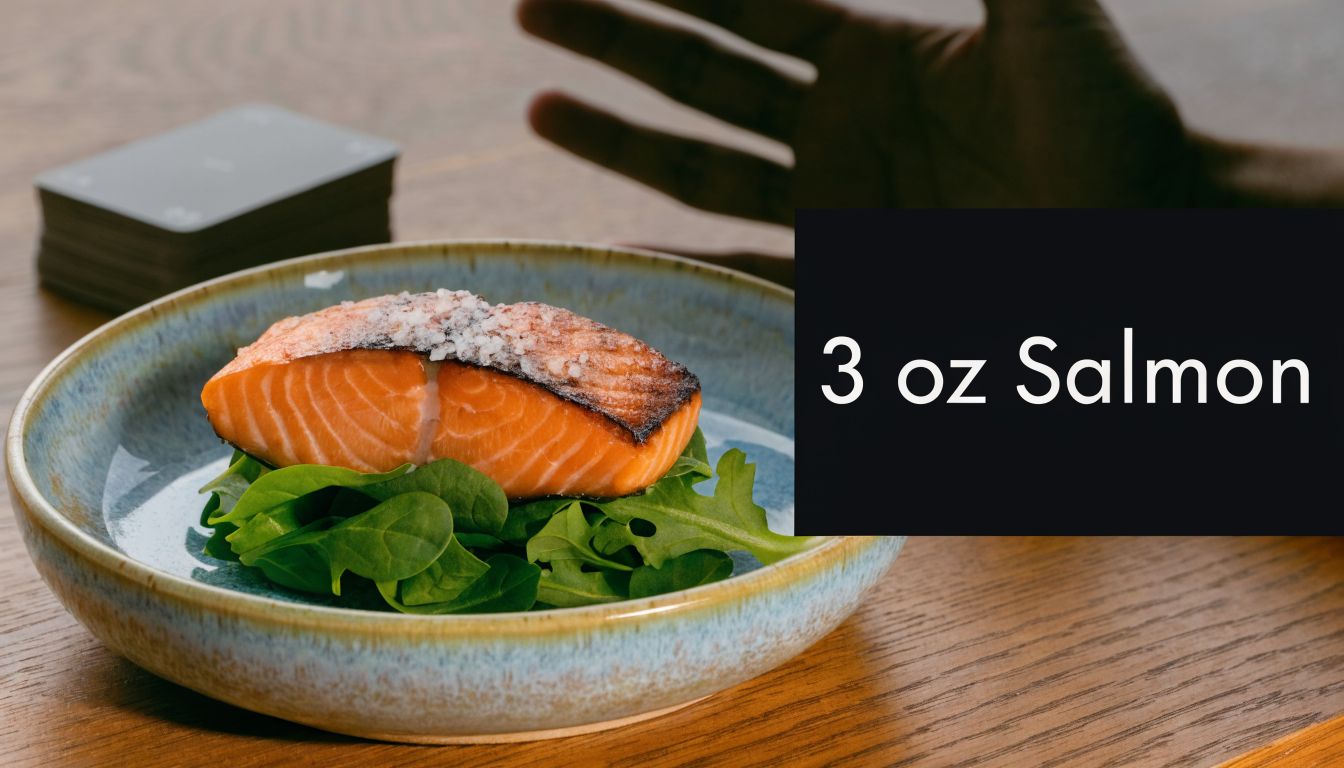
If you’re staring at a salmon fillet and trying to figure out what 3 oz salmon means for calories, protein, and meal planning, the short answer is simple. A 3-ounce serving of salmon generally provides about 16.86 to 19.94 grams of protein and falls in a relatively modest calorie range, with the exact amount changing based on whether it’s raw or cooked and whether it’s wild or farmed.
That small portion matters more than commonly believed. In practice, 3 oz salmon is one of the cleaner protein anchors you can build around when you want a meal that feels substantial without turning macro tracking into guesswork.
How Many Calories and How Much Protein Is in a 3 oz Salmon Serving?
You portion out salmon for lunch, log 3 ounces, and expect a clean macro entry. Then the numbers shift depending on whether the fish is wild or farmed, and whether you are weighing it raw or after cooking. For practical tracking, a 3 oz salmon serving usually lands around 17 to 20 grams of protein, with calories rising as fat content rises.
That range matters. A leaner wild portion will usually fit more easily into a lower-calorie cut, while a fattier farmed portion can make more sense for keto, higher-energy meal plans, or days when you want more satiety from a smaller plate.
For everyday planning, the main takeaway is simple. A 3 oz serving is a moderate protein portion, not a large one. It works well as a precise building block for bowls, salads, rice plates, and snack-style meals, but many active adults will need more than one 3 oz serving at a meal if muscle gain or post-training recovery is the goal.
This kind of consistency is useful when you are using an AI nutritionist for macro-based meal planning and need entries that reflect real portion differences instead of treating all salmon the same.
Why Is the 3 oz Salmon Portion So Popular in Meal Plans?
You prep lunch, log salmon, and need the entry to work whether the meal is a salad on a cut, a rice bowl on maintenance calories, or a higher-fat plate for keto. That is why the 3 oz portion keeps showing up. It is small enough to fit into different macro budgets and standardized enough to repeat across the week.
In practice, 3 oz works because it gives structure without forcing the rest of the meal. Dietitians, coaches, and meal-prep apps use it as a reference size that is easy to build around. If you use meal planning tools for macro tracking, a repeatable salmon portion makes it easier to adjust carbs and fats around the protein instead of rebuilding the whole meal entry every time.
It scales well across different goals
For weight loss, 3 oz is often enough to anchor a plate with vegetables, fruit, or a measured starch while keeping calories controlled. For maintenance, it fits cleanly into a balanced lunch or dinner without crowding out sides. For muscle gain, it serves as a base portion that can be doubled to 6 oz if the meal needs more protein.
That flexibility matters more than people realize.
A portion standard only helps if people can use it consistently in real kitchens. Three ounces is practical for batch cooking, easy to divide from a larger fillet, and familiar enough that restaurants, food labels, and tracking apps often use similar reference amounts.
It helps with precision, even though salmon is not nutritionally identical from fillet to fillet
The popularity of the 3 oz serving does not mean every 3 oz portion has the same macros. A 3 oz serving of wild salmon usually lands leaner than a same-size serving of farmed salmon. A 3 oz cooked portion is also more calorie-dense than 3 oz weighed raw because cooking reduces water weight.
For anyone tracking closely, that trade-off is the key takeaway. The portion size stays useful, but the food entry has to match the salmon type and whether you weighed it before or after cooking. That distinction matters for keto meal plans, where fat intake is deliberate, and for muscle-gain plans, where undercounting a larger cooked portion can throw off daily protein totals.
It gives more nutritional return than many similarly sized proteins
Salmon earns its place in meal plans because a modest portion does more than fill the protein slot. It also contributes omega-3 fats and key micronutrients, which makes a small serving pull more weight in overall diet quality than many convenience proteins.
That is why 3 oz remains a standard. It is a practical planning unit, easy to repeat, and flexible enough to fit very different goals as long as you account for wild versus farmed and raw versus cooked when logging it.
What Are the Exact Macronutrients and Micronutrients?
A 3 oz salmon serving is only useful for tracking if the entry matches the fish on your plate. Raw salmon logs differently from cooked salmon, and wild salmon often logs leaner than farmed. That is the difference between a close estimate and a macro entry that drifts far enough to affect a keto cut or a muscle-gain phase.
For a practical baseline, a 3 oz raw salmon portion generally provides protein, fat, and no carbohydrate, with potassium and sodium in modest amounts, as noted earlier. Once cooked, the same weighed portion becomes more concentrated because water is lost during cooking. That is why 3 oz cooked salmon can show higher calories and fat per ounce than 3 oz weighed raw, even though it is still the same fish.
Nutritional profile of a 3 oz cooked Atlantic salmon serving
| Nutrient | Amount | % Daily Value (DV) |
|---|---|---|
| Protein | 16.86 to 19.94 g | 33% to 40% |
| Calories | 118 to 175 | Not provided |
| Selenium | 31 to 40 mcg | 75% to 85% |
| Omega-3s DHA+EPA | 812 to 1,403 mg | Not provided |
| Vitamin B12 | Not separately listed by amount | 127% |
| Potassium | 308 to 430 mg | Not provided |
| Saturated fat | 0.83 to 1.856 g | Not provided |
These figures come from Healthline’s salmon nutrition summary.
What those numbers mean in practice
Protein is the anchor here. A 3 oz serving usually gives enough high-quality protein to matter in a meal, but not always enough to carry the whole meal for someone targeting aggressive muscle gain. In practice, that means 3 oz works well when paired with another protein source at breakfast or lunch, while athletes often need a larger salmon portion at dinner to reach their daily total.
Fat is where salmon type changes the plan. Farmed salmon usually contributes more fat and calories than wild salmon, which can be useful on higher-fat plans and less helpful when calories are tight. For keto, that extra fat can support the macro split. For a lean bulk or cut, wild salmon may fit the numbers with less adjustment elsewhere in the day.
Micronutrients are a strong reason to keep salmon in rotation. This serving supplies substantial selenium and vitamin B12, and it contributes omega-3 fats that many people underconsume. For clients working on heart health, thyroid support, or diet quality during calorie restriction, that gives salmon an advantage over protein sources that provide the grams but not much else. In a clinical setting, this is the kind of food quality issue that often comes up in nutrition therapy.
If you track closely, log the salmon in the form you weighed it. Raw entry for raw weight. Cooked entry for cooked weight. That one habit improves accuracy more than trying to guess whether a fillet was slightly wild, slightly farmed, or cooked a minute longer.
For people who want less manual logging, meal planning and macro tracking tools can help keep serving estimates, grocery planning, and repeat meals consistent.
How Do You Accurately Portion 3 oz of Salmon Without a Scale?
It's common not to weigh every fillet, and that's fine. The goal is to be accurate enough for everyday meal planning while knowing when eyeballing stops being useful.

A good visual estimate for 3 oz salmon is a piece about the size of your palm. Not your whole hand. Just the palm area. If the fillet is especially thick, that same palm-sized piece may weigh more than expected, which is why thickness matters as much as surface area.
What works in a normal kitchen
When I’m helping someone simplify meal prep, I usually recommend a tiered approach:
- Best for precision: Use a digital kitchen scale.
- Best for convenience: Cut salmon into palm-sized pieces before cooking.
- Best for batch prep: Portion a larger fillet into equal pieces first, then cook all of them the same way.
That approach is more realistic than trying to estimate from a finished fillet on a plate with sauce and side dishes already added.
Where people usually misjudge the portion
The biggest mistake is confusing raw weight with cooked appearance. Once salmon cooks, it loses moisture and looks smaller. That can make a properly portioned cooked serving seem undersized, which leads people to serve more than they intended.
Another issue is fillet variability. A center-cut piece from a thick salmon side can be much denser than a thin tail cut, even if they look similar at a glance.
A visual estimate is good enough for general healthy eating. It’s not good enough when you want tight macro control for a cutting phase or a highly structured muscle-gain plan.
If food accuracy is tied to a medical condition, sports performance target, or a long-term weight-management plan, individualized nutrition therapy can be useful. Portion estimation is often where otherwise well-designed diets start drifting.
How Do Cooking Methods and Salmon Type Affect Nutrition?
Salmon's nutritional profile gets less straightforward. The protein story stays fairly stable, but fat and calorie totals can shift based on the fish you buy and how you cook it.
A key difference is species and sourcing. Farmed Atlantic salmon can have 20% to 30% higher fat content, with up to 9 grams of fat per 3 oz serving, than wild salmon, according to Eat This Much’s Atlantic salmon nutrition entry. For someone casually eating healthy, that may not matter much. For someone trying to hit narrow calorie or fat targets, it matters a lot.

Wild vs farmed for macro tracking
Wild salmon is often the easier choice when you want a leaner protein source. Farmed salmon often fits better when you want more fat built into the entrée, such as in a keto-style eating pattern or when you need more energy density in a smaller portion.
That doesn’t make one universally better. It means they solve different problems.
| Choice | What tends to work well | Main trade-off |
|---|---|---|
| Wild salmon | Leaner meal builds, easier calorie control | Usually less built-in fat |
| Farmed Atlantic salmon | Higher-fat meals, more energy density | Less predictable for tighter fat targets |
Cooking method changes the final macro picture
The fish itself is only part of the story. The method can shift the finished meal from lean and light to richer and more calorie-dense.
A few common patterns:
- Baked or steamed: Usually the easiest route when you want the salmon’s own nutrition profile to stay close to what you logged.
- Pan-seared: Excellent texture, but oils and butter can push total calories higher fast.
- Roasted with sauce or glaze: Practical and flavorful, though the final numbers depend heavily on what’s added.
Three fast meal examples that show the trade-off
A wild salmon fillet baked with lemon and served over greens works well when the priority is a lighter dinner. The salmon carries the meal, and the vegetables add volume without making the plate heavy.
A farmed Atlantic fillet pan-seared and paired with avocado and roasted vegetables makes more sense when someone wants a higher-fat meal with stronger staying power.
A simple sheet-pan salmon dinner sits in the middle. It’s efficient, easy to batch cook, and easier to keep consistent than skillet meals if you’re logging intake carefully.
Choose the fish first based on your goal. Then choose the cooking method based on how much extra fat you want the meal to carry.
What Are Some Quick Meal Ideas Using a 3 oz Salmon Portion?
Dinner gets easier when one salmon portion already fits the plan. A 3 oz serving is large enough to anchor a meal, but small enough to pair differently depending on whether the goal is tighter calorie control, lower carbs, or a higher-energy plate for training days.

For speed, frozen portions solve a real meal-prep problem. Frozen 3 oz salmon portions can be cooked directly from frozen in an air fryer at 390°F for 7 to 9 minutes or pan-seared over medium-high heat for about 4 to 5 minutes per side, and the internal temperature should reach 145°F, according to Trident Seafoods’ salmon portion guidance.
The useful part for macro tracking is that the salmon can stay constant while the rest of the plate changes.
Three fast meals that use the portion differently
Salmon grain bowl for balanced lunches
Set the salmon over rice, quinoa, or greens, then add cucumber, shredded carrots, edamame, and a yogurt or tahini sauce. This format works well for office lunches because the components hold up in the fridge and the portion is easy to repeat across several days.
For a lighter build, use greens as the base. For higher training-day carbs, use rice or potatoes and keep the salmon portion the same.
Salmon and vegetables for a lighter dinner
Pair the fish with roasted broccoli, green beans, zucchini, or a large salad. This is one of the easiest ways to keep the meal filling without letting oils, sauces, or starch portions drift upward.
I often recommend this setup for clients who want consistency more than recipe variety. It is easy to log, easy to batch prep, and easier to keep aligned with calorie targets.
Salmon tacos or lettuce cups for variety
Flake cooked salmon into corn tortillas or lettuce cups with cabbage slaw, lime, and a Greek yogurt based sauce. The fish portion is modest, but the meal still feels substantial because crunch and acidity improve the eating experience.
This option also adapts well to different macro targets. Tortillas add carbs. Lettuce cups keep the meal lower in carbs and lighter overall.
Build the meal around the salmon, not the other way around
A 3 oz salmon portion works best as a protein anchor with flexible sides. That matters because wild and farmed salmon can differ in fat content, and cooking losses can make the final cooked piece look smaller than expected. Keeping the fish portion fixed, then adjusting starches, vegetables, and added fats, is the more reliable way to hit a meal plan.
If you want more plug-and-play options, browse portion-friendly salmon recipe ideas that can be filtered by prep time and eating style.
How Can You Use 3 oz Salmon for Weight Loss or Muscle Gain?
Dinner is where this portion either helps your goal or misses it. A 3 oz salmon serving can fit fat loss, keto, or muscle gain. The difference is how you build the rest of the meal and whether you log it as raw or cooked, wild or farmed.

For weight loss, 3 oz salmon works best as a controlled protein portion inside a high-volume meal. Keep the fish fixed, then add foods that improve fullness without driving calories up fast. Roasted vegetables, salad kits with measured dressing, cauliflower rice, or a broth-based soup on the side all work well.
The practical benefit is consistency. Salmon already brings protein and some fat, so you do not need much else to make the meal satisfying. The usual problem is not the fish. It is the cooking oil, creamy sauce, or oversized starch portion that turns a reasonable dinner into one that is hard to fit into a deficit.
For muscle gain, the same 3 oz portion is usually a starting point, not the whole protein target for the meal. It can still be useful, especially if you want variety or a lighter protein option at dinner, but many active adults will need either a larger salmon portion or another protein source alongside it. Add rice, potatoes, pasta, beans, or fruit based on your training volume and total calorie goal.
The significance of portion variability becomes apparent in real-life scenarios. A 3 oz cooked piece looks smaller than a 3 oz raw piece because cooking reduces water weight. Farmed salmon also tends to contribute more fat and calories than leaner wild salmon. If you are trying to stay in a deficit, that difference matters. If you are trying to push calories up for growth, it can help.
For keto or lower-carb plans, salmon is easy to use because the fish itself does not require carb budgeting. The more important decision is fat control. If the salmon is fattier to begin with, especially a farmed cut, you may not need extra butter, oil, or avocado to make the meal work. That keeps keto meals more precise and prevents accidental calorie creep.
A simple way to apply it:
- Weight loss: 3 oz salmon, 2 cups non-starchy vegetables, measured sauce, optional small starch if it helps adherence
- Muscle gain: 3 oz salmon plus extra protein or a larger portion, a solid carb source, vegetables, and enough total calories to support training
- Keto: 3 oz salmon, low-carb vegetables, and only enough added fat to match your macro target
I use salmon this way in meal planning because it is easy to repeat and easy to adjust. Keep the fish portion steady, then move carbs and added fats up or down based on the goal. If you want a more structured setup, a muscle gain meal plan built around your calorie and macro targets can make those adjustments easier to repeat week after week.
Frequently Asked Questions About 3 oz Salmon
Is 3 oz salmon enough for a meal?
It can be, especially when you pair it with vegetables, grains, or legumes. On its own, it’s usually better treated as a protein portion than a full meal.
Is 3 oz salmon cooked or raw?
It can refer to either, which is why logging method matters. Raw and cooked portions don’t look the same because cooking changes moisture content.
Is salmon good for low-carb eating?
Yes. Raw salmon contains 0 grams of carbohydrate, so it fits naturally into low-carb and keto meal patterns.
Is farmed salmon higher in fat?
Yes. Farmed Atlantic salmon can have 20% to 30% more fat, with up to 9 grams per 3 oz serving.
What’s the best way to cook frozen 3 oz salmon fast?
Air frying and pan-searing are the fastest options from the verified data. Always cook to an internal temperature of 145°F.
Do I need a food scale?
Not always. For casual healthy eating, visual estimation is often fine. For strict macro tracking, a scale is worth using.
If you want a simpler way to turn foods like 3 oz salmon into actual weekly meals, AI Meal Planner can build personalized menus, calculate macros, and organize grocery lists around your goals without the usual spreadsheet work.
AI-powered nutrition
Get Your Personalized Meal Plan
AI creates the perfect meals for your goals, lifestyle, and taste.
Start Your Journej