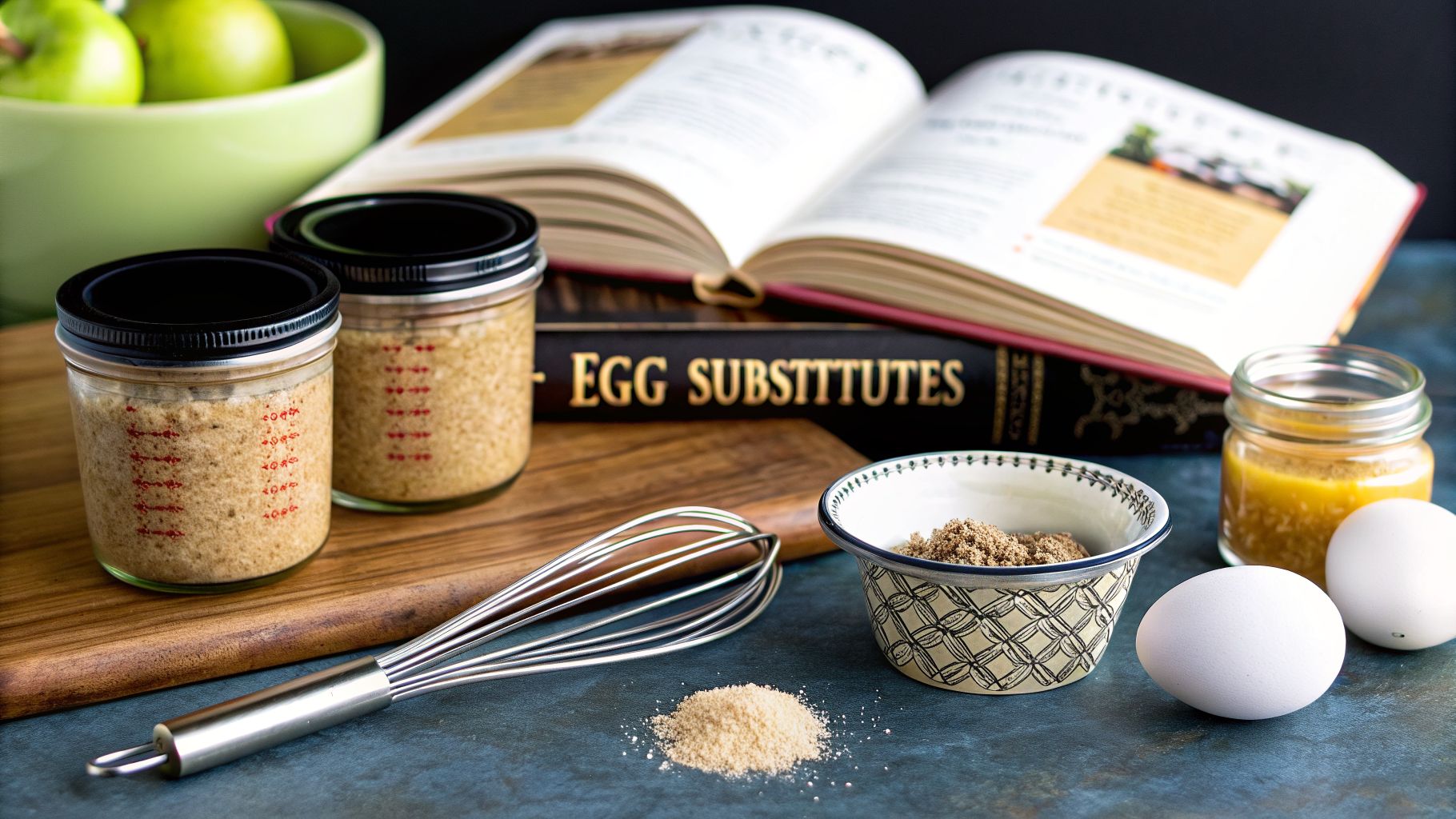
To substitute one large egg in baking, you can use 1/4 cup of unsweetened applesauce for moisture, 1 tablespoon of ground flaxseed mixed with 3 tablespoons of water for binding, or a combination of 1 teaspoon of baking soda with 1 tablespoon of vinegar for leavening. The best substitute depends on the egg's primary function in the recipe.
It’s a familiar story for any home baker: you’re halfway through mixing your favorite cookie dough when you reach into the fridge and find an empty egg carton. Panic sets in. But before you scrap the whole recipe, know this—your pantry is likely already stocked with fantastic egg substitutes.
Knowing the right swap isn't just about saving a recipe in a pinch. It's about having the power to adapt any bake for a vegan diet, manage an egg allergy, or simply make a recipe a little healthier without sacrificing texture or flavor. This guide is your key to unlocking that confidence.
What are the best pantry-friendly egg substitutions?

We’re going to break down not just what to use, but why each substitute works. Understanding the science behind binding, leavening, and moisture will help you move beyond basic swaps and become a more intuitive baker.
Of course, having the right tools makes any job easier. When you're working with stickier, egg-free doughs, a good silicone pastry mat can be a total game-changer, preventing messes and making cleanup a breeze.
Quick Egg Substitution Chart (Per One Large Egg)
Whether you need binding for cookies, moisture for cakes, or lift for muffins, this chart is your go-to reference. Just find the function you need to replicate and pick the pantry staple that fits your recipe best.
| Substitute | Amount | Best For (Function) |
|---|---|---|
| Ground Flaxseed | 1 tbsp flaxseed + 3 tbsp water | Binding (cookies, brownies) |
| Unsweetened Applesauce | 1/4 cup (60g) | Moisture (cakes, muffins) |
| Mashed Banana | 1/4 cup (about 1/2 banana) | Moisture & Binding |
| Silken Tofu | 1/4 cup, blended smooth | Binding & Density (cheesecakes) |
| Vinegar + Baking Soda | 1 tbsp vinegar + 1 tsp soda | Leavening (light cakes, cupcakes) |
| Aquafaba | 3 tbsp (liquid from a can of chickpeas) | Binding & Leavening (meringue) |
| Yogurt or Buttermilk | 1/4 cup | Moisture & Tenderness |
Remember, these are starting points. The best choice depends entirely on the flavor and texture you're aiming for in your final bake.
Whether you're navigating a new dietary need or just trying to be more resourceful in the kitchen, these real-world solutions deliver fantastic results every time. And when you find a new favorite egg-free recipe, you can easily save and organize it using an advanced meal planner.
For a seamless way to integrate these new baking adventures into your weekly routine, check out how the AI Meal Planner can help simplify your entire kitchen life.
Why are bakers looking for egg-free options?
It seems like everyone is looking for great egg substitutes these days. What used to be a niche trick for managing allergies or vegan diets has officially gone mainstream. And it's not just one thing—it’s a mix of rising grocery costs, a bigger focus on where our food comes from, and new health priorities.
Knowing how to whip up a batch of cookies without eggs is becoming a fundamental kitchen skill. When egg prices spike due to supply chain hiccups, having a reliable, pantry-friendly option like applesauce or a simple flax egg means you don't have to skip your weekend baking session.
Are there economic and ethical motivations?
Let's be honest, the cost of groceries has made us all a little more mindful of our spending. Using common pantry items as egg replacers is often way more budget-friendly than buying a carton of eggs, especially if you only bake occasionally.
Beyond your wallet, there’s a growing awareness of animal welfare and the environmental footprint of industrial farming. This has pushed a lot of people to actively seek out more plant-based alternatives in every part of their diet, including baking.
This isn't just a small trend. The market for egg replacement ingredients was already valued at $2.5 billion in 2023 and is on track to hit a massive $4.9 billion by 2035. The bakery and confectionery world is leading this charge, directly responding to what we, as consumers, are asking for. You can dive deeper into the numbers in the full market research report.
How do health and dietary needs play a role?
Health is another huge piece of the puzzle. Egg allergies are one of the most common food allergies, particularly in kids, making egg-free baking an absolute necessity for countless families.
On top of that, many people are choosing to cut back on dietary cholesterol or saturated fat. Since plant-based substitutes are naturally cholesterol-free, they’re an easy and effective swap.
For many of us who love to bake, being able to share our food with everyone is the real joy. Knowing how to make a delicious, allergy-friendly cake or a batch of vegan cookies means no one gets left out.
Mastering egg substitution simply makes you a more flexible, creative, and considerate baker. You'll be ready for anything—from an empty egg carton to a guest with a new dietary need. If you're looking for an easy way to keep track of these new recipes and ingredients, a tool like the AI Meal Planner can be a huge help.
How do you choose the right egg substitute for your recipe?
Picking the right egg substitute is less about a universal swap and more about understanding what the egg was supposed to do in the first place. Think of yourself as a recipe detective. Your first job is to figure out the egg’s primary role: is it there for binding, moisture, or leavening? Nailing this answer is the secret to getting flawless results when you're baking without eggs.
For instance, a dense, fudgy brownie depends on eggs for rich moisture, making a fruit puree a fantastic swap. On the other hand, a light, airy sponge cake needs eggs for lift—a job perfectly suited for whipped aquafaba. Getting the "why" behind the substitute is what separates a decent bake from a truly great one.
How can I figure out the egg's role in my recipe?
Before you reach for the applesauce or flaxseed, pause and analyze your recipe. The ingredient list and the type of baked good you're making offer big clues about what the egg is actually contributing.
For Binding: In things like cookies, meatballs, or veggie burgers, eggs are the glue holding everything together. If a recipe has just one or two eggs alongside a lot of dry ingredients, its main job is probably binding.
For Moisture: Rich, dense recipes like brownies, certain cakes, and some quick breads use eggs to add moisture and create a tender crumb. Eggs are about 75% water, so this is a significant role.
For Leavening: When a recipe calls for whipping egg whites or uses a lot of whole eggs without much chemical leavener (like baking soda or powder), the eggs are there to provide lift. This is absolutely crucial for creating a light, airy structure in angel food cakes, meringues, and soufflés.
This decision-tree infographic is a great visual guide for picking a substitute based on the egg's primary function.

The flowchart cuts right to the chase by starting with the most important question: what does the egg do here? By following the path for binding, moisture, or leavening, you're led straight to the best category of substitutes for that specific task.
How do I match substitutes to my baked goods?
Once you've figured out the egg's job, you can choose a replacement with confidence. The whole point is to mimic the egg's properties as closely as possible.
For Light And Fluffy Cakes (Leavening Is Key) When you're making vanilla cupcakes or a delicate sponge cake, you need a substitute that brings the lift. Aquafaba, the liquid from a can of chickpeas, is a total game-changer here.
To replace one egg, use 3 tablespoons of aquafaba. For maximum lift, you can whip it into soft peaks before gently folding it into your batter. This technique is fantastic for recipes where a light, delicate texture is non-negotiable.
For Dense And Moist Brownies (Moisture Is Priority) In a rich, fudgy brownie, the egg’s main purpose is to add moisture and density. Fruit purees are an excellent and incredibly easy choice for this.
- Unsweetened Applesauce: Use 1/4 cup to replace one egg. It adds plenty of moisture with a very neutral flavor.
- Mashed Banana: Use 1/4 cup for one egg. This works beautifully when you don’t mind a subtle banana flavor in the final product.
- Pumpkin Puree: Use 1/4 cup per egg for unbelievably moist results, especially in spice cakes or brownies.
For Chewy Cookies (Binding Is Essential) To keep your cookies from crumbling into a sad, sandy mess, you need a strong binder. A flax egg is the go-to substitute for this job.
To make one flax egg, just mix 1 tablespoon of ground flaxseed with 3 tablespoons of water. Let it sit for about 5-10 minutes until it becomes gelatinous and thick, much like the consistency of an egg white. This works perfectly in oatmeal, chocolate chip, and peanut butter cookies.
This focus on function isn't just a home-baking trick; it’s mirrored across the entire food industry. By thinking like a food scientist and choosing your substitute based on its function, you can successfully adapt almost any recipe. And if you're on the hunt for egg-free recipes that also pack a protein punch, you might be interested in our guide to creating a high-protein meal plan.
How do you fix common egg-free baking problems?

So you've swapped out the eggs in your favorite recipe, but something went wrong. A flat cake, crumbly cookies, or a dry, tough brownie. It’s a frustrating moment we’ve all faced, but don’t toss that recipe just yet.
Most egg-free baking mishaps are surprisingly easy to diagnose and fix. It almost always comes down to figuring out which job the egg was supposed to do—leavening, binding, or moisture—and then adjusting your approach. Think of this as your baking triage guide.
Why are my baked goods dense or flat?
This is easily the number one complaint I hear. You were hoping for a light, airy crumb, and instead, you got a dense, heavy brick. The culprit is almost always a lack of leavening.
When you whip eggs, they trap air that expands in the oven's heat, giving your bakes that beautiful lift. If your substitute doesn't do the same—like using applesauce in a delicate cake recipe—the final product will be disappointingly flat.
- The Quick Fix: Add some extra oomph with a chemical leavener. For most recipes, simply adding an extra 1/2 teaspoon of baking powder to your dry ingredients will provide the lift your egg substitute is missing.
- The Strategic Fix: Switch to a substitute that’s built for lift. For light cakes or fluffy muffins, the classic combination of 1 teaspoon of baking soda and 1 tablespoon of vinegar works beautifully. Aquafaba is another fantastic choice, especially when a recipe calls for significant rise.
Why did my cookies crumble and fall apart?
There’s nothing more disappointing than pulling a tray of cookies from the oven only to watch them fall apart at the slightest touch. If your cookies spread into a crumbly mess, you've got a binding problem.
The proteins in eggs coagulate with heat, acting like a structural glue that holds everything together. This issue often crops up when using a purely moisture-based replacer, or—and this is a big one—not preparing a flax or chia egg correctly.
Crucial Tip: When using a flax or chia egg, you must let it sit for at least 5-10 minutes. The mixture needs time to become thick and gelatinous. Rushing this step results in a watery mix that provides almost no binding power.
If you did everything right with your flax egg and still have crumbly results, the recipe might just need a stronger binder. Psyllium husk is a powerful alternative that forms a much stronger gel than flax or chia seeds, providing that extra hold.
Why are my brownies and cakes dry?
Did your fudgy brownies turn out more like a tough, dry brownie-brittle? This is a classic sign of insufficient moisture. Eggs are about 75% water, so when you take them out, you have to replace that lost liquid. This is a common problem when using powdered egg replacers that don’t contribute much moisture on their own.
- The Fix: Reach for a moisture-rich substitute. For dense, rich treats like brownies, fudgy cakes, and most muffins, these are my go-to choices:
- 1/4 cup of unsweetened applesauce
- 1/4 cup of pumpkin puree
- 1/4 cup of plain or Greek-style yogurt (or a thick, non-dairy alternative)
These options not only restore the liquid content but also add a wonderful tenderness to the final product. If you're navigating multiple dietary needs, looking through recipes designed for a gluten-free meal plan can be a great source of inspiration for other delicious, allergen-friendly baked goods.
What are the best commercial egg replacers to use?
While whipping up a quick flax egg is great in a pinch, sometimes you just don't want to leave things to chance. This is where commercial egg replacers shine. These products are professionally formulated for one purpose: to give you consistent, reliable results every single time you bake. Think of them as your pantry's insurance policy for perfect cakes and cookies.
The demand for these dependable alternatives has exploded, with the egg replacers market hitting $1.3 billion in 2022. As egg prices have fluctuated, more bakers are turning to these shelf-stable options. You can see more on these trends in this detailed industry analysis.
Should I use powdered egg replacers?
If you've ever walked down a baking aisle, you’ve probably seen a box of powdered egg replacer, like the classic from Bob's Red Mill. These are the unsung heroes of the vegan pantry for a reason. Typically made from a blend of potato and tapioca starches plus leavening agents, they are incredibly shelf-stable and versatile.
You simply mix a bit of powder with water to form a slurry that stands in for one egg. This type of replacer is at its best in recipes where the egg's main job is binding everything together and giving a little bit of lift.
Best uses for powdered replacers:
- Cakes and Cupcakes: Gives you a reliable structure and a beautifully consistent crumb.
- Muffins and Quick Breads: Binds the batter without adding any distracting flavors.
- Cookies: Helps them hold their shape and prevents them from turning into a crumbly mess.
The biggest advantage of a powdered replacer is its total neutrality. It adds structure without imparting any flavor or weird texture, which is crucial for delicate bakes like a classic vanilla cake where you definitely don't want a hint of banana or applesauce.
When should I use liquid plant-based eggs?
On the other side of the coin, you have liquid egg substitutes, with brands like JUST Egg really changing the game. These products are engineered to mimic the taste, texture, and even the appearance of real eggs. You’ll usually find them in the refrigerated aisle, right next to the carton of traditional eggs. They’re often built on a base of mung bean protein, which gives them a surprisingly "eggy" quality.
Liquid replacers are your go-to when the egg is a star player, not just a background binder. They can be scrambled, poured into a frittata, and add a richness to baked goods that powdered replacers just can't replicate.
However, they do have a shorter shelf life and come with a higher price tag. It's best to save them for recipes where you're trying to simulate a real egg experience. The easiest way to think about it is this: use powdered replacers for structure and liquid replacers for richness.
Choosing between powder and liquid really gets to the heart of successful egg-free baking—it's all about matching the right product to the job. Once you find a favorite, you can easily add it to your shopping list with a tool like the AI Meal Planner to keep your pantry stocked.
How can I plan my egg-free baking?
You’ve got the science down and a list of brilliant egg substitutes. That's the hard part. The next step is making all this knowledge a natural part of your weekly routine, so it doesn't feel like a science experiment every time you want to bake.
This is where you shift from simply knowing how to bake without eggs to actually doing it consistently. A little planning can transform this from an occasional fix into a sustainable habit, especially if you have an egg allergy in the house or are moving toward a plant-based diet.
How do I manage my egg-free shopping list?
One of the biggest hurdles with new recipes is remembering the specific ingredients at the store. It’s one thing to grab flour and sugar, but it's another to remember you need ground flaxseed for cookies this week and a can of chickpeas for a meringue experiment next week.
Instead of relying on scattered notes, a dedicated meal planner can handle the logistics. When you add egg-free recipes to your week, the app should automatically update your shopping list with the exact substitutes you'll need.
- Find & Save Recipes: You can build a library of go-to vegan or allergy-friendly desserts.
- Generate a Smart List: The system instantly adds items like silken tofu, applesauce, or that can of chickpeas to your grocery list.
- Track Your Bakes: You can even keep an eye on the nutritional profile of your treats to make sure they align with your health goals.
This removes the guesswork and a ton of mental load. You just show up to the store knowing you'll have everything you need.
How can I get creative and reduce food waste?
Good meal planning isn’t just about scheduling—it’s about using your ingredients wisely and reducing food waste. This mindset really shines with egg-free baking. For instance, if a recipe calls for a can of chickpeas, you’re left with that precious liquid gold: aquafaba.
Thinking like a planner means you don't see leftover aquafaba as waste; you see it as a bonus ingredient. A quick search can turn that liquid into fluffy vegan meringues or a light chocolate mousse for a dessert later in the week, making sure you get the most out of every single grocery item.
For a great example of how this all comes together, imagine planning to make this delicious vegan pumpkin bars recipe for a weekend treat. It's this kind of creative, forward-thinking approach that makes a plant-based lifestyle feel effortless. If you're exploring more of these options, our guide on building a comprehensive vegan meal plan can give you an even bigger picture.
Frequently Asked Questions About Egg Substitutes
Can I use any egg substitute for any recipe?
No, the best practice is to match the substitute to the egg's primary function in that specific recipe, whether it's for binding, leavening, or moisture. For instance, applesauce adds moisture but won't bind cookies like a flax egg will.
How many flax eggs can I use in one recipe?
It's best to stick to a maximum of two or three flax eggs in a single recipe. Using more can result in a dense, gummy texture and an overpowering nutty flavor.
Will my baking taste like chickpeas if I use aquafaba?
No, when aquafaba (the liquid from a can of chickpeas) is whipped with sugar, any "beany" taste completely disappears. It creates a neutral-flavored foam perfect for meringues and mousses.
Are egg substitutes healthier than real eggs?
It depends on your health goals, as it's a trade-off. Plant-based substitutes are cholesterol-free and lower in saturated fat, but they typically lack the protein, vitamin B12, and vitamin D found in eggs.
Why did my recipe turn out so dense?
Density in egg-free baking is almost always a leavening problem, often caused by using a moisture-rich substitute (like banana) when the recipe needed lift. Try adding 1/2 teaspoon of baking powder for a quick fix.
Can I use a ripe banana for everything?
No, a mashed banana adds significant moisture and binding but also imparts a strong banana flavor. Save it for recipes where that taste is complementary, like in muffins or pancakes, not for a classic vanilla cake.
What is the best substitute for one egg white?
The best substitute for one egg white is 2 tablespoons of aquafaba. It whips up just like egg whites and is perfect for making meringues, mousses, and fluffy frostings.
Ready to make egg-free baking a seamless part of your life? AI Meal Planner can help you discover new recipes, automatically add substitute ingredients to your shopping list, and track your nutritional goals. Simplify your healthy eating journey today by exploring the AI Meal Planner.
AI-powered nutrition
Get Your Personalized Meal Plan
AI creates the perfect meals for your goals, lifestyle, and taste.
Start Your Journej