How do I organize a grocery list?
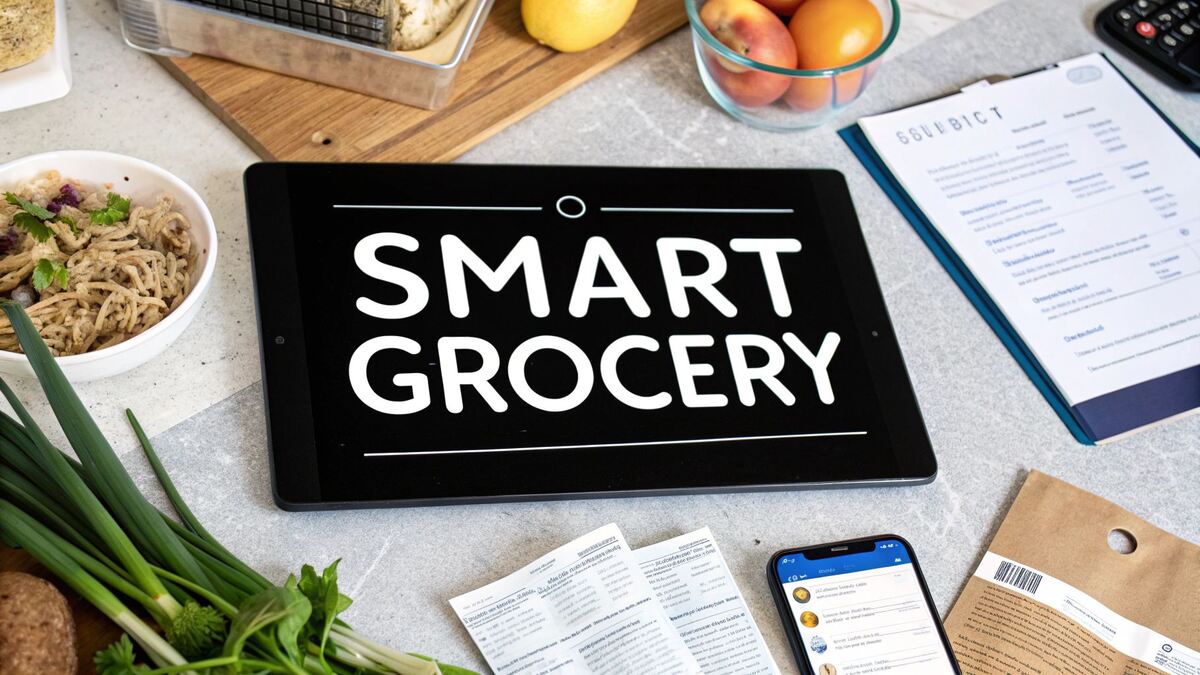
The best way to organize a grocery list is to first take inventory of what you already have, then plan your meals for the week. Group all the necessary ingredients on your list by store category, such as produce, dairy, meat, and pantry items. This method saves time by preventing backtracking and reduces impulse buys.
A well-organized grocery list is more than just a piece of paper—it's your game plan. It’s the tool that transforms a stressful chore into an efficient, budget-friendly mission. Getting a system in place is the first step toward smarter meal planning, less food waste, and a whole lot less stress.
The secret is simple: start by taking a quick inventory of your pantry and fridge. See what you already have before you even think about what to buy. Next, map out your meals for the week and list only the ingredients you need to complete those recipes.
The real game-changer? Grouping items on your list by store aisle—produce, dairy, pantry staples, and so on. This strategic move alone can slash your shopping time by up to 25% and trim your spending by as much as 15% per trip. No more backtracking for forgotten cilantro or getting tempted by the snack aisle three times. It's about working smarter, not harder.
What does a disorganized list actually cost you?
That scribbled, chaotic list does more than just frustrate you at the store—it actively drains your wallet and wastes your precious time. When you shop without a real plan, you're not just buying food. You're paying a hidden tax on inefficiency through impulse buys, forgotten items that require a second trip, and food that ultimately ends up in the trash.
It's a death-by-a-thousand-cuts situation. The real cost shows up in all those small, repeated moments of frustration. It’s the extra ten minutes you spend backtracking for that one forgotten spice. It’s the unplanned box of fancy cookies that somehow jumps into your cart. It’s buying another bag of onions because you just couldn't remember if you had any at home. These little things compound, turning a simple errand into a surprisingly costly habit.
Why does wing-it shopping hurt my budget?
Winging it in the grocery store is a direct hit to your budget. Without a clear list mapping out exactly what you need, you become a prime target for the clever marketing tactics and tempting displays that line every single aisle. Each unplanned purchase, whether it's a BOGO deal on something you don't really need or a flashy snack from an end-cap display, adds up.
It’s not just a feeling; the numbers back it up. Shoppers with poorly organized lists spend an average of 23% more time just wandering the store. That extra time directly spikes impulse buys by 15-20%, which often means wasting $12-18 per visit on stuff that wasn't on the plan. If you want to dive into the data, JLL.com offers some fascinating insights on grocery trends and shopping habits.
How does disorganization waste more than just money?
The consequences bleed out beyond your bank account. A disorganized list is a one-way ticket to food waste, which is a massive issue for both household budgets and the environment. When you buy ingredients without a specific meal in mind, they have a bad habit of just sitting there, unused.
That sad bunch of cilantro wilting in the crisper drawer? The half-used carton of sour cream that just expired? Those are the direct results of unplanned shopping. Every item you throw away is literally tossing money into the garbage.
An unorganized list also creates a ton of mental clutter and stress. The constant effort of trying to remember everything, the frustration of realizing you have to go back for a key ingredient, and the guilt over wasted food all pile up.
The good news is that you can turn this entire cycle around. You can even learn how to create new meals from what you already have—check out our guide on making a meal from what’s in your fridge to get started. Learning how to properly organize your grocery list is the first step, transforming a stressful chore into a seamless, money-saving system.
What is the best way to build a grocery list system?
Let's move past the chaos of a messy list and start building a solution. A rock-solid system for your groceries isn't about being restrictive; it's about being intentional. It’s a simple shift in approach that ensures you buy what you need, use what you buy, and spend less time and money doing it, week after week.
The very first step—and the one most people skip—is to "shop" your own kitchen before you ever leave the house. A quick scan of your pantry, fridge, and freezer tells you exactly what you already have. This simple habit is the foundation of an organized grocery list, instantly shortening your shopping trip and preventing you from buying that third jar of mustard you didn't need.
Why should I start with a meal plan?
Once you know your inventory, you can map out your meals. This doesn't need to be some rigid, hour-by-hour schedule. Just think of it as a loose framework for the week ahead.
- Brainstorm meals: Jot down 3-4 dinner ideas, a couple of options for lunch (hello, leftovers and salads), and your usual breakfast go-tos.
- Find the overlap: Do two of your recipes call for onions or bell peppers? Planning ahead means you can buy one bag instead of two, cutting down on waste.
- Be realistic: If you know Tuesdays are pure chaos, plan for a quick 20-minute meal, not an elaborate recipe you found online. Your plan should serve you, not the other way around.
After listing your meals, break each one down into its core ingredients. This becomes the raw material for your shopping list and makes sure you don't forget that one critical spice.
How should I categorize my list?
This is the secret sauce for an efficient system. Instead of a random jumble of items, group everything by how your favorite grocery store is laid out. Most stores follow a similar pattern, so you can create a standardized template that works almost anywhere.
A typical grocery list organized by category might look something like this:
| Category | Example Items | Why it Works |
|---|---|---|
| Produce | Lettuce, apples, onions, avocados, garlic | Keeps all your fresh items together, often the first section you enter. |
| Meat & Seafood | Chicken breasts, ground turkey, salmon | Groups all your protein needs for the butcher counter. |
| Dairy & Eggs | Milk, Greek yogurt, cheddar cheese, eggs | Prevents you from forgetting cold items in one organized pass. |
| Pantry/Dry Goods | Pasta, canned tomatoes, olive oil, rice, beans | The largest section, covering all your shelf-stable staples. |
| Frozen Foods | Frozen berries, vegetables, pizza crust | The last stop before checkout to keep items from thawing. |
This method turns your shopping trip into a logical path through the store. No more backtracking for forgotten crackers or aimless wandering down the snack aisle—the very behavior that leads to impulse buys.
The infographic below shows exactly how a lack of organization directly leads to wasted time and money.
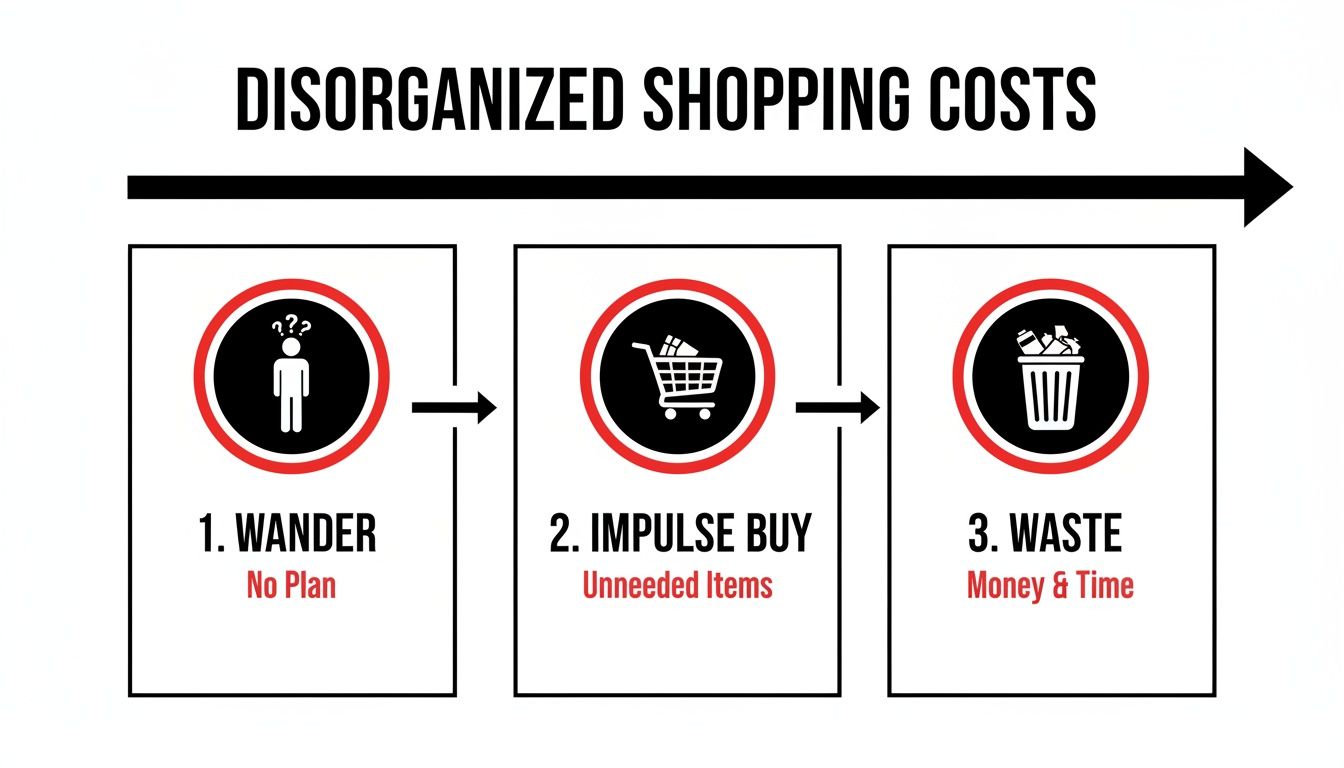
As you can see, the path from aimless wandering to impulse buys and eventual food waste is a straight line, costing you at every step.
How do I create a reusable master list?
Why start from scratch every single week? A master list is your secret weapon. This is a running list of all the staple items your household buys regularly—think milk, eggs, bread, coffee, olive oil, and those snacks the kids can't live without.
By maintaining a master list, you're not creating a new grocery list each week; you're simply editing an existing one. This cuts down planning time significantly and ensures you never forget the basics.
You can keep this as a note on your phone or a printable checklist on the fridge. When it's time to plan, just review the master list and check off what you need for the upcoming week, then add the unique ingredients for your new recipes. It's a simple system, but it's how you organize your grocery list for long-term success.
And for those looking to align their diet with specific health needs, you can refine your master list even further by learning about which foods to eat based on symptoms.
How can I adapt my list for modern shopping?
Let's be honest, the classic "weekly grocery run" to a single store is becoming a relic of the past. Today's reality is a dynamic mix of hunting for deals at multiple stores, placing last-minute online orders, and coordinating a shared list with your partner so you don't end up with four cartons of milk.
Your grocery list system needs to be just as flexible as your shopping habits. A rigid, single-store list just doesn't cut it anymore. The real power of a well-organized list is its ability to adapt to wherever—and however—you shop.
What is the best way to handle shopping at multiple stores?
Many of us are now split shopping: hitting one store for their great produce prices, another for bulk pantry staples, and maybe a third for specialty items. This is a smart way to fight inflation and get the best value, but without a plan, it can quickly turn into a chaotic, time-sucking mess.
This is where your categorized list becomes your mission control. Simply add a "Store" column or use different colored highlighters to assign items to specific locations.
- Big Box Club: Paper towels, olive oil, coffee, frozen chicken
- Local Grocer: Fresh produce, milk, eggs, deli meat
- Specialty Market: Gluten-free bread, specific spices
Suddenly, your master list transforms into several targeted mini-lists. You’re no longer wandering aisles aimlessly; you're on a precise mission at each stop. This multi-store strategy is becoming the norm. With 41% of shoppers stocking up on sales and 35% switching to store brands to save money, a divided list is an essential tactic. You can find more data on 2025 grocery trends at ClarkstonConsulting.com.
How should I organize a list for online vs. in-store trips?
The way you structure a list for a curbside pickup or delivery order is completely different from how you'd set one up for a walk through the store.
For an in-person shop, organizing by aisle layout is king. It’s all about efficiency—minimizing backtracking, saving time, and avoiding the siren song of the snack aisle.
But for an online order, the physical store layout means nothing. The "aisles" are digital categories on a website or app.
To make online shopping fast and painless, organize your list to match the store’s digital categories, like "Dairy & Eggs," "Meat & Seafood," or "Pantry Staples." This lets you fly through the website, adding items to your cart without toggling back and forth between your notes and the browser.
This digital-first approach turns a tedious task into a quick, focused activity, getting you in and out of the digital store in minutes.
How can I manage a shared digital list?
For couples and families, a shared digital list is an absolute game-changer. Using an app like Google Keep, AnyList, or even a shared note on your phone is the simplest way to prevent buying duplicates and making sure nothing critical gets forgotten.
To make it work without causing confusion, it helps to set a few ground rules from the start:
- Be ridiculously specific. Don't just write "cereal." Write "Honey Nut Cheerios, family size." This eliminates guesswork and ensures the right thing comes home.
- Update it in real-time. The moment you use the last of the olive oil, add it. The second someone grabs an item at the store, they check it off. This live-updating is what makes it work.
- Create a "Maybe" or "On Sale" section. For non-essentials or items you only want if there's a good deal, a separate section keeps the main list focused on true needs.
Adapting your list to these modern realities ensures your system stays a powerful ally, no matter how or where you're shopping. You can even find platforms that will do all this sorting for you, creating perfect, categorized lists right from your meal plan. Take a look at how to build your first automated plan at AI-Mealplan.com.
Can a grocery list support health and fitness goals?
Your grocery list is one of the most powerful—and overlooked—tools you have for smashing your health and fitness goals. Long before you ever step into a gym or start a workout, the choices you make while building that list are laying the foundation for your success.
A well-crafted list becomes your nutritional roadmap. It guides you toward the foods that actually align with what you want to achieve and helps you steer clear of the stuff that doesn't. You’re not just buying food; you’re investing in your health, one smart ingredient at a time.
How can I structure a list for weight management?
When weight management is the name of the game, your list needs to prioritize nutrient-dense, low-calorie foods. This means your shopping cart should be filled with items from the perimeter of the grocery store—that's where all the fresh, whole foods live.
Start by dedicating the very top of your list to non-starchy vegetables and lean proteins. This simple trick makes them a non-negotiable part of your shopping trip.
Here’s a practical way to build it out:
- Front-load the good stuff: Put leafy greens, broccoli, bell peppers, and zucchini right at the top.
- Lean on protein: Right after the veggies, add chicken breast, fish, tofu, and legumes.
- Add healthy fats and complex carbs last: Items like avocados, nuts, sweet potatoes, and quinoa are great, but list them after your core produce and protein.
This structure mentally commits you to filling your cart with the most impactful foods first. By the time you get to the snack aisle, there’s less room—and less budget—for the processed stuff.
How do I organize a list by macronutrients?
If you're focused on fitness goals like building muscle or fueling athletic performance, organizing your list by macronutrients—proteins, fats, and carbs—is a total game-changer. This approach guarantees you're buying a balanced mix to support muscle repair, energy, and recovery.
Forget about grouping by store aisle. Instead, create three distinct sections right on your list.
| Macronutrient Category | Example Grocery Items | Purpose |
|---|---|---|
| Proteins | Eggs, Greek yogurt, salmon, whey protein, lentils | For muscle repair and growth. |
| Carbohydrates | Oats, brown rice, bananas, whole-wheat bread | To provide sustained energy for workouts. |
| Fats | Almonds, olive oil, chia seeds, peanut butter | For hormone function and overall health. |
This method gives you a clear visual of your nutritional balance before you even leave the house. You can instantly see if your list is too heavy on one macro and make adjustments. If you need a hand calculating the nutritional value of your planned meals, a recipe nutrition calculator can be an incredibly useful tool.
What is the best system for dietary restrictions?
For anyone navigating dietary restrictions like gluten-free, dairy-free, or vegan diets, an organized grocery list is your first line of defense against accidentally buying the wrong thing.
Your list becomes more than a convenience; it's a critical tool for safety and adherence. It forces you to be intentional and read labels, making the grocery store a safe space rather than a field of hidden landmines.
Create a "master list" of your approved, go-to staples that you can pull from each week. Try grouping items by "safe swaps," like putting almond milk and coconut yogurt under a "Dairy Alternatives" heading. This systematic approach takes the mental load off of constantly second-guessing ingredients and helps you shop with confidence.
How can technology help automate my grocery list?
If crafting a perfectly categorized grocery list by hand each week feels like a chore you’ll never stick with, it’s probably time to let technology take over. The old pen-and-paper method has its charm, but it's slow and leaves way too much room for error. You forget that one crucial ingredient, buy too much of another, and burn precious time organizing everything just right.
An automated system removes the friction that causes most of us to give up on meal planning after just a few weeks. It eliminates the decision fatigue of constantly asking, "What should we eat?" and "What do I need to buy?"
The real power here is consistency. When the process is effortless, sticking to your health goals and budget becomes second nature, not just another item on your to-do list.
Instead of meticulously checking your pantry, cross-referencing recipes, and then trying to group items by store aisle, an AI-powered tool does it all in a blink. It creates a direct, seamless link between your meal plan and your shopping needs, making sure absolutely nothing gets missed.
How does an AI meal planner create smarter lists?
Imagine this: you generate a full week's worth of meals perfectly suited to your dietary goals, taste preferences, and allergies in under 60 seconds. Now, imagine that same system instantly creating a perfectly sorted grocery list from that very plan. That's exactly how tools like the AI Meal Planner are changing the game.
This approach offers some huge advantages:
- Instant Sorting: Your grocery list is automatically organized by aisle (Produce, Dairy, Pantry, etc.), saving you from pacing back and forth in the store.
- Smarter Waste Reduction: The system is smart. It plans for leftovers and finds clever ways to reuse ingredients across multiple recipes, meaning you buy less and throw away less.
- Perfect Goal Alignment: Every single item that makes it onto your list directly supports your health goals, whether that's managing your weight or hitting specific macro targets.
By automating the tedious parts of meal prep, you can reclaim hours of your week and finally gain a reliable system for eating well. If you want to see this in action, you can explore a grocery list generator that builds these smart lists for you. The result is a smooth, stress-free transition from planning to shopping, all without the usual guesswork.
Frequently Asked Questions
What is the smartest way to group items on a grocery list? The most efficient method is to organize your list by store aisle or category (produce, dairy, meat, etc.). This follows the store's layout, prevents backtracking, and saves a significant amount of time.
How does an organized list actually save money? An organized list prevents impulse buys by keeping you focused on the specific items you need for your meal plan. Sticking to your list can cut your grocery bill by 10-15% by eliminating unplanned purchases.
Should I use a digital app or a paper list? A digital app is often more practical because it allows for real-time updates, easy sharing with family members, and automatic sorting by category. However, a simple paper list can also be effective if you prefer it.
How can my list help me reduce food waste? By basing your list on a weekly meal plan, you only buy ingredients you know you will use. This ensures items don't expire in your fridge, directly reducing the amount of food you throw away.
How often should I make a new grocery list? Create a new, specific list once a week before your main shopping trip. To save time, maintain a running "master list" of your staples and simply add the unique ingredients for that week's meals.
Ready to stop making lists and start living healthier? Let AI Meal Planner do the hard work. Get your first personalized meal plan and smart grocery list in under 3 minutes when you visit https://ai-mealplan.com/onboarding.
AI-powered nutrition
Get Your Personalized Meal Plan
AI creates the perfect meals for your goals, lifestyle, and taste.
Start Your Journej