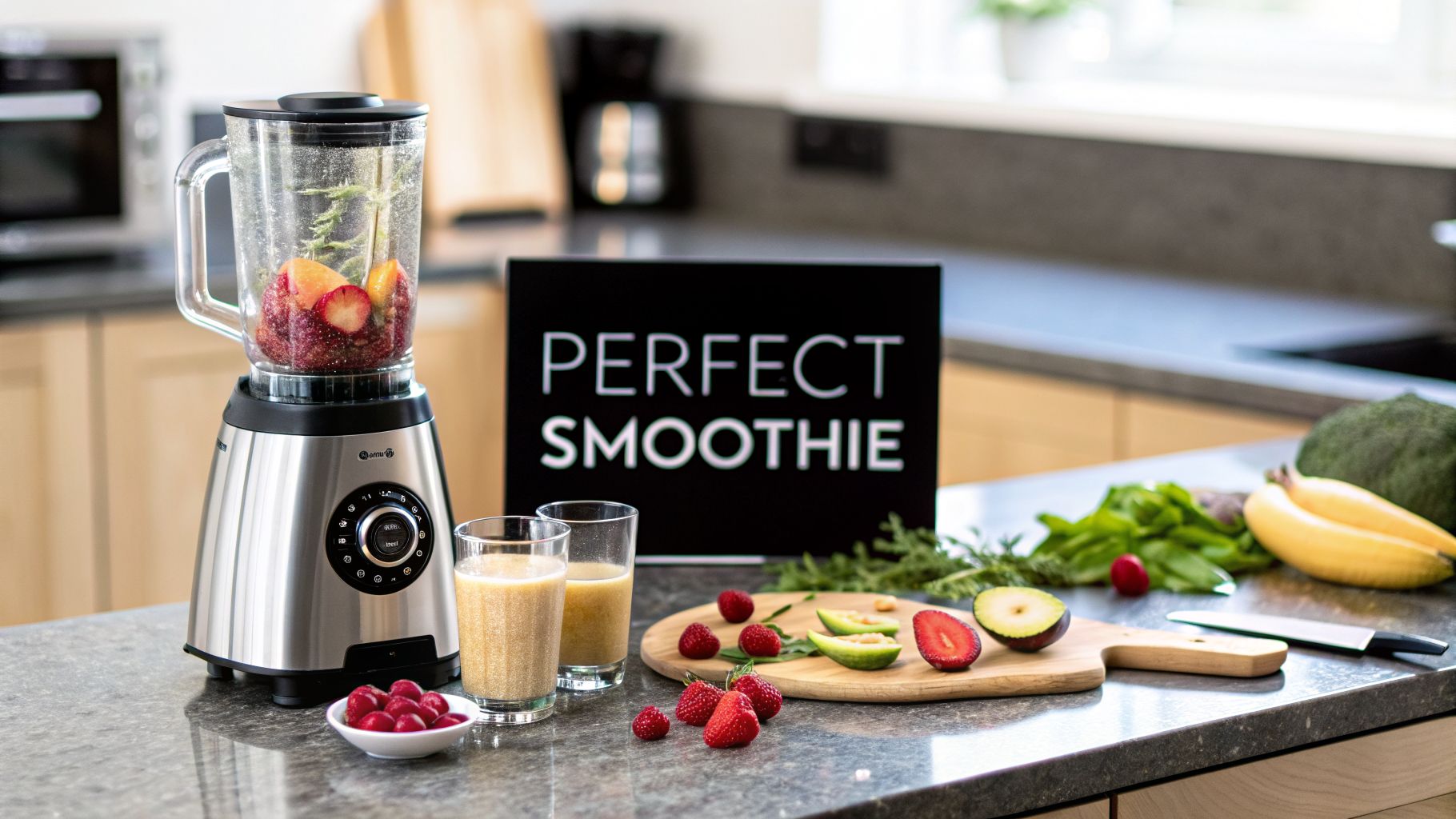
To make a standard fruit smoothie, blend 1 cup of liquid (like milk or water), 1 cup of frozen fruit (like berries), and ½ cup of a creamy base (like yogurt or a banana). Blend on low to start, then on high for 45-60 seconds until smooth. This basic 1-1-½ ratio creates a perfectly balanced single-serving smoothie.
Making a great fruit smoothie is less about a rigid recipe and more about a simple, proven formula. Once you get the hang of it, you'll be able to whip up endless variations without ever looking at instructions again. It all comes down to combining liquid, fruit, a creamy base, and optional boosters to create a texture and flavor you love.

This approach turns your blender into a tool for crafting delicious, nutrient-dense meals that fit your specific goals and whatever you have in the fridge.
How does the basic smoothie formula work?
If you've ever felt underwhelmed by a smoothie recipe, you're not alone. The secret to consistently amazing smoothies isn't a single, rigid recipe—it's a flexible framework that puts you in control. This universal formula is built on four core components:
- Fruit: This is your flavor engine and natural sweetener. Using frozen fruit is highly recommended, as it creates a thick, frosty texture without watering down the smoothie like ice does.
- Liquid: This gets everything moving and blended smoothly. You can use water for a clean base or dairy/plant-based milks for a much creamier result.
- Creamy Base: This is the key to turning a thin drink into a satisfying meal. A ripe banana is a classic, but a scoop of Greek yogurt or half an avocado adds incredible body.
- Boosters: This is your chance to add targeted nutrition—think protein powder for recovery, spinach for a greens kick, or chia seeds for fiber and healthy fats.
When you understand this formula, you're no longer chained to a specific shopping list. You can innovate on the fly with the ingredients you have on hand. This is exactly why smoothies have become a staple for anyone trying to eat well without spending hours in the kitchen.
The global smoothie market is valued at around $15 billion and is expected to more than double by 2034. Fruit-based smoothies hold a dominant market share of over 45%, proving their popularity for quick meals. You can read more in this analysis from Fortune Business Insights.
Expert Insight: The Fruit + Liquid + Creamy Base + Boosters formula empowers you to create endless variations. Once you know the role of each component, you can easily adjust for taste, texture, and nutrition. Need a post-workout refuel? Add protein powder. Looking for a breakfast that keeps you full? Toss in some oats.
How do I choose the right ingredients for my goal?
The secret to a great smoothie isn't a fancy blender; it's what you put inside. Every ingredient plays a role, and the right combination separates a thin drink from a creamy meal that supports your health goals.

This framework is incredibly flexible. Once you understand how the fruit, liquid, base, and boosters work together, you can create endless variations to hit any nutritional target or flavor profile you're craving.
Should I use frozen or fresh fruit?
For that thick, frosty consistency, frozen fruit is almost always the superior choice. It acts as both the ice and the flavor, creating a creamy blend without watering it down. Using only fresh fruit often results in a thin, juice-like drink.
For the best of both worlds, use a mix: a base of frozen mango or berries paired with a fresh, ripe banana gives you that perfect chill plus a vibrant, just-picked flavor. If you only have fresh fruit, chop larger pieces into 1-inch chunks, spread them on a baking sheet, and freeze for a few hours before blending.
What liquid should I pick for creaminess?
The liquid you choose defines the smoothie's character. Each one brings something different to the table.
- Dairy Milk: Lends a rich, creamy texture and a protein boost.
- Almond or Oat Milk: Go-to plant-based options for a creamy, dairy-free smoothie with a neutral taste.
- Coconut Water: Fantastic for a lighter, more hydrating smoothie with a tropical twist, especially post-workout.
- Water: A clean, simple, and effective low-calorie choice where the fruit is the star.
How do I add texture and nutrients with a base?
The creamy base gives your smoothie substance and staying power. This is the ingredient that turns a simple drink into a satisfying meal, so don't skip it.
A common mistake is leaving out the creamy base, which leads to a smoothie that separates quickly and doesn't keep you full. Adding a source of healthy fat or protein, like avocado or Greek yogurt, emulsifies the blend and dramatically increases satiety.
Here are a few favorite options:
- Greek Yogurt: A classic for a reason. It's an excellent source of protein and probiotics, adding a pleasant tang and a thick, luxurious body.
- Avocado: For an unbelievably silky-smooth texture and a dose of healthy fats, half an avocado is a game-changer.
- Soaked Oats or Cashews: Soak them in water for 10 minutes before blending. They add incredible creaminess, fiber, and thickness, perfect for a hearty vegan smoothie.
Which boosters can elevate my smoothie?
Boosters are where you customize your smoothie for specific nutritional needs. These potent additions can turn a simple fruit blend into a targeted nutritional powerhouse. For instance, a scoop of protein powder is non-negotiable for muscle repair after a workout, a cornerstone of any high-protein meal plan.
Other powerhouse boosters include:
- Spinach: A big handful adds vitamins and minerals, and you won't taste it.
- Chia or Flax Seeds: Just one tablespoon adds significant fiber and omega-3s, acting as a natural thickener.
- Nut Butter: A spoonful of almond or peanut butter contributes healthy fats, protein, and a rich, nutty flavor.
Building Your Perfect Smoothie
| Component | Goal: Creaminess & Flavor | Goal: High Protein | Goal: Low Calorie | Goal: Vegan |
|---|---|---|---|---|
| Fruit | Banana, Mango, Peach | Any fruit | Berries, Watermelon | Any fruit |
| Liquid | Whole Milk, Oat Milk | Dairy Milk, Soy Milk | Water, Coconut Water | Almond Milk, Soy Milk |
| Base | Avocado, Greek Yogurt | Greek Yogurt, Cottage Cheese | N/A (or use water as liquid) | Avocado, Soaked Cashews |
| Boosters | Nut Butter, Dates | Protein Powder, Hemp Seeds | Spinach, Chia Seeds | Plant-Based Protein, Oats |
Use this table as your starting point. Experiment with different combinations to find what you love. The best smoothie is the one you’ll actually enjoy making and drinking consistently.
What’s the secret to a flawlessly blended smoothie?

The secret to that perfectly smooth, creamy texture isn't a powerful blender—it’s a smarter blending process. Tossing everything in at once often creates an air pocket around the blades, leaving chunks of fruit unmixed. A flawless texture comes from mastering two things: the order of your ingredients and the speed of your blender.
How should I layer ingredients in my blender?
The way you load your blender is everything. For a standard blender with blades at the bottom, this is the foolproof layering method:
- First, add liquids. Pour in milk, water, or coconut water. This creates a fluid base that lets the blades spin freely.
- Next, add powders and creamy bases. Add protein powder, seeds, nut butters, and yogurt. This lets them dissolve directly into the liquid.
- Then, add fresh fruits and greens. Layer in softer ingredients like fresh banana, spinach, or avocado.
- Finally, add all frozen ingredients. Your frozen fruit and ice should always go in last. Their weight acts like a natural tamper, pushing everything down towards the blades.
Key Takeaway: The proper loading order—liquids first, frozen stuff last—is the single most important technique for achieving a smooth, consistent texture. It prevents motor strain and frustrating air pockets.
Why should I start low and go high?
Once layered, resist hitting the highest speed immediately. The best technique is a two-speed approach:
- Start on your blender’s lowest speed for about 15-20 seconds. This initial slow churn chops up big pieces and pulls everything down into the liquid, forming a vortex.
- After that, ramp up to high speed for another 30-45 seconds. The high speed aerates the mixture and perfectly emulsifies all the ingredients, creating that velvety-smooth texture.
How can I fix common blending problems?
Even with perfect technique, sometimes a smoothie needs adjustment.
- Is your smoothie too thick? If the blender is straining, add a small splash of liquid (about 1/4 cup at a time) and blend again until it moves freely.
- Is your smoothie too thin? To thicken it, toss in a few more pieces of frozen fruit, a spoonful of chia seeds, or a small handful of oats. Blend for another 20-30 seconds.
Mastering this process will guarantee delicious, perfectly-textured results every time.
What are some recipes for different dietary needs?
Once you have the basic formula, you can tailor smoothies to your exact needs. It's no surprise that fruit-based smoothies are so popular, holding a 52% market share. Their versatility makes them a perfect fit for vegan or gluten-free lifestyles and a go-to for the 62% of professionals who need a fast, nutrient-dense breakfast. You can dig deeper into these insights on smoothie consumption.
Think of these recipes as proven starting points, designed to show how adaptable your blender can be.
High-Protein Powerhouse for Muscle Recovery
This smoothie is engineered to refuel your body after a tough workout, delivering a serious dose of protein and carbs.
Recipe Components:
- Liquid: 1 cup unsweetened almond milk
- Fruit: 1 frozen banana
- Creamy Base: ½ cup plain Greek yogurt
- Boosters: 1 scoop vanilla protein powder, 1 tablespoon almond butter
Blend everything until completely smooth. The frozen banana creates an incredible ice-cream-like texture.
Low-Sugar Green Detox for a Nutrient Boost
This blend prioritizes nutrient-dense veggies and low-sugar fruit for a clean, refreshing drink without the sugar crash.
Recipe Components:
- Liquid: 1 cup coconut water
- Fruit: ½ cup frozen green apple chunks, ½ cup frozen pineapple chunks
- Veggies: 1 large handful of fresh spinach, ¼ cup chopped cucumber
- Booster: 1 tablespoon chia seeds
This blend is light and hydrating. The chia seeds add thickness along with fiber and healthy omega-3 fatty acids.
Creamy Vegan Dream for a Dairy-Free Treat
This recipe leverages plant-based fats to produce a rich, velvety texture without any dairy. Soaked cashews are the secret, creating a base that rivals any dairy product. If you’re exploring more dairy-free meals, our guide on creating a satisfying vegan meal plan has more ideas.
Recipe Components:
- Liquid: 1 cup unsweetened oat milk
- Fruit: 1 cup frozen mixed berries
- Creamy Base: ¼ cup raw cashews, soaked in hot water for 15 minutes
- Booster: 1 tablespoon maple syrup (optional)
Pro Tip: Soaking the cashews is a non-negotiable step. It softens them so they break down completely, creating a smooth, cream-like consistency.
How can I make my smoothie routine more efficient?
The biggest hurdle to a daily smoothie habit isn't the blending—it's the prep. The secret to making it stick is to eliminate morning friction by creating "smoothie packs." These are single-serving freezer bags with all your solid ingredients ready to go.
The Smoothie Pack Method
Here’s how to turn your freezer into an instant smoothie bar:
- Build Your Bags: Portion your solid ingredients (frozen fruit, boosters like chia seeds or protein powder, spinach) into freezer-safe bags.
- Label Everything: Label each bag with the recipe name (“Berry Blast,” “Green Machine”) so you know what you’re grabbing.
- Freeze Flat: Lay the bags flat to freeze, then stack them vertically to save space.
When you’re ready, just grab a pack, dump it in the blender, add liquid, and blend.
Smart Shopping and Prep
This strategy works even better when you shop smart. Buying fruit in bulk and freezing it yourself cuts costs and ensures you’re always stocked.
Prepping smoothies at home is a practical strategy for busy people. Freezing fruits can extend their shelf life by up to 3 times, cutting down on food waste. This aligns with meal prep workflows, where users of apps with automated grocery lists report 25% more consistency in their healthy eating goals. Find more on this global market trend here.
To make your routine even more seamless, integrate these recipes into a balanced meal plan. And don't forget your containers; this guide on choosing the best smoothie cups has great tips. For a fully automated process, an AI Meal Planner can streamline your entire healthy eating workflow.
FAQ about making fruit smoothies
Can I make a smoothie the night before?
Yes, pour it into an airtight container like a mason jar, fill it to the top to minimize air, and store it in the fridge. Shake it well before drinking to remix any separation.
How do I make a smoothie creamy without a banana?
Use half a small avocado or a small handful of raw cashews (soaked in hot water for 15 minutes) to add creaminess. Plain Greek yogurt also works well for a thick, protein-rich texture.
Is it better to use fresh or frozen fruit?
For the best texture, frozen fruit is superior as it creates a thick, frosty consistency without watering down the flavor. A mix of frozen and fresh fruit offers the best balance of texture and vibrant taste.
How can I make my smoothie thicker?
Add a few more pieces of frozen fruit, a tablespoon of chia seeds, or a quarter-cup of raw rolled oats. These ingredients absorb liquid and create a much heartier texture.
What is the best blender for making smoothies?
You don't need a top-of-the-line model, but a blender with at least 900 watts of power is ideal. This is strong enough to pulverize frozen fruit and fibrous greens into a smooth, grit-free drink.
How do I keep my smoothie from separating?
Add a binder with healthy fats or fiber, such as a spoonful of nut butter, a scoop of chia seeds, or a small chunk of avocado. These ingredients help emulsify the mixture and keep it stable.
Can I add oats to my smoothie?
Yes, adding about ¼ cup of raw rolled oats is a great way to boost fiber and make your smoothie more filling. For the best texture, let them soak in the liquid for 5-10 minutes before blending.
Ready to make healthy eating effortless? The AI Meal Planner creates personalized meal plans and smart grocery lists based on your goals and preferences. Get your custom plan today!
AI-powered nutrition
Get Your Personalized Meal Plan
AI creates the perfect meals for your goals, lifestyle, and taste.
Start Your Journej