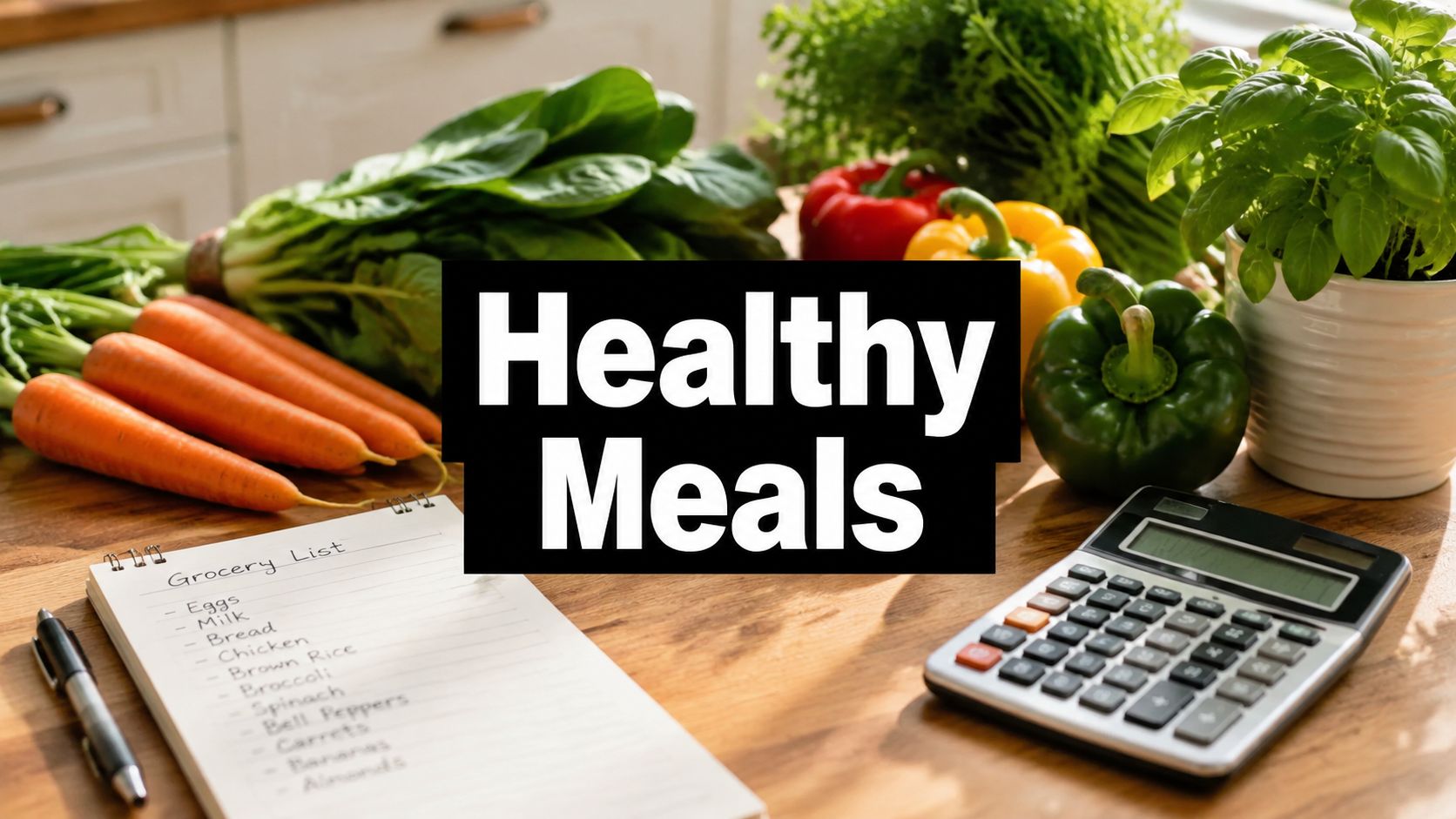
You're standing in front of an open fridge, it's 5 p.m., and the pressure to “make something healthy” is already colliding with the reality of a tight grocery budget. Healthy meals for the family on a budget are absolutely doable, but they come from a repeatable plan, not last-minute inspiration. For a family of four, a healthy grocery pattern can land around $175 per week in a disciplined system, with store choice and planning making a real difference in what you pay Jetter's menu-planning cost analysis.
Healthy meals for the family on a budget work best when you treat them like a workflow. That means planning meals before shopping, buying around sales, reusing ingredients, and protecting yourself from waste and convenience purchases that inflate the bill. Families that eat well on a budget usually aren't luckier, they're more organized.
The 5pm Fridge Problem Every Budget-Conscious Family Faces
At 5 p.m., the fridge can look like a challenge instead of a resource. There's food in it, but not a plan, and that gap is where takeout starts to feel reasonable even when you know it'll blow the week's budget.
The mistake isn't weak willpower. It's trying to solve dinner one decision at a time after the day is already gone. A family that wants healthy meals for the family on a budget needs a system that decides most of dinner before the evening stress hits.
A simple planning rhythm beats daily improvisation
The households that stay steadier usually do three things consistently. They look at what's already in the kitchen, they build meals around what's on sale, and they stop treating every dinner like a brand-new project.
That lines up with what family meal research shows, since healthy eating and meal planning are tightly connected to what's already at home and how often families eat together household and family-meal research summary. It also matches pediatric guidance that says to check pantry inventory first, use sale items and seasonal produce, and compare unit prices before buying American Academy of Pediatrics budget shopping guidance.
Practical rule: If dinner depends on one tired decision at 5 p.m., it's already too late.
Healthy family eating on a budget gets easier when the plan survives ordinary chaos, not perfect weeks. A system that survives late practices, work calls, and empty shelves is what keeps families out of the takeout trap.
Setting a Realistic Weekly Food Budget for a Family
For a family of four, a workable starting point is a healthy meal pattern at $25 per day in 2010 dollars, or about $175 per week, when meals are planned and purchased through bulk and discount settings Jetter's healthy-cost estimate. The same analysis found that bulk and discount market baskets had the lowest average daily cost at $25, while a specialty market basket reached $39 per day. That is a wide spread in daily cost, and it shows how much the store format affects the final bill.

That gap matters because the budget usually gets blown by operating choices, not by one expensive ingredient. Shopping in higher-cost stores, buying convenience foods without a plan, and letting food spoil can erase the savings from cheaper staples. A realistic weekly ceiling gives the family a target, then leaves a little room for produce that swings in and out of season.
If you want a number you can work from instead of a blank page, the grocery budget calculator can turn a weekly target into a plan you can shop against. It is useful for families who need the budget to reflect real meals, not just an abstract limit.
A better question is, “What weekly total lets me feed the family well without drifting into waste or impulse buys?” That framing keeps attention on the actual trade-offs. A cart that looks healthy on paper can still fail if it depends on too many perishables, too many specialty items, or more cooking than the week will realistically allow.
The budget also needs to match the way your household shops. A family with a small freezer and a packed schedule has less room for bulk deals than a family that can store leftovers and split batches across several meals. The same analysis shows why store choice matters so much, and the practical lesson is straightforward, match the spending cap to the way your kitchen runs, then protect that cap with a plan.
If you want a practical guide for the larger money-saving side of planning, save money on groceries is a useful reference for keeping costs down without making dinner miserable.
The Weekly Meal Planning Workflow That Sticks
A meal plan only works if it survives the week, so the process has to stay short and repeatable. The strongest version is a 45-minute Sunday workflow that ends with a printed list and a clear dinner map, not a loose intention to “eat better.”

Inventory first, sales second
Start by checking the pantry, fridge, and freezer before anything else. That keeps you from buying a second bag of rice, a third jar of salsa, or produce that will sit untouched until it spoils.
Then scan weekly ads or digital flyers and build around the sale items instead of forcing a fixed recipe list. The American Academy of Pediatrics recommends using pantry inventory, sale items, seasonal produce, unit prices, and planned coupons as the main shopping controls AAP budget shopping guidance.
Build the meals around overlap
Once the sale items are clear, choose meals that share ingredients across three or four dinners. One protein can show up as tacos one night, soup the next, and rice bowls later in the week.
That overlap cuts waste and keeps you from buying too many ingredients for a single recipe. It also shrinks the shopping list, which makes the store trip faster and lowers the odds of impulse additions.
Write the list in store order
A good grocery list is not alphabetical. It's organized by aisle, so you can move through the store once and stop drifting back and forth.
Simple weekly rule: Check what you have, choose meals from what's on sale, write the list by aisle, and shop once.
For families who want a cleaner list from the start, the grocery list generator can turn a rough meal idea into a shopping run that is easier to follow. That helps when the goal is to keep dinner healthy, cheap, and fast in the same week.
Batch Cooking and Leftover Reuse for Chaotic Weeks
The plan usually breaks on Tuesday, not Sunday. That's when soccer practice runs late, one child hates what's in the pan, and the evening turns into an argument between cooking and ordering out.

The answer is a two-cook rhythm, not nightly cooking heroics. A longer Sunday prep block can cover the base ingredients, then a shorter midweek reset cook rescues the week when schedules get messy.
What a two-cook week looks like
On Sunday, make the foods that hold their shape well, such as cooked grains, roasted vegetables, shredded chicken, hard-boiled eggs, and a pot of soup or beans. On Wednesday, cook a quick bridge meal that uses what's already open, chopped, or partially cooked.
Deliberate leftover reuse matters. Roast chicken can become tacos, soup, or rice bowls later in the week, which means one shopping trip carries farther without needing a new recipe each night.
The right storage setup matters too. Keep components separate so tortillas stay dry, vegetables stay crisp, and sauces don't turn the whole container soggy. If you need sturdy storage for repeated reheating and washing, dishwasher safe meal prep containers are worth looking at before you build the routine.
The freezer is useful, but it's not infinite
Frozen vegetables, bread, cooked rice, and family-size portions of meat can save a week, but freezer space is a real constraint. Big-budget guides often ignore that, yet many households can't stockpile much more than a few items without crowding out the basics.
That's why frozen storage should support the plan, not replace it. Use it for overflow and insurance, then keep the weekly cycle small enough that you're not running a home warehouse.
For recipe ideas that fit a tighter rhythm, the recipes page can help you spot dishes that reheat well and reuse ingredients cleanly. That matters more than trying to cook something impressive every night.
Pantry Staples and Smart Shopping Tactics
Healthy budget cooking starts in the aisle, not on a recipe blog. A family can build a lot from a small foundation of pantry and freezer staples, especially when the goal is to turn one sale item into several meals instead of buying a fresh set of ingredients every night.
A sturdy pantry usually includes rice, oats, pasta, dry beans, canned beans, canned tomatoes, tuna, soup, peanut butter, frozen vegetables, spices, soy sauce, and olive oil. Those basics do not solve every dinner, but they make it possible to cook around what is cheap that week instead of shopping as if every meal needs its own separate grocery list.
The store decision that changes the bill
Unit price matters more than package price when you are comparing staples. Store brands often win for pantry items, while seasonal produce is usually cheaper when it is at its natural price floor, and frozen vegetables help when fresh prices climb.
The practical benefit shows up in the middle of a busy week. If dinner needs to happen fast, the cheaper choice is often the one that gives you more usable food with less waste, fewer specialty items, and less pressure to make a second store run.
One small family detail matters here too. If you are sending snacks or lunches out of the house, keeping them labeled avoids waste and mix-ups, and InchBug's name labels for snacks are one simple organizational tool that helps with that.
| Scenario | Strategy | Approx. Weekly Cost | Trade-off |
|---|---|---|---|
| Name-brand pantry staples | Buy the familiar label | Higher | Easier recognition, less savings |
| Store-brand basics | Choose the house brand | Lower | Fewer marketing extras, same function |
| Fresh produce only | Buy only fresh vegetables and fruit | Higher when prices rise | More prep and more waste risk |
The trade-off is convenience versus flexibility. Store brands, frozen vegetables, and beans give you more room to stay in budget when the week changes, while fresh-only shopping can look tidy on paper and still fall apart when prices rise or plans change.
What not to overpay for
Convenience foods cost more per serving than ingredients you assemble yourself, especially when you are buying items that are already chopped, sauced, or pre-cooked. The guidance from healthy budget guidance from EatRight also points families toward frozen vegetables, beans and peas, and freezing family-size meat portions to reduce waste.
The pediatric guidance on budget shopping makes the same basic point. Pay for convenience only when it solves a real problem, such as a night when the schedule is broken and dinner needs to be salvageable fast. Otherwise, buy the workhorse foods often, the specialty foods rarely, and only the amounts you can realistically use before they spoil.
A planning tool can help here too. If you want a budget menu built around overlap, storage limits, and leftovers that get eaten, the budget meal plan page is a useful place to start. It is easier to stay disciplined when the list already reflects what your household will really use.
Keeping the pantry organized also protects the food you buy. Separate snack bins, clear labels, and repeat-use containers make it easier to spot what needs to be eaten first, which cuts down on forgotten items and the midweek scramble that ends in takeout.
A Sample Week of Budget Family Meals With Costs
A real plan needs more than rules. It needs a week that looks like the kind of week a family lives through, with leftovers, overlap, and enough structure to prevent random takeout decisions.
Seven dinners that reuse ingredients on purpose
| Day | Dinner | Main reuse idea |
|---|---|---|
| Sunday | Roast chicken, rice, and vegetables | Make extra chicken for Monday |
| Monday | Chicken quesadillas | Use leftover chicken and cheese |
| Tuesday | Bean and vegetable soup | Use pantry beans and leftover vegetables |
| Wednesday | Chicken noodle soup | Use remaining chicken and broth base |
| Thursday | Egg fried rice | Use cooked rice and mixed vegetables |
| Friday | Tuna pasta with peas | Use pantry pasta and freezer peas |
| Saturday | Turkey or bean chili | Use canned tomatoes and beans |
This kind of weekly flow keeps the cart smaller because the ingredients keep reappearing in different forms. A family isn't buying seven separate dinners, it's buying a few versatile bases and stretching them across the week.
Reusable grocery list by aisle
Produce
- Onions
- Carrots
- Bell peppers
- Seasonal fruit
- Potatoes
Protein
- Chicken thighs or whole chicken
- Eggs
- Canned tuna
- Beans or lentils
Dairy
- Milk
- Shredded cheese
- Yogurt
Pantry
- Rice
- Pasta
- Tortillas
- Broth
- Canned tomatoes
- Oats
Frozen
- Mixed vegetables
- Broccoli
- Peas
A week like this doesn't need to be fancy. It needs to be repeatable, flexible, and built from ingredients that can carry over without getting wasted. That's why the win is not one perfect dinner, it's a pattern the family can reuse next Sunday.
For a budget-friendly meal map that already thinks in that direction, the budget meal plan page is a useful starting point.
Three Excuses That Derail Budget Plans and How to Beat Them

Every family hits the same three problems sooner or later. A child rejects the meal, the week blows up, or the routine starts to feel repetitive and overpriced.
Picky eaters
Picky eaters do not need a speech, they need controlled choice. Give them two acceptable options inside the plan, not a blank chance to reject dinner entirely.
A one-pager dinner works well here. Serve one base meal, then set out toppings or mix-ins so kids can build their own plate without turning the whole family into separate cooks. That keeps the budget intact and lowers the odds of a dinner standoff.
No time
When the schedule falls apart, stop trying to force a full recipe. Use a 15-minute fallback template, something like protein plus grain plus vegetable, built from what is already cooked or frozen.
The earlier batch-cooking rhythm pays off here. If rice, vegetables, and one protein are ready, dinner becomes assembly instead of cooking, which changes the odds on busy nights.
Too expensive
The cost problem usually starts when the cart drifts away from the weekly benchmark and convenience items fill the gaps. Keep your eye on cost per serving, not on the idea of a perfect cart.
A short rotating theme helps with variety without creating new habits. Taco night, stir-fry night, soup night, and pasta night can all use different flavors while reusing the same core staples. That keeps the family from feeling trapped in one food lane.
The minimum workable version of the system is smaller than it sounds. A 30-minute Sunday reset can cover inventory, meal planning, list writing, and one batch cook if the family already uses the same staple structure every week.
AI Meal Planner automates that loop by generating personalized weekly plans, smart grocery lists sorted by aisle, and leftover-friendly recipes built around your preferences. If you want a system that cuts the blank-page problem and keeps healthy meals for the family on a budget from turning into takeout, visit AI Meal Planner and set up a weekly plan that matches your real schedule.
Healthy family meals on a budget work when planning, shopping, and leftovers all point in the same direction.
AI-powered nutrition
Get Your Personalized Meal Plan
AI creates the perfect meals for your goals, lifestyle, and taste.
Start Your Journej