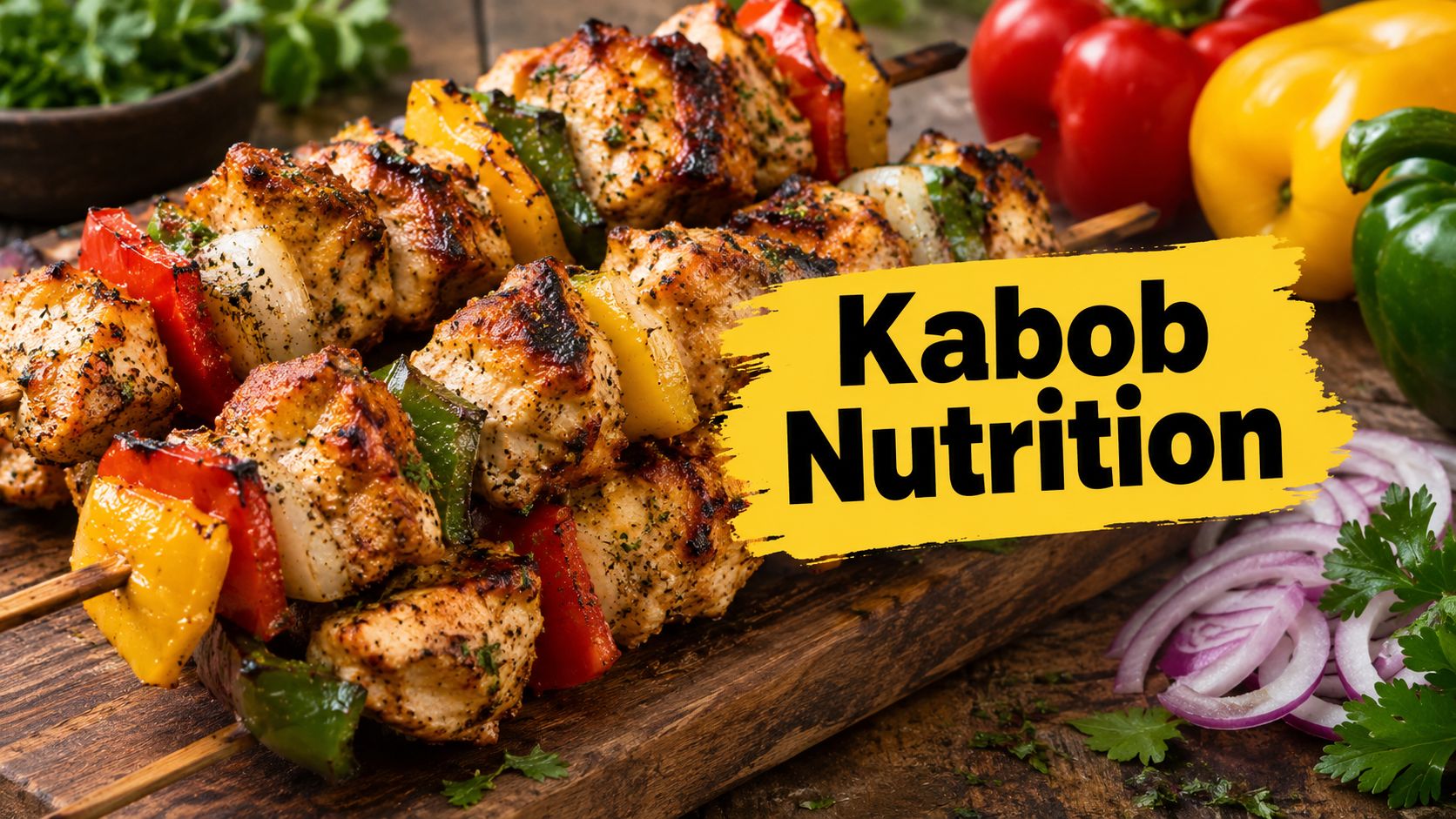
A single chicken kabob serving realistically falls between 140 and 300 calories and provides roughly 22 to 41 grams of protein. Marinades, sauces, cooking oils, vegetables, and sides can move those numbers sharply, so “chicken kabob” isn't one standardized nutrition entry.
That spread is the central fact behind chicken kabob nutrition. A plain grilled skewer can be a lean, protein-dense meal, while a restaurant version with an oil-heavy marinade, creamy sauce, rice, or pita can become a much larger calorie and sodium commitment. Database entries reflect different recipes and serving sizes, not necessarily errors.
The useful approach is to standardize the food by preparation method, portion size, and recipe style. Once those variables are separated, the conflicting labels become easier to interpret and log.
What the Numbers Actually Look Like for One Chicken Kabob
Published entries span 140 to 300 calories for chicken kabob portions, depending on weight, ingredients, and preparation. Per 100 grams, one entry lists 140 calories, 22.5 grams of protein, 4.2 grams of fat, and 1.2 grams of carbohydrates, while another lists 151 calories, 26 grams of protein, and 5 grams of carbohydrates. These figures describe broadly similar foods, but they are not interchangeable. (EatBetter's chicken kebab nutrition entry)
Serving size can change the reading more than the label suggests. A 300-gram portion is listed at 285 calories, 28 grams of protein, 4 grams of fat, 33 grams of carbohydrates, 699 milligrams of sodium, and 752 milligrams of potassium. The same entry records 50% of the Daily Value for protein and 16% for potassium, so portion weight must be logged alongside the recipe style.
A planning range that works better
For meal logging, classify the skewer before choosing a database entry:
- Plain chicken-only skewer: about 140 to 180 calories and 22 to 30 grams of protein.
- Marinated chicken-and-vegetable skewer: about 200 to 260 calories and 25 to 35 grams of protein.
- Restaurant or oil-heavy version: about 260 to 300 calories and as much as 41 grams of protein, depending on portion size.
These bands summarize the cited listings, rather than defining one universal recipe. A grilled chicken kabob entry gives 200 calories, 30 grams of protein, 7 grams of fat, and 5 grams of carbohydrates per 150 grams. A prepared recipe lists 300 calories and 41 grams of protein per serving. (SnapCalorie's grilled chicken kabob data, Whole Foods Market's grilled chicken kabob recipe)
Practical rule: Record skewer weight and recipe style with the food name. “Chicken kabob, skinless breast, lemon-herb” gives a more useful log than “chicken kabob.”
Greek souvlaki recipe ideas help distinguish regional choices in meat, vegetables, seasoning, and serving style. For homemade meals, the chicken recipe nutrition calculator can separate chicken, marinade, and sides before you log the dish.
The Core Macros and Sodium at a Glance
The cited entries differ by as much as 93 calories, 8 grams of protein, 7 grams of fat, and 2 grams of carbohydrates, even though each describes a chicken kabob. One listing reports 157 calories, 27 grams of protein, 3 grams of fat, and 3 grams of carbohydrates per 156 grams. Another reports 250 calories, 35 grams of protein, 10 grams of fat, and 5 grams of carbohydrates per 150 grams. (EatThisMuch's chicken kabob entry, SnapCalorie's grilled chicken kebab data)
Those figures are easier to interpret after standardizing three variables: portion weight, preparation method, and recipe style. A plain breast skewer will usually sit below an oil-heavy or thigh-based version, while sweetened marinades and sauces add carbohydrates. The table is therefore a planning range for one chicken-and-vegetable skewer, not a fixed nutrition label.
Chicken Kabob Core Nutrition Per 1-Skewer Serving
| Nutrient | Per Skewer (Range) | Notes |
|---|---|---|
| Calories | 180 to 260 kcal | Plain breast versions can be lower; oil-heavy versions can be higher |
| Protein | 25 to 35 g | Chicken supplies nearly all the protein |
| Fat | 7 to 14 g | Cut of chicken and added oil are the main drivers |
| Saturated fat | 2 to 4 g | Usually rises with darker meat and richer marinades |
| Carbohydrates | 2 to 6 g | Vegetables and sweetened marinades contribute most |
| Fiber | 0.5 to 1.5 g | Vegetables provide the majority |
| Sodium | 320 to 680 mg | Salt, soy-based marinades, and sauces create the widest swing |
| Potassium | 300 to 450 mg | Chicken contributes substantially, with vegetables adding some |
Sodium requires separate attention because portion size and seasoning can shift it independently of the macros. One chicken kebab entry lists 155 milligrams of sodium per 77 grams, while another lists 699 milligrams per 300 grams. (EatThisMuch's chicken kebab entry, EatBetter's chicken kebab data)
Chicken contributes niacin, vitamin B6, vitamin B12, and potassium. Vegetables add fiber and micronutrient variety, but contribute little of the skewer's protein. For accurate logging, identify the meat cut and marinade first, then account for vegetables, oil, and sauce separately.
How Branded, Database, and Homemade Versions Compare
The same product name can represent very different formulations. A branded 151-gram kabob product lists 119 calories, 22 grams of protein, and 64.9 milligrams of sodium, while another 100-gram kebab entry lists 151 calories, 9.09 grams of protein, and 19.83 grams of carbohydrates. The contrast suggests that breading, vegetables, marinade ingredients, and formulation matter more than the word “kabob” on the label. (Prospre's chicken kabob ingredient data)
A normalized comparison helps, but it still can't eliminate recipe differences. The entries below are drawn from the available verified databases and are best read as examples of formulation spread.
Branded vs Database vs Homemade Chicken Kabob Per 100 g
| Source | Calories | Protein | Fat | Carbs | Sodium |
|---|---|---|---|---|---|
| Branded product example | 119 kcal per 151 g | 22 g per 151 g | Not listed | Not listed | 64.9 mg per 151 g |
| Generic kebab database example | 151 kcal | 9.09 g | Not listed | 19.83 g | Not listed |
| Grilled chicken database example | 140 kcal | 22.5 g | 4.2 g | 1.2 g | Not listed |
The comparison shows why product labels should be read at the ingredient level. A protein-forward skewer made mostly from chicken breast will log differently from a prepared item containing breading or a carbohydrate-rich marinade. The AI Meal Planner food database can be useful when you need a standard serving reference, but a homemade recipe still requires its actual ingredients.
Restaurant and food-truck versions often exceed the plain-grilled range because cooks may baste the meat with butter or use generous oil-based marinades. That doesn't make them unusable for meal planning. It means the skewer should be logged as a prepared dish rather than as unseasoned chicken.
How Marinades Change the Kabob
Marinades change the nutrition profile without changing the chicken's raw identity. Oil adds energy, sugar adds carbohydrates, and salty ingredients can raise sodium. Some liquid remains on the surface after grilling, while some is absorbed into the outer layer of the meat.
The verified data establish that preparation can move chicken kabobs from very lean entries to versions with materially higher calories and carbohydrates. They don't support precise added values for each marinade style listed below, so the table uses qualitative comparisons rather than invented measurements.
Marinade Impact on One Chicken Kabob
| Marinade Style | Added Calories | Added Sodium (mg) | Added Fat (g) | Notes |
|---|---|---|---|---|
| Lemon and herbs | Low | Low to moderate | Low to moderate | Citrus, garlic, and herbs add flavor without making the meat carbohydrate-heavy |
| Yogurt, lemon, and spices | Low | Moderate | Low | Yogurt can add a small amount of carbohydrate and protein |
| Soy, ginger, and garlic | Moderate | High | Low to moderate | Soy sauce is the main sodium concern |
| Oil-heavy Mediterranean blend | Moderate to high | Variable | High | Oil can dominate the calorie increase |
The largest practical mistake is logging only the chicken. A soy-based preparation can turn a lean skewer into a high-sodium item, while a generous oil marinade can raise calories even when the protein stays unchanged. A recipe calculator such as the AI Meal Planner chicken recipe tool helps by assigning the marinade ingredients to the recipe instead of hiding them inside a generic food entry.
For lower-sodium meals, use lemon, vinegar, garlic, herbs, cumin, or black pepper as the flavor base and keep salty sauces separate. For calorie control, measure oil before mixing it into the marinade. The recipe's oil quantity matters more than the marinade's name.
What the Vegetables on the Skewer Add
Vegetables mainly change carbohydrates, fiber, and sugars, while their calorie contribution is usually modest. An all-meat skewer may contain very little carbohydrate. A mixed skewer with bell pepper, onion, zucchini, and tomato adds water, texture, and some carbohydrate without changing the protein base.
Serving size and recipe composition explain why kabob entries can look inconsistent. One database lists a 300-gram chicken kabob portion with 33 grams of carbohydrates, while another lists 3 grams for a 156-gram portion. That gap reflects more than the chicken itself. It may include different vegetable ratios, accompanying ingredients, or preparation styles, so portion size must be logged with the skewer.
Vegetable Add-Ins per Skewer Chunk
| Vegetable (1-inch piece) | Calories | Carbs (g) | Fiber (g) | Sugar (g) |
|---|---|---|---|---|
| Bell pepper | Low | Low | Low | Low |
| Red onion | Low | Low | Low | Low |
| Zucchini | Very low | Very low | Low | Low |
| Cherry tomato | Very low | Very low | Very low | Low |
| Pineapple | Higher than the vegetables above | Moderate | Minimal | Higher |
The practical effect is volume. Peppers, onions, zucchini, and tomatoes add bulk and moisture without the calorie density of oil or creamy sauces. Their contribution remains small when the skewer is mostly chicken, but it becomes more relevant when vegetables occupy a large share of the portion.
Pineapple follows a different pattern. It contributes more sugar and carbohydrate than the savory vegetables, so it should be included in a tightly controlled carbohydrate log rather than treated as a negligible garnish.
Grilled vegetables increase the skewer's volume, but they do not offset calories from oil, sauce, rice, or bread served beside it.
For faster logging, classify the serving as mostly chicken, evenly mixed, or built around sweet ingredients such as pineapple. This method accounts for preparation style and portion composition more accurately than assuming every visible vegetable has the same nutritional effect.
How Sauces and Dips Shift the Profile
Sauce choice can change the nutrition profile of a chicken kabob more than the vegetables on the skewer. Creamy and oil-based dips concentrate calories and fat in a small serving, while salty sauces can raise sodium without adding much volume. Portion control matters because a home spoonful and a restaurant side cup may represent different amounts.
A prepared kabob serving can include 300 calories, 41 grams of protein, 10 grams of fat, 11 grams of carbohydrates, 3 grams of fiber, 6 grams of sugars, and 360 milligrams of sodium per serving. As noted earlier, that serving reflects a recipe context rather than plain grilled chicken, so the accompanying ingredients and sauce need to remain attached to the log.
Sauce Impact per 2-Tablespoon Serving
| Sauce (2 tbsp) | Calories | Fat (g) | Sodium (mg) | Sugar (g) |
|---|---|---|---|---|
| Tzatziki | Low | Low | Moderate | Low |
| Hummus | Moderate | Moderate | Moderate | Low |
| Garlic aioli or toum | High | High | Moderate | Very low |
| Sweet chili sauce | Moderate | Minimal | High | High |
Tzatziki generally keeps the meal closer to a protein-focused build because yogurt supplies its base. Hummus adds fat from chickpeas and tahini. Garlic aioli or toum is chiefly a fat-based addition, while sweet chili sauce shifts the balance toward sugar and sodium.
Record each sauce as a separate ingredient. A yogurt dip combined with hummus can make the accompaniment a meaningful part of the meal, and adding garlic sauce can push its calories above the chicken's contribution. The same rule applies across recipe styles: log the skewer by its own preparation and portion, then add each dip by measured volume.
Requesting sauce on the side gives you control over calories, fat, sugar, and sodium without changing the chicken or vegetables. For database entries with no sauce details, choose a plain-skewer record and add the dip separately rather than accepting the entry's total as a complete meal estimate.
Fitting Chicken Kabobs Into a Macro-Focused Meal Plan
A chicken kabob meal can vary substantially before the side dish reaches the plate. The useful unit for planning is therefore a defined build: cooked chicken portion, preparation method, marinade, side, and separately measured sauce. Counting only the skewers can hide rice, pita, hummus, or oil and produce an incomplete estimate.
Two skewers suit a high-protein meal when the portions are substantial. The protein total may reach 60 to 82 grams when each skewer provides 30 to 41 grams. Treat that range as portion-specific, not as a fixed kabob value. Rice and greens should be logged separately because they belong to the meal build rather than automatically to the chicken entry.
Chicken Kabob Meal Plan Builds
| Plan Type | Skewers | Side | Sauce | Total kcal | Protein (g) | Sodium (mg) |
|---|---|---|---|---|---|---|
| High protein | 2 | Rice and greens | Optional yogurt dip | Depends on side portions | About 60 to 82 | Depends on marinade and sauce |
| Calorie controlled | 1 | Salad | Sauce measured separately | About 400 to 500 for a complete build | About 25 to 30 | Depends on dressing and seasoning |
| Lower sodium | 1 | Unsalted vegetables or salad | No salty dip | Depends on ingredients | Protein remains high | Lower than a soy-based build |
For calorie control, one skewer with salad leaves more room for another meal or snack than two skewers paired with rice, pita, and creamy sauces. A plain skewer can also fit a lighter plate, as shown by the earlier database entry containing 157 calories and 27 grams of protein. The practical distinction is preparation and portion size, not the word “kabob” alone.
Lower-sodium planning starts with the marinade. Lemon-herb seasoning generally creates a different sodium profile from soy-based seasoning, while a salty dip can change the meal after the chicken is cooked. If you manage a daily sodium budget of 1,500 to 2,000 milligrams, calculate the meal from the recipe, label, and measured portions instead of estimating from chicken alone.
Use the AI Meal Planner calorie and macro calculator to compare one- and two-skewer builds with different sides and sauces. The relevant question is which combination fits the day's calorie, protein, and sodium targets. Once each component has its own entry, database variation becomes useful context rather than a contradiction.
Practical Rules and How to Log It Faster
A reliable chicken kabob log records the variables that change its nutrition: cooked portion, recipe style, marinade, vegetables, oil, and sauce. The goal is consistency, not laboratory-level precision.
Weigh cooked chicken when possible. Cooked weight matches the portion on your plate. Raw and cooked weights are not interchangeable, so choose one approach and use it consistently.
Use the skewer only as a visual estimate. A skewer may contain roughly 100 to 120 grams of cooked meat, but restaurant portions vary. If it looks unusually large, weigh the chicken instead of counting sticks.
Record chicken and vegetables separately. For a quick estimate, use 50 to 80 grams of vegetables per skewer piece, then adjust for the ingredients present. Sweet vegetables and fruit should have separate entries from peppers or zucchini because their carbohydrate contribution differs.
Enter marinade and oil as separate items. Do not hide added oil inside “grilled chicken.” Marinade ingredients can raise carbohydrates, fat, fiber, sugars, and sodium while leaving protein relatively high, so the chicken entry alone will understate the finished portion.
Log sauce separately. Yogurt dip, hummus, and garlic sauce represent different nutrition entries. Recording the dip on its own prevents a lean skewer from appearing lower in calories or sodium than the meal is.

AI Meal Planner can reduce repeated entry work by letting you build recipes and meal plans from ingredients, serving sizes, calories, and macros. For chicken kabobs, enter the skewer count, chicken cut, marinade, vegetables, and sauce separately. The resulting meal then reflects the preparation and portion rather than a generic database average.
The fastest accurate estimate follows a fixed sequence: identify the cooked portion, classify the recipe style, record marinade and oil, separate the vegetables, and add the dip. This explains why database entries disagree without making the numbers unusable.
The video below offers another visual reference for preparing chicken skewers.
AI Meal Planner creates personalized weekly meal plans and smart grocery lists based on goals, dietary preferences, and allergies, with calories and macros calculated for the meals it builds. Visit AI Meal Planner to plan chicken kabob meals with portions, sides, and sauce accounted for.
AI-powered nutrition
Get Your Personalized Meal Plan
AI creates the perfect meals for your goals, lifestyle, and taste.
Start Your Journej