You're probably here because black cod feels hard to log accurately. It tastes rich, restaurant portions vary, and one nutrition entry can look very different from another.
How many calories are in black cod?
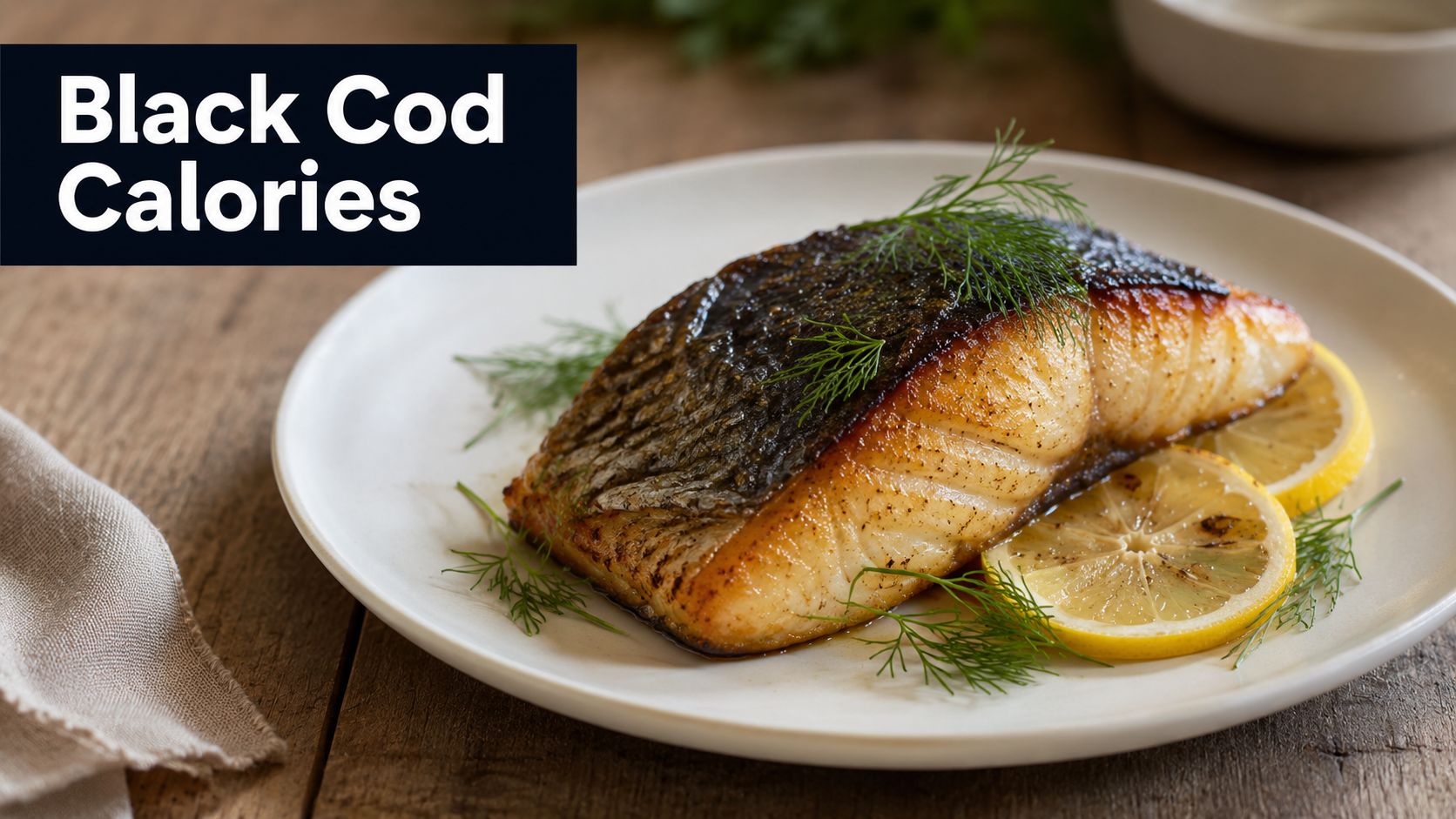
A 3.5 oz (100 g) cooked portion of black cod contains about 250 calories, with 17 g protein, 20 g fat, and 0 g carbohydrate, according to the Alaska Seafood black cod fact sheet. Raw and retail listings can be lower, with values around 195 calories per 3.5 oz raw and over 250 calories per 3.5 oz cooked, so the right entry depends on portion size and preparation. For meal planning, black cod is best treated as a rich, oil-heavy fish, not a lean white fish.
Black cod is one of those foods people often avoid when they're trying to eat “clean,” not because it's unhealthy, but because it's easy to misjudge. A fillet looks modest on the plate, yet it eats like a much richer fish than cod, haddock, or tilapia.
That mismatch is where calorie tracking goes sideways. If you log black cod as if it were a lean white fish, or you use a raw entry for a cooked restaurant portion, your meal plan can drift fast.
Your Guide to Understanding Black Cod Nutrition
Black cod, also called sablefish, has a premium reputation for a reason. It's silky, flavorful, and naturally high in fat, which gives it that buttery texture people love. It also means black cod calories aren't simple.
There is often a desire for one number. In practice, that single number often creates more confusion than clarity. A nutrition app entry might reflect a raw fillet, a cooked serving, or a retailer's specific cut. Those aren't interchangeable.
Why black cod confuses calorie trackers
Two things create the biggest problems:
- Portion drift: A fish counter portion, a restaurant fillet, and a “serving size” on a label often aren't the same.
- Cooking drift: When fish cooks, it loses water. That makes calories more concentrated by weight.
- Recipe drift: Miso glazes, butter, oil, and pan sauces can change the final meal much more than people expect.
Practical rule: Don't ask only “How many calories are in black cod?” Ask “How much cooked black cod am I actually eating, and what was added to it?”
That framing gives you a far more useful answer.
What works better than using a single static number
When I counsel clients on rich seafood, I don't tell them to avoid it. I tell them to classify it correctly. Black cod belongs in the same mental category as fatty fish you plan around, not “free” lean protein.
That matters whether your goal is weight loss, muscle gain, or just steadier eating. Black cod can fit all of those. It just fits differently than a lean fillet does.
A good approach is to use a reliable baseline, then adjust for real-life cooking and serving size. That's how you enjoy it without second-guessing every meal.
What Is the Exact Nutritional Profile of Black Cod?
A static calorie number is rarely enough to plan black cod well. The more useful question is what the fish looks like in a standard reference amount, then how that changes once your portion and cooking method enter the picture.
Using the cooked reference cited earlier in the article, a 100 g cooked edible portion of black cod provides 250 calories, 17 g of protein, 20 g of total fat, 4 g of saturated fat, 70 mg of sodium, 65 mg of cholesterol, 0 g carbohydrate, and about 1,800 mg of omega-3 fatty acids.

The baseline you should remember
For meal planning, save one verified cooked entry and treat it as your reference point, not as a universal answer for every fillet on your plate.
| Nutrient per 100 g cooked black cod | Amount |
|---|---|
| Calories | 250 |
| Protein | 17 g |
| Total fat | 20 g |
| Saturated fat | 4 g |
| Carbohydrate | 0 g |
| Omega-3 fatty acids | about 1,800 mg |
That table is useful because it reflects black cod in the form many people eat it. If you log meals often, it helps to compare your app entry against a reliable food database for meal planning so you are not mixing raw and cooked values.
What matters most in practice
Protein is part of the picture, but fat is what usually changes the planning decision. At 20 g of fat per 100 g cooked, black cod fits better with richer fish like salmon than with very lean white fish.
That has trade-offs. The higher fat content supports flavor, satiety, and omega-3 intake. It also means calories rise faster as portions get larger.
In practice, this is why a small difference in serving size matters more with black cod than with cod, haddock, or tilapia. A restaurant fillet can easily run well beyond 100 g cooked, and once a glaze or sauce is added, the final meal can land far above the baseline fish entry.
How to use this nutrition profile accurately
Use the numbers above as your anchor, then adjust based on the portion you serve. If your usual prep is simple, tools like these Ring Hot Water cooking suggestions can help keep the meal closer to the fish's base nutrition instead of turning it into a sauce-heavy dish.
Black cod is a nutrient-dense fatty fish. That is why it can be a strong choice in a healthy meal plan, but it needs more careful tracking than a lean fillet.
How Does Cooking Affect Black Cod Calories?
The calorie count changes for two practical reasons. First, cooking reduces water weight, which makes the fish more calorie-dense per ounce. Second, many black cod recipes include flavorful additions that push the final dish well above the fish alone.
A retail nutrition reference notes that black cod can range from 195 calories per 3.5 oz raw to over 250 calories per 3.5 oz cooked, with the difference driven by water loss during cooking and the common use of oils or sauces, as shown on the Seattle Fish Company black cod fillet page.
Why cooked fish looks higher in calories
This part trips people up. Cooking doesn't magically create calories in the fish itself. What changes is the weight. As moisture cooks off, the portion gets lighter, so the calories become more concentrated per measured ounce or gram.
That's why a cooked database entry often looks higher than a raw one. Both may describe the same fish at different stages.
What usually throws off logging
The biggest tracking mistakes aren't complicated:
- Using a raw entry for a cooked serving
- Logging only the fish, not the glaze
- Ignoring cooking fat in the pan or brush-on marinade
- Estimating a restaurant portion as “one serving”
For home cooking, simpler methods make tracking easier. If you want lower-fuss prep ideas, these Ring Hot Water cooking suggestions are a useful reminder that grilling, baking, steaming, and lighter seasoning approaches keep the total meal easier to account for.
If calorie accuracy matters, track the fish and the extras separately. That one habit fixes most logging errors.
For recipes, I prefer a calculator that lets you enter the fish plus every oil, butter, glaze, or marinade component as its own ingredient. A recipe nutrition calculator is much more reliable than picking the first generic black cod entry you see.
How Does Black Cod Compare to Other Fish?
A common tracking mistake happens at the grocery store. Someone plans for “fish” as a light dinner, then buys black cod and logs it like cod or tuna. That can throw off the meal because black cod belongs in a different nutrition category.
The infographic below gives a visual snapshot.

Black cod eats more like salmon than like a lean white fish. It brings a richer texture, more fat, and a higher calorie load per serving, which matters if you are building meals around a specific energy target. Atlantic cod and water-packed tuna usually fit better in lower-calorie, higher-protein plans because they give you more protein for fewer calories. Black cod gives up some of that protein efficiency in exchange for richness and built-in fat.
That trade-off can work in your favor.
A black cod fillet often needs very little added oil to feel satisfying, while leaner fish may need more fat from cooking oil, sauce, or sides to feel like a complete meal. In practice, the final calorie gap between fish choices can narrow if the lean fish ends up paired with butter, aioli, or a generous drizzle of olive oil.
Here is the most practical way to compare them for meal planning:
- Black cod fits best when you want a richer fish with enough natural fat to carry the meal.
- Salmon is in a similar general category, though the exact calories still depend on species, cut, and cooking method.
- Atlantic cod works well when you want a lighter seafood option and more room in the meal for calorie-dense sides.
- Tuna is often the most protein-forward choice, especially in simpler preparations, but it will not give the same buttery texture as black cod.
Portion size matters as much as species. A modest serving of black cod can fit well into an anti-inflammatory meal plan built around omega-3-rich fish, while a restaurant-sized fillet may land closer to the calorie impact of a much larger portion of lean fish.
For clients who want satiety and flavor with minimal extras, black cod is often a smart pick. For clients trying to maximize protein while keeping calories tighter, cod or tuna usually make logging easier. That is why a single calorie number for “fish” is not very useful. The better question is which fish matches the rest of the plate.
If you are building dinners around protein targets and controlled carbs, these high protein low carb meals can give you ideas for where black cod fits and where a leaner fish may make more sense.
Why Is Black Cod a Healthy Choice Despite the Calories?
Higher calories don't automatically make a food a poor choice. With black cod, the better question is what you get for those calories.
One of the clearest reasons nutrition professionals still value it is omega-3 content. A fish information source reports that black cod provides approximately 1,792 mg of omega-3 fatty acids per 100 g serving, a key reason for its premium health reputation, according to Positively Groundfish's black cod information.

Why these calories can be worth allocating
Black cod's calories are largely tied to fats people often want more of in a balanced diet, especially omega-3 fats. That changes the conversation from “Is this too high in calories?” to “Is this a smart use of calories in my day?”
For many health-conscious eaters, the answer is yes. Black cod can support a meal pattern focused on cardiovascular health, brain-supportive fats, and stronger satiety.
A fatty fish can be calorie-dense and still be a very smart nutrition choice. Black cod is a good example.
Its protein also matters. Even though black cod isn't the leanest fish, it still contributes meaningful protein to a meal, which helps support fullness and muscle maintenance.
A short explainer can help if you want cooking ideas before building it into your routine:
Who tends to benefit most from black cod
Black cod often fits well for people who want:
- Lower-carb meal structure with naturally fatty protein
- More variety in anti-inflammatory eating patterns
- A satisfying dinner that doesn't require a heavy starch to feel complete
If you're trying to build more seafood into a protein-focused routine, these high protein low carb meals can help with pairing ideas and meal structure. For a broader eating pattern centered on similar choices, an anti-inflammatory meal plan gives a useful framework.
How Should You Portion and Track Black Cod?
You buy a beautiful black cod fillet, log a generic calorie number, then cook it down and eat a much smaller piece than you started with. That is where tracking usually goes off course. Black cod is one of those foods where raw versus cooked weight can change the entry enough to matter, especially if you are trying to keep your meal plan tight.

The practical fix is simple. Measure it in the same form you plan to log it. If you weigh the fillet raw, use a raw entry. If you portion it after cooking, use a cooked entry. Mixing those up is one of the fastest ways to undercount or overcount black cod.
Portion the fish before you build the plate
Portion first. Plate second.
That order matters more with black cod than with a very lean fish because the calories are concentrated in a smaller serving. A fillet that looks moderate on the plate can still take up a meaningful share of your meal's calories.
A useful sequence looks like this:
- Weigh the fillet before cooking, or weigh the cooked portion if that is how you track
- Choose a database entry that matches raw or cooked
- Log added oil, butter, marinade, or glaze separately
- Build the rest of the meal around that portion
Visual estimates can work in a rush, but they are blunt tools. For black cod, a food scale gives you much better control because the fish is rich enough that small differences in portion size add up.
What works well in real meal planning
Black cod usually fits best when the rest of the plate stays straightforward. I would pair it with vegetables, greens, mushrooms, broth-based sides, or a modest grain serving instead of adding more rich ingredients by habit.
Good examples include:
- Black cod with roasted bok choy or broccoli
- Black cod with rice and a sharp cucumber salad
- Black cod with steamed vegetables and a miso-free or lightly dressed side
The trade-off is straightforward. The fish brings plenty of richness on its own, so the meal does not need much extra fat to feel satisfying.
Heavy sauces, buttery mash, and sweet glazes can still work, but they change the nutrition math quickly. If the goal is calorie control, choose either a richer fish or richer extras, not both in the same meal unless you have already planned for it.
How to log it without undercounting
Use the most specific entry available. “Black cod, raw” or “black cod, cooked” is far better than “fish fillet” or “cod,” which may refer to a much leaner fish. Restaurant black cod deserves extra caution because the dish often includes oil, miso glaze, sugar, or butter that does not show up clearly from appearance alone.
If you want a clearer target for how black cod fits into your day, use a calorie and macro calculator for your daily intake. Then slot black cod into a meal where its higher fat content works for your plan, instead of relying on a single calorie number that may not match the portion or preparation you ate.
For people who eat black cod regularly, consistency matters more than perfection. Track it the same way each time, stay honest about cooking fats, and your log becomes useful enough to guide real decisions.
Frequently Asked Questions About Black Cod
| Question | Answer |
|---|---|
| Is black cod good for weight loss? | It can be, if you portion it intentionally and account for cooking fats. Its richness can also make smaller servings feel satisfying. |
| Is black cod the same as cod? | No. Black cod is also called sablefish and is nutritionally much richer than typical lean cod. |
| Why do black cod calories vary so much online? | Different entries may reflect raw versus cooked fish, different cut sizes, and whether oils or sauces were included. |
| Is black cod low carb? | Yes. The verified nutrition profile lists 0 g carbohydrate for a cooked 100 g serving. |
| Why does black cod taste so buttery? | Its naturally high fat content gives it a soft, silky texture and richer flavor than lean white fish. |
| Should I log black cod as raw or cooked? | Log it in the same form you measured it. If you weighed it cooked, use a cooked entry. |
| Is black cod a healthy fat source? | Yes. Its reputation is strongly tied to its high omega-3 content and overall fatty fish profile. |
If you want meal plans that already account for rich proteins, portion sizes, and calorie targets, AI Meal Planner makes that process much easier. It helps you build weekly meals around your goals, with calories and macros mapped out so foods like black cod can fit without guesswork.
AI-powered nutrition
Get Your Personalized Meal Plan
AI creates the perfect meals for your goals, lifestyle, and taste.
Start Your Journej