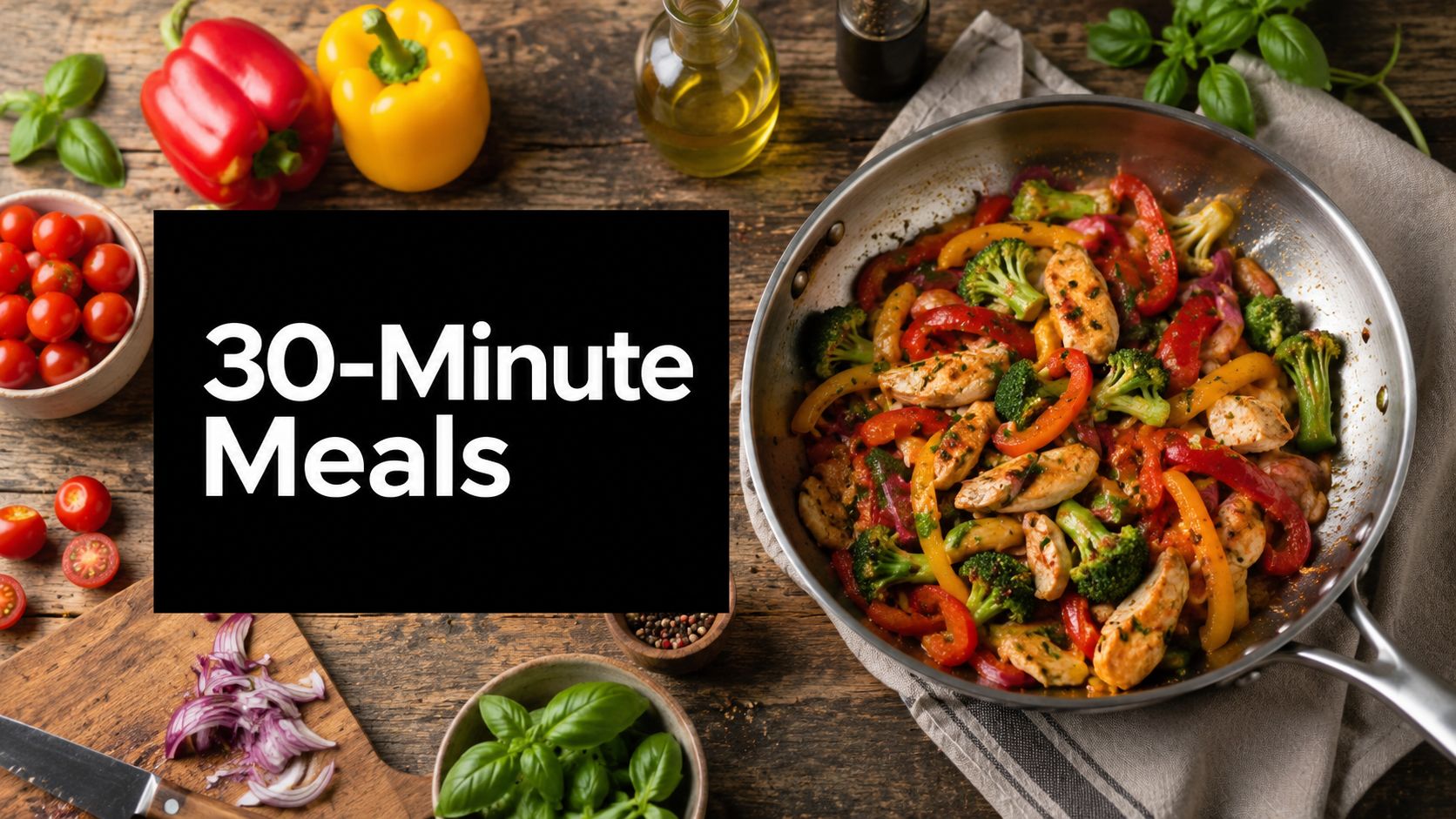
How do you get a real 30 minute dinner on the table night after night without defaulting to takeout?
It starts with treating dinner like a repeatable system, not a stack of random recipes. In practice, fast dinners work when the cooking method, protein choice, side, and cleanup all fit the same half-hour window. That usually means quick-cooking proteins, one primary pan or tray, and at least one component that can cook while something else is happening.
Home cooks already have endless recipe ideas. What they often lack is a workflow they can repeat on a busy weeknight. The useful shift is to build a small set of dinner templates, then sort them by how you eat: balanced, vegan, keto, or gluten-free. That makes weekly planning faster because you are choosing from proven formats, not starting from zero every evening.
I use the same filter in meal prep. Pick the template first. Then plug in the protein, vegetables, starch, and sauce that match your nutrition target. A sheet pan dinner can stay balanced with potatoes and chicken, go vegan with tofu and chickpeas, or go lower-carb with salmon and broccoli. If protein is the main priority, a high-protein meal plan makes these swaps easier to organize across the week.
Speed also depends on honesty. A dinner can be called "30 minutes" and still miss the mark if it needs three pans, a long ingredient list, or fussy prep. The meals that hold up in real kitchens are the ones with a clear order of operations: start the item that takes longest, overlap the rest, and keep the side simple.
A good rule is straightforward. If a meal needs marinating, constant stirring on multiple burners, and exact timing on several separate components, it is not a dependable weeknight 30 minute dinner.
How do you make a real 30 minute dinner work every night
The most reliable way is to pick one of a few proven formats and adapt it to your diet. Balanced eaters, vegan cooks, keto followers, and gluten-free households can all use the same dinner structure with different starches, proteins, and sauces.
Here are the 15 dinner ideas I come back to when speed matters and flavor still has to show up.
1. Sheet Pan Protein and Vegetables

A sheet pan dinner works because everything cooks at the same time and cleanup stays under control. Salmon with Brussels sprouts and sweet potato is the classic balanced version, but chicken breast with broccoli, tofu with mixed vegetables, or turkey meatballs with green beans all follow the same pattern.
The key is matching ingredients by cook speed. Dense vegetables need smaller cuts than zucchini or peppers. If the tray has one giant sweet potato wedge next to tiny broccoli florets, dinner drags and something turns mushy.
Best swaps by diet
- Balanced: Use salmon or chicken with a starchy vegetable like sweet potato.
- Vegan: Use extra-firm tofu and finish with tahini or a lemony bean dressing.
- Keto or low-carb: Skip the sweet potato and double the broccoli, cauliflower, or green beans.
- Gluten-free: The format is naturally easy to keep gluten-free if your seasonings are clean.
For macro-driven planning, this is one of the easiest formats to portion. Protein sits in one lane, vegetables in another, and any carb add-on is obvious. If you want that structure built into your weekly setup, the high-protein meal planning flow is a strong fit for this template.
Cut vegetables evenly, pat the protein dry, and line the tray with parchment. Those three steps prevent most sheet pan failures.
2. Stir-Fry with Quick-Cooking Proteins
Need a dinner format that adapts to whatever protein is in the fridge and still finishes in 30 minutes? Stir-fry is one of the few that does it consistently, but only if the prep is done before the pan gets hot.

The method is simple. Choose a quick-cooking protein, pair it with vegetables that can handle high heat, and mix the sauce in advance. Shrimp, thin-sliced chicken, beef strips, crumbled ground turkey, and extra-firm tofu all fit. The trade-off is that stir-fry gives you very little recovery time. If the sauce is not mixed or the vegetables are cut unevenly, the pan goes from fast to sloppy in a minute.
Start with the proteins that cook in a flash. Shrimp and thin beef are the fastest. Chicken works well if sliced small across the grain. Tofu holds up best when it is pressed first and seared without crowding. For meal planning, this makes stir-fry one of the easiest templates to sort by dietary need instead of by recipe.
Best stir-fry templates by diet
- Balanced: Shrimp, broccoli, bell peppers, and a sesame-garlic sauce over rice.
- Vegan: Extra-firm tofu, bok choy, mushrooms, and chili crisp with edamame or brown rice.
- Keto or low-carb: Chicken or beef with cabbage, zucchini, and peppers. Skip the rice and use cauliflower rice if needed.
- Gluten-free: Use tamari instead of soy sauce and check bottled sauces carefully, since that is where gluten usually sneaks in.
The time-saving move is sequencing. Aromatics first. Protein next. Hard vegetables after that. Tender vegetables and sauce go in at the end. That order keeps the pan hot and the vegetables crisp instead of watery.
A dependable mix looks like this:
- shrimp, broccoli, and sesame-garlic sauce
- chicken, mushrooms, and tamari
- beef, bell peppers, and ginger
- tofu, bok choy, and chili crisp
Batch prep helps this template more than almost any other dinner on the list. Slice onions, peppers, cabbage, and mushrooms once or twice a week, then store them in separate containers by cook time. That small step turns stir-fry into a real meal planning tool instead of a last-minute scramble.
Later, if you want to see the motion and pan rhythm, this quick stir-fry cooking video demonstration shows the kind of high-heat sequencing that keeps ingredients from steaming.
3. Pasta with Lean Protein Sauce
Pasta gets dismissed too quickly by people trying to eat better. In practice, it's one of the most useful weeknight bases because the pot of water does part of the timing work for you.
Brown ground turkey, ground chicken, lean beef, or plant-based mince while the pasta cooks. Add tomatoes, herbs, spinach, and a splash of pasta water. That last part matters because pasta water gives the sauce body without forcing you into cream or extra cheese.
Smart versions that still feel like dinner
- Balanced: Whole grain pasta with turkey marinara and spinach.
- Gluten-free: Use a gluten-free pasta and keep the sauce simple.
- Higher protein: Use legume pasta with ground chicken and mushrooms.
- Vegan: Build the sauce with olive oil, garlic, tomatoes, lentils, or plant-based crumbles.
What doesn't work is trying to make a reduced Sunday sauce on a weeknight. For a real 30 minute dinner, use canned tomatoes, dried herbs, and one pan. Save the long simmer for the weekend.
4. Grain Bowls with Roasted Components

Grain bowls stop being slow once the grain is already cooked. That's the whole trick. If quinoa, rice, or farro is sitting in the fridge, dinner becomes assembly plus one hot component.
A bowl can be balanced without feeling rigid. Quinoa with roasted sweet potato, kale, and chickpeas works. Brown rice with grilled chicken and broccoli works. Tofu, avocado, raw cucumbers, and a tahini dressing also works.
How to keep bowls from tasting like leftovers
Use contrast. Add one warm item, one crisp item, one creamy element, and one sharp dressing. A bowl with only soft components tastes flat even when the ingredients are good.
This is also one of the best templates for dietary customization at the same table. One person can add chicken, another can use chickpeas, and someone eating gluten-free can keep the same bowl base with no extra effort.
5. Quick Tacos with Lean Fillings
Tacos are one of the best family formats because they turn dinner into assembly instead of negotiation. Cook one filling, set out toppings, and let people build the version they'll eat.
Ground turkey with chili and cumin is the easy balanced route. Black beans with poblano peppers suit a vegan table. Lettuce wraps work for lower-carb eaters. Corn tortillas are often the simplest gluten-free option.
Keep the filling simple
A taco filling should be richly seasoned, not overcomplicated. Protein, onion, garlic, spices, and a bit of tomato or salsa is enough. Toppings do the rest.
Use toppings that add freshness fast:
- Crunch: shredded cabbage or romaine
- Acid: lime wedges or pico de gallo
- Creaminess: avocado, Greek yogurt, or a dairy-free crema
- Herb hit: cilantro
The mistake here is overcooking the filling while chasing dryness out of it. Pull it as soon as it's cooked through and let toppings carry the texture.
6. Sautéed Fish with Lemon and Herbs
Fish is one of the fastest ways to put a proper dinner on the table, but only if you stop treating it like a fragile restaurant project. Dry the fillets well, heat the pan properly, and leave them alone long enough to brown.
Salmon, cod, tilapia, and halibut all fit this format. Pair them with asparagus, green beans, spinach, or a quick salad. Lemon, garlic, parsley, dill, and butter or olive oil give you enough flavor without burying the fish.
Fish gets slow when the side dish is too ambitious. Pair it with vegetables that sauté, steam, or roast quickly.
Best use cases by diet
- Balanced: salmon with asparagus and potatoes
- Keto: salmon with buttery green vegetables
- Gluten-free: cod with lemon and rice
- Light dinner: tilapia with sautéed spinach and tomatoes
This is the format I use when I want dinner to feel clean and finished without making a sink full of cookware.
7. Stacked Breakfast-for-Dinner with Eggs
Eggs are the rescue meal too many people overlook. If you've got vegetables, cheese, toast, leftover rice, or a few herbs, you've got dinner.
A spinach and feta omelet with toast can absolutely count. So can a mushroom scramble with avocado, or an egg fried rice built from leftover grains and frozen vegetables. Eggs cook fast, absorb flavor well, and don't require much prep.
Make eggs feel like dinner, not backup food
Cook the vegetables first so the eggs stay tender. Add a serious side, such as roasted potatoes, whole grain toast, beans, or dressed greens. Use herbs, chili flakes, or a little cheese to make the meal feel intentional.
What doesn't work is serving plain scrambled eggs with nothing else and expecting anyone to feel satisfied. The supporting cast matters.
8. Slow Cooker or Instant Pot Adapt for Prep-Ahead Nights
These aren't true 30 minute dinners in total clock time. They are 30 minute dinners in active effort, which is often what busy households need.
That distinction matters because many people don't need less cooking time. They need less attention. One underserved reality in quick dinner planning is whether “30-minute dinner” still holds up when shopping, prep, interruptions, and cleanup are included. A practical review of that gap points out that the main bottleneck is often decision fatigue and workflow rather than cook time alone in this discussion of realistic 30-minute dinner expectations.
Best prep-ahead plays
- Instant Pot chicken and rice bowls
- Quick turkey chili
- Pressure-cooked beef and vegetables
- Pulled pork for tacos or bowls
If you batch-cook once and portion later, these dinners become much faster on the second pass. A structured weekly meal planning setup makes that easier because one prep block can feed multiple dinners without redoing the thinking every night.
9. Turkey or Chicken Meatballs with Quick Sauce
Meatballs are efficient because they solve two problems at once. They portion cleanly, and they adapt to whatever base you need that night.
Turkey meatballs with marinara and pasta is the obvious version. Chicken meatballs with teriyaki and rice works just as well. Mediterranean-style meatballs with herbs, tomato sauce, and cucumbers also fit the format.
What keeps meatballs tender
Don't overmix. That's the fastest way to turn lean meat into rubber. Mix just until the seasonings hold, then bake or pan-cook.
A strong weeknight sequence looks like this:
- shape the meatballs first
- get them cooking
- make the sauce while they bake or brown
- finish with a fast base like couscous, rice, or sautéed greens
Meatballs also reward advance work. Shape them a day ahead and dinner gets a lot easier.
10. Creamy Tomato-Based Protein Skillet
Some nights you want speed, but you also want the meal to feel like actual comfort food. That's where a tomato or light cream skillet earns its place.
Shrimp in garlic butter and tomato sauce cooks fast and tastes complete. Chicken pieces with mushrooms and a creamy pan sauce work well over rice or pasta. Ground beef or plant-based protein with spinach and tomatoes is a good one-pan option when you want less cleanup.
Keep the sauce under control
Simmer gently. A hard boil splatters, reduces unevenly, and makes cleanup worse. If you're using dairy or a creamy finish, add it late so it doesn't split.
Use one skillet, one protein, and one vegetable. The minute you add a separate side sauce, this format stops being a weeknight win.
11. Rotisserie Chicken Meal Hacks
This is the most realistic dinner shortcut in the grocery store. Rotisserie chicken isn't cheating. It's pre-decided protein.
Shred it into tacos, grain bowls, salads, wraps, or skillet dinners. Add it to pasta. Fold it into curry. Toss it into a pan with vegetables and a bottled sauce if you need to.
Where rotisserie chicken works best
- Tacos: chicken, cabbage, salsa, lime
- Bowls: rice or quinoa, roasted vegetables, chicken, dressing
- Wraps: hummus, greens, cucumbers, chicken
- Salads: sesame dressing, crunchy vegetables, warm shredded chicken
The trade-off is texture. If you overcook it during reheating, it dries out quickly. Warm it briefly and use sauce or dressing to bring it back to life.
12. Vegetable-Loaded Curry with Canned Coconut Milk
Curry is one of the best flavor shortcuts in a 30 minute dinner because curry paste and canned coconut milk do a lot of heavy lifting fast. You don't need a long ingredient list to get depth.
Red curry with chicken and peppers is reliable. Green curry with tofu and zucchini works for a vegan route. Chickpea curry with spinach is pantry-friendly and satisfying.
The fastest way to build flavor
Cook the curry paste in oil first. Then add the protein and vegetables. Add coconut milk and simmer gently until everything comes together.
For vegetarian meal planning, this template is one of the easiest to rotate because the protein swap barely changes the process. A vegetarian meal plan workflow helps here because curry components overlap well across several dinners.
13. Breakfast-Inspired Savory Oatmeal or Grain Bowls
Savory oats sound strange until you eat a bowl topped with a soft egg, mushrooms, greens, and chili oil. Then they make perfect sense.
This format is useful when you want something warm and filling but don't want pasta, bread, or another rice bowl. Oats, quinoa, farro, or millet all work as the base. Vegetable broth gives more savory depth than water.
Good combinations that don't taste like breakfast
- oats with poached egg, spinach, and Parmesan
- quinoa with roasted chickpeas and tahini
- farro with mushrooms, kale, and soft cheese
- millet with roasted vegetables and herbs
The mistake is under-seasoning. Savory grains need more salt, pepper, acid, and texture than sweet breakfast bowls do.
14. Quick Asian Lettuce Wraps
Lettuce wraps solve the “I want something fast but not heavy” problem better than almost any other dinner. They're also one of the easiest lower-carb templates to repeat.
Ground turkey with ginger, garlic, and soy sauce is the standard build. Beef with mushrooms works well. Plant-based crumbles with water chestnuts or tofu can carry the same flavor profile.
How to make them feel substantial
The filling needs strong seasoning and some crunch. Toasted nuts, sesame seeds, scallions, shredded carrots, or chopped cucumbers all help. Butter lettuce is tender, while iceberg gives more snap.
If you're planning around fewer starches, this low-carb meal planning approach fits especially well with lettuce wraps because the base is already built for that style of dinner.
15. Veggie-Packed Frittata or Egg Scramble
A frittata is what you make when the fridge is full of small leftovers and none of them can carry dinner alone. Eggs pull everything together fast.
Spinach, mushrooms, peppers, onions, broccoli, herbs, and a little cheese all fit. A scramble is faster and more flexible. A frittata feels more complete and slices well for leftovers.
What works better than most people think
Roasted vegetables from a previous night are excellent here. So are cooked potatoes, bits of sausage, or extra greens that need to be used up. Finish the skillet in the oven if you want cleaner slices and less stirring.
This is one of the best repeat dinners for busy weeks because it uses what's already in the kitchen instead of forcing another shopping trip.
15 Quick 30-Minute Dinners Compared
| Recipe | 🔄 Implementation Complexity | ⚡ Speed / Efficiency | 📊 Expected Outcomes | 💡 Ideal Use Cases | ⭐ Key Advantages |
|---|---|---|---|---|---|
| Sheet Pan Protein & Vegetables | Low, one-pan, basic technique | Moderate, ~25 min (plus preheat) | Balanced macros, even roasting, batch-friendly | Meal prep, macro tracking, busy weeknights | Minimal cleanup; versatile proteins/veggies |
| Stir-Fry with Quick-Cooking Proteins | Medium, requires mise en place and high-heat skill | Very fast, 12–15 min active | Crisp vegetables, concentrated flavor, good nutrient retention | Fast dinners, high-protein meals, fresh produce use | Ultra-fast, highly customizable |
| Pasta with Lean Protein Sauce | Low, one-pot, simple steps | Fast, ~20 min | Filling carb+protein balance; higher fiber with whole-grain options | Comfort meals, budget-friendly meal plans | Familiar, inexpensive, easily adapted |
| Grain Bowls with Roasted Components | Medium, multiple components but parallelizable | Fast assembly, ~15 min with pre-cooked grains | Independently portioned macros; high variety and visual appeal | Batch cooking, customizable family meals, meal prep | Component control; great for portioning |
| Quick Tacos with Lean Fillings | Low, simple cooking and assembly | Very fast, 8–10 min protein | High protein, interactive meal; toppings add nutrients | Family dinners, quick budget meals, customizable plates | Extremely fast; versatile and budget-friendly |
| Sautéed Fish with Lemon & Herbs | Medium, timing-sensitive to avoid overcooking | Very fast, 8–12 min | High-quality protein, omega-3s, nutrient-dense | Heart-healthy dinners, quick weeknight meals | Superior micronutrient profile; low-calorie options |
| Stacked Breakfast-for-Dinner with Eggs | Low, basic cooking skills | Ultra-fast, 5–8 min | Complete amino-acid profile, affordable satiety | Budget meals, flexible dinners, quick protein option | Cheapest complete protein; very quick |
| Slow Cooker / Instant Pot Adapt (Prep-Ahead) | Medium, device knowledge and prep workflow | Low active time, 15–20 min active (hands-off) | Tender results, large yields, excellent batch cooking | Weekend prep, hands-off meal prep, feeding groups | Hands-off; excellent for batch/leftovers |
| Turkey or Chicken Meatballs with Quick Sauce | Medium, mixing/shaping; batch-friendly | Moderate, ~18 min bake (plus prep) | High protein, freezable portions, versatile pairings | Batch cooking, family meals, freezer-friendly plans | Freezable and child-friendly; portion-controlled |
| Creamy Tomato-Based Protein Skillet | Low–Medium, single-pan sauce control | Fast, ~18 min | Satisfying, restaurant-style richness; macro-trackable if adjusted | Weeknight dinners, impressive quick meals | One-pan satisfaction and flexible richness |
| Rotisserie Chicken Meal Hacks | Very low, no cooking, assembly only | Instant assembly, ~5 min | Ready protein base; multiple meals per purchase | Zero-cook shortcuts, busiest schedules, post-workout meals | Time-saving; multiple meal variations |
| Vegetable-Loaded Curry with Canned Coconut Milk | Medium, flavor balancing and gentle simmer | Fast, ~18 min | Flavorful, nutrient-dense; higher saturated fat from coconut milk | Global-flavor variety, plant-based adaptations | Big flavor with minimal prep; highly customizable |
| Breakfast-Inspired Savory Oatmeal / Grain Bowls | Low–Medium, best with pre-cooked grains | Fast, ~12 min with pre-cooked grains | High fiber and satiety; good for calorie-deficit plans | Weight-loss meal plans, budget-friendly satiating meals | Very filling; high fiber and inexpensive |
| Quick Asian Lettuce Wraps | Low, simple cook and assemble | Ultra-fast, ~8 min | Low-carb, fresh, high protein-to-calorie ratio | Keto/low-carb meals, light dinners, interactive eating | Extremely low-carb and fresh; customizable crunch |
| Veggie-Packed Frittata or Egg Scramble | Low–Medium, skillet or oven finish | Fast, 15–20 min | Protein-rich, nutrient-dense, stores well as leftovers | Meal prep, make-ahead lunches/dinners, flexible serving | Versatile, reheats well, nutrient-dense option |
Final Thoughts
How do you make a real 30 minute dinner work on a Wednesday when the day ran long and nobody wants a project?
You use a repeatable system. The best dinners in this article work because they are templates with built-in flexibility for balanced, vegan, keto, and gluten-free eating. That matters more than novelty on a busy weeknight. A sheet pan formula, a stir-fry formula, a taco formula, and a bowl formula cover far more ground than 15 unrelated recipes ever will.
In practice, fast dinner depends on three decisions made early. Keep at least two quick proteins ready, stock vegetables that cook in under 10 minutes, and pair them with one reliable sauce or seasoning profile. That setup cuts hesitation at 5:30 p.m., which is usually the primary bottleneck. Cooking time matters, but decision time matters just as much.
The trade-off is simple. More variety usually means more prep, more cleanup, and more ingredients that sit in the fridge too long. Better weeknight systems stay a little narrower. I usually recommend choosing five dinner templates and rotating the dietary version that fits the household. Grain bowl for balanced eating. Cauliflower rice bowl for lower carb. Lentil curry for vegan nights. Corn tortilla tacos or rice bowls for gluten-free dinners.
The broader market points in the same direction. Grand View Research estimates continued growth in meal kits in its U.S. meal kit market outlook from Grand View Research, which reflects steady demand for dinners that reduce planning and shopping friction. The lesson is not that everyone needs a subscription box. The lesson is that households consistently pay for structure, portion guidance, and fewer nightly decisions.
Planning tools are changing too. In a nationally representative U.S. survey, the Federal Reserve Bank of St. Louis reported growing use of generative AI at work and at home in its Federal Reserve discussion of generative AI adoption. Dinner planning fits that pattern well because the work is repetitive: matching meals to macros, filtering for dietary needs, and turning a plan into a grocery list.
Time is still the hard limit. As noted earlier, USDA time-use data puts daily food prep, serving, and cleanup in a tight window for many adults. That is why the strongest 30 minute dinners use overlap. Roast while rice cooks. Simmer sauce while pasta boils. Start with pre-washed produce, canned beans, rotisserie chicken, frozen vegetables, or pre-cooked grains when the goal is consistency, not kitchen heroics.
Keep the system boring in the right places. Change sauces, herbs, toppings, and side vegetables. Keep the core method the same.
If you also like cooking outdoors, this outdoor pizza grilling guide is a fun change of pace for nights when you have more time and want a different kind of dinner workflow.
If you want your dinners planned for your goals instead of guessed night by night, AI Meal Planner helps you build personalized weekly meals, smart grocery lists, and fast recipes that fit how you eat. You can start with the quick AI Meal Planner onboarding and get a dinner system that's easier to repeat.
AI-powered nutrition
Get Your Personalized Meal Plan
AI creates the perfect meals for your goals, lifestyle, and taste.
Start Your Journej