You get home with a full grocery bag, spend more than planned, and still feel like there is nothing practical to cook by midweek. That is usually a food selection problem, not just a price problem.
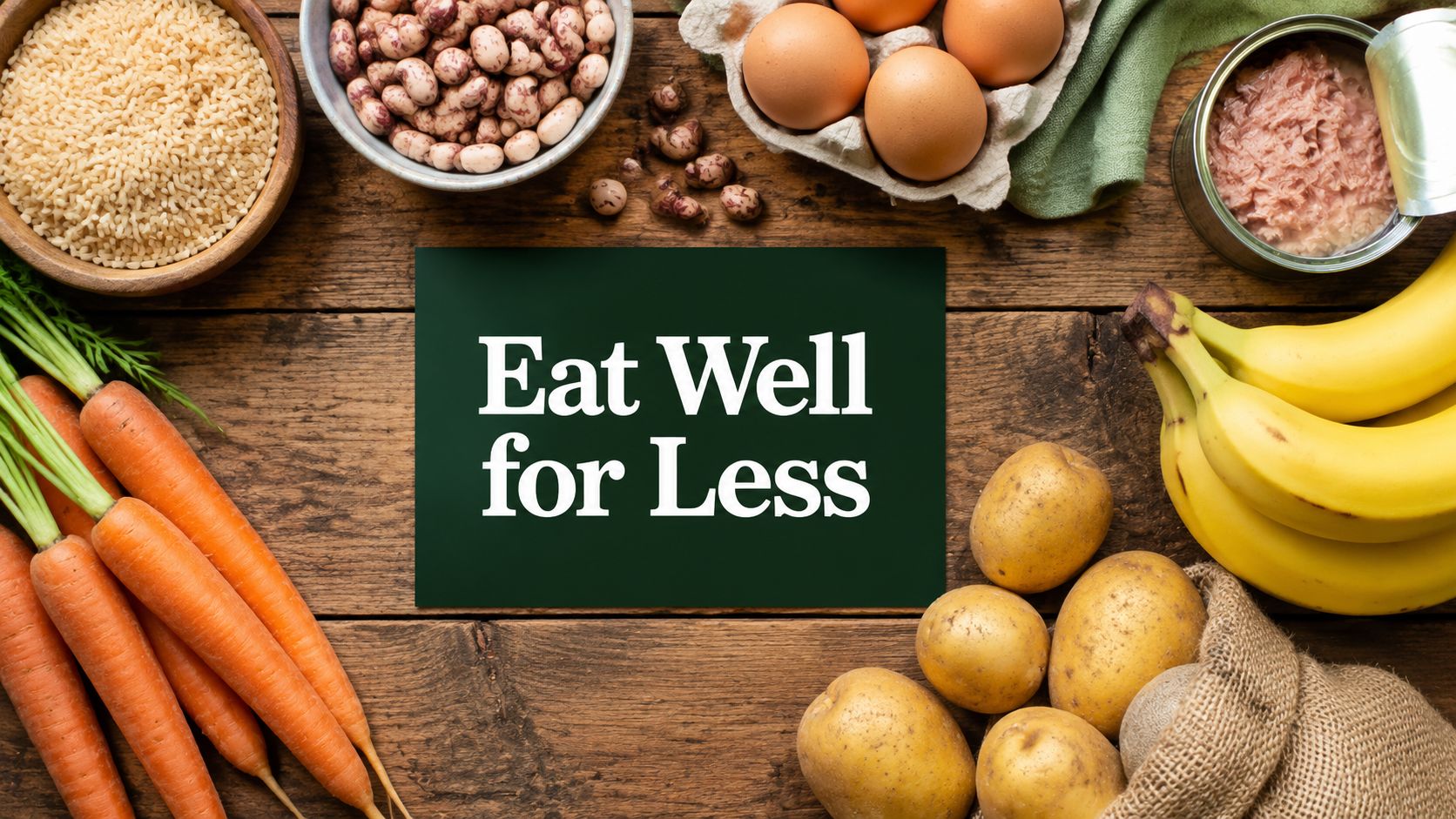
The best value foods for 2026 are the ones that hold up in storage, deliver solid nutrition, and fit into more than one kind of meal. In practical terms, that means eggs, dried beans and legumes, oats, frozen vegetables and fruit, chicken breast, brown rice and other whole grains, Greek yogurt, canned tuna and fish, peanut butter and other nut butters, and sweet potatoes and other root vegetables.
Value comes from three traits working together: nutrient density, meal flexibility, and low waste. A food can look cheap on the shelf and still cost more in real life if half of it spoils or if it only works in one recipe. By contrast, staples like oats, beans, frozen produce, and eggs can cover breakfast, lunch, dinner, snacks, and backup meals with very little planning.
That trade-off matters. Grocery costs are still high enough that many households need foods that stretch across several meals, not just one. The strongest budget foods also reduce decision fatigue. If a food stores well, reheats well, and pairs easily with other staples, it tends to get used instead of forgotten in the back of the fridge.
Public health guidance points in the same direction. Cleveland Clinic guidance on cheap healthy foods recommends practical options such as frozen and canned foods, store brands, and planning ahead to lower food costs. If you train regularly, the same approach supports recovery and consistency. A good guide to athlete recovery nutrition overlaps with budget eating because repeatable, easy-to-store foods are usually the ones that make healthy eating realistic.
The foods below earned their place because they do more per dollar. Each one offers a useful mix of nutrition, shelf life or freezer life, and enough versatility to support simple meal prep without wasting food.
1. Eggs
Eggs keep making this list for one reason. They solve several budget problems at once. They're fast, compact, useful at any meal, and easy to pair with grains, vegetables, toast, potatoes, or beans.
For busy households, eggs are one of the best-value proteins because they don't ask much from you. You can boil them ahead, scramble them in minutes, bake them into muffins, or turn a random leftover bowl into a real meal by adding two eggs on top.
To make prep easier, keep a visual demo handy:
How to get more value from eggs
The mistake people make is treating eggs as only a breakfast food. That limits their value. Eggs work better as an all-purpose protein that fills gaps when you don't have time to cook something bigger.
A dozen hard-boiled eggs in the fridge can cover quick breakfasts, snack plates, lunch add-ons, and easy dinners. If you're trying to spend less without relying on highly processed convenience foods, this kind of prep matters.
- Boil once, use all week: Hard-boil a batch and keep them ready for grab-and-go meals.
- Rotate the format: Scrambled eggs, omelets, fried eggs, egg salad, and baked egg cups all feel different even when the ingredient is the same.
- Pair for balance: Eggs work best with a high-fiber side like oats, potatoes, whole-grain toast, or vegetables.
Eggs are most valuable when they prevent a takeout meal. That's the real comparison.
Store them in the main body of the refrigerator rather than the door, where temperature shifts are more common. If you buy larger cartons when they're competitively priced, make sure you already have a plan for at least three different uses so they don't become another “good deal” that just sits there.
2. Dried Beans and Legumes
A one-pound bag of beans can rescue the kind of week when groceries need to stretch across several lunches and a few no-fuss dinners. That is why dried beans and legumes stay high on any best-value foods list. They cost little per serving, keep for months, and give you protein, fiber, and a base for meals that feel substantial.

The main advantage is versatility. One batch can become black bean tacos, lentil soup, chickpea salad, curry, chili, or hummus-style spreads. That range matters because affordable food only delivers value if you keep using it. Repeating the same cheap ingredient in different forms is one of the easiest ways to lower food costs without getting bored or wasting leftovers.
There is a trade-off. Dried beans save more money than canned, but they ask for planning. If a food takes soaking, simmering, and cooling before it is ready to eat, you need a system or it stays in the pantry.
What works and what doesn't
Lentils are usually the best starting point for busy households because they cook quickly and do not need soaking. Black beans and chickpeas take longer, but they reward the effort if you want an ingredient that works across salads, bowls, soups, and spreads. In my experience, people do best when they choose one or two varieties they enjoy rather than buying five kinds because they were cheap.
Use a routine that removes friction.
- Cook one large batch: Prepare enough for the week, then portion it into meal-size containers.
- Freeze some immediately: Keep two or three portions in the fridge and freeze the rest before they turn into forgotten leftovers.
- Season after cooking: A neutral batch is easier to reuse in chili, curry, taco filling, or grain bowls.
- Match the bean to the job: Lentils for fast soups and stews, black beans for tacos and bowls, chickpeas for roasting, salads, and dips.
Storage matters here. Cooked beans keep well in the fridge for several days, but their best budget use comes from freezing flat in labeled bags or containers with a little cooking liquid. That gives you quick portions that thaw faster and stay usable. Dry beans last longest in sealed containers kept in a cool, dark cupboard, especially if you buy larger bags.
A smart way to make beans pay off is to build several meals from the same prep session instead of treating every dinner as a separate project. A budget meal plan built around repeated ingredients makes that easier, especially when one pot of beans shows up in tacos one night, soup the next day, and lunch bowls after that.
Practical rule: Beans are cheapest when you cook with tomorrow's meal in mind, not just tonight's.
3. Oats
Oats are one of the most reliable breakfast buys because they're cheap to store, easy to flavor, and flexible enough to work hot or cold. They also help solve a common budget problem: breakfast that's fast enough for weekdays but not built around expensive single-serve items.
Rolled oats usually fit most households best. They cook quickly, work in overnight oats, and can be blended into smoothies or used in baking. Steel-cut oats are great too, but they ask for more time and a little more planning.
How oats save money across the week
The best use of oats isn't just one bowl in the morning. It's turning one bag into several forms so breakfast doesn't get boring and the ingredient keeps earning its place in your pantry.
Overnight oats work well for people who don't want to think in the morning. Cooked oats work better if you want a warm meal that can be reheated. Savory oats are underrated and especially useful when you're low on bread or rice.
- Make a base, then vary toppings: Banana and cinnamon one day, peanut butter the next, yogurt and berries after that.
- Use oats beyond breakfast: Add them to meatballs, pancakes, muffins, or homemade snack bites.
- Keep the add-ins simple: Fruit, seeds, yogurt, and nut butter usually do more for satisfaction than sugary flavor packets.
A practical pattern is to prep several jars of overnight oats for workdays and keep plain dry oats available for cooking on weekends. That gives you convenience without locking you into one texture all week. Oats don't look glamorous in a cart, but they reduce spending by replacing pricier breakfast foods that don't keep you full for long.
4. Frozen Vegetables and Fruits
Frozen produce fixes one of the biggest weaknesses in “eat healthy on a budget” advice. It removes spoilage from the equation. If you regularly throw out wilted greens, soft berries, or forgotten broccoli, frozen versions are often the better value even if the shelf price looks similar.
That's especially useful because many budget guides still recommend staples like beans, oats, rice, frozen vegetables, eggs, and canned fish, while access to fresh healthy food can vary by neighborhood, as summarized by County Health Rankings on grocery access in underserved areas. Frozen produce helps create consistency when fresh options are limited, uneven, or easy to waste.

The best way to use frozen produce
Plain frozen vegetables are usually a better buy than versions with sauces or seasoned coatings. They give you more control over flavor, salt, and how the ingredient fits into different meals.
Frozen fruit earns its place for smoothies, yogurt bowls, oatmeal, and simple desserts. Frozen vegetables earn it because they can go straight into stir-fries, soups, rice dishes, pasta, and sheet-pan meals with almost no prep.
- Choose plain bags: Broccoli, peas, spinach, mixed vegetables, berries, and cauliflower are easy staples.
- Stock variety, not excess: Keep a few types you use repeatedly instead of filling the freezer with novelty mixes.
- Use them as meal insurance: They're ideal for nights when the fresh produce is gone but dinner still has to happen.
A smart grocery list generator is especially useful here because it can keep frozen produce aligned with meals you will cook, instead of letting your freezer become a collection of random bargain bags.
5. Chicken Breast
Chicken breast is one of the most practical bulk proteins because it works in nearly every cuisine style and reheats well when cooked properly. If you meal prep, it gives you a neutral base that can become grain bowls, wraps, salads, pasta dishes, soups, or quick skillet meals.
The downside is obvious. Plain, overcooked chicken gets boring fast. Once that happens, people stop eating the food they prepped and start spending more elsewhere. So the value of chicken breast depends less on buying it and more on how you season, portion, and reuse it.
How to keep bulk chicken from becoming dry and repetitive
Cooked chicken is more useful when you think in formats, not recipes. Slice some for salads and bowls. Shred some for wraps and soups. Leave some whole for simple dinners with vegetables and grains.
A basic seasoning split helps too. Even one batch can be divided into different flavor profiles after cooking with sauces or spice blends you already keep around. That makes the same ingredient feel less repetitive through the week.
- Flatten thicker pieces: More even thickness means more even cooking.
- Cook for reuse: A plain but well-seasoned batch can go into many meals.
- Freeze portions early: Don't wait until you're tired of it. Freeze part of the batch the day you cook it.
For people focused on muscle gain or high satiety meals, chicken breast still earns its place because it delivers a lot of protein without much prep drama. If that's your goal, a structured high-protein meal plan can make one bulk purchase stretch across several distinct meals instead of five nearly identical containers.
Cook chicken for future flexibility, not just tonight's dinner.
6. Brown Rice and Whole Grains
Whole grains are budget anchors. They make meals bigger, more filling, and easier to balance without relying on pricier convenience foods. Brown rice is the obvious staple, but barley, farro, and similar grains can do the same job if you like more texture.
Their biggest advantage is meal range. A pot of cooked grain can support breakfast bowls, lunch leftovers, dinner sides, stir-fries, soups, and grain salads. That kind of reuse is what makes a low-cost staple valuable.
Which grain strategy works best
The best strategy isn't buying every whole grain at once. It's choosing one or two that match how you already cook. If your meals are mostly bowls, stir-fries, and simple proteins, brown rice is usually the easiest choice.
If you want a more plant-forward kitchen, whole grains also pair naturally with beans, lentils, roasted vegetables, yogurt sauces, and eggs. That's where they become more than filler. They become structure.
A practical pattern looks like this:
- Cook one large batch: Keep part in the fridge and freeze the rest in portions.
- Season after reheating: That keeps the grain flexible across different meals.
- Use grains to absorb leftovers: Small amounts of vegetables, beans, chicken, or sauces become a full meal faster over rice or another grain.
If you lean toward meatless meals, a plant-based meal plan can help turn grains into complete meals rather than just sides. That's usually where people get stuck. They buy the rice, but they don't have a repeatable way to build around it.
7. Greek Yogurt
Greek yogurt is one of the few foods that works as breakfast, snack, sauce base, and ingredient in cooking. That kind of range matters. The more jobs one item can do, the more likely it is to stay useful all week.
Plain versions usually offer the best value because they aren't locked into one flavor profile. You can make them sweet with fruit, cinnamon, or oats. You can make them savory with garlic, lemon, herbs, or cucumber. That saves you from buying separate dips, dressings, and snack cups.
Why big tubs beat single-serve cups
Single-serve yogurts can be convenient, but they're often a weaker value because they create more packaging and less flexibility. A larger tub lets you decide portion size and use the same product in more ways.
“Best value foods” often gets misunderstood. The best buy isn't always the cheapest item on the shelf. It's the one you can use fully before it expires.
- Buy plain when possible: It works in bowls, smoothies, sauces, marinades, and baking.
- Add your own flavor: Fruit, oats, peanut butter, or cinnamon usually cost less than paying for dessert-style varieties.
- Use it as a swap: Greek yogurt can replace part of the mayo, sour cream, or creamy dressing in many meals.
If you like high-protein snacks but don't want to keep buying bars and shakes, Greek yogurt is one of the simplest ways to lower cost while keeping nutrition quality high.
8. Canned Tuna and Fish
Dinner gets expensive fast when the plan falls apart at 6 p.m. Canned fish earns its place on a best-value list because it gives you a fast protein option that also brings useful nutrients and real meal flexibility, without the waste risk that comes with fresh seafood.
Tuna is the default for many shoppers, but it is not the only smart buy. Canned salmon gives a softer texture and works well in patties or rice bowls. Sardines are usually stronger in flavor, but they can be one of the better bargains in the aisle and pair well with toast, tomatoes, lemon, or crackers. The best choice is the one you will open and use.
How to make canned fish feel like a real meal
Canned fish works best when you build around it instead of treating it like a last-resort lunch. Use it in a grain bowl with chopped vegetables and beans. Stir it into pasta with olive oil, garlic, and lemon. Mash it with plain yogurt or a little mayo for sandwiches, wraps, or stuffed potatoes.
Storage is part of the value. Keep a few cans in the pantry, then pair them with low-cost staples you already use often, such as rice, bread, crackers, pasta, or canned beans. Once opened, move leftovers to a sealed container and use them within a couple of days so the can does not turn into wasted food.
Keep canned fish for busy nights and low-stock weeks. That is when it saves the most money.
A simple meal-prep blueprint helps. Pick one can of fish, one starch, one produce item, and one flavor booster. For example, tuna plus brown rice plus frozen peas plus lemon and black pepper. Or salmon plus potatoes plus cucumbers plus yogurt and dill. That formula keeps canned fish from feeling repetitive, which matters if you want shelf-stable foods that support both your budget and your nutrition over time.
9. Peanut Butter and Nut Butters
Peanut butter belongs on a best-value list because it delivers convenience, calories, flavor, and staying power in one jar. It's especially useful for people who need satisfying snacks, quick breakfasts, or a way to make lighter meals hold them longer.
It also solves a practical problem. Some budget foods are healthy but not filling enough on their own. Oats, fruit, toast, and smoothies often become better meals when you add a spoonful of nut butter.
When peanut butter is a good value and when it isn't
It's a strong value when you use it intentionally. It's a weak value when it turns into mindless extra calories or sits in the pantry because you only associate it with sandwiches.
Natural peanut butter is a highly versatile option. You can use it in oatmeal, on toast, in sauces, in yogurt bowls, in smoothies, or with apples and bananas for a fast snack.
- Read the ingredient list: Simpler options are usually easier to use across sweet and savory meals.
- Pair it, don't eat it alone every time: It works best with fruit, oats, yogurt, or toast.
- Use it as a flavor builder: Peanut sauces can make rice bowls, noodles, or roasted vegetables more satisfying.
For families and active eaters, peanut butter is often less about “health food” and more about meal durability. It helps small meals last longer, and that can reduce random snacking or last-minute convenience purchases later in the day.
10. Sweet Potatoes and Root Vegetables
Sweet potatoes, carrots, onions, and other root vegetables are some of the most forgiving foods you can buy. They last longer than delicate produce, adapt to many cooking methods, and make meals feel substantial without a lot of cost or effort.
Sweet potatoes stand out because they work in both simple and performance-focused meals. Roast them for dinner, stuff them for lunch, mash them into bowls, or reheat them alongside eggs, yogurt, or canned fish for a fast meal.
Why root vegetables are such strong pantry partners
They bridge the gap between fresh and shelf-stable. You still get a whole-food ingredient, but with much less spoilage pressure than salad greens or berries. That alone makes them one of the smartest budget buys for people who cook inconsistently during the week.
The larger healthy foods market was estimated at USD 1,063.3 billion in 2025 and is projected to reach USD 2,013.0 billion by 2033, with an 8.1% CAGR from 2026 to 2033. That projection reflects growing demand for healthier eating, but root vegetables remain a reminder that nutritious food doesn't have to be trendy to be useful.
A few practical ways to use them well:
- Batch-roast a tray: Reheat portions through the week for sides and bowls.
- Mix types together: Sweet potatoes, carrots, onions, and beets create more flavor variety from one pan.
- Use them as the meal base: Add eggs, yogurt sauce, beans, chicken, or fish and you're done.
Top 10 Best-Value Foods Comparison
| Item | 🔄 Implementation Complexity | 💡 Resource & Cost | ⭐ Key Advantages | ⚡ Speed / Efficiency | 📊 Expected Outcomes & Ideal Use Cases |
|---|---|---|---|---|---|
| Eggs | Low, simple cooking (boil, scramble, bake); minimal technique | Low cost ~$0.20–0.40/egg; refrigerate 3–4 weeks | Complete protein, nutrient-dense (choline, vitamins) | Very fast (3–10 min); versatile across meals | Supports muscle gain, satiety, weight loss; ideal for breakfast, meal prep, budget diets |
| Dried Beans & Legumes | Medium, soaking/cooking needed (or pressure-cook) | Very low cost $0.50–1/lb; shelf-stable 1+ year; bulk savings | High protein + fiber; iron/folate; cheapest protein-per-cost | Slow if boiled (1–2 hr) but efficient yield; pressure-cooker speeds prep | Promotes satiety, gut health, longevity; great for batch meal prep, plant-based athletes |
| Oats (Rolled/Steel-Cut) | Low–Medium, quick oats 5 min, steel-cut 20–30 min, overnight no-cook | Very low cost $0.10–0.20/serving; shelf-stable | Beta-glucan fiber for heart/blood sugar support; sustained energy | Moderate; overnight oats save morning time | Stable blood sugar, sustained energy; ideal breakfast staple, budget fitness meals |
| Frozen Vegetables & Fruits | Low, ready-to-cook, no chopping for most uses | Low cost $1–2/bag; needs freezer space; long freezer life | Peak nutrient retention, reduces food waste, year-round availability | Very fast, no washing/chopping for many recipes | Increases produce intake, convenient for smoothies, stir-fries, meal prep for busy professionals |
| Chicken Breast (Bulk) | Low–Medium, requires cooking skill to avoid dryness; batch-cookable | Moderate cost $2–4/lb bulk; freezer space needed | Very high protein-to-calorie ratio (31g/100g); versatile | Moderate prep; highly efficient when batch cooked | Excellent for muscle building and high-protein meal prep; family packs for cost savings |
| Brown Rice & Whole Grains | Low–Medium, rice cooker recommended; some varieties take ~45 min | Low cost $0.50–1.50/lb; shelf-stable long-term | Complex carbs, fiber, B vitamins for sustained energy | Moderate; batch cooking and freezing improve efficiency | Sustained energy and fullness; base for balanced meals, athletes and family meal planning |
| Greek Yogurt | Low, ready-to-eat; used as ingredient | Moderate cost $0.40–0.60/serving bulk; refrigerated | High protein (15–20g/serving), probiotics, calcium | Very fast, grab-and-eat or mix into recipes | Promotes satiety and gut health; ideal snack, breakfast, and protein-rich ingredient |
| Canned Tuna & Fish | Very low, no cooking required | Low cost $0.50–1/can; pantry-stable 1–3 years | High protein, omega-3s, long shelf life | Instant, ready-to-eat, minimal prep | Quick lunches, pantry protein for weight loss; note mercury limits for frequent consumption |
| Peanut Butter & Nut Butters | Very low, ready-to-use; portion control needed | Low cost $0.25–0.50/2 tbsp; long shelf life | Protein + healthy fats, vitamin E, satiating | Immediate, no prep | Portable snack, calorie-dense option for muscle gain, versatile in recipes |
| Sweet Potatoes & Root Vegetables | Low–Medium, baking or roasting (20–30 min) or microwave for speed | Low cost $0.50–1 each; stores 3–4 weeks | Nutrient-dense carbs, fiber, beta‑carotene, potassium | Moderate; can batch-bake or microwave for faster prep | Sustained energy and recovery support; ideal side dishes, athlete carb source, family meals |
Final Thoughts
A tight food budget usually breaks down on Wednesday night. The plan looked fine at the store, but the produce is fading, dinner needs too much effort, and takeout starts to look easier than cooking what is already in the kitchen.
Best-value foods solve that problem because they do three jobs at once. They keep costs down, deliver useful nutrition, and fit into more than one kind of meal. That mix matters more than the lowest shelf price. A cheap food stops being a bargain if half of it gets thrown away or if nobody wants to cook it after a long day.
That is why the strongest picks on this list keep showing up in practical meal rotations. Eggs become breakfast, fried rice, or a quick protein add-on. Beans turn into soups, tacos, grain bowls, and freezer portions. Oats cover breakfast, baking, and budget stretching for meatballs or patties. Frozen produce, yogurt, canned fish, grains, and root vegetables all earn their place the same way. They store well, they adapt, and they reduce the number of extra ingredients you need to buy.
Versatility is part of nutrition economics.
In practice, the best grocery list is usually built around a small group of foods you can prep once and use several times. Cook beans and rice in batches. Roast a tray of sweet potatoes. Portion Greek yogurt for snacks and sauces. Keep frozen vegetables for nights when fresh produce is already gone. That approach cuts waste, lowers prep friction, and makes balanced meals more realistic during busy weeks.
A good value strategy is straightforward:
- Pick 2 to 3 core proteins: eggs, beans, chicken, yogurt, canned fish
- Add 2 durable carb bases: oats, brown rice, whole grains, sweet potatoes
- Use produce with a longer window: frozen fruit, frozen vegetables, root vegetables
- Choose foods that cross meals: breakfast ingredients that also work for lunches, dinners, and snacks
- Prep for access: wash, cook, portion, or freeze foods so they are easy to use before they spoil
Store choice still affects the total bill, and discount grocers often perform well in consumer value surveys. One example is a grocery value ranking reported by KSBY, which cited Aldi, Woodman's Market, and WinCo Foods among the top stores for value perception in a consumer survey: these grocery stores topped the list for value, according to the report covered by KSBY. Even so, the better store does not fix a weak plan. The stronger result comes from buying foods you will use, storing them well, and repeating them across the week.
That is also the gap in many cheap food roundups. They judge value by price per serving and ignore spoilage, prep time, and how meals get built in a real home kitchen. From a practitioner standpoint, those factors decide whether a food saves money or drains it.
Eating well for less is rarely about one standout bargain. It is about setting up a kitchen where affordable, nutrient-dense, flexible ingredients are already within reach.
If you want that process to be faster, AI Meal Planner can turn your goals, food preferences, and schedule into practical weekly meals with smart ingredient reuse. Start with the quick onboarding to get a personalized plan and grocery list that helps you buy best value foods with less waste and less guesswork.
AI-powered nutrition
Get Your Personalized Meal Plan
AI creates the perfect meals for your goals, lifestyle, and taste.
Start Your Journej