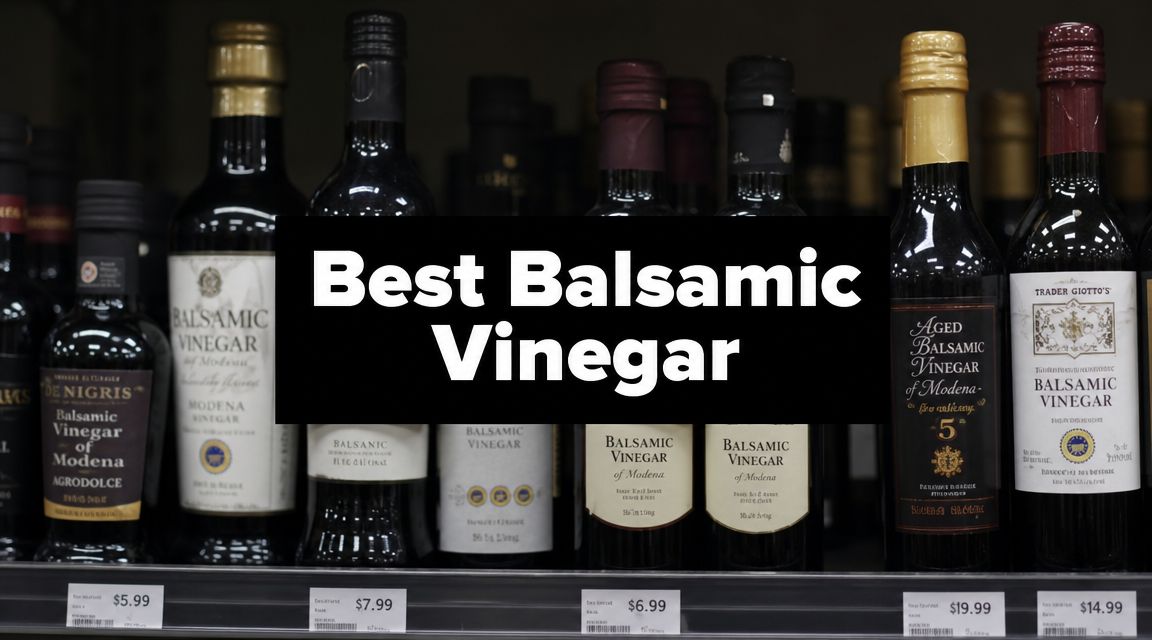
Standing in the vinegar aisle, most bottles look similar until you taste them. The best grocery store balsamic vinegar isn't one universal bottle. It's the bottle that matches the job, has a clean label, and doesn't fake quality with caramel color.
What Is The Best Grocery Store Balsamic Vinegar
You grab a bottle for a quick salad, get it home, and it tastes harsh enough to bully every other ingredient on the plate. That usually happens because shoppers buy balsamic by name instead of by job.
The best grocery store balsamic vinegar is the one that fits the way you cook. Keep an inexpensive, clean-label bottle for vinaigrettes, marinades, pan sauces, and reductions. Spend more only if you want a thicker, sweeter bottle for finishing roasted vegetables, strawberries, Parmesan, or steak.
That trade-off is the whole shelf. Value bottles should be sharp but not abrasive, lightly sweet, and easy to use in volume. Finishing bottles should have more body, more concentration, and a rounder finish. One bottle can cover basic salads and weeknight cooking, but expecting a cheap cooking balsamic to deliver a polished finishing drizzle is how money gets wasted.
Start with the label, not the front-of-bottle promises. “Balsamic Vinegar of Modena” is a good sign, but the ingredient line provides the essential information. Shorter is usually better. If caramel color shows up, I usually leave it on the shelf because it often points to a flatter, more manufactured flavor. Reading labels this way also helps across the rest of your pantry. A searchable food ingredient database for pantry staples makes it easier to compare products side by side.
One more practical filter helps. If you already pay attention to additives in packaged food, the same habit applies here. Learning more about understanding harmful US food ingredients can sharpen your eye for bottles that rely on shortcuts instead of better raw ingredients.
Quick comparison of the best grocery store balsamic vinegar
| Category | What to buy | Taste Profile | Best For | What to expect |
|---|---|---|---|---|
| Best all-around value | A clean-label Balsamic Vinegar of Modena from a warehouse club or major grocery brand | Balanced, lightly sweet, moderate acidity | Dressings, marinades, everyday cooking | Large bottle, good price per ounce |
| Best for finishing | An aged grocery-store balsamic with a short ingredient list and thicker texture | Richer, deeper, smoother | Drizzling over cheese, fruit, roasted vegetables | Smaller bottle, higher price per ounce |
| Best for cooking | A straightforward, thinner bottle with clean acidity | Sharper, less concentrated | Reductions, pan sauces, roasting, braises | Practical and affordable |
| Best single-bottle compromise | Mid-priced Modena balsamic with decent body and no obvious additives | Balanced with some sweetness | Salads, general use, occasional finishing | Good if you only want one bottle |
If you cook a lot, buy for range. One everyday bottle does the heavy lifting. A smaller, better bottle handles the final drizzle where flavor is exposed and easy to judge.
How to Decode a Balsamic Vinegar Label
You're standing in the vinegar aisle, holding two bottles that both say “balsamic,” and one costs three times as much as the other. The front label will not settle that decision. The back label usually will.

Look for origin and category before you look at price
Start with what the bottle claims to be. In this expert label-reading discussion, authentic traditional balsamic from Modena is described as carrying protected designation markings and being aged for at least 12 years. That sets the top end of the category, but it is not the standard weeknight bottle most cooks need.
For grocery shopping, the more useful move is to separate finishing vinegar from cooking vinegar. A bottle labeled Balsamic Vinegar of Modena is usually the right place to begin for everyday use. Then check whether the rest of the label supports the price.
Read the ingredient list like a buyer, not a tourist
The ingredient panel tells you whether the producer built flavor or dressed up a cheap base. Shorter is usually better. If caramel color shows up, I put the bottle back unless the price is so low that I only need it for a reduction or marinade.
Here's the quick screen I use:
- Short ingredient list: Better odds of a cleaner, more balanced vinegar
- No caramel color: Dark color should come from grape must and aging, not cosmetic coloring
- No syrupy add-ons: Extra thickeners and sweeteners often create a sticky texture without real depth
A few warning signs are easy to taste once you know them. Some bottles feel heavy but still taste hollow. Others are aggressively sweet up front, then drop off instead of finishing with gentle acidity. Those can work in a glaze, but they are poor value if you want one bottle for several jobs.
A balsamic that wins only on sweetness usually disappoints everywhere else.
Match the label to the job
Shoppers get better results when they stop asking for one universal “best” bottle. The distinction is important because “best” changes with the task. A thin, brighter balsamic can be exactly right in a vinaigrette, where oil, salt, and mustard fill it out. That same vinegar can taste flat as a finishing drizzle on tomatoes, fruit, or Parmigiano-Reggiano.
| Type | What it means in practice | Best use |
|---|---|---|
| Traditional balsamic | Highly regulated, long-aged, expensive bottle | Tiny finishing drizzles |
| Condimento-style balsamic | Often more concentrated and polished than standard grocery bottles | Cheese, fruit, finishing |
| Commercial grocery balsamic | Daily-use bottle with broader range | Dressings, marinades, reductions |
If you want to compare balsamic with other pantry staples and ingredient profiles, this food database and ingredient reference is a useful shortcut.
If you're also trying to get stricter about label reading across the rest of your pantry, this guide to understanding harmful US food ingredients is useful context. The habit is the same. Turn the bottle around, read past the marketing, and decide whether you're paying for actual quality or just dark, sweet packaging.
Our Top Picks for Every Budget and Use in 2026
You're standing in the vinegar aisle, one bottle is cheap enough to use by the cup, another costs enough that you want a reason before it goes in the cart, and three labels all promise “aged” quality. The right pick depends on the job.
I buy grocery-store balsamic in two lanes. One bottle handles high-volume cooking, dressings, and weeknight prep. The other is for finishing, where texture and depth show on the plate. That approach saves money and gets better results than chasing one bottle that tries to do everything.
The best all-around pick for most kitchens
Kirkland Signature Organic Balsamic Vinegar of Modena is the everyday benchmark. As noted earlier, it earned all-around praise for strong value, and that tracks with how this style performs in a real kitchen. It is affordable enough for regular use, but it still has enough body and balance for salads, roasted vegetables, and quick pan sauces.
This range is useful for an all-around balsamic.
A daily bottle needs to cover a lot of ground. It should taste bright in vinaigrette, hold up in a marinade, and reduce without turning syrupy and flat. Kirkland fits that role well. I'd keep it next to the olive oil and use it without hesitation.
The best pick if balance matters most
Fini Balsamic Vinegar of Modena is a smart choice for shoppers who want one step up from a basic cooking bottle without paying finishing-bottle prices. Its main strength is balance. You get sweetness, acidity, and a cleaner finish without one side taking over.
That makes it useful for mixed duty. It works in a tomato salad, but it also holds its shape when brushed onto vegetables before roasting. If you only want one better bottle in the pantry, this is the profile to look for.
The best pick for richness and finishing
Lucini Italia Aged Balsamic Vinegar of Modena makes more sense as a finishing vinegar than a bulk-use bottle. The richer texture and deeper flavor are easier to notice when the vinegar is exposed, not stirred into a large batch of dressing or cooked down in a pan.
Use a bottle like this sparingly:
- Parmesan or aged cheese: A few drops are enough.
- Fresh fruit: Strawberries, peaches, and figs take well to a richer balsamic.
- Cooked vegetables: Especially roasted carrots, onions, and Brussels sprouts.
- Simple proteins: A small drizzle on sliced steak, pork, or chicken.
Spending more proves worthwhile. You are buying concentration and polish, not volume.
The best bottle for cooking
Roland is the practical pick for heat. For cooking, I care less about subtle layers and more about whether the vinegar keeps its shape in a reduction, braise, or roasting glaze. Roland fits that use.
Save the richer bottle for the plate. Use the sturdier one in the pan.
That trade-off matters. Heat flattens delicate notes, so paying premium finishing-bottle prices for a reduction usually wastes money.
Top grocery store balsamic vinegars of 2026
| Category | Brand & Product | Taste Profile | Best For | Approx. Price |
|---|---|---|---|---|
| Best All-Around | Kirkland Signature Organic Balsamic Vinegar of Modena | Versatile, everyday-friendly | Dressings, marinades, meal prep | Value-priced |
| Most Balanced | Fini Balsamic Vinegar of Modena | Even sweet-acid balance | Salads, roasted vegetables, general use | Mid-range |
| Richest | Lucini Italia Aged Balsamic Vinegar of Modena | Fuller, richer | Finishing and drizzling | Premium |
| Best for Cooking | Roland | Built for heat applications | Reductions, roasting, pan sauces | Practical |
The best setup for many kitchens is simple. Buy one bottle for volume and one for finishing. You'll spend more intelligently, and each bottle will do the job it is built for.
What Should You Expect to Pay for Good Balsamic
You're standing in the vinegar aisle with a $6 bottle in one hand and a $16 bottle in the other. The label language sounds similar, the bottle sizes are different, and price alone does not tell you which one is the smarter buy. Cost per ounce does.

A good grocery-store balsamic usually falls into a few practical price bands. Around the value end, you are paying for a serviceable bottle that can handle frequent use without tasting harsh or watery. As the earlier review noted, strong everyday value starts around the 40-cent-per-ounce range. Move up toward $1 per ounce, and the vinegar should taste more focused, with less sharpness and a thicker feel. Push past $2 per ounce, and the bottle needs to deliver real concentration, cleaner sweetness, and enough balance that a small pour goes a long way.
That last point matters more than shoppers think.
A cheap bottle used by the quarter cup can still be a decent buy if the flavor holds up in dressings, marinades, and weeknight cooking. A pricier bottle can also be a bargain if you use it by the teaspoon and it gives you a more polished result every time. Price per ounce is the first filter. Price per use is the one that keeps you from overpaying.
Here's the practical way to judge value in the aisle:
- Under about 50 cents per ounce: Fair territory for daily cooking if the ingredient list is clean and the flavor is not aggressively acidic.
- Around $1 per ounce: Expect better balance, less bite, and a texture that clings better to greens, vegetables, or a spoon.
- $2 per ounce and up: Expect concentration. If it tastes thin or one-note, the bottle is overpriced.
Bottle size can distort the picture. Large formats often look expensive up front but come out cheaper ounce for ounce. Small premium bottles can look reasonable until you do the math. Always check the shelf tag or calculate it yourself.
I also watch for a hidden value trap. Some mid-priced bottles spend their budget on packaging and age claims that do not translate into better flavor. If the vinegar tastes sharp first and sweet second, the premium is not doing much for you.
For cooks who use balsamic often, the smartest approach is to match the price to the job instead of chasing one perfect bottle. If you want ideas for meals that use balsamic in practical ways, this searchable recipe collection for weeknight cooking can help you gauge how fast you'll go through a bottle.
One last rule. If a bottle costs more, it should save you something, either quantity, because you need less of it, or frustration, because it tastes right without extra sugar, honey, or reduction. If it does neither, leave it on the shelf.
How to Use Balsamic Vinegar Beyond Salads
Balsamic is frequently used solely for vinaigrette. That leaves a lot of flavor on the shelf.

Use it with heat, but use the right bottle
For weeknight cooking, balsamic shines when it hits ingredients with natural sweetness. Roasted carrots, onions, squash, and Brussels sprouts all take well to it. A practical move is a simple glaze made by simmering balsamic until it thickens slightly, then brushing or drizzling it over vegetables after roasting.
It also works well in marinades. With chicken or steak, balsamic adds acidity and dark sweetness that plays nicely with garlic, mustard, rosemary, or black pepper. If you want ideas for building full meals around pantry staples, a searchable recipe library like AI Meal Planner recipes can help turn one bottle into several dinners.
Think beyond savory
Better balsamic belongs near fruit and cheese as much as it belongs near greens. A few drops over strawberries, ripe peaches, or a piece of Parmesan is one of the easiest ways to understand why richer bottles cost more. The vinegar isn't there to dominate. It sharpens sweetness and makes dairy taste more savory.
Here's a quick visual on how cooks use it in simple dishes:
Three easy uses that work fast
- Roasted vegetables: Finish hot vegetables with a small drizzle right before serving.
- Pan sauce for meat: Add balsamic after searing, let it reduce briefly, then spoon over sliced meat.
- Dessert shortcut: Use a richer bottle on strawberries, vanilla ice cream, or pears.
The common mistake is overusing it. Good balsamic should accent the dish, not coat everything in syrupy sweetness.
How Should You Store Balsamic and What Are Good Substitutes
Keep balsamic away from heat and direct light. A cool, dark cabinet is the right place for it. The cabinet beside the oven or stove is one of the worst spots because repeated heat dulls flavor over time.
If your kitchen setup makes storage awkward, it's worth learning how to declutter kitchen cabinets effectively so oils, vinegars, and seasonings stay accessible but protected. Good ingredients disappear into the wrong cabinet all the time, then end up living next to heat because it feels convenient.
Best way to store it
A few habits keep the bottle in better shape:
- Close it tightly: Oxygen exposure won't ruin balsamic quickly, but it can soften aromas.
- Keep it out of sunlight: Light isn't your friend here.
- Store upright: Less mess, cleaner cap, easier pouring.
A practical pantry system also makes meal prep easier. If you like keeping staple ingredients organized by use, AI Meal Planner tools can help simplify shopping and ingredient planning around what you already have.
Good substitutes when you run out
No substitute is identical, but two options work well enough in most recipes.
Red wine vinegar plus a little sweetness
This is the closest everyday stand-in for dressings and marinades. Add a small touch of honey or maple syrup until the sharpness rounds out.Apple cider vinegar plus a little sweetness
This works especially well in salads or roasted vegetable glazes when you want a softer edge.
If the recipe uses balsamic as a finishing drizzle, substitutes won't taste the same. For cooking, they're usually good enough.
FAQ About Grocery Store Balsamic Vinegar
Can balsamic vinegar go bad
It's highly stable because of its acidity, so it keeps very well. Over time, the flavor can change gradually, especially after opening.
Is thicker balsamic always better
No. Some excellent aged balsamics are naturally thicker, but cheap bottles can also mimic thickness with additives or processing tricks.
What does IGP mean on a label
It refers to protected geographical indication for Balsamic Vinegar of Modena. In practice, it tells you the product follows established regional production standards.
Is white balsamic the same as regular balsamic
No. White balsamic is lighter in color and usually tastes milder. It's useful when you want acidity without darkening the dish.
Do I need to refrigerate balsamic vinegar
No. A cool, dark pantry is usually the better choice for storage.
What's the best grocery store balsamic vinegar for beginners
A balanced, everyday bottle is the easiest place to start because it works in dressings, marinades, and cooked dishes. If you want broader food guidance alongside pantry choices, an AI nutritionist tool can help connect ingredients to your eating goals.
Should I buy one bottle or two
If you use balsamic often, two bottles make more sense. Keep one affordable bottle for cooking and one richer bottle for finishing.
If you want meals that use the ingredients sitting in your pantry, AI Meal Planner makes that easier. It builds personalized meal plans, smart grocery lists, and practical recipes around how you eat, so staples like balsamic vinegar don't get bought once and forgotten.
AI-powered nutrition
Get Your Personalized Meal Plan
AI creates the perfect meals for your goals, lifestyle, and taste.
Start Your Journej