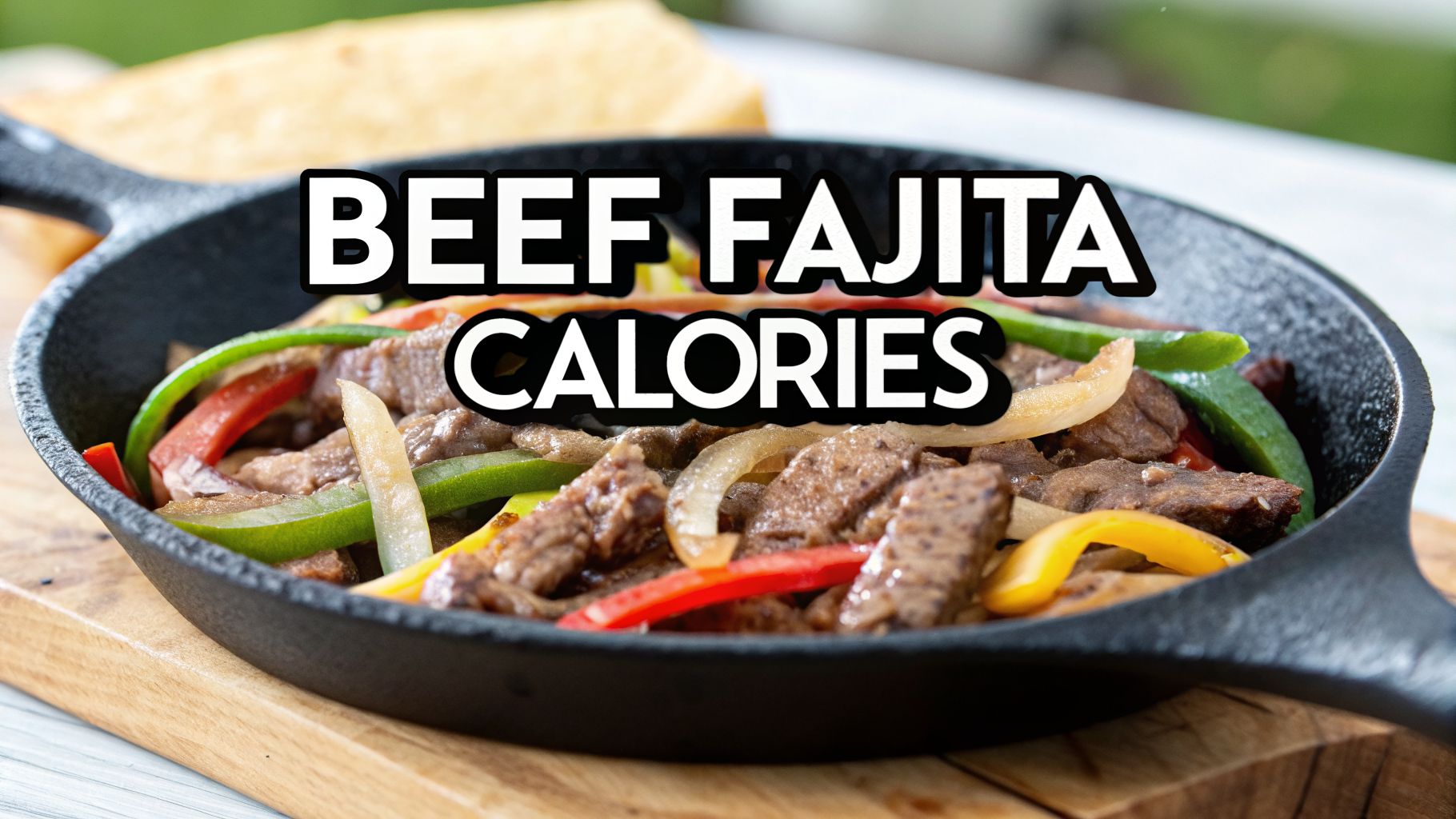
A standard serving of homemade beef fajitas contains between 400 and 450 calories. This includes about 4 oz of cooked skirt steak, sautéed peppers and onions, and one medium flour tortilla. Restaurant versions are typically higher, often exceeding 500 calories due to larger portions, more oil, and added toppings.
Beef fajitas are a Tex-Mex classic, famous for the signature sizzle and aroma when the platter arrives. But what does that delicious experience actually mean for your nutrition goals? Getting a handle on the calories in beef fajitas is the key to enjoying this dish without accidentally derailing your diet. Whether you're tracking every macro or just trying to make smarter choices, the numbers can be surprisingly variable.
This guide will break down every component—from the cut of beef to the type of tortilla and every topping in between—to show you exactly where the calories are hiding. We'll compare homemade fajitas to what you get when eating out and provide practical tips to build a fajita that fits your exact needs. By learning how to customize your meal, you can easily fit this delicious dish into a balanced meal plan.
Where Do the Calories in Beef Fajitas Come From?
When that sizzling platter of beef fajitas arrives, it's easy to get lost in the moment. But if you’re tracking your intake, you know the final calorie count is a sum of its parts. Think of it like building a meal from scratch—every single ingredient you choose adds to the final tally, and small choices can lead to surprisingly big differences.
A great way to visualize this is to compare a typical homemade serving to what you might get when dining out.

The takeaway is clear: restaurant versions often pack a much heavier caloric punch. Let's pull back the curtain and see exactly where those calories are hiding by breaking down each part of the dish.
What is the calorie count of the beef itself?
Not all beef is created equal, especially in the calorie department. The specific cut you choose plays the biggest role in determining the fat and calorie content of your meal.
- Skirt Steak: This is the traditional go-to for fajitas, and for good reason—it’s packed with flavor. That incredible taste comes from its marbling, which also means it’s higher in fat and calories. A 4-ounce serving of cooked skirt steak lands at around 250-280 calories.
- Sirloin or Flank Steak: Looking for a leaner-yet-still-delicious option? Sirloin and flank steak are fantastic alternatives. A 4-ounce portion of cooked sirloin might only have 180-200 calories, saving you a nice chunk without sacrificing much protein.
How do cooking oil and marinades add calories?
Here’s where hidden calories really start to creep in. That iconic sizzling sound fajitas are famous for? It’s often the result of a generous amount of oil hitting a screaming-hot skillet. Just one tablespoon of cooking oil—whether it's vegetable, canola, or olive oil—adds about 120 calories. Restaurants often use way more than this to prevent sticking and create that impressive tableside sizzle.
Beyond the cooking oil, keep an eye on the marinade. While homemade versions can be light and fresh, many store-bought marinades and restaurant recipes contain hidden sugars and oils that quietly add to the total.
How many calories are in tortillas and toppings?
The vehicle for your fajita fillings and all the delicious extras you pile on top can make or break your calorie budget. The differences here can be massive. This table shows the approximate calorie count for standard serving sizes of each part of a beef fajita.
| Calorie Breakdown of Common Fajita Ingredients | ||
|---|---|---|
| Ingredient | Standard Serving Size | Approximate Calories |
| Flour Tortilla | 1 (8-inch) | ~150 calories |
| Corn Tortilla | 1 (6-inch) | ~60 calories |
| Low-Carb Tortilla | 1 | 50-90 calories |
| Lettuce Wrap | 1 large leaf | ~5 calories |
| Sour Cream | 1 tablespoon | ~23 calories |
| Shredded Cheese | 1/4 cup | ~100 calories |
| Guacamole | 2 tablespoons | ~50 calories |
As you can see, toppings add up fast. Just swapping a single flour tortilla for two corn tortillas saves you 30 calories. Opting for salsa over sour cream and cheese can save you well over 100 calories per serving. Understanding these individual costs helps you build a smarter fajita that aligns with your goals, a skill that becomes second nature when using a tool like the AI Meal Planner.
Why Are Restaurant Fajitas So Much Higher in Calories?
Ever order beef fajitas at a restaurant, thinking you're making a reasonably healthy choice, only to see a calorie count that makes your jaw drop? The number on the menu can easily be double what you'd make at home. It’s a massive gap between a normal portion and a super-sized restaurant spectacle.
The number one culprit? Portion distortion. A standard homemade serving might use about four ounces of steak. But that sizzling platter arriving at your table often carries eight, ten, or even twelve ounces of beef. Once you factor in three or four huge flour tortillas and all the sides, you’re looking at a meal for one that could easily feed two people.
What are the hidden calorie sources in restaurant fajitas?
Beyond the sheer amount of food, restaurants use cooking methods designed for maximum flavor—which also happen to pack on the calories. That incredible sizzle is often powered by a very generous amount of oil poured over the screaming-hot cast-iron skillet. This one trick sends the calorie count soaring. While you might use a single tablespoon of oil at home, a restaurant kitchen might use several, quietly adding over 100 hidden calories per tablespoon.
It doesn't stop there. Many restaurant marinades are loaded with sugar and sodium, which work great for tenderizing the meat but also contribute to the overall calorie load.
How do sides and toppings pile up?
The main fajita mix of steak and veggies is only half the story. The standard-issue sides that come with restaurant fajitas are often major calorie bombs.
- Refried Beans: They're rarely just mashed beans. They are often made with lard and get a heavy-handed sprinkle of cheese, which can easily add 200-300 calories.
- Mexican Rice: This isn't plain, steamed rice. It's typically fried in oil before being cooked in broth, adding another 150-250 calories.
- Generous Toppings: Unlike the dollop of sour cream you might use at home, restaurants often serve up substantial portions that can tack on another 200-400 calories combined.
At home, you are in complete control. You can measure your oil with precision, opt for a leaner cut of beef, and load up on fresh, low-calorie toppings. This is exactly why a homemade beef fajita is almost always a more diet-friendly option. A typical homemade fajita can be a satisfying meal for around 400 calories, while many US restaurant versions start at 500 calories and go way up from there.
What Does the Macronutrient Profile of Beef Fajitas Look Like?
Calories are only half the story. To really understand what you're eating, you need to look at the macronutrients—the protein, fats, and carbs that make up your meal. When you build a fajita plate the right way, it can be a nutritional powerhouse.

This balanced macro profile is exactly what makes beef fajitas a fantastic choice for anyone on a high-protein meal plan or just trying to eat a more satisfying, nutrient-dense dinner. Before we get into the tortillas and toppings, let's look at just the cooked beef itself.
Typical Macronutrient Profile Per 100g Cooked Fajita Beef
| Macronutrient | Average Amount | Primary Source |
|---|---|---|
| Protein | 20g - 25g | Beef (e.g., skirt or flank steak) |
| Fat | 5g - 15g | Natural fats in the beef; cooking oil |
| Carbohydrates | <1g | Marinade ingredients (minimal) |
As you can see, the steak is almost pure protein and fat. The carbs only start to show up when we add the other components.
Why is the protein important?
Beef delivers a serious dose of high-quality protein. Just a 4-ounce serving of cooked fajita steak packs between 20-25 grams of protein. That's the stuff that repairs muscle and keeps you feeling full. This protein also comes with crucial micronutrients like:
- Heme Iron: The most easily absorbed type of iron, essential for fighting off fatigue.
- Zinc: A key mineral for a strong immune system.
- B Vitamins: B12 and B6 are fundamental for converting food into energy.
Where do the carbohydrates come from?
When it comes to carbs in fajitas, you’re getting them from two very different places: the veggies and the tortilla. The sautéed bell peppers and onions provide complex carbohydrates that come packaged with dietary fiber, which slows down digestion and helps prevent blood sugar spikes. The tortilla, on the other hand, is usually a source of simple carbohydrates, delivering quick energy without the fiber of whole grains.
Research shows a single 100g serving of fajita meat can provide 11.9g of protein (24% of your daily value), a whopping 39% of your daily iron, and earn a Grade A score for essential vitamins—all for around 149 calories. You can dig deeper into the impressive nutritional stats over at aashpazi.com.
How can you control the fat content?
The fat in your fajitas is almost entirely within your control. It all comes down to the cut of beef you choose and what you cook it in. Using a leaner cut like sirloin or flank steak will dramatically lower the saturated fat. The other major sources of fat are cooking oil and toppings. A smart move is to opt for healthy fats from toppings like avocado or guacamole.
How Do You Make Delicious Low-Calorie Beef Fajitas?
Yes, you can absolutely enjoy sizzling beef fajitas while sticking to a diet. You don't have to give up that signature sizzle or bold flavor. It all comes down to making a few smart choices—from the cut of beef you buy to the toppings you pile on.

The secret is focusing on small swaps that add up to big calorie savings. Just by using a few of the tips below, you can easily shave hundreds of calories off your plate.
Start with leaner cuts of beef
The single biggest change you can make happens right at the butcher counter. While traditional skirt steak is high in fat, you can get amazing results with leaner cuts.
- Sirloin or Flank Steak: Choosing one of these cuts can save you 50–80 calories for every four-ounce serving compared to skirt steak.
- Trim All Visible Fat: Before cooking, take a minute to trim off any big pieces of white fat from the edges of the steak.
Change up your cooking technique
That classic restaurant sizzle is usually thanks to a ton of oil. You can get a fantastic char at home with a tiny fraction of the calories. Grab a high-quality non-stick skillet and give it a light spritz of cooking spray instead of pouring oil into the pan. This simple change saves you over 100 calories for every tablespoon of oil you skip.
Rethink the tortilla and toppings
This is where calories can really sneak up on you. The wrap and all those delicious extras add up fast, but there are fantastic, lower-calorie substitutes.
- Lettuce Wraps: For a fresh, crunchy base, serve your fajita mix in crisp lettuce cups. This swap alone can save you around 150 calories per wrap.
- Low-Carb Tortillas: Look for low-carb or high-fiber tortillas, many of which have only 50–70 calories each. For more great ideas, check out our low-carb meal plan.
- Go Greek for Creaminess: Ditch the high-fat sour cream and use plain, non-fat Greek yogurt instead. You'll get that same cool, tangy creaminess with extra protein.
- Choose Fresh Over Fatty: Instead of piling on shredded cheese, load up on fresh pico de gallo or your favorite salsa.
How Can You Actually Track Fajita Calories for Your Meal Plan?
For anyone who takes tracking their nutrition seriously, figuring out the calories in a homemade meal is essential. It puts you in the driver’s seat, turning a delicious meal into a predictable part of your health strategy. The basic idea is to break down your recipe into its individual parts and add up their values.
A simple guide to calculating your fajita calories
You don’t need complex software to get a solid estimate. While dedicated food tracking apps are helpful, a quick manual calculation is a great place to start.
- List Every Single Ingredient: Write down everything that goes into your fajitas, including the steak, vegetables, oil, marinade, and tortillas.
- Get Specific with Quantities: Measure your steak in ounces, your oil in tablespoons, and your veggies in cups or grams.
- Find the Calorie Count for Each: Use a reliable online nutrition database or check the nutrition labels on your packages.
- Add It All Up: Sum the calories from every ingredient to get the grand total for the entire batch. Then, divide that number by how many servings you plan to make.
For example, if your entire recipe adds up to 1,600 calories and you divide it into four equal servings, each meal will be roughly 400 calories before toppings.
Turning your calculation into an actionable plan
Knowing your recipe's baseline calorie count is powerful. Modern tools can make your life even easier. Once you have this number, you can plug your custom meal into a platform like the AI Meal Planner. The system can then automatically adjust portion sizes to fit your daily targets, suggest smart ingredient swaps to hit specific macro goals, and slot it right into your weekly plan. For more ideas on how this works for specific diets, you can check out how to build a custom keto meal plan.
Frequently Asked Questions About Beef Fajita Calories
Are beef fajitas a good choice for weight loss?
Yes, beef fajitas can be an excellent meal for weight loss if built thoughtfully. Focus on lean protein like sirloin, go easy on cooking oil, and use a low-carb tortilla or lettuce wrap.
How many calories are in a full restaurant fajita platter?
A typical restaurant fajita platter with tortillas, rice, and beans can easily pack 1,200 to over 2,000 calories. It is best to check the restaurant's nutritional information online beforehand.
Which is lower in calories: chicken or beef fajitas?
Generally, chicken fajitas are leaner, as chicken breast is a lower-fat protein than traditional beef cuts. This can result in a savings of about 50–100 calories per serving, assuming all other ingredients are the same.
How can I make beef fajitas keto-friendly?
To make beef fajitas keto-friendly, use a sugar-free marinade and serve the meat and vegetable mix in large lettuce cups instead of tortillas. Feel free to add keto-approved toppings like cheese, sour cream, and guacamole.
What is the best cut of beef for low-calorie fajitas?
For the leanest, lowest-calorie fajitas, choose either flank steak or sirloin steak. These cuts are significantly leaner than the fattier skirt steak traditionally used.
How much sodium is in beef fajitas?
Beef fajitas can be very high in sodium, especially from restaurants or pre-made seasoning kits, often exceeding 1,000 mg per serving. To control sodium, make your own simple marinade with lime juice, chili powder, and cumin.
Ready to stop guessing and start building perfectly balanced meals that fit your goals? AI Meal Planner creates personalized meal plans with all the calories and macros calculated for you. Start your journey to effortless healthy eating today.
AI-powered nutrition
Get Your Personalized Meal Plan
AI creates the perfect meals for your goals, lifestyle, and taste.
Start Your Journej