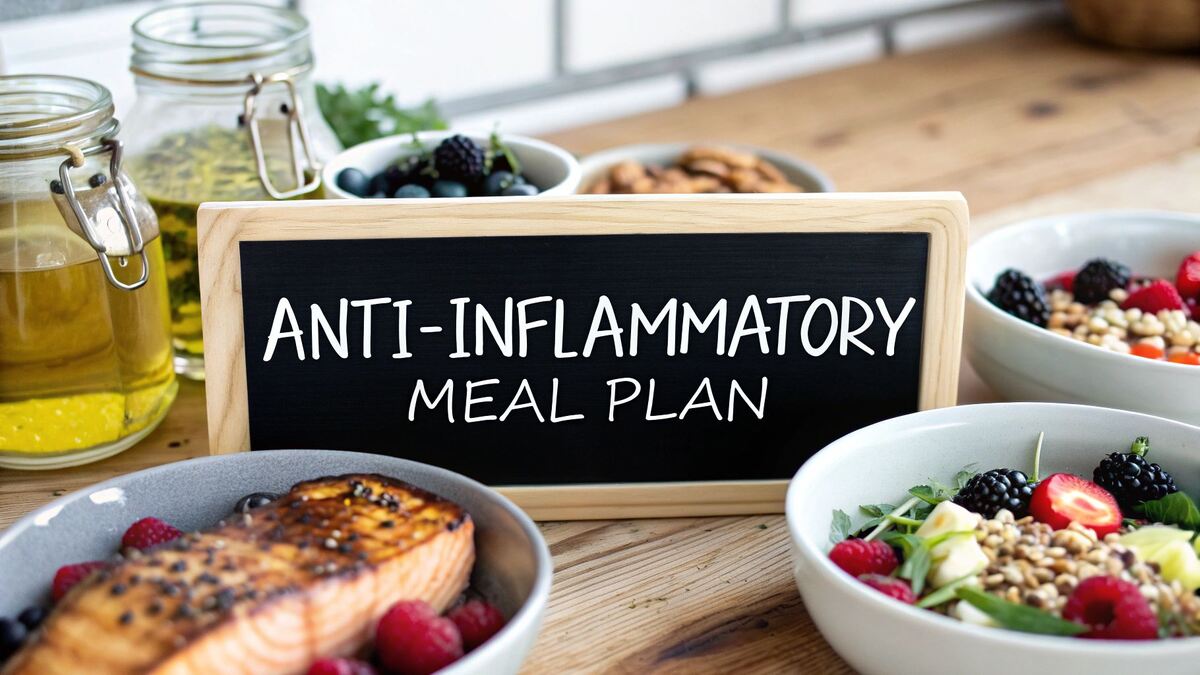
What is a practical anti-inflammatory meal plan?
A practical anti-inflammatory meal plan is a 7-day eating strategy focused on whole foods to reduce chronic inflammation. It typically includes three meals and one or two snacks per day, totaling around 1,800-2,200 calories, prioritizing fruits, vegetables, lean proteins, and healthy fats. The plan minimizes processed foods, sugar, and unhealthy fats known to provoke inflammation.
Think of an anti-inflammatory meal plan less like a rigid "diet" and more like a strategic way of eating. It's built around whole foods specifically chosen to help calm chronic inflammation in your body. The focus is simple: fill your plate with vibrant fruits, vegetables, high-quality lean proteins, and healthy fats while dialing way back on processed foods, sugar, and anything that tends to provoke an inflammatory response.
So, what does this way of eating actually look like?
This isn't about restriction. It's a lifestyle shift toward packing as much nutritional power into your meals as possible. The goal is to consistently choose ingredients that are scientifically known to lower inflammatory markers in the body.
You’re not just cutting things out; you’re actively adding powerful foods in. This means things like:
- Enjoying fatty fish like salmon at least twice a week.
- Making leafy greens a daily non-negotiable.
- Regularly incorporating antioxidant-rich berries, nuts, and high-quality olive oil.
By focusing on what you can add to your plate, this approach becomes sustainable, enjoyable, and genuinely effective for your long-term health. It’s about nourishing your body, not punishing it.
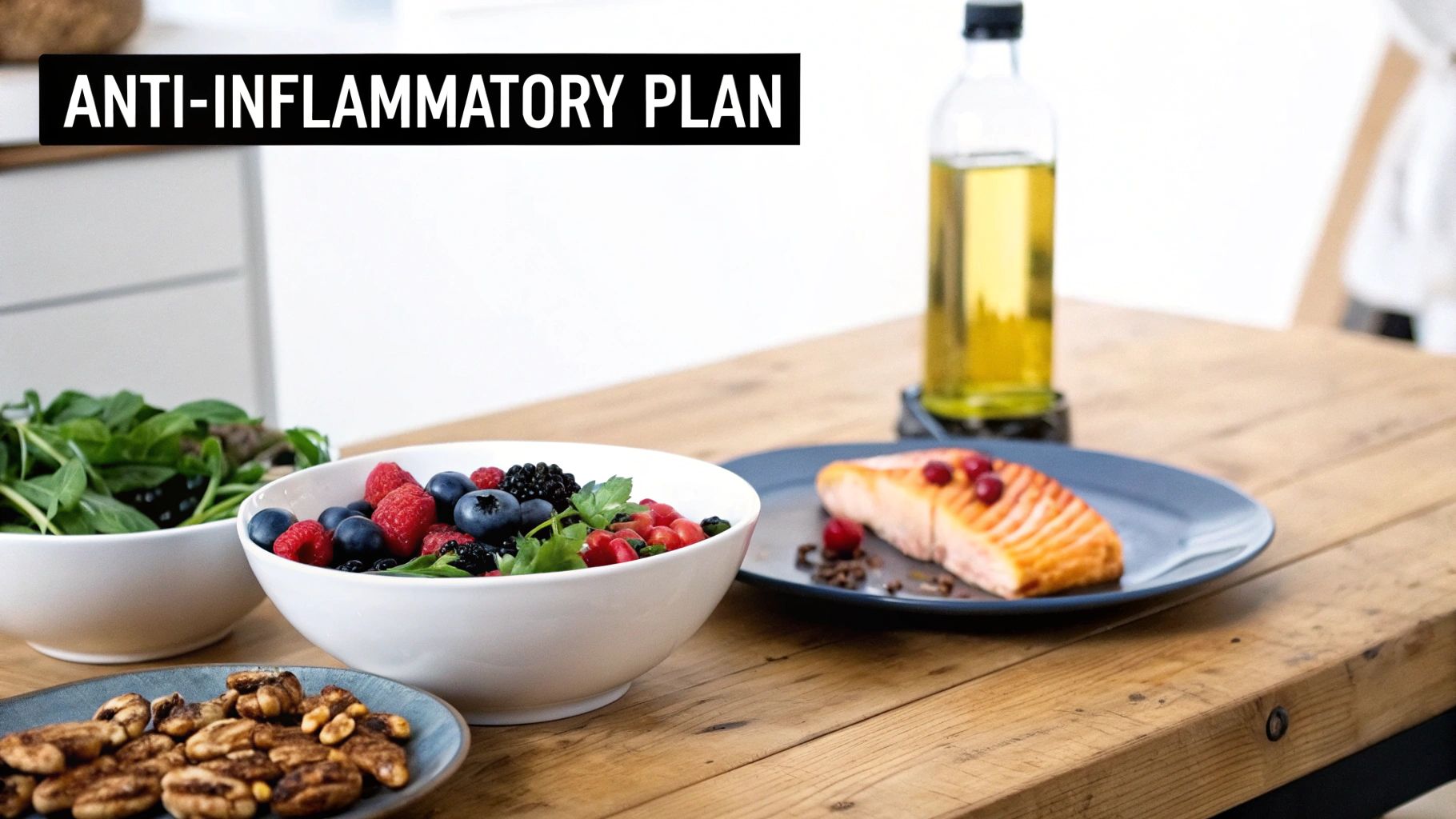
How does your diet influence chronic inflammation?
Think of chronic inflammation as a low-grade fire smoldering inside your body. It’s not like the acute inflammation you see with a sprained ankle—that’s your body’s helpful, short-term response to injury. This is different. It’s a quiet, persistent irritation that can last for months or even years, slowly damaging healthy tissues and cells along the way.
This internal fire is linked to a whole host of health problems, from everyday issues like joint pain, fatigue, and brain fog to more serious, long-term conditions.
The food you put on your plate every day either fans these flames or acts like a powerful fire extinguisher. Processed foods, sugary drinks, and certain unhealthy fats are notorious for triggering the release of inflammatory messengers. A steady diet of these foods keeps your immune system stuck on high alert, creating a vicious cycle that leaves you feeling achy, sluggish, and just plain unwell.
Why do your food choices matter so much?
Every single meal is a chance to either calm things down or stir them up. Foods packed with antioxidants, polyphenols, and omega-3 fatty acids are your best defense. They actively work to neutralize the damaging free radicals and dial down the inflammatory signals coursing through your bloodstream. This isn't just theory; the effects are real and measurable.
I’ve seen this firsthand with clients. Take Sarah, a busy marketing professional who came to me feeling drained and foggy all the time. We made some simple swaps—trading her sugary breakfast cereal for oatmeal with berries and replacing processed deli meats with grilled chicken salads. The change wasn’t immediate, but within a few weeks, she told me her energy was way up and that afternoon brain fog was finally starting to clear.
An anti-inflammatory diet isn't about deprivation. It's a lifestyle upgrade focused on crowding out the pro-inflammatory stuff with delicious, nutrient-dense foods that heal your body from the inside out.
Making these changes consistently can have a profound impact. A landmark 2025 meta-analysis in Frontiers in Nutrition found that people following anti-inflammatory diets saw significant drops in key health markers. On average, systolic blood pressure fell by -3.99 mmHg, diastolic by -2.12 mmHg, and there were major reductions in LDL cholesterol and the critical inflammation marker, hs-CRP.
These aren't just numbers on a page. For the over 500 million people worldwide affected by cardiovascular disease, these dietary changes are a powerful tool for taking back control. You can dive into the full research on these dietary impacts on frontiersin.org.
How does diet connect to key health markers?
So, how exactly do food choices lead to these kinds of clinical results? Your diet directly influences specific biomarkers that doctors use to measure just how much inflammation is going on in your body.
Let’s quickly look at some of the most important ones:
- High-Sensitivity C-Reactive Protein (hs-CRP): This is a primary marker of systemic inflammation. Anti-inflammatory foods, especially those high in fiber and omega-3s, are proven to bring hs-CRP levels down.
- LDL Cholesterol (the "bad" kind): Pro-inflammatory diets loaded with trans fats and refined sugars can send LDL levels soaring. On the flip side, foods like avocados, nuts, and olive oil help lower it.
- Blood Pressure: The high sodium content in processed foods is a major driver of high blood pressure. Meanwhile, potassium-rich foods like fruits and vegetables help your body counterbalance that effect and bring your numbers down.
The biomarkers in your blood work are a direct reflection of what's happening on your plate. It's a clear cause-and-effect relationship.
How does diet affect key inflammation markers?
Here’s a simple table that breaks down how your food choices can either help or hurt these key inflammatory markers.
| Biomarker | Impact of Anti-Inflammatory Diet | Impact of Pro-Inflammatory Diet |
|---|---|---|
| hs-CRP | Lowers levels by reducing systemic inflammation with antioxidants and omega-3s. | Elevates levels by triggering inflammatory cytokine production. |
| LDL Cholesterol | Decreases "bad" cholesterol with soluble fiber and healthy monounsaturated fats. | Increases levels with trans fats and refined sugars, promoting arterial plaque. |
| Blood Pressure | Helps lower it through high potassium intake and reduced sodium. | Raises it due to high sodium content in processed foods, straining the system. |
| Interleukin-6 (IL-6) | Reduces levels of this pro-inflammatory signaling molecule. | Stimulates the liver to produce more inflammatory proteins. |
Ultimately, choosing an anti-inflammatory meal plan puts you in the driver’s seat. You’re not just passively hoping for good health; you are actively building it, one nourishing and delicious meal at a time.
How do you build a personalized 7-day meal plan?
Jumping into an anti-inflammatory way of eating can feel like a massive project, but putting together your first 7-day plan is honestly simpler than you might think. The whole game is about structure, a little bit of prep, and focusing on delicious, easy-to-make meals you’ll actually be excited to eat. A solid plan takes the daily "what's for dinner?" guesswork out of the equation, helps you sidestep those impulse buys at the grocery store, and truly sets you up for a successful week.
This guide lays out a complete one-week sample plan designed to be both nourishing and incredibly practical. Every single recipe is crafted to be ready in under 30 minutes, making sure that even on your most chaotic days, a healthy, inflammation-fighting meal is totally within reach. We've also crunched the numbers on the approximate calories and macros for each day to help you stay aligned with your personal health goals.
What is the foundation of a successful meal plan?
Before we get into the daily menus, it's important to get a handle on the core principles that make a meal plan actually work. This isn’t just about listing recipes; it's about creating a system that fits seamlessly into your life. A winning anti-inflammatory meal plan is built on variety, efficiency, and a good dose of flexibility.
The main goal is to "eat the rainbow." That means bringing in a wide array of colorful fruits and vegetables to load up on different antioxidants and phytonutrients. Each meal should feel balanced and satisfying, built around three key components:
- A lean protein source: Think fatty fish like salmon, chicken, tofu, or legumes.
- Healthy fats: Avocado, nuts, seeds, and extra-virgin olive oil are your absolute best friends here.
- High-fiber carbohydrates: Things like quinoa, brown rice, sweet potatoes, and whole grains provide that steady, reliable energy.
This balanced-plate approach is what keeps you feeling full and satisfied, which is absolutely critical for making this a sustainable lifestyle change rather than just another short-term diet.
Your sample 7-day anti-inflammatory menu
Here is a complete one-week meal plan to get you started. Don't be afraid to swap days or substitute ingredients based on what you like and what's available at the store.
Day 1
- Breakfast: Berry Almond Oatmeal (½ cup rolled oats, 1 cup unsweetened almond milk, ½ cup mixed berries, 1 tbsp chopped almonds).
- Lunch: Mediterranean Quinoa Salad (1 cup cooked quinoa, cherry tomatoes, cucumber, ½ cup chickpeas, lemon-dill vinaigrette).
- Dinner: Lemon Herb Salmon with Roasted Asparagus (4-oz salmon fillet baked with lemon and herbs, served with roasted asparagus).
- Snack: Apple with 1 tbsp almond butter.
- Approximate Totals: 1,850 calories, 85g protein, 200g carbs, 80g fat
Day 2
- Breakfast: Avocado Toast (1 slice whole-grain toast, ½ mashed avocado, sprinkle of red pepper flakes).
- Lunch: Leftover Mediterranean Quinoa Salad.
- Dinner: Sheet-Pan Chicken Fajitas (4-oz chicken breast sliced with bell peppers and onions, roasted with fajita seasoning).
- Snack: Handful of walnuts.
- Approximate Totals: 1,900 calories, 90g protein, 185g carbs, 88g fat
Day 3
- Breakfast: Green Power Smoothie (1 cup spinach, ½ banana, ½ cup frozen pineapple, 1 tbsp chia seeds, 1 cup water).
- Lunch: Chicken and Veggie Bowl (Leftover chicken from Day 2 over mixed greens with a balsamic vinaigrette).
- Dinner: Black Bean Burgers on Lettuce Wraps (Serve a pre-made or homemade black bean patty in a large lettuce leaf with tomato and onion).
- Snack: Plain Greek yogurt with raspberries.
- Approximate Totals: 1,800 calories, 80g protein, 195g carbs, 75g fat
Day 4
- Breakfast: Greek Yogurt Parfait (Plain Greek yogurt layered with sliced peaches and chopped pecans).
- Lunch: Leftover Black Bean Burger Salad (Crumble a patty over mixed greens).
- Dinner: Lentil and Vegetable Soup (A hearty soup made with red lentils, carrots, celery, and a pinch of turmeric).
- Snack: Baby carrots with hummus.
- Approximate Totals: 1,750 calories, 75g protein, 210g carbs, 70g fat
Day 5
- Breakfast: Scrambled Eggs with Spinach (2 eggs scrambled with a handful of spinach and turmeric, served with a slice of whole-grain toast).
- Lunch: Leftover Lentil and Vegetable Soup.
- Dinner: Shrimp and Broccoli Stir-fry (4-oz shrimp sautéed with broccoli, ginger, and garlic, served over brown rice).
- Snack: An orange and a small piece of dark chocolate (70% or higher).
- Approximate Totals: 1,950 calories, 95g protein, 205g carbs, 85g fat
Day 6
- Breakfast: Berry Almond Oatmeal.
- Lunch: Leftover Shrimp and Broccoli Stir-fry.
- Dinner: Turkey Meatballs with Zucchini Noodles (Lean ground turkey meatballs served over spiralized zucchini with a no-sugar-added marinara sauce).
- Snack: Apple slices with a handful of almonds.
- Approximate Totals: 1,900 calories, 92g protein, 180g carbs, 90g fat
Day 7
- Breakfast: Green Power Smoothie.
- Lunch: Leftover Turkey Meatballs with Zucchini Noodles.
- Dinner: Chicken and Veggie Skewers (Cubes of chicken, bell peppers, zucchini, and cherry tomatoes grilled or baked).
- Snack: Plain Greek yogurt with berries.
- Approximate Totals: 1,850 calories, 88g protein, 175g carbs, 82g fat
Remember, personalization is everything. If you're craving more variety or need a plan that's fine-tuned for specific dietary needs, you can explore the personalized options available with our AI Meal Planner. Learn more about how to get customized anti-inflammatory meal plans that fit your unique goals.
How can you streamline your week with meal prep?
A great meal plan is only as good as your ability to actually follow it. Sunday is the perfect day to carve out an hour or two for meal prep, which will slash your cooking time during the week. Seriously, it's a game-changer.
Your Sunday Meal Prep Game Plan
- Get Your Grains Ready: Batch-cook a big pot of quinoa and brown rice. Let it cool completely before portioning it into airtight containers for the fridge. This makes throwing together lunches and dinners incredibly fast.
- Chop Those Veggies: Wash and chop your vegetables for the week—think bell peppers, onions, carrots, and broccoli. Store them in containers so they're ready to toss into a stir-fry, a sheet-pan dinner, or a salad.
- Prep Your Proteins: You can grill or bake a few chicken breasts to slice up for salads and bowls. You can also form your turkey meatballs or black bean burger patties so they're ready to hit the pan later.
- Make Your Dressings: Whisk together a vinaigrette for the week. Having a delicious, healthy dressing ready to go makes salads so much more appealing than the bottled stuff.
This diagram really drives home how a diet high in processed foods can directly fuel chronic inflammation and lead to health issues down the line.
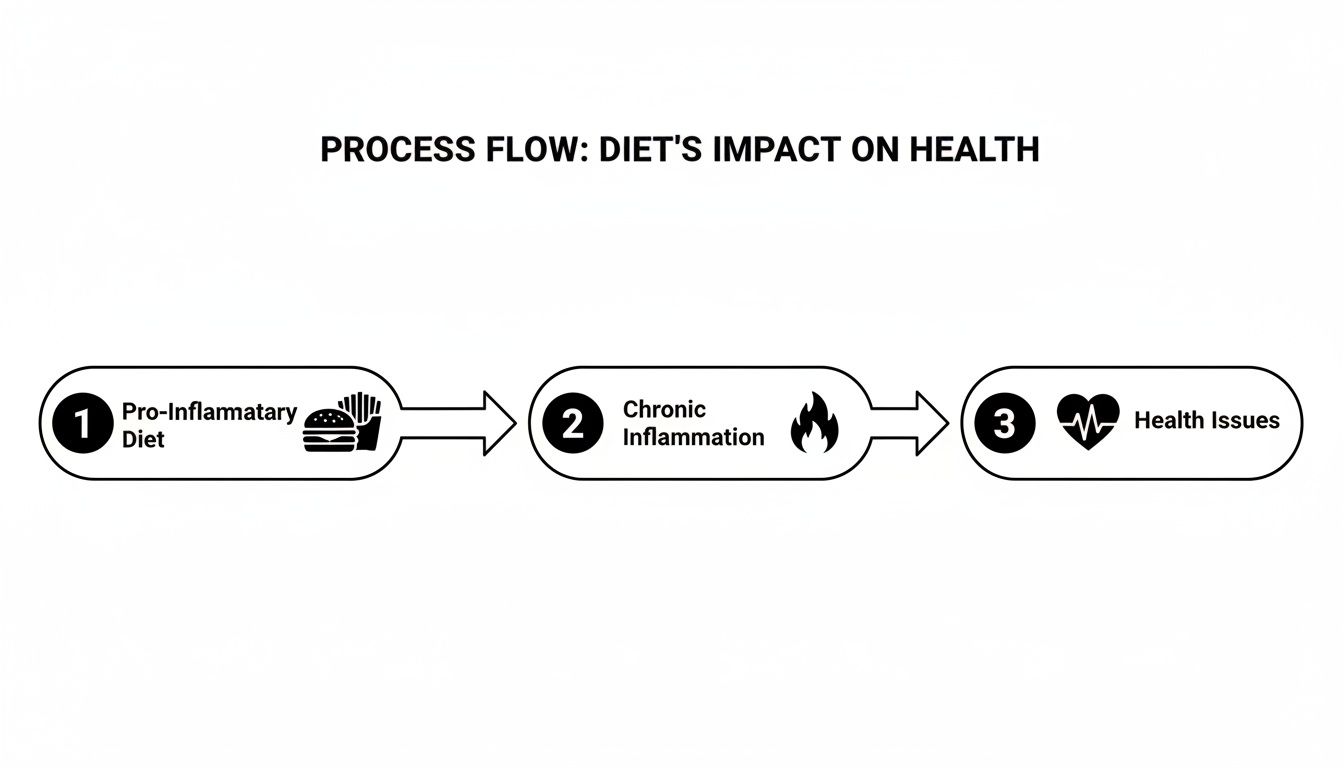
It’s a powerful visual reminder that your food choices are the first and most critical step in either fueling or fighting the inflammatory process in your body.
Aisle-sorted grocery list for efficiency
To make your shopping trip as fast as possible, organize your grocery list by store section. This simple trick prevents you from backtracking and makes sure you don't forget anything.
Produce
- Mixed berries (fresh or frozen), bananas, apples, oranges, peaches, pineapple, lemons
- Spinach, mixed greens, lettuce, asparagus, broccoli, bell peppers, onions, carrots, celery, zucchini, cherry tomatoes, avocado
Proteins
- Salmon fillets (4 oz each)
- Chicken breasts (boneless, skinless)
- Lean ground turkey
- Shrimp (peeled and deveined)
- Eggs
Pantry
- Rolled oats
- Quinoa, brown rice
- Canned chickpeas, canned black beans, red lentils
- Whole-grain bread
- Almonds, walnuts, pecans, chia seeds
- Almond butter
- Extra-virgin olive oil
- Balsamic vinegar
- Spices: Turmeric, ginger, garlic powder, red pepper flakes, fajita seasoning
- No-sugar-added marinara sauce
Dairy/Alternatives
- Unsweetened almond milk
- Plain Greek yogurt
By following this kind of structured approach—from the meal plan and prep schedule to the organized grocery list—you’re really empowering yourself to start an anti-inflammatory lifestyle with confidence and clarity.
Which foods should you prioritize or avoid?
Successfully switching to an anti-inflammatory meal plan really comes down to how you stock your kitchen. It’s all about making smart choices at the grocery store so that healthy eating becomes your default setting, even on the most hectic days. This isn't about restriction; it's about strategically choosing foods that calm inflammation while limiting those that fuel it.
Think of it this way: every meal is an opportunity. You can either add ingredients that act like a soothing balm for your system or ones that subtly stoke the fires of chronic inflammation. The goal is to make these anti-inflammatory choices feel effortless and automatic.
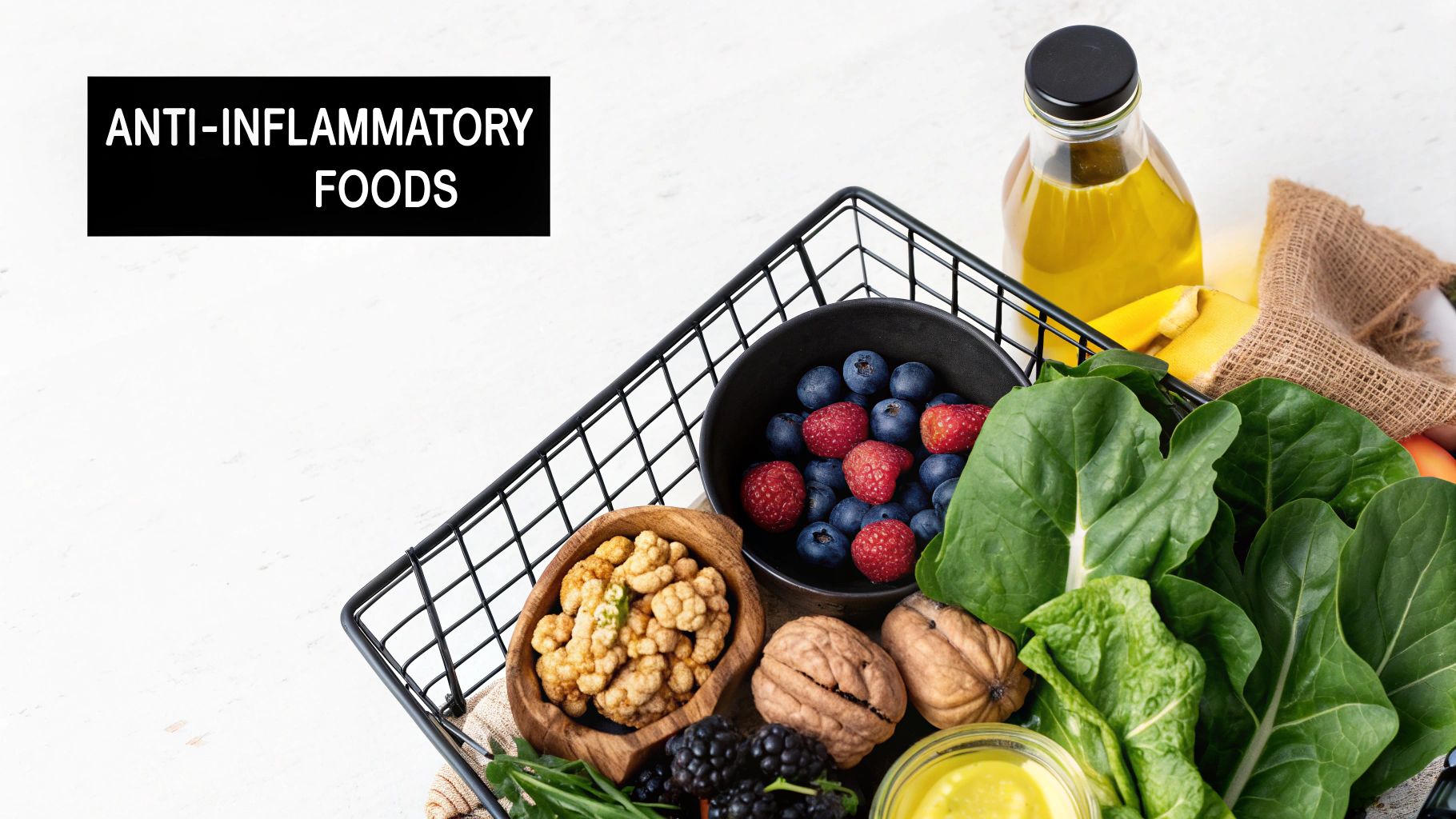
To make this easier, scientists even developed the Dietary Inflammatory Index (DII), a scoring system that ranks foods based on how they impact key biomarkers in the body. Choosing foods with a friendly DII score is a direct way to support your health.
A revealing 2020 study involving 3,151 students found that diets with the highest (most pro-inflammatory) DII scores were independently linked to a higher prevalence of overweight and obesity. This really highlights just how crucial it is to prioritize foods like berries, fatty fish, and leafy greens over highly processed options. You can read more about how foods aid in stress relief and lowering inflammation from the Obesity Medicine Association.
What should you add to your grocery cart?
Building an anti-inflammatory plate is all about adding color, fiber, and healthy fats. Instead of focusing on what you can't have, think about crowding out the less-healthy options with vibrant, nutrient-dense foods.
Top Anti-Inflammatory Foods to Prioritize:
- Colorful Fruits and Vegetables: Berries (blueberries, strawberries), cherries, and oranges are packed with antioxidants called polyphenols. Leafy greens like spinach and kale, along with broccoli and bell peppers, are the foundation of this eating style.
- Healthy Fats: Extra-virgin olive oil, avocados, walnuts, and almonds are fantastic sources of unsaturated fats that help reduce inflammation.
- Fatty Fish: Salmon, mackerel, and sardines are rich in omega-3 fatty acids, which have incredibly powerful anti-inflammatory effects. Aim for at least two servings per week.
- Herbs and Spices: Turmeric, ginger, garlic, and cinnamon do more than just add flavor. They contain potent compounds that actively fight inflammation.
Don't underestimate the power of spices. A sprinkle of turmeric in your eggs or ginger in your tea is a simple, effective way to boost the anti-inflammatory power of any meal.
Many of these core principles are shared with one of the most well-studied eating patterns in the world. For those interested in a structured approach, exploring our guide on the Mediterranean diet plan can provide more delicious ideas and recipes that align perfectly with these goals.
Which foods should you limit or avoid?
Just as important as adding the right foods is knowing which ones to scale back on. You don't have to eliminate these entirely, but reducing how often you consume them can make a massive difference.
Key Pro-Inflammatory Foods to Reduce:
- Sugary Beverages: Soda, sweetened fruit juices, and sugary coffee drinks can cause sharp spikes in blood sugar, which promotes an inflammatory response.
- Refined Carbohydrates: White bread, pastries, and most packaged snacks have been stripped of their fiber and can contribute to inflammation.
- Processed and Red Meats: Things like sausages, hot dogs, and bacon are often high in saturated fats and preservatives that can be inflammatory.
- Certain Oils: Heavily processed vegetable oils like soybean and corn oil are high in omega-6 fatty acids. While some omega-6 is necessary, an imbalanced ratio with too little omega-3 can promote inflammation.
- Fried Foods: French fries, fried chicken, and other deep-fried items are major culprits due to the unhealthy fats and high heat used in cooking.
How can you make smart swaps that stick?
Making changes that last is all about finding swaps that feel satisfying, not like a sacrifice. This table offers some simple, practical substitutions to help you transition smoothly.
Anti-Inflammatory Food Swaps
| Instead Of This (Pro-Inflammatory) | Try This (Anti-Inflammatory) |
|---|---|
| White Rice or Pasta | Quinoa or Brown Rice |
| Sugary Breakfast Cereal | Oatmeal with Berries & Nuts |
| Processed Deli Meat | Grilled Chicken or Salmon |
| Soybean or Corn Oil | Extra-Virgin Olive Oil |
| Potato Chips | A Handful of Almonds |
| Creamy Salad Dressing | Olive Oil and Vinegar |
| Soda or Sweet Tea | Sparkling Water with Lemon |
By focusing on these easy swaps and prioritizing whole, nutrient-rich foods, you make healthy eating the easy choice. It’s a sustainable approach that empowers you to build a powerful anti-inflammatory meal plan one delicious and simple choice at a time.
How can you adapt the plan for different dietary needs?
One of the best things about an anti-inflammatory eating style is its incredible flexibility. The core principles—loading up on whole foods packed with antioxidants, healthy fats, and fiber—are universal. This isn't a rigid, one-size-fits-all diet.
Think of it as a framework you can easily adapt to your own dietary needs. Whether you're vegan, gluten-free, or following a ketogenic diet, you can build a powerful, inflammation-fighting menu. It just takes a few smart swaps to keep the benefits without compromising your lifestyle.
How can you create a vegan anti-inflammatory plan?
A well-planned vegan diet is naturally anti-inflammatory. You're already focusing on fruits, vegetables, and legumes. The trick is to be intentional about getting enough high-quality protein and omega-3s from plant-based sources.
Here’s how to nail it:
- Protein Power: Ditch the animal products for things like lentils, chickpeas, tofu, tempeh, and edamame. These aren't just protein bombs; they're also loaded with fiber that your gut microbes will thank you for.
- Omega-3 Sources: Since fatty fish isn't on the menu, you’ll want to double down on plant-based omega-3s. Walnuts, chia seeds, flaxseeds, and hemp seeds are your best friends here. A tablespoon of ground flaxseed in your morning smoothie is an easy win.
- Mind Your Micros: Keep an eye on iron-rich plant foods like spinach and lentils. Pro tip: pair them with a source of vitamin C (like bell peppers or a squeeze of lemon) to dramatically boost absorption. You'll also want to consider a B12 supplement, as it's almost exclusively found in animal products.
If you want to dive deeper, our dedicated guide on building a vegetarian anti-inflammatory meal plan is packed with recipes and specific tips.
How can you adapt the plan for a gluten-free lifestyle?
Shifting to a gluten-free anti-inflammatory plan is surprisingly simple because most of the core foods—fruits, vegetables, lean proteins—are naturally gluten-free anyway.
Your main focus is on choosing the right carbs. Steer clear of processed gluten-free snacks, which are often packed with sugar and refined starches, and instead opt for nutrient-dense whole foods.
Here are some smart choices:
- Whole Grains: Swap out wheat, barley, and rye for naturally gluten-free options like quinoa, brown rice, wild rice, and certified gluten-free oats. These deliver crucial fiber and B vitamins.
- Root Vegetables: Don't forget about sweet potatoes, squash, and beets. They are fantastic carbohydrate sources that also happen to be loaded with powerful antioxidants.
- Become a Label Detective: Gluten can hide in the sneakiest places, like sauces, dressings, and marinades. Stick to simple preparations with olive oil and lemon juice, or just get in the habit of scanning labels before you buy.
How can you follow a keto anti-inflammatory diet?
A ketogenic diet can be powerfully anti-inflammatory, but only if it's done right. The key is building your plan around healthy, whole foods—not processed "keto-friendly" junk food. This version of keto prioritizes high-quality fats, loads of non-starchy vegetables, and moderate protein to crush inflammation while keeping you in ketosis.
Here are the key adjustments:
- Focus on Healthy Fats: Make avocados, extra-virgin olive oil, nuts (especially macadamia and almonds), seeds, and fatty fish like salmon the stars of your diet. These are your primary sources of monounsaturated and omega-3 fats.
- Load Up on Non-Starchy Vegetables: Your plate should be overflowing with leafy greens like spinach and kale, plus broccoli, cauliflower, asparagus, and bell peppers. They provide essential nutrients and fiber with a minimal carb count.
- Choose High-Quality Protein: When possible, opt for grass-fed meats, pasture-raised poultry, and wild-caught fish.
No matter how you tailor it, the goal is always the same: reduce the foods that cause inflammation and increase the ones that fight it. The specific ingredients might change, but the core principle of nourishing your body with real, unprocessed foods never does.
How do you track progress and stay consistent?
Kicking off an anti-inflammatory meal plan is a fantastic first step, but the real transformation happens when you stick with it. The key to staying motivated isn't just about watching the scale—it's about recognizing all the ways your body is thanking you. Success comes from building habits that make this way of eating feel natural, not like a chore.
The best way to track your journey is to look at both how you feel and what the data tells you. This combined approach gives you the full picture of how your body is responding, which keeps you fired up and helps you celebrate the wins along the way.
What subjective markers should you journal?
Often, the most powerful changes are the ones you feel personally. Keeping a simple daily journal is an incredible tool for catching subtle improvements you might otherwise miss. These “subjective” wins are what really fuel your motivation.
- Energy Levels: Jot down your energy in the morning, midday, and evening. Are those afternoon slumps starting to disappear?
- Sleep Quality: Are you falling asleep faster or waking up feeling more rested? Make a note of how many times you wake up during the night.
- Mental Clarity: Pay attention to moments of brain fog versus clear-headedness. Many people report feeling much sharper and more focused.
- Mood and Joint Comfort: Keep a quick log of your overall mood and any shifts in joint stiffness or general aches and pains.
How can you measure objective progress?
Alongside journaling your feelings, objective metrics offer concrete proof that your hard work is paying off. You don't need to get obsessed with checking these daily, but a weekly or monthly check-in can be incredibly insightful.
For a more structured approach, a balanced diet meal plan can help you manage these metrics without the guesswork.
The goal isn't perfection; it's consistency. A great mindset is the 80/20 rule: stick to your anti-inflammatory plan 80% of the time, and give yourself the flexibility for social events or cravings the other 20%. This is what prevents burnout and makes it a sustainable lifestyle.
Navigating social events is a classic hurdle. A pro tip is to check out the menu online before you go so you can spot an anti-inflammatory-friendly option ahead of time. Or, have a healthy snack before you leave so you don’t show up starving.
Celebrate every small victory—whether it's a full week of meal prepping or just noticing you have more energy to play with your kids. These are the wins that build the momentum you need to turn small changes into lasting health.
Frequently Asked Questions
How quickly will I feel better on an anti-inflammatory diet?
Most people notice improvements in energy and reduced bloating within the first 1-2 weeks. More significant changes in health markers, like hs-CRP levels, typically take 3-6 months of consistent eating.
Can I still drink coffee on this meal plan?
Yes, 1-2 cups of black coffee or coffee with unsweetened plant-based milk are fine. The polyphenols in coffee are anti-inflammatory, but adding sugar or heavy creamers negates these benefits.
Is an anti-inflammatory diet expensive?
It doesn't have to be if you shop smart. Focus on buying seasonal produce, utilize frozen fruits and vegetables, and incorporate budget-friendly proteins like lentils, beans, and canned wild salmon.
What are the best anti-inflammatory snacks?
The best snacks are whole foods like a handful of almonds or walnuts, an apple with almond butter, plain Greek yogurt with berries, or baby carrots with hummus.
Will I need to take supplements?
A well-planned anti-inflammatory diet should provide most necessary nutrients from whole foods. Always consult your healthcare provider before adding supplements to see if they are necessary for your specific needs.
Ready to stop the guesswork and start feeling your best? The AI Meal Planner creates personalized, anti-inflammatory meal plans that fit your goals and lifestyle, complete with smart grocery lists and easy 30-minute recipes. Take control of your health today.
AI-powered nutrition
Get Your Personalized Meal Plan
AI creates the perfect meals for your goals, lifestyle, and taste.
Start Your Journej