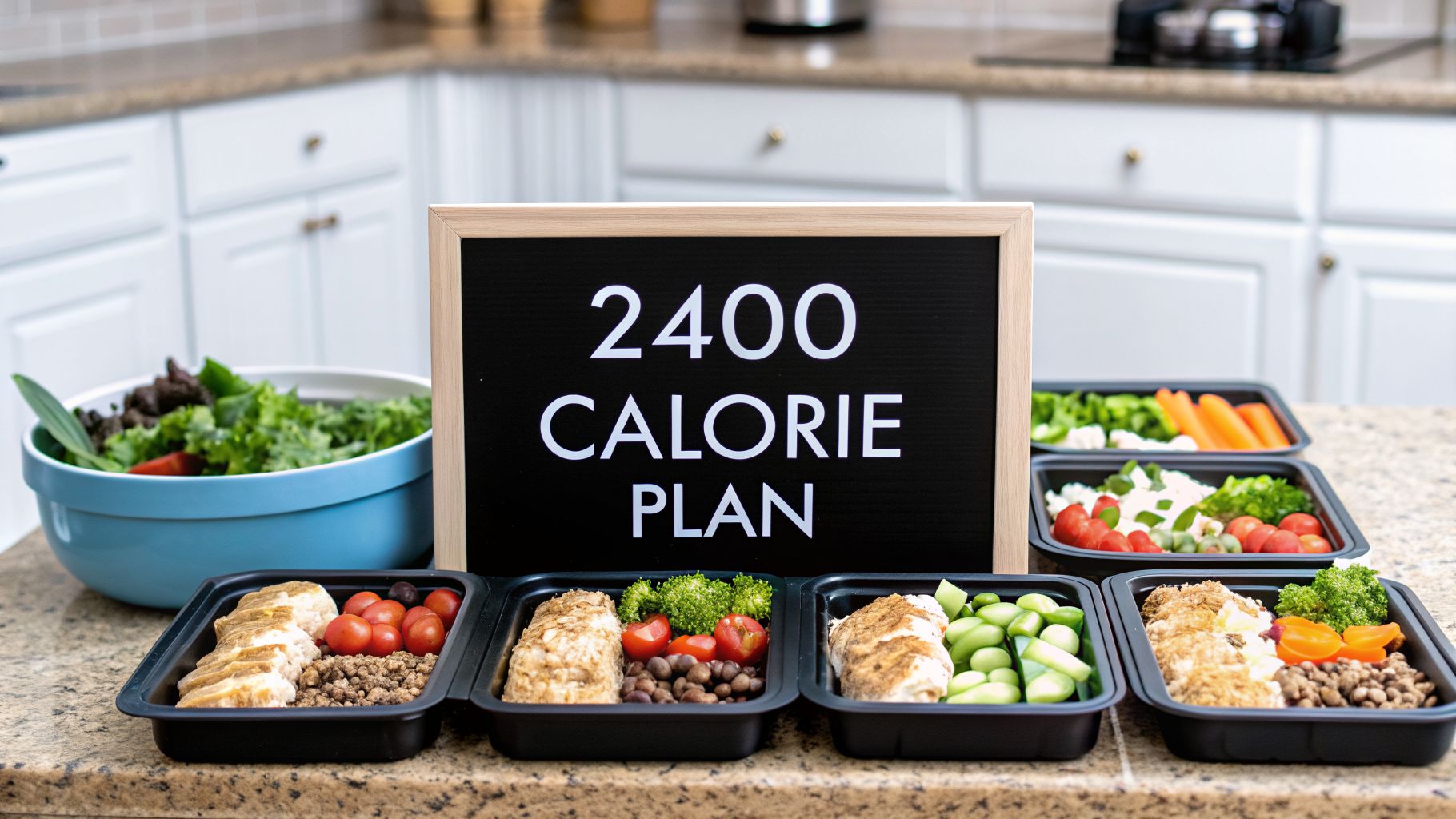
A 2400 calorie meal plan is an excellent target for active adults aiming for muscle gain, weight maintenance, or gradual weight loss. A balanced plan typically includes three main meals of 500-600 calories each and two snacks of 200-450 calories, focusing on whole foods. For example, a day might consist of oatmeal for breakfast, a large chicken salad for lunch, baked salmon for dinner, and snacks like Greek yogurt and an apple.
Following a 2400 calorie meal plan often hits the sweet spot for active adults looking to maintain weight, build lean muscle, or simply fuel a demanding lifestyle. This isn't a restrictive diet—it's a sustainable energy target that provides enough fuel for great workouts and solid recovery without feeling like you're constantly hungry. For many people, it’s the realistic calorie level they need to achieve their fitness goals.
Why might 2400 calories be the right target for me?
You’ve seen it on countless food labels: the ubiquitous phrase "based on a 2,000 calorie diet." This number has been drilled into our heads as the universal standard, but the truth is, it doesn't fit everyone. For a huge portion of the adult population, a 2400 calorie meal plan is a much more effective and appropriate target.
Trying to stick to just 2,000 calories can often lead to frustration, low energy, and stalled progress, especially if you lead an active life. That extra 400 calories can be a game-changer, providing the fuel you need to power through workouts, recover properly, and keep your metabolism humming.
Is the 2000-calorie standard accurate?
The 2,000-calorie standard was never meant to be a perfect number for every single person. When the FDA standardized nutrition labels, they actually noted that the average daily intake was closer to 2,400 calories. They simply settled on 2,000 as a round, moderate benchmark.
Today, the official Dietary Guidelines for Americans are much more specific, confirming that a range of 2,400-3,000 calories is appropriate for moderately active men, and 1,800-2,400 for active women.
This means a 2400 calorie plan aligns perfectly with expert recommendations for people who do more than sit at a desk all day. It strikes that ideal balance between providing energy for your daily life and creating the right conditions for meaningful changes in body composition.
Key Takeaway: A 2400 calorie plan isn't "a lot of food" for most active people. It's often the right amount of fuel to support your body's demands for energy, muscle maintenance, and a healthy metabolism.
Before settling on a specific calorie target, it's helpful to see how it might align with different goals. This table gives a quick overview of who a 2400 calorie plan typically works for and what you can realistically expect.
How does a 2400 calorie plan align with different fitness goals?
| Your Goal | Who It Typically Works For | What You Can Expect |
|---|---|---|
| Muscle Gain | Moderately active men or very active women looking to build lean mass. | Provides a slight calorie surplus needed for muscle protein synthesis without promoting significant fat gain. |
| Weight Maintenance | Active men and highly active women who want to maintain their current physique and energy levels. | Supplies enough fuel to match daily energy expenditure, supporting performance and preventing weight loss. |
| Performance Fueling | Individuals with physically demanding jobs or athletes in training. | Delivers the energy needed to sustain high activity levels, aid recovery, and prevent burnout. |
| Gradual Weight Loss | Larger, active individuals who are starting their weight loss journey. | Creates a manageable calorie deficit that promotes fat loss while preserving muscle mass and energy. |
This gives you a solid starting point, but remember that individual results can vary based on metabolism, body composition, and training intensity.
Who benefits most from this calorie level?
So, is this the right calorie level for you? It really boils down to your activity, goals, sex, and age.
- Men Aiming for Muscle Gain or Maintenance: For most men who hit the gym a few times a week, 2400 calories is a fantastic baseline for building lean muscle. It's often just enough of a surplus to fuel growth without piling on unwanted body fat.
- Highly Active Women: If you're a woman who regularly engages in intense exercise—think running, CrossFit, or competitive sports—2400 calories is often the sweet spot for fueling peak performance and helping your body recover. It helps you avoid the energy deficits that can sabotage your training.
- Individuals with Physically Demanding Jobs: If your work involves manual labor or keeps you on your feet all day, your body burns far more energy than someone with a desk job. This calorie level is great for meeting those higher daily demands.
While this plan works wonders for many, it might be too much for a sedentary individual or not quite enough for a high-level competitive athlete. If you have lower energy needs, it's worth exploring other options. A well-designed 1500 calorie meal plan can be a better fit for weight loss if you're less active.
How should I structure my meals and macros?
Structuring a 2400-calorie day is less about obsessively counting every single calorie and more about getting the right balance of macronutrients—protein, carbs, and fats—to fuel your specific goal. The real secret is in the timing. Spreading your calories out keeps your energy levels stable and hunger pangs at bay. Nobody performs well when they're hangry.
What is a good daily meal framework?
One of the most effective ways to manage a 2400 calorie meal plan is to split your intake across three solid meals and a couple of strategic snacks. This approach keeps your metabolism humming and blood sugar steady all day long.
Think of it like this:
- Breakfast (500-600 calories): Start your day strong with a meal rich in protein and fiber. This sets you up for success and keeps you full until lunch.
- Lunch (500-600 calories): Time to refuel. A balanced mix of lean protein, complex carbs, and plenty of veggies is the perfect midday reset.
- Dinner (500-600 calories): This meal is all about recovery. It should be satisfying, but you might go a little lighter on the carbs if you’re less active in the evenings.
- Snacks (1-2 total, 200-450 calories): These are your bridges. They fill the gaps between meals, stopping energy crashes before they start and preventing you from overeating at your next meal.
This structure makes hitting 2400 calories feel effortless and natural, not forced. As you can see below, the same calorie target can be adapted for very different fitness goals just by adjusting your macros.

It’s all about tweaking the fuel mix—your protein, carbs, and fats—to get the outcome you're after.
How do I set my macronutrient targets?
With a meal schedule in place, it's time to zero in on your macros. While general guidelines suggest a 2400-calorie plan breaks down into 45-65% carbohydrates, 20-35% fats, and 10-35% protein, those are just starting points. In real-world food terms, that might look like about 3 cups of veggies, 2 cups of fruit, 8 ounces of grains, and 6.5 ounces of protein each day.
Here’s how you can tailor those numbers for common goals:
Macro Splits for a 2400-Calorie Day
| Goal | Protein (Grams) | Carbohydrates (Grams) | Fats (Grams) |
|---|---|---|---|
| Balanced | 120g (20%) | 300g (50%) | 80g (30%) |
| Muscle Gain | 180g (30%) | 240g (40%) | 80g (30%) |
| Keto-Friendly | 120g (20%) | <50g (<10%) | 182g (>70%) |
Use these targets as your baseline. Pay attention to your energy levels, workout performance, and how your body feels, and don't be afraid to adjust. Seeing a detailed balanced meal plan can show you exactly how these macros look on a plate.
How can I visualize portions without a scale?
Nobody wants to weigh every piece of food for the rest of their life. It’s tedious and unsustainable. Instead, get comfortable with visualizing portion sizes using your hands and common objects.
- 6.5 Ounces of Protein: Think two palm-sized portions of chicken breast, a large salmon fillet, or a little over a cup of Greek yogurt.
- 8 Ounces of Grains: This is about one cup of uncooked rice or pasta, which doubles to two cups when cooked. Picture two fist-sized portions of cooked grains.
- 3 Cups of Vegetables: Imagine three baseballs' worth of broccoli, spinach, or bell peppers. It’s a lot!
Even your drink choices matter. Small swaps can add up, and understanding the differences between options like Almond Milk vs Soy Milk can help you stay on track with your calories and macros without even trying.
Expert Tip: Don't stress about hitting your numbers perfectly every single day. Consistency over the course of a week is far more important than daily perfection. If you find yourself struggling with the mental load of planning, an AI-powered tool can generate your meals and macros for you.
What does a 7-day meal plan look like?

Seeing a meal plan on paper is one thing, but bringing it to life in your kitchen is where the real progress begins. A 2400 calorie meal plan shouldn't feel like a punishment. Forget bland, repetitive meals; this is about structuring satisfying, nutrient-dense food that actually fuels your goals. The secret is all in the variety and smart planning.
To show you exactly what this means, here are three distinct 7-day plans. Whether your goal is all-around wellness, packing on lean muscle, or thriving on a plant-based diet, there's a delicious and effective path forward. Think of these not as strict rules, but as proven templates for a flavorful, energizing week.
What is a balanced wellness plan for all-around health?
This plan is a perfect starting point for most people. It's built on a foundation of whole foods, a balanced macronutrient profile, and sustainable habits that support long-term health and energy. We're not overcomplicating things here—just fueling your body well.
Here’s a snapshot of a typical day:
- Breakfast (550 Calories): Oatmeal loaded with berries, nuts, and a scoop of protein powder. This combo gives you slow-release carbs for energy, protein to keep you full, and healthy fats.
- Lunch (600 Calories): A massive salad with grilled chicken breast, mixed greens, quinoa, avocado, and a simple vinaigrette. It's absolutely packed with fiber, lean protein, and essential micronutrients.
- Dinner (650 Calories): Baked salmon with roasted sweet potatoes and steamed broccoli. This meal is a powerhouse of high-quality protein and omega-3 fatty acids for recovery and brain health.
- Snacks (600 Calories): Greek yogurt with a handful of almonds, plus an apple. These snacks are designed to keep your blood sugar stable and crush those evening cravings before they start.
My Personal Tip: Cook your grains (like quinoa or brown rice) and proteins (like grilled chicken) in a larger batch over the weekend. Trust me, this turns a 30-minute meal prep into a 5-minute assembly job on a busy weekday.
What does a high-protein plan for muscle gain look like?
When building lean muscle or improving satiety is the name of the game, protein becomes the star of the show. This plan strategically amps up the protein in every single meal to support muscle repair and keep you feeling full—a game-changer whether you're aiming for a calorie surplus or deficit.
For instance, a popular high-protein 2400-calorie meal plan averages 2,261 calories daily, with 167g of protein (30%), 200g of carbs (35%), and 100g of fat (40%) over a week. On some days, you might front-load your protein with a 759-calorie breakfast that delivers a massive 91g of protein, followed by a 763-calorie lunch with 72g of protein.
Let's see what this looks like on a plate:
- Breakfast (650 Calories): High-Protein Chocolate Peanut Butter Smoothie (2 scoops whey protein, 1 banana, 2 tbsp peanut butter, spinach, and almond milk).
- Lunch (650 Calories): Beef and vegetable stir-fry served with a side of brown rice. Using lean ground beef is a fantastic and tasty way to hit those high protein targets.
- Dinner (700 Calories): Two large chicken thighs baked with a side of roasted Brussels sprouts and a small portion of whole-wheat pasta.
- Snacks (400 Calories): A cup of cottage cheese and a ready-to-drink protein shake. These are my favorite no-prep options to guarantee you hit your numbers.
How do high-protein and balanced plans compare?
When you're trying to decide between a balanced approach and a high-protein one, seeing the numbers side-by-side makes all the difference.
Here's a look at how daily macronutrient targets in grams differ between a standard balanced diet and one optimized for high protein intake, both at 2400 calories.
| Macronutrient | Balanced Plan Target (Grams) | High-Protein Plan Target (Grams) |
|---|---|---|
| Protein | 120g | 180g |
| Carbohydrates | 300g | 240g |
| Fats | 80g | 80g |
As you can see, the main adjustment is shifting about 60 grams of daily carbohydrates over to protein. This simple reallocation is what fuels enhanced muscle synthesis while keeping fat intake consistent to support hormonal health. It’s a small change on paper with a big impact in the gym.
Can I follow a plant-based (vegan) plan at 2400 calories?
Following a plant-based diet at 2400 calories requires some smart planning to make sure you're getting enough protein, iron, and vitamin B12. This plan is designed to hit all your nutritional marks using a wide variety of whole foods, all completely free of animal products.
This approach proves you don’t need meat or dairy to build a strong, healthy body. It's all about using nutrient-dense ingredients to provide clean, sustained energy.
Here’s what a typical day on the vegan plan might look like:
- Breakfast (600 Calories): A big Tofu Scramble with black beans, bell peppers, and onions, plus a side of avocado toast on whole-wheat bread. This is a serious protein-packed start to your day.
- Lunch (650 Calories): A large Lentil Salad with mixed greens, cucumber, tomatoes, hemp seeds, and a lemon-tahini dressing. Lentils are one of my favorite sources of plant-based protein and fiber.
- Dinner (700 Calories): Vegan Lentil Shepherd's Pie with a sweet potato topping. This is the definition of a hearty, comforting, and incredibly nutritious meal.
- Snacks (450 Calories): A smoothie made with soy milk, a scoop of vegan protein powder, a banana, and a handful of walnuts. Plus, an orange for a vitamin C boost.
The absolute key to a successful vegan plan is diversity. By including a wide range of legumes, whole grains, nuts, seeds, and vegetables, you guarantee a complete amino acid profile and a rich intake of essential vitamins and minerals. Exploring a comprehensive guide to a 2400 calorie meal plan can give you even more creative ideas for plant-based swaps and delicious recipes.
How can I simplify grocery shopping and meal prep?

Let's be real: the most perfectly calculated meal plan is just a piece of paper if it's too overwhelming to actually execute. The real magic happens when you bridge the gap between your plan and your plate.
This is where smart grocery shopping and efficient meal prep come in. We're going to turn this part of your 2400 calorie meal plan from a dreaded chore into a simple, empowering weekly ritual that sets you up for success, even when life gets chaotic.
How can I create a smarter grocery list?
A well-organized list is your best friend in the supermarket. It's your defense against impulse buys, forgotten essentials, and wasted time wandering the aisles. The single best trick I've learned? Organize your list by the store's layout.
Instead of a random jumble, structure it by department. For our 7-day Balanced Wellness plan, that might look something like this:
- Produce: Arugula, spinach, broccoli, sweet potatoes, bell peppers, onions, avocado, bananas, berries, apples.
- Proteins: Chicken breast, salmon fillets, eggs, plain Greek yogurt, cottage cheese.
- Grains & Legumes: Rolled oats, quinoa, brown rice.
- Pantry & Fats: Almonds, walnuts, protein powder, olive oil, vinaigrette, spices.
To take it a step further, a good grocery list app can be a game-changer, especially for coordinating with a partner or family.
My best advice is to shop with versatility in mind. That big bag of spinach isn't just for salads. It's your smoothie green, your dinner side, and an easy way to bulk up an omelet. This mindset slashes food waste and saves you money.
How can I master my weekly meal prep?
Give me 90-120 minutes of your Sunday, and I’ll give you back hours during the week. The goal isn’t to cook seven days of identical, finished meals—that leads to sad, soggy food and serious burnout.
Instead, we focus on "component prep." You prepare the individual ingredients so that assembling a fresh, delicious meal takes minutes, not an hour.
What should I batch-cook for the week?
These are the time-consuming items. Get them done now, and thank yourself later.
- Grains: Cook a big batch of quinoa or brown rice. Let it cool completely, then store it in a large airtight container in the fridge. It's the ready-to-go base for countless lunches and dinners.
- Proteins: Grill or bake all your chicken breasts and salmon fillets. I like to go ahead and slice the chicken so it’s ready to toss into salads or wraps.
- Hard-Boiled Eggs: The ultimate grab-and-go protein. Cook a dozen. They're perfect for snacks or for adding a quick protein boost to a salad.
If you want more flavor variety, the prep-friendly ingredients in our Mediterranean meal plan are a fantastic source of inspiration.
What should I prep for quick assembly?
This is the chopping and portioning that makes "fast food" at home a reality. It's what makes a healthy meal possible on a Tuesday night when you're exhausted.
- Chop Your Veggies: Wash and chop your broccoli, bell peppers, and onions. Keep them in separate containers, ready to be roasted, steamed, or stir-fried in a flash.
- Portion Out Snacks: This is a big one. Divide nuts, Greek yogurt, and cottage cheese into single-serving containers. It prevents mindless overeating and makes grabbing a healthy snack on your way out the door effortless.
- Prep Your Greens: Wash and thoroughly dry your spinach and mixed greens. The key to keeping them from turning to slime is to store them in a container with a paper towel to absorb moisture. They'll stay crisp all week.
With your components prepped, a "600-calorie lunch" is no longer a project. It’s simply assembling a bowl: one cup of pre-cooked quinoa, a sliced chicken breast, a few big handfuls of greens, and a drizzle of vinaigrette. Done. This is the practical secret to making a 2400 calorie meal plan actually work in the real world.
How do I adjust my meal plan over time?
Think of your 2400 calorie meal plan as a starting line, not a lifelong set of rules. A truly effective nutrition plan isn't something you follow rigidly forever; it's a living document that bends and flexes with your body, your goals, and your life.
The real skill isn't just following a plan—it's learning how to steer it. You need to know when to push the accelerator to fuel muscle growth and when to ease off slightly to break through a fat loss plateau. This is how a temporary "diet" evolves into a sustainable way of eating.
When should I adjust my calorie intake?
The single biggest mistake people make is overreacting to daily fluctuations on the scale. Your decision to change your calorie target should never be based on a single weigh-in. You need a clear trend.
Give your body at least 2-3 weeks of solid consistency before you even think about making a change. This gives you enough real data to see how your body is actually responding.
Keep an eye out for these signals:
- Weight Loss Grinds to a Halt: If your goal is to lose weight and the scale hasn't moved for a few weeks, it's probably time to nudge your body again. A small reduction of 200-300 calories is usually all it takes to restart progress.
- Muscle Gain Stalls Out: Are you hitting the gym hard but your strength gains have flatlined? If you're not seeing the physical changes you expect, your body is likely crying out for more fuel. Adding 200-300 calories, mostly from protein and carbs, can reignite that growth.
- Your Lifestyle Changes: Did you switch from a desk job to one where you're on your feet all day? Started training for a 10k? Any significant increase in daily activity burns more energy, and your calorie intake should rise to support your performance and recovery.
How can I make smart food swaps without wrecking my macros?
Nobody wants to eat the exact same meals day in and day out. Variety is what keeps you sane and consistent. The trick is learning how to swap foods without throwing your calories and macros completely out of whack.
Here’s a simple cheat sheet I give my clients to keep their meals interesting while staying on track.
The Ultimate Food Swap Cheatsheet
| Food Group | Instead of This... | Try This... | Why It Works |
|---|---|---|---|
| Lean Protein | 6oz Chicken Breast | 6oz Cod, 6oz Lean Ground Turkey, 1.5 cups Greek Yogurt, or 1.5 cups Cottage Cheese | All of these provide a similar high-protein, low-fat profile, making them easy to interchange for hitting your protein target. |
| Complex Carbs | 1 cup Cooked Brown Rice | 1 cup Cooked Quinoa, 1 cup Cooked Whole-Wheat Pasta, or an 8oz Sweet Potato | Each of these delivers slow-digesting carbohydrates for sustained energy, plus the fiber to keep you full. |
| Healthy Fats | 1/4 Avocado | 1 tbsp Olive Oil, 2 tbsp Hemp Seeds, or a small handful of Almonds | These sources deliver heart-healthy fats, but always be mindful of portions. Fats are calorie-dense, so a little goes a long way. |
Pro Tip: Don't drive yourself crazy trying to match every last gram perfectly. Just focus on making "like-for-like" swaps. As long as you're trading a protein for a protein or a carb for a carb in roughly the same portion size, you're going to stay on the right path.
Making these tweaks manually can feel like a chore, especially when life gets busy. For effortless adjustments, a tool like the AI Meal Planner can automatically recalibrate your plan, recipes, and grocery list based on your progress and goals. It does all the math so you can just focus on the food.
Frequently Asked Questions
Can I lose weight on a 2400 calorie meal plan?
Yes, if your body's total daily energy expenditure (TDEE) is greater than 2400 calories. This calorie level often creates a sustainable deficit for active men or larger individuals, leading to gradual weight loss.
What if I feel hungry on 2400 calories?
Focus on increasing protein, fiber, and healthy fats within your meals to improve satiety. If hunger persists after optimizing your food choices, you may need a small calorie increase of 100-200 calories to support your activity level.
Is a 2400 calorie plan safe for everyone?
No, it is not a one-size-fits-all solution. This calorie level is generally safe for active adults but may be too high for sedentary individuals or too low for elite athletes.
How quickly will I see results?
For weight loss, a sustainable rate is 1-2 pounds per week. For muscle gain, noticeable strength increases can occur in weeks, but visible muscle growth often takes 2-3 months of consistent effort.
Can I drink alcohol on this plan?
Yes, but you must account for the empty calories in your daily 2400 calorie budget. A standard drink contains 100-150 calories that offer little nutritional value, so moderation is key.
Ready to stop guessing and start seeing results? AI Meal Planner creates personalized meal plans tailored to your exact calorie and macro needs. Get your custom plan, automated grocery lists, and delicious 30-minute recipes today. Start your journey at https://ai-mealplan.com/onboarding.
AI-powered nutrition
Get Your Personalized Meal Plan
AI creates the perfect meals for your goals, lifestyle, and taste.
Start Your Journej