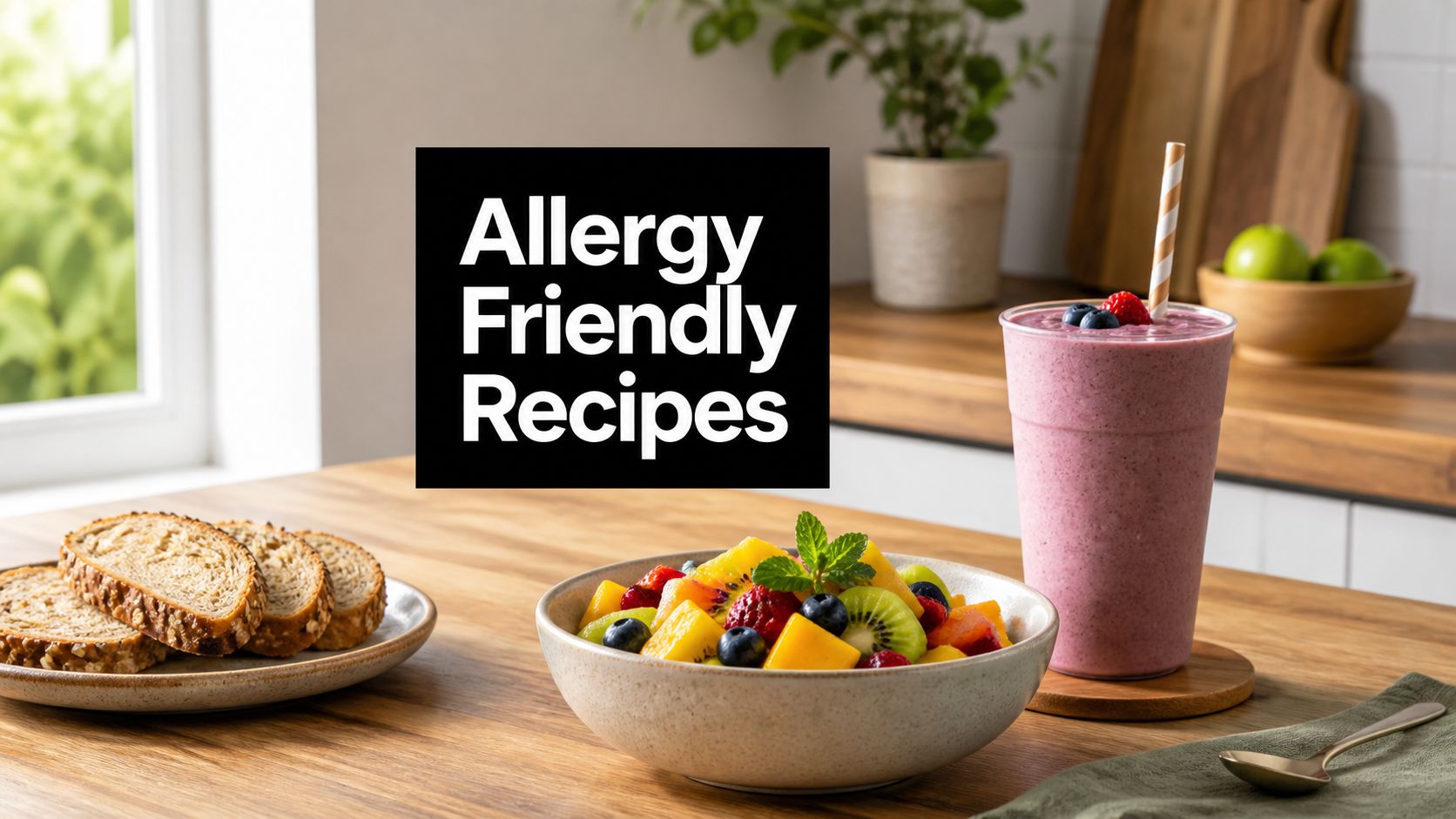
About 220 million people worldwide live with food allergies, and these 10 allergy friendly recipes cover breakfast, lunch, dinner, snacks, and meal prep with preparation times ranging from 10 to 35 minutes. The recipes address gluten, dairy, egg, tree-nut, soy, corn, sulfite, and low-FODMAP requirements, with calorie or macro details included where supplied.
How can you build a flexible allergy-friendly menu when removing one ingredient often creates three new problems? A dairy-free pasta may rely on cashews, a nut-free granola may contain sesame, and a gluten-free sauce may still include soy. Safe cooking requires more than choosing a recipe with a reassuring label. You need to read packaged-food labels, check ingredient derivatives, plan substitutions, prevent cross-contact, and keep protein, carbohydrates, fats, and fiber in the meal.
That care matters because the main allergenic foods include milk, eggs, peanuts, tree nuts, soy, wheat, fish, shellfish, and sesame. In the United States, the FDA requires packaged foods to identify major allergens either in parentheses after an ingredient or in a nearby “Contains” statement, and the agency says those eight major foods account for 90% of food allergies (FDA food allergy labeling guidance). Sesame became the ninth major allergen under the FASTER Act in 2021 (National Center for Biotechnology Information overview).
The roundup is organized by the restriction each recipe addresses, then by how the food fits into a real day. For severe allergies, ingredient labels, manufacturer warnings, kitchen surfaces, and individual medical guidance remain essential.
1. How does a gluten-free chicken and vegetable stir-fry work for fast dinners?
This 25-minute stir-fry uses chicken breast, vegetables, garlic, and tamari for a balanced, naturally gluten-free dinner. It works for a quick weeknight meal, a Sunday batch-cooking session, or a post-workout plate when you add rice noodles or quinoa.

Cut the chicken into uniform pieces so it cooks at the same pace as the vegetables. Heat the pan before adding oil, sear the chicken, remove it briefly, then cook the vegetables until they're tender but still firm. Return the chicken and add tamari near the end to prevent the sauce from becoming overly salty.
For weekday lunches, portion the stir-fry into containers with cooked rice, quinoa, or rice noodles. Batch-cooking chicken on the weekend and using frozen stir-fry vegetables can reduce preparation without changing the basic meal structure.
Cross-contact check: Tamari is often gluten-free, but the bottle still needs a clear label. If you're also avoiding soy, use a verified coconut aminos product instead.
Add this recipe to a broader gluten-free meal plan when you want the same base ingredients reused across lunches and dinners. The practical trade-off is texture. Reheated vegetables soften, so keep them slightly crisp during the first cook and store sauce separately when possible.
2. Can dairy-free creamy tomato pasta still taste rich?
Yes. Soaked cashews blended with tomato create a creamy, dairy-free sauce in about 20 minutes. The dish suits lactose-free households and vegan diners, but cashews remain a tree-nut ingredient, so they're not appropriate for every allergy-friendly kitchen.
Soak the cashews until they're soft, then blend them with cooked tomato, water, and seasoning until smooth. A high-speed blender gives the most even result. If the sauce tastes flat, fresh lemon juice adds acidity without requiring more salt.
Spinach, mushrooms, or sun-dried tomatoes make the bowl more substantial. Use a dairy-free pasta that matches your other restrictions, because some gluten-free products contain egg, and some specialty products may include soy or seed ingredients.
The sauce can be made in bulk and frozen in small portions, including ice-cube-sized portions for quick weeknight meals. Store-bought coconut cream can replace the cashew cream, though it changes the flavor and may make the sauce heavier.
This preparation is especially useful for a professional who wants a packed lunch that doesn't depend on cheese or cream. It's less suitable for a household managing both dairy and tree-nut allergies unless you use the coconut-based alternative and verify every packaged ingredient.
A short demonstration of the creamy method can help with blending texture:
For a fully plant-based rotation, pair it with a vegan meal plan, then replace cashews before generating the grocery list if tree nuts are excluded.
3. What makes egg-free chocolate banana protein muffins useful for breakfast?
Mashed banana and hydrated flaxseed replace eggs in these chocolate muffins, which provide 8 g of protein per muffin. They take about 30 minutes and work as a grab-and-go breakfast, a post-workout snack, or a lunchbox item for children with egg allergies.
Mix the flaxseed with water first and let it hydrate before adding it to the batter. This creates a more reliable binder than stirring dry flax directly into the flour. Mash ripe bananas thoroughly, combine the wet ingredients, then fold in the dry ingredients without overmixing.
Use dairy-free chocolate chips if you're also avoiding milk. Check the package for peanut, tree-nut, soy, and sesame warnings, since chocolate products often create secondary allergen concerns.
Freeze the muffins unfrosted and individually wrapped. You'll get a practical breakfast component without needing to thaw an entire batch.
The banana contributes sweetness and moisture, while flaxseed adds fat and fiber. The recipe's main limitation is protein distribution. The supplied protein callout is useful for planning, but a person with higher protein needs may still want a protein-rich side such as a safe yogurt alternative, a seed-based spread, or a suitable breakfast beverage.
Add 1 tsp espresso powder if you want a deeper chocolate flavor. For children, keep the muffins plain and use the chocolate chips as the main flavor accent. For a family bake sale, label every ingredient rather than relying on the phrase “egg-free,” because the recipe may still contain other allergens.
4. How can nut-free granola stay crunchy without tree nuts?
This granola uses oats, sunflower seeds, pumpkin seeds, sesame seeds, coconut, and a sweetener to create a crunchy breakfast base in 35 minutes, including cooling time. It's useful for school snacks and mixed households, but sesame must be treated as a separate allergen rather than assumed safe.
Spread the mixture in an even layer and stir it halfway through baking so the edges don't brown before the center. Let the granola cool completely before adding dried fruit. Warm granola traps moisture, which can make fruit sticky and reduce the finished crunch.
Sunflower and pumpkin seeds replace the texture and fat contribution of tree nuts. If sesame is also excluded, leave out sesame seeds and increase the tolerated seeds instead. If coconut is a concern, use a plain oat-and-seed version, but verify that the oats are suitable for the intended gluten-free household.
- For breakfast: Serve with a safe milk alternative, fruit, or a tolerated yogurt.
- For snacks: Pack it separately from moist foods to preserve texture.
- For batch cooking: Store cooled granola in a clean, airtight glass jar.
Maple syrup gives a familiar flavor, while honey can be used when appropriate for the household. Unsweetened dried cherries or apricots add fruit flavor, but packaged dried fruit still requires label checking.
This is a strong option for a family that needs a nut-free breakfast base, but it isn't automatically safe for every school or allergy policy. Shared scoops, bulk bins, and bakery-style seed mixes can introduce cross-contact before the granola reaches your kitchen.
5. Why does soy-free fried rice depend on the rice preparation?
The key swap is coconut aminos instead of soy sauce, and the dish can be ready in 15 minutes when chilled rice and leftover vegetables are already available. It works for lunch boxes, brunch, and food-waste reduction, especially when you add a tolerated protein.
Prepare the rice the evening before and refrigerate it. Cold rice separates more easily in a hot pan, while freshly cooked rice tends to clump and turn soft. Use high heat, keep the ingredients moving, and add coconut aminos near the end so the grains absorb flavor without becoming wet.
A practical bowl might include rice, peas if tolerated, carrots, scallions or another suitable vegetable, and leftover chicken. Egg can be included for households that tolerate it, but an egg-free version can rely on chicken, another safe protein, or extra vegetables.
Budget swap: Liquid smoke with salt can provide savory depth when coconut aminos aren't available, but check both products for additives that conflict with other restrictions.
Portion the finished rice into containers immediately for quick breakfasts or work lunches. Add hot sauce for more complexity only after checking its ingredient list, since sauces can contain soy, wheat, sulfites, or other triggers.
For packaged snack ideas that fit a soy-free pantry, compare labels with Rip Van's soy-free snack choices. The main limitation is that “soy-free” doesn't mean allergen-free, so every sauce, seasoning blend, and leftover protein still needs review.
6. What makes corn-free vegetable soup a useful meal-prep base?
This 30-minute soup uses vegetables and bone broth, without corn or obvious corn ingredients. It works as a gentle meal, a paleo-style dinner, or a base that can accept different proteins throughout the week.
Start by checking the broth label. Some prepared broths contain flavorings, starches, or other derivatives that don't fit a corn-free plan. Canned tomatoes also deserve close attention, including the source of added citric acid, because a recipe can appear corn-free while a packaged ingredient creates uncertainty.
Sauté the tolerated vegetables first, add broth and tomatoes, then simmer until the vegetables are tender. Add cooked chicken, ground turkey, or diced beef when you need more protein. A plain vegetable version can serve as a flexible base for different family members.
- For batch cooking: Freeze broth in meal-sized portions.
- For variety: Add a different cooked protein when reheating.
- For richer flavor: Use roasted bone marrow only if it fits your medical and dietary plan.
- For storage: Refrigerate the finished soup in glass containers and use it within the stated storage window of up to 5 days.
The nutrition profile depends heavily on the broth and protein. Bone broth can contribute collagen and minerals, but it shouldn't be treated as a complete protein replacement for a substantial serving of meat or another tolerated protein.
This soup suits people who want fewer processed ingredients, though “homemade” doesn't remove the need to check spice blends, stock cubes, canned tomatoes, and garnishes. Keep toppings separate when serving a mixed household.
7. How can a sulfite-free salad stay practical for meal prep?
A sulfite-free salad starts with fresh greens, vegetables, seeds, and a homemade vinaigrette rather than packaged dressings and preserved toppings. It takes about 10 minutes and works as a lunch, dinner side, or meal-prep base when the dressing stays separate.
Use fresh produce and prepare a small vinaigrette from oil, an appropriate acid, salt, and herbs. If acidic ingredients are a concern, select them according to the individual's guidance and verify the label. The purpose of making the dressing yourself is control, not an automatic guarantee of safety.
Store greens and wet ingredients separately. Keep pumpkin seeds in their own container and add them immediately before eating, which preserves crunch and lets each diner control the topping.
A useful lunch combination is greens, cucumber, carrots, a tolerated protein, and a separate container of dressing. For dinner, the same salad can accompany the gluten-free stir-fry or corn-free soup without requiring another cooked side.
“Fresh” is a preparation choice, not a safety certification. Produce, vinegar, mustard, seasonings, and packaged seeds still need individual review.
Thinly sliced red onion can soften the flavor, but don't use it merely because it appears in a standard salad formula. Anyone with sulfite sensitivity or asthma triggered by food additives should follow personal medical guidance and keep a record of ingredients and reactions.
The trade-off is convenience. Homemade dressing requires more frequent preparation than a bottled option, but it makes the ingredient list shorter and easier to audit.
8. Why does garlic-infused oil fit a low-FODMAP chicken and rice bowl?
Garlic-infused oil gives the bowl savory flavor while avoiding raw garlic pieces, which can be difficult for people following low-FODMAP guidance. The meal takes about 25 minutes and combines plain rice, lean chicken, and vegetables selected for the individual's tolerance.
Warm the oil with garlic to infuse flavor, then remove the garlic before assembling the bowl. Cook the chicken separately or in the same pan, and keep the vegetable selection simple. Rice provides a neutral base that works well for meal prep and can be portioned around appetite and activity.
This bowl suits a daily lunch for someone managing IBS symptoms, but low-FODMAP eating isn't a universal list of “good” and “bad” foods. Portion size, preparation, personal tolerance, and the stage of an elimination process all matter.
- Choose a protein: Use plain chicken or another protein already tolerated.
- Build flavor: Add herbs, ginger, or a suitable sauce instead of onion and garlic pieces.
- Prep components: Store rice, chicken, vegetables, and oil separately when texture matters.
- Adjust portions: Increase rice for higher carbohydrate needs or add tolerated oil for more energy.
People managing Crohn's disease or other digestive conditions should use individual clinical guidance rather than assuming a low-FODMAP recipe is appropriate at every stage. The recipe's strength is its simple structure. Its limitation is that even familiar vegetables and sauces may not work for every person.
9. How should mixed-restriction households combine these recipes?
A mixed household needs a rotation system, not one blanket “safe” label. These recipes address separate needs: gluten-free tamari stir-fry, dairy-free cashew pasta, egg-free muffins, tree-nut-free seed granola, soy-free fried rice, corn-free soup, sulfite-conscious salad, and a low-FODMAP chicken bowl.
The combinations also reveal important conflicts. Cashew pasta isn't appropriate for a tree-nut-free household, sesame in granola may not fit a sesame-free plan, and tamari may not work for someone avoiding soy. Coconut aminos can make the stir-fry soy-free, but the product still needs label verification.
A simple weekly rotation might use muffins and granola for breakfasts, salad and fried rice for lunches, then stir-fry, soup, pasta, and the rice bowl for dinners. Keep shared base ingredients separate from restricted toppings so one preparation can serve several people without forcing everyone into the same diet.
Use elimination meal planning when you need a clearer record of ingredients and reactions. It can help organize exclusions, but it doesn't replace medical supervision for allergy diagnosis or therapeutic diets.
The same discipline applies beyond food. Households handling allergy concerns may also review ingredients to avoid in cleaners when cleaning products are part of their broader sensitivity-management routine.
10. How can an AI meal planner organize allergy-friendly cooking?
An AI meal planner is most useful when it treats allergies as hard exclusions and preferences as flexible choices. Record the specific allergen, ingredient derivatives to avoid, preferred cuisines, meal timing, serving needs, and whether a recipe is for one person or a shared household.
For example, scheduling several stir-fries can prompt pre-cut vegetables on the grocery list. Recording corn avoidance can also encourage a closer review of canned tomato brands and other packaged ingredients with possible corn-derived additives.
A useful system should help with four practical jobs:
- Substitution logic: Replace tamari with verified coconut aminos when soy is excluded, or replace cashew cream when tree nuts aren't suitable.
- Grocery organization: Group ingredients by aisle and prevent duplicate purchases across recipes.
- Meal scheduling: Place muffins and granola on breakfast days, then reserve cooking time for soup or stir-fry.
- Preference tracking: Record disliked foods, tolerated ingredients, and meals that need different portion sizes.
The AI nutritionist can support planning around dietary preferences, but generated suggestions still require label checks. An automated list can identify “coconut aminos” without knowing whether a particular bottle was manufactured in a shared facility or contains an ingredient you personally avoid.
For a busy professional, the advantage is organization. For a severe allergy, the final safety decision remains with the person preparing and eating the food.
Top 10 Allergy-Friendly Recipes Comparison
| Item | Implementation 🔄 | Resource Requirements ⚡ | Expected Outcomes ⭐📊 | Ideal Use Cases 💡 | Key Advantages ⭐ |
|---|---|---|---|---|---|
| Gluten-Free Chicken and Vegetable Stir-Fry with Tamari | 🔄 Low–Moderate: one‑pan stir‑fry, ~25 min, basic knife/high‑heat skill | ⚡ Tamari (or coconut aminos), sesame oil, wok/skillet, fresh ginger/garlic | ⭐📊 High protein (~32g), balanced macros, crisp‑tender vegetables | 💡 Weeknight dinner, meal‑prep, gluten‑sensitive athletes | ⭐ Quick, customizable, high satiety, meal‑prep friendly |
| Dairy-Free Creamy Tomato Pasta with Cashew Sauce | 🔄 Low: blender required, 20 min (+15 min cashew soak) | ⚡ Raw cashews, blender/high‑speed blender, canned tomatoes, pasta | ⭐📊 Rich creamy texture, 14g protein, higher calories/fat for satiety | 💡 Vegan dinners, lactose‑intolerant meals, entertaining guests | ⭐ Indulgent dairy‑free creaminess; freezer‑friendly cashew cream |
| Egg-Free Chocolate Banana Protein Muffins | 🔄 Low–Moderate: baking, single‑bowl mixing, 30 min | ⚡ Flaxseed (egg replacement), whole wheat flour, oven, optional mixer | ⭐📊 Portable breakfasts, ~8g protein per muffin, moist banana flavor | 💡 Grab‑and‑go breakfast, egg‑allergy households, bake sales | ⭐ Single‑bowl, batch‑bake, freezer‑friendly, cost‑effective |
| Nut-Free Seed-Based Granola with Coconut | 🔄 Low: mix & bake, 35 min incl. cooling; monitor oven | ⚡ Sunflower/pumpkin/sesame seeds, oats, coconut oil, oven | ⭐📊 Crunchy, seed‑based fats & protein (~9g), stores 2–3 weeks | 💡 School‑safe snacks, allergy‑friendly breakfasts, bulk prep | ⭐ Nut‑free, customizable, no additives, affordable vs. specialty brands |
| Soy-Free Stir-Fried Rice with Coconut Aminos | 🔄 Low–Moderate: high‑heat stir‑fry, ~15 min; day‑old rice preferred | ⚡ Coconut aminos, coconut oil, wok/skillet, leftover rice | ⭐📊 Balanced meal, ~18g protein, reduces food waste | 💡 Quick lunches, use leftovers, soy‑sensitive households | ⭐ Fast one‑pan meal, adaptable, reduces waste |
| Corn-Free Vegetable Soup with Bone Broth | 🔄 Low–Moderate: ~30 min; longer if making broth from scratch | ⚡ Quality bone broth (or time to make), seasonal vegetables, large pot | ⭐📊 Low calorie, collagen‑rich (~12g), mineral‑dense, gentle on gut | 💡 Gut‑healing meals, paleo dinners, batch cooking | ⭐ Healing, scalable, whole‑food ingredient focus |
| Sulfite-Free Salad with Homemade Vinaigrette | 🔄 Low: 10‑minute assembly; requires fresh produce and fresh lemon | ⚡ Fresh greens/produce, extra virgin olive oil, lemon, jar for dressing | ⭐📊 Fresh nutrient retention, ~8g protein (with seeds), minimal additives | 💡 Quick weekday lunch, sulfite‑sensitive individuals, side dish | ⭐ Avoids preservatives, highly customizable, very fast |
| Low-FODMAP Chicken and Rice Bowl with Garlic-Infused Oil | 🔄 Low: ~25 min; requires garlic infusion and strict ingredient choices | ⚡ Garlic for infusion (removed), low‑FODMAP rice, lean chicken, careful produce | ⭐📊 Digestive‑friendly, high protein (~35g), gentle on IBS/Crohn's | 💡 Daily meals for IBS/Crohn's, post‑flare recovery, strict low‑FODMAP plans | ⭐ Strict low‑FODMAP compliance, simple and soothing |
| Allergen & Dietary Restrictions Overview | 🔄 Low: reference/infographic compilation, no cooking required | ⚡ Consolidated mapping of recipes, substitution options, planning doc | ⭐📊 Simplifies meal rotation, reduces cross‑contamination risk, quick reference | 💡 Households with mixed restrictions, meal‑planning sessions | ⭐ Centralizes swaps and shelf/freezer notes; planning aid |
| AI Meal Planner Integration Summary | 🔄 Moderate: initial profile setup and integration with recipes | ⚡ AI Meal Planner account/app, input of preferences, recipe data | ⭐📊 Automated grocery lists, substitutions, scheduling; improved adherence | 💡 Busy households, macro/allergen tracking, batch‑cooking workflows | ⭐ Automates planning, saves time, enforces dietary rules |
How will you turn these recipes into a safer weekly plan?
Start with breakfasts that tolerate batch preparation. Make the egg-free chocolate banana muffins for grab-and-go mornings, then alternate them with nut-free seed granola. Keep the granola's seeds and dried fruit clearly labeled, and omit sesame if anyone in the household needs sesame-free food. The muffins freeze well when wrapped individually, while granola is easier to store at room temperature once it has cooled completely.
Build lunches around components rather than entirely separate recipes. The soy-free fried rice uses chilled rice and leftover proteins, while the sulfite-free salad keeps greens, vegetables, dressing, and pumpkin seeds separate until serving. That separation protects texture and makes it easier to adapt one meal for several people.
Dinner can rotate between the gluten-free chicken stir-fry, dairy-free tomato pasta, corn-free soup, and low-FODMAP chicken and rice bowl. Tamari, cashew cream, garlic, canned tomatoes, and broth all require individual review because a substitution that solves one restriction may create another.
The safety process matters as much as the recipe:
- Verify every packaged ingredient: Read the full ingredient list and allergen statement every time you buy a new product.
- Separate equipment when necessary: Use clean utensils, cutting boards, pans, and storage containers for severe allergies.
- Control shared toppings: Keep sauces, seeds, garnishes, and dressings in separate containers.
- Record exact ingredients: A written record makes reactions easier to investigate with a qualified clinician.
- Adjust nutrition deliberately: Add tolerated protein, carbohydrate, fat, or fiber rather than removing foods without a replacement.
The global food allergy burden is substantial. The Food and Agriculture Organization describes food allergy as affecting approximately 220 million people worldwide, while prevalence estimates vary by population and testing method (FAO information on food allergens). That scale explains why practical recipe systems need more than a single “free-from” filter.
Frequently asked questions
Is tamari the same as coconut aminos?
No. Tamari is a soy-based sauce often used as a gluten-free alternative to conventional soy sauce, while coconut aminos are made from coconut sap and are commonly selected for soy-free cooking. Check both labels because formulations and facility warnings vary.
Can cashews and seeds substitute for each other?
They can provide similar creamy or crunchy roles, but they aren't interchangeable for every allergy. Use blended seeds or coconut cream instead of cashews only after checking flavor, texture, and the household's specific restrictions.
How should these recipes be stored for meal prep?
Cool food promptly, use clean containers, and keep wet and dry components separate when texture matters. The corn-free soup plan allows storage in glass containers for up to 5 days refrigerated, but follow your own food-safety guidance and discard food that shows spoilage.
Can these recipes fit a low-FODMAP plan?
Some can be adapted, especially the chicken and rice bowl with garlic-infused oil. Low-FODMAP suitability depends on ingredients, portions, preparation stage, and personal tolerance, so use clinical guidance for an elimination or reintroduction plan.
How can I increase the protein in these meals?
Add tolerated chicken, turkey, beef, eggs, or another suitable protein to rice bowls, soup, salads, and stir-fries. For muffins and pasta, pair the meal with a safe protein-rich side rather than assuming the base recipe meets your target.
How do I reduce cross-contact?
Clean surfaces and utensils thoroughly, separate restricted ingredients, and avoid shared jars, scoops, and cutting boards when necessary. A recipe label alone can't guarantee safety if ingredients were handled on contaminated equipment.
Record your restrictions and preferences in AI Meal Planner to generate an organized grocery list, schedule these meals, and adjust portions around your routine.
AI Meal Planner creates personalized weekly menus and smart grocery lists around your allergies, dietary preferences, goals, and meal schedule. Visit AI Meal Planner to organize safer substitutions, reuse ingredients across recipes, and make allergy-friendly cooking easier to manage.
AI-powered nutrition
Get Your Personalized Meal Plan
AI creates the perfect meals for your goals, lifestyle, and taste.
Start Your Journej