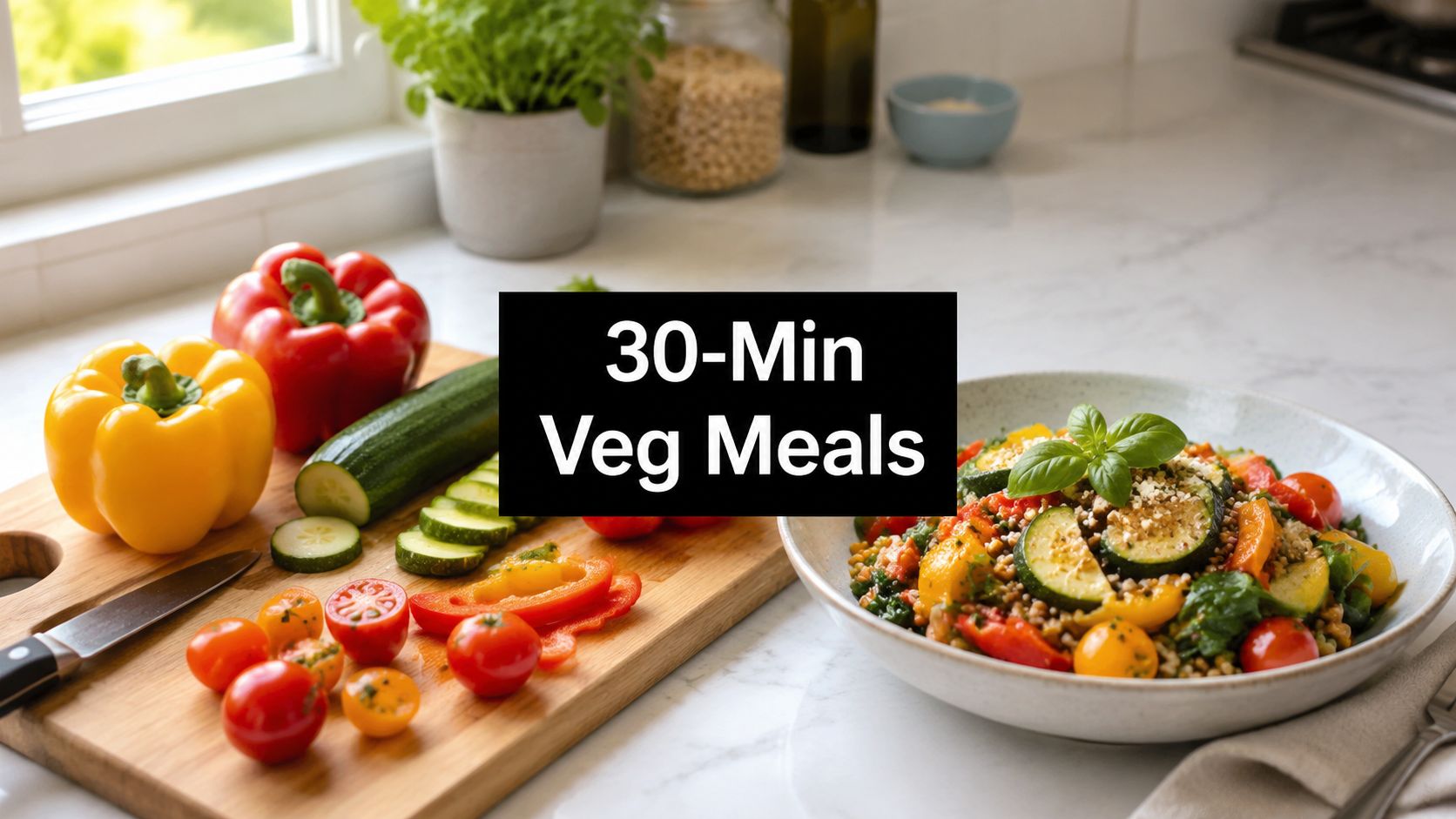
30-minute vegetarian meals can absolutely cover stir-fries, one-pan roasts, pastas, bowls, soups, tacos, and skillet dinners. The fastest versions usually rely on smart ingredients like canned beans, pre-cooked grains, frozen vegetables, and parallel cooking so dinner lands in 30 minutes or less.
You're probably standing in a kitchen right now with a hungry clock ticking, a half-planned grocery shelf, and no interest in making dinner feel like a second job. That's the exact problem 30-minute vegetarian meals solve when they're built well. The best versions aren't just fast, they're structured so the protein, vegetables, and sauce all come together without dragging you into a long prep session or a pile of dishes.
The category has become a mainstream dinner format, not a niche convenience label. Major recipe roundups now organize meatless cooking around the 30-minute threshold, and some collections explicitly feature 20 to 30-minute meals at the recipe level, not just in the headline, which shows how firmly this timing has settled into everyday cooking culture (Serious Eats quick vegetarian dinner roundups, PETA's 20 to 30-minute meals). Quick vegetarian cooking also now spans a large variety of formats, including 25 quick vegan dinner recipes, 10 under-30-minute vegetarian dishes, and 20 high-protein vegetarian meals in one curated set (EatingWell's high-protein vegetarian meals).
That variety matters because fast vegetarian food only works if it still feels like dinner. Pasta, tacos, bowls, curries, and skillet meals all fit the format, but the win is building meals that are fast and repeatable. The list below focuses on recipes that cook quickly, use practical shortcuts, and still give you enough protein, texture, and flavor to keep coming back to them.
1. Sheet Pan Roasted Vegetables with Crispy Chickpeas and Tahini Drizzle
This is the kind of dinner that rescues a weeknight when the fridge looks random but still usable. Broccoli, bell peppers, zucchini, and sweet potato roast alongside seasoned chickpeas, while a tahini-lemon drizzle comes together in a bowl off to the side. The result is a full plate with crunch, creaminess, and enough contrast to feel finished, not improvised.
How to make the timing work
Cut every vegetable to a similar size so the pan finishes together. Toss the chickpeas with oil and spices before they hit the sheet pan, because that's what gives you the crispy edges people want. If you're starting from a freezer stash, use pre-cut vegetables and parchment on the pan to cut prep and cleanup at the same time.
Practical rule: Keep the sauce separate until serving. A tahini drizzle works best when the vegetables are hot and the chickpeas are still crisp.
For meal prep, this format holds up well because the components can be reused in grain bowls or stuffed into wraps the next day. If you roast extra vegetables, they can become lunch without feeling like leftovers dressed up. The tahini sauce also carries over, so you can make one batch and use it again on another dinner.
2. Stir-Fry with Tofu, Broccoli, and Brown Rice
A good stir-fry is one of the cleanest ways to get dinner on the table fast, especially when tofu is already pressed or bought that way. In this version, broccoli stays bright, tofu browns well, and a soy-ginger sauce coats everything in a skillet without turning the pan watery. The key is getting every ingredient ready before the heat goes on, because stir-fry rewards organization more than improvisation.
What actually speeds it up
Pre-pressed tofu saves a step, and frozen broccoli is useful when fresh florets aren't washed and cut yet. If you want to make this more filling without changing the rhythm, swap in chickpeas for tofu or use brown rice that's already cooked from a weekend batch. That keeps dinner moving while still giving you a solid base.
Use this vegetarian meal planner if you want a simple way to repeat dinners like this without rebuilding your grocery list every week.
Don't start the pan until the sauce, rice, tofu, and vegetables are lined up within reach. Stir-fries fail when people chop as they go.
Leftover sauce is worth saving. A little extra poured over the next day's rice bowl keeps lunch from feeling dry, and that's one of the easiest ways to make a fast recipe feel like a system instead of a one-off.
3. Shakshuka With Eggs Poached in Tomato Sauce
Shakshuka works because it turns one skillet into a complete meal. Eggs poach directly in spiced tomato sauce with bell peppers and onions, so you get a saucy base, rich yolks, and a natural place to serve bread or pita for scooping. It's a strong choice when you want something warm and satisfying without assembling multiple components.
Why this dinner feels complete
Use high-quality canned tomatoes, because the sauce is carrying most of the flavor. If you want a deeper, more rounded base, fire-roasted tomatoes help, and feta gives the dish a sharper, saltier finish. Spinach can stand in for some of the peppers if you want a greener version.
The timing depends on moving in the right order. Cook the onions and peppers first, make the sauce in the same pan, then create little wells for the eggs and cover briefly so they set gently. Serve it right away with toasted pita or crusty bread, because shakshuka loses some of its appeal when it sits too long.
Small choices that matter
- Spice prep matters: Mix the spices ahead of time so they hit the pan quickly.
- Bread is not optional: Use something sturdy enough to scoop, not flimsy toast.
- Egg texture matters: Pull the skillet before the centers overcook.
This is one of the best examples of a meal that looks simple but eats like dinner, not breakfast. It's especially useful when you want something protein-forward without relying on meat substitutes.
4. Mediterranean Pasta With Spinach, Cherry Tomatoes, and White Beans
This is the kind of pasta that feels light enough for a weekday but still substantial enough to stand on its own. White beans add body, spinach brings freshness, and cherry tomatoes keep the dish bright instead of heavy. The sauce comes from olive oil and starchy pasta water, which gives you a silky finish without cream.
The smartest move here is to reserve pasta water before draining, then use it to emulsify the olive oil. That's what makes the sauce cling instead of sliding to the bottom of the bowl. Toast garlic lightly first, then add the beans, tomatoes, and spinach so the vegetables stay distinct and the greens don't collapse.
Drain and rinse the white beans if you want to reduce sodium, especially if you're eating this often. Add the spinach in the last couple of minutes so it wilts without losing all texture. This is also a good leftover lunch because the beans keep it from feeling like plain pasta reheated in a microwave.
Use this Mediterranean meal planner if you want more weeknight dinners that share ingredients like tomatoes, beans, greens, and pasta.
A fast pasta only works if the sauce has enough body. Pasta water gives you that body without extra dairy or a complicated reduction.
5. Thai-Inspired Buddha Bowl With Quinoa, Edamame, and Peanut Sauce
A Buddha bowl works well on nights when you need dinner to feel organized, fresh, and filling without a lot of cooking. Quinoa gives the bowl a steady base, edamame adds protein and a firm bite, and shredded carrots, cucumber, and red cabbage keep the texture bright. The peanut-lime dressing brings the ingredients together with enough richness to make the bowl satisfying, while still keeping it light enough for a weeknight.
Build the bowl in the right order
Start the quinoa first, then prep the vegetables while it cooks. That overlap keeps the meal on a realistic schedule and prevents the grain from sitting around too long after it is done. Mix the peanut sauce while the quinoa finishes, then hold it back until serving so the vegetables stay crisp.
Pre-cooked quinoa packets are a useful shortcut on a busy evening. If you need a nut-free swap, tahini gives you a similar creamy finish without peanuts. Baked tofu or chickpeas also fit naturally here if you want more staying power from the same bowl, which makes the meal easier to use for dinner and lunch.
The texture mix is what makes this bowl work. Toasted peanuts on top add crunch, and the dressing gives the kind of depth that keeps leftovers worth eating. For more freshness, consider pairing it with growing herbs for a flavorful kitchen, since basil, mint, or cilantro can sharpen the flavor without adding much prep. This bowl also packs well for lunch as long as the sauce stays separate until the last minute.
Keep bowls dry until the last minute. Once sauce and vegetables mingle too early, the crisp vegetables lose their edge.
6. Caprese Sandwich With Roasted Red Peppers on Whole Grain Bread
This sandwich works because it takes familiar flavors and strips away anything slow or fussy. Fresh mozzarella, ripe tomatoes, basil, jarred roasted red peppers, and balsamic glaze turn into a quick meal with almost no cooking. Toasted whole grain bread keeps everything from going soft too fast.
The trick is controlling moisture
Pat the tomato slices dry before assembling. That one move does more for sandwich quality than you might expect, because watery tomatoes are what turn a good Caprese into a soggy one. Toast the bread lightly so it creates a barrier against moisture, then build the sandwich close to eating time.
The roasted peppers bring a deeper, sweeter note than raw vegetables alone, and jarred versions are the right kind of shortcut here. Peak-ripeness tomatoes still matter, though, because this sandwich depends on quality ingredients more than technique. If the tomatoes are bland, the whole thing feels flat.
This is a strong lunch-dinner crossover option when you want minimal effort but still want something that feels composed. It also travels poorly if it sits too long, so it's better for immediate eating than for packing hours ahead.
7. Black Bean and Sweet Potato Tacos With Avocado Crema
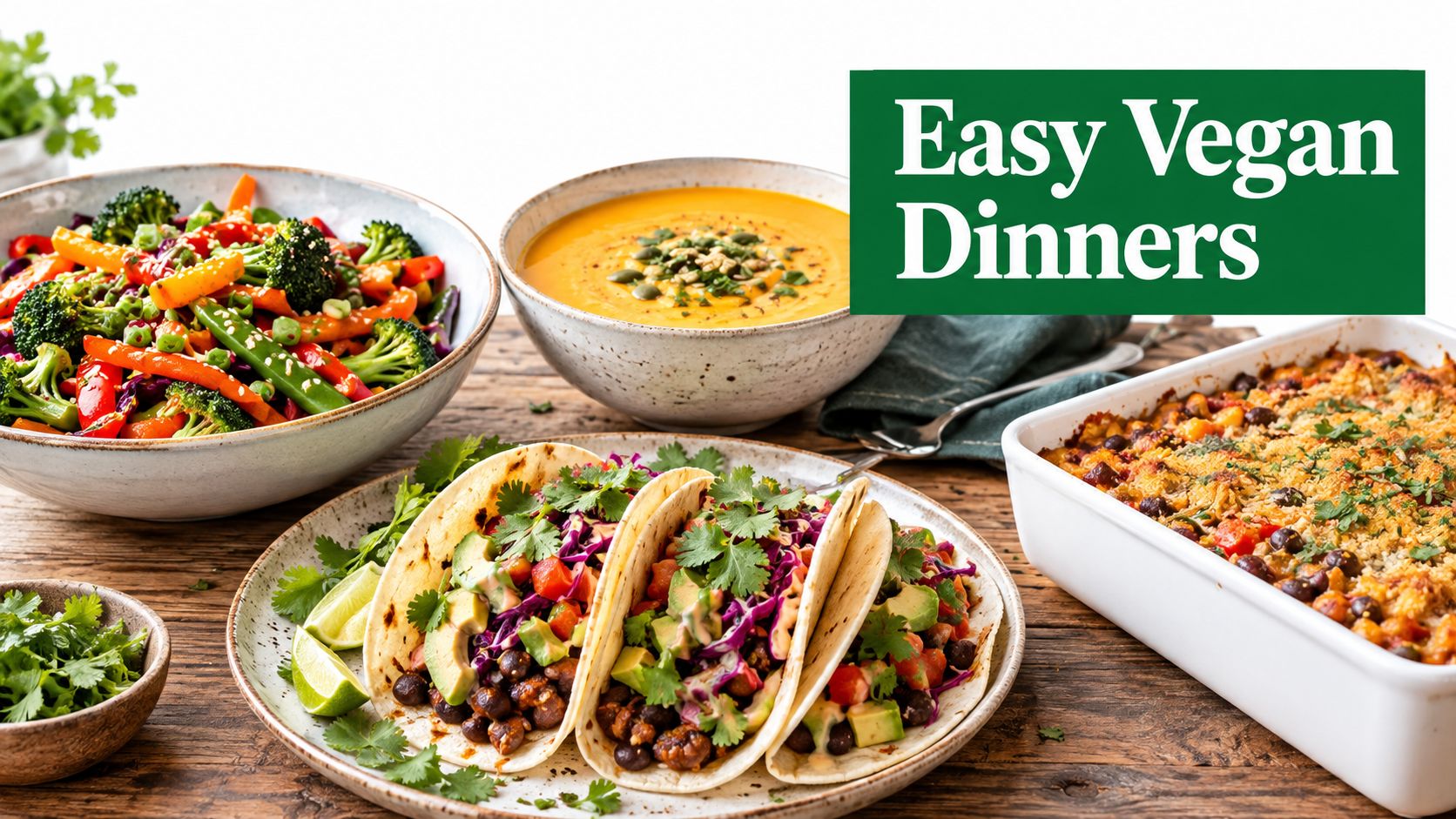
These tacos hit the sweet spot between comforting and fast. Soft corn tortillas hold seasoned black beans, roasted sweet potato, shredded cabbage, and a quick avocado crema, which gives you creaminess without needing a separate cooked sauce. They're especially useful when you want dinner to feel customizable, not fixed.
Make the tacos in parallel
Cube the sweet potato into even pieces so it roasts quickly and predictably. While it's in the oven, warm the beans and prep the toppings, because the speed here comes from overlap, not from rushing one pan. The avocado crema should be blended right before serving so it stays bright and doesn't brown.
If you need less prep, pre-cut sweet potato helps. If you want a different creamy element, cilantro-lime yogurt can stand in for the crema. Crispy tofu also fits if you want more texture and a little more staying power.
This kind of dinner works well for families because everyone can build their own taco. It also helps reduce waste, since leftover cabbage, beans, or roasted sweet potato can move into a bowl the next day.
Use this grocery list generator if you want the ingredients for dinners like this sorted before you shop.
8. Lentil and Vegetable Soup With Coconut Milk
Red lentils are one of the fastest ways to make soup feel substantial without waiting an hour. They break down quickly and create natural creaminess, which means you get a rich texture even before the coconut milk goes in. Carrots, celery, and onion give the base the familiar soup structure that makes it feel grounded and comforting.
Why this soup works on a weeknight
Toast the curry spices in oil for a minute before adding the vegetables. That brief step deepens the flavor so the soup doesn't taste flat, even though it cooks quickly. Using vegetable broth instead of water also gives the pot a better base without much extra effort.
Add the coconut milk near the end so it stays smooth. If you want a thicker bowl, blend part of the soup and leave the rest chunky. That gives you a more restaurant-like texture while still keeping the recipe simple.
This soup is also useful for batch cooking. Make a larger pot, freeze portions, and reheat them later for a near-instant dinner. The texture holds up well enough that it doesn't feel like a compromise meal.
Practical rule: If the soup tastes thin, don't add more salt first. Reduce it a little, or blend some of it for body.
9. Vegetable Fried Rice With Eggs and Soy Sauce
A skillet of fried rice solves the weeknight problem that starts with a bowl of leftover rice. Cold rice fries into separate grains, while fresh rice tends to clump and steam, so the texture is better before you even add the vegetables. Frozen mixed vegetables, eggs, and a soy-sesame sauce turn that leftover base into a fast dinner that still feels complete. For deeper flavor context, you can explore authentic Japanese soup details that complement fried rice traditions.
The texture depends on cold rice
Day-old rice gives the pan the dry surface it needs, but microwaveable rice packets can still work on nights when you are starting from scratch. Scramble the eggs in a separate corner of the pan or in a second pan, then fold them back in at the end so they stay in visible pieces instead of disappearing into the grains. Keep the heat high enough for the rice to fry, because a lower temperature pushes it toward a soft, sticky finish.
Add soy sauce in small amounts and taste as you go. Salt is easy to add and hard to take away. If you want a lower-carb version, cauliflower rice can replace some or all of the rice, though it will give you a softer result and less chew. Cashews or peanuts work well if you want extra crunch, and a handful of scallions at the end gives the pan a fresher finish.
This meal also handles leftovers well, which matters if you want one cooking session to cover more than one dinner. It reheats easily for lunch, and the vegetables hold up better than they do in many delicate sautéed dishes. The value is not just speed, it is how effectively the recipe turns what is already in the fridge into a balanced meal without extra shopping.
10. Roasted Chickpea and Kale Salad With Balsamic Vinaigrette
This salad earns dinner status because it brings crunch, bitterness, sweetness, and salt to the same bowl. Crispy roasted chickpeas provide the protein and texture, massaged kale softens enough to eat comfortably, and roasted cherry tomatoes add warmth. Parmesan finishes it with just enough sharpness to keep the flavors from feeling flat.
The sequence is what makes it work. Pat the chickpeas dry before roasting, massage the kale while they cook, and toss the warm tomatoes with vinaigrette before they hit the greens. That keeps the salad from tasting cold and separate, which is the main reason many quick salads fall short as dinner.
A larger batch of vinaigrette is worth making once and using through the week. That turns one quick salad into a repeated habit instead of a one-time fix. If you want the chickpeas and tomatoes to stay crisp, add them at the end rather than mixing everything too early.
This is a good option when you want a heavy day to end with something lighter but still filling. It's also one of the easiest ways to eat more greens without feeling like you're forcing yourself to do it.
11. Spinach and Feta Frittata With Sun-Dried Tomatoes
A frittata is one of the most reliable answers to the “what can I make fast?” question because it works for breakfast, lunch, or dinner. Eggs give it structure, spinach brings freshness, feta adds salt, and sun-dried tomatoes supply concentrated flavor without extra cooking. An oven-safe skillet does most of the work for you.
Use the stove and broiler together
Sauté the spinach first so excess moisture doesn't end up in the eggs. Cook the frittata on the stovetop until it's mostly set, then finish it under the broiler for a golden top. That combination is what gives you speed without sacrificing texture.
Let it rest for a couple of minutes before slicing so the portions hold together cleanly. If you want more vegetables, diced bell peppers or mushrooms fit well here. Vegan cheese can replace feta if you need a dairy-free version, and fresh basil can stand in for the sun-dried tomatoes when the season allows.
This meal is especially useful for people who want something protein-forward without cooking a separate side dish. It slices neatly, stores well, and can be eaten warm or at room temperature, which makes it practical in a way many quick dinners are not.
12. Tofu Scramble With Mushrooms and Nutritional Yeast
This is the best kind of breakfast-for-dinner recipe, because it cooks quickly but still eats like a full plate. Crumbled firm tofu gets seasoned with turmeric, garlic, and nutritional yeast, then mixed with browned mushrooms and onions for a savory scramble. The texture lands somewhere between soft eggs and a warm skillet hash, which is why it works so well at night.
Make it taste fuller, not flatter
Use extra-firm or pressed tofu so the scramble doesn't turn wet. Cook the mushrooms all the way before adding the tofu, because browning them first gives the dish more depth. Toast the spices in oil before the tofu goes in so the flavor blooms instead of tasting raw.
You can adjust the nutritional yeast gradually depending on how much cheesy flavor you want. Serve it with toast and avocado if you want a more complete breakfast-style dinner. It's also a natural fit for an easy meal plan, so the same base can show up in different forms without feeling repetitive.
Use this vegan meal planner if you want quick tofu-based dinners built into a weekly routine.
The fastest vegan skillet dinners usually succeed because the pan is already hot before the tofu arrives. Cold pans make tofu taste pale.
13. Minestrone Soup With Whole Wheat Pasta and Vegetables
Minestrone is dependable because it turns pantry staples into something that feels like a full meal. Zucchini, carrots, celery, tomatoes, beans, whole wheat pasta, and vegetable broth create a balanced soup with enough texture to keep each spoonful interesting. It's warming, familiar, and easy to scale up.
Keep the pasta from getting soft
Cook the pasta separately and add it right before serving. That protects it from turning mushy in the broth, which is the most common failure point in fast soup dinners. Dice the vegetables evenly so they cook at the same pace, and use the tomatoes with their juice to build the liquid base.
A good broth matters here because it carries the whole pot. Add spinach near the end if you want extra greens, and finish with basil or Parmesan if you want a more classic Italian edge. Chickpeas can also stand in for other beans if that's what you have in the pantry.
This is a strong make-ahead dinner because it freezes well in portions. If you want one recipe that can cover multiple nights without losing its character, minestrone is a solid choice.
14. Vegetable Lo Mein With Crispy Cashews
Lo mein is a smart weeknight option because noodles cook fast and carry sauce well. Stir-fried vegetables, ginger-soy sauce, and crispy cashews turn instant ramen or lo mein noodles into something that feels closer to takeout than a shortcut. The texture contrast is what keeps it interesting.
Move fast, but not recklessly
Reserve some noodle cooking water before draining, because it helps loosen the sauce if the pan gets dry. Stir-fry the vegetables before adding the noodles so they keep their color and bite. Add the sauce at the end, not the beginning, or the noodles will soften too much.
Use low-sodium soy sauce if you want more control over salt. Toast the cashews separately so they stay crisp, because soft cashews flatten the whole dish. This is a good recipe when you need bold flavor quickly and don't want to rely on a long ingredient list.
It also adapts well to what's in the fridge. Broccoli, bell peppers, mushrooms, and snap peas all work, which makes it flexible enough to repeat without feeling identical each time.
15. Polenta With Roasted Vegetables and Marinara Sauce
Polenta is one of the most satisfying quick bases because it tastes comforting without asking for much labor. Instant polenta cooks fast, and when it's topped with roasted seasonal vegetables and marinara sauce, the result is a bowl that feels both rustic and complete. It's especially good when you want something warm and spoonable.
Build flavor from the base up
Whisk the polenta slowly into boiling broth to avoid lumps. Stir constantly at first, then back off once it thickens so you're not standing there the entire time. Roasting the vegetables at high heat gives them caramelized edges that contrast with the soft polenta underneath.
Use vegetable broth instead of water if you want the base to taste fuller. Fresh basil and cracked pepper at the end make the dish feel finished, and white beans stirred into the marinara can add more protein without changing the structure. If you want a cheesy note, nutritional yeast or vegan cheese works well.
This is a dinner that rewards good pantry management. Keep instant polenta, marinara, and a few sturdy vegetables around, and you've got a meal that can be built quickly without feeling repetitive.
15 Quick 30-Minute Vegetarian Meals Comparison
| Dish | 🔄 Complexity | ⚡ Time & Resources | ⭐ Expected Outcome | 💡 Ideal Use Cases | 📊 Key Advantages |
|---|---|---|---|---|---|
| Sheet Pan Roasted Vegetables with Crispy Chickpeas and Tahini Drizzle | 🔄 Low, one‑pan, simple timing | ⚡ ~30 min (8 prep / 22 cook); oven required | ⭐⭐⭐⭐ Flavor‑concentrated, high‑fiber | 💡 Meal prep, easy weeknight dinners, next‑day lunch | 📊 Minimal cleanup, scalable, budget‑friendly |
| Stir‑Fry with Tofu, Broccoli, and Brown Rice | 🔄 Medium, high‑heat technique, tofu press | ⚡ ~28 min (10 prep / 18 cook); wok/stovetop, ventilation | ⭐⭐⭐⭐ Crisp veg, complete protein | 💡 Fast weeknight meals, high‑heat cooking | 📊 Very quick, high protein, low oil |
| Shakshuka (Eggs Poached in Tomato Sauce) | 🔄 Medium, single skillet, egg timing critical | ⚡ ~27 min (7 prep / 20 cook); skillet | ⭐⭐⭐⭐ Tender eggs, spice‑forward | 💡 Brunch, family‑style dinners, simple entertaining | 📊 Complete meal, budget‑friendly, adjustable spice |
| Mediterranean Pasta with Spinach, Cherry Tomatoes, and White Beans | 🔄 Low, boil + quick toss | ⚡ ~23 min (5 prep / 18 cook); pot, colander | ⭐⭐⭐⭐ Filling, antioxidant‑rich | 💡 Light dinners, quick vegetarian mains, meal prep | 📊 Quick, plant protein, dairy‑free option |
| Thai‑Inspired Buddha Bowl with Quinoa, Edamame, and Peanut Sauce | 🔄 Low, multiple simple components | ⚡ ~25 min (8 prep / 17 cook); pot for quinoa, minimal stovetop | ⭐⭐⭐⭐ Balanced macros, fresh textures | 💡 Meal prep bowls, vegetarian lunches | 📊 Nutritious, customizable, stores 3–4 days |
| Caprese Sandwich with Roasted Red Peppers on Whole Grain Bread | 🔄 Very Low, assembly only | ⚡ 8 min; no cooking required | ⭐⭐⭐ Good fresh flavor (produce‑dependent) | 💡 Quick lunch, picnic, no‑cook meals | 📊 Instant, calcium‑rich, no ventilation |
| Black Bean and Sweet Potato Tacos with Avocado Crema | 🔄 Low‑Medium, parallel tasks (roast + warm) | ⚡ ~27 min (7 prep / 20 cook); oven, tortillas | ⭐⭐⭐⭐ Flavorful, high fiber | 💡 Taco nights, budget dinners, customizable | 📊 Nutrient‑dense, vegan option, easy toppings bar |
| Lentil and Vegetable Soup with Coconut Milk | 🔄 Low, simmer and season | ⚡ ~28 min (8 prep / 20 cook); pot | ⭐⭐⭐⭐ Creamy, warming, protein‑rich | 💡 Batch cooking, freezer meals, comfort food | 📊 Cheap, freezes well, high fiber |
| Vegetable Fried Rice with Eggs and Soy Sauce | 🔄 Low‑Medium, needs pre‑cooked rice, high heat | ⚡ ~15 min (3 prep / 12 cook); wok/skillet | ⭐⭐⭐ Good use of leftovers, balanced | 💡 Leftover rescue, very quick meals | 📊 Fast, customizable, uses pantry staples |
| Roasted Chickpea and Kale Salad with Balsamic Vinaigrette | 🔄 Low, roast + manual kale massage | ⚡ ~25 min (7 prep / 18 cook); oven | ⭐⭐⭐⭐ Nutrient‑dense, textural contrast | 💡 Meal prep salads, hearty lunch or side | 📊 High protein/fiber, improves with sitting |
| Spinach and Feta Frittata with Sun‑Dried Tomatoes | 🔄 Medium, stovetop to broiler finish | ⚡ ~20 min (5 prep / 15 cook); oven/broiler, oven‑safe skillet | ⭐⭐⭐⭐ Custardy eggs, high protein | 💡 Brunch, make‑ahead portions, breakfast for dinner | 📊 Portionable, versatile, quick oven finish |
| Tofu Scramble with Mushrooms and Nutritional Yeast | 🔄 Low, stovetop sauté, simple steps | ⚡ ~20 min (5 prep / 15 cook); skillet | ⭐⭐⭐ Vegan complete protein, egg alternative | 💡 Vegan breakfasts/dinners, low‑sat fat option | 📊 Affordable, B12 via yeast, gluten‑free |
| Minestrone Soup with Whole Wheat Pasta and Vegetables | 🔄 Low‑Medium, simmer and pasta timing | ⚡ ~26 min (8 prep / 18 cook); pot | ⭐⭐⭐ Healthy, warming, filling | 💡 Batch cooking, family meals, freezer‑friendly | 📊 High fiber, budget‑friendly, flexible veg |
| Vegetable Lo Mein with Crispy Cashews | 🔄 Low‑Medium, quick noodle cook + stir‑fry | ⚡ ~22 min (6 prep / 16 cook); pot + wok | ⭐⭐⭐ Flavorful, texture contrast (watch sodium) | 💡 Quick takeout substitute, versatile weeknight dish | 📊 Very quick, customizable, crunchy topping |
| Polenta with Roasted Vegetables and Marinara Sauce | 🔄 Low, whisking polenta + roast veg | ⚡ ~26 min (8 prep / 18 cook); pot + oven | ⭐⭐⭐ Comforting, filling, gluten‑free | 💡 Cozy dinners, vegetarian mains, budget meals | 📊 Creamy base, gluten‑free, pairs with seasonal veg |
How Can You Make Quick Vegetarian Cooking a Habit?
Having a strong list of recipes helps, but habits come from repeatable structure. The fastest way to make 30-minute vegetarian meals sustainable is to rely on a few core patterns, use ingredients that overlap across several dinners, and stop treating every night like a separate culinary problem. A pot of grains, a batch of beans, a jar of sauce, or a tray of roasted vegetables can show up in more than one dinner if you plan them that way.
That's also where the best quick meals separate themselves from the merely convenient ones. The good ones use real shortcuts, not just fewer ingredients. Canned beans, jarred marinara, pre-cooked grains, frozen vegetables, and day-old rice all save time, but they work best when they're paired with a clear structure, like one-pan roasting, skillet cooking, or a bowl format that doesn't need much assembly. The right shortcuts still leave you with a dinner that feels balanced, not just fast.
The bigger issue for most households is decision fatigue. You don't need fifteen different systems, you need one or two ways to repeat dinner without getting bored. If you know that one night is a bowl, the next is a skillet, and the next is a soup, shopping gets easier and food waste drops because ingredients move through the week on purpose instead of by accident.
Quick vegetarian cooking also gets easier when you think in leftovers, not just single servings. Extra sauce becomes lunch. Roasted vegetables become a grain bowl. Beans from tacos can turn into soup. That kind of overlap is what makes healthy weeknight cooking feel realistic, especially if you're managing work, family schedules, or a specific nutrition target.
If you want a more automated version of that routine, AI Meal Planner can build weekly meal plans, generate smart grocery lists, and help you reuse ingredients across recipes. It's a practical fit for anyone trying to keep vegetarian dinners fast, organized, and varied without starting from scratch every week. You can also use it to keep meal planning aligned with allergies, dietary preferences, and calorie or macro goals.
If you want a faster way to turn these ideas into a week of actual dinners, try AI Meal Planner. It can organize quick vegetarian meals into a usable plan, build your grocery list, and help you reuse ingredients so weeknight cooking feels less chaotic.
AI-powered nutrition
Get Your Personalized Meal Plan
AI creates the perfect meals for your goals, lifestyle, and taste.
Start Your Journej