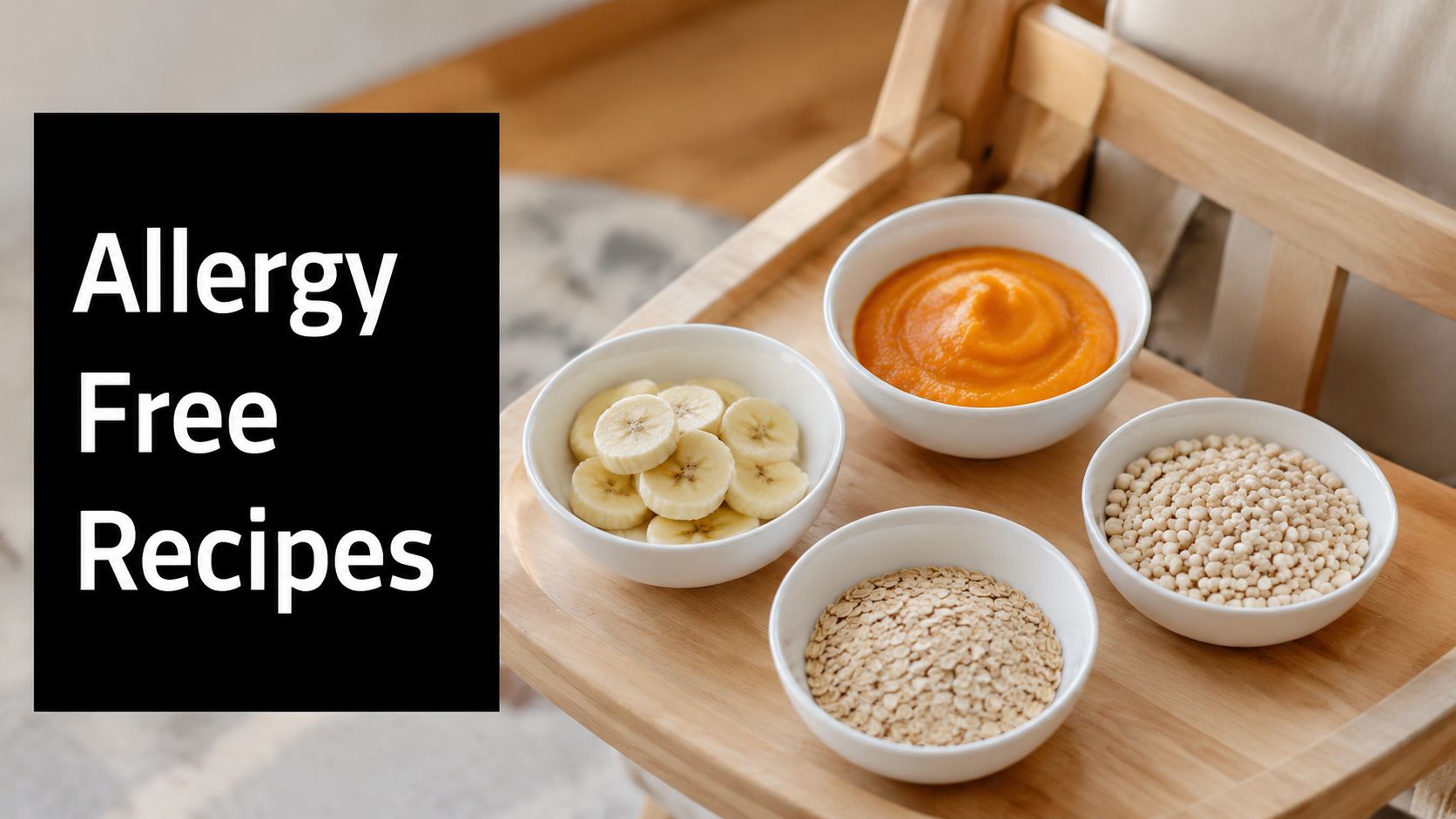
The best allergy free recipes for toddlers use simple whole foods and a repeatable structure: a soft protein or beans, a tolerated grain or starch, and fruit or vegetables. A practical target for balanced toddler meals is about 2 oz cooked protein or beans, 2 oz grains, and about 1/2 cup vegetables or fruit. For families avoiding multiple triggers, the safest routine is to build meals around top-8-free basics and batch-cook a few reliable recipes each week.
If you're reading this with one eye on your toddler and the other on a label, you're in familiar territory. Feeding a little one with allergies can feel like running quality control, short-order cooking, and nutrition planning at the same time. The problem usually isn't finding one safe recipe. It's building enough safe meals that breakfast, lunch, dinner, and snacks don't turn into the same three foods on repeat.
That's why I prefer a systems approach to allergy free recipes for toddlers. Start with dependable base recipes, keep textures toddler-friendly, and rotate ingredients slowly so you can tell what's working. If your child is also selective, these ideas pair well with broader meal ideas for fussy toddlers, but the focus here is safety first, then nutrition, then convenience.
Another reason this matters is scale. Food allergy affects millions of children. In the U.S., the CDC reported that in 2021 roughly 6.2 million children under 18 had a food allergy, with prevalence around 5.6%. This is everyday pediatric meal planning, not a fringe issue.
1. Sweet Potato and Chicken Puree
This is one of the most useful starter meals I know because it does two jobs well. It gives you a gentle texture for toddlers who still do best with spoonable foods, and it gives you a clear protein-plus-starch base that can be repeated without much kitchen stress.

Steam peeled sweet potato until very soft. Cook chicken breast separately until fully done, then blend or mash the two together with warm water or a little homemade broth until you get a texture your toddler can manage. For some children, a thicker mash works better than a very thin puree because it stays on the spoon and feels more like real food.
How to make it work in real life
In practice, this recipe shines when you batch it. I like freezing small portions so breakfast or lunch is already solved before the day starts slipping.
- Steam instead of boil: Steaming keeps the sweet potato from getting waterlogged, so the puree tastes fuller and freezes better.
- Add liquid slowly: Warm water or broth is enough. Too much liquid gives you a soupy puree that toddlers often reject after the first few bites.
- Test one ingredient at a time: If you're still assessing tolerance, introduce the sweet potato first, then add chicken later rather than changing two variables at once.
- Store smart: Glass containers hold texture and flavor well, especially if you're reheating individual servings.
Practical rule: Your safest recipe isn't the fanciest one. It's the one you can make again next week without thinking.
I also like this as a base recipe because you can widen the menu without changing the structure. Once sweet potato and chicken are well tolerated, many families rotate in turkey or beef and keep the same soft orange vegetable base. That gives variety without turning dinner into another food trial.
For parents who need more structure, an elimination meal plan can help organize repeat meals, ingredient tracking, and reintroduction timing.
2. Pumpkin and Lentil Dal
When a toddler can't rely on dairy, eggs, or common snack foods, I lean harder on soft legume dishes. Pumpkin and lentil dal is one of the best allergy free recipes for toddlers because it lands in the middle ground between bland and overpowering. It has enough flavor to be interesting, but it's still soft, mild, and easy to digest for many children.
Use red lentils for this, not green or brown. Red lentils break down into a creamy texture without much work. Simmer them with pumpkin puree and water until the mixture becomes thick and spoonable. A very small pinch of cumin or turmeric can be enough for aroma, but if your toddler is sensitive to strong flavors, start plain and build up later.
What works and what doesn't
The biggest win with dal is texture. It can be served smooth, lightly mashed, or thicker over rice depending on your child's feeding stage.
What usually works well:
- Pairing with rice: Plain rice softens the flavor and rounds out the meal.
- Keeping seasoning light: Toddlers often accept warm, mild flavors more easily than sharp spices.
- Adding tolerated fat: A little coconut oil can improve mouthfeel and make the bowl more satisfying.
What often doesn't work:
- Using firmer lentils: They stay separate and can feel gritty or too textured for younger toddlers.
- Making it too thick: Dense dal can read as pasty. Thin it slightly before serving.
- Over-spicing it: Adults may enjoy that. Toddlers usually don't.
Children's Hospital Los Angeles meal guidance for toddlers avoiding major allergens emphasizes structured meals built from protein, grains, produce, and fortified non-dairy beverages rather than relying on "free-from" packaged foods alone, which is exactly why simple meals like dal deserve a place in the weekly rotation through the CHLA allergen-free toddler meal and snack pattern.
If your household also needs meat-free planning support, a plant-based meal plan can make ingredient reuse much easier across lunches and dinners.
3. Banana and Rice Cake with Coconut Oil
Some toddlers need a safe baked snack that feels like a treat. This one fills that gap without leaning on eggs, dairy, or wheat. It also solves a common problem in allergy households. Everyone else is eating muffins or cake, and your toddler needs something that looks familiar enough not to feel left out.
Mash very ripe bananas until smooth, stir in rice flour and melted coconut oil, and bake the batter in mini muffin tins or a shallow pan. The exact texture depends on the rice flour brand and banana ripeness, so this is a recipe where the batter should look thick but spoonable, not dry.
Best uses for this recipe
I think of this less as dessert and more as a practical snack or side. It works on busy mornings, in lunchboxes, or as a backup food in the diaper bag.
- Choose overripe bananas: Brown-speckled fruit gives sweetness and moisture without added sugar.
- Rest the batter briefly: Rice flour hydrates a bit after mixing, which improves the crumb.
- Bake as muffins: Small portions are easier to cool, freeze, and serve safely.
- Cut to age-appropriate size: Even soft baked goods can clump in the mouth if pieces are too large.
Some toddlers reject dry gluten-free baked goods immediately. A moister, softer crumb usually has a much better chance.
This recipe is also useful in shared kitchens because the ingredient list stays short. Fewer ingredients often means fewer cross-contact opportunities. If your child is sensitive to texture, the soft middle of a banana-rice muffin is often accepted before crisp crackers or crumbly biscuits.
For families managing wheat avoidance alongside other triggers, a gluten-free meal plan can help you keep snacks, breakfasts, and baked options from getting repetitive.
4. Zucchini and Ground Turkey Meatballs
Not every toddler with allergies wants puree forever. At some point, you need bridge foods. These meatballs do that job well. They're soft enough for early self-feeding, but substantial enough to feel like a real lunch or dinner.
Start with ground turkey, finely grated zucchini, rice flour, and very light seasoning. The zucchini isn't there to hide vegetables from your child. It's there because turkey alone can bake up dry and rubbery. Zucchini keeps the texture soft, which matters a lot more than parents expect.

Texture is the whole game here
If these meatballs fail, it's usually because of one of three issues. The zucchini wasn't squeezed enough, the mixture was overmixed, or the cooked meatballs weren't reheated properly later.
A good method looks like this:
- Grate finely: Large zucchini shreds create stringy bits toddlers may spit out.
- Squeeze out extra moisture: Enough to prevent sogginess, but don't dry it completely.
- Mix gently: Overworking ground turkey makes a springy, dense meatball.
- Bake, don't pan-fry: Baking gives a more even texture and avoids crisp edges that some toddlers resist.
I like serving these with rice, mashed sweet potato, or soft-cooked vegetables. They also hold up well in lunch containers if your child eats at daycare or with another caregiver. That's one of the key considerations with toddler allergy meals. Foods need to be safe, yes, but they also need to survive transport, reheating, and tired adults.
A toddler meatball should break apart easily with light finger pressure. If you need a knife to test tenderness, it's too firm.
These also help parents move beyond snack-style feeding. A plate with two or three small meatballs, a tolerated starch, and fruit is much closer to a complete toddler meal than grazing on puffs and fruit pouches.
5. Avocado and Quinoa Power Bowls
Some allergy free recipes for toddlers are less about the recipe and more about the assembly method. This bowl is one of those. Once your toddler can handle a few distinct textures on the plate, a quinoa bowl becomes an easy way to offer protein, fat, and produce without heavy processing.
Cook quinoa until soft and fluffy, then cool it enough for toddler serving. Add diced avocado and one or two soft vegetables such as steamed carrots, peas, or zucchini. Keep the bowl visually simple. Adults like loaded grain bowls. Toddlers often do better when they can still see each ingredient.
Why this bowl earns a place in rotation
Avocado gives creaminess without dairy. Quinoa gives a neutral base that can be served warm or room temperature. The whole meal is easy to scale for one child or the whole family.
Here are the practical advantages:
- It adapts easily: Add shredded chicken, beans, or extra vegetables depending on what's tolerated.
- It supports self-feeding: Small soft pieces are easier for toddlers learning to scoop and pinch.
- It keeps ingredients visible: That's helpful when you're tracking acceptance and possible reactions.
- It reduces reliance on substitutes: You don't need allergen-free cheese or specialty sauces to make it satisfying.
The children who do best with bowls are usually the ones who like some control. Letting a toddler choose between avocado or peas, or between quinoa and rice, often works better than presenting a fully mixed dish they didn't see come together.
One more kitchen reality. Quinoa has to be rinsed well or it can taste bitter. If your child rejects it on the first try, don't assume quinoa is the problem. Sometimes it's just poor rinsing or overcooking. Small details matter more with toddlers than they do with adults.
6. Pear and Oat Porridge with Ground Flax
Breakfast is where allergy fatigue often shows up first. Parents get trapped between convenience foods that aren't safe and homemade options that take too long at 6:30 in the morning. Pear and oat porridge is one of the few breakfasts that can be both gentle and practical.
Cook oats until very soft, stir in finely diced pear so it breaks down into the porridge, and add ground flax near the end. The result should be creamy, not gluey. If the porridge sits and thickens too much, loosen it with more liquid before serving.
How to keep porridge from becoming a texture battle
A lot of toddlers like warm breakfasts, but only if the consistency is right. This recipe is forgiving, though it needs a little attention.
- Dice the pear small: Big chunks can stay firm and interrupt the smooth texture.
- Stir often: Oats catch and scorch quickly, and toddlers notice off flavors immediately.
- Add flax late: Ground flax thickens the porridge and can turn it heavy if added too early.
- Serve warm, not hot: Toddlers often refuse a whole bowl after one too-hot bite.
I often use this breakfast for children who are transitioning from infant cereals to more textured grains. It feels familiar but offers more flavor and substance. If your toddler won't accept visible pear pieces, cook the pear first until very soft, then mash it in.
There is also a bigger nutrition point here. Toddlers on multi-allergen diets don't just need safe food. They need meals that deliver enough energy and nutrients in a small volume. Breakfasts like porridge work best when they're made substantial enough to count as a meal rather than a warm snack.
7. Beef and Vegetable Bone Broth Soup
When toddlers are tired, teething, or coming off an illness, soup can carry more nutrition than parents expect. A beef and vegetable broth soup works especially well when chewing is inconsistent but appetite is still present for warm savory foods.
Use very soft-cooked beef, fully tender vegetables, and a broth that isn't aggressively seasoned. The pieces should be small enough to mash with gentle pressure. If they aren't, keep cooking.
A warm version of the method is shown here:
When this soup is most useful
I don't think of this as an everyday must-have. I think of it as a recovery meal, a freezer meal, and a fallback dinner when everyone is worn out.
It helps when:
- Appetite is lower: Warm broth can feel easier to accept than dry finger foods.
- Iron-rich foods need more repetition: Beef offers a different flavor profile from poultry.
- You need one-pot batch cooking: Soup portions freeze and reheat well.
- The whole family is eating together: Adults can season their bowls later, while the toddler gets the plain base.
The allergen-free food market is projected to grow from USD 51.6 billion in 2026 to USD 103.5 billion by 2036, with a projected 7.2% CAGR. I mention that not to push products, but because it reflects something parents already know. Demand for practical allergy-safe food systems is growing, and meals like simple soups remain more dependable than many specialty items.
Keep the toddler portion plain and adjust the adult bowls at the table. That one habit prevents a lot of accidental over-seasoning.
If your child does best with gentler, repetitive meals, a gut health meal plan can help you organize soups, porridges, and other easy-to-tolerate meals without rebuilding the week from scratch.
7 Allergy-Free Toddler Recipes Comparison
| Recipe | 🔄 Implementation complexity | ⚡ Prep speed/efficiency | Resource requirements | 📊 Expected outcomes | ⭐ Key advantages |
|---|---|---|---|---|---|
| Sweet Potato and Chicken Puree | Low, simple steaming, blending | Fast, 15–20 min; batch-freeze friendly | Common staples; freezer space | Smooth, easily digested, nutrient-dense (beta‑carotene + lean protein) | Hypoallergenic base; freezer-friendly; easy intro for multiple-allergy toddlers |
| Pumpkin and Lentil Dal | Medium, one-pot simmer; spice control | Quick, 20–25 min cook time | Lentils, pumpkin, basic spices; stovetop | High fiber & iron; plant-based protein when paired with rice | Cost-effective; freezes/reheats well; vegan complete-protein option |
| Banana and Rice Cake with Coconut Oil | Low, one-bowl mixing & baking | Moderate, 10 min prep + 20–25 min bake | Rice flour, bananas, coconut oil; basic bakeware | Sweet, energy-dense snack; shelf-stable 2–5 days | Egg/dairy/refined-sugar free; minimal equipment; customizable |
| Zucchini and Ground Turkey Meatballs | Medium, prep, shaping, poultry safety | Moderate, 15 min prep + ~20 min bake | Ground turkey, zucchini, binder (arrowroot); oven, freezer | High-protein, iron-rich; supports texture transition & self-feeding | Hides vegetables; freezable; suitable for batch cooking |
| Avocado and Quinoa Power Bowls | Low–Medium, assembly & texture balancing | Fast, ~15 min (mostly chopping) | Cooked quinoa, ripe avocado, fresh veggies; perishables | Complete plant protein + healthy fats; promotes variety & satiety | Highly customizable; teaches whole-food recognition; quick assembly |
| Pear and Oat Porridge with Ground Flax | Low, stovetop or slow-cooker options | Flexible, 10–15 min or overnight slow-cook | Certified GF oats, pears, ground flax; slow-cooker optional | Sustained energy, omega‑3 ALA, soluble fiber; filling breakfast | Warm, comforting; versatile prep methods; allergen-safe when GF oats used |
| Beef and Vegetable Bone Broth Soup | High, long simmering and food-safety | Slow, 30 min active + 12–48 h broth if homemade | Quality bones/meat, long cook time, storage capacity | Mineral- and collagen-rich; bioavailable iron; gut‑supportive nutrition | Highly nutrient-dense; therapeutic for recovery; large batch/freezer-friendly |
Building a Confident and Joyful Allergy-Free Kitchen
Feeding a toddler with food allergies asks a lot from parents. You have to think about safety, nutrition, texture, cost, waste, and your child's mood, often all before noon. That's why I don't recommend collecting random allergy free recipes for toddlers and hoping for the best. What works better is building a small, dependable rotation and treating it like a household system.
These seven recipes give you different functions, not just different flavors. The puree is your soft fallback. The dal gives you a plant-based protein option. The banana rice bake covers snacks and portable food. The turkey meatballs help with texture progression. The quinoa bowl supports self-feeding. The porridge steadies breakfast. The soup fills in the hard days when chewing, appetite, or energy isn't great.
That kind of variety matters because avoiding allergens isn't the whole job. Children's Hospital Los Angeles guidance for allergen-free toddler meal patterns makes this point clearly in practice by emphasizing structured meals with protein, grains, produce, and fortified non-dairy options beyond the removal of problem foods. In other words, "safe" doesn't automatically mean "enough." Toddlers have small appetites, so meals need to be nutrient-dense and easy to eat.
I also want to be honest about trade-offs. Batch cooking helps, but only if you're freezing foods your toddler already accepts. Substitutions are useful, but not every dairy-free or gluten-free product earns a place in a toddler meal. Some are expensive, some are low in nutrition, and some don't taste good enough to become repeat foods. Whole-food bases like sweet potato, rice, beans, quinoa, avocado, oats, chicken, turkey, and beef are often more reliable than trying to recreate standard kid food with a stack of specialty replacements.
A sample weekly rhythm can make this easier. Batch-cook one puree or porridge, one hand-held protein, and one soup or stew. Keep one safe baked snack in the freezer. Use leftovers intentionally so Tuesday lunch isn't a scramble. To achieve this, a planning tool can help. Instead of mentally tracking every tolerated ingredient, every repeat meal, and every grocery need, you can organize the week in one place and reduce decision fatigue.
For many families, an AI-based planner is the missing piece between having recipes and using them consistently. It can help turn a list of safe meals into a working routine with ingredient reuse, batch-cooking reminders, and simpler shopping. If you want a cleaner system for all of this, start with AI Meal Planner Onboarding. And if you're inviting toddlers into prep as they grow, these kitchen safety tips for children can help make that process safer and calmer.
If you want allergy free recipes for toddlers to become a routine instead of a daily puzzle, try AI Meal Planner. It can help you build repeatable weekly menus, organize safe ingredient swaps, and turn a short list of trusted meals into a plan you can follow.
AI-powered nutrition
Get Your Personalized Meal Plan
AI creates the perfect meals for your goals, lifestyle, and taste.
Start Your Journej