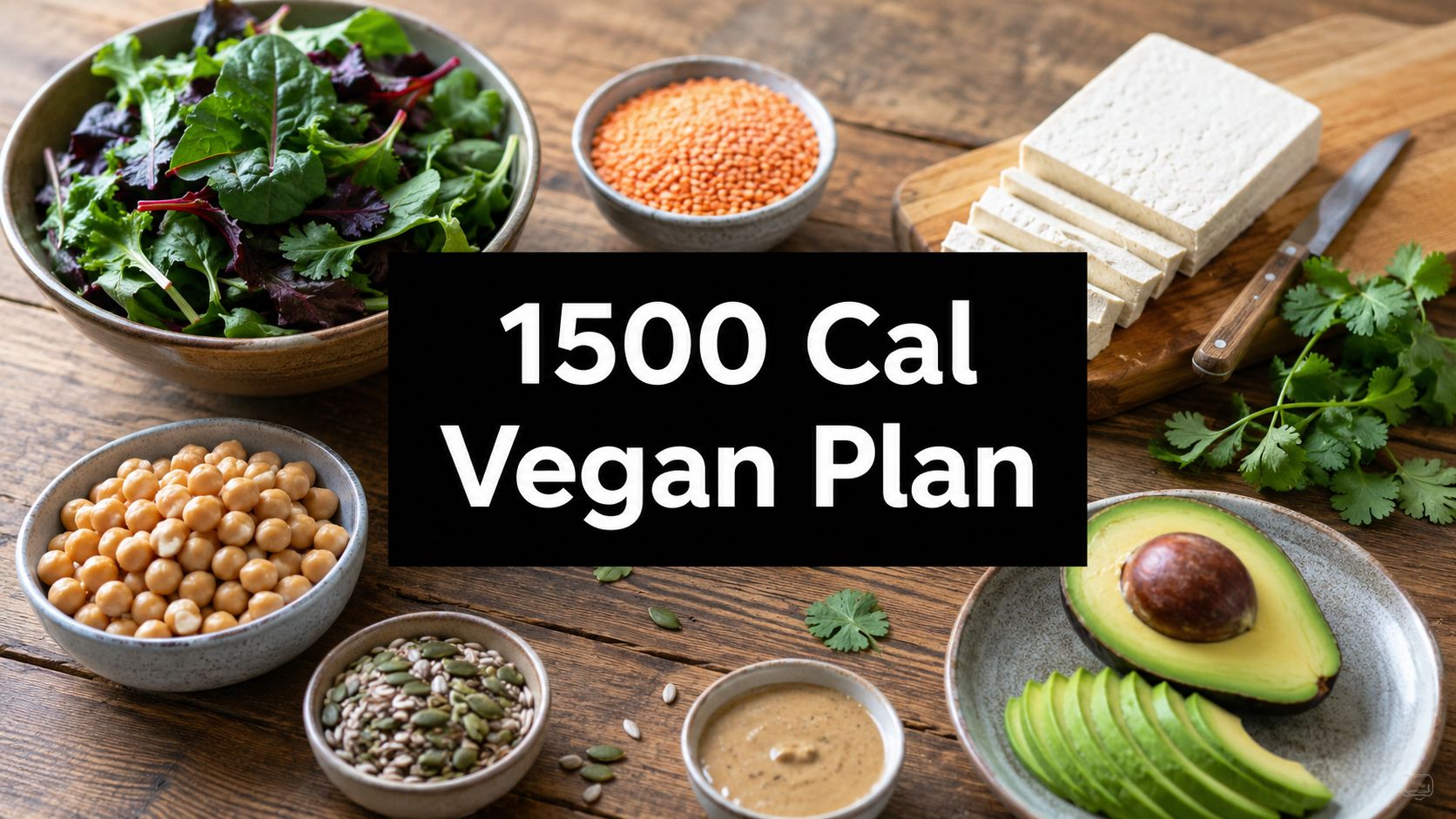
A 1,500-calorie vegan plan typically splits into about 350 calories for breakfast, 400 for lunch, 200 for a snack, and 500 for dinner, while aiming for roughly 80 to 100 grams of protein, 170 to 205 grams of carbohydrates, 42 to 58 grams of fat, and 40 to 60 grams of fiber. Build those numbers around tofu, tempeh, legumes, and fortified foods, rather than expecting grains and vegetables to supply enough protein on their own.
You may be searching for a plan like this after another day of eating oatmeal, salad, fruit, and hummus, then discovering that your protein total is still nowhere near where you want it. That's the common weakness in many vegan calorie plans. They reach the calorie target, but protein becomes an afterthought, fortified foods are missing, and hunger arrives before dinner.
A better approach treats protein as the first planning constraint. Calories, carbohydrates, fats, fiber, micronutrients, and preparation time then fit around that foundation. The menu below uses soy foods and legumes repeatedly, with practical swaps for gluten-free, soy-free, higher-protein, and more active days.
A 1,500-calorie intake also isn't automatically appropriate for every adult. UK-style balanced-diet references place approximate daily energy needs at 2,600 calories for adult men and 2,100 calories for adult women, so 1,500 calories sits well below those benchmarks. If you're pregnant, breastfeeding, under 18, managing an eating disorder, highly active, or unsure whether this target is suitable, get individual guidance from a registered dietitian or clinician.
What a 1,500-Calorie Vegan Day Should Look Like
Start with the calorie distribution, not the recipes. A useful four-meal structure assigns approximately 350 calories to breakfast, 400 to lunch, 200 to a snack, and 500 to dinner, leaving about 50 calories for condiments, low-calorie beverages, or small measurement differences. This pattern gives every eating occasion a job without forcing all your protein into one large dinner.
The macro framework matters because a low energy ceiling makes mistakes more obvious. A plant-based macro framework commonly places protein around 20% to 25% of calories, fat around 25% to 35%, and carbohydrates around 45% to 55%, with approximately 40 to 60 grams of fiber as a practical daily range (vegan macro guidance). At 1,500 calories, that equals about 75 to 94 grams of protein, 42 to 58 grams of fat, and 169 to 206 grams of carbohydrates.
Why protein must lead the menu
Grains, potatoes, fruit, and vegetables contribute protein, but they're not efficient enough to carry the day by themselves. At this calorie level, make at least two meals visibly protein-led with tofu, tempeh, edamame, seitan, lentils, chickpeas, black beans, TVP, or a fortified soy product.
The Vegetarian Resource Group gives lower protein estimates for typical moderately active vegan adults, about 33 to 39 grams daily for men and 35 to 42 grams for women at 1,500 calories (VRG protein guidance). The menu here deliberately aims higher, because people pursuing fat loss or muscle retention often need a more intentional distribution than a minimum adequacy calculation.
| Slot | Calories | Protein (g) | Carbs (g) | Fat (g) | Fiber (g) |
|---|---|---|---|---|---|
| Breakfast | 350 | 20–25 | 40–50 | 10–15 | 8–12 |
| Lunch | 400 | 25–30 | 45–55 | 10–15 | 10–14 |
| Snack | 200 | 12–18 | 20–30 | 6–10 | 4–7 |
| Dinner | 500 | 30–35 | 60–75 | 15–20 | 14–20 |
| Daily target | 1,500 | 80–100 | 170–205 | 42–58 | 40–60 |
Use a minimum fiber floor of 25 to 30 grams, then increase toward the menu's higher range if your digestion tolerates it. Drink water consistently, and keep sodium roughly within 1,500 to 2,000 milligrams when practical. Because calories are limited, vitamin B12, vitamin D, iodine, and omega-3 EPA/DHA need a supplement or fortified-food strategy rather than wishful thinking. The 1500-calorie vegan meal planning guide can help translate this framework into meals, but check labels when products differ.
Your 7-Day Vegan Menu at 1500 Calories
The following menu keeps the same calorie rhythm so shopping and preparation stay predictable. Meal-level protein figures are planning targets, not laboratory measurements, because brands and serving sizes vary. Weigh calorie-dense foods such as nut butter, tahini, oil, avocado, and trail mix, since small portions can change the day substantially.
| Day | Breakfast (cal/P) | Lunch (cal/P) | Snack (cal/P) | Dinner (cal/P) | Day Total |
|---|---|---|---|---|---|
| 1 | Silken tofu scramble with black beans, 350 / 24g | Lentil dal with rice, 400 / 25g | Apple with peanut butter, 200 / 6g | Tempeh stir-fry, 500 / 35g | 1,450 / 90g |
| 2 | Overnight oats with soy protein, 350 / 28g | Chickpea salad sandwich, 400 / 22g | Edamame, 200 / 18g | Lentil pasta with TVP, 500 / 36g | 1,450 / 104g |
| 3 | Tofu burrito bowl, 350 / 25g | Seitan tacos, 400 / 30g | Hummus snack, 200 / 7g | Peanut tofu with quinoa, 500 / 32g | 1,450 / 94g |
| 4 | Tempeh bacon avocado toast, 350 / 23g | Three-bean chili, 400 / 24g | Trail mix, 200 / 6g | Chickpea curry, 500 / 25g | 1,450 / 78g |
| 5 | Soy yogurt parfait, 350 / 24g | Buddha bowl with edamame, 400 / 25g | Roasted chickpeas, 200 / 9g | Black bean burgers, 500 / 30g | 1,450 / 88g |
| 6 | Tofu Benedict, 350 / 25g | Quinoa tabbouleh, 400 / 18g | Soy-nut butter toast, 200 / 10g | Tempeh Reuben, 500 / 32g | 1,450 / 85g |
| 7 | Protein pancakes, 350 / 27g | Lentil shepherd's pie, 400 / 23g | Edamame hummus plate, 200 / 12g | Stuffed peppers with lentils, 500 / 30g | 1,450 / 92g |
The table's totals land below the nominal target because the meal slots are rounded for planning. Add the reserved condiment or beverage calories, or slightly increase a measured grain, bean, or protein serving to reach your personal target. A published four-meal vegan example uses a similar structure and reports approximately 1,522 calories, 52 grams of protein, 194 grams of carbohydrates, 46 grams of fiber, 68 grams of fat, and 1,734 milligrams of sodium (published vegan sample plan).
Day 2 is the deliberate high-protein template. Soy protein at breakfast, edamame at snack, and TVP with lentil pasta at dinner make the number easier to reach without turning every meal into a huge bean bowl. Day 4 is lower in protein because avocado toast, trail mix, and chickpea curry bring more fat and carbohydrate relative to their protein. Use it as a variety day, not the pattern to repeat when muscle retention is your priority.
For flexible planning, keep the anchor intact when changing flavors. Replace one legume with another, but don't remove the tofu, tempeh, edamame, or concentrated protein source without adding an equivalent protein-led ingredient.
Grocery List for the Whole Week
Shop by aisle and buy the foods that can serve more than one meal. Onions, garlic, canned tomatoes, lentils, rice, quinoa, tofu, and frozen edamame are especially useful because they appear across several recipes rather than being purchased for one isolated dish.
Produce
- Aromatics: 8 onions, 2 garlic bulbs, and ginger for dal, chili, curry, stir-fries, and sauces.
- Fresh vegetables: 8 bell peppers, tomatoes, leafy greens, broccoli, and lemons for bowls, sandwiches, tacos, and stuffed peppers.
- Fruit: 6 apples, bananas, berries, avocados, and extra lemon for breakfasts and snacks.
- Batch-friendly choices: Keep apples, onions, garlic, and frozen berries for the longest storage. Buy delicate leafy greens later in the week if possible.
Legumes and grains
- Legumes: Dry lentils, canned chickpeas, canned black beans, and ingredients for three-bean chili.
- Grains: Dry brown rice, quinoa, rolled oats, lentil pasta, whole-grain bread, and whole-wheat tortillas.
- Portioning: Cook grains in batches, then measure servings into containers rather than serving directly from the pot.
Soy and plant proteins
- Core proteins: Extra-firm tofu, silken tofu, tempeh, seitan, edamame, soy milk, soy yogurt, and soy protein powder.
- Fortified staples: Choose fortified soy milk and calcium-set tofu when available, checking the package label.
Nuts, seeds, and pantry items
- Nuts and seeds: Peanut butter, almonds, walnuts, chia, flax, hemp hearts, and tahini.
- Flavor builders: Olive oil, soy sauce, nutritional yeast, vinegar, spices, canned tomatoes, tomato paste, salsa, and hummus.
- Already-stocked items: Check your cupboards for salt, pepper, cumin, smoked paprika, chili powder, curry spices, and dried herbs before buying replacements.
For a one-pass shopping list that adjusts quantities to your preferences, use the vegan grocery list generator. The exact amount of each food depends on package size and whether you cook from dried or canned ingredients, so use the menu's meal slots as your final portioning guide.

Micronutrients to Watch on a Low-Calorie Vegan Plan
Calories and protein are visible in a tracker. Micronutrient gaps are quieter, especially when meals look colorful and wholesome. At 1,500 calories, the solution is not to add random supplements. It's to identify nutrients that need a dependable source every day.
| Nutrient | Daily Target | Menu Sources | Supplement Needed |
|---|---|---|---|
| Vitamin B12 | 250–500 mcg daily, or 1,000 mcg twice weekly | Fortified foods | Usually yes, unless fortified intake is deliberate |
| Iron | 18 mg | Lentils, chickpeas, beans, tofu, seeds | Individual assessment may be needed |
| Calcium | 1,000–1,200 mg | Fortified plant milk, calcium-set tofu, tahini | Use fortified swaps if food intake falls short |
| Iodine | 150 mcg | Iodized salt, nori | Often needed if iodized salt is absent |
| Vitamin D | 1,000–2,000 IU in winter | Fortified foods and sunlight exposure | Often needed seasonally |
| Omega-3 | 2 g algae DHA/EPA | Flax and chia provide ALA | Algae DHA/EPA is the dependable vegan option |
| Zinc | 8–11 mg | Legumes, nuts, seeds | Check the overall diet before adding a supplement |
Vitamin B12 has no reliable unfortified plant source, so use a B12 supplement or a consistent fortified-food schedule. Iron from plants is non-heme iron. Pair lentils, beans, tofu, and seeds with vitamin C-rich peppers, tomatoes, citrus, or berries, and avoid tea or coffee within an hour of iron-focused meals.
Calcium-set tofu and fortified plant milk do more work than adding another handful of greens. Iodine is similarly practical: use iodized salt, while remembering that seaweed iodine content varies. Vitamin D and omega-3 EPA/DHA deserve separate attention, particularly when the menu contains little fortified food.
A broad vegan multivitamin can simplify the routine, but it shouldn't replace label checking. The Vitamin Planet vegan multivitamin is one option to review alongside your diet, medications, and clinician's advice. For ingredient-specific meal building, the vegan food guide can help you find fortified and protein-dense choices.
Daily checklist: B12, fortified calcium and vitamin D, iodized salt, iron plus vitamin C, legumes or soy, and algae DHA/EPA.
Meal Prep Workflow for the Week
A 90-minute Sunday session works best when several tasks run at once. Don't cook every recipe from start to finish. Prepare neutral components that can take on different flavors through salsa, curry sauce, mustard, soy sauce, or lemon dressing.
The first 20 minutes
Press and bake two blocks of extra-firm tofu, keeping one plain and marinating the other. Roast 1.5 pounds of sweet potato cubes on a separate tray, and start a pot containing 1 cup of dry lentils. While those cook, wash the produce and clear enough refrigerator space for portioned containers.
The middle cooking block
Blend oat-based overnight-oat jars for Monday, Wednesday, and Friday. Cook 1 cup of dry quinoa, bake tempeh strips, simmer black beans if you're using dried beans, and roast a tray of chickpeas for snacks. Prepare smoothie bags in freezer pouches with fruit and greens, leaving soy milk or another liquid to add when blending.
The point of parallel preparation is control. You're not trying to make seven finished dinners. You're making protein anchors, starches, vegetables, and sauces that can be assembled into different meals without losing the calorie structure.

The nightly 10-minute reset
Each evening, add dressing to the next day's lunch bowl, move overnight oats to the front of the refrigerator, and plate dinner components from labeled containers. Keep sauces separate until eating so grains and greens don't become soggy.
Use cooked grains within 4 days, pressed tofu within 5 days, tempeh within 4 days, and chickpea croutons within 5 days. Freeze lentil shepherd's pie portions, cooked beans, smoothie bags, and some sauces successfully. A practical guide to weight loss meal planning can add useful structure if you're also coordinating portions, leftovers, and a changing weekly schedule.
Smart Swaps for Different Goals and Restrictions
Swapping foods works only when you recalculate the meal. A gluten-free replacement may preserve calories but reduce protein, while a higher-fat ingredient can make a meal more satisfying without keeping the original macro balance. The figures below are planning deltas from the stated substitutions, so verify the package label before treating them as exact.
| Original | Swap | Cal Delta | Protein Delta |
|---|---|---|---|
| 100g cooked quinoa | 150g extra-firm tofu | Qualitatively lower or similar, brand-dependent | Qualitatively higher |
| Standard oats | Soy protein-fortified granola | Qualitatively higher | Qualitatively higher |
| Wheat seitan | Buckwheat plus legumes | Qualitatively similar | Qualitatively lower unless legumes increase |
| Soy sauce | Tamari | Minimal change | No meaningful change |
| Tofu | 200g cooked chickpeas plus 2 tbsp hemp hearts | Qualitatively higher | Qualitatively similar or higher |
| Tempeh | Lupini beans | Qualitatively lower | Qualitatively similar |
| Soy milk | Pea protein milk | Qualitatively similar | Qualitatively similar or higher |
| Standard day | 2 tbsp almond butter | Adds calories | Adds a small amount of protein |
| Lunch | ¼ avocado | Adds calories | Little protein change |
| Dessert | 1 oz dark chocolate | Adds calories | Little protein change |
For a 100-gram-plus protein day, use tofu instead of a quinoa serving, choose soy protein-fortified granola instead of plain oats, and add hemp hearts to a bowl or smoothie. This preserves the high-protein direction, but the hemp and almond-butter additions can push fat upward, so reduce oil or tahini elsewhere if needed.
For gluten-free eating, choose certified gluten-free oats, tamari instead of soy sauce, buckwheat instead of wheat-based seitan, and verify that nutritional yeast is labeled gluten-free. For soy-free eating, use chickpeas plus hemp hearts in place of tofu, lupini beans instead of tempeh, and pea protein milk instead of soy milk. These changes can preserve the meal's structure, but soy-free menus usually need more deliberate protein distribution.
On active days, a higher-calorie version can add almond butter mid-afternoon, avocado at lunch, and dark chocolate after dinner. Those additions raise energy and fat more than protein, so they're appropriate for fueling a larger day, not for improving protein density.
Troubleshooting Hunger, Energy, and Protein Gaps
A vegan 1,500-calorie plan usually fails for one of three reasons: too little food volume, too little protein early in the day, or too many calories spent on oils and spreads. Correct the pattern instead of trying harder.
If hunger stays high
Increase non-starchy vegetables toward 400 to 600 grams daily, move calories toward a 400-calorie protein-led breakfast, and add 5 to 10 grams of psyllium or ground flax to two meals if your digestion tolerates it. Don't add all the fiber at once, especially if your current intake is low.
If energy drops in the afternoon
Check whether you've eaten less than 30 grams of protein before 2 p.m. Pair carbohydrates with tofu, legumes, or tempeh instead of eating fruit alone. Cap added oil at one tablespoon per meal, because oil can consume the budget without adding protein or much food volume.
If protein stays below 60 grams
Replace oat milk with soy milk, replace one starch serving with an additional 100 grams of tofu or tempeh, and add 15 grams of vegan protein powder to overnight oats or a smoothie. Use the protein intake calculator to personalize the target rather than assuming every reader needs the same number.
| Symptom | Likely Cause | Targeted Fix |
|---|---|---|
| Fatigue | Protein, iron, B12, or overall intake needs review | Add a protein anchor and check B12 and iron planning |
| Hair shedding | Low intake or micronutrient gap | Review calories, protein, iron, zinc, and medical causes |
| Cravings | Meals lack protein, fiber, or sufficient volume | Add legumes or tofu and increase non-starchy vegetables |
| Afternoon crash | Carbohydrates eaten without a protein partner | Pair fruit or grains with soy, tofu, tempeh, or legumes |
If you're considering animal-derived protein for a different dietary pattern, comparisons such as whey protein for muscle on GLP-1 can clarify trade-offs. For a vegan plan, though, soy protein, legumes, seitan, and vegan protein powder can cover the same planning function without changing the dietary pattern.
Fix one variable at a time and monitor how you feel over the next 48 hours. Persistent fatigue, hair loss, dizziness, or disordered-eating symptoms deserve professional assessment, not a more aggressive calorie restriction.
AI Meal Planner creates personalized weekly menus and grocery lists around calorie targets, vegan preferences, allergies, and macro goals. Use AI Meal Planner to turn this 1,500-calorie framework into a plan with calculated meals, organized shopping, and swaps for foods you don't enjoy.
AI-powered nutrition
Get Your Personalized Meal Plan
AI creates the perfect meals for your goals, lifestyle, and taste.
Start Your Journej