What are some quick and easy meal prep ideas?
Some of the best quick and easy meal prep ideas include sheet pan meals, mason jar salads, freezer-friendly breakfast burritos, and slow cooker "dump" recipes. These methods minimize active cooking time and simplify weekly planning. Key strategies involve batch cooking components, assembling grab-and-go meals, and using appliances to automate the cooking process.
Tired of the daily scramble to figure out what to eat? The constant cycle of cooking, cleaning, and decision fatigue can make healthy eating feel like an impossible task. For many busy professionals, fitness enthusiasts, and families, the five o'clock rush often ends in expensive takeout or less-than-nutritious convenience foods. This is where strategic meal prepping becomes a game-changer, transforming chaotic weeknights into streamlined, healthy-eating opportunities. It's not about spending your entire Sunday in the kitchen; it's about smart, efficient preparation that buys back your time and energy during the week.
This guide provides ten actionable, quick and easy meal prep ideas designed to fit into even the most packed schedules. You’ll discover how to assemble delicious sheet pan dinners in minutes, create grab-and-go mason jar salads that stay fresh for days, and master the art of the "dump-and-go" slow cooker meal. Whether your goal is weight management, muscle gain, or simply reclaiming your evenings, these methods are designed for maximum efficiency.
How do you make sheet pan meals for meal prep?
Sheet pan meals are one of the most efficient quick and easy meal prep ideas, involving roasting a balanced mix of proteins, vegetables, and starchy carbohydrates together on a single baking sheet. This "toss and bake" method drastically reduces active cooking time and cleanup, making it a cornerstone for anyone seeking healthy, streamlined meals. The magic lies in its simplicity: all components cook simultaneously, allowing flavors to meld beautifully in the oven.
This approach is perfect for busy weeknights when you need a nutritious dinner without the hassle of multiple pots and pans. It's also exceptionally effective for batch cooking. You can easily prepare three to four servings at once, portioning them into containers for lunches or dinners throughout the week. The high, dry heat of the oven ensures proteins get a delicious sear and vegetables become perfectly caramelized.
How do you build a perfect sheet pan meal?
A successful sheet pan meal follows a simple formula: Protein + Vegetables + Starch + Healthy Fat & Seasoning.
- Protein Examples: Chicken thighs, salmon fillets, lean ground turkey meatballs, or plant-based options like chickpeas and firm tofu.
- Vegetable Examples: Hardy vegetables like broccoli, Brussels sprouts, bell peppers, and zucchini work best.
- Starch Examples: Diced sweet potatoes, butternut squash, or red potatoes.
What are some tips for perfect sheet pan meals?
To master this technique, follow these simple guidelines:
- Uniform Cutting: Chop all vegetables and starches into similar-sized pieces to ensure they cook evenly.
- Don't Crowd the Pan: Spread ingredients in a single layer with space between them. Overcrowding will steam the food instead of roasting it. Use two pans if necessary.
- Use Parchment Paper: Lining your pan with parchment paper makes cleanup almost nonexistent.
- Season Generously: Roasting concentrates flavor, so don't be shy with herbs, spices, salt, and pepper.
- Smart Grocery Planning: To streamline your shopping, a tool like this grocery list generator can help organize your ingredients by category, ensuring you don’t miss a thing.
How do you keep mason jar salads from getting soggy?
Mason jar salads are a game-changer for anyone looking for quick and easy meal prep ideas, offering a clever way to keep salads fresh and crisp for days. The method involves strategically layering ingredients in a glass jar, with the dressing at the very bottom and the delicate greens at the top. This separation prevents the lettuce from becoming soggy, ensuring a perfectly fresh, ready-to-eat meal when you need it.
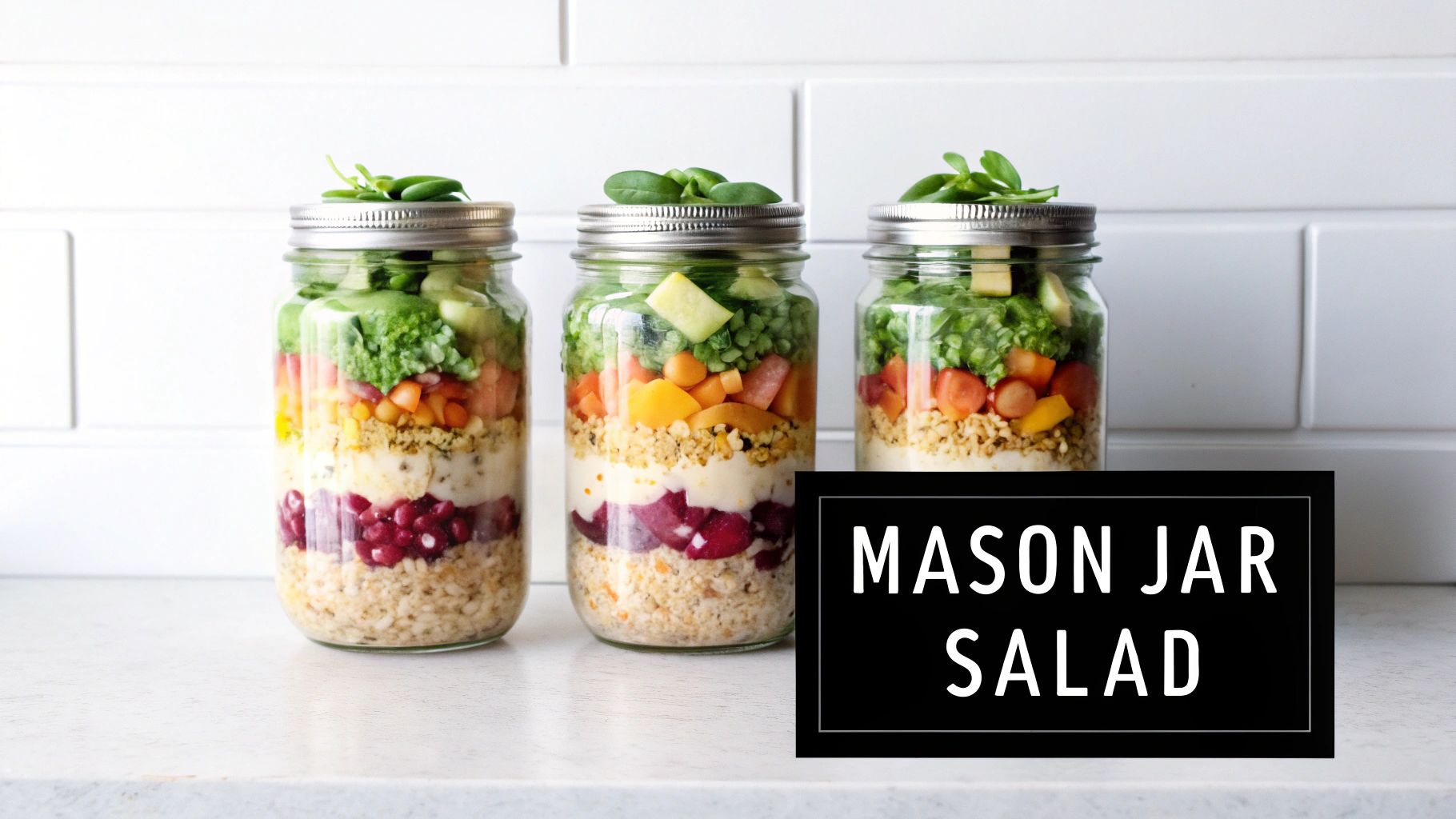
This grab-and-go solution is ideal for busy professionals or anyone needing a portable and nutritious lunch without any day-of preparation. By prepping five jars on a Sunday, you can have healthy lunches sorted for the entire workweek. When you're ready to eat, simply shake the jar vigorously to mix the dressing and pour it into a bowl for a delicious, fresh salad.
How do you build a perfect mason jar salad?
A successful mason jar salad follows a specific layering formula to maintain freshness: Dressing + Hardy Vegetables + Grains/Legumes + Protein + Delicate Greens & Toppings.
- Dressing Examples: Balsamic vinaigrette, tahini dressing, or a simple lemon-herb vinaigrette.
- Hardy Vegetable Examples: Cherry tomatoes, cucumbers, bell peppers, shredded carrots, and radishes.
- Grains/Legumes & Protein Examples: Quinoa, chickpeas, grilled chicken, hard-boiled eggs, or firm tofu.
- Delicate Greens & Toppings Examples: Spinach, arugula, mixed greens, nuts, seeds, and feta cheese.
What are the best tips for mason jar salads?
To master the art of the mason jar salad, adhere to these simple guidelines:
- Start with Dressing: Always pour the dressing into the bottom of the jar first. This acts as a barrier, protecting other ingredients from moisture.
- Layer Strategically: Add the heartiest ingredients next, like carrots or chickpeas, that can marinate in the dressing without becoming soggy.
- Keep Greens on Top: Place your delicate greens, like lettuce or spinach, at the very top, far away from the dressing.
- Pack Tightly: Fill the jar to the top to minimize air exposure, which helps keep ingredients fresh for longer.
- Shake Before Serving: When you're ready to eat, shake the jar thoroughly to distribute the dressing evenly through all the layers.
- Smart Meal Planning: Streamline your salad prep by planning your ingredients in advance. A tool like the AI Meal Planner can help you create balanced recipes and generate a corresponding grocery list, making your prep session even more efficient.
How do you make breakfast burritos for meal prep?
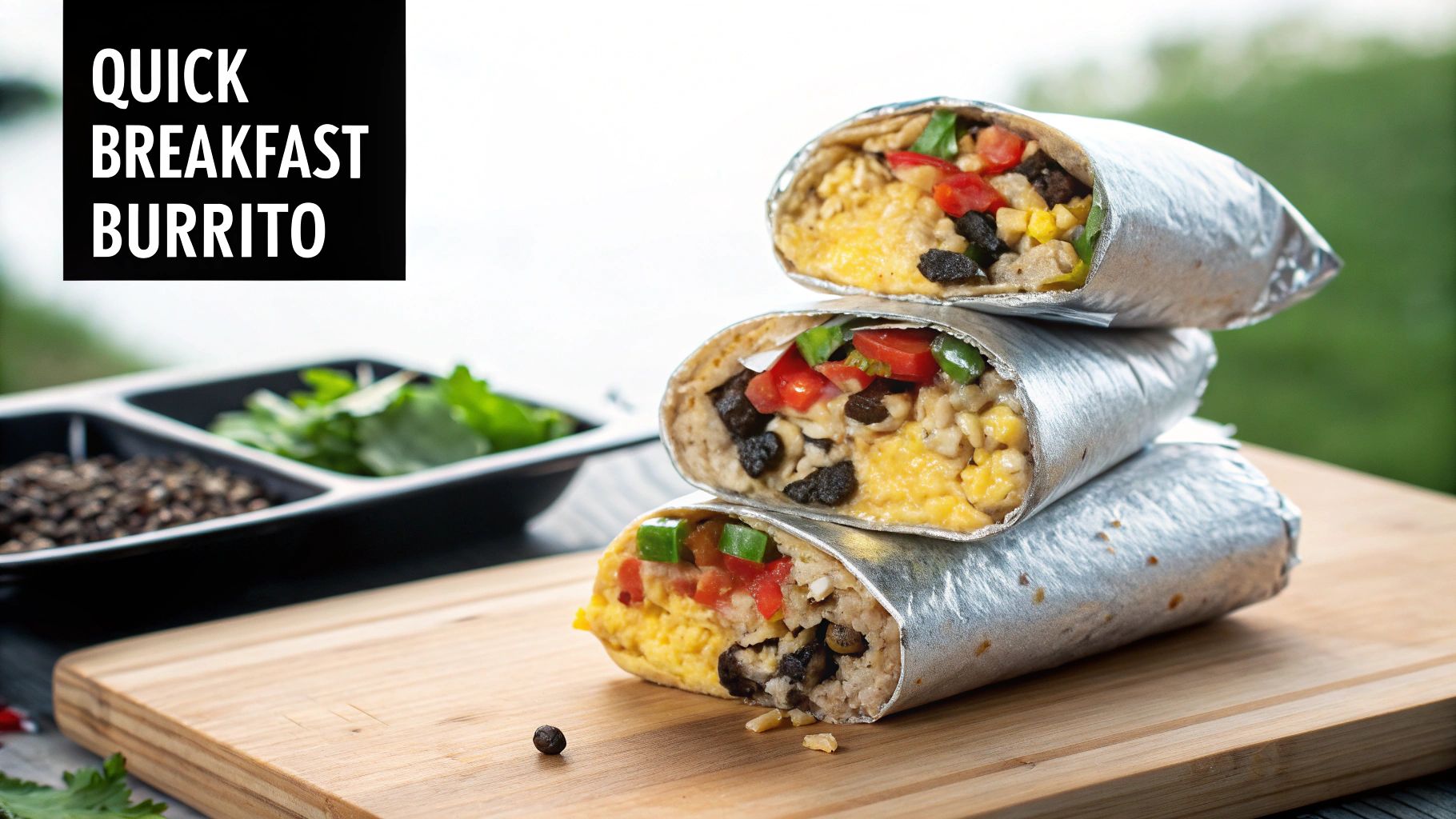
Freezer-friendly breakfast burritos are a game-changer for anyone who struggles with hectic mornings. This meal prep idea involves batch-cooking fillings like scrambled eggs, proteins, and vegetables, wrapping them in tortillas, and freezing them individually. This "make-ahead" method ensures you have a hot, nutritious, and satisfying breakfast ready in minutes, solving the common problem of skipping the most important meal of the day due to a lack of time.
This approach is perfect for busy professionals and families who need a grab-and-go option that is both healthy and filling. By investing about 30 minutes on a Sunday, you can prepare a week's worth of breakfasts, eliminating daily cooking and cleanup. Reheating from frozen takes just 2-3 minutes in the microwave, providing a protein-packed start that keeps you energized until lunch.
How do you build a perfect breakfast burrito?
A successful freezer burrito follows a simple formula: Protein + Vegetables + Binder + Tortilla.
- Protein Examples: Scrambled eggs, turkey sausage, black beans, or plant-based options like scrambled tofu.
- Vegetable Examples: Sautéed bell peppers, onions, spinach, and mushrooms. Pre-cooking reduces moisture.
- Binder Examples: Shredded cheddar, Monterey Jack, or a dairy-free cheese alternative.
- Tortilla Examples: Large flour tortillas are most common for their flexibility, but whole wheat or gluten-free wraps also work well.
What are the best tips for making breakfast burritos?
To master this technique, follow these simple guidelines:
- Avoid Sogginess: Cook vegetables until most of their moisture has evaporated. Also, allow all fillings to cool completely before assembling the burritos.
- Undercook the Eggs: Scramble eggs until they are just set but still slightly soft. They will finish cooking during the reheating process.
- Wrap Tightly: To prevent freezer burn, wrap each burrito tightly in foil or parchment paper before placing them in a freezer-safe bag.
- Label Everything: Use a freezer-safe marker to label each burrito with its contents and the date it was made.
- Track Your Intake: To ensure your breakfast aligns with your health goals, you can calculate the nutritional value using a calorie and macro calculator.
What are good dump recipes for meal prep?
Slow Cooker and Instant Pot dump recipes are a game-changer for anyone looking for truly hands-off meal prep. The concept is simple: you add all your ingredients to the appliance, set the timer, and walk away. The machine handles the entire cooking process, making it one of the most passive yet effective quick and easy meal prep ideas available. This "set it and forget it" method eliminates active cooking time almost entirely.
This approach is perfectly suited for busy professionals or parents who have minimal time during the day. You can load a slow cooker in the morning and come home to a perfectly cooked meal, or use an Instant Pot to prepare a week's worth of chili or stew in under 30 minutes. It's a fantastic way to batch cook tender, flavorful proteins and hearty soups with almost no effort, streamlining your meal prep process significantly.
How do you build a perfect dump recipe?
A successful dump recipe combines ingredients that cook well together over time or under pressure. The basic formula is: Protein + Liquid/Sauce + Vegetables & Aromatics.
- Protein Examples: Chicken breasts with salsa and black beans (for shredding), beef for chili, or pork shoulder with BBQ sauce. Plant-based options include lentils for curry or a mix of beans for soup.
- Vegetable Examples: Hardy vegetables like carrots, potatoes, onions, and bell peppers go at the bottom.
- Liquid/Sauce Examples: Broth, salsa, coconut milk, diced tomatoes, or your favorite marinara sauce.
What are the best tips for dump recipes?
To get the most out of your appliance, follow these key guidelines:
- Don't Overfill: Keep the appliance ½ to ¾ full to ensure ingredients cook evenly and safely, especially when pressure cooking.
- Layer Strategically: Place harder vegetables (like potatoes and carrots) on the bottom, followed by the protein, and then pour liquids and sauces over the top.
- Brown for Flavor: When using an Instant Pot, use the "Sauté" function to brown your protein and aromatics first. This simple step adds a deep layer of flavor to the final dish.
- Time Your Greens: Add delicate greens like spinach or kale in the last 5-10 minutes of cooking to prevent them from becoming mushy.
- Use Natural Release: For ultra-tender meat in an Instant Pot, allow the pressure to release naturally for at least 10-15 minutes. This helps lock in moisture.
- Plan Your Portions: Tools like an AI-powered meal planner can help you calculate the exact ingredient quantities needed for your weekly portions, preventing food waste and simplifying your shopping list.
What no-cook meal prep ideas can I use?
Overnight oats and chia puddings are the ultimate no-cook, grab-and-go meal prep solution. This method involves combining a base of rolled oats or chia seeds with a liquid and other mix-ins, then refrigerating overnight. As the mixture sits, the oats soften and absorb the liquid, or the chia seeds gel into a thick, pudding-like consistency. This simple process creates a perfectly portioned, nutrient-dense breakfast or snack that is ready to eat in seconds.
This approach is a game-changer for anyone with hectic mornings or those seeking a consistent, calorie-controlled breakfast to support weight management goals. Preparing several jars at once ensures you have a healthy option ready for multiple days, eliminating the temptation of less nutritious convenience foods. The versatility is unmatched, allowing you to create endless flavor combinations that cater to your specific taste and dietary needs.
How do you build a perfect jar of oats or pudding?
A successful jar follows a simple formula: Base + Liquid + Protein & Flavor.
- Oats Examples: Rolled oats, vanilla protein powder, almond milk, and mashed banana. For a classic taste, try Greek yogurt, rolled oats, mixed berries, and a drizzle of honey.
- Chia Pudding Examples: Chia seeds, coconut milk, and pureed mango for a tropical pudding. For a seasonal option, combine chia seeds, almond milk, pumpkin puree, and pumpkin pie spice.
- Mix-in Examples: Add texture and nutrients with nut butters, shredded coconut, seeds, or granola just before serving.
What are some tips for perfect overnight oats?
To master this grab-and-go breakfast, follow these simple guidelines:
- Get the Ratio Right: Start with a 1:1 ratio of oats to liquid and a 1:4 ratio of chia seeds to liquid. Adjust based on your preferred thickness.
- Mix Thoroughly: Stir all ingredients well to prevent clumps and ensure the base is fully submerged in liquid for a consistent texture.
- Boost the Protein: Incorporating 20-30g of protein powder or a scoop of Greek yogurt will significantly increase satiety and keep you full longer.
- Use Jars for Portability: Prepare your oats or puddings in mason jars for a perfectly portioned, easy-to-transport meal.
- Add Toppings Last: To prevent sogginess, add crunchy toppings like granola, nuts, or fresh fruit just before you eat.
How can I prep healthy snacks for the week?
Protein-packed snack boxes are a smart and simple meal prep idea, involving pre-portioned containers filled with a balanced mix of protein, healthy fats, and complex carbohydrates. These grab-and-go boxes are designed to curb hunger between meals, prevent impulse snacking on unhealthy options, and support fitness goals by ensuring consistent protein intake. The genius of this method lies in its "assemble and store" approach, which eliminates decision fatigue and keeps you fueled throughout the day.
This strategy is perfect for busy professionals, athletes, and anyone needing a reliable source of energy without derailing their nutritional targets. By preparing several boxes at the start of the week, you create a system of healthy, portion-controlled mini-meals. This not only saves time but also provides the structured nutrition necessary for muscle maintenance and stable blood sugar levels, making it one of the most effective quick and easy meal prep ideas.
How do you build a perfect snack box?
A successful protein-packed snack box follows a simple formula: Protein Source + Healthy Fat + Complex Carb + Fruit/Vegetable.
- Protein Examples: Hard-boiled eggs, Greek yogurt, cheddar cheese cubes, hummus, or edamame.
- Healthy Fat Examples: Almonds, walnuts, avocado slices, or olives.
- Carbohydrate Examples: Whole-grain crackers, pita chips, quinoa, or an apple.
- Fruit/Vegetable Examples: Grapes, baby carrots, bell pepper strips, or berries.
What are the best tips for making snack boxes?
To master this technique, follow these simple guidelines:
- Use Compartments: Invest in bento-style containers with multiple compartments to keep wet and dry ingredients separate and fresh.
- Prevent Soggginess: Pack crackers, nuts, and granola separately in small silicone cups or bags to maintain their crunch.
- Aim for a Protein Target: Build each box to contain 15-25 grams of protein to maximize satiety and support muscle repair. You can use a tool to calculate macros, like this recipe nutrition calculator, to ensure you hit your goals.
- Label Everything: Clearly label each box with the contents and the date it was prepared to easily track freshness.
- Strategic Assembly: Add durable items like nuts, cheese, and crackers first. Add delicate items like fresh fruit or avocado just before you take the box to go.
What is a good way to meal prep with variety?
Grain and protein bowls are a versatile and balanced approach to meal prep, centered on assembling individually prepared components. This modular method involves cooking a base grain, preparing a protein, and chopping vegetables, then storing each element separately. You can then build a fresh, customized bowl each day, which is a fantastic strategy for those who dislike eating the exact same meal repeatedly.
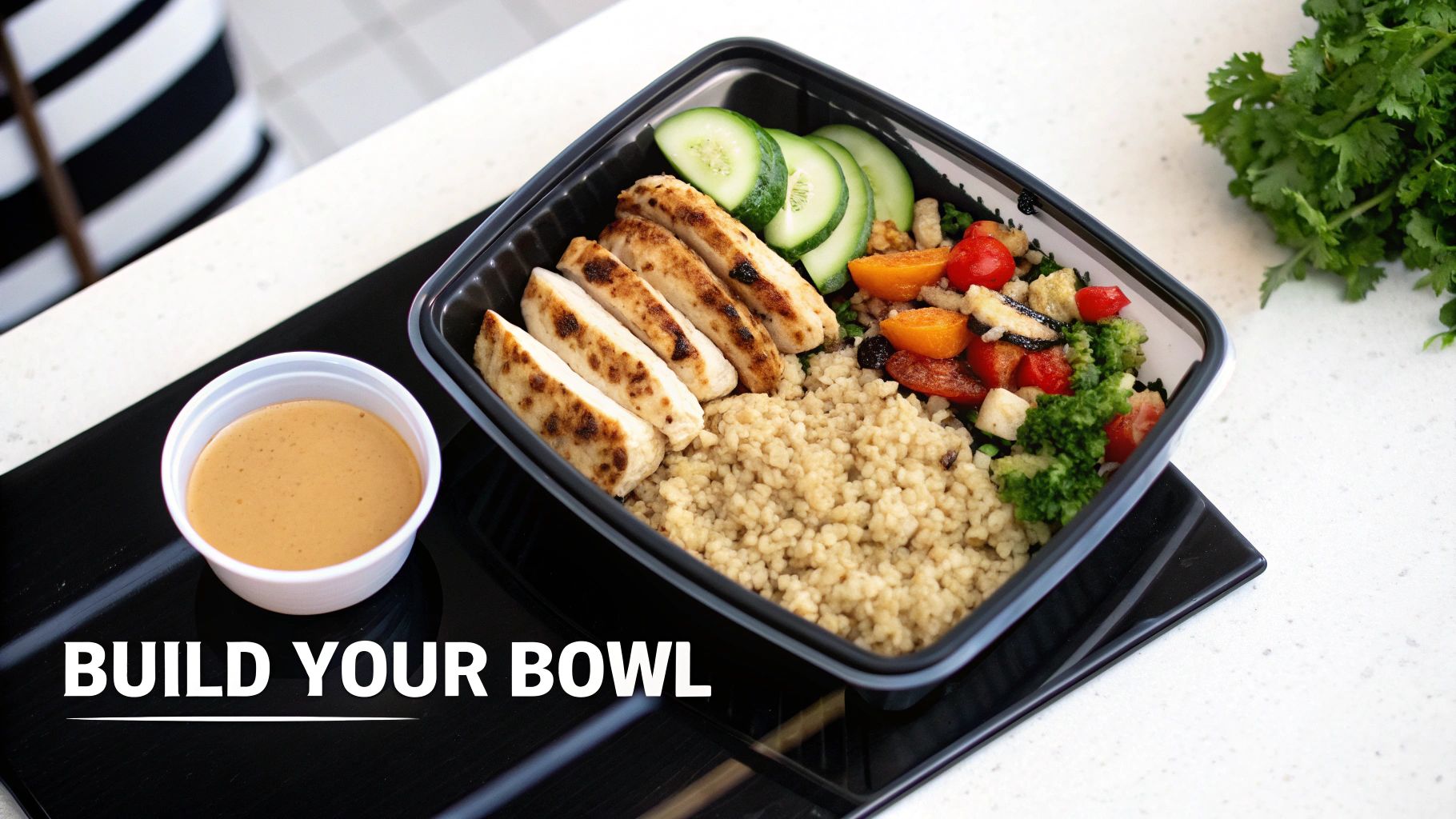
This "build-a-bowl" technique is ideal for managing macronutrients, whether your goal is weight loss or muscle gain. By keeping components separate, you prevent ingredients from becoming soggy and give yourself the flexibility to mix and match flavors throughout the week. It’s one of the best quick and easy meal prep ideas because the active cooking is done in one batch, while the daily assembly takes mere minutes.
How do you build a perfect grain bowl?
A well-balanced grain bowl follows a simple formula: Grain Base + Lean Protein + Vegetables + Healthy Fat & Sauce.
- Grain Examples: Quinoa, brown rice, farro, or couscous.
- Protein Examples: Grilled chicken, ground turkey, chickpeas, or seasoned tofu.
- Vegetable Examples: Roasted broccoli, stir-fried bell peppers, or fresh chopped cucumber.
- Topping Examples: A tahini dressing, a sprinkle of feta cheese, or a simple balsamic vinaigrette.
What are some tips for making grain bowls?
To get the most out of your bowl prep, apply these practical tips:
- Flavorful Grains: Cook your grains in vegetable or chicken broth instead of water to infuse them with a savory base flavor.
- Prevent Dryness: Store cooked grains with a lightly damp paper towel on top to maintain moisture.
- Cool Before Storing: Allow all warm components to cool completely before sealing them in containers to prevent condensation and sogginess.
- Keep Sauces Separate: Always store dressings and sauces in a separate small container and add them just before eating to keep everything crisp.
- Smart Meal Planning: Streamline your entire meal prep process by creating a structured plan. A tool like the AI Meal Plan Generator can help you design a week's worth of balanced meals and generate a corresponding grocery list in seconds.
How can I meal prep eggs for the week?
Egg muffins and frittatas are a powerhouse among quick and easy meal prep ideas, offering a versatile, protein-packed solution for grab-and-go breakfasts, lunches, or snacks. This method involves baking a simple egg mixture, combined with your choice of vegetables, proteins, and cheeses, into individual muffin tins or a larger pan. The result is a set of perfectly portioned, nutrient-dense meals ready for the entire week.
This approach is exceptionally efficient for anyone tracking protein intake, following a low-carb or keto diet, or simply needing a savory, satisfying option that isn't loaded with carbs. A single batch can yield a dozen individual muffins or 6-8 frittata slices, providing a high-protein foundation for multiple meals. They store beautifully in the refrigerator for up to five days or can be frozen for three months, making them a cornerstone of long-term meal planning.
How do you build a perfect egg muffin or frittata?
The base formula is simple and highly customizable: Eggs + Vegetables + Protein + Optional Cheese & Seasonings.
- Classic Combinations: Spinach, feta, and sun-dried tomato; ham, bell peppers, and cheddar; or broccoli, bacon, and Swiss cheese.
- Vegetarian Options: Sautéed mushrooms, onions, and fresh herbs; roasted red pepper and goat cheese; or zucchini and parmesan.
- Base Ratio: A good starting point is 10-12 large eggs for a 12-cup muffin tin or a 9-inch frittata pan.
What are the best tips for making egg muffins?
To achieve flawless texture and flavor, follow these key guidelines:
- Manage Moisture: Pat vegetables like spinach or mushrooms completely dry after washing or cooking. Excess water will result in a soggy final product.
- Pre-Cook Hard Veggies: Lightly steam or sauté hard vegetables like broccoli, diced potatoes, or carrots to ensure they are tender after baking.
- Prevent Sticking: Use silicone muffin liners for effortless removal, or generously grease the muffin wells with oil or butter.
- Don't Overfill: Fill each muffin cup about three-quarters full. Eggs expand significantly as they cook.
- Perfect the Bake: Bake at 350°F (175°C) for 20-25 minutes. They are done when the center is set but still looks slightly moist. They will continue to cook as they cool.
- Let Them Rest: Allow the muffins or frittata to cool in the pan for 5-10 minutes before removing them. This helps them firm up and prevents breaking.
What is the easiest way to prep smoothies?
Smoothie and protein shake packs are a game-changer for anyone needing a nutrient-dense meal on the go, involving pre-portioning all non-liquid ingredients into individual freezer-safe bags. This grab-and-blend system eliminates morning decision-making and ensures a perfectly balanced meal is just seconds away. By preparing everything in advance, you lock in freshness and create a consistent, portable nutrition source.
This method is ideal for busy professionals who need a quick breakfast, fitness enthusiasts seeking post-workout recovery fuel, or anyone aiming for controlled portions for weight management. Preparing packs in a batch on Sunday means you have a full week of healthy, high-protein breakfasts or snacks ready to go. The freezer keeps fruits and vegetables at peak freshness, preventing food waste and saving money.
How do you build a perfect smoothie pack?
A successful smoothie pack follows a simple formula: Fruit/Vegetable Base + Protein Source + Healthy Fat + Fiber Boost.
- Green Power Pack: Spinach, kale, frozen green apple, celery, ginger, lemon juice, and vanilla protein powder.
- Berry Antioxidant Pack: Mixed frozen berries, rolled oats, chia seeds, almond butter, and strawberry protein powder.
- Tropical Sunrise Pack: Frozen mango, pineapple, a scoop of coconut cream, chia seeds, and vanilla or unflavored protein powder.
- Chocolate Banana Dream: Frozen banana, cocoa powder, almond butter, oats, and chocolate protein powder.
What are the best tips for smoothie packs?
To master this technique, follow these simple guidelines:
- Layer Strategically: Place soft ingredients like spinach or kale at the bottom of the bag, followed by protein powder and seeds, with hard frozen fruit on top. This prevents crushing.
- Flash Freeze Fresh Fruit: To prevent clumping, spread fresh fruit like bananas or berries on a baking sheet and freeze them for an hour before adding them to your packs.
- Label Everything: Clearly label each bag with the ingredients and the date it was prepared. Packs can be stored in the freezer for up to three months.
- Use a Powerful Blender: A high-speed blender is essential for breaking down frozen ingredients and creating a smooth, creamy texture without any grit.
- Plan Your Ingredients: For efficient shopping and to ensure you have all your components ready for assembly, consider using a smart tool like this meal planner to organize your grocery list.
How can I prep proteins to cook quickly?
Marinated proteins paired with quick-cook bases are a game-changing strategy among quick and easy meal prep ideas. This method involves preparing marinades ahead of time and letting your protein (chicken, fish, steak, or tofu) absorb the flavor for hours or even days. This upfront work transforms a plain ingredient into a dynamic centerpiece that cooks in minutes, dramatically cutting down your time in the kitchen on busy nights.
This approach offers unparalleled flexibility for individuals with unpredictable schedules. You can marinate proteins for up to 24 hours in the fridge for near-term meals or freeze them in their marinade for months. When you're ready to eat, simply thaw and cook. A protein that was prepped weeks ago can be pan-seared, grilled, or baked in just 10-15 minutes, allowing a fresh, home-cooked meal to come together faster than most takeout orders.
How do you build a perfect marinated meal?
The formula for this quick meal is straightforward: Pre-Marinated Protein + Quick-Cook Base + Fast Veggie.
- Protein Examples: Chicken breasts in an Italian herb vinaigrette, salmon fillets in a miso-ginger marinade, flank steak in a lime-cilantro marinade, or firm tofu in a sesame-soy marinade.
- Quick-Cook Base Examples: Pre-cooked quinoa or rice, microwavable sweet potatoes, or couscous (which cooks in 5 minutes).
- Fast Veggie Examples: Bagged spinach, steamed green beans, or a simple side salad.
What are some tips for marinating proteins?
To get the most out of this technique, apply these simple guidelines:
- Use Zip-Top Bags: Marinate proteins in resealable plastic bags. They ensure even coating, save space in the fridge or freezer, and make for easy cleanup.
- Pat Proteins Dry: Before cooking, pat the marinated protein dry with a paper towel. This removes excess surface moisture and promotes a better, crispier sear.
- Freeze Flat: When freezing proteins in their marinade bags, lay them flat. This saves significant freezer space and allows them to thaw much more quickly.
- Mind the Marinade Time: Most proteins benefit from 2-24 hours of marinating. Be cautious with acidic marinades (citrus or vinegar), as they can "cook" delicate proteins like fish or break down the texture of chicken if left for too long.
- Plan Your Pairings: Having quick-cook bases ready is key. For more ideas on how to assemble these components, you can create a meal from what’s in your fridge and get instant suggestions.
How do different meal prep ideas compare?
| Method | Implementation Complexity 🔄 | Resources & Time ⚡ | Expected Outcomes 📊⭐ | Ideal Use Cases & Key Advantages 💡 |
|---|---|---|---|---|
| Sheet Pan Meals | Medium — simple prep, moderate timing (5–10 min active) | Oven + baking sheets; 25–35 min cook; scalable for batches | Balanced, roasted meals with minimal cleanup — ⭐⭐⭐⭐ | Batch family meals or weekly prep; fast cleanup, versatile for diets |
| Mason Jar Salads | Low — layering technique (10–15 min) | Mason jars, fridge; no cooking; keeps 4–5 days | Fresh, portable cold lunches; excellent portion control — ⭐⭐⭐⭐ | Grab-and-go lunches; maintain leafy greens fresh, visually motivating |
| Freezer-Friendly Breakfast Burritos | Medium — batch cooking required (3–4 hr initial) | Stove/oven, foil, freezer space; microwave 2–3 min to reheat | Reliable hot breakfasts with balanced macros — ⭐⭐⭐⭐ | Prevents skipped breakfasts; budget-friendly, protein-rich mornings |
| Slow Cooker & Instant Pot Dump Recipes | Low active complexity; passive or short pressure-cook learning curve | Slow cooker or Instant Pot; 6–8 hr slow or 20–30 min pressure | Large yields, tender flavorful meals; energy-efficient — ⭐⭐⭐⭐ | Set-and-forget dinners for busy schedules; batch family portions |
| Overnight Oats & Chia Puddings | Very low — mix and refrigerate (minutes) | Jars, fridge; ready in 30 sec (cold) and stores ~5 days | High-fiber, satiating breakfasts; customizable — ⭐⭐⭐⭐ | Quick cold breakfasts for weight management; no cooking skills needed |
| Protein-Packed Snack Boxes | Medium — assemble and rotate variety weekly | Compartment containers, fridge; perishable items last 5–7 days | Prevents impulse snacking; supports muscle gain via consistent protein — ⭐⭐⭐⭐ | Between-meal protein control, office snacks, family-friendly portions |
| Grain & Protein Bowl Prep | Medium-high — cook multiple components then assemble | Pots/pans, multiple containers, fridge; reheat as needed | Modular, high-variety meals tailored to macros — ⭐⭐⭐⭐ | Flexible lunches/dinners for macro tracking and variety |
| Egg Muffins & Frittatas | Low — prep and bake (20–25 min) | Oven, muffin tin or skillet; refrigerate 5 days or freeze 3 months | Portable, high-protein portions; freezes well — ⭐⭐⭐⭐ | Quick protein breakfasts/snacks, keto/low-carb diets, easy batching |
| Smoothie & Protein Shake Packs | Low — pre-portion and freeze; blender required | Freezer bags, high-powered blender; blends in <2 min | Fast nutrient-dense drinks; consistent macros but lower satiety — ⭐⭐⭐ | Post-workout or rushed mornings; sneaks veggies into diet |
| Marinated Proteins & Quick-Cook Bases | Medium — plan marinating time (2–24 hr) | Zip-top bags, fridge/freezer, grill or skillet; 10–15 min cook | Flavorful, quick meals in ~20 min; flexible and tenderized proteins — ⭐⭐⭐⭐ | Last-minute weeknight meals, flexible scheduling, high-flavor prep |
How can you make meal prep even easier?
The key to making meal prep easier is to start small, invest in the right tools, and automate your planning. Begin by prepping just one type of meal, like lunches, until it becomes a habit. Using quality containers and a smart planning tool like an AI Meal Planner can significantly reduce time spent on choosing recipes and creating grocery lists.
How can I make meal prep sustainable?
To make your meal prep routine last, focus on these principles:
- Start Small and Build Momentum: Don't try to prep every single meal for the entire week on your first attempt. Begin by prepping just your lunches or a few weeknight dinners.
- Embrace Themed Prep Sessions: Dedicate specific, short blocks of time to certain tasks, like a "Chopping Hour" for all your vegetables or a "Sauce Session."
- Invest in the Right Tools: Quality containers, a sharp knife, and a good food processor can dramatically cut down on prep time and improve food storage.
What are the next steps to start meal prepping?
- Choose Your First Target: Select one or two ideas from this list to try this week, like overnight oats for breakfast or grain bowls for lunch.
- Schedule Your Prep Time: Block out a 60 to 90-minute window in your calendar and treat it like an important appointment.
- Automate Your Planning: Use a tool that can generate recipes, create grocery lists, and calculate macros for you, saving significant time and mental energy.
By automating the tedious parts of meal planning, you free yourself up to focus on the cooking and, more importantly, enjoying the delicious, healthy food you've prepared. It ensures you never run out of fresh ideas and that every meal perfectly aligns with your dietary needs and health goals, turning a weekly chore into an effortless, integrated habit.
Ready to take the guesswork out of meal planning forever? The AI Meal Planner creates personalized meal plans, generates smart grocery lists, and tracks your macros automatically. Stop planning and start cooking with your free trial at AI Meal Planner.
Frequently Asked Questions
What is the easiest meal to prep for a week? Overnight oats are often the easiest meal to prep. You simply mix oats, liquid, and flavorings in jars and refrigerate them, requiring no cooking and minimal cleanup.
How do I start meal prepping for beginners? Start by choosing just one meal to prep for the week, like lunch or breakfast. Pick a simple recipe, like sheet pan chicken and veggies, and schedule 1-2 hours to cook.
How long does prepped food last? Most prepped meals last 3-5 days in the refrigerator. Freezer-friendly meals like burritos or soups can last for up to 3 months.
Is it cheaper to meal prep or buy lunch? Meal prepping is almost always cheaper than buying lunch. You save money by buying ingredients in bulk and avoiding the high markups on convenience foods and restaurant meals.
What are the best containers for meal prep? Glass containers are best because they are durable, microwave-safe, and don't stain or retain odors. For portability and snacks, BPA-free plastic containers with separate compartments are also excellent.
How do you meal prep without eating the same thing every day? Use a "component prep" method where you cook proteins, grains, and vegetables separately. Each day, you can assemble them into different combinations for a varied bowl, salad, or wrap.
Can I meal prep for weight loss? Yes, meal prepping is highly effective for weight loss. It allows you to control portions, track calories and macros accurately, and avoid unhealthy impulse food choices.
AI-powered nutrition
Get Your Personalized Meal Plan
AI creates the perfect meals for your goals, lifestyle, and taste.
Start Your Journej