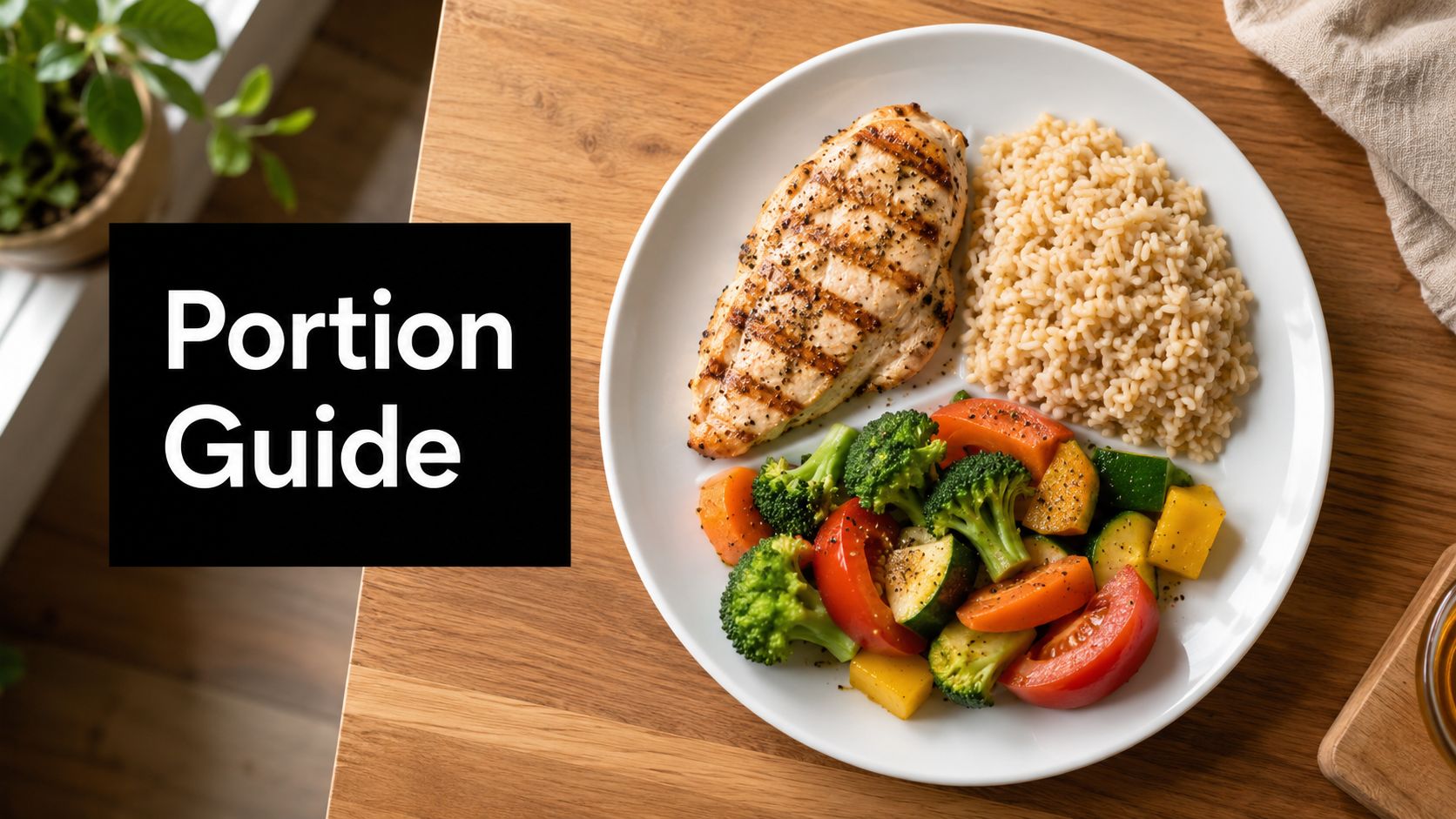
A standard portion guide uses visual cues like a fist for carbohydrates, approximately ½ cup, a palm for protein, about 3–4 ounces, and a thumb for fats. Serving sizes on food labels reflect average consumption, not necessarily the amount that matches your personal health goals.
You're standing over a bowl of cereal before work, ordering lunch from a restaurant, or eating pasta straight from the serving dish. You want a balanced meal, but you don't want to weigh every ingredient or calculate every bite. A practical portion size guide turns abstract nutrition advice into simple references you can use with your hands, your plate, and familiar household measures.
Visual cues aren't rigid rules. They're starting points that help you recognize how much food is in front of you, especially when a scale or measuring cup isn't available. You can then adjust based on hunger, activity, medical needs, and the food's nutrient density.
Understanding Portion Size Versus Serving Size
The words portion and serving sound interchangeable, but they describe different things. A portion size is the amount you choose to put on your plate or eat during one occasion. A serving size is a standardized reference used by dietary guidance or a food label.
The U.S. Food and Drug Administration defines serving size as the amount customarily consumed in one sitting. Labels express that amount with familiar measures such as cups, tablespoons, pieces, slices, or fractions of a food item, including a fraction such as 1/4 pizza. The FDA explains these reference amounts in its food labeling guidance.
That means a label serving isn't automatically a recommendation. It tells you how the product is commonly consumed and gives you a consistent basis for comparing nutrition information.

Why the label can feel misleading
A package may look like one snack, yet the nutrition panel can describe more than one serving. The FDA also states that the entire content of a single-serving container must be labeled as one serving under its labeling rules. For other packages, check the number of servings and compare it with the amount you eat.
Use this three-step check:
- Look at the serving size. Note whether it describes a cup, slice, piece, or another household measure.
- Check servings per container. A large bag, bottle, or box may contain several label servings.
- Compare the label amount with your portion. If you eat twice the listed amount, you've consumed twice the listed nutrition values.
The Dietary Guidelines use a related but broader definition. The latest 2020–2025 Dietary Guidelines define portion size as the amount of food or beverage served or consumed in one eating occasion, and explicit portion-size guidance has appeared in the U.S. Guidelines since 2005. The guidance has evolved over the past two decades in response to rising obesity prevalence and related health concerns, making portion awareness a long-running public-health tool rather than a passing trend. You can review the full Dietary Guidelines portion-size chapter.
Practical rule: A label tells you what amount the package uses for comparison. Your portion is the amount you decide to eat.
For a more personalized way to connect food choices with meal structure, you can also use an AI nutritionist. Keep the distinction clear, though. No app or label can decide whether a particular amount suits your medical needs or appetite.
Visual Cues and the Hand Measurement Method
At an office lunch, restaurant, or family gathering, a food scale is rarely within reach. The hand method gives you a portable reference that needs no equipment. Your hand travels with you, turning an abstract serving target into a quick visual check.
Hand cues also offer a personal scale because hand size generally relates to overall body size. They are estimates, not medical prescriptions, so use them to guide consistency rather than demand exactness.
Build a balanced plate first
Start with the plate's overall shape. A practical plate model uses half the plate for vegetables, one quarter for lean protein, and one quarter for lower-GI carbohydrates. Begin with vegetables to create volume and color, add protein to one quarter, then place carbohydrates in the remaining quarter. Finish with a modest, measured-looking amount of fat, such as dressing, oil, avocado, seeds, or nuts.
The plate model works like a frame for the meal. It helps you judge the balance before focusing on individual ingredients.

Match each food with the right cue
| Food | Visual reference | Everyday examples |
|---|---|---|
| Protein foods | One palm | Chicken, fish, tofu, eggs, beans |
| Non-starchy vegetables | One fist | Broccoli, peppers, leafy greens, zucchini |
| Carbohydrates | One cupped hand or fist | Rice, pasta, potatoes, oats |
| Fats | One thumb | Oil, nut butter, cheese, seeds |
Hand-based guides commonly place starch at about one quarter of the plate, or around the size of a fist. Protein often matches the palm or one quarter of the plate. Another plate model and hand guide compares 1 slice of bread with a hand, ½ cup pasta or rice with about half a fist, and fish, nuts, or seeds with a palm or cupped hand.
Some foods need closer judgment because they spread, pour, or pile easily. Rice, pasta, cereal, sauces, oils, and dressings have less definite boundaries, so a generic fist may be less dependable. A review of food portion estimation evidence found image-based aids were generally more accurate than other estimation methods across 334 studies. Validation studies also found image tools performed better than household utensils and food models.
Use your hand for speed, then occasionally check a familiar food with a measuring cup. Once you know how ½ cup of cooked rice or 1 tablespoon of oil looks in your usual bowl, that image becomes a practical memory. You can also browse a structured food nutrition database when building meals with these visual cues, allowing an AI meal-planning workflow to connect ingredients with a plate structure.
Portion Recommendations by Food Group and Goal
A portion becomes useful when it matches the meal's purpose. The same ingredients may suit weight management, maintenance, or muscle gain, but the balance between vegetables, protein, carbohydrate, and calorie-dense additions can change with appetite, activity, and health needs. Use the plate structure as a flexible map rather than a fixed prescription.
| Goal | Build the meal around | Practical adjustment |
|---|---|---|
| Weight management | Vegetables, a satisfying protein source, and a measured carbohydrate or fat addition | Keep vegetables prominent, choose concentrated foods such as oils, nuts, sauces, and starches deliberately, and adjust the amount if fullness arrives before the meal is finished |
| Maintenance | A balanced mix of vegetables, protein, carbohydrate, and fats | Start with your usual plate pattern, then observe energy, hunger, and fullness across the day |
| Muscle gain or higher activity | Protein and carbohydrate alongside vegetables | Add a carbohydrate or protein component when it fits your appetite, training demands, and wider eating plan |
| Lower appetite or smaller meals | Protein and nutrient-dense foods first | Keep the meal balanced while using smaller amounts of foods that take up space without contributing much nourishment |
These adjustments complement the hand and plate references explained earlier. They are not a reason to repeat every food measurement. For produce, public-health guidance commonly uses a medium fruit, two small fruits, or a comparable serving as a practical reference. The NHS fruit and vegetable portion guidance also explains examples such as half a grapefruit and dried fruit, helping translate a broad target into recognisable foods.
A busy weekday meal might use vegetables as the largest visual area, a protein that suits the goal, and a carbohydrate amount that reflects activity. For a lower-activity day, keep the same structure and reduce the concentrated add-ons if needed. For a training day, increase carbohydrate or protein rather than letting the whole plate grow without direction.
Nutrient density matters alongside portion size. Someone managing diabetes, heart concerns, or a restrictive diet may need advice that visual cues alone cannot provide. The British Dietetic Association explains that a serving size is a guide, not an instruction for how much to eat, and that protein, dairy, oils, and grains cannot be exchanged as though they provide the same nutrition. Its food facts on portion sizes connects portion decisions with macros, fibre, and satiety.
AI meal planning can apply these goal-based rules before a shopping list is created. Set the priority, such as more protein for training or more vegetables for a weight-focused plan, then review whether each proposed meal still has a clear balance. A food database can supply ingredient information, while the person remains responsible for checking appetite, medical advice, and the portion that feels satisfying.
For broader ideas on building meals around personal wellness priorities, nutrition strategies for wellness offers useful context. If you have a diagnosed condition, use visual anchors alongside guidance from your clinician or registered dietitian.
Navigating Packaged Foods and Restaurant Meals
A busy lunch can hide several portions at once. A large takeaway box, a snack eaten from its packet, or cereal poured straight into a bowl gives you little visual feedback. Restaurants and packaged foods reduce the measuring control you have at home, so use the label, the plate, and familiar hand-sized cues to make the amount easier to read.
For packaged foods, check the serving size and servings per container before eating. Compare that reference with the amount you plan to have. Pour cereal into a bowl, place nuts in a small dish, and add oil with a spoon when possible. The goal is not to measure every bite. It is to create a visible boundary instead of eating from a bag or pouring directly from a bottle.

Use different strategies for different foods
Foods with clear boundaries, such as a slice of bread, a piece of fruit, or one yogurt container, are usually easier to estimate. Amorphous foods, including pasta, rice, cereal, casseroles, and mashed foods, pile and spread in less predictable ways. A photo of half a cup of cooked rice beside a heaping bowl makes the difference obvious. Keep a measured reference or food image handy when a particular food repeatedly causes confusion.
At a restaurant, read the plate in an order that gives each food a role:
- Vegetables first: Let vegetables or salad take the largest visible share when available.
- Protein next: Look for a palm-sized serving of fish, poultry, meat, tofu, or another protein.
- Starches last: Treat fries, rice, pasta, and bread as the carbohydrate portion, not as unlimited extras.
- Sauces separately: Request dressing or sauce on the side, then add an amount you can see.
A deck of cards offers a familiar visual benchmark for protein. A tennis ball or similar household object can help you recall the size of a compact portion. These are memory aids, not exact rules. Give extra attention to oils, nuts, spreads, and creamy sauces because small amounts can still contribute substantial nutrition.
For a mixed dish, the recipe nutrition calculator can help divide a recipe into per-serving information before cooking or sharing. AI meal planning can use that result with your visual cues, making a casserole easier to portion without judging the whole pan at the table.
Integrating Portions into Your Weekly Meal Plan
Portion awareness works better when it begins before you feel hungry. A weekly plan lets you decide which meals need measured ingredients, which can use hand cues, and where leftovers can become the next meal instead of an unplanned extra.
A useful workflow starts with your actual life. Note your dietary pattern, allergies, foods you enjoy, cooking time, and the meals you usually eat away from home. Then assign a simple structure to each meal, such as vegetables, protein, carbohydrates, and a small source of fat. You won't need the same level of precision for every ingredient.

Turn visual goals into a repeatable routine
Use this sequence when planning a week:
- Set the meal pattern. Decide which breakfasts, lunches, dinners, and snacks need to fit your schedule.
- Choose portion anchors. Mark the meals where you'll use a palm, fist, cupped hand, or thumb.
- Verify difficult foods. Check cooked grains, pasta, oils, sauces, and mixed recipes with a cup, spoon, or recipe calculator.
- Build the shopping list. Group ingredients by aisle and account for planned leftovers.
- Prep practical amounts. Portion cooked food into containers that match the meals you intend to eat.
AI tools can reduce the repetitive work, but they don't remove the need for judgment. A meal planner can organize recipes, calculate per-serving information, adapt menus to preferences, and create a grocery list. You should still review whether the plan fits your hunger, cultural preferences, medical guidance, and household needs.
AI Meal Planner is one option that creates personalized weekly meal plans and grocery lists after onboarding about goals, dietary preferences, and allergies. It also provides recipes with calculated macros and calories, supports meal swaps, and organizes grocery items by aisle. You can use its grocery list generator to connect planned meals with the ingredients required for their portions.
The main benefit of this workflow is less daily decision-making. You're not trying to remember every cue while rushing through dinner. You've already selected meals, checked the difficult measurements, and made the right ingredients easy to reach.
Mistakes Even Health-Conscious Eaters Make, and How to Fix Them
A busy day can turn a healthy meal into an oversized one. Compact foods such as nuts, seeds, oils, avocado, granola, and dressings are nutritious, yet their small volume makes extra amounts easy to miss. Use a thumb, spoon, or small bowl, and serve from that measure instead of pouring straight from the container.
Liquids create a separate blind spot. Juice, smoothies, creamy drinks, and sauces spread beyond the plate, so pour them into a transparent glass with a familiar capacity or follow the household measure on the label. For fruit and vegetables, at least 5 portions a day provides a useful public-health framework. An adult portion is commonly described as 80 g in UK guidance and related materials, as noted earlier.
FAQ: Visual Cues, Diabetes, and Sustainable Portion Control
Is a serving size the amount I should eat?
No. A serving size is a reference used on packaging or in guidance. Your portion is the amount you decide to eat, based on your needs, appetite, and plan. Label serving sizes describe customary consumption, not an individualized health target.
What does a fist represent?
A fist can represent vegetables or a starchy food, depending on the hand guide. It works like a quick visual container, but rice, pasta, and other loose foods can vary in volume. Check the cue against a household measure when consistency matters.
Are palm portions exact?
No. A palm estimates a protein portion rather than providing a clinical measurement. Use the same cue regularly, then adjust it for your plan, appetite, and professional guidance.
How should someone with diabetes use visual portions?
Use the plate method to arrange vegetables, protein, and carbohydrate foods. Follow the carbohydrate and medication instructions from your healthcare team. Visual cues build awareness, but they do not replace individualized diabetes care.
Do healthy fats need portion control?
Yes. Oils, nuts, seeds, nut butter, and dressings can be nutrient-dense while taking up little space. A thumb or measured spoon gives you a clear starting point, unlike an unmeasured drizzle.
Do I need to weigh every food?
No. Weighing can teach you what a familiar amount looks like, then hand cues, plate divisions, and household measures can handle everyday meals. Use more precision for foods that are difficult to estimate or when a clinician recommends it.
How can I make portion control sustainable?
Repeat practical meals, serve food onto a plate, and keep your visual cues consistent. Review your energy and fullness over time, then adjust the plan rather than chasing perfection.
AI Meal Planner can turn portion goals into personalized weekly meals, calculated recipe servings, and organized grocery lists based on your preferences and schedule. Visit AI Meal Planner to create a plan that reduces daily measuring guesswork while keeping meal choices clear and balanced.
AI-powered nutrition
Get Your Personalized Meal Plan
AI creates the perfect meals for your goals, lifestyle, and taste.
Start Your Journej